1. Bird Facts
| Feature | Details |
|---|---|
| Common Name | Bird (Class Aves) |
| Scientific Classification | Class: Aves; descended from theropod dinosaurs |
| Kingdom | Animalia |
| Phylum | Chordata |
| Estimated Species | ~10,800+ known species (2026) |
| Lifespan Range | 2 years (some small songbirds) to 80+ years (parrots, albatrosses) |
| Weight Range | 2 grams (bee hummingbird) to 160 kg (ostrich) |
| Size Range | 5.7 cm (bee hummingbird) to 2.8 m tall (ostrich) |
| Diet | Herbivores, carnivores, omnivores, filter feeders, nectarivores |
| Habitat | Every continent including Antarctica |
| Global Population | Estimated 200–400 billion individual birds |
| Conservation Status | ~13% of species threatened with extinction (IUCN, 2026) |
| Oldest Fossil Evidence | ~150 million years ago (Archaeopteryx, Late Jurassic) |
| % of All Vertebrates | Birds represent approximately 22% of all vertebrate species |
2. What is Bird? Species Overview & Scientific Classification
Stand still for five minutes in almost any outdoor environment on Earth — a city park, a rainforest clearing, a windswept Arctic coastline, a Saharan oasis — and you will almost certainly hear or see a bird. They are everywhere. They fill the air above every landscape, animate every ecosystem, and have accompanied humanity through every chapter of our existence on this planet.
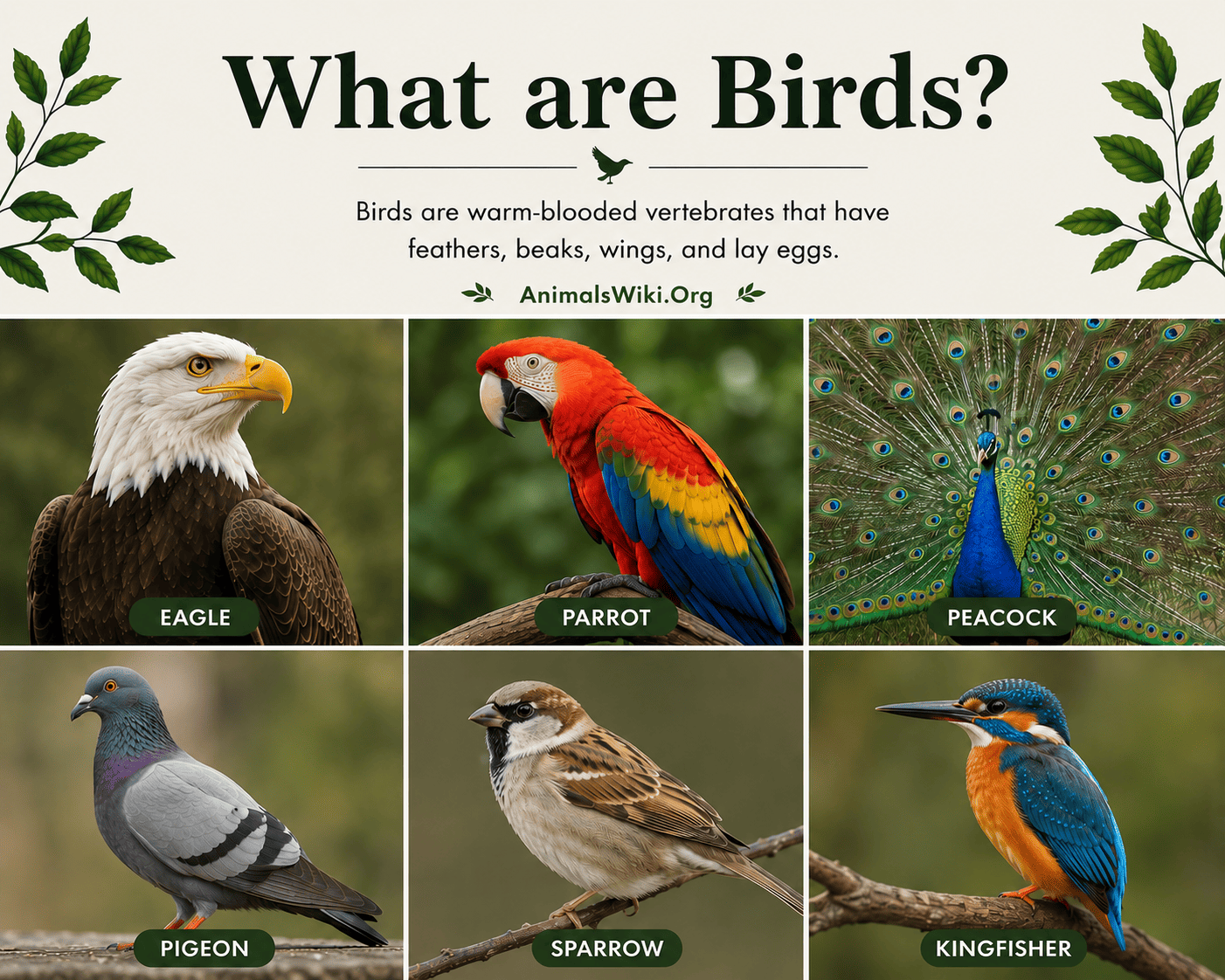
Birds — the class Aves — are warm-blooded, feathered, egg-laying vertebrates that represent one of the most successful and diverse groups of animals that has ever lived. With approximately 10,800 known species as of 2026, they colonize environments ranging from the frozen interior of Antarctica (Emperor penguins) to scorching desert sand seas (sandgrouse, roadrunners), from the pitch-dark ocean at midnight (petrels, shearwaters navigating by smell) to the highest altitudes reached by any animal (bar-headed geese crossing the Himalayas at over 7,000 metres).
What makes birds so extraordinary, so immediately recognizable, and so scientifically fascinating is not any single feature but a constellation of characteristics that together create an animal unlike any other: feathers (unique in the animal kingdom), powered flight (achieved independently by very few other groups), warm-bloodedness (shared with mammals but evolved independently), hard-shelled eggs laid in constructed nests, and a level of vocal complexity and navigational ability that continues to astonish researchers.
Birds are also, in the most technically accurate scientific sense, living dinosaurs — a fact that has transformed from a provocative hypothesis into established consensus over the past three decades of paleontological research. Every bird you have ever seen — the sparrow on your windowsill, the eagle overhead, the chicken on your dinner plate — is a direct descendant of the theropod dinosaurs that walked the Earth 230 million years ago.
Species Classification Table
| Order | Common Name | # Known Species | Examples |
|---|---|---|---|
| Passeriformes | Perching birds / Songbirds | ~6,500 | Sparrows, crows, warblers, robins |
| Apodiformes | Swifts and Hummingbirds | ~450 | Ruby-throated hummingbird, common swift |
| Psittaciformes | Parrots | ~400 | African grey, macaw, cockatoo |
| Falconiformes | Falcons | ~65 | Peregrine falcon, kestrel |
| Accipitriformes | Hawks, Eagles, Vultures | ~260 | Bald eagle, harpy eagle, condor |
| Strigiformes | Owls | ~230 | Great horned owl, barn owl |
| Sphenisciformes | Penguins | ~18 | Emperor penguin, little blue penguin |
| Struthioniformes | Ostriches & ratites | ~15 | Ostrich, emu, kiwi, rhea |
| Charadriiformes | Shorebirds, Gulls, Auks | ~380 | Puffin, oystercatcher, snipe |
| Anseriformes | Waterfowl | ~180 | Mallard, swan, goose |
The order Passeriformes — the perching birds or songbirds — dominates, comprising over 60% of all bird species. This extraordinary diversification, which began approximately 50 million years ago, has produced everything from the melodious nightingale to the tool-using New Caledonian crow.
“A bird does not sing because it has an answer. It sings because it has a song.” — Chinese proverb, widely cited by ornithologists as a reminder that bird vocalizations serve purposes far beyond human analogies
3. Physical Description & Unique Features
If one word could define the bird body plan, it is optimization. Every anatomical feature of a bird — every bone, feather, organ, and muscle — has been shaped by millions of years of evolution toward one overriding imperative: the ability to fly. Even in the many bird species that have subsequently lost flight (penguins, ostriches, kiwis, kakapos), the body plan retains the legacy of that aerial heritage.
Feathers — Nature’s Most Versatile Structure
The single feature that defines every bird on Earth — that no other living animal possesses — is feathers. These extraordinary structures, evolved from the scales of theropod dinosaur ancestors over tens of millions of years, serve simultaneously as insulation, waterproofing, flight surfaces, display structures, camouflage, and sensory organs.
A single flight feather is an engineering masterpiece. The central rachis (shaft) supports hundreds of barbs, each carrying hundreds of barbules equipped with microscopic hooks (hamuli) that zip adjacent barbules together like a biological Velcro system — creating a lightweight, flexible, aerodynamically precise surface. When damaged, a bird preens its feathers to re-zip the barbule hooks — restoring flight performance with a few passes of the beak.
Different feather types serve different functions:
- Contour feathers — the outer layer visible to observers; streamline the body
- Flight feathers (remiges and rectrices) — the large wing and tail feathers providing lift and control
- Down feathers — the insulating underlayer trapping warm air against the body
- Filoplumes — hair-like sensory feathers detecting feather position and movement
- Semiplumes — intermediate feathers providing both insulation and shape
The Hollow Skeleton
A bird’s skeleton is a masterpiece of structural engineering — strong enough to withstand the stresses of powered flight yet light enough to make it energetically possible. Many bird bones are pneumatized — hollowed and connected to the respiratory system, filled with air rather than marrow. In some large birds, the bones contain internal struts (trabeculae) that provide strength without weight.
The result: a Bald Eagle with a 2.3-metre wingspan has a skeleton weighing only approximately 270 grams — less than the weight of its feathers.
Vision
Birds possess the most sophisticated visual system of any vertebrate group. Most birds have eyes positioned on the sides of their head, providing nearly 360-degree vision — critical for detecting approaching predators. Predatory birds (owls, raptors) have forward-facing eyes providing binocular vision for precise depth perception.
Many birds can perceive ultraviolet light — a visual spectrum entirely invisible to humans. This allows them to see patterns on flowers, detect UV-reflective urine trails of rodents (used by kestrels when hunting), and perceive plumage markings on potential mates that are invisible to human observers.
Did You Know? The peregrine falcon (Falco peregrinus) is the fastest animal on Earth — reaching diving speeds of over 390 km/h (242 mph) in a hunting stoop (dive). To withstand these speeds without losing control, the peregrine has specialized turbinate bones in its nostrils that deflect airflow and prevent its lungs from being ruptured by the pressure at speed — an adaptation so elegant that aircraft jet engine designers have copied it.
4. Natural Habitat & Geographic Range
Birds are the most geographically widespread class of terrestrial vertebrates on Earth. They have colonized every continent — including Antarctica, where Emperor penguins breed on the sea ice in temperatures of -60°C during the polar winter — and virtually every habitat type the planet offers.
Habitat Range by Continent
| Continent | # Bird Species (approx.) | Dominant Groups | Notable Hotspots |
|---|---|---|---|
| South America | 3,400+ | Hummingbirds, tanagers, antbirds, parrots | Amazon basin, Andes, Atlantic Forest |
| Asia | 2,700+ | Pheasants, bulbuls, sunbirds, cranes | Borneo, Western Ghats, Himalayas |
| Africa | 2,400+ | Weavers, starlings, hornbills, raptors | Congo Basin, Rift Valley, Cape region |
| North America | 1,100+ | Warblers, sparrows, raptors, waterfowl | Pacific Flyway, Florida, Alaska |
| Europe | 800+ | Passerines, raptors, waterfowl, waders | Mediterranean, Scandinavia |
| Australia/Oceania | 2,100+ | Parrots, honeyeaters, kingfishers | Queensland, New Guinea, New Zealand |
| Antarctica | ~45 | Penguins, petrels, skuas | Antarctic Peninsula, Ross Sea |
South America is the world’s richest continent for bird diversity — driven by the extraordinary ecological complexity of the Amazon basin and the altitudinal gradients of the Andes, which create dozens of distinct ecological zones stacked vertically within short horizontal distances. The Colombian Andes alone host over 1,900 species — more than the entire United States and Canada combined.
Migration extends the geographic range of countless species beyond their breeding areas. The Arctic Tern (Sterna paradisaea) makes the longest migration of any animal — traveling from its Arctic breeding grounds to the Antarctic and back each year, covering approximately 70,000–90,000 km annually. Over a typical lifespan of 30 years, an Arctic Tern may travel the equivalent of three trips to the Moon and back.
Did You Know? The bar-headed goose (Anser indicus) regularly crosses the Himalayas during migration — flying at altitudes exceeding 7,290 metres above sea level, where oxygen levels are less than 50% of those at sea level. They achieve this through specialized hemoglobin that binds oxygen more efficiently at high altitude and an extraordinary cardiovascular system that would kill most other birds.
5. Bird’s Diet & Feeding Behavior
Birds have evolved into virtually every dietary niche available in terrestrial, freshwater, and marine ecosystems. The diversity of bird feeding strategies is one of the primary drivers of their extraordinary species richness — in any given ecosystem, multiple bird species can coexist by specializing in different food sources, accessed through different methods, in different microhabitats.
Diet Breakdown Table
| Dietary Category | Description | Representative Species |
|---|---|---|
| Carnivore — aerial hunter | Pursues prey in flight | Peregrine falcon, sparrowhawk, hobby |
| Carnivore — terrestrial hunter | Hunts on ground or in vegetation | Secretary bird, roadrunner, kookaburra |
| Piscivore | Feeds primarily on fish | Osprey, kingfisher, gannet, heron |
| Nectarivore | Feeds on flower nectar | Hummingbirds, sunbirds, lorikeets |
| Granivore | Feeds on seeds and grains | Finches, sparrows, doves, parrots |
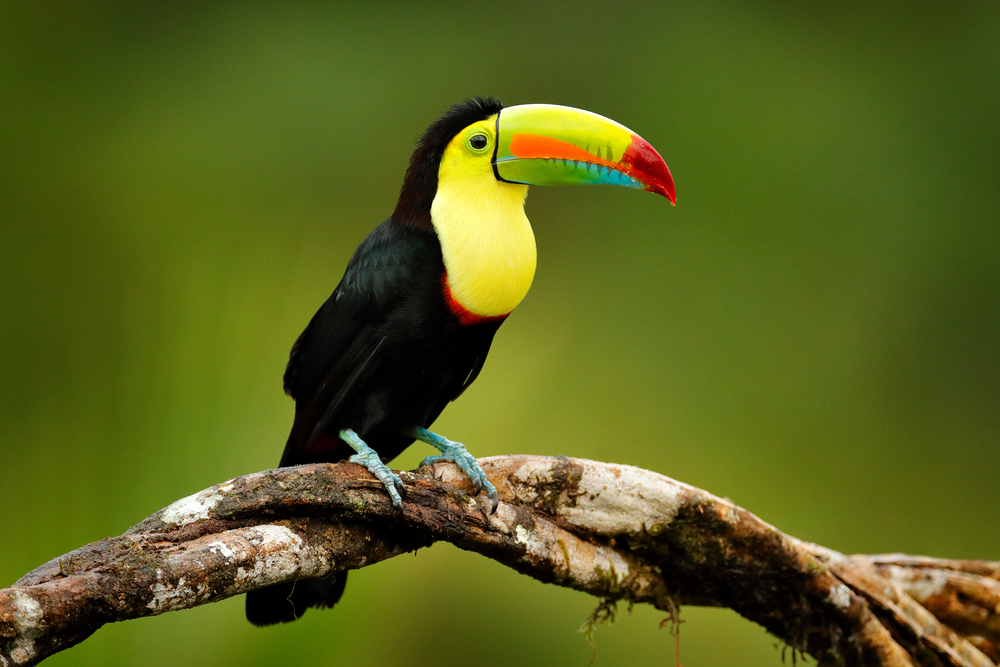
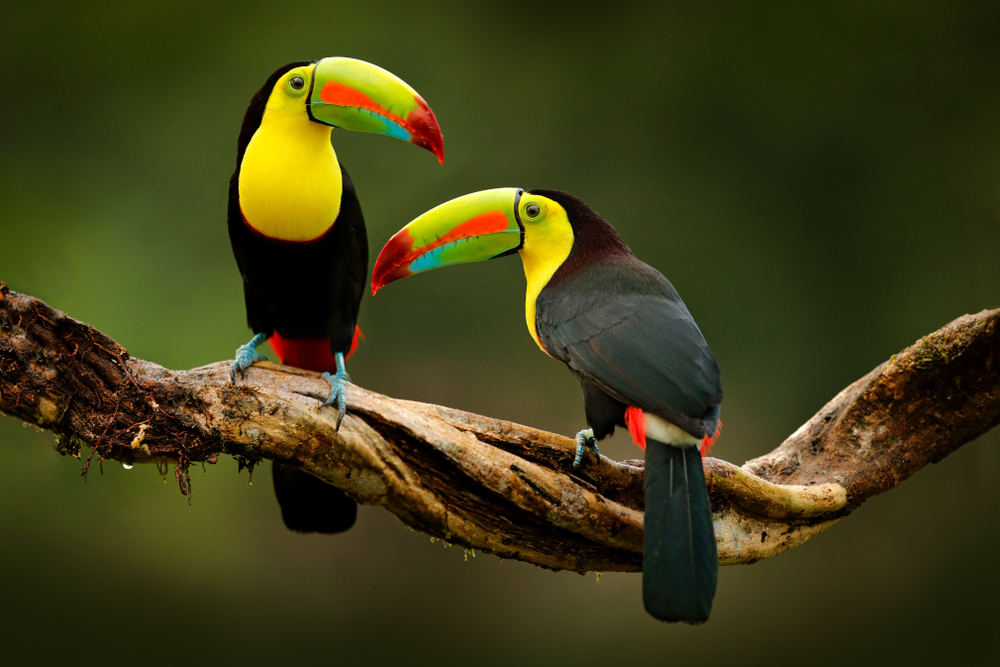
| Frugivore | Feeds primarily on fruit | Toucans, fruit doves, hornbills |
| Insectivore | Feeds primarily on insects | Warblers, swallows, nightjars, wrens |
| Herbivore — grazer | Feeds on grasses and vegetation | Geese, swan, hoatzin |
| Scavenger | Feeds on carrion | Vultures, condors, marabou stork |
| Filter feeder | Filters microorganisms from water | Flamingo, spoonbill, some ducks |
| Omnivore | Mixed diet | Crows, gulls, thrushes, starlings |
Extraordinary Feeding Strategies
The sword-billed hummingbird (Ensifera ensifera) of the Andes has a bill longer than its entire body — the only bird whose bill exceeds its body length. This extraordinary structure evolved in precise co-adaptation with specific long-tubed flowers that no other pollinator can access — a bilateral evolutionary dependency that has locked the two species together across millions of years.
The lammergeier (bearded vulture) (Gypaetus barbatus) has evolved a diet almost uniquely specialized on bone marrow. Unable to access marrow directly, it carries bones to height and drops them onto specific rock surfaces — ossaries that individual birds learn and return to — cracking them open. It also swallows whole bones up to 25 cm long, dissolving them in a stomach acid so concentrated it can digest bone within 24 hours.
New Caledonian crows (Corvus moneduloides) manufacture and use tools to extract insect larvae from wood — fashioning hooked probes from twigs, carefully selecting materials by stiffness and length for different tasks, and even combining tools in sequential tool use. This cognitive achievement rivals the tool use of great apes and has revolutionized scientific understanding of bird intelligence.
6. Reproduction & Life Cycle of bird
The diversity of bird reproductive strategies is as remarkable as their feeding ecology — ranging from the monumental dedication of Emperor penguins incubating eggs in Antarctic blizzards to the near-parasitic reproductive shortcuts of brood parasites like cuckoos.
Egg and Nest Diversity
All birds reproduce by laying hard-shelled amniotic eggs — the shared inheritance from their reptilian and dinosaurian ancestors. Beyond this shared characteristic, however, the variation is extraordinary.
Megapodes (mound birds of Australasia) construct enormous compost heaps of vegetation — sometimes exceeding 10 metres in diameter and 5 metres in height — using the heat of decomposition to incubate their eggs, monitoring and adjusting the mound’s temperature with extraordinary precision without ever sitting on the eggs themselves.
The common murre (Uria aalge) lays a single egg directly on bare rock ledges — but the egg is strikingly pyriform (pear-shaped), a shape that causes it to spin in a tight circle if disturbed rather than rolling off the ledge. This is not coincidence but the result of millions of years of selection pressure.
Brood parasitism — laying eggs in the nests of other species and leaving the raising of offspring to the host — has evolved independently in approximately 100 bird species across several families. The common cuckoo (Cuculus canorus) has driven a remarkable coevolutionary arms race with its hosts — evolving eggs that mimic the appearance of host eggs in color and pattern, while hosts have evolved increasingly fine discrimination abilities to detect intruder eggs.
Life Stages and Parental Investment
| Stage | Description |
|---|---|
| Egg incubation | 10 days (small songbirds) to 80 days (large albatrosses) |
| Hatching | Chick uses egg tooth to pip through shell |
| Altricial development | Helpless at hatching; requires intensive parental care (most songbirds) |
| Precocial development | Mobile and largely independent shortly after hatching (ducks, geese, shorebirds) |
| Fledgling | First flights; still dependent on parents for food |
| Juvenile | Fully mobile; learning survival skills |
| Sub-adult | Pre-breeding; developing adult plumage (may take years in large species) |
| Adult breeding | Sexually mature; participating in reproduction |
Lifespan Comparison
| Species | Average Lifespan | Maximum Recorded |
|---|---|---|
| Laysan Albatross | 40–60 years | 74 years (“Wisdom”) |
| African Grey Parrot | 40–60 years | ~80 years (captive) |
| Bald Eagle | 20–30 years | ~47 years |
| Common Swift | 5–9 years | ~21 years |
| House Sparrow | 3–5 years | ~20 years |
| Emperor Penguin | 20 years | ~50 years |
| Ostrich | 40–45 years | ~75 years |
| Ruby-throated Hummingbird | 3–5 years | ~9 years |
7. Birds Social Behavior & Communication
Birds are among the most behaviorally complex and socially sophisticated animals on Earth. Their communication systems — particularly their vocalizations — represent some of the most extraordinary acoustic achievements in nature.
Song and Vocalization
Bird song is produced not by a larynx (as in mammals) but by a uniquely avian structure called the syrinx — a dual sound-producing organ located at the junction of the trachea and bronchi that allows birds to produce two independent sounds simultaneously. Songbirds (Oscines) learn their songs through a process remarkably analogous to human language acquisition — a sensitive developmental period, vocal memorization of adult models, and progressive refinement through practice.
The superb lyrebird (Menura novaehollandiae) of Australia produces what may be the most complex vocal performance of any animal — able to perfectly mimic the calls of dozens of other bird species simultaneously, weaving them into a continuous performance, and even accurately mimicking chainsaws, car alarms, camera shutters, and construction equipment heard in its forest habitat. Each individual male’s repertoire is unique.
The common nightingale’s song — which can be heard from over a kilometre away on still nights and involves over 200 distinct song units — has inspired poets, composers, and naturalists for millennia.
Tool Use and Intelligence
Corvids — crows, ravens, jays, and their relatives — and parrots consistently demonstrate cognitive abilities that rival those of non-human primates:
- Betty the New Caledonian crow (Oxford University, 2002) spontaneously bent a straight wire into a hook to retrieve food from a tube — a problem-solving achievement that stunned researchers
- Alex the African Grey parrot (Dr. Irene Pepperberg’s research) demonstrated genuine understanding of concepts including color, shape, number, and absence — asking for items by name, saying “I’m sorry” when he made errors, and reportedly saying “You be good. I love you. See you tomorrow” to his researcher on the last evening before his unexpected death in 2007
- Ravens have demonstrated episodic memory, future planning, and theory of mind — an understanding that other individuals have different knowledge and perspectives
Did You Know? The Clark’s nutcracker (Nucifraga columbiana) — a corvid of the American West — caches up to 98,000 pine seeds in thousands of separate locations across its mountain territory each autumn, then retrieves them across the following winter and spring. It remembers the locations of caches for up to 9 months with remarkable accuracy — a spatial memory feat that exceeds the abilities of most mammals.
8. Predators & Defense Mechanisms
Natural Predators of Birds
- Raptors — Hawks, falcons, eagles, and owls are the primary avian predators of other birds across most ecosystems
- Mammals — Cats (domestic and wild), foxes, weasels, martens, raccoons, and rats are particularly devastating predators of eggs and ground-nesting birds
- Snakes — Tree-climbing snakes are significant predators of nesting birds and eggs across tropical regions
- Humans — Through hunting, habitat destruction, and the introduction of invasive predators, humans represent the primary existential threat to bird populations globally
Defense Mechanisms
Cryptic coloration is the first line of defense for many ground-nesting species. The nightjar family produces birds so perfectly patterned to resemble bark, dead leaves, and soil that they are nearly impossible to spot even at arm’s length — a camouflage so complete that their primary defense is simply to remain motionless.
Distraction displays — particularly the famous broken-wing display of many ground-nesting shorebirds — involve a parent bird running away from the nest while dragging one wing as if injured, drawing a predator away from eggs or chicks before suddenly recovering and flying off.
Mobbing — a behavior in which multiple smaller birds collectively harass a larger predator — is used by many songbird species against owls, cats, and raptors. The collective noise and harassment can drive significantly larger predators away from nesting areas and alert other birds to the predator’s presence.
Chemical defense is rare in birds but spectacular where it occurs. The hooded pitohui (Pitohui dichrous) of New Guinea was discovered in 1992 to be genuinely toxic — containing batrachotoxin (the same compound found in poison dart frogs) in its skin and feathers, making it the first documented toxic bird. The toxin is acquired through its diet of Melyrid beetles.
Colony nesting provides safety in numbers — the collective vigilance of thousands of pairs of eyes dramatically reduces predation risk for individual nests. Some seabird colonies contain millions of breeding pairs.
9. Birds Evolution & Discovery Timeline
The evolutionary history of birds is one of the most dramatic and well-documented stories in paleontology — and one that has been fundamentally rewritten over the past 30 years.
~230 million years ago (Triassic Period) — The theropod dinosaurs — the bipedal, primarily carnivorous dinosaur lineage that includes Tyrannosaurus rex and Velociraptor — first appear. Birds will ultimately evolve from within this group.
~180–160 million years ago (Jurassic Period) — Feathered dinosaurs begin appearing in the fossil record. Chinese fossil sites, particularly Liaoning Province, eventually yield extraordinary specimens with preserved feathers — establishing beyond doubt that feathers evolved long before flight, initially for insulation and display.
~150 million years ago (Late Jurassic) — Archaeopteryx lithographica — the first recognized bird-dinosaur transitional fossil — is preserved in the Solnhofen limestone of Bavaria, Germany. Discovered in 1861, just two years after Darwin published On the Origin of Species, it became an immediate iconic demonstration of evolutionary transition. It retains dinosaurian features (teeth, clawed wings, long bony tail) alongside avian ones (asymmetrical flight feathers).
~125 million years ago (Early Cretaceous) — More advanced early birds, including Confuciusornis (the earliest known bird with a true toothless beak and pygostyle tail), appear in Chinese fossil beds.
~66 million years ago — The Cretaceous-Paleogene extinction event — the asteroid impact — eliminates non-avian dinosaurs and most early bird lineages. A small group of birds — likely ground-dwelling, seed-eating forms — survive and subsequently diversify explosively in the ecological vacuum left by the extinction.
~50–40 million years ago (Eocene) — Most modern bird orders are established. The passerine (songbird) radiation begins — eventually producing the most species-rich bird order on Earth.
1758 — Carl Linnaeus publishes the 10th edition of Systema Naturae, establishing the formal binomial nomenclature system that forms the foundation of modern bird taxonomy.
1861 — Archaeopteryx discovered; immediately becomes the most important fossil specimen in the history of evolutionary biology.
1990s–2000s — Extraordinary feathered dinosaur discoveries from China’s Yixian Formation transform understanding of bird origins, establishing definitively that birds are living theropod dinosaurs.
2004 — Microraptor gui described — a four-winged, gliding dinosaur that provides insights into the aerodynamic experiments that preceded powered flight.
2014 — Aurornis xui described from China — possibly pushing the origin of bird-line archosaurs even further back in time.
2022–2026 — Ongoing molecular phylogenetics, ancient DNA analysis, and new fossil discoveries continue to refine the bird family tree and reveal new species. Approximately 5–10 new bird species are formally described per year, primarily through genetic analysis revealing hidden species within previously recognized single species.
10. Birds & Humans – Historical & Modern Relationship
The relationship between birds and humanity is one of the oldest, most intimate, and most consequential interspecies bonds in the natural world. Birds have fed us, inspired us, guided us, warned us, and accompanied us through every stage of human history.
Ancient Relationships
Archaeological evidence of human-bird relationships extends back hundreds of thousands of years — from eagle talon jewelry found at Neanderthal sites (suggesting symbolic use of raptors at least 130,000 years ago) to the domestication of the Red Junglefowl (Gallus gallus) — the ancestor of all domestic chickens — approximately 8,000 years ago in Southeast Asia.
Birds served ancient humans as food, as navigational guides (Pacific Islander navigators used bird behavior to locate islands), as messengers (carrier pigeons were used in warfare from ancient Greece through World War II), as hunting partners (falconry has been practiced for over 4,000 years), and as spiritual intermediaries whose behavior — interpreted as augury — was believed to reveal the will of the gods.
Modern Relationships
Today birds intersect with human life across an extraordinary range of contexts:
Food — The domestic chicken (Gallus gallus domesticus) is the world’s most numerous bird — with approximately 25–30 billion individuals alive at any given time. More chickens are raised and consumed annually than any other animal. Duck, turkey, quail, and goose are also widely consumed globally.
Birdwatching (Birding) — One of the world’s most popular wildlife-based recreational activities, with an estimated 45 million birdwatchers in the United States alone and hundreds of millions globally. The economic value of birdwatching tourism — supporting conservation areas, local guides, accommodation, and equipment — is estimated at tens of billions of dollars annually.
Scientific Contribution — Birds are among the most studied animals in the world, contributing to advances in navigation science (magnetoreception), linguistics (song learning as a model for language acquisition), evolutionary biology, ecology, and climate science (as sensitive indicators of environmental change).
“In order to see birds it is necessary to become part of the silence.” — Robert Lynd, essayist, capturing the meditative quality that makes birdwatching one of the world’s most contemplative outdoor pursuits
11. Role in the Ecosystem & Food Chain
Birds perform ecological roles of fundamental importance — roles so integrated into ecosystem function that their loss would trigger cascading consequences visible across entire landscapes.
Pollination
Approximately 2,000 bird species are significant pollinators — primarily hummingbirds in the Americas, sunbirds in Africa and Asia, and honeyeaters in Australia and Oceania. Bird-pollinated plants (ornithophilous flowers) have evolved specific adaptations — typically red or orange coloration (the spectrum birds see best), tubular shapes matching specific bill morphologies, and copious nectar production. In Hawaii, the extinction of many native honeycreepers has left dozens of native plant species with no effective pollinators — a crisis of co-extinction playing out in slow motion.
Seed Dispersal
Frugivorous birds — those that eat fruit — are among the most important seed dispersers in tropical ecosystems. Large-fruited trees, including many commercially important timber species, evolved their fruits specifically to attract large birds that swallow fruit whole and deposit seeds at distances of kilometres from the parent tree. The extinction of large frugivorous birds — from the dodo to modern hornbills and toucans facing hunting pressure — can leave trees in what ecologists call an “ecological anachronism” — producing large fruits for dispersers that no longer exist.
Pest Control
Insectivorous birds — the vast majority of songbird species — consume staggering quantities of insects annually. A single pair of great tits raising a brood may collect 10,000 caterpillars to feed their nestlings over a three-week nesting period. Globally, wild birds are estimated to consume 400–500 million metric tonnes of insects per year — providing an irreplaceable natural pest control service to agriculture worth billions of dollars annually.
Scavenging and Nutrient Cycling
Vultures and other obligate scavengers perform an ecological service of critical importance — rapidly consuming carcasses that would otherwise become breeding grounds for disease-causing bacteria and spread pathogens across landscapes. The collapse of vulture populations in South Asia following exposure to the anti-inflammatory drug diclofenac (used in livestock) caused a rapid increase in feral dog populations feeding on untouched carcasses, with associated increases in rabies transmission — a dramatic demonstration of the cascading consequences of removing key scavengers.
Did You Know? A single albatross chick requires approximately 100 kg of food to fledge — delivered by both parents over a 12-month developmental period that is among the longest of any bird. Parent albatrosses may travel tens of thousands of kilometres in foraging trips, using dynamic soaring — an aerodynamic technique exploiting wind speed gradients above ocean waves — to cover vast distances with minimal energy expenditure.
12. Birds Conservation Status & Threats
The global bird conservation crisis represents one of the most serious and well-documented biodiversity emergencies of our time. Birds are among the best-monitored animal groups on Earth — their high visibility, popularity, and the vast network of amateur birdwatchers providing data make them sensitive and reliable indicators of overall ecosystem health.
The news is not good.
The Scale of Decline
A landmark 2019 study published in Science estimated that North America alone has lost approximately 3 billion birds — roughly 29% of the total bird population — since 1970. Similar declines have been documented across Europe, with farmland birds particularly severely affected. Globally, populations of many widespread, previously abundant species have declined dramatically in recent decades.
As of 2026, approximately 13% of bird species are classified as threatened with extinction on the IUCN Red List — approximately 1,400 species. A further 1,000+ species are classified as Near Threatened.
Key Threats
Habitat destruction remains the primary driver of bird population decline globally. Tropical deforestation — particularly in South and Southeast Asia, the Amazon, and Central Africa — destroys the habitat of thousands of endemic bird species with nowhere else to go. Agricultural intensification in temperate regions has eliminated the insect abundance, ground-nesting habitat, and seed availability that farmland birds depend on.
Invasive species — particularly cats, rats, and stoats — have devastated island bird populations worldwide. Domestic and feral cats kill an estimated 1.3–4 billion birds in the United States alone each year. On islands — where many of the world’s most endangered birds live — introduced predators have been responsible for the majority of bird extinctions since 1500.
Window and building strikes kill an estimated 600 million birds annually in the United States. Power line collisions and electrocution are significant mortality sources globally, particularly for large, slow-flying species like bustards, storks, and raptors.
Climate change is an accelerating threat — shifting the timing of insect emergence relative to bird breeding seasons (phenological mismatch), altering species distributions, intensifying extreme weather events that destroy nesting attempts, and threatening low-lying island and coastal habitats.
Conservation Status of Key Species
| Species | IUCN Status | Population Trend | Primary Threat |
|---|---|---|---|
| Spix’s Macaw | Extinct in Wild | N/A (captive only) | Habitat loss, trapping |
| California Condor | Critically Endangered | Increasing (slowly) | Lead poisoning, habitat |
| Kakapo | Critically Endangered | Increasing (slowly) | Invasive predators |
| Whooping Crane | Endangered | Increasing (slowly) | Habitat, collisions |
| African Penguin | Endangered | Decreasing | Overfishing, climate |
| Snowy Owl | Vulnerable | Decreasing | Climate change |
| House Sparrow | Least Concern | Decreasing (significant) | Agricultural intensification |
| Barn Swallow | Least Concern | Decreasing | Insect decline |
Comparison with Related Groups
| Group | # Species | % Threatened | Key Shared Threat |
|---|---|---|---|
| Birds | ~10,800 | ~13% | Habitat loss, invasives |
| Bats | ~1,400 | ~26% | Habitat loss, disease |
| Reptiles | ~11,700 | ~21% | Habitat loss, climate |
13. Famous Birds in Science, History & Pop Culture
Wisdom — A Laysan albatross (Phoebastria immutabilis) banded at Midway Atoll in 1956 by ornithologist Chandler Robbins, Wisdom is the oldest known wild bird on record. As of 2024, she was approximately 74 years old and had raised an estimated 30–36 chicks over her extraordinary lifetime. She continues to return to Midway to breed, making her a living symbol of oceanic resilience.
Alex — The African grey parrot whose work with researcher Dr. Irene Pepperberg at Harvard and Brandeis Universities transformed scientific understanding of avian cognition. Alex demonstrated genuine comprehension of over 100 words, concepts of color, shape, and number, and behaviors suggesting emotional intelligence. He died unexpectedly in 2007, aged approximately 31. His final documented words to Pepperberg — “You be good. I love you. See you tomorrow” — became one of the most quoted statements in the history of animal cognition research.
Cher Ami — A carrier pigeon who delivered a critical message during World War I’s Battle of the Argonne in 1918, saving the “Lost Battalion” of nearly 200 American soldiers despite being shot through the breast, blinded in one eye, and losing a leg. She was awarded the French Croix de Guerre with palm and her taxidermied remains are displayed at the Smithsonian Institution.
Birds in Pop Culture
Big Bird (Sesame Street, 1969–present) — the 8-foot-2-inch yellow bird has been one of the most beloved characters in children’s television for over 50 years.
Tweety Bird (Looney Tunes) and Daffy Duck — Warner Bros. avian icons whose decades of animation have introduced generations of children to bird characters.
Angry Birds (2009, game; 2016, film) — one of the most successful mobile games ever created, spawning films, merchandise, and theme parks.
The Raven by Edgar Allan Poe (1845) — one of the most famous poems in the English language, featuring a raven as its central, ominous figure.
Hedwig (Harry Potter series) — the Snowy Owl who serves as Harry Potter’s companion and messenger, leading to a concerning surge in snowy owl purchases by fans that wildlife organizations actively discouraged.
14. Myths, Folklore & Cultural Significance
No animal group is more deeply embedded in human mythology, symbolism, and cultural life than birds. Their ability to fly — to inhabit the sky, that realm above human reach — has made them universal symbols of the spiritual, the divine, and the transcendent.
Ancient Egypt — The ibis was sacred to Thoth, god of wisdom and writing. The falcon-headed god Horus — one of the most important deities in the Egyptian pantheon — represented divine kingship. Mummified ibises and falcons have been found in their millions in Egyptian burial sites. The Ba — one component of the human soul in Egyptian belief — was depicted as a human-headed bird.
Ancient Greece & Rome — The eagle was the bird of Zeus/Jupiter, king of the gods — a symbolism that was adopted by the Roman Empire and lives on in the national emblems of the United States, Germany, Mexico, and dozens of other nations. The owl was sacred to Athena, goddess of wisdom — giving rise to the enduring association between owls and intellectual life.
Norse Mythology — Odin’s two ravens — Huginn (Thought) and Muninn (Memory) — flew across the world each day and returned to whisper all they had seen into the god’s ears, making them the original intelligence-gathering agents of Norse cosmology.
Native American Traditions — The Thunderbird — a vast supernatural bird of immense power — appears across the traditions of dozens of Indigenous North American peoples, associated with storms, lightning, and the creative and destructive power of nature. Eagle feathers hold profound spiritual and ceremonial significance across many Indigenous nations and are legally protected in the United States.
Celtic Tradition — Ravens and crows occupy a central place in Celtic mythology — associated with the Morrigan (goddess of war and fate) in Irish tradition, and with wisdom and prophecy more broadly. The tradition that Britain will fall if the ravens ever leave the Tower of London persists to this day, with a Ravenmaster employed by the Crown to maintain captive ravens at the Tower.
Chinese & East Asian Culture — The crane is one of the most important birds in East Asian symbolism — representing longevity, wisdom, fidelity, and good fortune. The tradition of origami cranes and the story of 1,000 cranes granting a wish are among the most globally recognized Asian cultural symbols. The phoenix (Fenghuang) is the supreme feminine symbol in Chinese cosmology — a composite bird representing virtue and grace.
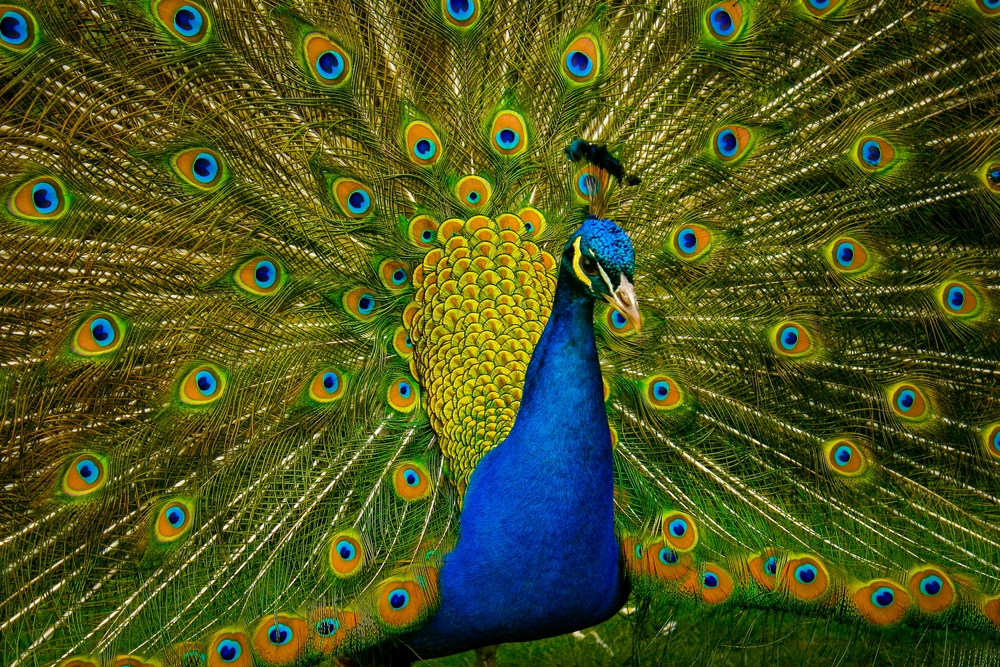
Hinduism — The Garuda — a divine eagle-like being — is the mount of the god Vishnu, one of Hinduism’s supreme deities. Garuda is the national symbol of both Indonesia and Thailand. The peacock is the national bird of India and the vehicle of the god Kartikeya — its spectacular display feathers making it a universal symbol of beauty, grace, and divine display.
Indigenous Australian Traditions — The emu features prominently in Aboriginal creation stories across many regions. The Emu in the Sky — a constellation formed not by stars but by the dark nebulae of the Milky Way — is one of the most distinctive contributions of Aboriginal astronomical knowledge to global cultural heritage.
15. Best Places to See Birds in the Wild
The Amazon Basin, Brazil/Peru/Ecuador The most species-rich bird environment on Earth. A single day’s birding in the right location can yield 400+ species — macaws, toucans, antbirds, cotingas, tanagers, and hundreds more. The Manu Biosphere Reserve in Peru is particularly celebrated.
The Galápagos Islands, Ecuador Extraordinary for the tameness of the wildlife — birds evolved with no land predators and show virtually no fear of humans. Blue-footed boobies, waved albatrosses, Galápagos penguins, flightless cormorants, and Darwin’s finches (the birds that sparked the theory of evolution) are all present.
The Serengeti/Masai Mara, East Africa Home to extraordinary raptor diversity, vast flocks of waterbirds, ostriches, secretary birds, and the spectacle of millions of flamingos at East African soda lakes like Lake Nakuru and Lake Bogoria.
Bharatpur (Keoladeo National Park), India One of the world’s great wetland bird reserves — hosting extraordinary concentrations of herons, egrets, storks, and wintering migratory species from across Asia. A UNESCO World Heritage Site.
New Guinea (Papua New Guinea/Indonesia) The center of bird-of-paradise diversity — those extraordinary birds whose males have evolved the most flamboyant plumage and displays in the avian world. Also home to cassowaries, bowerbirds, and extraordinary diversity of honeyeaters and parrots.
The Pantanal, Brazil/Bolivia/Paraguay The world’s largest tropical wetland — hosting extraordinary concentrations of wading birds, macaws, raptors, and the Hyacinth macaw (the world’s largest parrot species) in significant numbers.
Churchill, Manitoba, Canada One of the world’s premier destinations for snowy owls, ptarmigan, and polar bear viewing, as well as an extraordinary location for witnessing the spectacle of beluga whale calving — with shorebird migration adding extraordinary bird diversity in summer.
Extremadura, Spain The heartland of European raptor diversity — home to great bustards (the world’s heaviest flying bird), Spanish imperial eagles, black vultures, lesser kestrels, and white storks in concentrations unmatched elsewhere in Europe.
You may also like: Complete Guide to the World’s Most Endangered Birds | Top 10 Best Birdwatching Destinations | The Ultimate Guide to Bird Migration
16. How You Can Help
Support Bird Conservation Organizations
- BirdLife International (birdlife.org) — the world’s largest nature conservation partnership, with programs in over 120 countries specifically focused on birds and their habitats
- American Bird Conservancy (abcbirds.org) — focused on bird conservation across the Americas
- RSPB (Royal Society for the Protection of Birds) (rspb.org.uk) — the UK’s largest wildlife conservation charity, with extensive habitat management programs
- Cornell Lab of Ornithology (birds.cornell.edu) — the world’s leading center for bird research and citizen science; home to eBird and other major monitoring programs
- Audubon Society (audubon.org) — over a century of bird conservation in North America
- Vulture Conservation Foundation (4vultures.org) — specialized focus on Europe’s threatened vulture species
Practical Actions
- Keep cats indoors or use cat-proof garden enclosures — the single most impactful action individual cat owners can make for bird conservation
- Make windows visible to birds — window strikes kill hundreds of millions of birds annually; bird-safe glass, tape, or external screens dramatically reduce mortality
- Participate in citizen science — platforms including eBird (Cornell Lab), iNaturalist, and the Christmas Bird Count (Audubon) turn everyday birdwatching into globally valuable scientific data
- Plant native vegetation in gardens and green spaces — native plants support native insects, which support insectivorous birds
- Reduce or eliminate pesticide use — pesticides decimate insect populations that birds depend on and can directly poison birds
- Support shade-grown and bird-friendly certified coffee — coffee certification schemes that maintain native tree canopy protect critical wintering habitat for migratory songbirds
Top Documentaries & Books
- “The Life of Birds” (BBC, 1998) — David Attenborough’s 10-part definitive series remains the gold standard of bird documentary filmmaking
- “Winged Migration” (2001) — Jacques Perrin’s breathtaking documentary following migratory birds in flight across continents
- “Planet Earth II” (BBC, 2016) — includes extraordinary bird sequences, including the iconic Birds of Paradise episode
- “The Biggest Little Farm” (2018) — documents the return of bird diversity to a regenerative farm
- “The Genius of Birds” by Jennifer Ackerman (2016) — a beautifully written survey of the science of bird intelligence
- “The Thing with Feathers” by Noah Strycker (2014) — explores bird behavior through the lens of what makes birds extraordinary
- “H is for Hawk” by Helen Macdonald (2014) — a memoir of grief and goshawk training; one of the finest pieces of nature writing of the 21st century
17. Bird Fun Facts
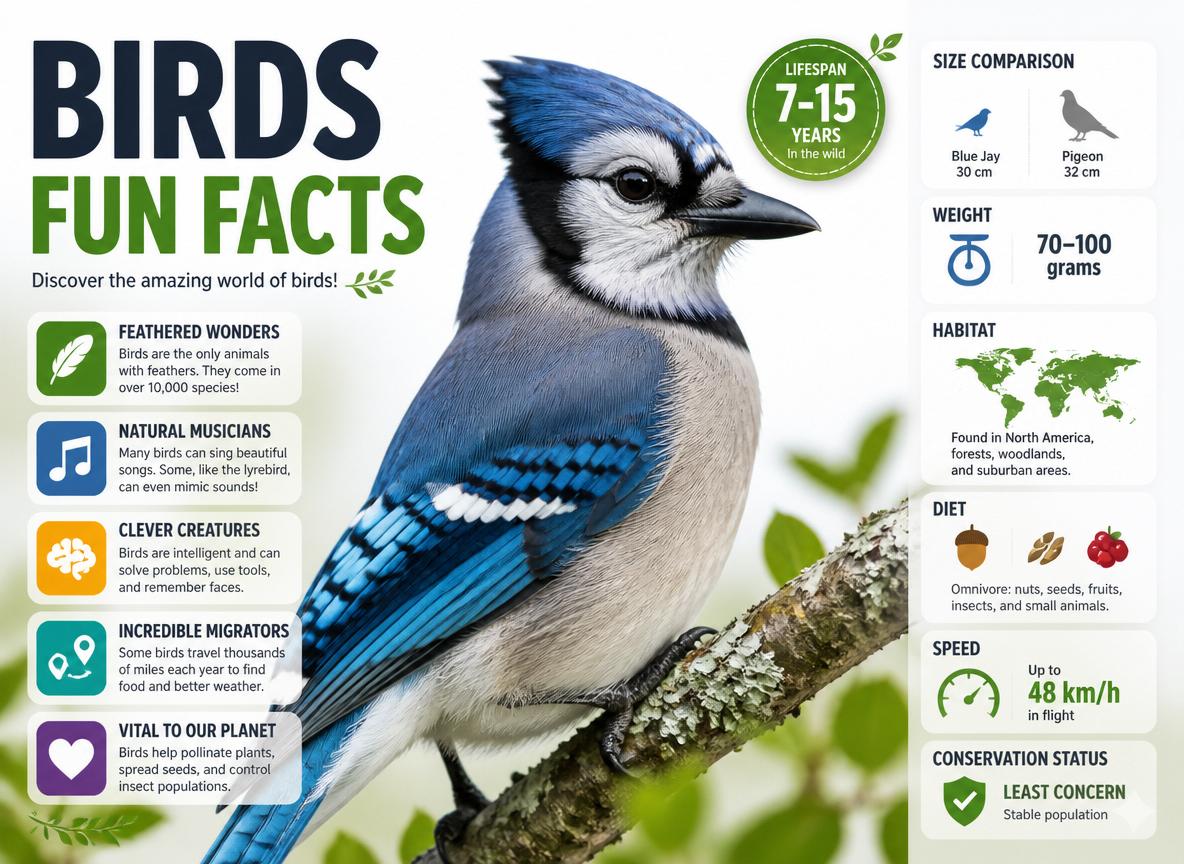
- The bee hummingbird (Mellisuga helenae) of Cuba is the world’s smallest bird — weighing just 1.6–1.9 grams and measuring 5.7 cm in length. Its wings beat at approximately 80 times per second during normal flight, producing the distinctive hum that gives hummingbirds their name
- Ostriches have the largest eyes of any land vertebrate — measuring 5 cm in diameter — and their eyes are physically larger than their brains
- The common swift (Apus apus) spends almost its entire life in the air — eating, sleeping, and even mating on the wing. Young swifts may fly continuously for 2–3 years after fledging before landing for the first time to breed
- Penguins are the only birds that walk upright on two legs as their primary means of terrestrial locomotion — and their black-and-white coloration is a form of countershading that provides camouflage both from above (black back blending with dark ocean depths) and below (white belly blending with bright surface light)
- Crows and ravens can recognize individual human faces and hold grudges against specific people who have treated them badly — passing this information on to their offspring
- The wandering albatross has the largest wingspan of any living bird — reaching up to 3.7 metres — and can circumnavigate the entire Southern Ocean in approximately 46 days while raising a chick
- Flamingos are pink because of carotenoid pigments in the algae and crustaceans they eat — flamingos raised without access to these food sources are white. Their distinctive feeding posture — head inverted, bill filtering water — means their bill is effectively upside-down relative to other birds
- The Arctic tern experiences two summers each year — migrating from the Arctic to the Antarctic and back, meaning it sees more daylight annually than any other animal on Earth
18. Frequently Asked Question About Bird
Q1: What exactly makes an animal a bird?
A bird is a member of the class Aves — warm-blooded, feathered, egg-laying vertebrates descended from theropod dinosaurs. The defining characteristics that all birds share are feathers (unique in the living animal kingdom), a toothless beak (present in all living species), hard-shelled amniotic eggs, a high metabolic rate sustained by endothermy (warm-bloodedness), a four-chambered heart, and a lightweight skeleton with fused clavicles (the furcula, or wishbone). In the most technically accurate modern classification, birds are literally a subgroup of reptiles — specifically a group of feathered maniraptoran theropod dinosaurs.
Q2: Are birds really dinosaurs?
Yes — in the most rigorous scientific sense. Modern birds are the direct descendants of theropod dinosaurs and are classified by paleontologists as avian dinosaurs. The non-avian dinosaurs (T. rex, Triceratops, etc.) were wiped out by the Cretaceous-Paleogene extinction event 66 million years ago, but the avian lineage survived and subsequently diversified into the ~10,800 species alive today. The evidence for this relationship is overwhelming — from the transitional fossil Archaeopteryx to the extraordinary feathered dinosaur fossils from China’s Liaoning Province, to molecular phylogenetics confirming the relationship. When you watch a chicken scratch at the ground, you are watching a dinosaur.
Q3: How many bird species are there?
As of 2026, approximately 10,800 species of birds are formally recognized by science. However, ongoing molecular research regularly reveals that what appeared to be single widespread species actually represent multiple distinct species — a process called “taxonomic splitting” — suggesting the true number may be considerably higher. Approximately 5–10 new bird species are formally described each year.
Q4: What is the most intelligent bird?
This depends on how intelligence is defined, but corvids (crows, ravens, jays) and parrots consistently top rankings across most cognitive measures. New Caledonian crows demonstrate the most sophisticated tool manufacture of any non-human animal. Ravens have demonstrated future planning and theory of mind. African grey parrots show the most complex language-like communication abilities. Cockatoos excel at problem-solving and physical reasoning. Different species excel in different cognitive domains — suggesting that avian intelligence, like mammalian intelligence, is multidimensional.
Q5: Why do birds sing?
Bird song primarily serves two functions: territorial defense (advertising occupancy of a territory to rival males) and mate attraction (advertising genetic quality, health, and fitness to potential mates). Song learning and production are so energetically and cognitively costly that the quality and complexity of a male’s song serves as an honest signal of his underlying fitness. Some species also use calls — distinct from songs — for alarm signaling, flock cohesion, parent-offspring communication, and food announcements. The distinction between “song” (typically complex, learned, season-specific) and “call” (typically simpler, innate, year-round) is a useful but imperfect one.
Q6: How do birds navigate during migration?
Bird navigation involves multiple redundant systems used simultaneously. Magnetic compass — birds possess magnetite crystals in their beaks (and possibly light-sensitive proteins in their eyes) that allow them to detect Earth’s magnetic field, providing compass and possibly map information. Stellar navigation — nocturnally migrating birds learn the rotation of the night sky and use it for orientation. Solar compass — diurnal migrants use the sun’s position, compensating for its movement with an internal clock. Landmark recognition — experienced birds use coastlines, rivers, and topographic features. Olfactory navigation — some seabirds (particularly petrels and albatrosses) use smell to navigate across featureless oceans.
Q7: What is the rarest bird in the world?
Several species compete for this designation. The Spix’s macaw (Cyanopsitta spixii) is extinct in the wild, with only captive individuals surviving in a breeding program. The kakapo (Strigops habroptilus) — a flightless, nocturnal parrot from New Zealand — had only 247 known individuals as of early 2026, making it one of the rarest birds with a wild population. The California condor (Gymnogyps californianus) was reduced to just 27 individuals in 1987 before an emergency captive breeding program began rebuilding the population; wild and captive birds now number over 500.
Q8: How can I attract more birds to my garden?
The most effective actions for attracting birds to gardens are: plant native vegetation that supports native insect communities (the primary food source for most songbird species, particularly during breeding season); provide clean water in a shallow bird bath, changing it regularly; put up nest boxes of appropriate dimensions for target species; provide supplementary food during winter months (seeds, suet, mealworms) using clean, regularly maintained feeders; and reduce or eliminate pesticide use, which removes the insect base that birds depend on. Perhaps most importantly: keep cats indoors or confined — cat predation is the single most significant human-associated cause of bird mortality in domestic settings.
19. Sources Researched
- Wikipedia — en.wikipedia.org/wiki/Bird
- Cornell Lab of Ornithology — birds.cornell.edu and allaboutbirds.org
- BirdLife International — birdlife.org (species data and conservation status)
- IUCN Red List — iucnredlist.org
- National Geographic — nationalgeographic.com
- Britannica — britannica.com/animal/bird
- Smithsonian’s National Zoo — nationalzoo.si.edu
- WWF (World Wildlife Fund) — worldwildlife.org
- American Bird Conservancy — abcbirds.org
- RSPB — rspb.org.uk
- Science (journal) — science.org (2019 North American bird decline study)
- Jennifer Ackerman, “The Genius of Birds” (2016)
- Audubon Society — audubon.org
- eBird (Cornell Lab) — ebird.org
- The Peregrine Fund — peregrinefund.org
- Bird facts Photo — britannica.com
20. Bird Images