
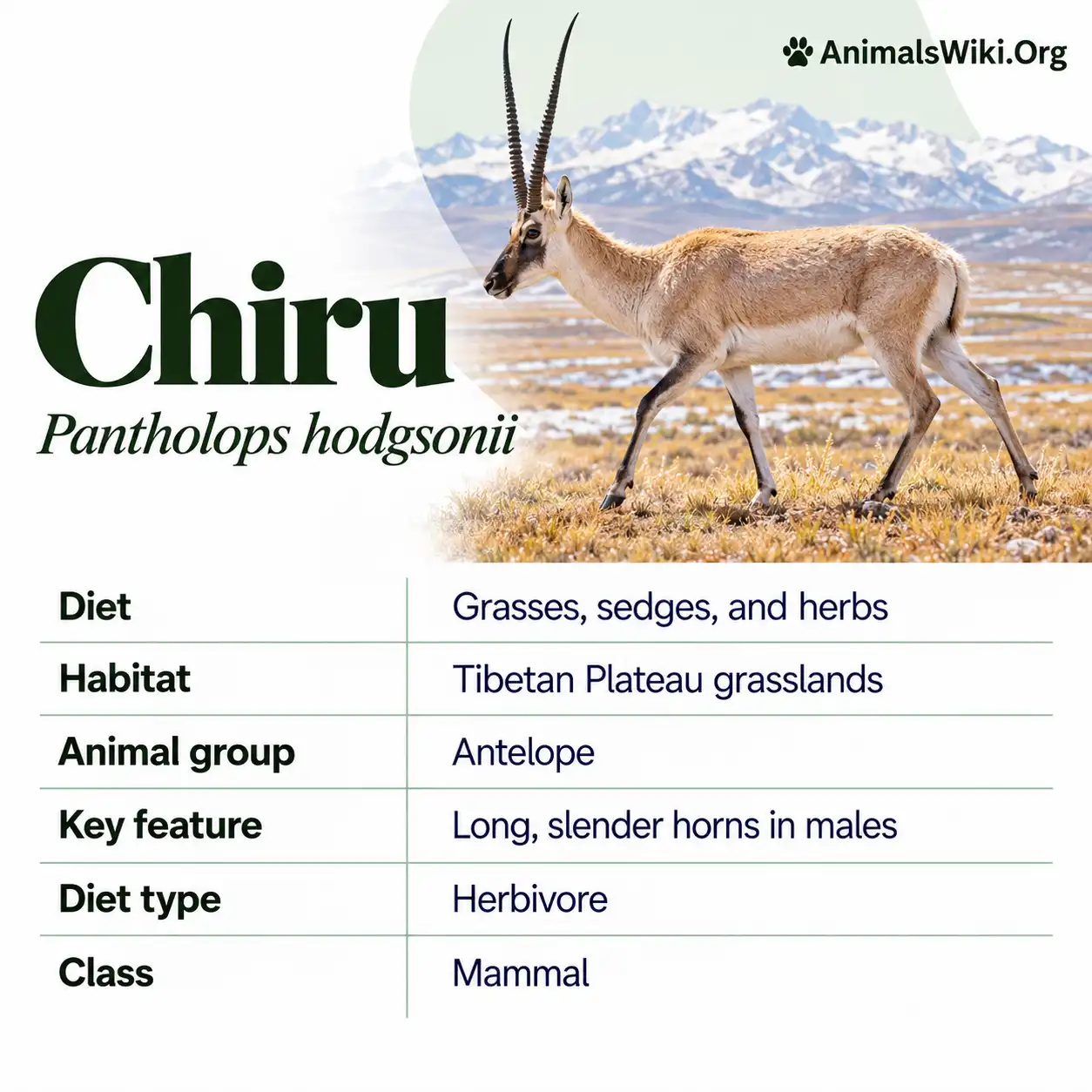
Chiru, The Remarkable Tibetan Antelope of the High Plateau
The chiru is one of the most remarkable mammals of the high Himalayas and the Tibetan Plateau. Also known as the Tibetan antelope, this swift, elegant animal is specially adapted to life in cold, windswept grasslands at elevations where oxygen is limited and winter temperatures can become severe. Its long, slender legs, pale brown coat, and the spectacular curved horns of adult males make it one of the most recognizable wild animals of the region.
Scientifically known as Pantholops hodgsonii, the chiru belongs to the bovid family, which includes antelopes, cattle, sheep, and goats. Although it is often called an antelope, it has a distinctive evolutionary history and is classified in its own genus. Its home lies mainly across the Tibetan Plateau and surrounding high-altitude regions, where it travels across open plains in search of grasses and other low-growing plants.
The chiru is also famous for its extraordinary fine undercoat, known as shahtoosh. For centuries, this fiber has been prized for its softness and warmth. Demand for shahtoosh, however, created a serious conservation crisis because obtaining the fiber traditionally required killing the animal. Intense illegal hunting caused severe declines during the late twentieth century, and the species became an important example of how luxury wildlife products can threaten a wild mammal.
Protection and conservation work have helped the Tibetan antelope recover in parts of its range, but it still faces challenges. Illegal trade, disturbance of migration routes, habitat changes, and infrastructure development can affect its survival. Understanding the chiru requires looking at both its remarkable biological adaptations and the pressures that have shaped its recent history.
This guide covers chiru identification, classification, habitat, distribution, population estimates, diet, migration, high-altitude adaptations, social behavior, reproduction, calf development, predators, ecological importance, threats, and conservation. It also distinguishes established facts from estimates that vary by date or survey method.
Chiru Facts
| Feature | Details |
|---|---|
| Common name | Chiru, Tibetan antelope |
| Scientific name | Pantholops hodgsonii |
| Animal group | Mammal |
| Class | Mammalia |
| Order | Artiodactyla; included within Cetartiodactyla in some modern classifications |
| Family | Bovidae |
| Genus | Pantholops |
| Native range | Tibetan Plateau and surrounding high-altitude regions of Central Asia |
| Habitat | Alpine steppe, cold desert, high-altitude grassland, and open plateau |
| Diet | Herbivorous; grasses, sedges, herbs, and other low-growing vegetation |
| Adult male horns | Long, slender, ridged horns that curve backward |
| Adult female horns | Generally absent |
| Coat | Brownish or sandy above, with paler underparts; seasonal variation occurs |
| Typical shoulder height | Approximately 80–100 cm |
| Typical body mass | Roughly 25–40 kg, with variation by sex and source |
| Gestation | Around six months |
| Usual litter size | One calf |
| Conservation status | Endangered in the IUCN Red List assessment commonly cited for the species |
| Main threats | Illegal hunting for shahtoosh, habitat disturbance, and disruption of migration routes |
| Distinctive adaptation | Specialized physiology for life at high altitude |
| Ecological role | High-altitude herbivore and prey species within the plateau ecosystem |
Measurements vary among reference sources and populations. Figures should be treated as approximate biological ranges rather than exact limits for every individual. The chiru is widely recognized as an iconic mammal of the Tibetan Plateau, with conservation needs shaped by its specialized high-altitude habitat and seasonal movements.
1. What Is a Chiru?
The chiru is a wild, hoofed mammal that lives in some of the highest and coldest grassland environments on Earth. It is best known as the Tibetan antelope, a name that reflects its strong association with the Tibetan Plateau. Unlike many mountain animals that spend most of their time on steep slopes or rocky peaks, chiru often favor broad, open plains and gently rolling alpine steppe.
Its scientific name, Pantholops hodgsonii, identifies it as the only living species in the genus Pantholops. The species belongs to the bovid family, but its evolutionary relationships and specialized anatomy distinguish it from familiar antelopes such as blackbuck and chinkara.
The chiru has a dense coat, a distinctive enlarged muzzle, and long legs that support movement across open terrain. Adult males develop impressive, ridged horns that rise from the head and curve gently. Females generally lack horns and are smaller than males.
One of the species’ most important characteristics is its ability to survive at high elevations. Much of its habitat lies thousands of meters above sea level, where cold temperatures, strong winds, limited vegetation, and reduced oxygen create difficult conditions. The chiru’s physiology and behavior help it cope with this environment, although severe weather and food shortages can still affect survival.
Why is the chiru important?
The chiru is important for three main reasons.
First, it is a distinctive component of the Tibetan Plateau ecosystem. As a large herbivore, it consumes vegetation and contributes to nutrient cycling. It also forms part of the food web supporting predators such as wolves and snow leopards in areas where their ranges overlap.
Second, it is a remarkable example of adaptation to extreme environments. Its dense undercoat, efficient movement, and high-altitude physiology make it well suited to open plateau landscapes.
Third, the chiru has become a symbol of wildlife conservation. Its fine undercoat was used to produce shahtoosh, a luxury fiber associated with exceptionally soft shawls. Commercial demand for this material drove illegal hunting and severe population declines during the late twentieth century. The species’ subsequent recovery demonstrates the importance of enforcement, protected habitat, and sustained conservation efforts.
Is the chiru the same as the Tibetan gazelle?
No. The Tibetan antelope and Tibetan gazelle are separate species. Both occur on the plateau, but the chiru is generally larger and has a different body shape. Mature male chiru possess long, upright horns with a characteristic shape, while Tibetan gazelles have a different horn profile and a more gazelle-like appearance.
Correct identification matters because the animals have different ecological characteristics and conservation histories.
2. Scientific Classification and Evolutionary History
Scientific classification helps researchers describe the chiru consistently across languages and regions. Although common names may differ, its scientific name allows biologists to refer to the same species precisely.
Scientific classification table
| Taxonomic rank | Classification |
|---|---|
| Kingdom | Animalia |
| Phylum | Chordata |
| Class | Mammalia |
| Order | Cetartiodactyla, also commonly called Artiodactyla in traditional classifications |
| Family | Bovidae |
| Genus | Pantholops |
| Species | Pantholops hodgsonii |
The Integrated Taxonomic Information System recognizes Pantholops hodgsonii as a valid species. The genus Pantholops is considered monotypic, meaning it contains only one living species.
What does the scientific name mean?
The species name hodgsonii honors Brian Houghton Hodgson, a nineteenth-century naturalist and administrator known for documenting wildlife in the Himalayan region. Scientific names often preserve the names of researchers or collectors associated with the original description of a species.
The genus name Pantholops has historical roots in early zoological classification. Although the animal is commonly called an antelope, its evolutionary relationships are more specialized than the everyday word might suggest.
Is the chiru a true antelope?
In ordinary language, the chiru is correctly called an antelope. In evolutionary classification, however, the relationships among bovids are more complex than common names imply. The Tibetan antelope has historically been placed among antelopes, but specialist zoological literature notes affinities with the caprine group, which includes sheep and goats.
This does not mean the chiru is a sheep or goat. It means that evolutionary relationships do not always match familiar categories based on appearance. The species has a distinctive combination of traits that sets it apart from other living bovids.
Why is it placed in its own genus?
The chiru has several features that distinguish it from related hoofed mammals:
-
Adult males have long, slender horns with distinctive ridges.
-
Females generally lack horns.
-
Both sexes possess a dense, fine undercoat.
-
The muzzle has specialized structures associated with breathing in cold, dry air.
-
Its body and behavior are adapted to the high-altitude Tibetan Plateau.
These characteristics, along with evolutionary evidence, support its treatment as a separate genus.
What can fossils and genetics tell us?
Fossil evidence and genetic research help scientists understand how modern species evolved and how populations became separated over time. High-altitude environments can impose strong selective pressures, favoring animals that cope effectively with cold, low oxygen, and seasonal food shortages.
The chiru’s precise evolutionary history remains a specialist research subject. It is safer to describe its distinctive place within Bovidae than to claim a simple, fully resolved family tree without specifying the study or classification system being followed.
3. Chiru Subspecies and Regional Populations
The chiru is generally recognized as a single species, Pantholops hodgsonii. Major species accounts do not consistently recognize multiple living subspecies. Differences in coat shade, body size, movement, and seasonal behavior between regions should not automatically be interpreted as evidence of separate subspecies.
Are there different types of chiru?
There are regional populations that differ in their movements and ecology. Some populations undertake long seasonal migrations, while others move shorter distances or remain within a relatively stable home range.
These differences are important for conservation, but they do not necessarily indicate taxonomic separation. Migration can develop in response to the distribution of seasonal food, calving habitat, snow conditions, and other environmental factors.
Migratory and resident populations
At least five migratory populations have been described in specialist literature. Some travel several hundred kilometers between seasonal ranges. Other populations are less migratory or may remain within a more restricted area.
Migratory animals may travel toward traditional calving grounds during the warmer part of the year and return toward wintering areas afterward. These movements can differ among populations and can be affected by severe weather or barriers in the landscape.
A resident population may experience different challenges from a long-distance migrant. For instance, a resident group may be especially dependent on the condition of one area, while a migratory group may require safe passage across several regions.
Do chiru from different regions look different?
Some visible variation is natural. Coat shade can be affected by age, season, and individual characteristics. Body condition can also change according to forage and weather. Such variation should not be used alone to assign an animal to a separate taxonomic group.
Researchers seeking to identify meaningful population differences may study genetics, anatomy, movement patterns, and reproductive behavior. Long-term tracking can reveal whether groups remain separate or mix at different times of year.
Why regional populations matter
Even when animals belong to one species, each population can face distinct pressures. A group whose migration route crosses a heavily developed corridor may be vulnerable to barriers, while another may face greater risk from illegal hunting or severe winter conditions.
Conservation planning should therefore identify the locations and movement patterns of populations, not simply count the species as a whole. Protecting a species means preserving the ecological processes that allow its populations to survive and reproduce.
4. Physical Appearance and Identification
The chiru is a medium-sized, slender antelope with long legs, a compact body, and a coat adapted to cold conditions. Its appearance reflects the demands of living on open, high-altitude plains rather than in dense forests.
Coat color
The upper body is generally sandy, fawn, or brownish-gray. The underparts are paler, and the face and legs can have darker markings. Exact coloration varies with the individual, age, season, and lighting.
The coat provides some camouflage against the muted colors of the plateau. In a landscape of dry grasses, bare soil, and rocky ground, the chiru’s pale brown coloring can reduce the contrast between its body and the surroundings.
Dense undercoat
One of the chiru’s most famous features is its exceptionally fine undercoat. The fibers are extremely soft and provide insulation in cold conditions. This woolly layer is commonly associated with the name shahtoosh, although the commercial value of the fiber has had severe consequences for the species.
The undercoat helps trap air close to the body, reducing heat loss. It is particularly important in a landscape where strong winds and low temperatures can place substantial demands on an animal’s energy reserves.
Head and muzzle
The chiru has a relatively narrow head with a distinctive enlarged muzzle. The nasal region contains specialized structures that have been discussed in connection with breathing in cold, dry air. Such structures are important in animals that must maintain activity in an environment where the air is thin and winter conditions can be harsh.
The muzzle also gives the chiru a recognizable profile when viewed from the side. It differs from the facial shape of many other plateau herbivores.
Horns of adult males
Male chiru develop long, slender, dark horns that rise from the head and curve slightly. The horns have ridges, especially along their front surfaces. They can reach approximately 50–60 centimeters in some descriptions, although measurements vary. Females generally lack horns.
The horns are among the most distinctive features of the species. They are used in male-male competition during the breeding season and may help males establish dominance or access to females.
Tail and legs
The tail is relatively short. The legs are long and slender, supporting efficient travel over open ground. The chiru’s build allows it to cover large distances when needed, which is important for populations that migrate between seasonal habitats.
Its limbs are suited to movement over open plateau terrain. However, deep snow can make movement difficult, particularly when snow depth limits access to forage or makes travel energetically costly.
How to distinguish a male from a female
Adult males are typically larger and possess long horns. Females are smaller and usually hornless. Both sexes share the dense coat and general body shape associated with the species.
Juveniles may not show all the obvious differences of mature males, so sex identification can be more difficult when animals are young or observed at a distance.
5. Size, Weight, and Sexual Dimorphism
The chiru is smaller than many of the large antelopes found in African savannas, but it is well proportioned for life on the high plateau. Its body is relatively light compared with that of a large bovine, while its legs support efficient movement over broad open landscapes.
Adult males are generally larger than females. A Nepal government wildlife report describes male shoulder height at about 83 centimeters and female shoulder height at about 74 centimeters, with reported body masses of roughly 39 kilograms for males and 26 kilograms for females. Other accounts give broader ranges, so these should be treated as reference measurements rather than universal values.
What is sexual dimorphism?
Sexual dimorphism refers to differences in appearance between males and females of the same species. In chiru, the most obvious differences are body size and horns.
Male horns play a role in competition during the breeding season. Males may display, chase rivals, or engage in horn-based contests. Larger size and horns can help males compete, although the outcome of an encounter also depends on condition, experience, and the behavior of the animals involved.
Why are females smaller?
Female body size is influenced by natural selection and the demands of reproduction. Pregnancy, giving birth, and nursing calves require energy. Female body condition can influence reproductive success, especially in a harsh environment where food availability fluctuates.
Males also face reproductive pressures, including competition with other males. These different pressures can contribute to differences in body size and weaponry between the sexes.
Does body size help chiru survive the cold?
Body size can influence heat loss, but survival in the plateau environment depends on several traits working together. The chiru’s dense coat, physiology, behavior, and ability to find food all contribute to its survival.
A larger body alone would not solve the problems of high-altitude living. Animals also need adequate energy, oxygen delivery, and the ability to move across snow-covered or windswept terrain.
6. Chiru Habitat and High-Altitude Environment
The chiru lives mainly in alpine steppe and cold desert-steppe habitats on the Tibetan Plateau. These environments are open, often sparsely vegetated, and exposed to extreme seasonal changes.
Many chiru habitats lie at elevations of approximately 3,250–5,500 meters above sea level. Specialist accounts describe the species using broad, flat or gently rolling terrain, where it can feed and travel across open ground.
Alpine steppe
Alpine steppe consists of cold, open grassland found at high elevations. Vegetation is often low-growing because the growing season is short and temperatures can remain low for much of the year.
The chiru feeds on grasses, sedges, and herbs found in these environments. Although plant cover may appear sparse, the available vegetation can support specialized herbivores adapted to the plateau.
Cold desert-steppe
Cold desert-steppe habitats receive limited precipitation and can have extreme temperature variation. Winters may be severe, while summer conditions can be relatively mild during the short growing season.
These environments present two major challenges: finding enough food and conserving body heat. The chiru’s dense undercoat helps with the second challenge, while its feeding flexibility and seasonal movements help it respond to the first.
Why open terrain matters
Open terrain allows chiru to detect approaching danger and travel across broad feeding areas. Their long-distance movements are particularly associated with open plateau landscapes rather than steep, forested mountain valleys.
However, openness also leaves animals exposed to strong winds and severe weather. During storms or periods of deep snow, conditions can become difficult even for a species adapted to high elevations.
How seasonal weather changes the habitat
The availability of vegetation changes with temperature, rainfall, and snow cover. During the growing season, plants become more available, while winter can restrict access to forage.
Snow is especially important because it can cover vegetation and make movement more difficult. Specialist accounts note that deep snow can alter migration patterns and influence where chiru gather.
Habitat quality and livestock
Domestic livestock also use parts of the Tibetan Plateau. Where grazing pressure is high, competition for forage may affect wild herbivores, including chiru. The impact depends on the density of livestock, vegetation productivity, the timing of grazing, and whether wild animals can reach alternative feeding areas.
It would be misleading to assume that all livestock grazing is equally harmful or that every shared pasture is overgrazed. Local studies are needed to determine how livestock and wild herbivores interact in a particular landscape.
Why protecting habitat is essential
The chiru needs more than a patch of grassland. Migratory populations require access to seasonal feeding grounds, calving areas, and routes connecting them. A protected site may be insufficient if animals cannot safely travel between the places they need at different times of year.
Conservation must therefore consider both habitat quality and landscape connectivity.
7. Geographic Distribution
The chiru’s natural distribution is concentrated on the Tibetan Plateau, especially in the high-altitude regions of China. A smaller seasonal presence has been documented in the Ladakh region of India. Historical records also indicate that the species occurred in parts of northwestern Nepal, where it is now generally considered locally extinct.
China
China contains the overwhelming majority of the chiru’s known range. The species occurs in parts of the Tibet Autonomous Region (Xizang), Qinghai Province, and Xinjiang Uygur Autonomous Region.
One of the most important strongholds is the Chang Tang region in northern Tibet, a vast landscape of high-altitude steppe and cold desert. Other important areas include Hoh Xil, also called Kekexili, and parts of the Sanjiangyuan region.
These landscapes provide open habitat, seasonal feeding grounds, and calving areas. Their scale is important because many chiru populations move across large distances instead of remaining in one small territory.
India
Chiru have been recorded in the Ladakh region of northwestern India, particularly in areas connected ecologically to the Tibetan Plateau. Their presence in India is much more limited than in China, and some animals may occur seasonally rather than as a large, continuously resident population.
The Indian population’s exact size and movement patterns are difficult to summarize using a single figure. Research must account for seasonal movements across remote terrain and the possibility that animals observed in one season may spend other parts of the year elsewhere.
Nepal
The chiru was historically reported from a limited area of northwestern Nepal. However, recent regional conservation summaries describe the species as extinct or locally extirpated there.
Local extinction does not mean that the species has disappeared globally. It means that a population is no longer considered to survive in that part of its former range.
Why is the range so restricted?
The chiru is adapted to a particular combination of elevation, climate, and habitat structure. It cannot be expected to thrive in every mountain environment simply because it can survive at high altitude.
Suitable habitat must also provide the plants it eats, space to move, and areas where females can give birth. The plateau’s open landscapes offer these conditions, while many other regions have unsuitable vegetation, climate, terrain, or levels of human disturbance.
Distribution can change over time
A species’ distribution is not always a fixed line on a map. Snow, drought, food availability, development, and human disturbance can affect the areas used by a population from one year to another.
For migratory chiru, a map of summer distribution may look different from one showing winter range. Conservation assessments therefore need to distinguish permanent occupancy from seasonal presence.
8. Chiru Population: Estimates and Uncertainty
The chiru’s population has changed dramatically over recent decades. Illegal hunting for shahtoosh drove severe declines in the late twentieth century, but anti-poaching enforcement and habitat protection have contributed to a substantial recovery.
The most important point is that a current total-population estimate and an older estimate of mature individuals are not interchangeable. The number of animals reported by regional authorities also should not automatically be treated as a complete, independently verified global census.
How many chiru are left?
Chinese government reporting published on March 3, 2025, stated that the wild Tibetan antelope population had risen from around 60,000–70,000 in the late 1990s to more than 300,000. A report published in July 2025 likewise described more than 300,000 animals in the Tibet Autonomous Region, according to regional ecological authorities.
These are recent official figures and indicate a major recovery. However, they are administrative population estimates rather than a claim that every animal across the full range was individually counted in one census.
Why do some sources say 100,000–150,000?
Some specialist conservation sources report an estimate of approximately 100,000–150,000 mature individuals, while other sources report a total population of more than 300,000. These figures can differ because they refer to different dates, assessment methods, and population categories.
The Convention on Migratory Species’ Central Asian Mammals Initiative page gives an estimate of 75,000–150,000 individuals and notes that estimates vary. A 2016 assessment summarized in a later transboundary conservation report gave a range of 100,000–150,000. These older estimates should not be presented as though they were a new 2026 total-population census.
A mature-individual estimate attempts to count animals considered capable of reproduction under the assessment’s criteria. A total-population estimate may include mature animals, juveniles, and calves. The two measures can differ substantially.
Population trend
The broad trend is positive compared with the severe declines of the late twentieth century. Official reporting describes the population as having increased from around 60,000–70,000 in the late 1990s to more than 300,000 in recent years.
This recovery is significant, but it does not eliminate the need for continued protection. A population can grow while some migration routes remain vulnerable or while illegal trade continues to pose a risk.
Population estimates at a glance
| Estimate or assessment | Reported figure | Date and scope | Important qualification |
|---|---|---|---|
| Historical low population | Around 60,000–70,000 | Late 1990s, as summarized by Chinese authorities | A historical estimate during the period of severe poaching |
| Mature individuals | Around 100,000–150,000 | Older specialist conservation assessments | Mature-individual estimate, not a current total count |
| Range-wide estimate on the CMS CAMI page | 75,000–150,000 | Published web summary; not a 2026 census | The page notes that estimates vary |
| Population reported by Chinese authorities | More than 300,000 | Reporting published in March 2025 | Recent official estimate; do not treat it as an exact count of every individual |
| Hoh Xil population | More than 70,000 | Reported in 2024 and 2025 official summaries | Regional population, not the entire species’ global total |
What does this mean for conservation?
The evidence supports a strong recovery in the main range, especially in China. It does not mean the species has become immune to threats or that all populations are equally secure.
Conservationists still need to monitor migration, calf survival, habitat conditions, illegal hunting, and the effects of infrastructure. Maintaining a large population requires more than protecting the animals at one moment: it requires preserving the seasonal movements and ecological processes that sustain them.
9. Diet and Feeding Behavior
Chiru are herbivores. Their diet consists mainly of grasses, sedges, herbs, and other low-growing plants found in high-altitude steppe. The available foods change with season, elevation, and local vegetation.
What do chiru eat?
Their diet can include:
-
Alpine grasses.
-
Sedges and similar grass-like plants.
-
Broad-leaved herbs, often called forbs.
-
Young plant shoots.
-
Other low-growing vegetation available on the plateau.
The chiru is adapted to an environment where plants often grow slowly and the growing season is short. It must obtain sufficient nutrients from vegetation that can be sparse or seasonally limited.
Grazing on open steppe
The chiru feeds close to the ground, cropping low-growing plants with its mouth. Open steppe provides broad feeding areas, but food availability can vary considerably across short distances.
Animals may concentrate in areas where vegetation is more nutritious or accessible. As the season changes, they may move to new feeding grounds rather than remain in a place where the plants have become less productive.
How does diet change with season?
During the growing season, fresh vegetation becomes available and can provide important nutrients. In winter, cold temperatures and snow may limit access to plants. The chiru must then rely on available forage and its stored energy reserves.
The relationship between weather and food is particularly important for females that are pregnant or nursing calves. Reproduction increases energy requirements, so the quality of feeding areas can influence reproductive success.
Do males and females eat different foods?
Some research has reported differences in diet between males and females, associated in part with their seasonal segregation and use of different areas. However, such differences should not be assumed to occur identically in every population or season.
A study of one region may find that one sex consumes a greater proportion of certain plants because it uses a different habitat. This does not necessarily mean the species has a fixed, universal dietary division between the sexes.
How does the chiru digest vegetation?
Like other ruminants, the chiru has a digestive system that supports the processing of fibrous plant material. Microorganisms in its digestive tract help break down plant components that mammals cannot efficiently digest on their own.
The animal regurgitates and rechews cud, which helps reduce plant particles and supports digestion. This process allows it to gain energy from vegetation that would be difficult for a non-ruminant mammal to use as efficiently.
Competition with livestock
Domestic sheep, goats, and other grazing animals can use some of the same vegetation. Competition becomes more likely when the available forage is limited and livestock density is high.
The effect depends on grazing intensity, vegetation productivity, the season, and the amount of habitat available to wild herbivores. Good management requires local evidence rather than assuming that every livestock herd has the same impact on chiru.
10. Migration and Seasonal Movements
Migration is one of the chiru’s most remarkable behaviors. Many populations move between seasonal ranges, and some females travel long distances to reach traditional calving grounds. These journeys take place across remote plateau landscapes where weather and terrain can be harsh.
At least five migratory populations have been described in specialist literature, and some movements may cover approximately 300–400 kilometers. Other populations are less migratory or remain in a more restricted area.
Why do chiru migrate?
Migration helps chiru use resources that are not available in the same place throughout the year. Seasonal feeding areas may offer better vegetation at particular times, while traditional calving grounds can provide conditions suitable for giving birth and raising young.
The animals’ movements are therefore linked to the seasonal distribution of food, weather, and reproductive needs.
The journey to calving grounds
In some populations, pregnant females move toward calving areas during late spring or early summer. They may gather in large groups as they approach these locations. The timing and direction of movement vary among populations, so the calendar of one migration should not be treated as universal.
A specialist account published in Mammalian Species describes females in Tibet moving toward calving grounds in May and June, giving birth in late June or early July, and returning toward their other seasonal range later in summer.
Why do females migrate separately?
In many populations, males and females become segregated outside the breeding period. Pregnant females and their young may move to calving grounds while many males remain elsewhere or use different seasonal areas.
This separation may be related to reproductive needs, feeding opportunities, and social behavior. The precise pattern differs among populations.
Migration routes and obstacles
A long-distance migrant depends on the landscape between its starting point and destination. Roads, railways, fences, settlements, and other infrastructure can affect movement if they block access or create disturbance.
Not every structure is an impassable barrier. The impact depends on its design, location, traffic, and the behavior of the animals. Wildlife crossings and carefully planned infrastructure can help reduce some risks.
River crossings and calf safety
Chiru sometimes cross rivers during migration. Official reporting from 2025 described a migration route at the Senlong Zangbo River in the Chang Tang National Nature Reserve, where calves and mothers cross during their seasonal movements. The report noted that more than 150,000 migrating animals had crossed that river each year over the preceding three years, according to regional authorities.
Such reports illustrate the scale of some movements, but the number using one crossing should not be mistaken for the entire global population. Counts at a migration bottleneck measure the animals passing that point, and methods must account for repeated passage or differences in survey coverage.
How migration supports survival
Migration gives chiru access to different habitats through the year. However, it also exposes them to hazards along the route and makes their conservation dependent on coordination across large areas.
Protecting a calving site is not enough if females cannot reach it safely. Effective management must safeguard both important seasonal locations and the connections between them.
11. Adaptations to High Altitude
The Tibetan Plateau is an extreme environment. Its high elevation means that oxygen is less available than at sea level, while cold temperatures, strong winds, and limited vegetation create additional challenges. The chiru has evolved a combination of physical and physiological traits that help it survive under these conditions.
Efficient movement
The chiru’s long legs and relatively light build help it travel across open terrain. This is important for animals that must search for vegetation across large areas and, in some populations, migrate hundreds of kilometers.
Movement can nevertheless become difficult in deep snow. The animal is adapted to high-altitude grassland, not to effortless travel through every possible winter condition.
Dense insulating coat
The chiru’s fine undercoat helps trap warm air close to the body and reduce heat loss. This insulation is particularly valuable during winter and in exposed areas where wind can increase the loss of body heat.
Insulation does not eliminate the need for food. Maintaining body temperature consumes energy, so the animal still depends on adequate nutrition and the ability to find forage during cold periods.
Specialized respiratory physiology
High altitude creates a challenge because each breath contains less available oxygen than it would at sea level. Chiru are adapted to this environment, and research has examined the physiological traits that support life on the plateau.
It is important not to attribute every high-altitude advantage to one single feature. Survival depends on an integrated set of traits involving breathing, circulation, metabolism, behavior, and energy use.
Nasal structures
The chiru’s enlarged muzzle and specialized nasal region are distinctive anatomical features. These structures have been discussed in relation to breathing in cold, dry air and the demands of high-altitude life.
The nasal region should not be described as a simple device that entirely prevents heat or moisture loss. It is part of a broader respiratory system, and its role must be understood alongside other physiological adaptations.
Seasonal behavior
Behavior also helps the chiru cope with the plateau. Moving between seasonal ranges, selecting feeding areas, and adjusting activity to weather can reduce exposure to the most difficult conditions.
During severe winters, animals may change their movements in response to snow or food availability. Such flexibility is valuable, but extreme weather can still cause poor body condition or reproductive failure.
Why these adaptations matter
The chiru’s adaptations are not just interesting biological details. They explain why the species depends on a particular kind of environment. A landscape with similar elevation but unsuitable vegetation or disrupted movement routes may not support a healthy population.
Conservation therefore needs to protect the ecological conditions that allow these adaptations to work: open habitat, adequate forage, safe seasonal movement, and access to calving areas.
12. Behavior and Social Structure
Chiru social behavior changes through the year. They may gather in large groups, form smaller groups, or separate according to sex and reproductive condition. The size and composition of a group can vary with season, food, weather, and migration.
Herds and group size
Chiru are gregarious, meaning they often associate with other individuals. Groups may contain only a few animals or grow into large aggregations in favorable locations or during migration.
Large groups can make it easier for individuals to detect approaching danger, although a large aggregation may also be conspicuous. Group size is not fixed: animals can gather at feeding or calving areas and later disperse.
Seasonal separation between sexes
Outside the breeding season, males and females often use different areas. Females may move with other females and their young, while males may form separate groups or remain more dispersed.
This pattern can change during the rut, when males and females come together for mating. The timing and degree of separation vary among populations.
Male competition
During the breeding season, males compete for access to females. Their horns are used in displays and can be involved in fights. Males may also chase rivals or adopt postures that communicate dominance.
Serious fights are not the only way males resolve competition. Displays and avoidance may help reduce the frequency of dangerous physical encounters.
Female behavior
Females must balance feeding, migration, pregnancy, and calf care. Their movements may be strongly influenced by the location of suitable calving habitat and the need to find adequate forage.
During migration, females may gather in groups and travel toward traditional birth areas. After giving birth, the mother must nurse the calf while remaining alert to predators and environmental hazards.
Resting behavior
Chiru rest on the plateau, sometimes using shallow depressions in sandy or silty ground. The function of these depressions is not completely established, though they have been proposed to provide some protection from insects or help conceal the animal.
This is an example of why animal behavior should be described with appropriate caution. A behavior may be observed repeatedly, while its exact purpose remains uncertain.
13. Communication and Senses
Chiru depend on their senses to find food, recognize other animals, detect predators, and navigate open terrain. Their communication includes visual signals, body posture, and sounds, although not every signal has a fully established meaning.
Vision and open landscapes
In open plateau habitats, visual detection is important. Chiru can scan the surrounding terrain while feeding and respond to the movements of other animals.
Their vigilance helps them identify danger at a distance, though terrain, light, weather, and vegetation can affect what they can see. Even in open country, an approaching predator may remain hidden behind a rise or other feature of the landscape.
Hearing
Hearing helps chiru detect sounds from the surrounding environment. The importance of a particular sound depends on its source, distance, and context. Movement by another animal or an unfamiliar disturbance can prompt a chiru to become alert or move away.
Smell
Smell is useful for investigating the environment and recognizing other animals. Like other mammals, chiru encounter a variety of chemical cues from food, other individuals, and their surroundings.
However, specific claims about the meaning of a particular scent or scent-marking behavior require evidence. It is better to distinguish general mammalian sensory abilities from behaviors that have been directly studied in the species.
Body language
Posture and movement can communicate alertness, submission, or dominance. During male competition, horn displays, head position, and movement can influence whether an encounter escalates.
Females and young also respond to group movement and signs of danger. A change in posture or a sudden flight by one animal may cause others to become alert.
Vocalizations
Chiru can produce sounds, but they are not as famous for loud calls as some other mammals. Vocalizations may occur in social or alarm contexts. The exact significance of a sound depends on the situation, and not every call should be assigned a fixed meaning without direct research.
14. Speed, Movement, and Daily Activity
Chiru are swift runners, an important ability in open habitats where there may be little cover. Their long legs and light build help them move quickly over plateau terrain. Some general wildlife accounts report speeds approaching 80 kilometers per hour, or about 50 miles per hour, but such figures should be treated as reported estimates rather than a universally verified top speed for every animal.
How the chiru moves
Chiru can travel across broad plains and gently rolling terrain, using their long legs to cover ground efficiently. Migratory populations travel much farther than an animal moving within a small home range.
The energy cost of movement depends on terrain, snow, wind, distance, and the animal’s physical condition. A route that is easy in summer can become difficult when snow covers the ground.
Daily activity
Chiru may spend much of their active time feeding and moving between patches of vegetation. They also rest, ruminate, and respond to environmental conditions.
Their daily routine is not identical throughout the year. Temperature, wind, snow, food availability, breeding, and migration all influence where and when they are active.
Can chiru survive deep snow?
They are adapted to cold and high-altitude conditions, but deep snow can restrict movement and make food harder to reach. Specialist literature notes that snow can alter migration and space use.
The chiru’s adaptations should therefore not be mistaken for immunity to extreme weather. An animal can be well adapted to a harsh environment and still be vulnerable when conditions exceed the limits to which its behavior and physiology are suited.
Why speed matters
Speed can help a chiru escape predators or move away from a threat. Early detection is also essential: running is more useful if an animal notices danger before a predator gets close.
For a migratory animal, efficient movement also supports access to seasonal feeding and calving areas. Its movement ability is therefore relevant to both immediate survival and long-term reproduction.
15. Reproduction and Mating
Chiru reproduction is closely connected to the seasonal conditions of the Tibetan Plateau. Mating, pregnancy, and birth must fit into an environment where the availability of vegetation changes throughout the year and winters can be severe.
Breeding season
The breeding season, often called the rut, takes place in late autumn and winter in many described populations. During this period, males and females that may have occupied separate areas come together.
The exact timing varies geographically, so the breeding calendar of one population should not be assumed to apply to every chiru population.
Male mating behavior
Males compete for access to females. They may establish temporary groups of females, display their horns, chase rivals, and engage in physical contests. Specialist observations describe males forming harems during the rut, with the number of females varying between groups.
A harem is a temporary reproductive grouping rather than a permanent family unit. After mating, the sexes may separate again.
Why do males have horns?
Male horns are important in competition with other males. Their size and shape can influence the outcome of confrontations, although social interactions also involve posturing and movement.
Horn-based contests can cause injuries, so avoiding unnecessary fighting may benefit males. Displays can allow rivals to assess one another before escalating an encounter.
Female reproduction
Females must maintain enough body condition to support pregnancy and nursing. The availability of nutritious vegetation is therefore important to reproductive success.
Females may travel toward calving grounds while pregnant, sometimes moving long distances. This migration allows them to reach areas traditionally used for giving birth, but it also means that the safety of migration routes is crucial for successful reproduction.
Gestation period
Gestation is approximately six to seven months in many specialist accounts, though some references give a range of roughly six to eight months. A widely cited species account reports a period of seven to eight months, while other technical summaries report approximately six to six and a half months. These differences may reflect source methods and the populations or observations being summarized.
For a general article, it is most accurate to describe the gestation period as approximately six to eight months rather than insist on one exact number.
How many calves are born?
Females generally give birth to one calf at a time. Twins are not considered the usual reproductive outcome. A single calf allows the mother to concentrate milk, protection, and attention on one young animal in a demanding environment.
Birth timing is seasonal in many migratory populations, with calves commonly born in late June or early July. The timing helps align the early stages of calf growth with the warmer part of the year and the seasonal availability of vegetation.
16. Pregnancy, Birth, and Calf Development
The early life of a chiru is a vulnerable period. Calves must grow quickly enough to move with their mothers and respond to danger, while the mother must find food and maintain her own condition.
Choosing calving grounds
Pregnant females in migratory populations may travel to traditional calving grounds that offer suitable habitat for birth and early calf development. These sites can be far from the wintering areas used by the same animals.
The selection of calving habitat is important because the young need access to vegetation and a setting where the mother can care for them. The value of a calving site depends not only on the site itself but also on whether females can reach it safely.
Birth
A chiru mother generally gives birth to one calf. Births are often concentrated in late June and early July in well-studied migratory populations, although timing varies with region and local conditions.
A newborn calf has to cope with cold, wind, and the demands of moving in an open environment. The mother provides milk and remains attentive to the young animal.
Early movement
Like many hoofed mammals, chiru calves develop the ability to stand and move early in life. Mobility is important because the calf may need to accompany its mother and later join other animals.
Early mobility does not mean independence. The calf still relies on milk, maternal protection, and the opportunity to learn where to feed and how to respond to danger.
Feeding and growth
Milk provides the main source of nutrition during early life. As the calf grows, it begins to consume plant material and gradually transitions toward the adult diet.
The rate of growth depends on the mother’s condition, food availability, weather, and the calf’s health. A year with poor forage or severe weather can affect the survival and condition of young animals.
Why calf survival can be low
The plateau environment can be difficult for newborn animals. Severe weather, predation, poor maternal condition, and other hazards can affect survival. Older field accounts have documented substantial mortality among young chiru, although the rate varies by conditions and should not be treated as a universal figure for all populations.
Staying with the mother
Young chiru remain associated with their mothers during early development. Their social relationships and movement patterns change as they grow. Males and females may later use different areas or join different groups as they mature.
The timing of independence can vary, and it should not be represented as one fixed age without a source tied to a specific population.
Why calf monitoring matters
Population counts are more informative when they record age classes rather than only total animals. A high number of adults can hide poor calf survival, while a successful calving season may not immediately produce a visible increase in the total population.
Long-term monitoring can help researchers identify whether changes are caused by adult mortality, reproductive failure, or the survival of young animals.
17. Lifespan and Aging
The lifespan of a chiru depends on environmental conditions, health, predation, and the challenges of living at high altitude. It is difficult to provide a single figure for the average lifespan of wild chiru because long-term individual tracking is challenging in remote terrain.
Some older accounts report that chiru may live for around eight years in the wild, but this is not a universal maximum or a definitive estimate for every population.
Life in the wild
Wild chiru face cold winters, changing food availability, predators, and the risks associated with migration. Their survival can also be affected by disease, injury, and human activity.
A successful adult must maintain body condition through seasonal changes and, in migratory populations, travel between feeding and calving areas. Severe weather may place additional stress on pregnant females and young calves.
Aging and physical condition
As animals age, their teeth may wear down and their physical condition can change. Injuries or illness may affect their ability to move or compete during the breeding season.
Age is not always easy to determine from a distant observation. Horn development can provide information about males, but exact age estimation requires more than simply looking at horn length.
Why lifespan estimates differ
Studies may measure different things: the oldest recorded individual, an estimated maximum lifespan, or the average survival of animals in a population. These are not equivalent.
For example, an animal’s maximum recorded age does not tell us how long most calves survive. Reliable lifespan estimates require appropriate demographic methods and clearly defined study populations.
18. Natural Predators and Other Threats
The chiru is a large herbivore, but it is still prey for some carnivores. Predation risk varies by age, season, habitat, and the availability of alternative prey.
Wolves
Wolves are among the predators reported to hunt chiru. Their hunting behavior may be especially relevant to young, weakened, or isolated animals. Predation pressure varies with the local wolf population and the availability of other prey.
Wolves are not necessarily the leading cause of chiru mortality across the whole range. The importance of predation must be assessed alongside weather, disease, and human-related threats.
Snow leopards
Snow leopards occur in parts of the wider high-altitude region and may prey on vulnerable chiru where their ranges overlap. However, snow leopards use varied prey species, and chiru are not necessarily a dominant food source in every area.
Predator-prey relationships are influenced by terrain, prey size, and the availability of more accessible animals.
Bears and other carnivores
Regional reports also refer to bears as potential predators or threats during migration and calving periods. The significance of any predator depends on local ecology and documented interactions. It is best not to claim that one carnivore routinely hunts large numbers of adult chiru without specific evidence.
Severe weather
Extreme weather can affect chiru directly by exposing animals to cold, and indirectly by reducing access to food. Deep snow may cover vegetation and make movement costly.
Pregnant females and newborn calves can be particularly vulnerable when severe conditions coincide with late pregnancy or early development. Weather-related reproductive failure has been documented in specialist accounts.
Habitat disturbance and fragmentation
Infrastructure and other development can affect the plateau’s open habitats. Roads, railways, fencing, settlements, and other structures may disturb animals or interfere with movement between seasonal ranges.
Not every road or structure causes the same level of impact. Effects depend on placement, traffic, barriers, and the behavior of the animals. Conservation planning can reduce risk through careful design and monitoring.
Illegal hunting
Illegal hunting was a major cause of the chiru’s historical population decline. Animals were killed for their undercoat, which entered the shahtoosh trade. Although protection has helped the species recover, illegal trade remains a reason for continued vigilance.
Competition with livestock
Domestic livestock may compete with chiru for grasses and other vegetation. This becomes more serious when grazing pressure is high or forage is limited by drought and harsh winters.
The relationship between livestock and wild herbivores varies across the plateau. It is important to assess actual grazing pressure and habitat condition rather than assume that all pastoralism is equally damaging.
Disease and parasites
Chiru can be affected by parasites and infectious diseases like other wild mammals. The importance of any disease depends on the pathogen, the animal’s condition, and contact with livestock or other wildlife.
Disease should not be presented as the principal threat everywhere without evidence. Local monitoring is needed to determine whether an illness is an isolated event or a population-level concern.
19. Competition With Other Herbivores
Chiru share parts of the Tibetan Plateau with other herbivores, including Tibetan gazelles, wild yaks, kiang or Tibetan wild asses, and domestic livestock. These animals do not all use the landscape in the same way, but their feeding needs can overlap.
Chiru and Tibetan gazelles
Tibetan gazelles are generally smaller and have a different body shape from chiru. Both feed on vegetation and can use open plateau habitats, but the degree of competition depends on the plants available and the places each species selects.
Species that share a broad landscape may still use different microhabitats or select different plants. Direct competition becomes more likely when food is scarce.
Chiru and wild yaks
Wild yaks are much larger bovids that use high-altitude grasslands and other plateau habitats. They can consume substantial quantities of vegetation because of their size.
Whether wild yaks and chiru compete strongly depends on the overlap in their feeding areas and the availability of forage. They may coexist across a broad landscape while using different patches at particular times.
Chiru and kiang
The kiang, or Tibetan wild ass, is an equid rather than a bovid. It is a large herbivore that feeds on plateau vegetation. Like chiru, kiang are adapted to harsh environments, but their feeding strategies and body structure differ.
The species may share grassland and steppe habitats. Competition depends on forage conditions, grazing intensity, and how each species uses the landscape.
Chiru and livestock
Livestock grazing is a particularly important management issue because domestic animals may be present at high densities in some areas. Sheep, goats, and other livestock consume plants that chiru also need.
Competition is not automatic merely because species feed in the same general area. It becomes more likely when total grazing pressure exceeds what vegetation can sustain, especially during dry periods or after severe winters.
Resource partitioning
Animals can coexist when they use different food types, feeding sites, or times of day. Ecologists call this resource partitioning. It can reduce competition even among species that live in the same landscape.
The balance can change when drought, development, or intensive grazing reduces available resources. Conservation therefore needs to consider the combined effects of weather, wild herbivores, and domestic livestock.
20. Ecological Importance
Chiru are an important part of the Tibetan Plateau’s ecological community. Their role includes consuming vegetation, contributing to nutrient cycling, and providing prey for carnivores.
Influence on vegetation
As herbivores, chiru feed on grasses, sedges, and herbs. Their grazing can affect plant growth and the distribution of vegetation, particularly in places where many animals feed repeatedly.
The effect depends on population density, plant productivity, and the season. Herbivory is a normal ecological process, but concentrated grazing can have stronger local effects when vegetation grows slowly or recovery time is limited.
Nutrient cycling
Dung returns organic matter and nutrients to the environment. Decomposers break down this material, helping nutrients move through the ecosystem.
In cold, high-altitude environments, decomposition rates may be affected by temperature and moisture. The contribution of chiru to nutrient cycling is part of a larger system that also includes other herbivores, plants, soil organisms, and weather.
Seed movement
Chiru may contribute to the movement of seeds when they consume plant material and later deposit seeds in dung. The significance of this process depends on the plant species, whether seeds survive digestion, and where the animals move.
It is reasonable to recognize seed dispersal as a possible ecological function, but its importance for particular plants should be supported by specific research.
Supporting predators
Chiru are potential prey for wolves and other carnivores in areas where their ranges overlap. Their presence adds to the prey base available in the plateau ecosystem.
Predators can influence the behavior and distribution of herbivores, while prey availability can affect predator movements. These relationships are complex and involve multiple species rather than a single predator-prey pairing.
An indicator of plateau conditions
Because chiru depend on particular high-altitude habitats and seasonal movement routes, their condition can provide useful information about the broader environment. Changes in distribution, migration, or reproductive success may signal changes in food availability, disturbance, or habitat quality.
However, a single species cannot tell researchers everything about an ecosystem. Monitoring chiru works best when combined with data on vegetation, climate, livestock, predators, and other wildlife.
Why conservation benefits the wider ecosystem
Protecting chiru habitat can also benefit other plateau species that rely on open grasslands and seasonal wetlands or use the same movement corridors. Conservation measures that reduce illegal hunting and improve habitat management can therefore have broader biodiversity benefits.
The aim is not simply to maintain a particular number of chiru. It is to preserve the ecological processes and habitats that allow them and other wildlife to survive.
21. Shahtoosh Wool and the History of Hunting
The history of shahtoosh is central to understanding why the chiru became threatened. Its undercoat is exceptionally fine and soft, making it highly prized for luxury textiles. The demand for shawls made from this fiber created a market that encouraged illegal hunting.
What is shahtoosh?
Shahtoosh is a luxury fiber obtained from the fine undercoat of the Tibetan antelope. It is associated with exceptionally soft, lightweight shawls. The fiber’s physical qualities made it desirable in the luxury textile trade.
The problem is that the traditional collection of this undercoat required killing the animal. Unlike wool that can be sheared from a living domestic sheep, chiru undercoat was obtained through a process associated with lethal hunting.
Why did demand become a conservation problem?
As demand for shahtoosh grew, commercial hunting placed intense pressure on wild chiru populations. The animals were killed for their fiber, and the trade created incentives for poaching and smuggling.
International conservation documents describe large-scale poaching beginning in the late 1980s and continuing into the 1990s. The species’ numbers declined sharply during this period.
Why is shahtoosh trade restricted?
The Tibetan antelope is listed in Appendix I of the Convention on International Trade in Endangered Species of Wild Fauna and Flora (CITES). This listing prohibits international commercial trade in specimens and products covered by the convention, subject to its applicable rules and exceptions.
CITES documentation specifically notes that commercial international trade in shahtoosh has been prohibited since 1979.
National laws in the chiru’s range countries also restrict hunting. The exact legal provisions and enforcement arrangements vary by jurisdiction, but the central conservation principle is that products made from illegally obtained chiru fiber should not be treated as ordinary luxury goods.
Why a shawl can represent a wildlife crime
A finished shawl may not look like an animal product in the same way that a skin or horn does. This can make illegal wildlife trade less obvious to consumers. Yet the material’s origin remains central: the fiber is associated with the killing of a protected wild animal.
Consumers should not assume that a seller’s claim of authenticity or legality is reliable. When a product is advertised as shahtoosh, it raises serious legal and conservation concerns.
Alternatives and ethical choices
People who value fine textiles can choose lawful alternatives that do not rely on the killing of protected wildlife. Cashmere, pashmina, and other animal fibers have different origins and should not be confused with shahtoosh.
A textile’s name, marketing, and physical softness do not establish its legality or ethical sourcing. Buyers should rely on transparent, lawful supply chains rather than claims that a prohibited wildlife product is harmless or sustainable.
Lessons from the shahtoosh crisis
The chiru’s history illustrates how a luxury market can threaten a wild species when the product cannot be obtained without serious harm to the animal. It also shows that conservation must address demand, not just protect habitat.
Anti-poaching patrols are important, but so are customs enforcement, investigation of trafficking networks, public awareness, and the refusal to buy illegal wildlife products.
22. Conservation Status and Protection
The chiru’s conservation status is an example of why the date and source of an assessment matter. Some older sources still describe it as Endangered, while more recent conservation summaries report an improvement to Near Threatened following population recovery.
The Convention on Migratory Species’ Central Asian Mammals Initiative lists the species as Near Threatened, referring to the IUCN assessment that followed recovery from earlier declines. Chinese government reporting has also described the species’ status as having improved from Endangered to Near Threatened.
What does Near Threatened mean?
Near Threatened is a category used for species that do not currently meet the criteria for a higher threat category but may be close to doing so or could qualify in the near future if circumstances worsen.
It does not mean the species faces no risks. Illegal hunting, habitat disturbance, disruption of migration routes, and competition for forage can still affect chiru populations.
Why do some sources still say Endangered?
Conservation information may remain online for years after an assessment changes. Older educational pages, reports, and wildlife summaries may continue using the category that applied when they were written.
The IUCN Red List is updated periodically, and the assessment date is important when interpreting a category. The Near Threatened classification in the specialist sources cited here should be understood in the context of the assessment they report, rather than as a guarantee that every regional population has the same status.
Legal protection
The chiru is protected under national laws in its range countries, and international commercial trade is restricted through CITES Appendix I. These measures are intended to prevent legal markets from creating incentives for the killing of wild animals.
Protection is most effective when laws are enforced. Anti-poaching patrols, investigation of illegal trade, habitat management, and public cooperation can all contribute to reducing pressure on the species.
Why continued protection is necessary
A population recovery does not remove all conservation risks. A species that once declined severely can be affected again if illegal trade expands or important habitat becomes inaccessible.
The chiru’s migratory behavior makes protection especially challenging. Conservation areas need to include important seasonal habitats, and animals must be able to travel between them.
Conservation and local communities
Conservation programs operate across landscapes used by pastoral communities and other residents. Effective management should consider the needs of people as well as wildlife, including the effects of grazing policies, protected areas, and infrastructure.
Community participation can improve monitoring and reduce conflict. Conservation is more sustainable when local people understand the goals, have a role in decisions, and can see how protecting the landscape benefits its long-term ecological condition.
23. Protected Areas and Conservation Initiatives
Protected areas have played an important role in the chiru’s recovery. The species’ main strongholds include large high-altitude reserves and protected landscapes in China, where anti-poaching patrols and monitoring help safeguard migration and calving.
Chang Tang National Nature Reserve
The Chang Tang region is one of the major strongholds of the chiru. Its vast, remote landscapes provide open steppe habitat and seasonal ranges used by migratory populations.
The reserve’s size matters because chiru do not necessarily remain within one small area. A large protected landscape can help maintain access to feeding grounds and calving areas, although migration routes beyond its boundaries also need protection.
Hoh Xil and Kekexili
Hoh Xil, also called Kekexili, is another important area for Tibetan antelope conservation. It has become well known for its high-altitude ecosystems and the work of patrol teams combating illegal hunting.
A report published by Chinese state media in February 2025 described Hoh Xil’s transformation from a major poaching hotspot into a model for wildlife protection. It reported that the local chiru population had increased from fewer than 20,000 in the late 1980s to more than 70,000.
These figures describe a regional population, not the entire species. They nevertheless illustrate the scale of recovery reported in a key conservation area.
Sanjiangyuan
Sanjiangyuan is an important high-altitude region in Qinghai associated with major river headwaters and a variety of plateau ecosystems. Conservation activities there include habitat protection, monitoring, and measures intended to reduce the pressure of human activity on fragile landscapes.
Such programs can benefit several species, including chiru and other plateau herbivores. However, the outcomes depend on how policies are implemented and whether the habitat remains connected.
Migration monitoring
Monitoring migration routes helps authorities identify where animals cross rivers, roads, or other features that could pose risks. Counts at key crossing points can provide useful information about timing and movement, but they must be interpreted carefully.
A high count at a migration bottleneck may reflect a large passage of animals through that location rather than the total population of the species. Monitoring programs therefore benefit from multiple survey methods and repeated observations.
Anti-poaching patrols
Patrols can deter illegal hunting, detect suspicious activity, and help protect animals in remote areas. Their effectiveness may depend on access, staffing, technology, coordination, and the ability to investigate trafficking networks.
The history of the chiru demonstrates that protection requires more than a rule on paper. Enforcement and habitat management must be sustained over time.
Infrastructure planning
Roads, railways, fences, and other structures can interfere with movement if they block routes or create hazards. Planning infrastructure with wildlife needs in mind can reduce some impacts.
Possible measures include maintaining movement corridors, designing suitable crossing structures, monitoring animal responses, and avoiding critical calving areas when possible. These measures should be based on local evidence and adjusted when monitoring shows that animals are not using the intended routes.
24. Chiru Compared With Other Wild Sheep and Antelopes
The chiru is sometimes confused with other high-altitude hoofed mammals. Comparing its body shape, horns, habitat, and behavior helps distinguish it from similar species.
Chiru vs. Tibetan gazelle
| Feature | Chiru | Tibetan gazelle |
|---|---|---|
| Scientific name | Pantholops hodgsonii | Procapra picticaudata |
| General build | Medium-sized, robust antelope with dense coat | Smaller, more delicate gazelle-like build |
| Male horns | Long, slender, ridged, and slightly curved | Shorter and shaped differently |
| Female horns | Generally absent | Generally absent |
| Coat | Brownish or sandy above, pale below | Grayish-brown to sandy, with paler underparts |
| Habitat | High-altitude steppe and cold desert-steppe | High-altitude open grassland and steppe |
| Migration | Many populations migrate seasonally | Movements vary by population and conditions |
| Conservation concern | Historically affected by shahtoosh hunting | Faces different regional habitat and disturbance pressures |
The two species can occupy similar broad environments, but their body shape and horn structure are useful identification features. The chiru’s long horns in males are especially distinctive.
Chiru vs. bharal (blue sheep)
| Feature | Chiru | Bharal |
|---|---|---|
| Scientific name | Pantholops hodgsonii | Pseudois nayaur |
| Common name | Tibetan antelope | Blue sheep |
| Body type | Slender antelope-like body | More sheep-like body, adapted to rocky slopes |
| Horns | Long, slender horns in males; females usually hornless | Both sexes have horns, though male horns are much larger |
| Typical terrain | Open plateau and steppe | Rocky slopes and mountainous terrain |
| Movement | Efficient travel across open ground; many populations migrate | Excellent movement across steep, rocky terrain |
| Diet | Mainly grasses, sedges, and herbs | Grasses, herbs, and other mountain vegetation |
Despite the name “blue sheep,” bharal are not chiru. The bharal has a stockier, sheep-like body and is especially adapted to rocky mountain slopes, whereas chiru are strongly associated with open plateau terrain.
Chiru vs. saiga antelope
| Feature | Chiru | Saiga antelope |
|---|---|---|
| Scientific name | Pantholops hodgsonii | Saiga tatarica |
| Main range | Tibetan Plateau | Central Asian steppe and related regions |
| Distinctive feature | Long, ridged horns in males and dense undercoat | Large, distinctive nose |
| Habitat | High-altitude alpine steppe and cold desert-steppe | Mainly lowland and gently rolling steppe |
| High-altitude specialization | Strongly associated with high elevations | Generally associated with lower-elevation steppe |
| Major historical threat | Illegal hunting for shahtoosh | Hunting for horns and other pressures, varying by population |
Both species are adapted to open landscapes, but they occupy different geographic and ecological settings. The saiga’s enlarged nose is its most distinctive feature, while the chiru is famous for its long male horns and fine undercoat.
25. Interesting Chiru Facts
1. Chiru are also called Tibetan antelopes.
Their scientific name is Pantholops hodgsonii, and the genus contains only one living species.
2. Many chiru migrate hundreds of kilometers.
Some populations travel long distances between seasonal ranges and calving grounds.
The fiber known as shahtoosh is closely linked to the species’ history of illegal hunting.
Adult males develop long, slender, ridged horns used in competition during the breeding season.
5. Chiru are herbivores.
They feed mainly on grasses, sedges, herbs, and other low-growing plants.
6. Their habitat can lie more than 5,000 meters above sea level.
They are specialized for the cold, open environments of the Tibetan Plateau.
7. The population has recovered from a severe historical decline.
Chinese authorities reported more than 300,000 Tibetan antelopes in 2025, compared with an estimated 60,000–70,000 in the late 1990s.
Pregnant females travel to seasonal birth areas, and mothers later return with their calves.
The species is listed in CITES Appendix I, which restricts international commercial trade.
Chiru need connected seasonal habitats, not just isolated protected areas.
26. Frequently Asked Questions About Chiru
1. What is a chiru?
A chiru is a wild hoofed mammal commonly known as the Tibetan antelope. Its scientific name is Pantholops hodgsonii. It is adapted to cold, high-altitude grasslands and steppe on the Tibetan Plateau.
2. Where do chiru live?
Most chiru live in China, especially in parts of the Tibet Autonomous Region, Qinghai Province, and Xinjiang. A smaller seasonal presence has been documented in Ladakh, India. The species formerly occurred in northwestern Nepal but is generally considered locally extinct there.
3. What is the scientific name of the chiru?
The scientific name is Pantholops hodgsonii. It is the only living species in the genus Pantholops, according to major taxonomic references.
4. Why is the chiru called the Tibetan antelope?
The name reflects its association with the Tibetan Plateau, where most of the species lives. The name “chiru” is another widely used common name for the same animal.
5. How big is a chiru?
Chiru are medium-sized antelopes. Reference measurements commonly place shoulder height at approximately 74–83 centimeters, with body mass varying by sex and source. One regional wildlife account reports around 39 kilograms for males and 26 kilograms for females.
6. Do female chiru have horns?
Female chiru are generally hornless. Adult males develop long, slender, ridged horns that may reach approximately 50–60 centimeters in some descriptions.
7. What do chiru eat?
Chiru are herbivores. Their diet includes grasses, sedges, herbs, and other low-growing plants found in alpine steppe and cold desert-steppe habitats.
8. How high do chiru live?
Chiru inhabit high-altitude environments, often at approximately 3,250–5,500 meters above sea level. Elevation varies with location and the reference used.
9. Why do chiru migrate?
Many chiru migrate to access seasonal feeding grounds and traditional calving areas. Some populations travel several hundred kilometers, while others move shorter distances or remain relatively resident.
10. How fast can a chiru run?
Some wildlife accounts report speeds of up to about 80 kilometers per hour, or 50 miles per hour. This should be treated as a reported estimate rather than a universally verified maximum speed for every animal.
11. How long is a chiru pregnant?
Published accounts give somewhat different figures, ranging from roughly six to eight months. For a general overview, approximately six to eight months is a cautious summary.
12. How many calves does a chiru have?
A female usually gives birth to one calf. In many migratory populations, births are concentrated in late June or early July, although timing can vary between populations.
13. What is shahtoosh, and why is it harmful to chiru?
Shahtoosh is a luxury fiber obtained from the fine undercoat of the Tibetan antelope. Its commercial demand drove illegal hunting because traditional collection involved killing the animal. International commercial trade is prohibited under the applicable CITES rules.
14. Are chiru endangered?
The species is described as Near Threatened in the conservation summaries cited here, reflecting recovery from earlier declines. Some older sources still list it as Endangered. When discussing conservation status, readers should check the assessment date and source rather than assume all pages are current.
15. How many chiru are left in the wild?
Chinese authorities reported more than 300,000 Tibetan antelopes in 2025, compared with an estimated 60,000–70,000 in the late 1990s. This is a recent official population estimate, not an exact census of every individual across the entire range. Older estimates of 100,000–150,000 may refer to mature individuals or assessments from an earlier period, so the figures should not be compared without considering their dates and definitions.
16. What are the main predators of chiru?
Wolves are among the predators reported to hunt chiru. Other carnivores may prey on young or vulnerable animals where their ranges overlap. Predation risk varies with the local ecosystem and the availability of other prey.
17. What is the biggest threat to chiru?
Illegal hunting for shahtoosh was a major historical threat. Continued conservation concerns include illegal trade, disturbance or fragmentation of habitat, disruption of migration routes, and competition for forage in some areas.
18. Can chiru survive in captivity?
Chiru are rarely kept in captivity compared with many more familiar hoofed mammals. Their specialized habitat requirements, social behavior, and conservation needs make captive management challenging. They are wild animals and are not suitable as pets.
19. How is the chiru different from a Tibetan gazelle?
The chiru is generally larger and has a different body shape. Adult male chiru possess long, slender, ridged horns, while Tibetan gazelles have shorter horns and a more delicate, gazelle-like build. They are separate species.
20. Why is the chiru important to the ecosystem?
Chiru consume plateau vegetation, contribute to nutrient cycling through dung, and form part of the prey base for carnivores. Their movements and population trends can also provide information about habitat conditions and ecological change on the Tibetan Plateau.
21. Is shahtoosh legal to buy?
International commercial trade in shahtoosh is prohibited under CITES Appendix I rules, and national laws may impose additional restrictions. Legal details depend on the jurisdiction and circumstances. Consumers should avoid products marketed as shahtoosh and follow local wildlife-product laws.
22. What is being done to protect chiru?
Conservation efforts include anti-poaching patrols, protected areas, habitat management, migration monitoring, enforcement against illegal wildlife trade, and measures to reduce disturbance along important movement routes. These efforts have contributed to the recovery reported in recent population estimates.
23. Do all chiru migrate?
No. Many populations undertake seasonal migrations, but some move shorter distances or remain within a more restricted range. Movement patterns depend on the population, habitat, food availability, and seasonal conditions.
24. Why are migration routes important for chiru conservation?
Migration routes connect feeding areas, winter ranges, and calving grounds. If these routes become blocked or heavily disturbed, animals may struggle to reach the habitats they need at different times of year. Protecting isolated reserves without maintaining connectivity may therefore be insufficient.
25. How long does a chiru live?
The available lifespan information is limited and varies between sources. One older account reports a wild lifespan of around eight years, but this should not be interpreted as a definitive maximum or a reliable average for every population.
Chiru (Pantholops hodgsonii)
The chiru, or Tibetan antelope, is a remarkable mammal of the Tibetan Plateau. Its dense insulating coat, long legs, specialized physiology, and ability to travel across open high-altitude terrain help it survive in an environment where cold, low oxygen, and seasonal food shortages pose constant challenges.
Scientifically known as Pantholops hodgsonii, the chiru is the only living species in its genus. It feeds mainly on grasses, sedges, and herbs, and many populations make long seasonal journeys between feeding areas and calving grounds. These migrations are essential to its way of life, making the protection of connected habitats just as important as safeguarding individual reserves.
The species’ history also provides a powerful conservation lesson. Demand for shahtoosh fiber led to severe illegal hunting and a dramatic decline in chiru numbers during the late twentieth century. Protection, anti-poaching enforcement, and habitat conservation have helped the population recover. Chinese authorities reported more than 300,000 Tibetan antelopes in 2025, a major improvement compared with estimates from the late 1990s.
However, recovery does not mean every threat has disappeared. Illegal wildlife trade, habitat disturbance, migration barriers, and competition for forage can still affect local populations. Population figures must also be interpreted carefully because older estimates, mature-individual assessments, and recent regional totals measure different things.
Protecting the chiru means preserving more than an iconic animal. It means maintaining the high-altitude grasslands, migration corridors, and seasonal calving habitats that support an entire ecological community. Continued monitoring, strong enforcement against illegal trade, and thoughtful landscape planning can help ensure that this extraordinary Tibetan antelope remains a living part of the plateau for generations to come.



