Greater Kudu Facts, The Magnificent Spiral-Horned Antelope of Africa
The greater kudu is one of Africa’s most striking antelopes, famous for its enormous spiral horns, long legs, large ears, and elegant body marked with narrow white stripes. Moving quietly through wooded savannas, thorny thickets, rocky hillsides, and bush-covered landscapes, this remarkable mammal combines grace with an impressive ability to survive in environments where food and water can become scarce.
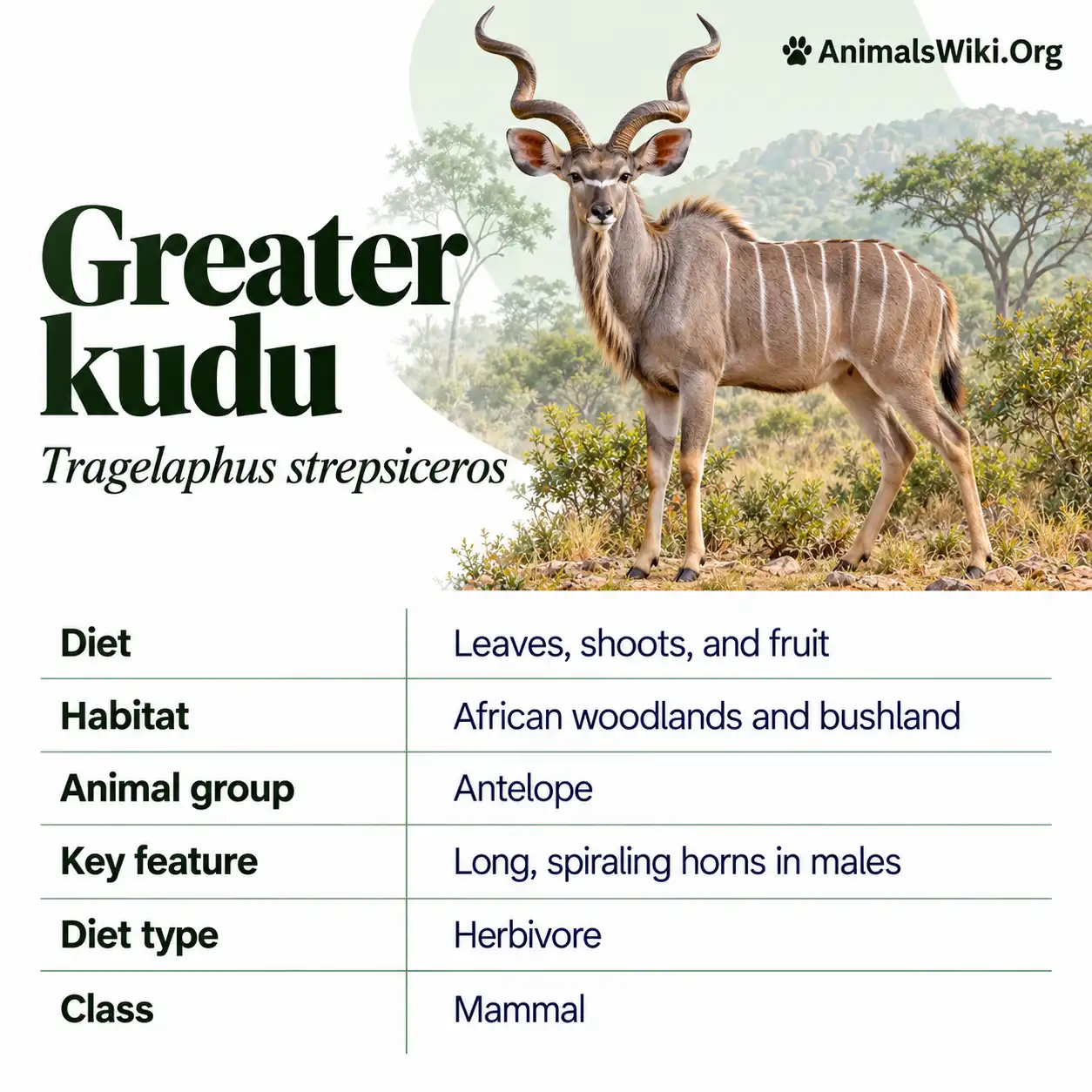
A mature male greater kudu is particularly unforgettable. Its tall, powerful body supports a pair of twisting horns that may extend more than a meter and a half along their curves. Its grayish-brown coat, pale vertical stripes, white facial markings, and dark mane create a distinctive appearance. Females are smaller and lack horns, but they share the species’ characteristic striped coat and excellent ability to move through thick vegetation.
Unlike antelopes that depend heavily on open grasslands, greater kudus are primarily browsers. They feed on leaves, shoots, herbs, flowers, and fruits, selecting nutritious plant material from shrubs and trees. This feeding strategy allows them to use woodland habitats where grass may not be the most reliable food source. They can also adjust their movements and feeding patterns in response to seasonal changes.
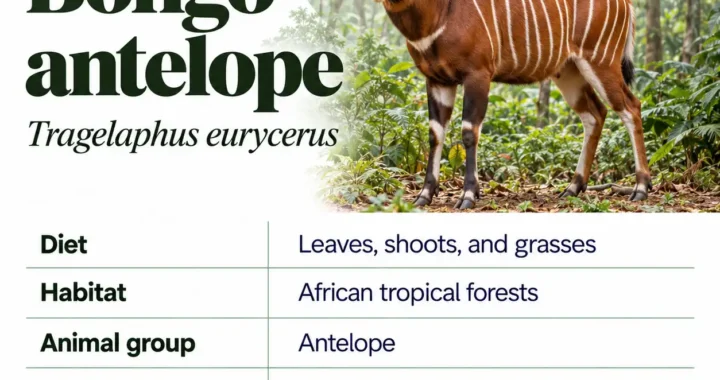
The greater kudu belongs to the bovid family, which includes cattle, sheep, goats, and many other antelopes. Its scientific name is Tragelaphus strepsiceros. It is closely related to other spiral-horned antelopes, including the lesser kudu, nyala, bongo, and bushbuck, although each species has its own characteristic appearance and habitat preferences.
Greater kudus occur across parts of eastern and southern Africa. Their populations are particularly well represented in several southern African countries, including Namibia, Botswana, South Africa, Zimbabwe, and Zambia. They also inhabit parts of eastern Africa, although their distribution can be patchy in some northern regions.
Despite their impressive horns and large bodies, greater kudus are prey animals. Lions, spotted hyenas, leopards, and African wild dogs may hunt them where their ranges overlap, with the level of risk depending on the predator, habitat, and condition of the kudu. Their main defenses include camouflage, alertness, rapid movement, and the shelter provided by dense vegetation.
The species is currently assessed as Least Concern globally, but this does not mean that every population is secure. Hunting, habitat loss, disease, and the fragmentation of natural landscapes can threaten local groups. Some populations have increased in well-managed protected areas and on private wildlife properties, while others face continuing pressure.
In this detailed guide, you will learn how to identify a greater kudu, understand its scientific classification, explore its size and remarkable horns, discover what it eats, and examine its social behavior, reproduction, calf development, natural predators, ecological importance, and conservation status.
Facts About the Greater Kudu
| Feature | Information |
|---|---|
| Common name | Greater kudu |
| Scientific name | Tragelaphus strepsiceros |
| Kingdom | Animalia |
| Class | Mammalia |
| Order | Artiodactyla |
| Family | Bovidae |
| Subfamily | Bovinae |
| Tribe | Tragelaphini |
| Animal group | Antelope; ruminant mammal |
| Natural range | Eastern and southern Africa, with a historically broader northern distribution |
| Preferred habitat | Woodland savannas, bushland, scrub, and rocky hillsides with vegetation cover |
| Diet | Leaves, shoots, herbs, flowers, fruits, and some grasses |
| Feeding type | Herbivore; primarily a browser |
| Adult male weight | Commonly around 190–300 kg, with variation between sources and populations |
| Adult female weight | Commonly around 120–210 kg |
| Shoulder height | Approximately 1–1.5 m, depending on sex and source |
| Horns | Long, spiral-shaped horns in adult males |
| Female horns | Absent |
| Coat | Grayish-brown, tan, or reddish-brown, usually with white vertical stripes |
| Social structure | Females and young often form groups; adult males may be solitary or form bachelor groups |
| Gestation | Approximately seven to eight months, with some references giving broader ranges |
| Typical offspring | Usually one calf |
| Main predators | Lions, leopards, spotted hyenas, and African wild dogs where ranges overlap |
| Global conservation status | Least Concern in the IUCN assessment last assessed in 2016 and published in 2020 |
| Population trend | Assessed as stable globally in that IUCN assessment; regional trends vary |
| Major threats | Hunting, habitat loss, fragmentation, and other locally important pressures |
| Ecological role | Browser, prey animal, and contributor to nutrient cycling |
The measurements above are approximate. Different wildlife authorities report different ranges because of variation between sexes, populations, individuals, and measurement methods. The IUCN assessment lists an estimated 300,000–350,000 mature individuals, but that is a mature-individual estimate from the assessment, not a fresh count of all greater kudus alive in 2026.
What Is a Greater Kudu?
The greater kudu is a large African antelope belonging to the family Bovidae. It is particularly recognizable by the impressive spiral horns of adult males and the narrow white stripes running down the sides of its body.
Although its appearance is delicate and graceful, the greater kudu is a substantial wild mammal. Adult males have muscular shoulders, long legs, and a powerful body, while females are smaller and more lightly built. Both sexes have large ears, a relatively narrow head, and a coat that helps them blend into woodland vegetation.
Greater kudus are members of the spiral-horned antelope group. Their relatives include the lesser kudu, nyala, bongo, and bushbuck. These animals share aspects of their evolutionary history and anatomy, but they differ in body size, coloration, habitat use, and horn structure.
Why Is the Greater Kudu Special?
Several characteristics make the greater kudu stand out among African mammals.
First, its horns are exceptionally impressive. Adult males develop long, twisting horns that may form two or more complete spirals. These structures are used in displays and male contests and can also serve as defensive weapons.
Second, the greater kudu is well adapted to woodland and bush habitats. Its striped coat provides camouflage, and its browsing diet allows it to exploit leaves and shoots that may remain available when grass becomes dry.
Third, it has a flexible social system. Females and their offspring often form groups, while adult males may live alone or associate with other males. Individuals can come together during the breeding season.
Finally, the species occupies an important ecological position. It feeds on woody vegetation and other plants, contributes to nutrient cycling, and provides prey for large carnivores.
Is the Greater Kudu a Deer?
No. The greater kudu is an antelope, not a deer.
Both antelopes and deer are hoofed mammals, but they belong to different families. The greater kudu is a member of Bovidae, while deer belong to Cervidae.
The difference between their headgear is especially useful. Greater kudus have permanent horns with a bony core covered by a keratin sheath. Deer typically grow antlers, which are generally shed and regrown, and their antlers often have branches.
The greater kudu’s long spiral horns are therefore fundamentally different from the branching antlers of animals such as red deer and elk.
Is the Greater Kudu a Wild or Domestic Animal?
The greater kudu is a wild species native to Africa. It can be maintained in managed wildlife facilities and on private reserves, but it is not a conventional domestic animal like cattle, sheep, or goats.
An individual may become accustomed to the presence of people in a managed setting without becoming domesticated. Greater kudus retain their natural instincts and can react unpredictably when frightened or cornered.
Because males have powerful horns and both sexes can move rapidly, observing them at a safe distance is essential.
Scientific Classification of the Greater Kudu
The greater kudu’s scientific name is Tragelaphus strepsiceros. This name is widely used by modern mammal databases, wildlife conservation organizations, and zoological institutions.
Scientific classification places the species within a group of related mammals and helps researchers understand its evolutionary relationships. Although taxonomic arrangements can change as new evidence becomes available, the greater kudu’s identity as a distinct species is well established.
Scientific Classification Table
| Classification level | Name |
|---|---|
| Kingdom | Animalia |
| Phylum | Chordata |
| Class | Mammalia |
| Order | Artiodactyla |
| Family | Bovidae |
| Subfamily | Bovinae |
| Tribe | Tragelaphini |
| Genus | Tragelaphus |
| Species | Tragelaphus strepsiceros |
The order Artiodactyla includes even-toed hoofed mammals. Bovidae contains antelopes, cattle, buffaloes, sheep, and goats. Within this family, the greater kudu belongs to the spiral-horned antelope lineage.
What Does the Scientific Name Mean?
The genus name Tragelaphus is associated with the goat-like appearance of some members of this antelope group. The species name strepsiceros refers to its twisted or spiral horns.
The name reflects one of the animal’s most distinctive characteristics: the extraordinary curvature of the male’s horns.
Scientific names are especially useful because common names can differ between countries and languages. A greater kudu may be called a kudu or koedoe in everyday usage, but Tragelaphus strepsiceros provides a more precise identification in scientific writing.
Are There Different Greater Kudu Subspecies?
Several geographic forms of the greater kudu have historically been described as subspecies. These classifications have often relied on differences in the number of pale body stripes, coat characteristics, and geographic distribution.
Older literature may distinguish forms such as the southern greater kudu and northern or western forms. However, the number and validity of named subspecies are not consistently treated across every taxonomic reference.
The Endangered Wildlife Trust notes that four African subspecies have historically been recorded using differences in the number of pale body stripes, while its southern African assessment follows the form occurring in that region.
It is important not to assume that every historical subspecies name represents an independently established conservation unit. Taxonomic recognition can change as researchers compare genetic evidence, anatomy, geography, and other characteristics.
For a general wildlife article, the most reliable approach is to use the accepted species name and explain that historical subspecies classifications exist without presenting disputed divisions as settled.
How Is the Greater Kudu Related to the Lesser Kudu?
The greater kudu and lesser kudu are closely related antelopes in the same genus. Both have striped coats and males with spiral horns, but the greater kudu is substantially larger.
Greater kudus are more widely associated with eastern and southern African woodland and savanna habitats. Lesser kudus are particularly associated with dry bushland and scrub in eastern Africa.
The two species can be distinguished by their overall size, body proportions, markings, and geographic distribution. Their shared features reflect related ancestry, while their differences reflect adaptations to different ecological conditions.
Greater Kudu vs. Lesser Kudu
The greater kudu and lesser kudu are sometimes confused because both have spiral horns in males and pale stripes on their bodies. However, they are separate species with clear differences in size and appearance.
Greater kudu
A large antelope with long horns, prominent ears, and a striped coat.
kudu
A smaller, more compact antelope associated especially with eastern African dry bushland.
Main Differences
| Feature | Greater kudu | Lesser kudu |
|---|---|---|
| Scientific name | Tragelaphus strepsiceros | Tragelaphus imberbis |
| Body size | Large antelope | Considerably smaller |
| Male horns | Long, prominent spirals | Shorter, more compact spirals |
| Female horns | Absent | Absent |
| Coat markings | Usually about 6–10 narrow pale stripes, with variation | Often more numerous stripes, commonly around 11–15 |
| Neck appearance | Males have a noticeable throat fringe | Lacks the same prominent male throat fringe |
| Preferred habitat | Woodland savannas, scrub, and bushland | Dry thornbush, scrub, and dense bushland |
| Geographic emphasis | Eastern and southern Africa | Primarily eastern Africa |
| Conservation context | Globally Least Concern | Separate species with its own population and conservation assessment |
The stripe counts are typical identification clues rather than rigid rules. Individuals vary, and coat markings can be difficult to count when an animal is moving or partly hidden.
Which Species Has Longer Horns?
The greater kudu is famous for its exceptionally long male horns, which may extend approximately 1.5 meters or more when measured along their curves. The lesser kudu’s horns are generally much shorter.
Horn length depends on age, genetics, nutrition, and individual development. A young greater kudu male will not have the same horns as a fully mature bull.
Why Is This Comparison Important?
Correct identification matters for wildlife photography, conservation reporting, and population monitoring. If observations of the two species are mixed together, estimates of abundance and distribution can become unreliable.
The species also differ in habitat use, so accurate identification helps researchers understand which environmental conditions support each animal.
Physical Appearance and Identification
The greater kudu has a graceful, long-legged body with a narrow waist, deep chest, and relatively tall shoulders. Its appearance combines the delicate outline of a woodland antelope with the muscular structure needed for rapid movement through uneven terrain.
Adult males are especially striking because of their large horns and heavier build. Females are smaller and hornless, but their striped coats and large ears make them recognizable.
Coat Color and Pattern
The coat can range from reddish-brown and tan to grayish-brown or bluish-gray. Color differences may reflect age, sex, geography, individual variation, and the effects of lighting or dust.
Several narrow white vertical stripes usually run along the sides of the body. These markings break up the animal’s outline and can make it harder to see against a background of grass, branches, and alternating sunlight and shadow.
Greater kudus may also have small pale spots on the cheeks and a white marking between the eyes. The nose and lower face can show contrasting dark and light areas.
The underside of the tail is pale, while the upper surface may appear darker. When a kudu raises or moves its tail, the contrast can be noticeable to observers.
Body Shape
The greater kudu has long, slender legs and a relatively narrow body. Its shoulders are high, and its back slopes gently toward the hindquarters.
Although the animal looks light on its feet, adult males can weigh several hundred kilograms. Their legs and muscles must support this substantial weight while allowing the animal to accelerate, turn, and jump.
A fringe of longer hair beneath the throat is particularly noticeable in males. Both sexes have a line of longer hair along parts of the neck and back, although its prominence varies.
Facial Features
The greater kudu’s head is relatively narrow, with a dark muzzle and large, rounded ears. The ears are useful for detecting sounds from the surrounding woodland and may rotate toward a potential disturbance.
The eyes are positioned to provide a broad field of view. This helps the animal detect movement while it feeds among shrubs or watches for predators.
A pale marking between the eyes is a useful identification clue, although the exact pattern can vary between individuals.
Differences Between Males and Females
Sexual dimorphism, or physical differences between males and females, is pronounced in greater kudus.
| Feature | Adult male | Adult female |
|---|---|---|
| Body size | Larger and heavier | Smaller and lighter |
| Horns | Long spiral horns | No horns |
| Neck | More substantial, with a noticeable throat fringe | Slenderer, without the same prominent male fringe |
| Body build | Muscular shoulders and heavier neck | More lightly built |
| Typical social pattern | Often solitary or in bachelor groups outside breeding periods | Often associated with other females and young |
Young males may initially resemble females because their horns are small or undeveloped. Correctly identifying sex can therefore require more than a quick look at a distant animal.
How to Identify a Greater Kudu in the Wild
Look for a combination of characteristics:
-
A large, long-legged antelope with a narrow body.
-
Multiple pale vertical stripes along the flanks.
-
Large, rounded ears.
-
A pale marking between the eyes.
-
A male with long, twisting spiral horns.
-
A preference for bushland, woodland savannas, and habitats with substantial cover.
Habitat and location are also useful. Greater kudus are native to eastern and southern Africa, but their distribution is not continuous throughout the region.
Greater Kudu Size and Weight
The greater kudu is among Africa’s largest antelopes. Its height, long legs, and substantial body give it an impressive presence, especially when a mature male stands in an open clearing.
However, size differs considerably between sexes. Adult males are usually much heavier than females, and measurements also vary across populations.
Typical Size Measurements
| Measurement | Approximate range |
|---|---|
| Adult male weight | About 190–300 kg |
| Adult female weight | About 120–210 kg |
| Shoulder height | Approximately 1–1.5 m, depending on sex and source |
| Body length | Varies by individual and measurement method |
| Male horn length | Can exceed 1.5 m along the curve in exceptional individuals |
| Body build | Long-legged, narrow-bodied, and muscular |
These figures are broad reference ranges, not strict limits. The Muséum national d’Histoire naturelle reports male and female weight ranges within these general dimensions, while other zoological references give different upper values.
Why Are Males Larger?
Larger body size can help males compete with other males during the breeding season. Body mass and strength may influence the outcome of displays and contests, while larger horns can contribute to visual displays.
Females have different reproductive demands. Pregnancy and lactation require substantial energy, and a smaller body can affect feeding and movement requirements. Both sexes, however, need enough food and suitable habitat to maintain good condition.
How Does Body Size Help the Greater Kudu?
The kudu’s size provides several benefits:
-
Movement: Long legs help it cover ground and negotiate uneven terrain.
-
Defense: An adult’s size can make it more difficult for predators to overpower.
-
Energy reserves: Body mass can provide some capacity to withstand short-term fluctuations in food availability.
-
Competition: Larger males may have advantages in certain social contests.
These benefits are balanced by the need to obtain enough food. A large herbivore requires a substantial supply of nutritious vegetation, and drought or habitat degradation can make that requirement difficult to meet.
Is the Greater Kudu Bigger Than Most Antelopes?
Yes. Greater kudus rank among the largest antelopes, although giant elands are generally larger and heavier.
Other large species, such as roan antelopes and sable antelopes, can also reach impressive dimensions. Comparisons depend on whether the measurement is body mass, shoulder height, body length, or horn length.
The greater kudu’s combination of body size and long spiral horns makes it one of the most recognizable large antelopes in Africa.
The Remarkable Spiral Horns
The male greater kudu’s horns are among the most distinctive structures found in African wildlife. They rise from the head, curve outward, and twist into large spirals that may include two or more complete turns.
These horns are permanent, unlike the antlers of deer. They grow gradually as the animal matures and are covered by a tough keratin sheath over a bony core.
How Long Can Greater Kudu Horns Grow?
Exceptional male horns can extend approximately 1.5–1.8 meters or more when measured along the curve. The straight-line distance from the base to the tip is shorter because the horns twist around their axis.
Horn length varies with genetics, age, nutrition, and individual growth. Not every adult male develops equally large horns, and younger males have much shorter structures.
Why Are the Horns Spiral-Shaped?
The spiral form develops as the horns grow. Its evolutionary significance is likely connected to several factors, including sexual selection, visual signaling, and the mechanics of male contests.
A large set of horns can make a male appear impressive to rivals and potential mates. During confrontations, males may bring their horns into contact and push or twist against one another.
It would be misleading to suggest that the spiral shape evolved for only one purpose. Horn morphology reflects inherited biology and the multiple demands placed on these structures.
How Do Males Use Their Horns?
Male greater kudus use their horns in social contests, especially when competing for dominance or access to females.
During such encounters, two males may position themselves, engage their horns, and push against each other. The contest can involve twisting movements as each animal tries to gain leverage.
Serious injury is possible. In rare cases, horns can become locked in ways that prevent the animals from separating. This is an unusual but documented risk of horn-based contests.
Horns can also provide defense against predators, although an animal generally benefits from escaping before a confrontation becomes necessary.
Do Female Greater Kudus Have Horns?
No. Adult female greater kudus are naturally hornless.
This is a useful difference from elands, in which both sexes have horns. The absence of horns in female greater kudus also makes sex identification easier when the animals are mature and clearly visible.
Do Horns Keep Growing Throughout Life?
Horns grow as the animal develops, but their growth is not unlimited or constant. Their final dimensions depend on age, genetics, health, and nutrition.
Damage can affect a horn’s appearance, and wear or breakage may alter its shape. A large horn does not necessarily prove that an individual is healthy, dominant, or reproductively successful.
Horns are best understood as structures that support social signaling and defense while reflecting the animal’s development over time.
Habitat and Geographic Distribution
Greater kudus inhabit parts of eastern and southern Africa, where they favor landscapes that combine vegetation cover with access to nutritious leaves and shoots. They are particularly associated with woodland savannas, thorn scrub, bushland, and wooded hillsides.
Unlike animals that rely primarily on extensive open grasslands, greater kudus generally benefit from having bushes or trees nearby. Vegetation provides food, shelter, and opportunities to hide when predators approach.
Where Do Greater Kudus Live?
The greater kudu’s native range includes countries in eastern, central, and southern Africa. Its distribution includes South Africa, Namibia, Botswana, Zimbabwe, Zambia, Tanzania, Kenya, Ethiopia, Mozambique, Malawi, Angola, and other parts of the broader region.
The exact distribution varies by country, and historical records should not automatically be treated as proof of a current population. Some northern populations have declined or disappeared from parts of their former range.
The IUCN assessment records the greater kudu as native across a broad set of African countries, while noting uncertainty in its presence in some areas and possible extinction in Djibouti.
What Habitat Does a Greater Kudu Prefer?
Greater kudus generally favor areas where shrubs, trees, and other vegetation provide both food and cover.
| Habitat | Importance to greater kudus |
|---|---|
| Woodland savanna | Provides browse, shade, and cover |
| Thorn scrub | Offers leaves and shoots as well as concealment |
| Bushland | Supports feeding and escape behavior |
| Rocky hillsides | Can provide refuge and varied vegetation |
| Riverine woodland | May offer productive vegetation and access to water |
| Semi-arid scrub | Can be suitable where edible plants remain available |
| Woodland near settlements | May be used where cover persists and hunting pressure is limited |
Greater kudus can use a range of environments, but they generally avoid landscapes that lack sufficient cover. Their presence near human settlements depends on local vegetation, hunting pressure, and the availability of suitable habitat.
How Does Habitat Affect Their Distribution?
Habitat determines whether a landscape provides enough food, water, shelter, and space to support a population.
A region may have suitable average rainfall but still be poor kudu habitat if shrubs and trees have been cleared. Similarly, an area with abundant vegetation may become less suitable if hunting pressure prevents animals from using it safely.
The distribution of greater kudus is therefore influenced by both natural conditions and human activity.
Seasonal Changes in Habitat Use
Vegetation changes with rainfall and temperature. During the rainy season, new leaves and shoots may become abundant. As the dry season progresses, some plants lose their leaves or produce less nutritious growth.
Greater kudus can respond by changing their feeding locations and selecting different plant species. They may also adjust how far they travel to obtain food.
Seasonal flexibility is valuable, but it depends on having access to multiple feeding areas. Fences, roads, farms, and settlements can prevent animals from reaching otherwise suitable habitat.
Do Greater Kudus Live in Mountains?
Greater kudus can inhabit rocky hillsides and mountainous or elevated terrain where sufficient vegetation is available. Their documented elevation range extends from lowlands to approximately 2,400 meters in some parts of eastern Africa.
The species is not exclusively mountainous, however. Many populations live in woodland and bushland environments at lower elevations.
Why Is Habitat Connectivity Important?
Habitat connectivity allows animals to move between feeding areas, breeding locations, and sources of water.
When natural vegetation becomes fragmented, populations may become isolated. Animals can lose access to seasonal resources, and dispersal between groups may become more difficult.
Maintaining connected woodland and bushland is therefore an important conservation measure, particularly where greater kudus need to move across a landscape in response to drought or other environmental changes.
Diet and Feeding Habits
Greater kudus are herbivores and primarily browsers. Their diet consists mainly of leaves, shoots, herbs, flowers, and other plant material, with fruits and some grasses included when available.
Browsing is particularly useful in woodland environments, where nutritious leaves may be abundant even when grass is dry or sparse.
What Do Greater Kudus Eat?
Their diet can include:
-
Leaves from shrubs and trees.
-
Tender shoots and young stems.
-
Herbs and broad-leaved plants.
-
Flowers and buds.
-
Fruits and seasonal plant growth.
-
Some grasses and other low-growing vegetation.
The exact plant species depend on the kudu’s location and the time of year. Animals in different parts of Africa encounter different plant communities, so no single list accurately describes every population’s diet.
Are Greater Kudus Grazers or Browsers?
Greater kudus are primarily browsers, meaning they obtain much of their food from leaves, shoots, and other parts of woody plants.
They may eat grass, especially when fresh growth is available, but their feeding strategy differs from that of specialized grazers such as many wildebeests.
This preference helps explain why greater kudus are often found in bushland and woodland rather than on extensive treeless plains.
How Do They Feed?
A greater kudu selects edible plant parts with its mouth and lips, often reaching among branches to obtain leaves and shoots. Its long neck and legs help it access vegetation at different heights.
The animal may move slowly through a feeding area, taking small amounts from different plants. This can spread feeding pressure across a wider area, although the ecological effect depends on the number of animals and the abundance of vegetation.
Greater kudus often feed while remaining alert. They may pause to look around or listen before continuing to browse.
How Does Digestion Work?
Greater kudus are ruminants. Their digestive systems contain multiple stomach compartments, including a rumen where microorganisms ferment plant material.
The microorganisms help break down complex carbohydrates in vegetation. The animal later regurgitates partially digested material as cud and chews it again, supporting further digestion.
This process allows greater kudus to extract nutrients from fibrous plants that would be difficult for many other mammals to digest efficiently.
Ruminant digestion requires time, so animals alternate between feeding, resting, and chewing cud.
Can Greater Kudus Survive Without Drinking Every Day?
Greater kudus can obtain some moisture from the plants they eat and may go for extended periods without visiting a water source when vegetation contains sufficient moisture.
However, they are not completely independent of water. During dry conditions, plants may contain less moisture, and access to water can become more important.
The ability to tolerate periods without drinking helps greater kudus use some semi-arid environments, but it does not protect them from severe drought or prolonged food shortages.
Feeding During the Dry Season
During the dry season, fresh grass may become less nutritious, and some plants may shed their leaves. Greater kudus can respond by selecting alternative browse and moving toward areas where edible vegetation remains available.
Fruits may provide both energy and moisture when they are seasonally abundant. The importance of individual food sources varies across regions.
If drought becomes severe, however, even browsing animals may struggle to obtain enough food. Poor nutrition can reduce body condition, weaken resistance to disease, and affect reproductive success.
How Does Diet Influence Habitat Choice?
The greater kudu’s browsing behavior helps determine where it can live. A landscape with a mixture of shrubs, trees, and patches of open ground may provide more reliable feeding opportunities than a treeless grassland.
The availability of browse also changes over time. Woodland management, fire, drought, and agricultural expansion can alter plant communities and influence how suitable a region remains for kudus.
Protecting the species therefore requires maintaining the vegetation it depends on, not simply preserving open space.
Adaptations for Survival
Greater kudus possess several adaptations that help them survive in African woodland and bushland environments. These include their striped coats, keen senses, long legs, flexible feeding behavior, and ability to use vegetation for concealment.
Their survival depends on the combined effects of these characteristics rather than on any single feature.
Camouflage Through Body Stripes
The greater kudu’s pale vertical stripes help break up the outline of its body. Among branches, grass, and patches of sunlight, these stripes can make the animal less conspicuous.
Camouflage is especially useful because greater kudus often feed in habitats where vegetation blocks parts of the observer’s view.
The stripes do not make the animal invisible. Their effectiveness depends on lighting, background vegetation, movement, and the distance of the observer or predator.
Large Ears and Alertness
Greater kudus have large ears that help them detect sounds from their surroundings. They may turn their ears toward an unfamiliar noise while keeping the rest of their body still.
This response can help the animal assess a possible threat without immediately revealing its position through movement.
Their broad field of vision also assists in detecting approaching danger. Smell can provide additional information about the surrounding environment.
Long Legs and Powerful Movement
The greater kudu’s long legs help it move quickly through woodland and across uneven terrain. Its body is built for rapid acceleration and agile movement rather than sustained high-speed running over extremely long distances.
When startled, a kudu may bound away through vegetation, using its strength and coordination to escape.
Movement through dense brush can be advantageous because the animal knows its habitat and can exploit gaps that may be difficult for a pursuing predator to navigate.
Flexible Feeding
Greater kudus can eat many types of plant material, which reduces their dependence on a single food source.
When one plant species becomes less available, the animal may switch to other leaves, shoots, herbs, or fruits. This flexibility helps it cope with seasonal changes.
Nevertheless, dietary flexibility cannot compensate for the complete loss of suitable vegetation. A landscape must still provide enough nutritious food to support the population.
Using Cover to Avoid Predators
Greater kudus often rely on vegetation to remain hidden. When danger approaches, they may freeze, move cautiously, or retreat into thicker cover.
Remaining still can make it harder for a predator to notice the animal. If the threat gets too close, rapid escape may be the safer option.
This strategy works best when habitat contains enough cover. Clearing woodland and scrub can reduce the kudu’s ability to hide and may increase the distance it must travel to reach safe areas.
Ruminant Digestion
The greater kudu’s multi-chambered digestive system enables it to obtain nutrients from fibrous vegetation.
Microorganisms in the rumen help break down plant material, while rumination allows the animal to chew its food again.
This is particularly important for a browser that consumes leaves, shoots, and other plant parts that contain structural fibers.
Seasonal Flexibility
Greater kudus can adjust their movements and food choices in response to changing conditions. They may use different feeding areas at different times of the year, depending on rainfall and vegetation.
Such flexibility helps them survive in environments with pronounced wet and dry seasons.
However, the success of these adaptations depends on the availability of connected habitat. An animal cannot move to a better feeding area if fences or extensive land conversion block its route.
Behavior and Social Structure
Greater kudus are social mammals, but they do not remain in one fixed herd structure throughout their lives. Females and young often form groups, while adult males may spend time alone or associate with other males.
Group composition can change with the season, availability of food, reproductive activity, and local environmental conditions.
Do Greater Kudus Live in Herds?
Yes. Female greater kudus often live in groups with their offspring. These groups may contain several individuals, and their size can change as animals join or leave.
Adult males commonly live alone or in small bachelor groups outside the breeding period. During mating activity, males may approach groups of females and compete for access to receptive individuals.
This flexible social structure allows the animals to balance the benefits of group living with the need to find food and avoid competition.
Why Do Females Form Groups?
Groups can improve predator detection because more than one animal may notice a threat.
Females with young may also benefit from remaining in familiar areas where food and cover are available. Social contact can help maintain associations between mothers and offspring.
However, groups do not guarantee safety. Predators can still isolate an individual, particularly where vegetation is sparse or animals become separated.
Why Are Adult Males Sometimes Solitary?
Adult males may spend time alone because they do not need to remain continuously with groups of females and young. They may also form temporary associations with other males.
During the breeding season, males can spend more time near females and engage in displays or contests with rivals.
Solitary behavior does not necessarily mean that a male avoids all social contact. His associations can change with reproductive activity and local conditions.
Male Competition
Male greater kudus may compete for dominance and mating opportunities. Their horns can be used during contests in which rivals push, twist, or attempt to displace one another.
Some encounters end after displays, while others involve physical contact. Severe fighting can be dangerous because injuries may interfere with feeding, movement, or escape from predators.
The outcome of a contest may depend on size, horn development, condition, maturity, and behavior.
Daily Activity
Greater kudus spend much of their time feeding, resting, and ruminating. They may adjust their activity according to temperature, disturbance, and the availability of food.
In hot weather, animals may rest in shade during the warmest part of the day and feed more actively when conditions are cooler.
Their behavior is not identical across all populations. Animals living in heavily disturbed landscapes may use different feeding times or cover patterns from those living in relatively undisturbed reserves.
How Do Greater Kudus React to Danger?
When a kudu detects a possible threat, it may stop feeding, raise its head, orient its ears, and observe the surroundings.
If danger appears imminent, the animal may flee into thicker vegetation. Its long legs allow rapid movement, while its coat markings can help it disappear into a wooded background.
A kudu may remain motionless when it believes that hiding is safer than running. The decision depends on the distance to the threat, available escape routes, and whether the animal has already been detected.
Communication and Senses
Greater kudus use a combination of visual signals, sounds, scent, and body movements to respond to other animals and their surroundings.
Communication is important for maintaining group contact, recognizing threats, and managing social relationships.
Visual Signals
Posture can convey alertness, aggression, or submission. A male may display his size and horns when facing another male, while a sudden change in posture can alert nearby animals to possible danger.
Visual signals are particularly useful in open patches of woodland where animals can see one another between trees and shrubs.
Hearing
The greater kudu’s large ears help it detect sounds from different directions. When an unfamiliar noise occurs, an animal may turn its ears and head to investigate.
Hearing can be particularly valuable in dense vegetation, where a predator may be difficult to see.
A sound does not always reveal the source of danger, so the kudu may combine hearing with sight and smell before responding.
Smell
Smell provides information about the environment and may help animals recognize other individuals or detect potential threats.
Scent can also play a role in reproductive behavior and interactions between animals.
The precise importance of particular scent signals varies by context, and not every possible communication mechanism has been studied equally well.
Vocal Communication
Greater kudus can produce vocalizations, including alarm-related calls. A loud, rough bark is often described in wildlife accounts as a notable sound made by the species.
Such vocalizations can be important when animals respond to danger or maintain awareness of nearby individuals.
Not every sound has the same meaning. The context, behavior of the caller, and reaction of other animals help determine how a vocalization should be interpreted.
Why Communication Matters
Greater kudus rely on early warning and coordinated responses to reduce the risk of predation.
A sudden alarm response may prompt nearby animals to stop feeding or move toward cover. Group members can then assess the disturbance and decide whether to remain in place or flee.
Communication is one part of their broader survival strategy, working alongside camouflage, movement, and habitat selection.
Running, Jumping, and Movement
Greater kudus are capable of rapid, agile movement despite their relatively large bodies. Their long legs and powerful muscles allow them to escape danger, navigate uneven terrain, and travel between feeding areas.
They are particularly impressive when moving through bushland, where they can use gaps in vegetation and changes in terrain to avoid predators.
How Fast Can a Greater Kudu Run?
Greater kudus are fast runners, and some wildlife references report speeds approaching 60 miles per hour, or about 97 kilometers per hour. Such figures should be treated cautiously because maximum speeds are difficult to measure consistently in wild animals.
The exact speed achieved depends on the individual’s condition, the terrain, the distance covered, and the circumstances of the movement. A reported maximum should not be mistaken for the speed a kudu can maintain over a long distance.
Escape also depends on detecting danger early and having a suitable route. A kudu that notices a predator before an attack begins may have a much better chance of surviving than one surprised at close range.
Can Greater Kudus Jump?
Yes. Greater kudus can make powerful leaps and bounds, allowing them to cross obstacles and move rapidly through uneven terrain.
Their jumping ability is particularly useful in bushland, where fallen branches, rocks, and other natural obstacles may interrupt a straight escape route.
The height of a jump depends on the animal and the conditions. Extreme jumping figures repeated in popular accounts should not be treated as a guaranteed performance for every individual.
Why Do Greater Kudus Move Through Dense Bush?
Vegetation provides both food and concealment. A kudu moving through thick scrub may be harder for a predator to track than one crossing an open plain.
Dense cover can also provide access to leaves and shoots. Because greater kudus are primarily browsers, they often benefit from landscapes containing shrubs and trees.
However, thick vegetation can restrict visibility. The animal must balance the benefits of concealment with the need to detect danger and find a clear escape route.
Seasonal Movement
Greater kudus may change their feeding locations as vegetation and water availability change throughout the year.
In dry periods, animals may travel farther to find suitable browse or reach areas with better moisture conditions. In other circumstances, they may remain within a relatively small home range where resources are sufficient.
These movements mean that habitat connectivity is important. A landscape divided by fences or extensive development may prevent animals from reaching seasonal feeding areas.
Reproduction and Mating
Greater kudu reproduction involves courtship, competition among males, pregnancy, and the birth and development of calves.
The timing of breeding can vary between populations because rainfall, food availability, and local environmental conditions influence reproductive activity.
When Do Greater Kudus Breed?
Breeding patterns vary geographically. Some populations show seasonal peaks in reproductive activity, while others may breed over a more extended period.
Seasonal vegetation can influence the condition of females before and after birth. When nutritious food is available, females may be better able to support pregnancy and lactation.
The exact breeding calendar should therefore be interpreted in relation to the region being studied rather than treated as a universal schedule for the entire species.
Courtship Behavior
During the breeding period, males may approach groups of females and assess their reproductive condition.
A male may remain near a female and follow her movements. Other males may also approach, leading to displays or competition.
Courtship behavior can involve body posture, movement, and interactions between the sexes. Successful mating depends on the circumstances and the female’s receptivity.
Competition Between Males
Male greater kudus may use their horns in contests over dominance and access to females. The animals may display their horns, position their bodies, and push against one another.
Some encounters are resolved without serious fighting. Others may become more intense and create a risk of injury.
Horn size can be visually impressive, but it is not the sole factor determining dominance. Body condition, age, experience, and the behavior of the individuals involved may also influence the result.
Gestation Period
The gestation period is generally reported as approximately seven to eight months, although published accounts vary somewhat in the ranges they give. The Muséum national d’Histoire naturelle reports seven to eight months, while other references use broader estimates.
A pregnant female needs adequate nutrition to support the developing calf. If food becomes scarce, poor body condition may affect reproductive success and the mother’s ability to support her offspring after birth.
How Many Calves Does a Greater Kudu Have?
A female typically gives birth to one calf at a time.
The calf must develop quickly enough to stand, nurse, and eventually follow its mother. It remains vulnerable during its early life because it is smaller and less experienced than adults.
The usual birth of a single calf means that population growth depends partly on calf survival and the frequency with which females successfully reproduce.
What Influences Reproductive Success?
Several factors can affect whether a female produces and raises a healthy calf:
-
Availability of nutritious vegetation.
-
The mother’s body condition.
-
Disease and parasite burdens.
-
Disturbance near birth sites.
-
Predation on calves.
-
Drought and other environmental pressures.
-
The survival and reproductive condition of adult animals.
These influences interact. For example, drought may reduce food quality, weaken females, and increase the distance they must travel to feed, potentially affecting both pregnancy and calf survival.
Birth and Calf Development
A newborn greater kudu is much smaller and more vulnerable than an adult. Its early survival depends on maternal care, suitable cover, adequate nutrition, and its ability to avoid predators.
Where Are Calves Born?
Females may give birth in locations with suitable vegetation and relatively low disturbance. A mother may temporarily separate from other animals around the time of birth.
The calf can remain concealed while the mother feeds nearby or returns to nurse it. Hiding helps reduce the likelihood that predators will detect the newborn through movement.
The length of this hiding period varies, so a precise duration should not be assumed for every population.
Why Do Young Kudus Hide?
A newborn has limited strength and experience. Remaining still in vegetation can reduce the chance of attracting a predator’s attention.
The mother must balance feeding with the need to return to her calf. As the calf grows stronger, it becomes more capable of following her and joining other animals.
This early hiding strategy is not unique to greater kudus. Several hoofed mammals rely on concealment during the vulnerable period after birth.
Maternal Care
The mother provides milk and protection. She may remain attentive to the calf while feeding and moving between suitable areas.
The calf gradually develops the strength and coordination required to keep pace with its mother. It also begins learning about its surroundings through observation and experience.
Maternal care is particularly important where predators are common or where food and cover are unevenly distributed.
Weaning and Growing Independence
As the calf grows, it gradually consumes more vegetation and becomes less dependent on milk.
Weaning does not necessarily mean that the young animal immediately separates from its mother. It may continue associating with her and other juveniles while developing the skills required for adult life.
Young males and females may eventually follow different social patterns as they mature, but the timing depends on individual development and local circumstances.
Why Is Calf Survival Important?
The survival of young animals determines how many individuals eventually enter the breeding population.
Even where adult kudus are common, a prolonged period of poor calf survival can reduce population growth. Predation, drought, disease, accidents, and habitat disturbance may all affect the number of young animals that survive.
Conservation managers therefore benefit from monitoring young animals as well as counting adults. Population structure can reveal changes that a total head count alone may not show.
Lifespan and Aging
Greater kudus can live for many years, but lifespan varies with habitat, health, predation, disease, and human activity.
Animals in managed environments may live longer than some wild individuals because they receive consistent food, veterinary attention, and protection from certain threats. These differences make it important to distinguish maximum lifespan from typical survival in the wild.
How Long Do Greater Kudus Live?
Wildlife references commonly report lifespans of around 10–15 years in the wild, with some animals living longer. Greater kudus in captivity or managed facilities may reach approximately 20 years or more under favorable conditions.
These figures are approximate. The average lifespan of an entire wild population is not necessarily the same as the oldest age recorded for an individual.
What Affects Their Lifespan?
Important factors include:
-
Food quality: Poor nutrition can weaken an animal and affect reproduction.
-
Predation: Young, sick, injured, and isolated individuals may be more vulnerable.
-
Disease: Infections and parasites can reduce health and survival.
-
Drought: Prolonged shortages of vegetation can affect several age groups.
-
Human activity: Hunting, habitat loss, fencing, and road traffic may increase mortality.
-
Injuries: Horn-related injuries and accidents can affect movement and feeding.
-
Management conditions: Veterinary care and suitable habitat can influence survival in managed populations.
How Do Greater Kudus Change With Age?
Young males initially have small horns that develop as they mature. Adult males become heavier and may develop more pronounced neck musculature and longer horns.
Older animals may experience reduced mobility or changes in dental condition. These changes can make feeding more difficult, particularly during dry periods when nutritious vegetation is less available.
Age alone does not determine health. An older animal in good habitat may remain in better condition than a younger animal experiencing drought, disease, or nutritional stress.
Predators and Natural Threats
Greater kudus are large antelopes, but they remain potential prey for several African carnivores. Their risk of being hunted depends on their location, age, body condition, the surrounding vegetation, and which predators occur in the area.
Their principal defenses are camouflage, vigilance, escape behavior, and the ability to use dense vegetation.
Lions
Lions are powerful predators capable of hunting large herbivores, including greater kudus.
Hunting success depends on the circumstances. A predator may have an advantage when vegetation provides concealment or when an animal is isolated, injured, or distracted.
A healthy adult kudu can be difficult to overpower, and an unsuccessful attack can cost a lion valuable energy. Predators therefore benefit from selecting suitable opportunities rather than attacking every kudu they encounter.
Leopards
Leopards are stealthy predators that use cover to approach prey. They may hunt young greater kudus or other vulnerable individuals where their ranges overlap.
Their hunting strategy often involves concealment and a short, powerful attack. The outcome depends on the prey’s size, the terrain, and the element of surprise.
An adult male greater kudu can be a challenging target because of its size and horns, while smaller calves may be more vulnerable.
Spotted Hyenas
Spotted hyenas can hunt large mammals and may prey on greater kudus. They may also consume carcasses, contributing to the removal of remains from the environment.
Hyenas are adaptable predators, and their impact on kudu populations varies according to local conditions and the availability of alternative prey.
African Wild Dogs
African wild dogs hunt cooperatively and may pursue antelope species within their range. Their endurance and coordinated behavior can make them effective predators.
Greater kudus may be at risk when wild dogs encounter them in suitable hunting habitat, although the frequency of predation depends on local prey availability and predator distribution.
Are Calves More Vulnerable Than Adults?
Generally, yes. Calves have less strength and experience and cannot defend themselves as effectively as mature animals.
Concealment and maternal care reduce risk, but young kudus remain vulnerable to predators. Adults are better equipped to escape and may use their horns when threatened at close range.
Other Natural Threats
Predation is not the only cause of mortality. Disease, parasites, drought, accidents, and severe nutritional stress can also affect greater kudus.
During a drought, reduced food availability may weaken animals and increase competition with other herbivores. These conditions can interact with predation, leaving poorly nourished individuals less able to escape.
A healthy population therefore needs suitable habitat, adequate food, successful reproduction, and manageable mortality from several different causes.
Competition With Other Herbivores
Greater kudus share African landscapes with many other plant-eating mammals. Depending on the region, these may include impalas, bushbucks, nyalas, giraffes, elephants, zebras, buffaloes, and other antelopes.
These species do not all use the environment in the same way. Their feeding preferences, body sizes, and habitat choices influence how much they compete with one another.
Competition for Food
Greater kudus primarily browse on leaves and shoots. This can reduce direct competition with herbivores that rely heavily on grass, especially when several food sources are abundant.
However, the distinction is not absolute. Greater kudus may consume some grasses, and other antelopes may browse when conditions change.
During drought, the availability of nutritious plants can decline, forcing animals to rely on a smaller range of food sources. Competition may become more intense when many herbivores depend on the same remaining vegetation.
Competition With Livestock
Domestic cattle and goats can overlap with greater kudus in some landscapes. Cattle generally rely heavily on grazing, while goats can browse on shrubs and trees, creating potential dietary overlap with wild antelopes.
The severity of competition depends on stocking density, rainfall, habitat condition, and the availability of alternative feeding areas.
Poorly managed grazing can reduce vegetation cover and leave less food for wildlife. At the same time, carefully managed systems may allow livestock and wildlife to coexist where resources are sufficient.
Competition With Other Antelopes
Greater kudus may share browsing areas with bushbucks, nyalas, and other antelopes. The extent of competition depends on the plant species consumed, the heights at which animals feed, and the time spent in a particular area.
Some species may use different parts of the same habitat, reducing direct competition. Others may compete more strongly when food is scarce.
Do Greater Kudus Compete With Elephants?
Elephants consume large quantities of vegetation, including leaves, branches, and other woody plant material. In some environments, their feeding can alter the structure of woodland and shrub communities used by greater kudus.
The relationship is complex. Elephant browsing may reduce some food sources while creating more open areas or encouraging new plant growth under particular conditions.
The final effect depends on elephant density, vegetation type, rainfall, and the history of land management. It is not accurate to assume that elephants always reduce kudu habitat or always improve it.
Ecological Importance of the Greater Kudu
Greater kudus contribute to the ecology of African woodland and savanna environments through their feeding, movement, and role as prey. Their activities influence plant communities and form part of the wider relationships linking herbivores, predators, and decomposers.
Influencing Plant Growth
By feeding on leaves, shoots, flowers, and other plant material, greater kudus influence which parts of plants are removed and how vegetation is used.
The effect depends on population density and the amount of vegetation available. Moderate browsing may have different consequences from intense, repeated feeding pressure.
Plant responses also depend on rainfall, soil conditions, fire, and the activity of other herbivores. Greater kudus are one part of a larger ecological system rather than the sole force shaping woodland vegetation.
Supporting Nutrient Cycling
Greater kudus return nutrients to the environment through dung and urine. These materials can contribute organic matter and nutrients to the soil.
Dung provides food for decomposers and insects, including dung beetles, which help break down waste and redistribute nutrients.
These processes support soil functioning and plant growth, although their importance varies with local conditions and the number of animals present.
Providing Food for Predators
Greater kudus are potential prey for lions, leopards, spotted hyenas, and African wild dogs where the species’ ranges overlap.
Their presence can contribute to the food resources available to carnivores. However, predators generally rely on several prey species, so the importance of greater kudus differs among ecosystems.
Carcasses can also support scavengers and decomposers, returning nutrients to the environment after an animal dies.
Supporting Biodiversity
Greater kudus are part of the natural biodiversity of African savannas and woodlands. Protecting the habitats they require can benefit other mammals, birds, reptiles, insects, and native plants.
A landscape that supports healthy populations of large herbivores generally needs suitable vegetation, access to resources, and adequate space for animals to move.
Conserving the greater kudu is therefore connected to broader efforts to maintain functioning ecosystems.
Connecting Woodland Habitats
Greater kudus may move between feeding areas as vegetation and water availability change. These movements can influence where nutrients are deposited and how animals interact with different parts of a landscape.
Habitat corridors help maintain access to seasonal resources. When movement routes are blocked, animals may become confined to smaller areas and lose the ability to respond to environmental change.
Greater Kudu Population and Conservation Status
The greater kudu is currently assessed as Least Concern on the IUCN Red List. However, the date and scope of the assessment matter: the IUCN record identifies June 14, 2016, as the assessment date and 2020 as the publication year of the amended assessment. It reports a stable global population trend and an estimated 300,000–350,000 mature individuals.
This is the most important distinction when discussing greater kudu population figures: the assessment’s mature-individual estimate is not a complete count of every kudu alive in 2026.
What Does Least Concern Mean?
Least Concern means that the species does not currently meet the criteria for a more threatened global category under the assessment used.
It does not mean that every population is increasing or that the species faces no threats. A widespread animal can remain relatively abundant overall while experiencing declines in particular areas.
The greater kudu has declined or disappeared from parts of its historical range, particularly in some northern areas, while populations in several protected areas and managed landscapes have performed well.
How Many Greater Kudus Are Left?
The IUCN assessment reports an estimated 300,000–350,000 mature individuals, but this estimate is associated with the assessment published in 2020 and should not be described as a newly conducted 2026 census.
Other wildlife references report larger estimates for the total population, including figures around 482,000. Such numbers may reflect different data sources, geographic coverage, dates, and estimation methods.
These figures should not be added together or treated as interchangeable. They refer to different estimates rather than separate groups of animals that can simply be combined.
Total Population vs. Mature Individuals
| Term | Meaning |
|---|---|
| Total population estimate | The estimated number of all animals within a defined area, including young animals where the method allows |
| Mature-individual estimate | The estimated number of animals considered mature under the assessment’s criteria |
| Breeding population | Animals participating in reproduction, depending on the study’s definition |
| Wild population | Animals living in free-ranging populations |
| Captive population | Animals held in zoos or other captive facilities |
| Managed or fenced population | Animals living in enclosed or intensively managed wildlife areas |
| Regional population | Animals counted within a particular country, park, or geographic region |
These measures answer different questions. A mature-individual estimate helps assess reproductive capacity and conservation risk, while a total population estimate describes overall abundance.
Captive animals should not automatically be counted as part of the wild population. Similarly, a count from a single protected area cannot be used to represent the entire species.
Why Do Population Estimates Differ?
Wildlife surveys are affected by visibility, animal movements, survey coverage, and the methods used to estimate abundance.
Greater kudus often use thick vegetation, making them difficult to detect from a distance. Some surveys use aerial counts, while others rely on ground observations, camera traps, or statistical models.
The results may also cover different geographic areas. A survey of a national park, a regional assessment, and a global estimate cannot be compared without considering their scope.
For this reason, responsible conservation reporting should identify the source and year of an estimate and explain what the number represents.
Regional Conservation Trends
The Endangered Wildlife Trust’s 2025 southern African assessment lists the greater kudu as Least Concern and reports an increasing regional population trend. It estimates 63,708–67,383 mature individuals across its assessment region, based on counts from 2013–2015. The same assessment reports that populations in a sample of protected areas increased by approximately 72–81% over three generations from 1990 to 2015.
These figures describe a regional assessment and historical monitoring period, not a new continental count. The protected-area trend also applies to the sampled areas rather than every kudu population in Africa.
This example demonstrates why conservation status and population trends should always be interpreted in context.
Threats to Greater Kudu Survival
Although the greater kudu remains widespread overall, it faces several pressures that can affect local populations. These include hunting, habitat loss, fragmentation, disease, drought, and conflict with human activities.
The importance of each threat varies by region. A population in a well-managed reserve may face very different circumstances from one living in a landscape experiencing extensive habitat conversion or uncontrolled hunting.
Hunting
Greater kudus are hunted for meat and for their impressive horns. Hunting can be managed sustainably in some circumstances, but excessive or poorly controlled removal can reduce population size and disrupt the age and sex structure of a population.
Targeting mature males may affect the number of animals available for breeding and alter social dynamics. Heavy hunting pressure on females can have a more direct effect on the number of calves produced.
Effective management requires reliable population data, appropriate rules, and enforcement. Without these safeguards, hunting can contribute to local declines.
Habitat Loss
Habitat loss occurs when natural woodland and scrub are converted to cropland, settlements, roads, or other uses.
The loss of vegetation reduces access to food and shelter. It can also force animals into smaller patches where competition and exposure to human activity increase.
Greater kudus depend on suitable browse and cover, so the removal of shrubs and trees can make an area less suitable even if some open ground remains.
Habitat Fragmentation
Fragmentation divides continuous habitat into isolated patches. Roads, fences, and development may restrict the movement of animals between feeding areas.
This can prevent greater kudus from reaching seasonal resources or dispersing between populations.
Small, isolated groups may also be more vulnerable to local disasters and have fewer opportunities for genetic exchange.
Drought and Environmental Change
Drought reduces the availability of nutritious vegetation and may increase competition among wildlife and livestock.
Greater kudus can switch food sources, but severe drought may affect many plant species at once. Animals may lose body condition, reproduce less successfully, or become more vulnerable to disease.
Changes in rainfall patterns can also alter plant growth and the seasonal distribution of food. The impact depends on the local environment and the degree to which animals can move to other suitable habitats.
Disease and Parasites
Infectious diseases and parasites can affect greater kudus directly or indirectly. Risks may change where wildlife shares grazing areas or water sources with domestic animals.
Disease can weaken individuals, affect reproduction, and cause mortality. It may be especially damaging when animals are already stressed by drought or poor nutrition.
Disease surveillance and management should be based on veterinary evidence and local conditions rather than broad assumptions about wildlife.
Human–Wildlife Conflict
Greater kudus may occasionally enter farmland or consume crops, creating conflict with farmers. Their movements can also be restricted by fences or other barriers intended to protect agricultural land.
Solutions may include better land-use planning, suitable fencing, compensation arrangements, and community-based wildlife management.
The most effective approach depends on local circumstances. Measures that protect crops should also consider whether they prevent essential wildlife movement.
Conservation and Wildlife Management
Protecting greater kudus requires maintaining suitable habitat, monitoring populations, controlling unsustainable hunting, and supporting coexistence between wildlife and people.
Because the species is widespread, conservation priorities differ across its range. In some places, the focus may be on maintaining healthy populations; elsewhere, it may be necessary to restore habitat or address a local decline.
Protecting Habitat
Protected areas provide refuge from some forms of habitat loss and can reduce hunting pressure.
However, reserves need effective management. Food availability, vegetation condition, fire, water resources, and interactions with livestock can all influence the long-term health of a kudu population.
Maintaining connected habitat outside protected areas can also be important, particularly where animals move between seasonal feeding locations.
Population Monitoring
Regular surveys help conservation managers identify changes in abundance and population structure.
Methods may include aerial counts, ground surveys, camera traps, and other monitoring approaches suited to the habitat.
The results should include a survey date, geographic scope, and description of the method. Where detection is difficult or uncertainty is high, the estimate should be reported with appropriate qualifications.
Monitoring should examine more than the number of adults. Calf survival, sex ratios, and changes in the distribution of animals can provide useful information about population health.
Responsible Hunting Management
Where hunting is permitted, management should be based on reliable evidence about population size, reproduction, mortality, and regional trends.
Appropriate controls may include quotas, restrictions on which animals can be taken, seasonal rules, and enforcement against illegal hunting.
A population that is increasing in one reserve should not automatically be considered suitable for increased hunting elsewhere. Decisions should be based on local data and updated when conditions change.
Maintaining Genetic Diversity
Connected populations can exchange individuals naturally, supporting genetic diversity.
When populations become isolated, opportunities for dispersal may decline. Over time, small groups may become more vulnerable to inbreeding and environmental change.
Maintaining habitat corridors can help preserve natural movement. In some cases, conservation experts may consider carefully planned translocations, but these require assessment of genetics, disease, habitat suitability, and potential effects on existing populations.
Working With Local Communities
Local communities play an important role in wildlife conservation because their land-use decisions and experiences influence the conditions in which animals survive.
Community-based conservation programs can support habitat protection, wildlife tourism, employment, and sustainable land management.
These programs are most effective when they also address practical concerns, such as crop damage, livestock losses, and restrictions on land use.
Responsible Wildlife Tourism
Greater kudus are popular subjects for wildlife photography and observation because of their horns, stripes, and graceful movement.
Responsible tourism can help support protected areas and local conservation initiatives. Visitors should keep a safe distance, avoid feeding wildlife, and follow the guidance of trained guides.
Tourism is not a substitute for habitat protection or effective management, but it can provide an additional reason to maintain healthy wildlife populations.
Greater Kudus and Humans
Greater kudus have long been part of the natural and cultural landscapes of Africa. Their meat, hides, and horns have been used by people, while their striking appearance has made them important animals for wildlife observation and tourism.
Today, human relationships with greater kudus vary from conservation and photography to managed wildlife systems and hunting.
Cultural Significance
The greater kudu is recognizable in many parts of southern and eastern Africa. Its impressive horns and striped body have contributed to its place in regional wildlife traditions.
In some communities, kudu horns have been used to make musical instruments and other objects. Such uses vary by region and cultural practice, and they should not be assumed to be universal.
Understanding the cultural significance of wildlife can help conservation programs work more effectively with local communities.
Greater Kudus in Wildlife Tourism
Greater kudus are often sought out by wildlife observers because of their distinctive horns and elegant movement.
They can be seen in national parks, conservancies, and private reserves across parts of Africa. Their preference for woodland cover means that sightings may require patience, even in areas where populations are healthy.
Responsible wildlife viewing avoids chasing animals or interfering with their feeding and resting behavior. Visitors should never approach a male closely simply to obtain a photograph of its horns.
Can Greater Kudus Be Domesticated?
Greater kudus can be kept in managed settings, but keeping a wild animal is not the same as domesticating a species.
Domestication involves inherited changes over many generations under human influence. An individual kudu may become accustomed to people without losing its natural instincts.
Because greater kudus are powerful, fast-moving animals and males have large horns, their management requires suitable facilities and experienced handlers.
Do Greater Kudus Damage Crops?
Greater kudus may browse on cultivated plants when agricultural land overlaps with their habitat. This can cause conflict with farmers, particularly where natural vegetation has been reduced or food becomes scarce.
The level of damage depends on the crops, the number of animals, the surrounding habitat, and the availability of alternative food.
Managing conflict may involve protecting crops, maintaining suitable wildlife habitat, and working with local communities to develop practical solutions.
Why Should People Care About Greater Kudus?
Greater kudus are part of Africa’s natural heritage and contribute to the functioning of woodland and savanna ecosystems.
Their conservation supports biodiversity, ecological processes, and the landscapes on which many other species depend.
Even when a species is not globally endangered, protecting its habitat and managing local pressures can help prevent avoidable declines.
Greater Kudu Compared With Other Antelopes
Greater kudus share their habitats with numerous other antelope species. Comparing their characteristics helps explain how different antelopes use the African landscape.
Greater Kudu vs. Eland
Greater kudu
Tall, striped antelope with long spiral horns in males only.
Eland
A much heavier antelope with a deep body and horns in both sexes.
| Feature | Greater kudu | Eland |
|---|---|---|
| Body size | Large | Among the largest antelopes |
| Male horns | Long spirals | Long spirals |
| Female horns | Absent | Present |
| Feeding | Primarily browsing | Mixed browsing and grazing |
| Preferred habitat | Woodland, scrub, and bushland | Savanna, grassland, woodland, and scrub |
| Body shape | Relatively slender and long-legged | Heavy-bodied and muscular |
The greater kudu is easily distinguished from an eland by its more slender body, conspicuous stripes, and hornless females.
Greater Kudu vs. Nyala
| Feature | Greater kudu | Nyala |
|---|---|---|
| Body size | Generally larger | Smaller and more compact |
| Male horns | Very long spirals | Shorter spirals |
| Female appearance | Smaller, striped, hornless | Usually reddish-brown, striped, and hornless |
| Habitat | Woodland savanna and bushland | Dense woodland, thicket, and forest edges |
| Male coloration | Grayish or brownish with white stripes | Often darker gray-brown with more pronounced shaggy hair |
| Distribution | Broad eastern and southern African range | More restricted southeastern African range |
Both species browse on vegetation and use cover to avoid predators. Greater kudus are generally larger, with substantially longer male horns.
Greater Kudu vs. Impala
| Feature | Greater kudu | Impala |
|---|---|---|
| Body size | Large | Medium-sized |
| Male horns | Long, twisting spirals | Curved horns without the kudu’s large spirals |
| Female horns | Absent | Absent |
| Feeding | Primarily browses | Mixed feeder, often grazing and browsing |
| Social structure | Flexible groups; males often solitary | Frequently forms groups, with social patterns changing by season |
| Escape behavior | Rapid running and bounding through cover | Famous for powerful leaps and rapid directional changes |
Impala are generally more lightly built and often use more open savanna habitats, although they also depend on cover and suitable vegetation.
Greater Kudu vs. Sable Antelope
| Feature | Greater kudu | Sable antelope |
|---|---|---|
| Horn shape | Spiral horns | Long, backward-curving horns |
| Female horns | Absent | Present in both sexes, generally smaller in females |
| Coat | Brown or grayish with white vertical stripes | Often dark in mature males, with lighter undersides |
| Feeding | Primarily browsing | Primarily grazing, with variation by season |
| Habitat | Woodland and bushland | Woodland and grassland mosaics |
| Identification | Large ears and twisting male horns | Dramatically curved horns and contrasting coat |
The two species illustrate how different horn shapes and feeding strategies have evolved among African antelopes.
Interesting Greater Kudu Facts
1. Greater kudus are among Africa’s largest antelopes. Their long legs and substantial bodies make them impressive animals even before their horns are considered.
2. Only males grow horns. Female greater kudus are naturally hornless, unlike female elands, which also possess horns.
3. Male horns can exceed 1.5 meters along the curve. Their spiral shape makes them appear even more dramatic than a straight measurement would suggest.
4. Their coats contain pale vertical stripes. These markings help break up the animal’s outline among vegetation.
5. Greater kudus are primarily browsers. Leaves, shoots, and other woody plant material make up much of their diet.
6. They are ruminants. Their specialized digestive system uses microbial fermentation to process fibrous vegetation.
7. They can obtain moisture from their food. This helps them cope with some dry conditions, although they still require adequate water over time.
8. Females and young often form groups. Adult males may be solitary or associate with other males.
9. Their horns are used in male contests. Males may push and twist their horns against those of rivals.
10. They rely heavily on cover. Woodland and bushland provide food as well as concealment from predators.
11. They can run and leap powerfully. Their long legs help them escape danger and navigate uneven ground.
12. Their large ears help detect sounds. Hearing complements their vision and sense of smell when they assess potential threats.
13. Greater kudus are prey for several large carnivores. Lions, leopards, spotted hyenas, and African wild dogs may hunt them where their ranges overlap.
14. A female usually gives birth to one calf. The calf depends on maternal care during its early development.
15. Calves may remain concealed after birth. Hiding helps reduce the chance of a predator detecting them.
16. The species is globally assessed as Least Concern. This category does not mean that every regional population is secure.
17. Population estimates require context. Total numbers and mature-individual estimates measure different things.
18. Greater kudus have historically been divided into geographic forms. The recognition of particular subspecies depends on the taxonomic authority.
19. Their ecological role extends beyond browsing. They contribute to nutrient cycling and provide food for predators and scavengers.
20. Habitat connectivity matters. Maintaining connected woodland and bushland helps animals reach seasonal resources and disperse between populations.
Frequently Asked Questions About Greater Kudus
1. What Is a Greater Kudu?
A greater kudu is a large African antelope known for its long legs, striped coat, large ears, and the impressive spiral horns of adult males. It belongs to the bovid family and is primarily a browser that feeds on leaves, shoots, herbs, and other vegetation.
2. What Is the Scientific Name of the Greater Kudu?
The scientific name is Tragelaphus strepsiceros. This name is widely used by zoological institutions and conservation organizations to identify the species.
3. Where Do Greater Kudus Live?
Greater kudus occur in parts of eastern and southern Africa, including Namibia, Botswana, South Africa, Zimbabwe, Zambia, Tanzania, and Kenya, among other countries. They favor woodland savannas, scrubland, and bushland with enough vegetation to provide food and cover.
4. What Do Greater Kudus Eat?
Greater kudus primarily eat leaves, shoots, herbs, flowers, and fruits. They may also consume some grasses and other plant material. Their diet changes according to the vegetation available in their habitat and the season.
5. How Big Is a Greater Kudu?
Adult males commonly weigh around 190–300 kilograms, while females often weigh approximately 120–210 kilograms. Shoulder height varies, with reported measurements broadly around 1–1.5 meters. Exact dimensions depend on sex, population, and measurement method.
6. How Long Are Greater Kudu Horns?
Male greater kudu horns can exceed 1.5 meters along the curve, with exceptional horns reported at approximately 1.8 meters or more. Horn length varies with age, genetics, nutrition, and individual development.
7. Do Female Greater Kudus Have Horns?
No. Adult female greater kudus are naturally hornless. Their striped coats resemble those of males, but the absence of horns is an important difference between the sexes.
8. What Is the Difference Between a Greater Kudu and a Lesser Kudu?
The greater kudu is substantially larger and has longer horns in males. The lesser kudu is smaller, usually has more body stripes, and is associated particularly with eastern African dry bushland. Both species have spiral horns in males and hornless females.
9. How Fast Can a Greater Kudu Run?
Greater kudus can run quickly and move with considerable agility. Some references report speeds approaching 60 miles per hour, but such figures are approximate reported maxima rather than a guaranteed speed for every animal.
10. How Long Do Greater Kudus Live?
Greater kudus may live around 10–15 years in the wild, with some individuals surviving longer. Animals in captivity or managed facilities may reach approximately 20 years or more under favorable conditions. Lifespan varies with health, nutrition, predation, and environmental conditions.
11. How Long Is a Greater Kudu Pregnant?
The gestation period is generally around seven to eight months, although some sources report broader ranges. The female typically gives birth to one calf.
12. How Many Calves Does a Greater Kudu Have?
A female usually gives birth to one calf at a time. The young animal receives milk and protection from its mother, gradually develops the ability to follow her, and eventually becomes less dependent on milk.
13. What Are the Main Predators of Greater Kudus?
Lions, leopards, spotted hyenas, and African wild dogs may prey on greater kudus where their ranges overlap. Calves and vulnerable adults are generally at greater risk than healthy mature animals.
14. Are Greater Kudus Endangered?
The greater kudu is classified as Least Concern in the IUCN assessment published in 2020, based on an assessment conducted in 2016. Nevertheless, local populations can face serious threats from hunting, habitat loss, and fragmentation.
15. How Many Greater Kudus Are Left in the Wild?
The IUCN assessment reports approximately 300,000–350,000 mature individuals, but this is an assessment estimate rather than a new census for 2026. Other sources report different totals because they may use different dates, methods, and population definitions.
16. Why Do Greater Kudus Have Spiral Horns?
The horns develop their spiral shape as the animal grows. They are involved in visual displays and male contests and can provide defense. Their shape reflects evolutionary history and the physical demands placed on the horns rather than a single known function.
17. Do Greater Kudus Live Alone or in Groups?
Both patterns occur. Females and young often form groups, while adult males may live alone or associate with other males. Group composition can change with the breeding season, food availability, and local conditions.
18. Can Greater Kudus Survive Without Water?
Greater kudus can obtain some moisture from vegetation and may go for extended periods without visiting a water source when food contains sufficient moisture. However, they are not independent of water and may become vulnerable when prolonged drought reduces both food quality and water availability.
19. Why Do Greater Kudus Have White Stripes?
Their pale stripes help break up the outline of the body among grass, shrubs, and woodland shadows. This camouflage can make the animal less conspicuous to predators, although its effectiveness depends on the surrounding habitat and lighting.
20. Are Greater Kudus Related to Elands?
Yes. Greater kudus and elands are both members of the bovid family and belong to the broader spiral-horned antelope group. However, elands are generally heavier, and both male and female elands have horns, whereas female greater kudus do not.
21. What Is the Difference Between a Greater Kudu and a Deer?
Greater kudus are antelopes in the family Bovidae, while deer belong to Cervidae. Greater kudus have permanent horns in males, whereas most male deer grow antlers that are shed and regrown. Their evolutionary histories and anatomy are also different.
22. Why Do Greater Kudus Prefer Bushland?
Bushland provides leaves and shoots for browsing, as well as cover that helps kudus hide from predators. Woodland and scrub also offer shade and varied feeding opportunities. The amount of cover and food available determines whether a particular area is suitable.
23. Do Greater Kudus Make Sounds?
Yes. Greater kudus produce vocalizations, including alarm-related calls. Wildlife accounts often describe a rough bark as a notable sound. The meaning of a vocalization depends on its context and the behavior of the animals involved.
24. Are Greater Kudus Dangerous to Humans?
Greater kudus generally avoid people when they have room to escape, but they are wild animals and should not be approached. A frightened or cornered kudu may defend itself, and a male’s large horns can cause serious injury.
25. What Threatens Greater Kudu Populations?
Threats include hunting, habitat loss, habitat fragmentation, drought, disease, and human–wildlife conflict. The importance of each threat varies across the species’ range. Local monitoring is necessary to determine which pressures are most serious in a particular region.
26. Why Are Greater Kudus Important to the Ecosystem?
Greater kudus influence vegetation through browsing, return nutrients to the environment through waste, and provide potential prey for large carnivores. Their presence is part of the ecological relationships that help sustain African woodland and savanna communities.
27. Can Greater Kudus Be Kept in Captivity?
Yes. Greater kudus are kept in some zoos and managed wildlife facilities. Their care requires appropriate space, suitable vegetation or formulated food, veterinary attention, and secure facilities. Captive animals should be distinguished from wild populations in conservation estimates.
28. How Can People Help Protect Greater Kudus?
People can support habitat protection, responsible wildlife tourism, sustainable wildlife management, and efforts to reduce illegal hunting. Maintaining connected natural landscapes and working with communities that live alongside wildlife are also important for long-term conservation.
Greater Kudu (Tragelaphus strepsiceros)
The greater kudu is one of Africa’s most remarkable antelopes, combining a graceful body, striped coat, powerful legs, and spectacular spiral horns. Its preference for woodland and bushland, flexible browsing diet, and ability to remain concealed help it survive in landscapes where predators and seasonal changes create constant challenges.
Understanding the species requires looking beyond its impressive appearance. Greater kudus are part of complex ecosystems in which vegetation, herbivores, predators, and people influence one another. Their feeding behavior affects plant communities, their movements connect different parts of the landscape, and they provide food for large carnivores.
Although the greater kudu is globally classified as Least Concern, that status should not obscure local conservation problems. Hunting, habitat conversion, fragmentation, drought, and disease can affect individual populations even when the species remains widespread overall.
Population estimates also need careful interpretation. The number of mature individuals reported in a conservation assessment is not the same as a total population census, and historical estimates should not be presented as freshly verified counts.
Protecting greater kudus means maintaining suitable woodland and scrub, supporting responsible wildlife management, monitoring populations, and helping local communities coexist with wildlife. These efforts can safeguard not only the greater kudu but also the broader African landscapes of which it is an important part.