Lesser Kudu Facts, The Secretive, Stripe-Coated Antelope of East Africa
The lesser kudu is one of Africa’s most elegant and elusive antelopes. With its slender body, large ears, delicate facial markings, and striking white stripes, this forest-dwelling browser can disappear into thorny vegetation with remarkable ease. Males carry impressive spiral-shaped horns, while females are hornless and often blend into their surroundings so effectively that even experienced wildlife observers may overlook them.
Found mainly in the dry woodlands and scrublands of East Africa, the lesser kudu is specially adapted to environments where water can be scarce and dense vegetation provides both food and shelter. Unlike grazing antelopes that depend heavily on open grasslands, it feeds primarily on leaves, shoots, and other plant material found among shrubs and trees.
Despite its resemblance to the greater kudu, the lesser kudu is a distinct species with its own distribution, appearance, habits, and ecological role. Its secretive behavior makes it less frequently seen than many better-known African mammals, but that very quality makes it an especially fascinating subject for wildlife enthusiasts.
This comprehensive guide explores lesser kudu facts, including the animal’s classification, physical features, horns, habitat, diet, behavior, reproduction, predators, lifespan, and conservation challenges.
Facts About the Lesser Kudu
| Feature | Details |
|---|---|
| Common name | Lesser kudu |
| Scientific name | Tragelaphus imberbis |
| Animal group | Mammal |
| Class | Mammalia |
| Order | Artiodactyla |
| Family | Bovidae |
| Genus | Tragelaphus |
| Diet | Herbivorous; mainly a browser |
| Native region | Eastern Africa |
| Typical habitat | Dry woodland, thorn scrub, bushland, and dense thickets |
| Shoulder height | Approximately 90–105 cm (35–41 in), with variation |
| Adult male weight | Roughly 60–105 kg (132–231 lb) |
| Adult female weight | Generally lighter than males |
| Horns | Present in males; absent in females |
| Coat | Reddish-brown in females and young; darker gray-brown in mature males |
| Social behavior | Females often form small groups; adult males are frequently solitary |
| Reproduction | Usually one calf per birth |
| Gestation | Approximately 6–8 months |
| Conservation status | Near Threatened in the IUCN assessment published in 2016 |
| Main threats | Habitat loss, hunting, and population fragmentation |
| Closest familiar relative | Greater kudu |
The measurements above are approximate. Size varies with sex, age, individual condition, and the source being consulted. The conservation classification and global population figures should also be interpreted in light of the date of the available assessment, rather than as a new census for 2026.
1. What Is a Lesser Kudu?
The lesser kudu is a medium-sized African antelope known for its narrow body, reddish or grayish-brown coat, white stripes, and spiral horns in males. It belongs to the bovine family, Bovidae, which also includes cattle, goats, sheep, and many other antelopes.
Although it is related to the greater kudu, the lesser kudu is a separate species. Its scientific name is Tragelaphus imberbis. The species name imberbis means “beardless,” referring to a notable distinction from the greater kudu, which typically has a more obvious beard or fringe beneath the throat.
Lesser kudus are adapted to dry, brush-covered landscapes in eastern Africa. They often inhabit places where thorny bushes, scattered trees, and thick vegetation provide both food and protection. Instead of relying mainly on open grasslands, they browse on leaves, shoots, twigs, and other plant material.
Why is the lesser kudu special?
Several characteristics make this antelope particularly interesting:
-
Remarkable camouflage: Its stripes break up its body outline against a background of light and shade.
-
Distinctive sexual differences: Adult males are darker and have horns, while females are generally reddish-brown and hornless.
-
A secretive lifestyle: It often stays concealed in dense vegetation instead of remaining in the open.
-
Adaptation to dry country: It can obtain much of its water from the plants it eats and may drink infrequently when conditions permit.
-
Elegant horns: Male lesser kudus develop long, twisting horns that are impressive despite the animal’s relatively modest size.
The lesser kudu is not as widely recognized as the lion, giraffe, or zebra, but it is an important component of the wildlife communities that inhabit East African scrublands. Its survival depends on maintaining the vegetation and landscape connections that allow it to feed, hide, reproduce, and move between suitable areas.
Is a lesser kudu a deer or an antelope?
A lesser kudu is an antelope, not a deer. Both belong to the order Artiodactyla, but they are classified in different families. Lesser kudus belong to Bovidae, whereas true deer belong to Cervidae.
One of the easiest ways to understand the difference is to examine the horns. Male lesser kudus grow permanent horns covered in a keratin sheath. Deer generally grow antlers, which are usually shed and regrown periodically. Lesser kudus therefore do not lose and regrow their horns every year.
Is the lesser kudu dangerous?
Lesser kudus are wild prey animals, not predators that actively hunt humans. They are generally shy and try to avoid unfamiliar animals or people. If disturbed, they may freeze, retreat into thick vegetation, or flee rapidly.
Like other large wild mammals, they should not be approached or cornered. A frightened animal can injure a person, particularly if a horned male feels trapped. Observing lesser kudus from a safe distance is best for both the animal and the observer.
2. Scientific Classification and Evolution
Understanding the lesser kudu’s classification helps explain its relationship to other antelopes and its place in Africa’s mammal diversity.
Taxonomic classification
| Taxonomic rank | Classification |
|---|---|
| Kingdom | Animalia |
| Phylum | Chordata |
| Class | Mammalia |
| Order | Artiodactyla |
| Family | Bovidae |
| Genus | Tragelaphus |
| Species | Tragelaphus imberbis |
This classification identifies the lesser kudu as a hoofed mammal in the bovid family. It is part of a group of African antelopes commonly known as spiral-horned antelopes, which includes the greater kudu, nyala, bushbuck, and bongo.
What does its scientific name mean?
The scientific name Tragelaphus imberbis combines a genus name associated with a group of antelopes and a species name meaning “beardless.” Scientific names are useful because common names can vary between regions and languages.
The phrase “lesser kudu” describes the animal in relation to its larger relative, the greater kudu. It does not mean that the lesser kudu is a juvenile greater kudu. The two are distinct species, each with its own physical characteristics and natural history.
How is it related to the greater kudu?
The two kudus share several features, including long legs, white body stripes, large ears, and spiral horns in males. These similarities reflect their evolutionary relationship.
However, the lesser kudu is generally smaller, has more numerous narrow body stripes, and lacks the prominent throat beard often associated with male greater kudus. Its distribution is also more strongly associated with eastern African dry bushland and scrub.
Does the lesser kudu have subspecies?
Taxonomic treatments have historically discussed geographic forms within the lesser kudu, but classifications can differ depending on the authority and the evidence used. For general wildlife education, Tragelaphus imberbis is the accepted species name to use.
It is better not to present a disputed or outdated subspecies list as settled fact. Anyone conducting detailed scientific research should check the latest taxonomic authority and the relevant regional literature.
3. Where Do Lesser Kudus Live?
Lesser kudus are native to eastern Africa. Their range includes parts of the Horn of Africa and neighboring regions, particularly areas of Ethiopia, Kenya, Somalia, South Sudan, Tanzania, and Uganda. Their occurrence is not uniform across these countries, and some populations may be isolated or poorly documented.
Ethiopia
In Ethiopia, lesser kudus are associated with suitable dry woodland and scrub habitats. These environments provide browse, cover, and pathways through thorny vegetation.
The presence of the species depends on local conditions. Not every dry landscape offers enough food, shelter, or protection to support a population.
Kenya
Kenya is an important country for lesser kudu conservation. The species occurs in suitable arid and semi-arid environments, particularly where thorn scrub and bushland create suitable feeding and hiding places.
Protected areas can help safeguard local populations, but the animal’s long-term survival also depends on the wider landscape beyond park boundaries. Where settlements, roads, farms, and other developments divide the habitat, lesser kudus may become more vulnerable.
Somalia
Somalia forms part of the species’ broader native range. In dry environments, thorny scrub and scattered woodland can provide a combination of edible vegetation and protective cover.
Reliable wildlife information can be harder to obtain in regions where surveys are infrequent or difficult to conduct. Consequently, the lack of recent observations should not automatically be interpreted as proof that a population has disappeared.
Tanzania
Lesser kudus are associated with appropriate dry bushland habitats in Tanzania. Their presence reflects the availability of shrubs and trees rather than simply the presence of grass.
The condition of the vegetation matters greatly. Heavy browsing pressure, changes in land use, prolonged drought, or landscape disturbance may reduce the suitability of some areas.
South Sudan and Uganda
The lesser kudu’s broader distribution includes parts of South Sudan and Uganda, although its status can vary locally. Records from a country do not necessarily mean that the species is common throughout it.
Regional monitoring is important because a species may remain present nationally while declining in particular districts or protected areas. Small, isolated populations can be especially vulnerable to habitat changes and hunting pressure.
Does the lesser kudu live outside Africa?
The lesser kudu is naturally an African species. Individuals may be kept in zoos or managed wildlife collections elsewhere, but such animals are not evidence of a native wild population in those locations.
The distinction between a species’ natural range and its presence in captivity is important when interpreting distribution maps and wildlife records.
4. Lesser Kudu Habitat and Environment
Lesser kudus are especially associated with dry and semi-arid environments where woody plants are plentiful. They are often described as woodland and scrubland antelopes rather than open-country grazers.
Dry thorn scrub
Thorn scrub provides a particularly useful habitat. Acacia and other thorny plants may offer edible leaves and shoots, while dense branches make it difficult for larger predators to move freely.
The same vegetation can make lesser kudus difficult for humans to see. An animal may remain only a short distance away yet be almost invisible because its stripes and coat blend with alternating bands of sunlight and shadow.
Open woodland
Open woodland provides a mixture of trees, shrubs, and gaps through which an antelope can move. The lesser kudu can browse on leaves at different heights and use nearby cover when threatened.
The ideal balance varies by location. Very open terrain may leave the animal exposed, while extremely dense vegetation may restrict movement or limit access to certain foods.
Bushland and thickets
Thickets serve as hiding places and resting areas. During the hottest parts of the day, lesser kudus may remain concealed rather than crossing exposed ground.
Thick cover is also important for females with newborn calves. A concealed calf is less likely to attract the attention of predators than one left in an exposed clearing.
How does climate affect its habitat?
Rainfall affects the growth of leaves, shoots, and other plants that lesser kudus eat. During favorable periods, fresh vegetation may be abundant. During droughts, plants may become less productive, and the quality of available browse may decline.
Because lesser kudus live in relatively dry regions, their survival depends on the relationship between vegetation, water availability, and seasonal conditions. Drought does not necessarily cause immediate population collapse, but prolonged dry periods combined with habitat degradation can increase pressure on already vulnerable populations.
Why is thick cover important?
Vegetation provides at least four essential benefits:
-
Food: Leaves, buds, shoots, and twigs are available on shrubs and trees.
-
Camouflage: The animal’s coat blends into the visual complexity of the bush.
-
Protection: Dense growth can make it harder for predators to approach unseen.
-
Calf concealment: Young animals can remain hidden while their mothers feed nearby.
When suitable vegetation disappears, the lesser kudu loses more than a feeding ground. It may also lose the cover that makes its survival strategy effective.
5. Physical Appearance and Distinctive Markings
The lesser kudu is a graceful antelope with a relatively slim body, long legs, a narrow muzzle, and large, rounded ears. Its coat is one of its most recognizable features: numerous white vertical stripes cross the sides of the body, creating a striking pattern against the brown or gray-brown background.
Coat color
Adult females usually have a reddish-brown coat. Young males initially resemble females, but their coloring gradually becomes darker as they mature. Fully grown males commonly develop a grayer, darker appearance.
These color differences help distinguish the sexes in the field. A reddish-brown, hornless individual is likely to be a female or young animal, while a darker animal with developed spiral horns is generally an adult male.
Coat color can vary among individuals and with age, so color alone is not always enough for confident identification.
White body stripes
Lesser kudus have numerous narrow white stripes along their flanks. These stripes are a key field-identification feature and help visually break up the animal’s outline.
The pattern is particularly useful in woodland because sunlight passing through leaves creates alternating bright and dark patches. The antelope’s stripes can merge with this background, making the animal less conspicuous.
The African Wildlife Foundation notes that lesser kudus generally have more lateral white stripes than greater kudus.
Facial markings
The face features pale markings that contrast with the darker areas around the eyes and muzzle. These markings contribute to the species’ distinctive appearance.
The eyes are large and dark, while the ears are broad and prominent. The combination gives the lesser kudu an alert expression suited to an animal that relies on detecting danger before it gets too close.
White patches on the neck
White patches on the upper and lower neck are useful identification features. They complement the stripes on the body and help separate the lesser kudu from other similar-looking antelopes.
The dorsal crest
A row of longer hairs along the back forms a subtle crest. The crest is not as dramatically developed as in some other antelopes, but it adds to the animal’s distinctive silhouette.
The tail
The lesser kudu has a relatively long tail with a pale underside. When the animal flees, it may raise the tail, exposing the lighter surface. Such a movement can be visible through vegetation and may provide a visual cue to nearby animals.
The exact purpose of tail movements can depend on context; it is best not to assume that every raised tail is a deliberate alarm signal to the entire group.
6. Size, Weight, and Body Structure
The lesser kudu is considerably smaller than the greater kudu, but it is still a substantial wild mammal. Its long legs help it travel across uneven ground, while its relatively narrow body makes it well suited to moving through brush.
How big is a lesser kudu?
Adult lesser kudus generally stand around 90–105 centimeters (35–41 inches) at the shoulder. Published weight ranges commonly fall around 60–105 kilograms (132–231 pounds), with males typically heavier than females. Different wildlife references may report slightly different ranges.
| Measurement | Approximate description |
|---|---|
| Shoulder height | 90–105 cm (35–41 in) |
| Male weight | Often within 60–105 kg (132–231 lb) |
| Female weight | Usually lower than that of males |
| Body shape | Slender, deep-chested, and long-legged |
| Limbs | Long and relatively fine |
| Hooves | Cloven hooves adapted to terrestrial movement |
These values are useful general references rather than strict limits for every individual.
Why are males larger?
Male lesser kudus tend to be heavier and more robust than females. This difference between the sexes is called sexual dimorphism.
Males also develop horns, while females remain hornless. Together, these traits make adult males and females relatively easy to distinguish when they can be observed clearly.
Long legs and narrow body
The lesser kudu’s legs support rapid movement and allow it to negotiate uneven ground. Its body shape helps it move through the bush without the bulk associated with much larger antelopes.
Its physical structure is particularly useful in environments where escape routes may involve quick turns, short bursts of speed, and leaps over low obstacles.
Hooves and balance
Like other bovids, lesser kudus have cloven hooves. Their hooves support weight on firm ground and help them travel across rocky or uneven terrain.
They are not specialized mountain climbers in the same way as some wild goats, but their sure-footed movement is valuable in the varied landscapes they inhabit.
7. Lesser Kudu Horns
The male lesser kudu’s spiral horns are among its most striking characteristics. They grow from the skull and twist upward in an elegant corkscrew-like shape.
Females do not normally have horns, making this feature an especially useful way to identify adult males.
How long are lesser kudu horns?
The horns can grow to approximately 90 centimeters (about 3 feet) along their length in some mature males, although size varies. Their spiral shape makes them look longer and more elaborate than a simple straight measurement might suggest.
The Smithsonian’s National Zoo describes adult male horns as reaching around 3.5 feet in some cases, with approximately two and a half twists. Individual horn length and shape can differ.
Why do the horns spiral?
The exact shape reflects the animal’s inherited anatomy and growth pattern. The spiral form is characteristic of several antelopes in the broader spiral-horned group.
The horns are not antlers. They are permanent structures that grow over time rather than being shed and replaced annually.
What are the horns used for?
Horns can play roles in social interactions between males, including displays and contests associated with access to mates. The size and development of a male’s horns may also influence how other males assess him.
However, horn size does not automatically determine every contest’s outcome. Age, body condition, experience, and the behavior of the individuals involved can all matter.
Can lesser kudus use their horns for defense?
A male may use his horns when threatened or involved in a physical confrontation. However, the species’ main strategy for avoiding danger is generally to detect threats early, remain concealed, and escape.
The horns can also make close encounters hazardous for people. Wild animals should never be cornered or approached closely to obtain photographs.
Do female lesser kudus have horns?
No. Adult female lesser kudus are naturally hornless. Their reddish-brown coats and lack of horns distinguish them from mature males.
Young males can initially resemble females, so age must also be considered when identifying individuals.
8. Lesser Kudu vs. Greater Kudu
The lesser kudu and greater kudu are related antelopes, but they differ in size, appearance, and aspects of their ecology. The word “lesser” refers to the smaller of the two species, not a young or immature stage of the greater kudu.
Lesser kudu
Smaller, more numerous narrow stripes, usually associated with dry bushland and scrub.
Greater kudu
Larger body, exceptionally long horns in males, and a more prominent throat fringe or beard.
Main differences
| Feature | Lesser kudu | Greater kudu |
|---|---|---|
| Scientific name | Tragelaphus imberbis | Tragelaphus strepsiceros |
| Overall size | Smaller | Larger |
| Male horns | Spiral-shaped | Spiral-shaped, often much longer |
| Female horns | Absent | Absent |
| Body stripes | Typically more numerous and narrow | Usually fewer, broader stripes |
| Male coat | Often dark gray-brown | Often gray-brown |
| Female coat | Usually reddish-brown | Usually reddish-brown |
| Throat appearance | No prominent greater-kudu-style beard | Males commonly have a noticeable throat fringe |
| Typical habitats | Dry scrub, thorn bush, and open woodland | Woodland, bushland, and a wider variety of habitats |
| IUCN assessment cited here | Near Threatened, assessed 2016 | Least Concern, assessed 2016 |
The comparison draws on the IUCN assessment records and wildlife references. Conservation categories reflect the cited assessments and should not be interpreted as newly completed 2026 assessments.
Which kudu has bigger horns?
The greater kudu generally has much larger horns. A mature male greater kudu can develop horns with two or more twists and a length that may exceed a meter when measured along the curves. Lesser kudu horns are smaller but remain impressive relative to the animal’s body size.
Which kudu has more stripes?
The lesser kudu typically has more narrow white stripes along the sides of its body. This can be useful for identification when the animal is visible in good light.
Which kudu is more endangered?
The cited IUCN assessments classify the lesser kudu as Near Threatened and the greater kudu as Least Concern. This does not mean that every greater kudu population is secure or that every lesser kudu population is declining at the same rate. Local conditions can differ substantially.
Can the two species interbreed?
The lesser kudu and greater kudu are distinct species. They should not be described as different sizes of the same animal, and claims about hybrids should not be made without reliable documentation.
9. Diet and Feeding Habits
The lesser kudu is a herbivore and primarily a browser. Browsing means feeding on leaves and other woody plant material rather than relying mainly on grass.
Its diet can include leaves, young shoots, twigs, herbs, fruits, and other available plant parts. The exact foods consumed vary according to habitat, season, and local plant availability.
What do lesser kudus eat?
Common food categories include:
-
Leaves from shrubs and trees
-
Tender shoots and young stems
-
Twigs and buds
-
Herbs and other low-growing plants
-
Seasonal fruits and plant material when available
-
Some grasses, particularly when suitable browse is limited or accessible
This flexibility helps the species use habitats where grass cover is patchy or seasonal.
Why do lesser kudus browse instead of graze?
Grasses may be abundant in some African ecosystems, but lesser kudus are well adapted to feeding among shrubs and trees. Their preferred food can be found above ground level, allowing them to exploit resources that are not used in exactly the same way by grazing animals.
Browsers and grazers may therefore use different parts of the same landscape. This can reduce direct competition when their preferred foods differ, although competition can increase when drought or habitat degradation makes food scarce.
How do lesser kudus select food?
A feeding animal can move its head among branches, select leaves, and use its lips and tongue to gather plant material. It may feed selectively rather than consuming every plant it encounters.
Selective feeding can help an animal obtain nutritious plant parts, but it also means that the availability of particular shrubs and trees matters. If preferred browse disappears, the lesser kudu may need to travel farther or switch to less suitable foods.
When do lesser kudus feed?
They commonly feed during cooler parts of the day, particularly early morning and late afternoon. Activity patterns vary with temperature, disturbance, and food conditions. During the hottest hours, individuals may rest in shade or dense cover.
Do lesser kudus eat grass?
Yes, grasses may form part of their diet. However, they are principally browsers rather than specialized grazers. Leaves, shoots, and other woody vegetation are especially important.
Do lesser kudus eat meat?
No. Lesser kudus are herbivores. They obtain energy and nutrients from plant material, not from hunting other animals.
Do they compete with livestock?
Competition can occur where livestock and wild antelopes rely on the same limited vegetation. The extent of competition depends on stocking density, rainfall, vegetation type, and the condition of the land.
Because lesser kudus depend heavily on woody browse, the relationship is not identical to competition between cattle and grass-eating wildlife. Nevertheless, heavy grazing and browsing pressure can alter the vegetation on which the antelope depends.
10. How the Lesser Kudu Survives Dry Conditions
The lesser kudu lives in landscapes where rainfall may be unpredictable and water sources may be widely separated. It has several behavioral and physiological advantages that help it cope with such conditions.
Obtaining moisture from plants
Leaves and other fresh plant parts contain water. By feeding on vegetation, lesser kudus obtain both nutrients and moisture.
This does not mean that they never need to drink. Water requirements depend on temperature, diet, and the moisture content of available plants. The ability to obtain water from food can reduce dependence on permanent water sources when conditions are favorable.
Drinking infrequently
Wildlife references describe lesser kudus as relatively independent of regular access to waterholes. Some observations suggest that individuals can go extended periods without drinking directly when their food supplies enough moisture.
It would be misleading, however, to claim that every lesser kudu can survive for a fixed number of months without water under all circumstances. Drought severity, food quality, and individual condition all affect water needs.
Using shade and cover
Dense vegetation helps the antelope avoid direct sun and remain concealed. Resting in shade during hot periods can reduce exposure to heat and disturbance.
Feeding during cooler hours
Foraging during the early morning and late afternoon may help lesser kudus avoid the highest daytime temperatures. It can also allow them to feed when the surrounding environment is quieter.
Adapting to seasonal food availability
The ability to browse on a range of plants gives the lesser kudu some flexibility when individual plant species become less abundant. However, flexibility has limits: a landscape that loses too much vegetation cannot sustain the same number of animals indefinitely.
Why drought remains a threat
Adaptation to dry conditions does not make the species immune to drought. Long periods without adequate rainfall can reduce plant growth, lower food quality, and intensify competition. If drought coincides with land degradation or high browsing pressure, populations may face even greater difficulties.
11. Behavior and Daily Activity
Lesser kudus are cautious animals that depend on alertness and concealment. They often spend much of their time in or near vegetation that provides cover.
Are lesser kudus active at night?
They are not strictly nocturnal. Their activity can occur throughout the day, but feeding often increases during cooler periods around dawn and dusk. The timing varies with local conditions and human disturbance.
A lesser kudu living in an undisturbed area may show a different activity pattern from one exposed to frequent human activity.
Resting during the day
When temperatures are high, individuals may rest in shaded locations. Remaining still within dense vegetation can make them difficult to detect.
Their camouflage works best when they avoid unnecessary movement. A moving animal may attract attention even if its coat blends well with the background.
Why are they so difficult to spot?
Several features work together:
-
Their coat blends into brown and green vegetation.
-
Their white stripes disrupt the outline of their body.
-
They often remain motionless when uncertain about a possible threat.
-
Their preferred habitats contain many visual obstructions.
-
They can retreat into cover before an observer notices them.
The lesser kudu’s secretive nature can make population monitoring difficult. A low number of sightings does not always mean that very few animals are present; it may also reflect the challenges of observing them.
Are lesser kudus territorial?
Their social and space-use patterns are more flexible than those of strongly territorial animals. Males may move through areas used by females and other males, and the degree of overlap can vary.
It is important to distinguish a home range, which is the area an animal regularly uses, from a defended territory, which an animal actively protects against intruders. Not every repeatedly used area is a territory.
Do lesser kudus migrate?
They are not famous for the large-scale seasonal migrations seen in some African herbivores. They may nevertheless change their local movements in response to food, rainfall, disturbance, and the availability of cover.
Local movements can be significant to survival even when they do not constitute a long-distance migration.
12. Social Structure and Communication
Lesser kudus are not usually found in enormous herds. Their social organization commonly consists of small groups of females and young, while adult males are often solitary. Males may also form loose associations or small bachelor groups.
Female groups
Females may travel with their calves or other related individuals. Small groups can help members remain aware of their surroundings while moving and feeding.
Group size varies. It is better to describe female groups as commonly small rather than claim that every group contains an exact number of animals.
Solitary males
Adult males are frequently seen alone. This does not necessarily mean they are antisocial. A solitary lifestyle can reduce competition over food and space, while males can still encounter females during the breeding season.
Communication through body language
Lesser kudus can communicate through posture and movement. A sudden freeze, a change in head position, or a rapid departure can reveal that an animal has detected something unusual.
These behaviors may also influence nearby animals. In a group, one individual’s reaction can alert others to possible danger.
Scent and chemical signals
As with many mammals, scent can convey information about an animal’s presence and reproductive condition. Scent marking and investigation may contribute to social interactions, although the importance of particular signals can vary by context.
Vocal communication
Lesser kudus are not generally known for loud, frequent calls like some highly vocal herd animals. They can produce sounds in particular circumstances, including alarm or interactions between mothers and young, but sound is only one part of their communication system.
How do they respond to danger?
A lesser kudu may initially stand still and assess its surroundings. If the threat becomes more immediate, it can retreat or run into thick vegetation.
Freezing is not necessarily a sign that the animal has failed to detect danger. Remaining still can be an effective way to avoid drawing attention while the animal evaluates what is happening.
13. Speed, Movement, and Escape Strategies
Lesser kudus can move rapidly when frightened. Their long legs, agile bodies, and ability to negotiate uneven ground help them escape through bushland.
Can a lesser kudu jump?
Yes. Lesser kudus are capable of bounding leaps, which can help them pass over low obstacles and move quickly through uneven vegetation. Wildlife references describe impressive jumps, although the exact distance or height achieved varies with the animal and the circumstances.
Why is agility important?
Dense scrub is not an easy environment for a large predator to navigate at full speed. An antelope that can turn quickly and use narrow routes through vegetation may gain an advantage over a pursuer.
The lesser kudu does not rely on agility alone. Its first line of defense is often avoiding detection in the first place.
Does it run in a straight line?
Its movement depends on the terrain and the threat. It may run along a relatively open route when available or turn sharply through bushes and trees.
No single escape pattern is guaranteed to work every time. The outcome depends on the distance to the predator, the condition of the animal, and the landscape.
How does its tail help when fleeing?
When a lesser kudu raises its tail, the pale underside may become more visible. This can provide a visual cue to nearby individuals, although the exact signaling function should not be overstated without evidence from the specific situation.
Can it outrun a lion?
Speed alone does not determine the outcome of a predator encounter. A lion can be extremely fast over short distances, while a lesser kudu’s best chance may come from early detection, quick turns, and access to cover.
The lesser kudu is a prey species and cannot rely on winning a direct confrontation with a large predator. Avoidance and escape are its main strategies.
14. Reproduction and Mating
Lesser kudus reproduce sexually and usually give birth to a single calf. Their reproductive behavior is shaped by the need to find suitable mates while avoiding predators in a landscape where cover is essential.
When do lesser kudus breed?
Breeding may occur throughout the year, with local patterns influenced by rainfall, food availability, and other environmental conditions. In some areas, births may become more frequent during seasons when vegetation and maternal nutrition are favorable.
It is risky to apply one universal breeding calendar to every population across the species’ range.
How do males find females?
Males may move through areas occupied by females and respond to reproductive cues. During mating periods, a male may spend more time near a receptive female.
Interactions between males can involve displays or contests, but not every encounter becomes an aggressive fight. Avoidance and assessment may prevent unnecessary injury.
How long is the gestation period?
The gestation period is commonly reported as approximately six to eight months. A female then gives birth to a single calf, which she conceals in vegetation.
Gestation length can vary somewhat, and general wildlife sources often provide rounded estimates rather than a single exact number.
Where does a female give birth?
A pregnant female typically separates from the group around birth and chooses a concealed place. Dense vegetation can reduce the likelihood that predators will find the newborn.
This behavior is especially important because a young calf is much more vulnerable than an adult antelope.
Do lesser kudus mate for life?
There is no good basis for describing lesser kudus as animals that routinely form permanent lifelong pairs. Their social organization is generally more flexible, with males and females associating in connection with reproduction rather than maintaining an exclusive pair bond throughout life.
15. Calves and Parental Care
A newborn lesser kudu is small compared with an adult and relies heavily on concealment during its early life. Its survival depends on a combination of hiding behavior, maternal care, and suitable vegetation.
What does a newborn lesser kudu look like?
Young calves have a reddish-brown coat and may resemble adult females more than mature males. Their white body markings provide camouflage, helping them blend into the dappled light and shadows of the bush.
As males grow older, their coat color gradually darkens and their horns begin to develop.
The hiding strategy
A mother often leaves her calf concealed while she goes to feed. She returns periodically to nurse and care for it.
This strategy is known as a hiding or hider strategy. Rather than accompanying its mother everywhere, the newborn remains still in a sheltered location for much of the earliest stage of life.
Why does the mother leave the calf alone?
Leaving a calf hidden may reduce the chance that a predator will follow the mother’s movements directly to it. The mother can forage while the calf remains concealed.
This behavior is not abandonment. It is a form of parental care adapted to the risks of the habitat.
When do calves begin following their mothers?
Calves gradually become more mobile and begin accompanying their mothers on feeding trips. Zoo and wildlife references report that this transition may start at around three to four weeks, although development varies. Weaning generally occurs at approximately six months.
Do calves join a group?
As a calf grows, it may increasingly accompany its mother and become integrated into a female group. This can provide access to other animals and allow it to learn where to feed and how to respond to potential danger.
How many calves are born at once?
A single calf is the usual outcome. Twins should not be presented as the normal reproductive pattern for lesser kudus.
What happens to young males?
Young males initially have a coat similar to females. As they mature, their coloring becomes darker, and their horns grow.
Physical maturity does not necessarily mean immediate social dominance. A male may be sexually mature before he has the size, experience, or social standing to compete successfully with older males.
16. Predators and Natural Threats
The lesser kudu is a prey animal. Its survival depends on avoiding predators, detecting danger early, and escaping into cover.
Potential predators vary by location and include large carnivores such as lions and leopards, as well as other predators capable of taking vulnerable young animals. Humans also hunt lesser kudus in some parts of their range.
Lions
Lions are powerful predators that may hunt a range of large and medium-sized herbivores. A lesser kudu’s best defense against a lion is usually to avoid being detected or to escape before the predator can close the distance.
Leopards
Leopards are well suited to hunting in environments with cover. Their stealth can make them dangerous to antelopes that rely on vegetation for concealment.
A lesser kudu may reduce the risk by remaining alert, using its hearing, and avoiding prolonged exposure in open areas.
Spotted hyenas and other carnivores
Predation pressure depends on the local predator community. Spotted hyenas and other large carnivores may pose risks, especially to young, weak, or injured animals.
Predator lists should not be treated as identical for every population. A predator common in one part of eastern Africa may be rare or absent in another.
Predators of calves
Young calves face greater danger because they are smaller, less experienced, and less capable of escaping rapidly. Their hiding behavior reduces exposure but cannot eliminate the risk of discovery.
Humans as a threat
Hunting can reduce local populations, particularly when it continues without effective monitoring or limits. Even where hunting is not the primary threat, it can become more damaging when animals have already lost habitat or are concentrated in smaller areas.
Does camouflage always protect the lesser kudu?
No. Camouflage helps the antelope blend into vegetation, but it is not perfect. Predators may detect movement, scent, tracks, or sounds even when the animal is difficult to see.
The lesser kudu’s survival strategy combines camouflage with alertness, concealment, and rapid movement.
17. Lifespan and Life Cycle
The lifespan of a lesser kudu depends on genetics, nutrition, disease, predation, habitat quality, and human pressure.
How long do lesser kudus live?
Wild and captive lifespans can differ. Animals in managed care may benefit from regular food, veterinary attention, and protection from predators. Wild animals face a much wider range of risks.
It is best to avoid giving a single exact lifespan as a universal biological limit unless the source clearly distinguishes an average from a maximum recorded age.
Stages of life
The lesser kudu’s life cycle can be described in several broad stages:
-
Newborn calf: The young animal remains concealed for much of its early life.
-
Growing calf: It begins following its mother and feeding more independently.
-
Juvenile: The animal grows and learns to recognize food, cover, and danger.
-
Sexually mature animal: It becomes capable of reproduction.
-
Adult: It may reproduce and contribute to the next generation.
-
Older animal: Its survival depends increasingly on physical condition, disease exposure, and environmental pressures.
What affects survival?
Food availability and habitat cover are critical. Calves may be especially vulnerable to predators, while adults may face risks from hunting, injury, disease, and drought.
Population survival also depends on reproduction and the ability of young animals to reach adulthood. A population may contain many animals but still struggle if too few young survive to replace older individuals.
18. Role in the Ecosystem
The lesser kudu contributes to the ecological processes that sustain African woodland and scrubland communities. Its role goes beyond being prey for carnivores.
Plant browsing
By eating leaves and shoots, lesser kudus participate in the movement of energy from plants to herbivores. Their feeding may influence which plant parts are consumed and how browsing pressure is distributed across a landscape.
The effect of their browsing depends on population density, the plant species available, and the presence of other herbivores.
Supporting predators
Lesser kudus can serve as prey for large carnivores. Healthy prey populations help sustain predator communities, although predators usually hunt multiple species rather than depending entirely on one antelope.
Nutrient cycling
Like other herbivores, lesser kudus return nutrients to the environment through their waste. These nutrients can become part of the soil and plant nutrient cycle.
Seed movement
When lesser kudus eat fruits, some seeds may pass through the digestive tract and be deposited elsewhere. The importance of this process varies by plant species and diet, so it should be considered a possible ecological contribution rather than a guarantee that every fruit-eating event results in successful seed dispersal.
Maintaining wildlife diversity
The lesser kudu is one of many species that make East African dry woodland ecosystems biologically distinctive. Protecting the landscapes it needs can also benefit other animals and plants that depend on similar habitats.
19. Conservation Status and Population
The lesser kudu is listed as Near Threatened in the IUCN Red List assessment published in 2016, with a decreasing population trend in that assessment. The assessment estimated approximately 80,000–100,000 mature individuals. This is a historical assessment figure, not a verified census of the population in October 2026.
The Smithsonian’s National Zoo reports an estimate of approximately 118,000 lesser kudus in the wild, while other references cite figures around 100,000. These numbers should not be combined as if they were measurements from the same survey: estimates can differ because of dates, geographic coverage, methods, and whether they count mature individuals or the total population.
What does Near Threatened mean?
Near Threatened means that a species does not necessarily meet the criteria for a higher threatened category at the time of assessment, but it is close enough to the threshold, or has characteristics that warrant concern, that continued monitoring is important.
It does not mean that extinction is inevitable. It also does not mean that every population is secure.
Is the lesser kudu endangered?
Under the cited global assessment, the lesser kudu is Near Threatened rather than classified as Endangered. However, individual populations may be in worse condition than the species-wide category suggests.
Local assessments can use different evidence and may produce different classifications. National conservation status should not be confused with global status.
Why are population estimates uncertain?
Several factors make it difficult to count lesser kudus accurately:
-
Their secretive behavior makes direct observation challenging.
-
Dense vegetation reduces visibility.
-
Populations are spread across a large and varied region.
-
Survey coverage is not uniform in every country.
-
Counts may use different methods and definitions.
-
Some areas have limited recent field data.
For these reasons, a population estimate should always be associated with its source and assessment date.
Are lesser kudu populations declining?
The cited IUCN assessment recorded a decreasing trend. Habitat loss and hunting are recognized concerns. However, the direction and magnitude of change can vary from one local population to another.
A responsible conservation summary should therefore distinguish the global assessment from individual regional records.
Why does the conservation status matter?
The Near Threatened classification signals that maintaining suitable habitat and preventing excessive hunting are important. Conservation action is often more effective before a species reaches a more severe level of threat.
Monitoring populations, improving habitat management, and protecting landscape connections can help reduce the chance of further decline.
20. Major Threats to Lesser Kudus
Although lesser kudus are adapted to dry bushland, their survival is not guaranteed. Human land use, hunting, changing vegetation, and environmental pressures can reduce the quality and continuity of their habitat.
20.1 Habitat loss
The conversion of natural bushland into farmland, settlements, roads, and other developments can remove the vegetation that lesser kudus need.
Habitat loss affects more than the amount of available food. It can also remove hiding places, reduce safe resting areas, and make it harder for animals to move between populations.
20.2 Habitat fragmentation
A landscape can retain patches of vegetation yet still become unsuitable if those patches are isolated from one another. Fragmentation can restrict movement, reduce access to seasonal food, and limit opportunities for animals to find mates.
Small, isolated populations may be more vulnerable to local extinction because they have fewer individuals and less ability to recover from severe losses.
20.3 Hunting and poaching
Lesser kudus may be hunted for meat, horns, or other purposes. Hunting can be particularly damaging when it removes breeding adults or occurs repeatedly in the same area.
The risk depends on the scale of hunting, enforcement, community needs, and the availability of alternative food and income sources.
20.4 Drought and climate variability
Drought can reduce the production of leaves and shoots, leaving less food for browsing herbivores. It may also force wildlife to move farther in search of suitable vegetation.
A species adapted to dry conditions can still be affected by prolonged drought, particularly if its habitat has already been degraded or divided into small patches.
20.5 Competition for vegetation
Livestock and wild herbivores may use overlapping food resources. When too many animals depend on limited vegetation, browsing pressure can affect plant regeneration and reduce the amount of food available.
The extent of this competition varies by habitat and management. It should be assessed locally rather than assumed to be equally severe everywhere.
20.6 Disease
Wildlife can be exposed to infectious diseases from other wild animals or, in some circumstances, domestic livestock. Disease impacts depend on the pathogen, contact patterns, animal condition, and the susceptibility of the population.
Rinderpest historically caused serious problems for several ungulate species in Africa, including lesser kudus. The global eradication of rinderpest was declared in 2011, but this historical example should not be confused with a claim that all disease risks have disappeared.
20.7 Human-wildlife conflict
When people and wildlife share land, conflicts may develop over crops, livestock, access to water, or perceived threats to people and property.
Lesser kudus are generally shy, but their presence in areas used by people can still create management challenges. Conservation programs work best when they account for the needs and safety of local communities as well as those of wildlife.
20.8 Weak monitoring and enforcement
Even where suitable habitat remains, conservation can be undermined by insufficient monitoring, limited resources, and weak enforcement of hunting regulations.
Without reliable data, it is difficult to identify declining populations early or determine whether management measures are working.
21. Conservation and Protection
Protecting lesser kudus requires a combination of habitat management, responsible wildlife monitoring, anti-poaching work, and cooperation with the people who live alongside them.
Protecting natural bushland
The first priority is preserving the dry woodland, thorn scrub, and thicket habitats that lesser kudus depend on. Conservation planning should consider not only individual protected areas but also the surrounding landscape.
A park can provide a refuge, but isolated protected areas may not be sufficient if animals cannot move safely between them.
Maintaining habitat connections
Wildlife corridors and connected patches of natural vegetation can allow animals to move between feeding areas and populations. Such connections are particularly important where development has divided the landscape.
Corridor design must account for local land use, roads, human settlements, and the actual movement patterns of the species.
Preventing illegal hunting
Effective protection involves enforcing relevant wildlife laws, monitoring hunting pressure, and supporting local systems that report illegal activity.
Anti-poaching work is more sustainable when communities have meaningful opportunities to benefit from wildlife conservation rather than bearing only its costs.
Supporting local communities
Community participation can improve conservation outcomes. Programs may support education, sustainable livelihoods, responsible tourism, and practical ways to reduce conflicts between people and wildlife.
The details must be appropriate to local circumstances. A successful program in one region may not transfer directly to another without adaptation.
Monitoring populations
Surveys help conservationists estimate numbers, understand trends, and identify areas where populations are under pressure.
Because lesser kudus are difficult to see, monitoring may require repeated surveys and methods appropriate to the habitat. A single low count should not automatically be treated as proof of a population collapse, just as one high count should not be taken as evidence of long-term security.
Conservation in zoos
Zoos can contribute to public education, research, and managed breeding. The European Association of Zoos and Aquaria has published best-practice guidance for lesser kudu management, and institutions such as Zoo Basel have maintained the species in managed care.
Captive populations can provide valuable knowledge about husbandry, reproduction, and veterinary care. However, captive breeding alone cannot replace the protection of wild habitats and populations.
What can individuals do?
People can support lesser kudu conservation by:
-
Supporting credible wildlife and habitat-protection organizations.
-
Choosing responsible wildlife tourism that respects animal welfare.
-
Avoiding products made from illegally obtained wildlife parts.
-
Learning about the ecological value of dry woodland and scrubland.
-
Sharing accurate information about lesser kudus and their conservation needs.
Conservation is most effective when reliable science, local knowledge, practical habitat management, and long-term commitment work together.
22. Lesser Kudus and Humans
Lesser kudus have long existed in landscapes also used by human communities. Their relationship with people varies depending on local culture, land use, hunting practices, and conservation policy.
Hunting and traditional use
In some areas, lesser kudus have been hunted for meat and other animal products. Horns may also be used for decorative or cultural purposes.
The conservation impact depends on how hunting is regulated and how frequently animals are removed from a population. Uncontrolled hunting can place serious pressure on populations already affected by habitat loss.
Wildlife tourism
Seeing a lesser kudu can be a memorable experience for wildlife visitors because the species is not always easy to find. Its striped coat, elegant horns, and cautious behavior make it appealing to photographers and nature enthusiasts.
Responsible viewing means keeping a safe distance, avoiding attempts to chase or corner the animal, and following the rules of protected areas.
Importance in wildlife education
The lesser kudu is a useful example for teaching several broader concepts:
-
How camouflage helps prey animals avoid detection.
-
How antelopes differ from deer.
-
How browsers use vegetation differently from grazers.
-
Why dry ecosystems can support specialized wildlife.
-
How habitat fragmentation and hunting affect conservation.
Can lesser kudus be kept as pets?
No. Lesser kudus are wild antelopes with specialized space, nutrition, veterinary, and behavioral needs. They are not domesticated animals and are unsuitable as ordinary household pets.
Keeping or transporting one may also be subject to wildlife, animal welfare, import, and permit laws. Any managed care should be undertaken by appropriately qualified institutions under the relevant regulations.
23. Lesser Kudu Compared With Other Antelopes
Lesser kudus share their environment with a variety of hoofed mammals. Comparing them with related species helps explain their distinctive features.
Lesser kudu vs. nyala
The nyala is another spiral-horned antelope, but it differs in appearance and habitat preferences. Male nyalas have a shaggy coat and prominent white vertical markings, while females are smaller and generally reddish-brown.
Lesser kudus are typically more closely associated with dry thorn scrub and open woodland, whereas nyalas are often associated with denser vegetation and habitats with more reliable cover and moisture.
Lesser kudu vs. bushbuck
Bushbucks are generally smaller and more compact than lesser kudus. They are also known for their solitary or small-group behavior and use of dense vegetation.
Both species can have conspicuous white markings, but their body shape, horn development, size, and typical habitat use help distinguish them.
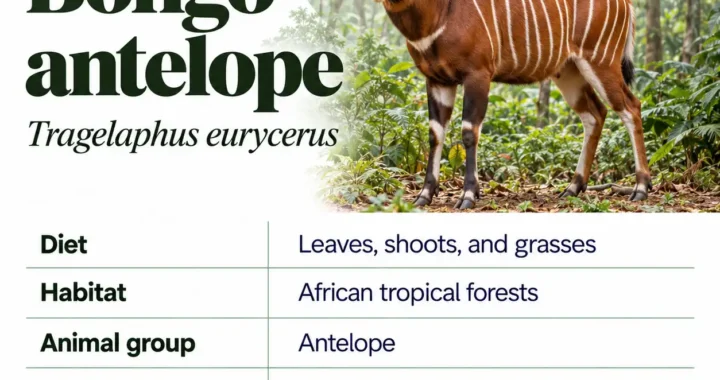
Lesser kudu vs. bongo
Bongos are large forest antelopes with reddish coats and white vertical stripes. They have spiral horns in both sexes, unlike lesser kudus, in which horns are normally restricted to males.
Bongos are associated with forest environments, while lesser kudus are primarily linked to dry bushland and scrub.
Lesser kudu vs. impala
Impala are slender antelopes that commonly use open woodland and savanna. Male impalas have lyre-shaped horns rather than the long spiral horns of a lesser kudu.
Impala are often observed in larger herds, whereas lesser kudus tend to be more secretive and are frequently seen in small female groups or as solitary males.
Comparison table
| Feature | Lesser kudu | Nyala | Bushbuck | Bongo | Impala |
|---|---|---|---|---|---|
| Scientific name | Tragelaphus imberbis | Tragelaphus angasii | Tragelaphus scriptus complex | Tragelaphus eurycerus | Aepyceros melampus |
| Main habitat association | Dry scrub and woodland | Dense woodland and thickets | Dense vegetation and woodland | Forest | Savanna and open woodland |
| Horned sexes | Males | Males | Generally males | Males and females | Males |
| Typical coat pattern | Numerous narrow white stripes | White vertical markings | Variable white markings | Bright white stripes on reddish coat | Generally plain reddish-brown |
| Social pattern | Small female groups; males often solitary | Variable groups | Often solitary or small groups | Small groups or herds | Frequently larger herds |
The descriptions above are broad comparisons. Habitat and social behavior can vary across each species’ range.
24. Interesting Lesser Kudu Facts
Here are 20 useful facts about this elusive East African antelope.
-
Its scientific name is Tragelaphus imberbis. The species name means “beardless.”
-
It is an antelope, not a deer. The lesser kudu belongs to the bovid family.
-
It is smaller than the greater kudu. The two species are related but distinct.
-
Adult males have spiral horns. Females are naturally hornless.
-
Its coat contains many white stripes. These markings help break up its body outline.
-
Females are usually reddish-brown. Mature males tend to become darker and grayer.
-
It lives in eastern Africa. Its native range includes parts of Ethiopia, Kenya, Somalia, South Sudan, Tanzania, and Uganda.
-
It prefers woody vegetation. Leaves and shoots are important parts of its diet.
-
It is mainly a browser. It does not depend primarily on grazing grass.
-
It is naturally secretive. Dense vegetation makes it difficult to observe.
-
Its ears are large. Hearing helps it remain alert to potential danger.
-
It uses camouflage. Its coat blends into the complex light and shadows of the bush.
-
Males are often solitary. Females may form small groups with their young.
-
It can make impressive leaps. Bounding movement helps it negotiate obstacles.
-
It is adapted to relatively dry habitats. Food-derived moisture can reduce dependence on frequent drinking.
-
Females generally give birth to one calf. The newborn relies heavily on concealment.
-
Calves often hide in vegetation. Their mothers return to nurse and care for them.
-
Its gestation lasts several months. Common references report approximately six to eight months.
-
Its IUCN status in the cited 2016 assessment is Near Threatened. That assessment also reported a decreasing trend.
-
Its survival depends on habitat protection. Natural scrubland, control of hunting, and reliable population monitoring are all important.
These facts are simplified summaries; exact measurements, local behavior, and population conditions can vary.
25. Frequently Asked Questions About Lesser Kudus
1. What is a lesser kudu?
A lesser kudu is a medium-sized antelope native to eastern Africa. It is known for its white-striped coat, slender body, large ears, and spiral horns in adult males.
2. What is the scientific name of the lesser kudu?
Its scientific name is Tragelaphus imberbis. It belongs to the family Bovidae.
3. Where do lesser kudus live?
They live in parts of eastern Africa, including suitable habitats in Ethiopia, Kenya, Somalia, South Sudan, Tanzania, and Uganda. Their distribution is patchy rather than uniform across these countries.
4. What habitat does a lesser kudu prefer?
Lesser kudus generally prefer dry woodland, thorn scrub, bushland, and thickets. They need both edible vegetation and sufficient cover to hide from predators.
5. What does a lesser kudu eat?
It mainly browses on leaves, shoots, twigs, buds, herbs, and other plant material. Fruits and grasses may also be eaten when available.
6. Is the lesser kudu a herbivore?
Yes. It is a herbivore and obtains its food from plants.
7. How big is a lesser kudu?
Adults commonly stand around 90–105 centimeters at the shoulder. Weight varies, but published references often report approximately 60–105 kilograms for adult males, with females generally lighter.
8. Do female lesser kudus have horns?
No. Female lesser kudus are naturally hornless. Mature males develop long, spiral-shaped horns.
9. How long are lesser kudu horns?
Horn size varies among males. Some mature males develop horns approaching or exceeding about 90 centimeters along their curves, and certain references report lengths of approximately 3.5 feet.
10. What is the difference between a lesser kudu and a greater kudu?
The lesser kudu is smaller and usually has more numerous, narrower body stripes. The greater kudu is larger and males typically have much longer horns and a more prominent throat fringe.
11. Is the lesser kudu endangered?
The IUCN assessment cited in this article classified it as Near Threatened in 2016, with a decreasing population trend. This classification is based on that assessment and should not be represented as a newly completed 2026 reassessment.
12. How many lesser kudus remain in the wild?
The IUCN assessment published in 2016 estimated 80,000–100,000 mature individuals. Other sources report estimates around 100,000–118,000 animals, but those figures are not necessarily directly comparable because dates and counting methods differ.
13. What are the main threats to lesser kudus?
Major concerns include habitat loss, fragmentation, hunting, and pressures associated with drought and changing land use. The relative importance of each threat varies by location.
14. What predators hunt lesser kudus?
Potential predators include lions, leopards, spotted hyenas, and other carnivores depending on the region. Humans also hunt them in some areas.
15. Are lesser kudus social animals?
They have a flexible social structure. Females may form small groups with young, while adult males are often solitary or occasionally form loose male groups.
16. How fast can a lesser kudu run?
Lesser kudus are agile and capable of rapid movement, but a single maximum speed is difficult to verify consistently across sources. Their main advantages include early threat detection, quick turns, and access to cover.
17. Can lesser kudus live without drinking water?
They can obtain moisture from their food and may drink infrequently when vegetation provides enough water. However, they still need sufficient moisture, and their requirements change with temperature, diet, and environmental conditions.
18. How long is a lesser kudu pregnant?
The gestation period is generally reported as approximately six to eight months.
19. How many babies does a lesser kudu have?
A female usually gives birth to one calf. The calf remains concealed for much of its earliest life while the mother returns to nurse and care for it.
20. When do lesser kudu calves begin following their mothers?
They begin accompanying their mothers as they become more mobile, often at around three to four weeks of age. The timing can vary, and weaning commonly occurs at approximately six months.
21. Are lesser kudus active during the day or night?
They are not strictly nocturnal. They often feed during cooler periods around dawn and dusk, although activity depends on local conditions and disturbance.
22. Why does the lesser kudu have white stripes?
The stripes help disrupt the animal’s outline against the alternating light and shadow of its woodland habitat. This camouflage can make it harder to detect.
23. Is a lesser kudu the same as a baby greater kudu?
No. The lesser kudu is a distinct species, not a juvenile greater kudu. Its smaller body size is an adult species characteristic.
24. Can lesser kudus jump?
Yes. They can make bounding leaps and move rapidly over uneven ground. Such agility helps them negotiate obstacles and escape threats.
25. Do lesser kudus migrate?
They are not known for the huge seasonal migrations associated with some African herbivores. However, they may move locally in response to food, water, rainfall, and disturbance.
26. Do lesser kudus live in deserts?
They can inhabit arid and semi-arid scrublands, but they still need adequate vegetation and cover. They should not be described as animals that can survive in completely barren desert conditions.
27. Do lesser kudus live in zoos?
Yes. Some zoos maintain lesser kudus for conservation education, research, and managed breeding. Captive animals require appropriate space, nutrition, veterinary care, and specialist husbandry.
28. Can lesser kudus be domesticated?
They are wild antelopes, not domesticated livestock. Their specialized needs and natural behavior make them unsuitable as household pets.
29. Why are lesser kudus difficult to study?
They are secretive, use dense vegetation, and may remain motionless when disturbed. These behaviors make direct counts and observations challenging.
30. How can lesser kudus be protected?
Important measures include preserving natural scrubland, maintaining habitat connections, reducing illegal hunting, monitoring populations, and involving local communities in conservation.
Lesser Kudu (Tragelaphus imberbis)
The lesser kudu is a remarkable African antelope whose beauty is matched by its adaptations to life in dry, thorny landscapes. Its reddish-brown or grayish coat, white body stripes, large ears, and elegant spiral horns make it distinctive, while its cautious behavior and preference for dense vegetation allow it to remain hidden from many potential threats.
As a browser, the lesser kudu depends on leaves, shoots, and other plant material rather than relying primarily on grass. Its ability to obtain moisture from vegetation can help it cope with dry conditions, but this does not make it immune to drought, habitat degradation, or the loss of suitable feeding areas.
The species’ conservation status deserves attention. The cited IUCN assessment classified the lesser kudu as Near Threatened and reported a declining population trend. Habitat loss, hunting, and fragmentation can undermine its long-term survival, especially when populations become isolated.
Protecting lesser kudus means protecting the wider ecosystems they inhabit. Preserving natural woodland and scrub, maintaining connections between habitats, improving wildlife monitoring, and working with local communities can all contribute to their future.
For wildlife enthusiasts, the lesser kudu is a reminder that some of Africa’s most fascinating animals are not the largest or most famous. Sometimes, the most extraordinary wildlife is the animal that can stand quietly among the branches and remain almost invisible.