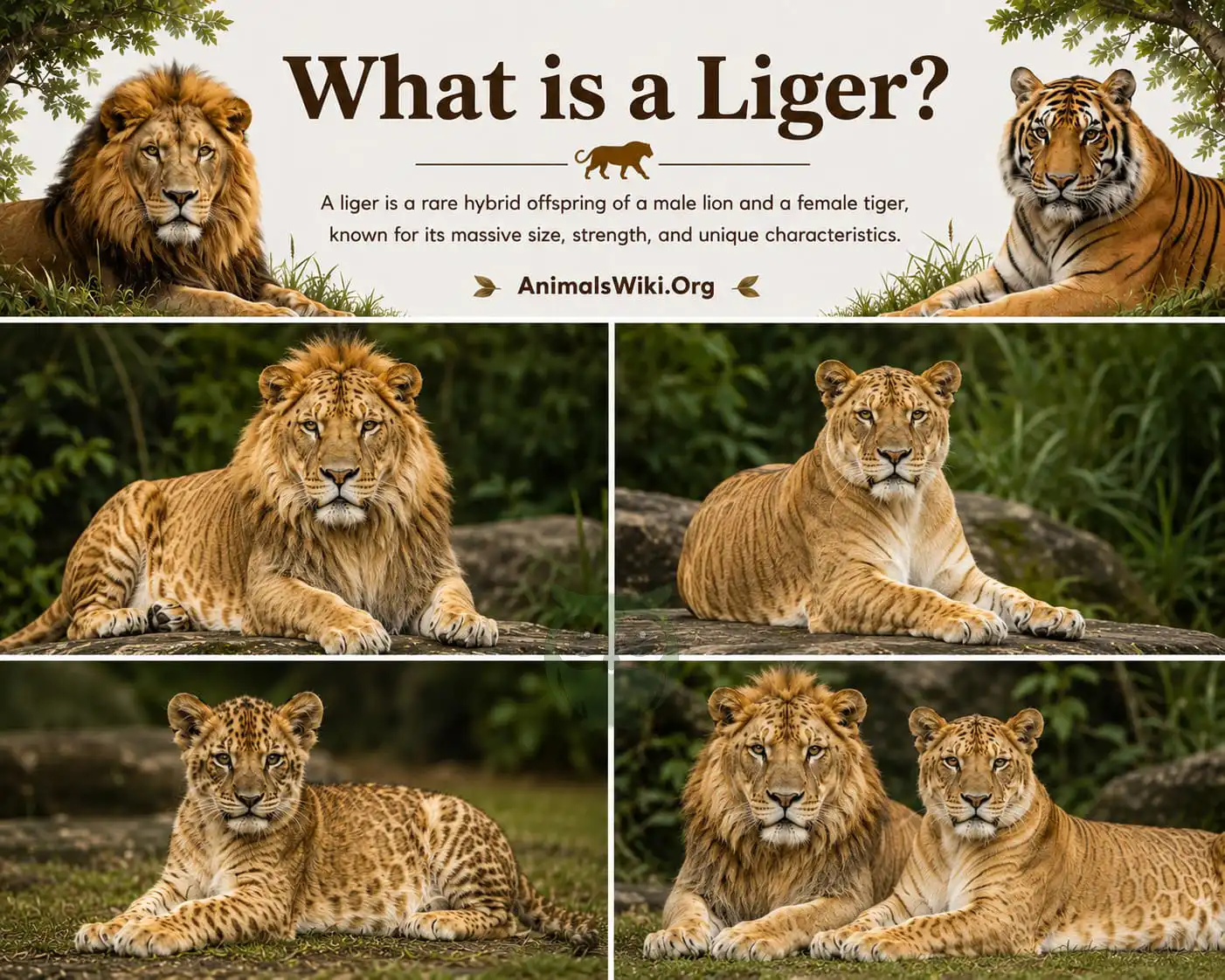
What is a Liger?
Liger Facts
| Feature | Details |
|---|---|
| Common Name | Liger |
| Scientific Name | Panthera leo × Panthera tigris (hybrid; no formal species name) |
| Family | Felidae |
| Order | Carnivora |
| Origin | Captive hybrid — male lion × female tiger |
| First Documented | Early 19th century (India, under British colonial rule) |
| Native Habitat | No wild habitat — exists only in captivity |
| Average Size | 3.0–3.6 meters body length; shoulder height 1.0–1.2 meters |
| Average Weight | 270–350 kg; largest individuals exceeding 400 kg |
| Lifespan | 10–18 years (captivity) |
| Diet | Carnivore — large quantities of meat; up to 9–10 kg daily |
| Conservation Status | Not Evaluated (hybrid; not a natural species) |
| Defining Feature | World’s largest living cat; may grow indefinitely due to growth dysregulation; social like lions; striped like tigers |
| Fertility | Males infertile; females fertile (can produce tiliger or liliger offspring) |
1. Species Overview & Hybrid Biology
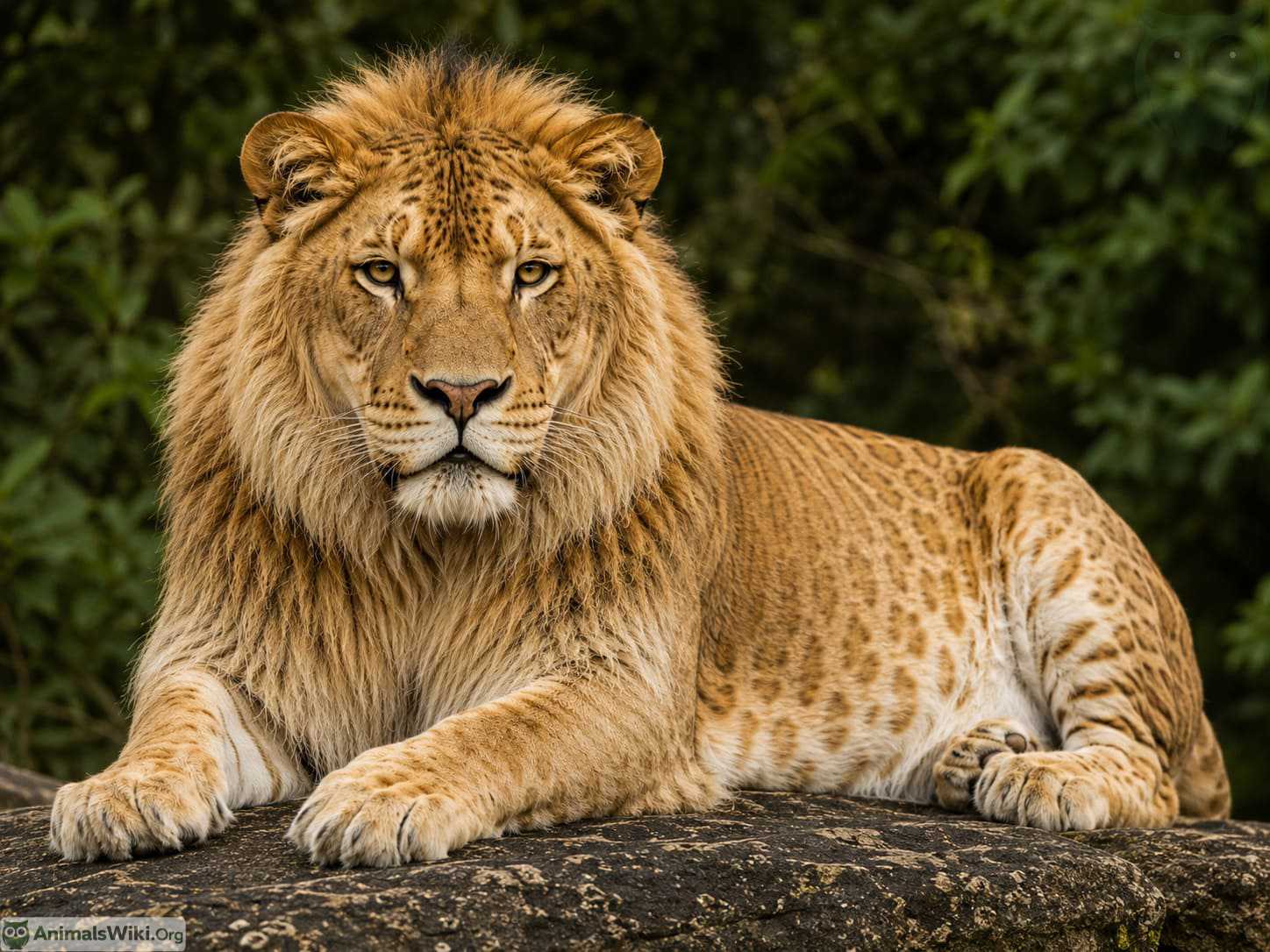
There is a creature alive today that is larger than any lion, larger than any tiger, larger than any wild cat that has walked the Earth in the past ten thousand years — perhaps the largest felid to exist since the great cats of the Pleistocene. It can weigh over 400 kilograms — nearly the combined weight of a large male lion and a large female tiger. It can stand taller at the shoulder than a lion. It can be longer from nose to tail than a full-grown Bengal Tiger. And yet it does not exist in nature. It never has. It is entirely a product of human intervention — a living demonstration of what happens when two of the world’s most powerful animals are placed in proximity to one another in circumstances that would never arise in the wild.
The Liger — the offspring of a male lion (Panthera leo) and a female tiger (Panthera tigris) — is the world’s largest living cat, and arguably one of the most biologically fascinating, most ethically contested, and most pop-culturally recognized hybrid animals in existence. It is not a species. It is not a subspecies. It is a hybrid — the product of the crossing of two distinct species that share a common ancestor approximately 3.9 million years ago but have since diverged sufficiently that their offspring are characterized by growth dysregulation, reproductive abnormalities, and a complex phenotype that draws from both parent species in ways that are only partially understood.
The liger presents simultaneously a window into the biology of hybridization — one of evolutionary biology’s most complex and most contested subjects — and a mirror reflecting human relationships with large carnivores, the ethics of captive animal breeding, and the complex intersection of conservation, entertainment, and science that characterizes modern zoological practice.
To understand the liger fully, one must understand not merely what it is — though that is genuinely extraordinary — but why it is; what it tells us about the genetics of the two most iconic wild cats; and what its existence means for both species’ conservation.
What is a Hybrid?
A hybrid is the offspring of two individuals of different species, subspecies, or other distinct taxonomic groups. In the animal kingdom, hybrids most commonly arise:
- In captivity, where species that would never encounter each other in the wild are housed together
- At natural range boundaries, where closely related species come into contact
- During range disruptions caused by human habitat modification that brings previously isolated species together
For hybridization to produce viable offspring, the parent species must be sufficiently closely related genetically that their gametes (sperm and eggs) can successfully combine, the embryo can develop normally enough to survive gestation, and the offspring can survive to adulthood. The closer the genetic relationship between parent species, the more likely that the hybrid offspring will be viable and healthy.
The Lion-Tiger Genetic Relationship
Lions and tigers are members of the genus Panthera — the great cats — and diverged from a common ancestor approximately 3.9 million years ago during the Pliocene epoch. Despite this separation, they retain sufficient genetic compatibility for successful hybridization. Their chromosomes are identical in number (2n = 38 in both species) — a necessary condition for successful meiosis and germ cell production in the hybrid.
The genetic distance between lions and tigers is considerably smaller than the distance between, for example, horses and donkeys (which diverged approximately 4–4.5 million years ago and produce sterile mules) — yet the liger shows some of the same reproductive consequences of hybridization, including male infertility.
Why Does the Liger Exist Only in Captivity?
Lions and tigers do not overlap geographically in the wild today — with one extraordinary exception:
The Gir Forest National Park and Wildlife Sanctuary in Gujarat, India is the only place on Earth where wild Asiatic Lions (Panthera leo persica) and Bengal Tigers (Panthera tigris tigris) potentially share range — or historically did so. However, natural hybridization between the two species in the wild has never been documented. Even where ranges overlap or historically overlapped, the two species maintain behavioral separation through different habitat preferences, prey choices, and activity patterns.
The liger therefore exists exclusively because humans house lions and tigers together in captivity — in zoos, private facilities, and breeding operations. Whether this is done intentionally (to produce the commercially attractive liger) or accidentally (when facilities house both species without adequate separation) varies considerably by institution.
Species Classification Table
| Classification Level | Details |
|---|---|
| Kingdom | Animalia |
| Phylum | Chordata |
| Class | Mammalia |
| Order | Carnivora |
| Family | Felidae |
| Subfamily | Pantherinae |
| Genus | Panthera |
| Parent 1 | Panthera leo — Lion (male) |
| Parent 2 | Panthera tigris — Tiger (female) |
| Hybrid Designation | Panthera leo × Panthera tigris |
| Reverse Hybrid | Tigon (Panthera tigris × Panthera leo) — male tiger × female lion |
| Status | Not a natural species; captive-produced hybrid only |
Did You Know? The liger is specifically the offspring of a male lion and a female tiger — the reverse cross (male tiger × female lion) produces a different hybrid called a tigon, which is significantly smaller than the liger and does not show the same extreme size characteristics. The dramatic size difference between ligers and tigons is one of the most striking demonstrations in mammalian biology of genomic imprinting — the phenomenon by which certain genes are expressed differently depending on whether they are inherited from the mother or the father, regardless of the genes’ actual DNA sequence.
2. Physical Description & Unique Features
The liger’s physical appearance is the most immediately striking thing about it — not because it is strange or alien-looking, but because it is so recognizably a combination of its two magnificent parents, scaled to a size that the eye struggles initially to accept. The first response of most people who see a liger in person is not “what is that?” but “how is that possible?”
The Extraordinary Size
The liger is the largest living cat — a title it holds unambiguously and by a considerable margin. Key size statistics:
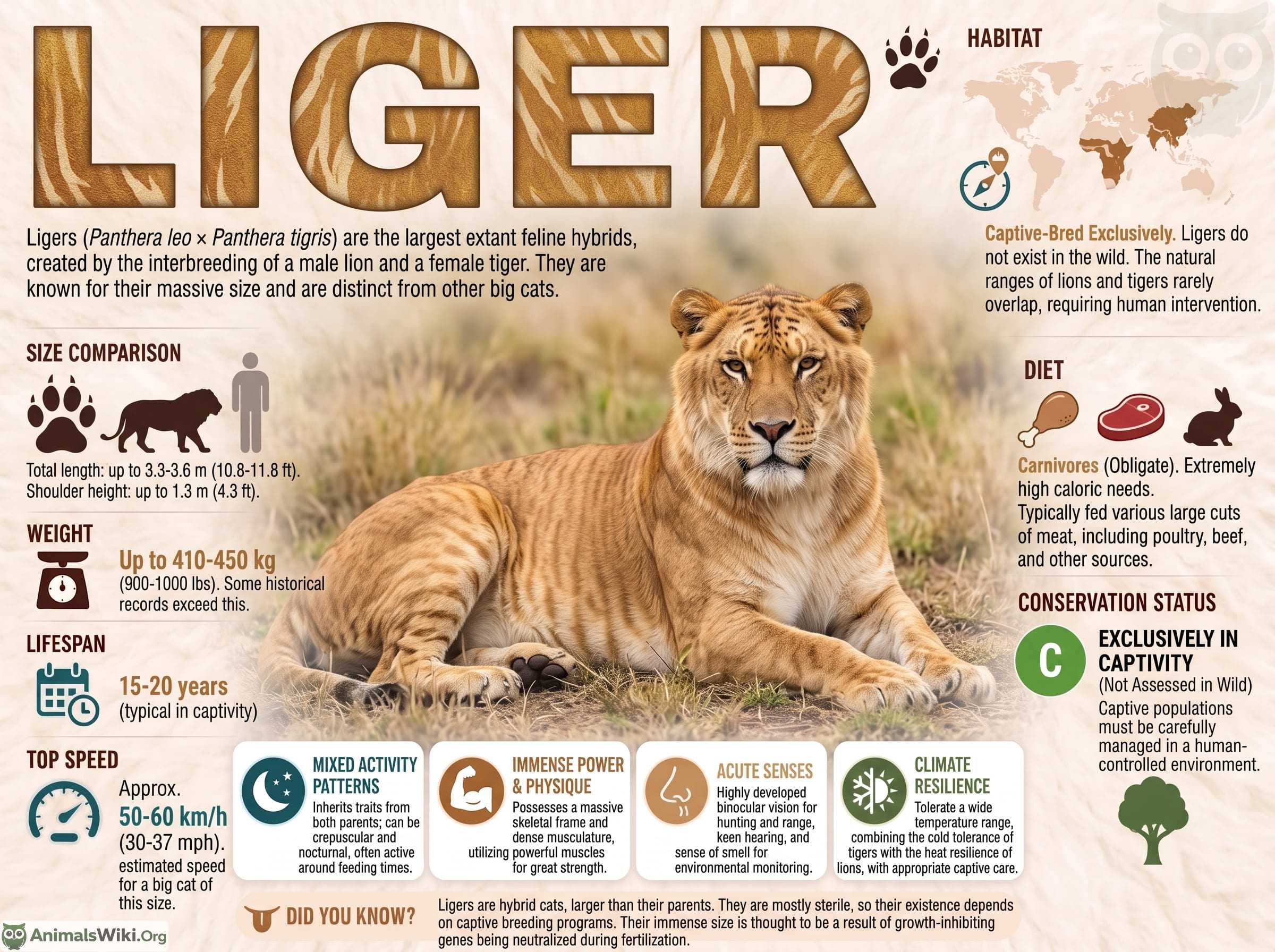
Weight — adult ligers typically weigh 270–350 kg in normal health and condition. Large individuals can exceed 400 kg. The heaviest reliably documented liger — Hercules, a resident of Myrtle Beach Safari in South Carolina — has been recorded at approximately 418 kg (922 lbs) — the weight of a fully grown male polar bear and approximately three times the weight of a large male lion.
Body length — adult ligers typically measure 3.0–3.6 meters (10–12 feet) from nose to tail tip — approaching or exceeding the length of the largest wild tigers on record.
Shoulder height — approximately 1.0–1.2 meters (3.3–3.9 feet) at the shoulder — exceeding the shoulder height of most large male lions.
Comparison with parent species:
| Measurement | Male Lion | Male Bengal Tiger | Male Liger |
|---|---|---|---|
| Weight | 150–250 kg | 180–260 kg | 270–420 kg |
| Body length | 1.7–2.5 m | 1.9–3.1 m | 3.0–3.6 m |
| Shoulder height | 0.9–1.1 m | 0.85–1.0 m | 1.0–1.2 m |
Why Are Ligers So Large? — Genomic Imprinting
The extraordinary size of ligers is not a simple matter of “hybrid vigor” (heterosis) — the somewhat mystical concept that hybrid offspring are simply better than their parents. The mechanism is considerably more specific and more interesting: genomic imprinting.
Genomic imprinting is a phenomenon in which certain genes are expressed differently depending on which parent they were inherited from — the parental origin of the gene, rather than its DNA sequence, determines whether it is active or silenced. This imprinting is achieved through epigenetic modifications (chemical marks on DNA or the proteins that package it) that are set during germ cell development.
In the case of the liger:
In lions: The male lion has evolved to activate growth-promoting genes inherited from the father (paternal genes promote offspring growth, increasing the lion’s fitness by maximizing offspring size). Lions have polygynous mating systems where males compete for females — larger offspring are more likely to survive and reproduce successfully. The lion’s own growth-promoting genetic program is therefore particularly aggressive.
In tigers: The female tiger has evolved to suppress growth-promoting imprinted genes to some degree — in the tiger’s solitary, resource-limited ecology, offspring that grow too large too quickly may deplete maternal resources and reduce the mother’s ability to produce subsequent offspring.
In the liger: The lion father’s growth-promoting imprinted genes are present and active; but the tiger mother’s growth-suppressing counterpart genes — which would normally modulate the lion genes’ effects in a tiger-tiger mating — are absent. The lion’s growth-promoting genes therefore operate without their normal counterbalancing influence, resulting in animals that grow considerably larger than either parent species.
This interpretation — proposed by researcher Siegfried Dröscher and elaborated by others — explains not only the liger’s extraordinary size but also the opposite size pattern in tigons (male tiger × female lion), which are typically smaller than either parent species: in the tigon, the tiger father’s relatively less growth-promoting genes combine with the lion mother’s growth-suppressing counterpart genes, producing a size-suppressed rather than size-enhanced hybrid.
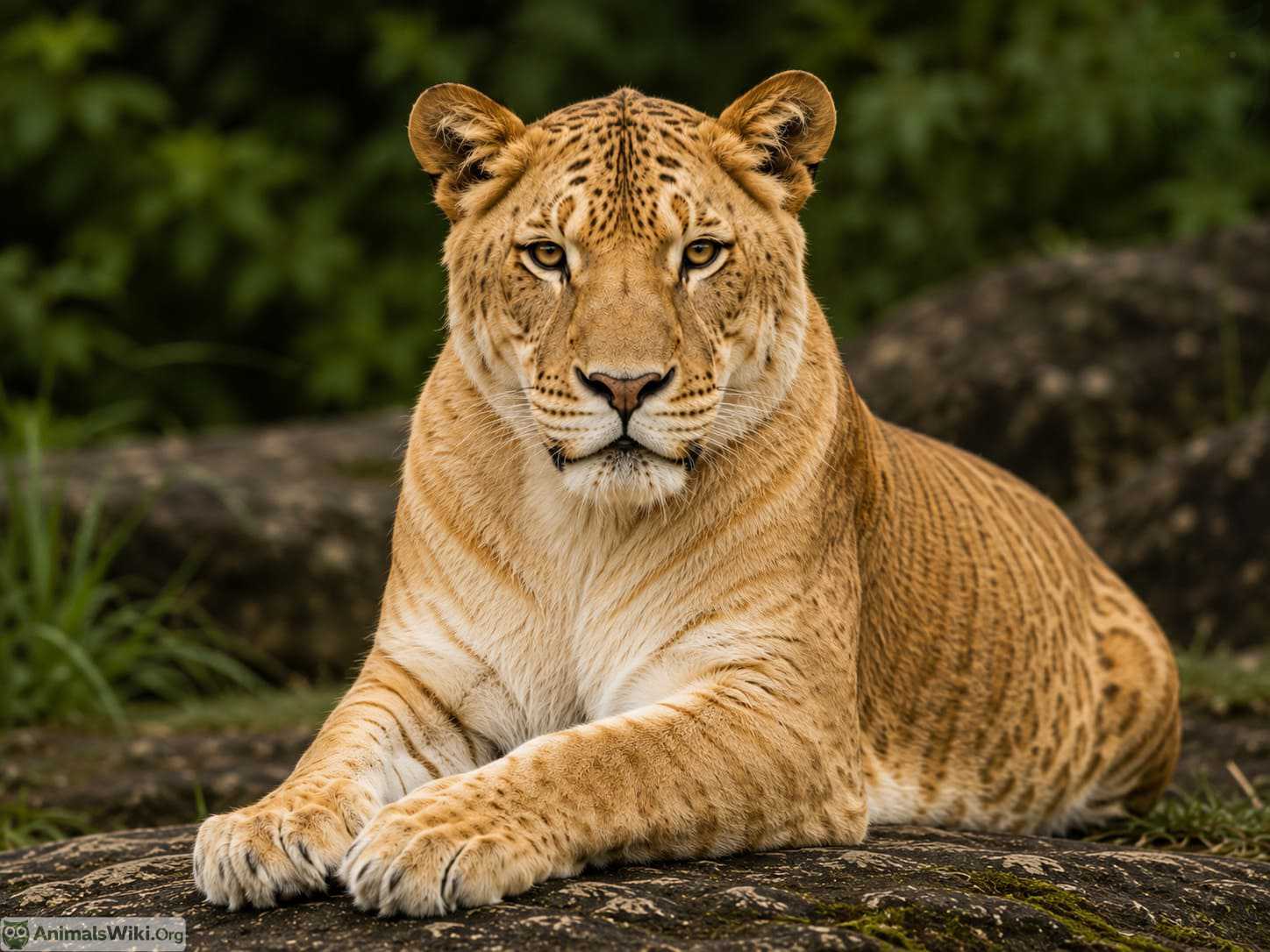
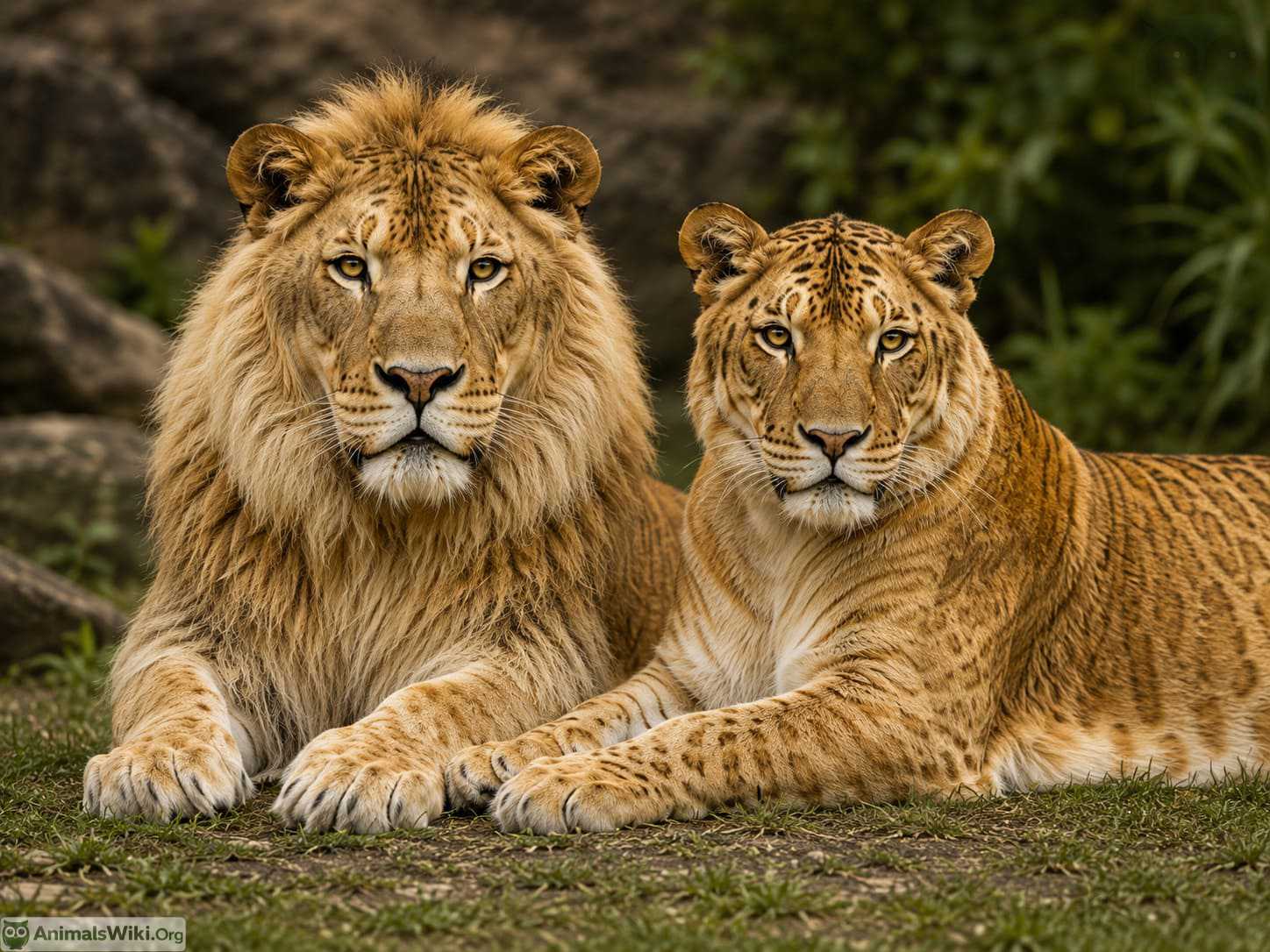
Appearance — Combining Two Iconic Aesthetics
Beyond their extraordinary size, ligers display a visually striking combination of lion and tiger characteristics:
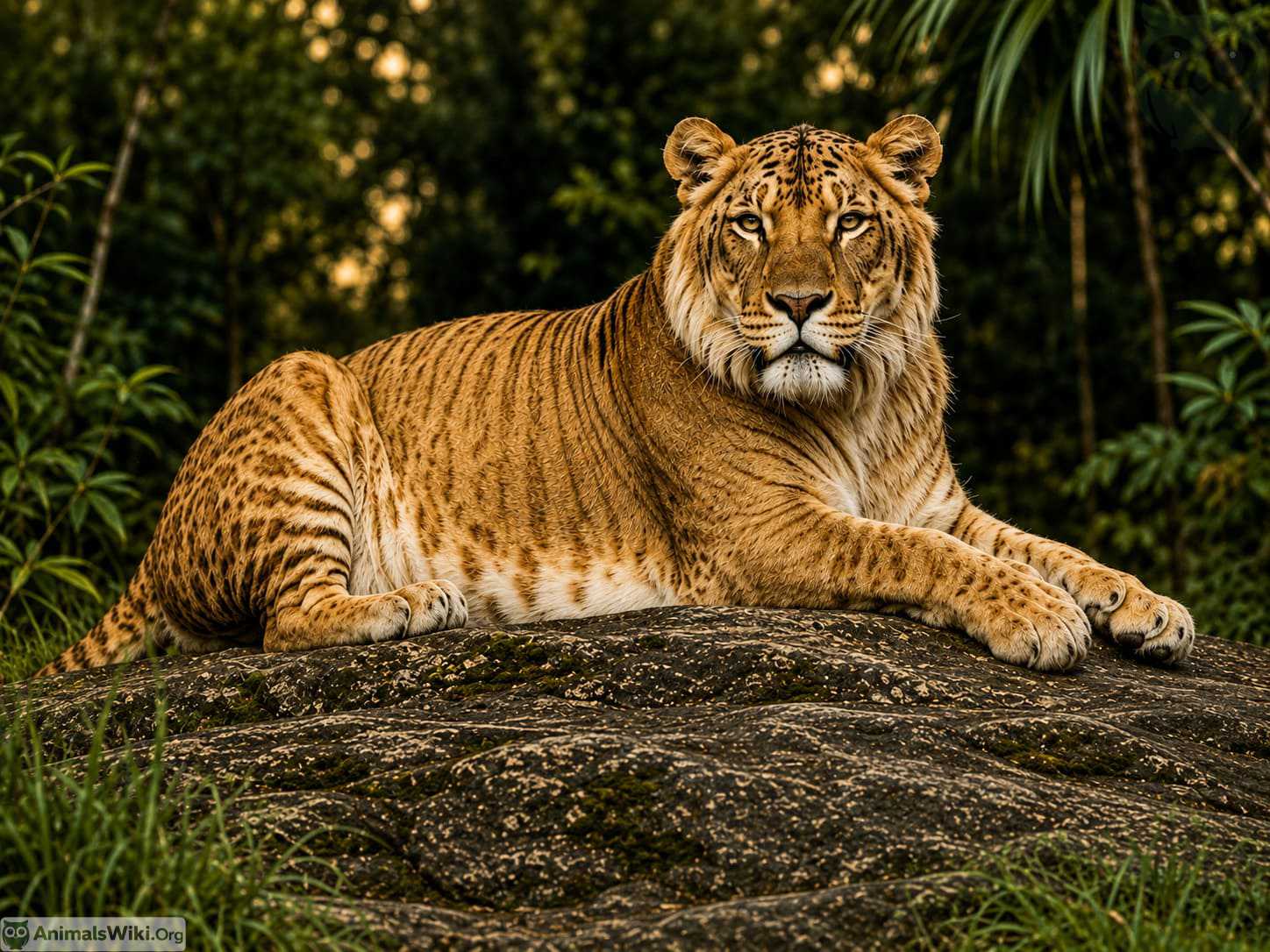
Coat color — generally tawny to sandy-buff — a background color intermediate between the lion’s plain tawny coat and the tiger’s more saturated orange; the overall impression is of a very large, pale tawny cat with patterning
Stripes — present but faint, appearing as pale darker striping on the tawny background; typically more visible on the legs, sides, and flanks than on the back; less distinct than tiger stripes but clearly present to a careful observer
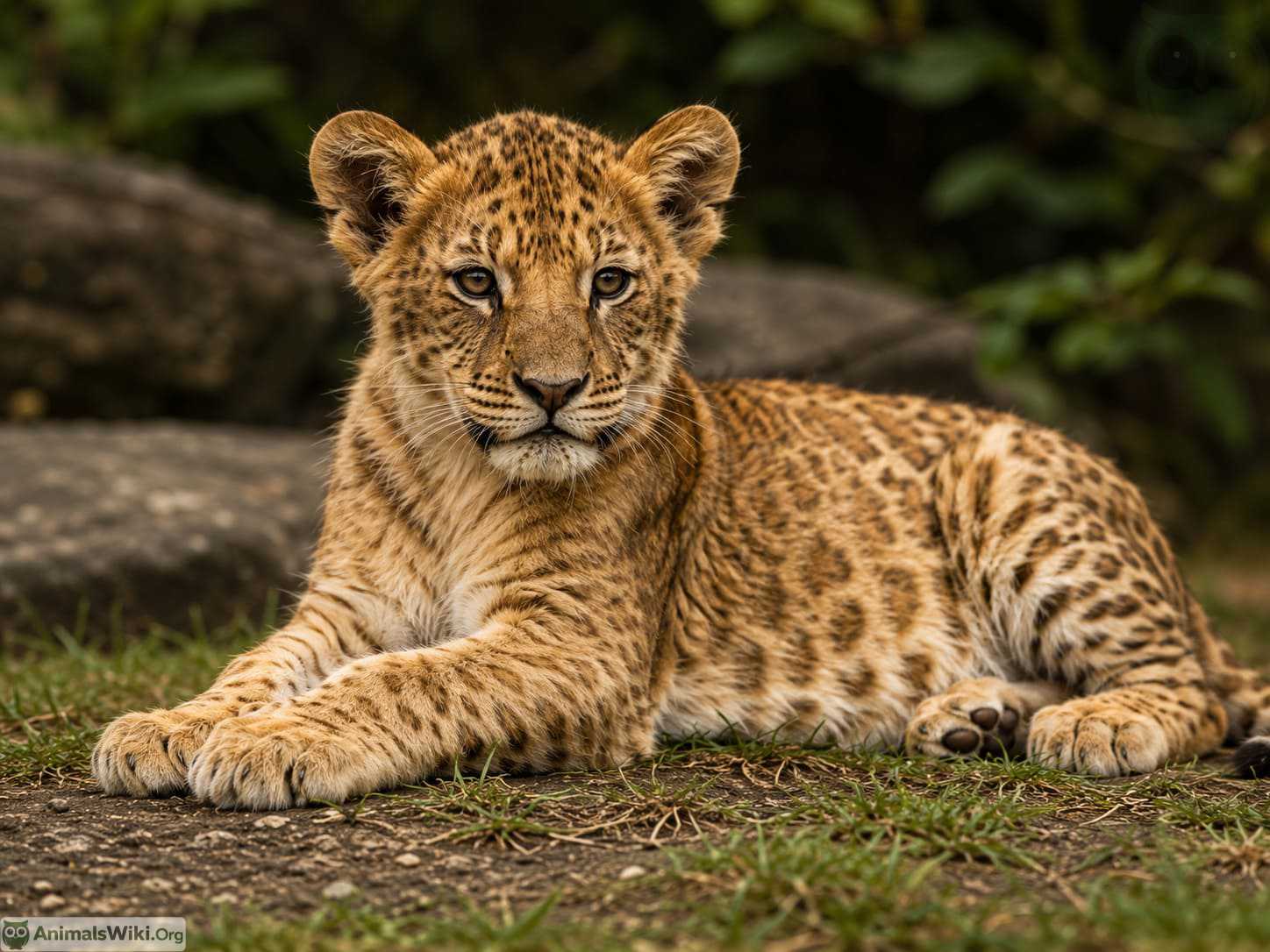
Spots — some ligers, particularly when young, display rosette-like spots on the belly and flanks — reminiscent of lion cubs’ spotted pattern that fades with age; some adults retain faint ghostly spotting
Mane — male ligers may develop a partial mane — typically shorter, less full, and less dramatically colored than a lion’s mane; some males develop no mane at all; the mane development is variable and not as consistent as in lions
Face — the face is intermediate; larger and more rounded than a tiger’s, with the broader muzzle of the lion family line but retaining some tiger facial structure; whisker spots are typically present, as in both parent species
Tail — tufted at the tip, as in lions but less dramatically so; the tuft is typically smaller and less developed than a lion’s
Size of the head — proportionally large even relative to the enormous body; a large liger skull is genuinely impressive, accommodating the jaw musculature needed to process large quantities of meat
Coat Variants — White Ligers
Some ligers have been produced from white lion (a color morph of the African lion carrying a recessive leucism gene) and white tiger (a color morph of the Bengal Tiger carrying a recessive gene producing white background coloration) parents. These white ligers display pale to near-white coats with barely visible pale striping — an even more dramatic visual effect than standard ligers and commercially very attractive, though the animals’ welfare implications of the deliberate production of these rare color morphs are a significant ethical concern.
Did You Know? A liger’s roar is unique — it combines elements of both the lion’s roar and the tiger’s chuff (a friendly contact sound also called a prusten or puffing sound). Ligers have been documented producing both roars comparable to lions and chuffing sounds associated with tigers — though neither is typically as powerful as a large male lion’s full territorial roar. Some observers describe the liger’s vocalization as a sound that contains both elements simultaneously — a haunting acoustic hybrid to match the visual one.
3. Origin, Captive Habitat & Geographic Distribution
The First Ligers — Early 19th Century India
The earliest documented records of ligers come from India in the early 19th century — a period when British colonial administration frequently maintained menageries that housed multiple large cat species. The earliest reliable description appears in a letter written by Mr. G. Woodney to a Mr. Elias in the early 1820s, describing hybrids between lions and tigers maintained at an Indian menagerie. Earlier suggestive references exist, but their reliability is uncertain.
A colored illustration of what appear to be lion-tiger hybrid cubs was published in the Proceedings of the Zoological Society of London in 1837 — depicting young animals described as “hybrid” offspring from the Exeter Exchange Menagerie in London, though subsequent examination of the historical record suggests these may have been tigons rather than ligers.
Ethan King — an American naturalist visiting India in the 1820s — made detailed observations of a liger-type animal at a Baroda menagerie that closely match modern descriptions of liger characteristics, providing some of the most reliable early documentation.
By the late 19th and early 20th centuries, ligers were documented at several European zoos — including the Schönbrunn Zoo in Vienna — as deliberate or accidental productions in collections that housed both species.
Where Ligers Live Today
Ligers exist exclusively in captivity — in zoos, wildlife parks, private sanctuaries, and private collections. Their geographic distribution is therefore entirely determined by where institutions or individuals choose to keep them:
United States — the largest number of ligers anywhere in the world; estimates suggest approximately 30–50+ ligers in the US, with concentrations in private facilities in South Carolina (Myrtle Beach Safari), Florida, Indiana, and other states with relatively permissive exotic animal ownership laws
Russia — several ligers maintained in Russian zoos and private facilities; Russia has produced some well-documented liger specimens
China — multiple ligers in Chinese zoological facilities; China has produced liger litters more consistently than most other countries in recent years
South Korea — documented liger births in South Korean facilities
European zoos — occasional historical occurrences; strict modern zoo standards make deliberate liger production unlikely at accredited European institutions
India — ironically, the country where ligers were first documented; modern Indian zoos under Central Zoo Authority regulations do not deliberately breed hybrid animals, though occasional accidental hybridizations have occurred at facilities housing both species
Legal Status
The legal status of ligers varies dramatically by jurisdiction:
United States — federal law does not specifically address liger production; state laws vary enormously, from permissive (South Carolina, Florida) to highly restrictive; the Big Cat Public Safety Act (2022) has significantly restricted public contact with big cats including ligers at private facilities
European Union — most accredited European zoos do not deliberately produce ligers; European Association of Zoos and Aquaria (EAZA) standards discourage hybrid production that does not serve conservation purposes
China — ligers exist in Chinese facilities; regulation of hybrid production is less strict than in most Western countries
India — the Central Zoo Authority has explicitly discouraged deliberate production of hybrid animals in Indian zoological gardens
4. Diet & Feeding Behavior
The liger’s diet is a direct extrapolation from its parent species combined with the demands of its extraordinary body mass — it requires enormous quantities of meat to maintain its size and health, consuming far more than either parent species typically would.
Dietary Requirements
An adult liger requires approximately 8–10 kg (18–22 lbs) of meat per day in captivity — sometimes more for the largest individuals. This is considerably more than a typical large male lion (approximately 5–7 kg daily in captivity) or tiger (approximately 5–8 kg daily) would consume.
The diet in well-managed captive facilities typically consists of:
Whole prey items — deer, goat, rabbit, chicken, and other animals provided whole; whole prey feeding is considered optimal for large cat husbandry as it provides natural feeding stimulation, dental wear from bone chewing, and nutritional completeness
Muscle meat — beef, horse meat, or other large mammal muscle meat; often the primary diet component in facilities without whole-prey access
Supplemented cuts — meat supplemented with bone meal, vitamins (particularly Vitamin A and niacin, which cats cannot synthesize), and mineral supplements
Bones — raw meaty bones provide dental health benefits and mental stimulation; important for large cat welfare
Feeding Behavior
The liger’s feeding behavior draws from both parent species:
Lion-like feeding behavior — tolerance of proximity during feeding; less intense resource guarding than tigers in some individuals; willingness to share feeding space with familiar individuals
Tiger-like feeding behavior — some ligers display the tiger’s characteristic inclination to drag prey items to a secluded location before feeding; occasional water-dipping of food (tigers frequently submerge prey in water before feeding)
Swimming ability — many ligers demonstrate the tiger’s natural affinity for water; some individuals voluntarily enter water and may dip food in water before consumption; this contrasts with the typical lion’s avoidance of deep water
Gorging pattern — like both parent species, ligers in captivity typically feed in large meals (gorging) rather than multiple small meals — a feeding pattern that reflects the intermittent nature of large prey acquisition in wild felids
The Challenge of Meeting Nutritional Needs
The liger’s extraordinary food requirements create significant economic and logistical challenges for facilities housing them. The daily cost of feeding a large liger at US market prices can reach $50–100+ per day — many times the cost of maintaining most zoo animals. This economic pressure is one factor that has led some less scrupulous operations to prioritize tourist revenue and public access over animal welfare — using food costs as a justification for insufficient dietary provision.
Well-managed facilities ensure that ligers receive nutritionally complete, appropriately portioned diets with dietary variety that provides both physiological nutrition and behavioral enrichment.
Did You Know? Unlike their lion parent — whose species generally dislikes deep water — many ligers actively seek out water and demonstrate a tiger-like enjoyment of swimming. Several famous ligers, including Hercules at Myrtle Beach Safari, have been documented voluntarily swimming in pools at their facilities, demonstrating behaviors more similar to tigers than lions. This behavioral characteristic appears to be more consistently expressed in ligers than the tiger’s pattern behavior — possibly because the tiger parent provides the behavioral programming for water affinity while the social environment provided by lion genes reduces the territorial isolation that typically channels tigers’ aquatic behavior.
5. Reproduction & Life Cycle
The liger’s reproductive biology is one of its most scientifically interesting aspects — and one that is directly relevant to understanding the genetics of hybridization between closely related species.
Male Liger Infertility
Male ligers are infertile — unable to produce functional sperm and therefore incapable of fathering offspring. This male sterility in hybrid animals is a well-established biological phenomenon described by Haldane’s Rule (1922) — the observation that in hybrids between different species, the heterogametic sex (the sex with two different sex chromosomes — XY males in most mammals) is more likely to be absent, rare, or sterile than the homogametic sex (XX females).
The mechanism of male liger infertility involves disruption of the meiotic process — the cell division by which sperm are produced. When lion and tiger chromosomes attempt to pair during meiosis, incompatibilities in chromosome structure and epigenetic marks prevent normal pairing and segregation, producing non-functional sperm. The genetic differences between lions and tigers, while small enough to allow successful hybridization and development, are sufficient to disrupt the highly precise process of meiosis in male reproductive cells.
Female Liger Fertility
Female ligers, by contrast, are fertile — capable of producing offspring when mated with either a lion or a tiger. This asymmetric fertility pattern is characteristic of many mammalian hybrids and represents one of the most direct experimental demonstrations of Haldane’s Rule in living animals.
Female liger fertility has produced several documented second-generation hybrid animals:
Liliger — offspring of a female liger and a male lion; documented births in Russia and other facilities; these animals show approximately 75% lion and 25% tiger genetic contribution
Tiliger — offspring of a female liger and a male tiger; documented in several facilities; these animals show approximately 25% lion and 75% tiger genetic contribution
Li-liger — offspring of a female liliger and a male lion; third-generation hybrids have been produced in at least one Russian facility
These second and third-generation hybrids provide genuinely valuable scientific information about inheritance patterns in Panthera hybrids and about the epigenetic basis of growth regulation.
Development and Growth
Liger cubs at birth are not dramatically larger than lion or tiger cubs — they are born at approximately the same size as large tiger cubs. The extraordinary size differential that characterizes adult ligers develops progressively over a growth period of several years.
Key developmental milestones:
| Stage | Timing | Notes |
|---|---|---|
| Birth | Day 0 | ~1–1.5 kg; size comparable to large tiger cub |
| Eye opening | ~10–14 days | Similar to both parent species |
| Solid food introduction | ~6–8 weeks | Begin transitioning from milk to meat |
| Weaning | ~3–4 months | Fully onto solid diet |
| Rapid growth phase | 6 months–3 years | Growth dramatically exceeds parent species rate |
| Sexual maturity (female) | ~2–3 years | Females can reproduce |
| Sexual maturity (male) | ~2–3 years | Males physically mature but reproductively infertile |
| Full adult size | 3–6 years | Continue growing beyond parent species’ adult size |
The Continuous Growth Question
One of the most discussed aspects of liger biology is whether they continue growing throughout their lives — unlike lions and tigers, which reach a characteristic adult size and then stop growing. Some reports suggest that ligers never fully cease growing — potentially gaining mass indefinitely in a phenomenon called acromegaly-like dysregulation (though this comparison to the human hormonal condition is imprecise).
The scientific evidence for indefinite growth is mixed. What is clear is that ligers grow significantly larger than either parent species before their growth rate decreases, and that very large ligers (400+ kg) likely represent animals that have grown for considerably longer than is typical for parent species. Whether this represents truly indefinite growth or simply a higher growth ceiling is an ongoing area of scientific debate.
Lifespan
Ligers in captivity typically live 10–18 years — roughly comparable to well-maintained captive lions and tigers. Some individuals have lived beyond 20 years. The health challenges associated with large size (joint stress, cardiovascular strain, thermoregulatory difficulty) may reduce lifespan relative to what optimal smaller-bodied cats achieve, but well-managed ligers can live full and apparently comfortable lives.
6. Social Behavior & Communication
The liger’s social behavior is a fascinating blend of its two parent species’ very different social systems — and the mixture produces a behavioral profile that is both predictable and occasionally surprising.
The Lion-Tiger Behavioral Contrast
Lions are among the most socially sophisticated of all wild cats — living in prides (family groups of related females and their offspring, typically with 1–4 adult males) with complex social bonds, cooperative hunting, allogrooming (mutual grooming), play behavior persisting into adulthood, and elaborate vocal communication. Lions are the only truly social wild cat.
Tigers, by contrast, are among the most solitary of large carnivores — adults (particularly males) maintaining large exclusive territories with minimal overlap; meeting conspecifics primarily for mating; lacking the social bonding behaviors of lions; and communicating primarily through scent marking and occasional vocalizations rather than through direct social interaction.
The Liger’s Social Profile
The liger appears to have inherited a social tendency closer to the lion’s end of the spectrum. Most observers of ligers in captivity note:
Sociability with humans — ligers are typically more comfortable with, and interested in, human company than most tigers; they seek contact, tolerate handling better, and show lion-like social behavior directed at human caregivers
Sociability with other animals — ligers in facilities where they have been raised with other animals (including other ligers) typically show tolerance of proximity unusual for tiger-like animals; some ligers have been observed engaging in play with other large cats
Vocal behavior — ligers produce both lion-like roars and tiger-like chuffing (prusten) sounds; the chuffing behavior in particular — a friendly contact vocalization typical of tigers — is frequently reported in ligers
Play behavior — adult ligers show extensive play behavior, more consistent with lions (which play extensively as adults) than tigers (which reduce play after cubhood)
Water behavior — as noted in the diet section, many ligers show tiger-like interest in water — swimming voluntarily and approaching water with curiosity rather than the avoidance typical of lions
Communication
Ligers communicate through the full repertoire available to both parent species:
Roar — present; typically described as somewhat intermediate between lion and tiger in character; audible at considerable distance
Chuff/Prusten — the friendly “puffing” sound typical of tigers; frequently reported in ligers; used in friendly approaches to familiar individuals
Growl, snarl, and hiss — standard threat vocalizations present as in both parents
Scent marking — spraying and cheek-rubbing behavior present; combines elements of both parent species’ marking behaviors
Body language — tail position, ear orientation, and postural signals draw from both species’ behavioral repertoires
7. Health Challenges & Medical Issues
The liger’s extraordinary size and hybrid genetic background create specific health challenges that must be carefully managed by responsible facility operators. Understanding these challenges is essential for evaluating the ethics of liger production and maintenance.
Size-Related Health Issues
The liger’s enormous body mass creates mechanical and physiological stresses that do not affect the smaller parent species to the same degree:
Joint and skeletal stress — the skeleton and joints of a 350+ kg cat bear mechanical loads that evolution has not optimized for in either parent species. Arthritis, hip dysplasia, and other joint conditions develop at higher rates and earlier ages in ligers than in parent species. The management of musculoskeletal health — through appropriate substrate, swimming opportunities (which reduce joint load), and dietary management to avoid obesity — is a significant veterinary priority.
Cardiovascular demands — maintaining circulation to the tissues of a very large body requires greater cardiac output than in parent-sized cats; cardiovascular monitoring and management is important for aging ligers.
Thermoregulation — large body mass reduces the surface-area-to-volume ratio, making heat dissipation more challenging. In hot climates, ligers must have access to shade, cool water, and air-conditioned facilities to prevent dangerous overheating. Swimming opportunities are particularly valuable for thermoregulation.
Neurological concerns — some reports suggest that ligers may be at elevated risk for certain neurological conditions; the evidence base is limited given small population size but warrants monitoring.
Genetic Health Issues
Beyond size-related problems, liger genetics themselves create specific health vulnerabilities:
Immune system function — the mixing of two divergent immune system genetics can occasionally produce immune irregularities; some ligers have shown elevated susceptibility to specific infections or reduced vaccine responses
Reproductive system abnormalities — male infertility is universal; females, while fertile, may show reproductive irregularities in some individuals
Neurological development — some ligers show behavioral or neurological abnormalities that may reflect disrupted gene expression during development; the significance and frequency of these issues is difficult to quantify given population size limitations
Obesity — A Major Welfare Concern
The most commonly documented health problem in captive ligers at less well-managed facilities is obesity. The liger’s enormous food requirements — combined with the relatively sedentary life of a captive animal and commercial incentives to keep animals as large as possible for marketing purposes — create conditions that favor excessive weight gain.
Obese ligers suffer from the same consequences as obese cats of parent species — joint stress, cardiovascular strain, reduced mobility, skin fold infections — but at the exaggerated scale of their body size. Responsible facilities carefully manage dietary intake and provide regular opportunities for exercise and behavioral enrichment to maintain healthy body condition.
Did You Know? The largest reliably documented liger — Hercules, living at Myrtle Beach Safari in South Carolina, USA — holds the Guinness World Record for the world’s largest living cat. Hercules weighs approximately 418.2 kg (922 lbs) — roughly equivalent to the weight of a large male polar bear or three large male lions. Despite his extraordinary size, Hercules is described by his handlers as gentle and social — exhibiting lion-like tolerance of human company combined with tiger-like water affinity. He was born in 2002 and continues to be one of the most visited and most photographed big cats in the world.
8. Relationship with Humans
Historical Fascination
Since the first documented ligers in early 19th century India, these animals have consistently attracted intense human interest — a combination of their extraordinary size, their visual beauty, and the almost mythological quality of being a combination of the two most iconic large predators in human culture.
Victorian-era menageries in Britain and Europe exhibited hybrid big cats (including liger-type animals) as significant attractions — their novelty value drawing visitors in numbers that single-species cats could not match. Early zoological publications in Britain documented hybrid big cat births with considerable scientific interest.
Carl Hagenbeck — the Hamburg-based animal trader who transformed zoological practice in the late 19th and early 20th centuries — reportedly maintained and exhibited lion-tiger hybrids, though the precise details are difficult to verify from historical records.
The American Private Facility Landscape
The largest concentration of ligers today is in the United States — specifically in states with permissive exotic animal laws (South Carolina, Florida, Indiana, and others). The American private big cat industry — a complex and controversial sector involving zoos, sanctuaries, wildlife parks, and private hobbyists — has produced and maintained ligers primarily for commercial purposes:
Tourist attraction — the liger’s extraordinary size and appearance makes it a significant tourist draw; facilities charge substantial admission fees for the opportunity to see, photograph, and in some cases interact with ligers
Breeding revenue — liger cubs have historically been sold to other facilities or private owners at high prices; reduced by recent legislation but historically significant
Media appearances — some ligers have achieved significant media profiles through television programs, YouTube channels, and social media, generating substantial commercial value for their facilities
The Big Cat Public Safety Act, signed into US law in December 2022, significantly restricts public contact with big cats (including ligers) at private facilities and prohibits the breeding of big cats for private ownership purposes. This legislation has significantly changed the American private liger landscape, though implementation and enforcement continue to evolve.
The Tiger King Connection
The documentary series “Tiger King: Murder, Mayhem and Madness” (Netflix, 2020) dramatically highlighted the conditions and practices of the American private big cat industry — including facilities maintaining ligers and other hybrid cats. While the documentary focused primarily on tigers rather than ligers specifically, it significantly increased public awareness of the private big cat industry and contributed to the momentum behind the Big Cat Public Safety Act.
Scientific Relationships
For the scientific community, ligers provide a unique natural experiment in mammalian hybridization genetics — a window into the molecular mechanisms of genomic imprinting, growth regulation, and hybrid incompatibility that would be impossible to study in any other way. Key scientific insights from liger biology include:
Demonstration of genomic imprinting in growth regulation — the liger/tigon size difference is among the clearest natural demonstrations of imprinted gene action in any mammal
Documentation of Haldane’s Rule in felids — male infertility in ligers represents textbook Haldane’s Rule expression
Information on Panthera phylogenetics and genetics — liger hybrid viability data informs understanding of the genetic relationships and divergence times within the Panthera genus
9. Conservation & Ethical Debate
The liger occupies one of the most contested positions in modern conservation debate — simultaneously fascinating scientifically, commercially valuable to some facilities, deeply concerning to major conservation organizations, and a focus of genuine animal welfare concern.
The Conservation Critique — A Strong Consensus
The overwhelming consensus among professional conservationists, accredited zoos, and major wildlife organizations is that deliberate liger production serves no conservation purpose and potentially harms conservation goals:
No wild population relevance — ligers do not exist in the wild, cannot exist in the wild, and cannot contribute to the conservation of either parent species’ wild populations; they are genetically dead ends that consume resources without conservation benefit
Resources diverted from conservation — the substantial financial resources required to feed, house, and care for ligers could fund meaningful conservation of wild lion and tiger populations, both of which are threatened
Genetic dilution concerns — in facilities housing both lion and tiger populations, the production of ligers risks creating confusingly mixed genetic records and reducing the quality of captive breeding programs for both parent species
Public misrepresentation — the use of ligers in commercial settings sometimes involves misleading representations of their relationship to wild cat conservation; facilities occasionally market liger viewing as “supporting conservation” when it demonstrably does not
Animal welfare concerns — the specific health challenges of ligers, combined with the commercial motivations that sometimes drive their production, create conditions where animal welfare may be subordinated to financial considerations
The Ethical Debate — Multiple Perspectives
The case for deliberate liger production (arguments made by proponents):
- Ligers produced as accidental byproducts of facilities housing both species are inevitable; managed breeding is preferable to uncontrolled accidental production
- Ligers that exist deserve excellent care regardless of the ethics of their production
- Scientific knowledge gained from studying ligers justifies their existence as research subjects
- Public fascination with ligers brings people into contact with big cat conservation messages
The case against deliberate liger production (arguments made by critics):
- The production of animals specifically to suffer predictable health consequences and serve commercial purposes represents unethical instrumental treatment of animals
- Accidental production should be prevented through proper facility management rather than used as justification for deliberate breeding
- The scientific value of ligers does not require ongoing production of new individuals; existing animals provide sufficient research opportunity
- The commercial exploitation of ligers distracts from genuine conservation funding and public education
The position of major conservation organizations:
- IUCN Cat Specialist Group — does not recognize ligers as conservation-relevant; focuses attention on wild population conservation
- World Association of Zoos and Aquariums (WAZA) — member institutions are expected not to deliberately produce hybrids that do not serve conservation purposes
- American Zoo and Aquarium Association (AZA) — accredited AZA facilities do not deliberately produce ligers; the species are managed in separate Species Survival Plans for their respective species
What Responsible Liger Ownership Looks Like
For ligers that already exist — regardless of the ethics of their production — responsible care involves:
- Adequate space for their enormous body size — significantly larger than typical big cat enclosures
- Access to swimming facilities for thermoregulation and behavioral enrichment
- Appropriate diet without overfeeding that causes obesity
- Regular veterinary monitoring addressing size-related health challenges
- Social enrichment through appropriate animal or human company
- No public contact beyond viewing that stresses the animal
- No commercial exploitation of the animal’s reproductive capacity
10. Famous Ligers Around the World
Hercules — The World’s Largest Living Cat
Hercules — a male liger born in 2002 at Myrtle Beach Safari (also known as the Institute of Greatly Endangered and Rare Species, or T.I.G.E.R.S.) in Myrtle Beach, South Carolina, USA — holds the Guinness World Record for the world’s largest living cat, with a recorded weight of approximately 418 kg (922 lbs).
Hercules is the son of a male lion named Arthur and a female tiger named Ayla, both resident at Myrtle Beach Safari. His size was apparent from early age — he exceeded the normal growth trajectory of both parent species from cubhood onward. Hercules has been featured in numerous television programs and documentaries, and has been photographed with celebrities including Will Smith, Sylvester Stallone, and David Copperfield.
The facility’s founder, Doc Antle, has been one of the most prominent public advocates for ligers in the United States — and one of the most controversial figures in the private big cat industry, achieving significant notoriety through his appearance in the Tiger King documentary series. The facility’s practices have been subject to significant criticism from animal welfare organizations.
Sinbad — The World’s Tallest Cat
Sinbad — another liger at Myrtle Beach Safari — has been claimed as one of the tallest ligers on record, reportedly standing taller at the shoulder than Hercules despite being somewhat lighter. Sinbad has featured in promotional materials for the facility and appeared in media coverage of the record-breaking liger phenomenon.
Hobbs — The Russian Liger Record Holder
Hobbs — a liger at the Novosibirsk Zoo in Russia — became internationally known in the 2000s as one of the largest documented ligers outside the United States, contributing to scientific documentation of liger size ranges outside the American private facility context.
Russian Second-Generation Ligers
Russia has produced some of the best-documented cases of second-generation liger offspring — liligers and other hybrid combinations that provide scientific data on multi-generation hybridization in Panthera. The Novosibirsk Zoo and Vladivostok facilities have been sites of some of the most scientifically documented hybrid big cat breeding in the world.
Chinese Liger Births
Multiple Chinese zoological facilities have reported liger births in the 2000s–2020s — providing additional data on liger birth weights, development rates, and adult characteristics outside the American private facility context. Chinese liger populations have been documented at facilities including the Hainan Tropical Wildlife Park and Botanical Garden.
11. Role in Captive Ecosystems & Scientific Research
Scientific Value — Genuine and Limited
The liger’s scientific value is genuine but limited by small population size and the ethical constraints that appropriately limit experimental research on large carnivores:
Genomic imprinting research — the liger/tigon size difference provides the clearest demonstration in any large mammal of the role of genomically imprinted genes in regulating growth; understanding this mechanism in a living system is scientifically valuable
Panthera phylogenetics — the fertility and behavior of ligers and second-generation hybrids provides information about the genetic relatedness and divergence of lion and tiger lineages that complements molecular phylogenetic data
Hybrid vigor and inbreeding — comparison of liger health (benefits and costs of outbreeding) with the health of inbred captive lion and tiger populations provides information relevant to conservation genetics
Behavioral genetics — the mixing of lion (social) and tiger (solitary) behavioral tendencies in a single individual provides a living model for the genetic basis of social behavior — a subject of considerable scientific interest
Educational Role
Ligers in well-managed facilities serve a genuine public education function — their extraordinary size and hybrid nature provide natural entry points for public engagement with genetics, hybridization, and conservation. The story of why ligers exist only in captivity — and what their existence tells us about the separation of lions and tigers in the wild — is a compelling and accessible science communication narrative.
The challenge is ensuring that the educational message is accurate — that visitors understand they are looking at an animal that cannot contribute to conservation, whose existence raises genuine ethical questions, and whose parent species are threatened by human activities in the wild — rather than a simple spectacle.
12. Myths, Culture & Pop Culture Appearances
Mythological Antecedents — Lions and Tigers Combined
Long before ligers actually existed, the combination of lion and tiger characteristics had embedded itself in human mythology and art. The Griffin — the classical mythological creature with the body of a lion and the wings and head of an eagle — and the Sphinx — lion-bodied with a human head — represent the ancient human imagination’s tendency to combine the most powerful animals into composite super-beings. The liger, in a sense, fulfills the mythological dream of combining two of the world’s most powerful predators into a single being.
In Chinese mythology, the combination of tiger and lion characteristics appears in various artistic traditions — the Pixiu (a mythical protective creature) and various temple guardian figures combine feline characteristics in ways that echo the modern liger.
Pop Culture — Napoleon Dynamite’s Defining Contribution
The most influential single cultural moment for liger awareness in the English-speaking world is almost certainly the scene in “Napoleon Dynamite” (2004, dir. Jared Hess) in which the socially isolated protagonist Napoleon, when asked what his favorite animal is, responds: “A liger. It’s pretty much my favorite animal. It’s like a lion and a tiger mixed… bred for its skills in magic.”
This brief exchange — memorable for its deadpan delivery, its factual accuracy (a liger is indeed a lion-tiger hybrid), and the completely invented element of “magic skills” — became one of the most quoted lines in early 2000s American pop culture and introduced the word “liger” to millions of people who had never encountered it before. Napoleon Dynamite’s liger reference has been described by biologists and science communicators as the single most significant driver of general public awareness of the liger’s existence.
Pop Culture Appearances
- “Napoleon Dynamite” (2004) — the defining pop culture moment for liger awareness; “bred for its skills in magic” became a catchphrase
- “Jack Hanna’s Wild Countdown” and various wildlife documentary segments — Hercules and other famous ligers have been featured extensively in American wildlife television programming
- “Tiger King” (Netflix, 2020) — while focused on tigers, featured the broader private big cat industry including facilities maintaining ligers; dramatically increased public awareness of private big cat operations
- Guinness World Records TV programs — Hercules’s world record appearances on multiple Guinness programming formats introduced ligers to global audiences
- Social media — liger content generates significant engagement; photographs of Hercules alongside humans (dramatically illustrating his scale) are among the most shared big cat images on the internet; size comparison videos comparing ligers to lions, tigers, and humans generate millions of views
- Science education — ligers appear in virtually every undergraduate genetics and evolution textbook as an example of genomic imprinting, Haldane’s Rule, and hybrid biology
- Various video games — liger-like creatures appear as powerful enemies or companions in numerous fantasy video games, drawing on the cultural currency of “lion + tiger = ultimate cat”
- Rick Riordan’s “Percy Jackson” series — features a “liontaur” (lion-tiger hybrid guardian) in one installment, reflecting the liger’s cultural penetration into popular fantasy literature
Did You Know? The Napoleon Dynamite liger scene (2004) has been credited by multiple wildlife scientists and science communicators as doing more to introduce the general public to the concept of the liger than any natural history documentary, zoo exhibit, or scientific paper. Before 2004, most English-speaking people outside specialist zoological circles had never heard of a liger. After the film’s release, internet searches for “liger” increased by orders of magnitude and the word entered common cultural vocabulary. The film’s screenwriters have confirmed that the liger reference was researched — it is one of the few factually grounded elements in a film deliberately populated with absurdist fiction.
13. Discovery & Historical Timeline
~3.9 million years ago — Lions and tigers diverge from a common Panthera ancestor during the Pliocene epoch; the genetic divergence that will eventually allow hybridization but not fully compatible reproduction begins.
~10,000 years ago — Lions and tigers overlap in range across parts of the Middle East and the Indian Subcontinent; there is no evidence of natural hybridization despite geographic proximity.
~2000 BC — Lions and tigers are both documented in ancient Mesopotamian art and texts; both are already culturally significant animals in human civilization; no records of natural hybrids.
~1820s — The earliest reliable documentary records of lion-tiger hybrids (ligers) in captivity; Indian menageries housing both species under British colonial administration; descriptions in correspondence and natural history publications.
1837 — Proceedings of the Zoological Society of London publishes what may be the first illustrated record of lion-tiger hybrid cubs from the Exeter Exchange menagerie in London.
1850s–1900s — Multiple European zoos document lion-tiger hybrid births; the hybrid’s existence is well-known in zoological circles; scientific discussion of the significance of hybrid fertility begins.
1895 — A Bombay Natural History Society report documents lion-tiger hybrids at the Baroda menagerie in India — one of the most reliable historical records of early liger production.
1922 — J.B.S. Haldane publishes the rule bearing his name — the observation that in species hybrids, the heterogametic sex is more likely to be sterile; later confirmed in ligers through observation of male infertility.
Mid-20th century — Ligers and tigons produced occasionally at various zoos worldwide; scientific interest in hybrid genetics grows; liger fertility (female) and infertility (male) documented more precisely.
1980s–1990s — American private big cat industry expands; ligers produced with increasing frequency at private facilities in permissive US states; commercial motivation for liger production grows.
2002 — Hercules born at Myrtle Beach Safari, South Carolina; will go on to become the world’s most famous individual liger.
2004 — “Napoleon Dynamite” releases; the “bred for its skills in magic” scene transforms liger cultural recognition globally.
2006 — Guinness World Records formally recognizes Hercules as the world’s largest living cat — significant media coverage globally.
2010s — Multiple additional liger births documented worldwide; second-generation hybrids (liligers, tiligers) produced and documented particularly in Russia; increasing scientific literature on liger genetics and the genomic imprinting mechanism.
2020 — “Tiger King” (Netflix) brings private big cat industry into global spotlight; facilities housing ligers experience increased public scrutiny.
2022 — US Big Cat Public Safety Act signed into law; restricts public contact with big cats including ligers; significant impact on American private big cat industry.
2026 — Approximately 30–100 ligers estimated to exist worldwide; exact number difficult to determine given private facility opacity; Hercules continues as the world’s most famous liger at approximately 24 years of age.
14. Comparison with Related Hybrids
| Feature | Liger | Tigon | Jaglion | Leopon |
|---|---|---|---|---|
| Parents | ♂ Lion × ♀ Tiger | ♂ Tiger × ♀ Lion | ♂ Jaguar × ♀ Lion | ♂ Leopard × ♀ Lion |
| Size vs parents | Much larger than both | Smaller than both | Intermediate | Intermediate |
| Weight (adult) | 270–420 kg | 100–180 kg | ~90–120 kg | ~80–100 kg |
| Size mechanism | Genomic imprinting (growth genes unrestrained) | Genomic imprinting (growth genes suppressed) | Intermediate | Intermediate |
| Male fertility | Infertile | Infertile | Infertile (presumed) | Infertile (documented) |
| Female fertility | Fertile | Fertile (documented in some) | Unknown | Documented in some |
| Appearance | Tawny; faint stripes; partial mane | Orange-tan; strong stripes; smaller mane | Spotted; some striping | Spotted; some mane |
| Frequency | Uncommon; several dozen known | Rare; fewer than ligers | Very rare; few documented | Very rare; few documented |
| Best known facility | Myrtle Beach Safari, USA | Various facilities globally | Potentially Big Cat Rescue (documented jaguar hybrid) | Koshien Zoo, Japan (historical) |
| Pop culture fame | Very high (Napoleon Dynamite) | Moderate | Very low | Very low |
The Tigon — The Liger’s Smaller Cousin
The Tigon (male tiger × female lion) is the reciprocal hybrid to the liger — and it demonstrates the genomic imprinting mechanism in the opposite direction. Where the liger grows dramatically larger than either parent species, the tigon grows smaller than either parent species — typically weighing 100–180 kg as adults, compared to the lion’s 150–250 kg or tiger’s 180–260 kg.
Tigons typically show more distinct tiger-like striping on a background closer to the lion’s tawny coloration; males may develop a small mane; females are fertile; males are infertile.
Tigons are significantly rarer than ligers in captivity — partly because the size outcome (a smaller animal) is commercially less appealing, and partly because the logistics of breeding a male tiger with a female lion are somewhat different from the reverse combination.
15. Best Places to See Ligers
The Ethical Viewing Question
Before listing specific facilities, it is important to acknowledge the ethical complexity of liger tourism. Major conservation and animal welfare organizations have raised significant concerns about some facilities that house ligers — particularly private facilities that prioritize commercial exploitation over animal welfare. Visiting facilities with poor welfare standards financially supports practices that harm both individual animals and conservation.
Criteria for responsible liger viewing:
- The facility should provide adequate space for the animals’ enormous size
- Animals should be in good body condition (not obese; not underweight)
- Public contact beyond viewing should not be offered (no “cub petting” or direct animal interaction for paying customers)
- The facility should provide accurate information about the animals’ status (hybrid; no wild conservation relevance)
- The facility should not be actively breeding additional ligers
Known Liger Locations (With Caveats)
- 🇺🇸 Myrtle Beach Safari, South Carolina, USA — the most famous liger facility globally; home of Hercules, the world’s largest living cat; the facility has been criticized by some animal welfare organizations but also defended by others; under new regulatory constraints following the Big Cat Public Safety Act 2022
- 🇷🇺 Novosibirsk Zoo, Russia — one of Russia’s most reputable zoological institutions; has housed ligers and produced documented second-generation hybrids; generally considered more scientifically credible than private American facilities
- 🇨🇳 Various Chinese zoos — multiple Chinese facilities have housed ligers; quality of care varies enormously between facilities
- 🇰🇷 South Korean facilities — documented liger births in South Korean zoos; specific current locations require verification
The Big Cat Sanctuary Alternative
For those who wish to see large hybrid cats while supporting genuine animal welfare, accredited big cat sanctuaries in the US and UK maintain rescued big cats (including occasional hybrid animals rescued from poor conditions) with demonstrably high welfare standards. These facilities prioritize the animals’ welfare over commercial considerations and use visitor revenue to fund rescue and care rather than to breed more animals.
16. Liger Fun Facts for Kids
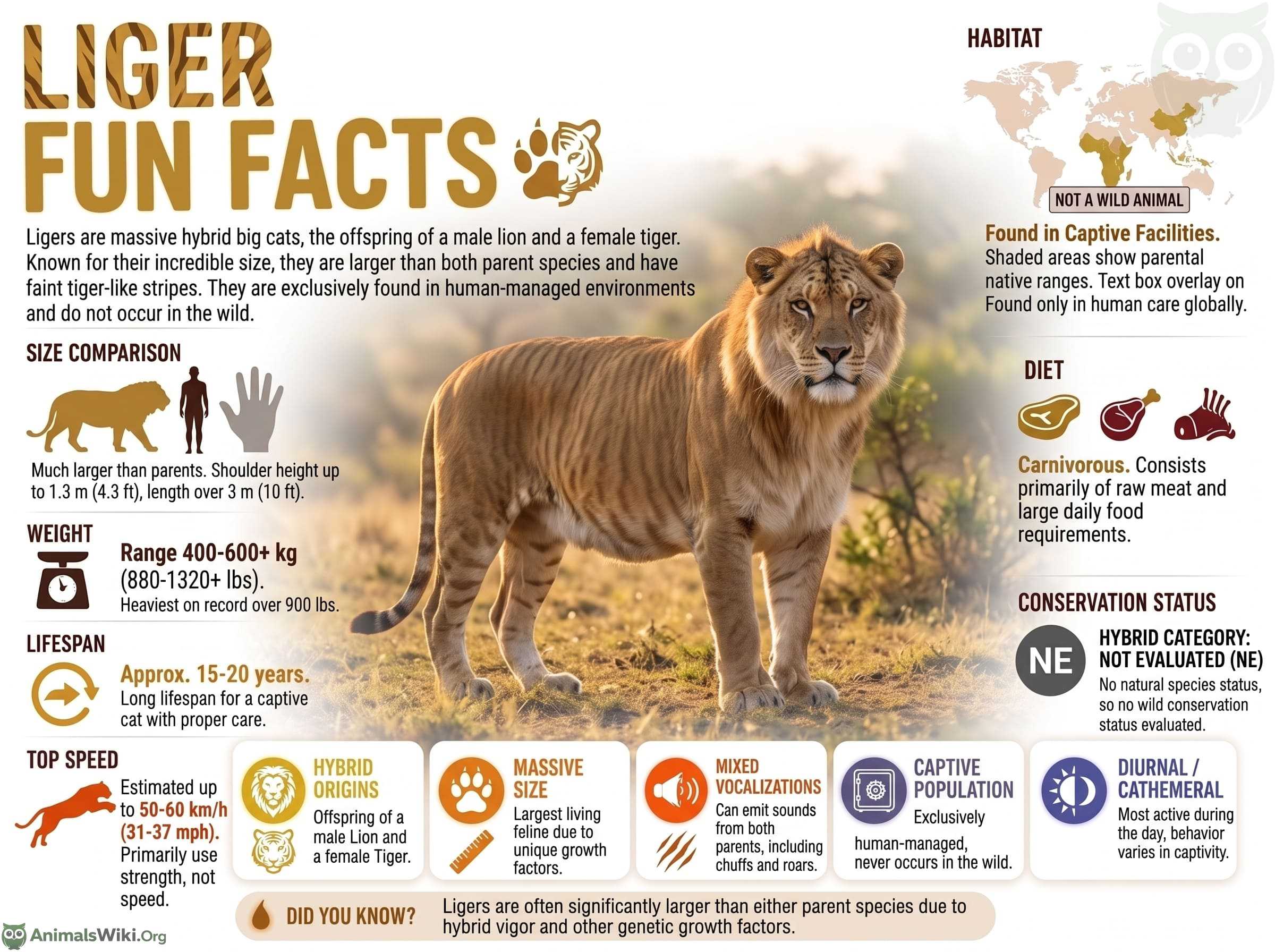
- 🦁🐯 The liger is the world’s largest living cat — larger than a lion, larger than a tiger, larger than any wild cat alive today
- 🦁🐯 The famous quote: “It’s pretty much my favorite animal — it’s like a lion and a tiger mixed, bred for its skills in magic” — Napoleon Dynamite (2004)
- 🦁🐯 Hercules the liger weighs approximately 418 kg (922 lbs) — roughly the weight of a large male polar bear
- 🦁🐯 Male ligers are infertile but female ligers can reproduce — a textbook example of Haldane’s Rule
- 🦁🐯 The liger’s extraordinary size is caused by genomic imprinting — the lion father’s growth genes operate without the tiger mother’s normal counterbalancing influence
- 🦁🐯 The reverse hybrid (male tiger × female lion = tigon) is significantly smaller than either parent — demonstrating the same imprinting mechanism in the opposite direction
- 🦁🐯 Many ligers love water — inheriting the tiger’s aquatic tendencies despite the lion’s typical water avoidance
- 🦁🐯 Lions and tigers diverged approximately 3.9 million years ago — sufficiently different to show hybrid incompatibilities, but sufficiently similar for viable offspring
- 🦁🐯 There are approximately 30–100 ligers alive worldwide at any given time — all in captivity
- 🦁🐯 Liger cubs are not dramatically larger than lion or tiger cubs at birth — their extraordinary size develops over years of accelerated growth
- 🦁🐯 The only place wild lions and tigers overlap is in India’s Gir Forest — but no natural hybridization has ever been documented
- 🦁🐯 Female ligers have produced liligers (with male lions) and tiligers (with male tigers) — making multi-generational Panthera hybrids a documented biological reality
17. Ethical Considerations & How You Can Help
The Ethical Framework
The production and maintenance of ligers raises genuine and important ethical questions that do not have simple answers:
Animal welfare ethics — does the production of animals with predictable health consequences for commercial purposes represent ethical treatment of living beings? The answer depends on one’s broader ethical framework regarding the use of animals for human purposes.
Conservation ethics — does the use of significant resources (money, space, expertise) for non-conservation-relevant hybrid production represent an ethical allocation of resources in an era of mass extinction and wild population decline?
Scientific ethics — does the genuine scientific value of studying ligers justify their production and maintenance?
Public education ethics — does the genuine public fascination with ligers provide sufficient educational benefit to justify their commercial exploitation?
Thoughtful engagement with these questions — rather than simplistic condemnation or uncritical acceptance — represents the most intellectually honest approach to the liger’s existence.
Support These Organizations
- Panthera (panthera.org) — the world’s leading wild cat conservation organization; focused on protecting lions, tigers, and other wild Panthera species in their natural habitats; supporting Panthera directly addresses the conservation needs of the species whose captive offspring ligers represent
- Save China’s Tigers (savechinastigers.org) — rewilding program for South China Tigers; represents the kind of conservation activity that liger tourism revenue could alternatively support
- Lion Recovery Fund (lionrecoveryfund.org) — specifically focused on reversing African lion population declines; the lion half of the liger’s parentage is classified as Vulnerable with declining populations
- World Wildlife Fund — Tigers Alive Initiative (wwf.org) — supporting wild tiger conservation across the species’ remaining range
- Big Cat Rescue (bigcatrescue.org) — accredited sanctuary rescuing big cats from poor conditions; a model for responsible care of captive big cats including hybrid animals
- FOUR PAWS International (four-paws.org) — international animal welfare organization campaigning for improved conditions for captive big cats
What You Can Do
- Choose conservation-supporting wildlife experiences — if you are drawn to big cat experiences, choose accredited facilities that genuinely contribute to wild population conservation rather than private facilities whose primary motivation is commercial
- Support the Big Cat Public Safety Act’s implementation — advocate for full implementation and strong enforcement of the 2022 legislation restricting private big cat breeding and public contact in the United States
- Donate to wild lion and tiger conservation — the lion and tiger parent species of ligers are both classified as threatened or vulnerable in the wild; your financial support for their conservation is far more valuable than attending a liger show
- Educate others accurately — the liger is genuinely fascinating and deserves accurate public education about its biology, its lack of conservation relevance, and the ethical questions surrounding its production; sharing accurate information is more valuable than either dismissive condemnation or uncritical enthusiasm
- Support sanctuary rescue operations — accredited big cat sanctuaries that rescue animals from poor conditions (including hybrid cats) deserve support for demonstrating that responsible care of captive big cats is possible and economically sustainable without commercial exploitation
Recommended Documentaries & Books
- “Tiger King” (Netflix, 2020) — flawed but informative documentation of the American private big cat industry; watch critically
- “The Conservation Game” (2021) — documentary examining the private big cat industry more critically than Tiger King; more directly relevant to liger ethics
- “Hercules: Largest Living Cat” (National Geographic) — more straightforward natural history coverage of the world’s most famous liger
- “Cat Sense” by John Bradshaw — excellent scientific coverage of felid behavior and biology; provides context for understanding liger behavioral genetics
- “The Tiger: A True Story of Vengeance and Survival” by John Vaillant — while focused on wild tigers, provides essential context for understanding the conservation stakes surrounding wild tiger populations
18. Frequently Asked Questions About Ligers
Q1: What exactly is a liger?
A liger is a hybrid animal produced by crossing a male lion (Panthera leo) with a female tiger (Panthera tigris). It is not a species — it has no formal scientific species name because it is a hybrid, not a naturally occurring taxonomic unit. Ligers exist only in captivity, as lions and tigers do not overlap in range in the wild (with the minor exception of India’s Gir Forest, where no natural hybridization has ever been documented). The liger’s most remarkable characteristic is its extraordinary size — adult ligers are the world’s largest living cats, significantly exceeding the size of either parent species.
Q2: Why are ligers so much bigger than lions or tigers?
The liger’s extraordinary size is caused by genomic imprinting — a genetic phenomenon in which certain genes are expressed differently depending on whether they are inherited from the mother or father. In lions, paternal genes that promote growth are particularly active (larger offspring are advantageous in lions’ competitive polygynous mating system). In normal lion-lion matings, these paternal growth genes are balanced by growth-moderating genes from the lion mother. But in a liger (lion father × tiger mother), the lion father’s aggressive growth genes are present and active, while the tiger mother lacks the specific counterbalancing genes that would normally modulate them. The result is an animal that grows far larger than either parent species, as the growth-promoting genes operate without their normal biological constraints.
Q3: Can ligers reproduce?
Male ligers are infertile — they cannot produce functional sperm and therefore cannot father offspring. This is an example of Haldane’s Rule, which predicts that in crosses between different species, the sex with two different sex chromosomes (males in mammals) is more likely to be sterile. Female ligers, however, are fertile — they can and do produce offspring when mated with either male lions or male tigers. Second-generation hybrids produced from female ligers include liligers (female liger × male lion) and tiligers (female liger × male tiger). Several such second-generation animals have been documented in Russian and Chinese facilities.
Q4: Are there ligers in the wild?
No — ligers do not and have never existed in the wild. Lions and tigers do not share geographic range today in any area where interaction would be likely; the only potential overlap is in India’s Gir Forest (the last refuge of the Asiatic Lion) where Bengal Tigers also occur, but even here no natural hybridization has ever been documented. The two species maintain behavioral separation even where they could potentially encounter each other. Ligers exist exclusively because humans have housed lion and tiger populations together in captivity — either accidentally (when facilities inadequately separate species) or deliberately (for commercial purposes).
Q5: What is the difference between a liger and a tigon?
A liger is produced by crossing a male lion with a female tiger; a tigon is produced by crossing a male tiger with a female lion. The direction of the cross matters enormously due to genomic imprinting. Ligers are much larger than either parent species (due to unrestrained paternal lion growth genes); tigons are smaller than either parent species (due to a different combination of imprinted gene effects). A typical liger weighs 270–420 kg; a typical tigon weighs approximately 100–180 kg. Both have male-infertile, female-fertile reproductive profiles. Ligers are significantly more common in captivity than tigons, partly because their large size makes them more commercially attractive.
Q6: Is it ethical to breed ligers?
This is a genuinely contested ethical question without a simple consensus answer. Major conservation organizations, accredited zoos, and most professional wildlife biologists oppose the deliberate production of ligers, arguing that: ligers have no conservation relevance (they cannot contribute to wild population conservation); the health consequences of their extraordinary size represent predictable animal welfare costs that are not justified by the commercial benefits their production generates; and resources devoted to liger production could more valuably support wild lion and tiger conservation. Proponents of liger production argue that the animals are genuinely fascinating, scientifically valuable, and that responsible care of existing ligers justifies the practice. The mainstream professional conservation and animal welfare consensus strongly favors not deliberately producing ligers.
Q7: What is the world’s largest liger?
The world’s largest reliably documented liger is Hercules — a male liger born in 2002 at Myrtle Beach Safari in South Carolina, USA. Hercules holds the Guinness World Record for the world’s largest living cat, with a recorded weight of approximately 418 kg (922 lbs) — roughly the weight of a large polar bear and approximately 2–3 times the weight of a large male lion. Hercules stands approximately 1.25 meters at the shoulder and measures over 3.3 meters from nose to tail. Despite his extraordinary size, he is described as social and relatively gentle in his interactions with familiar humans and caregivers.
Q8: What does Napoleon Dynamite have to do with ligers?
In the 2004 film “Napoleon Dynamite”, the socially awkward protagonist Napoleon Dynamite responds to a question about his favorite animal by saying: “A liger. It’s pretty much my favorite animal. It’s like a lion and a tiger mixed… bred for its skills in magic.” This scene — memorable for its deadpan delivery and the invented “magic skills” element — became one of the most quoted lines in early 2000s American pop culture. Before the film, the word “liger” was largely unknown outside specialist zoological circles. After the film’s release, internet searches for “liger” increased dramatically and the word entered common cultural vocabulary. The scene is frequently credited by scientists and science communicators as the single most significant factor in general public awareness of the liger’s existence — a remarkable case of pop culture driving zoological public knowledge.
19. Sources & References
The information in this article was researched and verified using the following authoritative sources:
- Wikipedia — Liger, Tigon, Panthera leo, Panthera tigris, Genomic imprinting, Haldane’s rule, Hybrid (biology)
- National Geographic (nationalgeographic.com) — Liger biology and size documentation features
- Britannica (britannica.com) — Liger, Hybrid animal, Genomic imprinting
- Guinness World Records (guinnessworldrecords.com) — Hercules the liger world record documentation
- Smithsonian Institution (si.edu) — Big cat biology and hybrid animal documentation
- IUCN Cat Specialist Group (catsg.org) — Wild lion and tiger conservation status; position on hybrid production
- Panthera (panthera.orgpanthera.org) — Wild cat conservation information; lion and tiger status
- Journal of Heredity — Research on Panthera hybrid genetics and genomic imprinting
- Myrtle Beach Safari / T.I.G.E.R.S. — Facility documentation for Hercules and other resident ligers
- Big Cat Public Safety Act (2022) — US Congressional legislation documentation
- American Zoo and Aquarium Association (AZA) — Position statements on hybrid production in accredited facilities
- Big Cat Rescue (bigcatrescue.org) — Information on captive big cat welfare and private industry practices
- BBC Nature (bbc.co.uk/nature) — Big cat species profiles and hybrid documentation
- Haldane, J.B.S. (1922) — Original paper describing what became known as Haldane’s Rule; Journal of Genetics
- Dröscher, S. (Various) — Research on genomic imprinting in Panthera hybrids and liger size dysregulation
20. Liger Animal Images