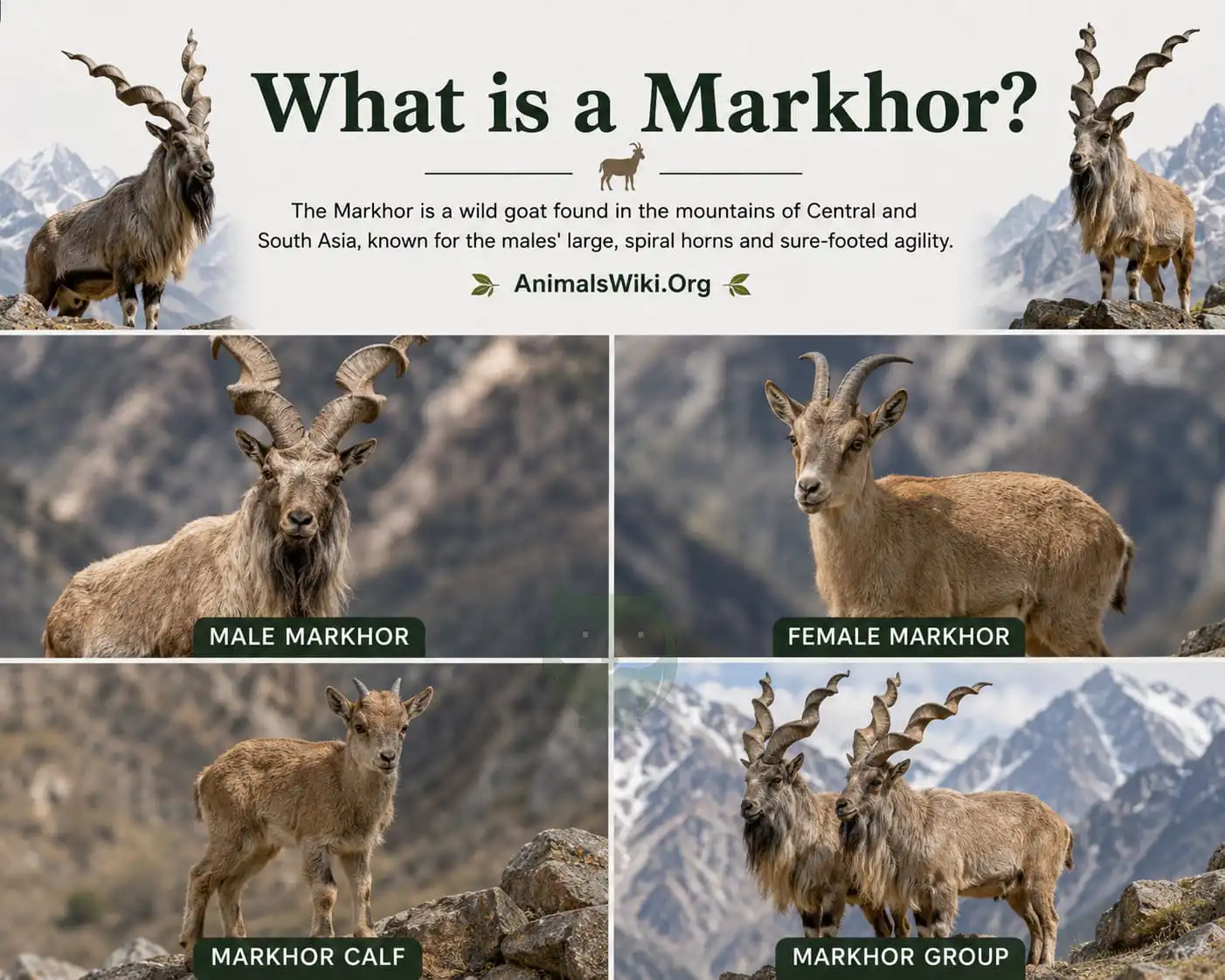
What is a Markhor?
Markhor Facts
| Feature | Details |
|---|---|
| Common Name | Markhor |
| Scientific Name | Capra falconeri |
| Family | Bovidae |
| Order | Artiodactyla |
| First Described | 1839 (by Edward Griffith) |
| Native Habitat | Steep, rocky mountain terrain; cliffs, forest margins, and scrub at 600–3,600 meters elevation |
| Geographic Range | Pakistan, Afghanistan, India (Jammu & Kashmir), Tajikistan, Uzbekistan, Turkmenistan |
| Average Size | 65–115 cm shoulder height; 132–186 cm body length |
| Average Weight | Males: 80–110 kg; Females: 32–50 kg |
| Lifespan | 12–13 years (wild); up to 19 years (captivity) |
| Diet | Herbivore — grasses, leaves, shrubs, herbs, fruits, bark |
| Conservation Status | Near Threatened (IUCN) — recovering from Endangered |
| Defining Feature | Magnificent corkscrew spiral horns reaching up to 160 cm in males; national animal of Pakistan; extraordinary cliff-climbing agility |
| Number of Subspecies | 3 recognized (previously up to 6 described) |
1. Species Overview & Classification
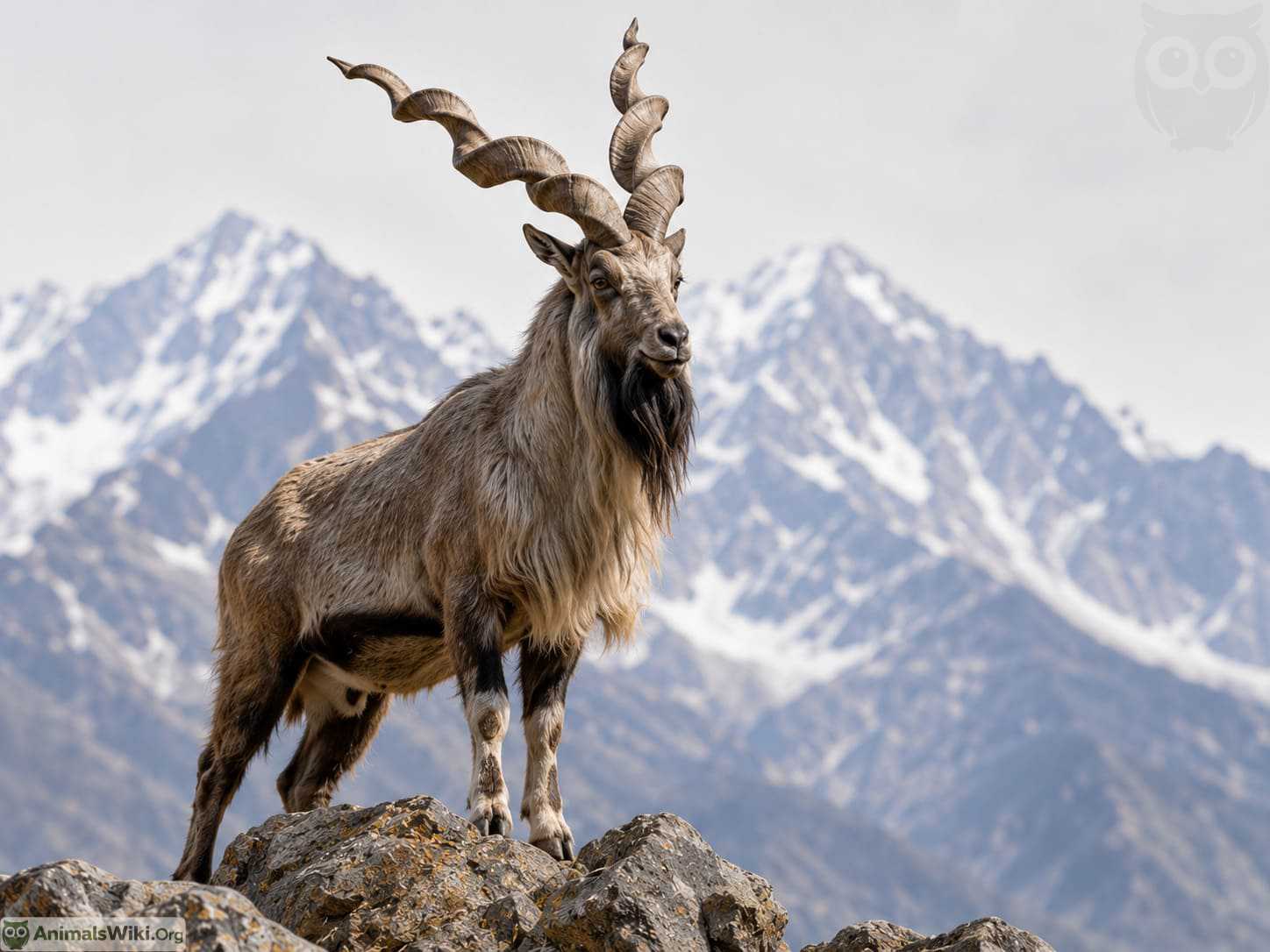
High in the Hindu Kush mountains of northern Pakistan, on a cliff face so steep and so high that most humans would consider it inaccessible, a large male animal moves with a casual, unhurried confidence that seems to defy both gravity and common sense. It is enormous — a male of its kind can weigh over a hundred kilograms — yet it navigates the narrow rock ledges, the crumbling scree slopes, and the vertical faces of the mountain with the ease of a creature for whom such terrain is not a challenge but a home. And rising from its head, twisting in elegant corkscrew spirals that catch the morning light and hold it, is a pair of horns so extraordinary in their form that they have inspired legends, mythology, and centuries of human admiration across a dozen cultures.
This is the Markhor — Capra falconeri — the world’s largest wild goat, the national animal of Pakistan, and one of the mountain world’s most spectacular and most charismatic large mammals. The very name — derived from the Pashto and Persian for “snake eater” (from mar, meaning snake, and khor, meaning eater) — hints at the mythological weight this animal carries across the cultures of the Hindu Kush, Karakoram, and Western Himalayas.
The markhor is an animal of superlatives. Its corkscrew horns — which in old males can reach 160 cm (63 inches) in length and describe a full spiral or more — are among the most spectacular horn structures in the entire animal kingdom; no other wild goat or sheep produces anything remotely comparable. Its cliff-climbing agility is so extreme that it routinely navigates terrain that kills other large mammals. Its geographic range spans some of the world’s most politically complex and geographically dramatic territory — the mountains of Pakistan, Afghanistan, India’s Jammu and Kashmir region, Tajikistan, Uzbekistan, and Turkmenistan.
And the markhor’s conservation story is one of the most remarkable in modern wildlife management — a species that was declining toward extinction in the 1970s and 1980s, classified as Endangered on the IUCN Red List, and subsequently recovered through a combination of community-based conservation, regulated trophy hunting revenue, and international cooperation to its current status of Near Threatened — a conservation success celebrated as one of the great victories of mountain ungulate conservation and a model for similar programs worldwide.
Species Classification Table
| Classification Level | Details |
|---|---|
| Kingdom | Animalia |
| Phylum | Chordata |
| Class | Mammalia |
| Order | Artiodactyla |
| Family | Bovidae |
| Subfamily | Caprinae |
| Genus | Capra |
| Species | Capra falconeri |
| Described By | Edward Griffith, 1839 |
| Common Name | Markhor |
| National Animal of | Pakistan (since 1970) |
Subspecies of the Markhor
The taxonomy of markhor subspecies has been extensively debated — historical classifications recognized up to 6 subspecies, while more recent molecular and morphological analyses support a 3-subspecies model now generally accepted:
| Subspecies | Scientific Name | Range | Horn Shape | IUCN Status |
|---|---|---|---|---|
| Flare-horned Markhor | Capra falconeri falconeri | Chitral (Pakistan), NE Afghanistan, Nuristan | Wide flare; tight corkscrew | Near Threatened |
| Kabul / Straight-horned Markhor | Capra falconeri megaceros | SE Afghanistan, NW Pakistan (Sulaiman range) | Straighter; wider spiral | Near Threatened |
| Bukharan / Tajik Markhor | Capra falconeri heptneri | Tajikistan, Uzbekistan, Turkmenistan, N Afghanistan | Tight corkscrew; narrower | Near Threatened |
2. Physical Description & Unique Features
The markhor’s physical form is built around two primary evolutionary achievements — the ability to navigate extreme mountain terrain with unparalleled agility, and the ability to grow the most magnificent horns of any member of the genus Capra. Everything about the markhor’s anatomy reflects the dual demands of mountain survival and sexual competition.
Size and Build
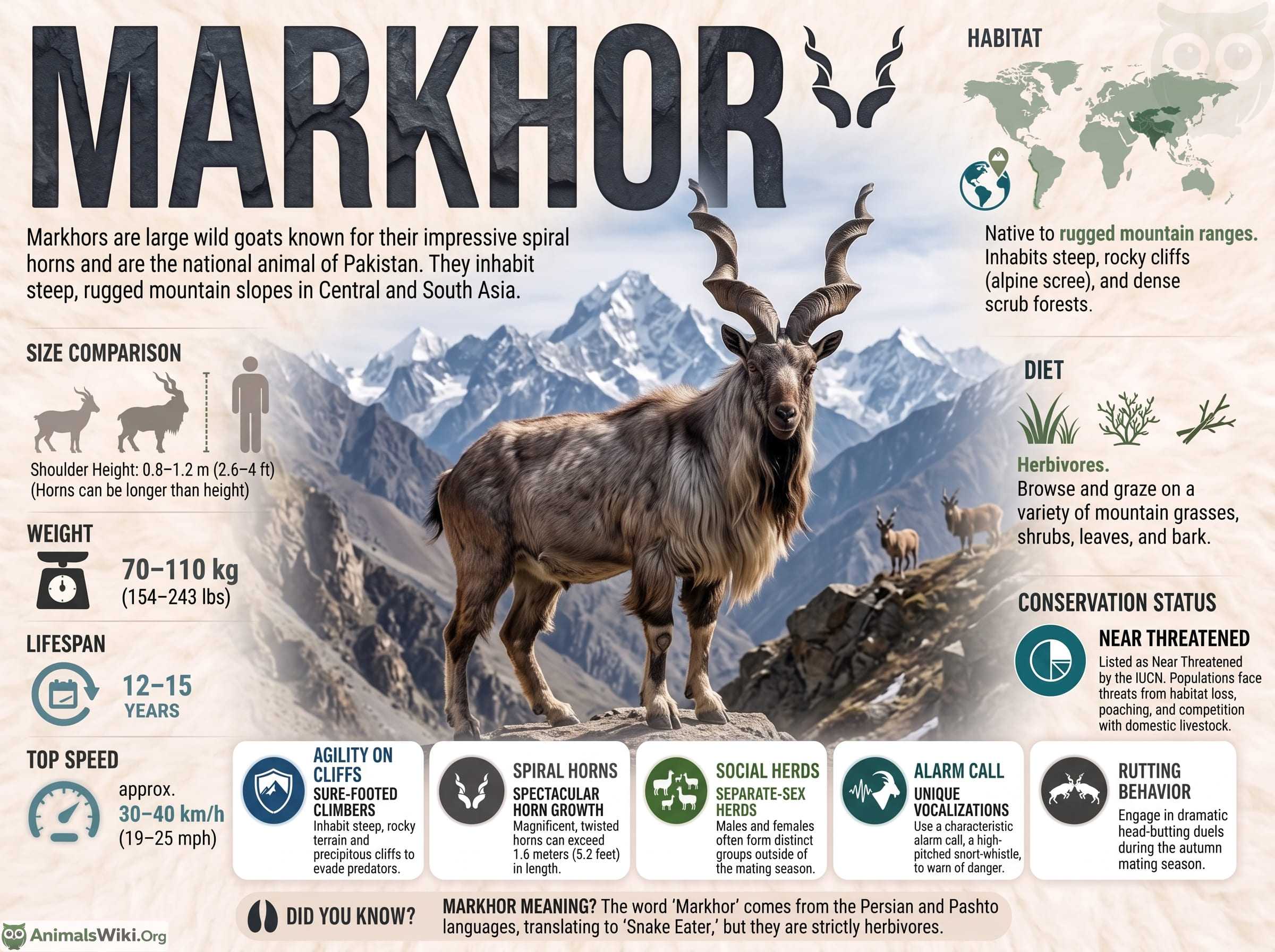
The markhor is a large, robustly built wild goat — significantly bigger than most of its genus Capra relatives and justifiably described as the world’s largest wild goat. There is pronounced sexual dimorphism in size — males are considerably larger and heavier than females:
Males (bucks/billies):
- Shoulder height: 65–115 cm (26–45 inches)
- Body length: 132–186 cm (52–73 inches)
- Weight: 80–110 kg (176–243 lbs); the largest individuals may approach 120 kg
Females (does/nannies):
- Shoulder height: 60–85 cm (24–33 inches)
- Body length: 120–160 cm (47–63 inches)
- Weight: 32–50 kg (71–110 lbs)
The body is strongly built — particularly the forequarters, which carry the weight of the massive horns and provide the muscular power for cliff climbing. The legs are muscular and proportionally shorter than in open-country ungulates — an adaptation for stability on steep terrain rather than speed on flat ground.
The Extraordinary Horns
The markhor’s horns are, without qualification, one of the most spectacular anatomical structures in the entire Bovidae family — the family that includes cattle, sheep, goats, antelope, and buffalo, collectively producing the greatest diversity of horn forms in any mammal family.
Horn structure: Like all bovid horns, markhor horns consist of a permanent bony core (an extension of the frontal bone of the skull) covered by a keratinous sheath (made of the same protein as human fingernails and hair). Unlike antlers (which are shed and regrown annually), bovid horns are permanent and grow throughout the animal’s life — each year’s growth adding to the previous year’s, accumulating into the magnificent spiraling structures that define the adult male markhor.
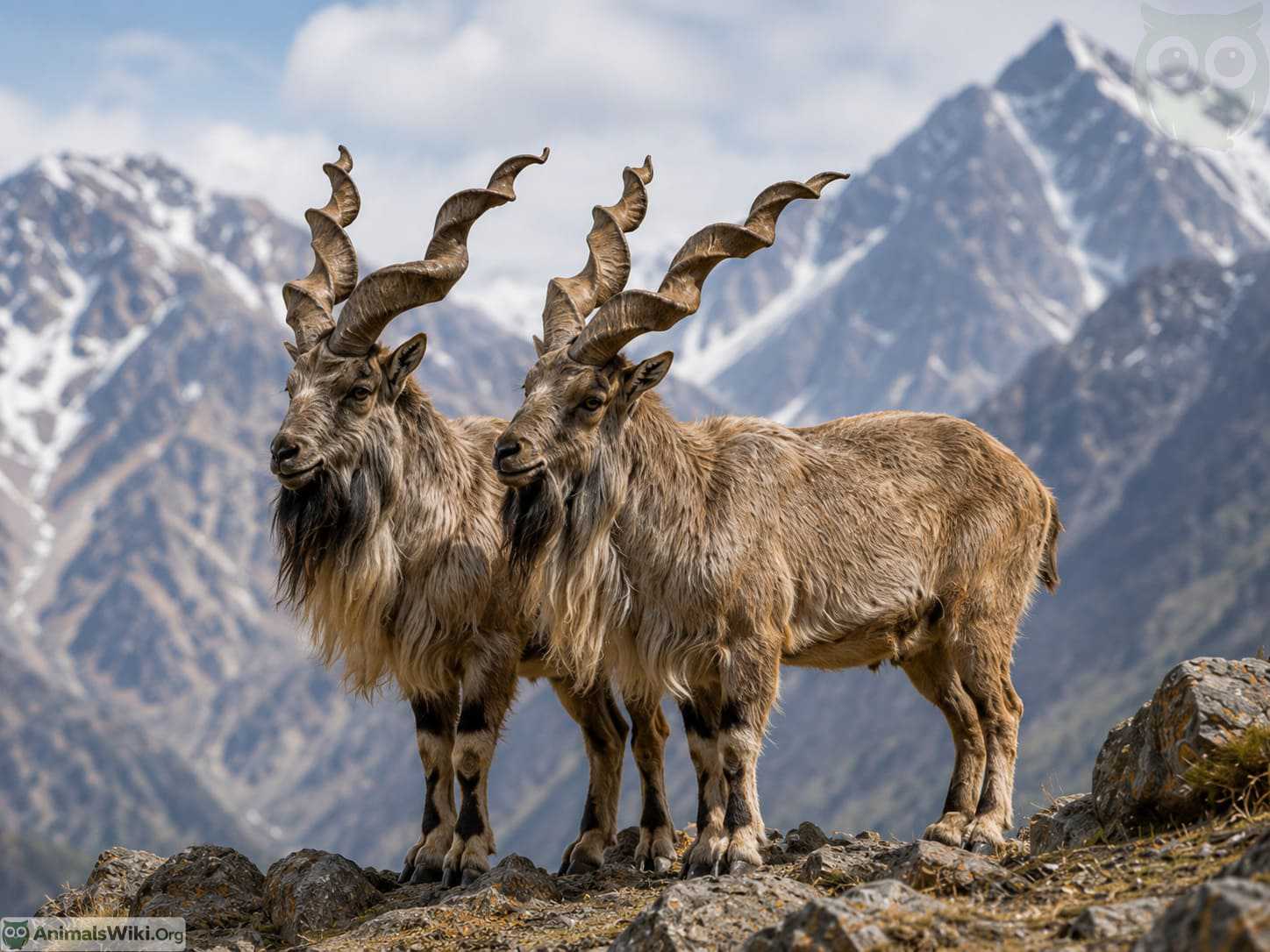
The spiral — unique in the animal kingdom: The markhor’s horns do not simply grow upward and curve — they rotate as they grow, producing the characteristic corkscrew or spiral form. The direction and tightness of the spiral varies between subspecies — the Flare-horned Markhor (northwestern Pakistan, northeastern Afghanistan) has widely flaring horns that spread dramatically to the sides before spiraling; the Bukharan Markhor has tighter, more column-like spirals; the Kabul Markhor has an intermediate form. In all cases, the spiral is a consistent structural feature produced by differential growth rates across the horn cross-section — the inner surface grows faster than the outer surface, causing the horn to curve, while rotational growth differences cause the spiral.
Size: In adult males, horns typically reach 90–120 cm in large individuals; exceptional specimens have been recorded with horn lengths exceeding 160 cm (63 inches). Record-book measurements from Pakistan’s Chitral and Gilgit regions include several specimens measured at over 150 cm. The horns are typically measured along the outer curve of the spiral, which is the longest measurement and captures the full extent of the spiral growth.
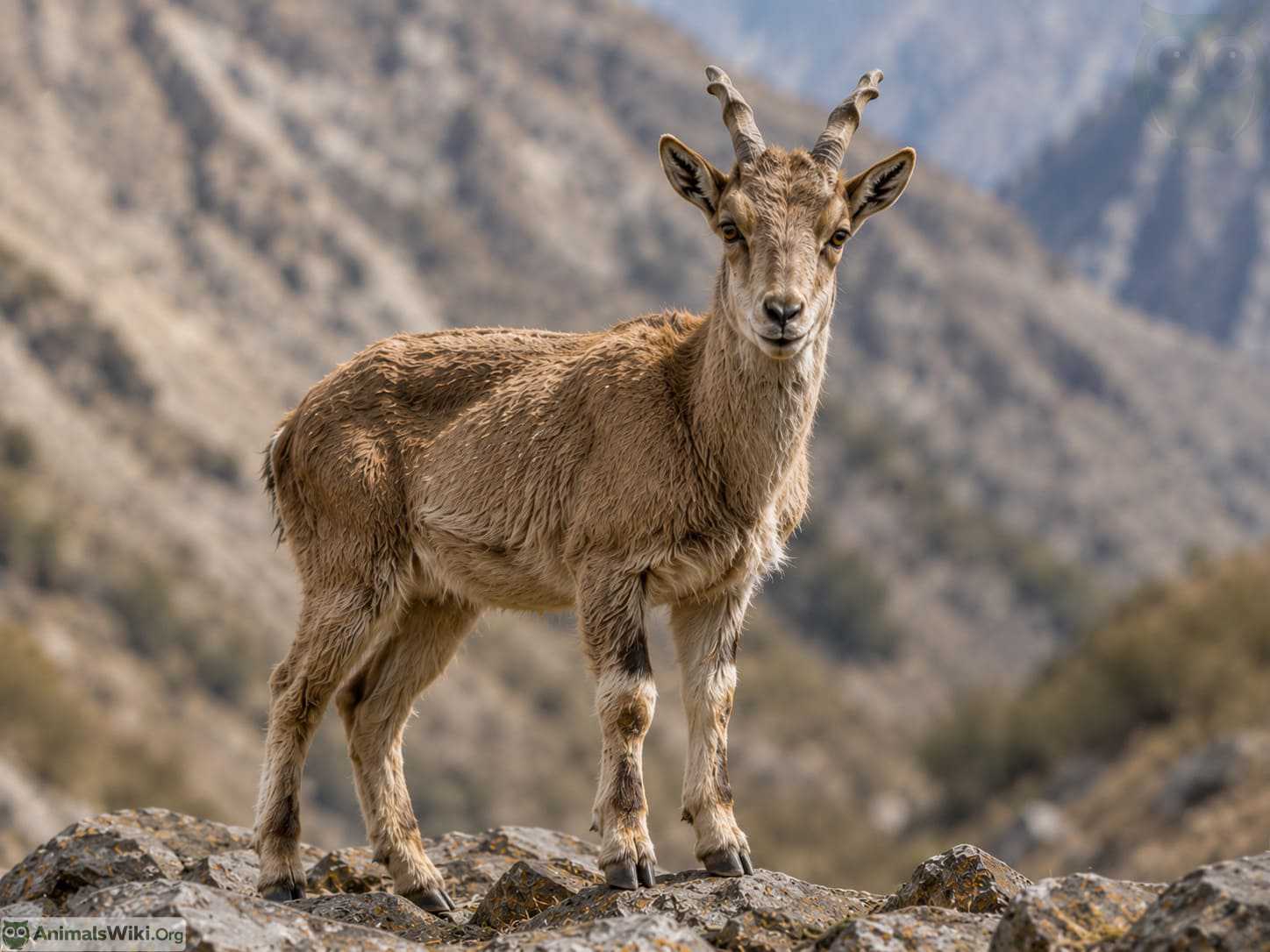
In females: Female markhors also bear horns but they are dramatically smaller — typically 20–25 cm in adult females — and show a gentle curve without the dramatic spiral of males. The presence of horns in both sexes is typical of wild goat species, where the female’s horns serve primarily defensive functions against predators rather than intraspecific competition.
Growth rate: Horn growth is most rapid during the first few years of a male’s life. Males reach their maximum horn length at approximately 7–8 years of age, after which growth slows dramatically. Horn rings (similar to tree rings) accumulate annually and can be used to age individual animals.
Coat and Coloration
The markhor’s coat shows significant seasonal variation and sexual dimorphism:
Summer coat — short, smooth, reddish-brown to tan; provides relatively minimal insulation during warm mountain summers; both sexes similar in appearance though males are often darker
Winter coat — dramatically longer and thicker; males develop particularly long, shaggy mane-like hair on the throat, chest, and legs that gives the animal a distinctive silhouette; this flowing winter mane — silvery-grey to dark brown — combined with the massive spiral horns makes the large male markhor one of the most visually imposing mountain ungulates anywhere in the world; females also develop longer winter coats but without the dramatic mane
Color variation — varies somewhat between populations and subspecies; ranges from pale sandy-grey to rich rufous-brown; legs typically paler (whitish) on the inner surface; face often shows a dark facial mask in adult males
Age-related change — males typically become greyer with age; very old males may be almost entirely grey or silver
Hooves and Climbing Adaptations
The markhor’s hooves are anatomical masterpieces for mountain terrain:
Hard outer rim — provides grip on rock surfaces, acting like a climbing shoe’s edge
Soft, concave inner pad — creates suction on smooth rock surfaces and conforms to irregular terrain
Split design — the two-toed hoof can spread to increase contact area on uneven surfaces and close for precise placement on narrow ledges
Dew claws — small additional claws on the back of the lower leg help prevent sliding on steep slopes
These hoof adaptations allow markhors to routinely navigate terrain gradients that would be impassable for most large mammals — including near-vertical rock faces where the animal moves from foothold to foothold with startling speed and confidence.
Did You Know? A large male markhor’s corkscrew horns can weigh up to 9–10 kg (20 lbs) — approximately 8–10% of the animal’s total body weight. Carrying this weight on the head while navigating steep mountain terrain represents a significant biomechanical challenge — one that natural selection has addressed through extraordinarily strong neck musculature, a specialized skeletal architecture that distributes the horn weight efficiently, and a behavioral tendency to carry the horns in a specific head position that minimizes the rotational torque on the neck during movement.
3. Natural Habitat & Geographic Range
The markhor is quintessentially an animal of the rugged, high-altitude mountain systems of South and Central Asia — specifically the complex of ranges and valleys formed by the Hindu Kush, Karakoram, Western Himalayas, and the Sulaiman and Toba Kakar ranges of Pakistan and Afghanistan. This is some of the most dramatic and most geologically young mountain terrain on Earth — created by the ongoing collision of the Indian and Eurasian tectonic plates and characterized by extreme elevation gradients, unstable geological substrates, and deeply incised river valleys.
Elevation Range and Seasonal Movement
Markhors are notably flexible in their elevation use — found from approximately 600 meters in the deepest mountain valleys to over 3,600 meters on high alpine pastures. Crucially, they practice altitudinal migration — moving seasonally between different elevation bands in response to snow cover, food availability, and temperature:
Summer: Higher elevations (2,000–3,600 m); alpine meadows and scrub; cooler temperatures; high-quality forage during brief mountain summer
Winter: Lower elevations (600–1,500 m); south-facing cliff faces and rocky slopes with minimal snow cover; remaining forage in protected valley positions; proximity to agricultural margins in some areas
This seasonal movement is critical to the markhor’s survival — deep winter snow at high elevations makes forage inaccessible, and the markhor’s behavioral response (descending to lower elevations where snow cover is less complete) is the primary mechanism by which the species survives the harsh mountain winters.
Preferred Habitat Features
Within any given elevation zone, markhors show consistent preferences for specific habitat features:
Steep, rocky terrain — the markhor’s primary refuge from predators and the habitat type to which its extraordinary agility is adapted; areas with ≥60% slope gradient are frequently used; near-vertical cliff faces are the ultimate refuge habitat
Forest and scrub woodland — particularly Chilghoza pine (Pinus gerardiana), Blue pine (Pinus wallichiana), Oak (Quercus spp.), Wild olive (Olea europaea), and Juniper (Juniperus spp.) woodland; provides forage (especially in winter when ground vegetation is snow-covered) and shelter
South-facing slopes — receive more solar radiation, less snow accumulation, and earlier spring green-up than north-facing slopes; strongly preferred particularly in winter
Proximity to water — water sources (springs, seeps, seasonal streams) attract markhors particularly in summer; location relative to water influences territory and ranging patterns
Escape terrain access — the proximity of cliff faces and rocky areas that predators cannot follow into is a key habitat requirement; markhors rarely venture far from such terrain
Geographic Range by Country
| Country | Population Estimate (2026) | Key Areas | Subspecies | Trend |
|---|---|---|---|---|
| Pakistan | ~3,500–5,000 | Chitral, Gilgit-Baltistan, Azad Kashmir, Dir, Sulaiman range | All 3 subspecies | Recovering |
| Afghanistan | ~1,000–2,000 | Nuristan, Badakhshan, Hindu Kush mountains | C. f. falconeri; C. f. megaceros | Uncertain; likely declining |
| India (J&K) | ~400–600 | Kishanganga valley, Gurez, Shamsabari range | C. f. falconeri | Stable to slightly increasing |
| Tajikistan | ~700–1,500 | Shuroabad, Rushan, Zorkul | C. f. heptneri | Recovering |
| Uzbekistan | ~200–500 | Surkhandarya, Sherabad valley | C. f. heptneri | Recovering |
| Turkmenistan | ~100–300 | Kugitang range (Kopet-Dag) | C. f. heptneri | Uncertain |
Total Population
The global markhor population is estimated at approximately 5,000–7,000+ individuals as of 2026 — a remarkable recovery from an estimated low of approximately 2,000 animals in the early 1990s. The species was downlisted from Endangered to Near Threatened by the IUCN in 2015 — one of the very few large mammal species to achieve this conservation improvement in recent decades.
Did You Know? The markhor inhabits some of the most geopolitically complex terrain on Earth — its range spans the border regions of Pakistan, Afghanistan, India, Tajikistan, Uzbekistan, and Turkmenistan, including some of the world’s most contested and militarized border zones. The Line of Control between Pakistan and India bisects markhor habitat in Kashmir; the Durand Line between Pakistan and Afghanistan cuts through important markhor populations. Conservation of a species across such politically sensitive terrain requires remarkable diplomatic sensitivity and cross-border cooperation — making the markhor’s recovery story even more impressive given the political obstacles involved.
4. Diet & Feeding Behavior
The markhor is an herbivore of remarkable dietary flexibility — capable of exploiting the sparse, seasonally variable vegetation of high mountain environments through a combination of dietary breadth, feeding technique diversity, and the physiological efficiency of its ruminant digestive system.
What Markhors Eat
Grasses — the primary dietary component during spring and summer when alpine meadow grasses are actively growing; markhors graze extensive areas during summer, building fat reserves for winter
Shrubs and dwarf shrubs — important year-round and critically important in winter; Artemisia (wormwood), various rose-family shrubs (Cotoneaster, Rosa, Rubus), and juniper are heavily used
Tree leaves and bark — markhors are notable browsers that stand on their hind legs to reach foliage above their head height; pine needles, oak leaves, and the leaves of various other tree species are consumed
Herbs and forbs — diverse broad-leaved herbaceous plants consumed particularly in spring and summer; higher protein content than grasses; important for reproduction
Fruits and seeds — consumed when available; the Chilghoza pine nut is an important food source where this tree occurs; various berries consumed in late summer and autumn
Bark and stems — consumed particularly in severe winters when other food is snow-covered; the markhor’s strong jaws and teeth can process bark and woody stems that most other ungulates cannot exploit
Agricultural crops — in areas where markhor range overlaps with farmland, crops (particularly wheat, maize, and vegetables) may be consumed; this creates human-wildlife conflict that is a significant management challenge
The Remarkable Feeding Behaviors
Tree climbing — one of the markhor’s most celebrated and most visually dramatic behaviors is its ability to climb into trees to access foliage. Markhors regularly stand on their hind legs against tree trunks and lean out onto lower branches to reach leaves otherwise inaccessible. In some instances, individuals have been documented climbing into the lower canopy of Chilghoza pine and oak trees — an extraordinary behavior for an animal of this size. This behavior has been observed and photographed in Pakistan, Afghanistan, and India, and represents a foraging strategy that reduces competition with ground-level grazers.
Mineral licking — like many mountain ungulates, markhors regularly visit mineral licks — natural exposures of mineral-rich soil or rock — where they consume soil and lick mineral deposits. These sites provide sodium, calcium, magnesium, and other minerals not adequately available in the vegetation diet; mineral licks are particularly important for pregnant and lactating females whose mineral demands are elevated.
Snow excavation — in winter, markhors use their front hooves to paw through shallow snow to access frozen vegetation beneath; this behavior extends the winter feeding season beyond what passive grazing of exposed vegetation would allow.
Ruminant digestion — like all bovids, markhors are ruminants; they have a four-chambered stomach that allows re-chewing of partially digested food (cud-chewing). This digestive system extracts maximum nutrition from the tough, fibrous, low-quality vegetation of mountain habitats — allowing survival on food that most animals cannot efficiently process.
Diet Breakdown Table
| Food Type | % of Annual Diet | Peak Season | Notes |
|---|---|---|---|
| Grasses | 35–50% | Spring–summer | Primary summer diet; fat accumulation |
| Shrubs and dwarf shrubs | 20–30% | Autumn–winter | Critical winter food when grasses snow-covered |
| Tree leaves and bark | 10–20% | Winter | Tree-climbing behavior maximizes access |
| Herbs and forbs | 10–15% | Spring–summer | High protein; reproductive season importance |
| Fruits and seeds | 3–8% | Late summer–autumn | Chilghoza pine nuts particularly important |
| Bark and stems | 2–5% | Winter | Hard food; last resort when other food scarce |
“The markhor is the perfect mountain ungulate — an animal of extraordinary physical capability, dietary flexibility, and ecological resilience that has evolved over millions of years to exploit one of the most demanding environments on Earth. Its recovery from the brink of extinction stands as one of the great achievements of community-based conservation in South Asia.” — Dr. Shafqat Hussain, Conservation Biologist, Trinity College, Hartford
5. Reproduction & Life Cycle
The markhor’s reproductive biology is organized around the dramatic winter rut — one of the most spectacular wildlife events in the mountain ecosystems of South and Central Asia, in which enormous, fully-maned males compete ferociously for access to females in a spectacle of sound, scent, and physical combat.
Breeding Season — The Winter Rut
The markhor rut falls in late autumn to early winter — typically October to January depending on latitude, elevation, and subspecies. This winter timing is strategically placed so that kids (young) are born in spring (April–June) — when temperatures are warming, snow is melting, and vegetation is producing its most nutritious new growth, providing the optimal conditions for kid survival and maternal milk production.
During the rut, the normally separate male and female social groups converge — males descend from higher, more isolated areas to join female groups and compete for mating access.
Male Rutting Behavior
The male markhor’s behavioral transformation during the rut is dramatic:
Increased scent marking — males produce powerful-smelling secretions from preorbital glands (in front of the eyes), interdigital glands (between the toes), and through urine spraying; these scents communicate reproductive status, identity, and competitive rank
Neck extension and posturing — males extend their necks and carry their spiral horns in exaggerated postures that display their length and impressiveness to rival males and watching females
Vocalization — males produce guttural grunts, bellows, and snorting sounds during confrontations and courtship
Combat — the most visually dramatic rutting behavior; when two males of similar size contest access to females, they engage in direct physical combat:
- Initial parallel walking and side-by-side display (allowing size assessment without combat)
- Head-to-head confrontation with horns interlocked — the spiral structure of the horns is thought to help prevent them from sliding apart during pushing contests, maintaining horn-to-horn contact
- Twisting and pushing contests that can last several minutes and produce dramatic sounds of clashing horn against horn
- Rarely, rear-up and clash — both animals rearing on hind legs and crashing down with full force; extremely energy-intensive; primarily in evenly matched contestants
The outcome of these contests determines the dominant male’s access to females. Larger males with more impressive horns are typically dominant — and the correlation between horn size and competitive success is one of the selection pressures driving the evolution of the markhor’s extraordinary horn length.
Gestation and Birth
- Gestation period: Approximately 135–170 days (4.5–5.5 months)
- Litter size: Typically 1–2 kids (twins are common; triplets occasionally recorded)
- Birth weight: Approximately 2.5–3.5 kg
- Birth season: April–June — the most productive vegetation period of the mountain year
- Birth location: Females seek sheltered ledges or rocky hollows for parturition — areas inaccessible to most predators
Kid Development
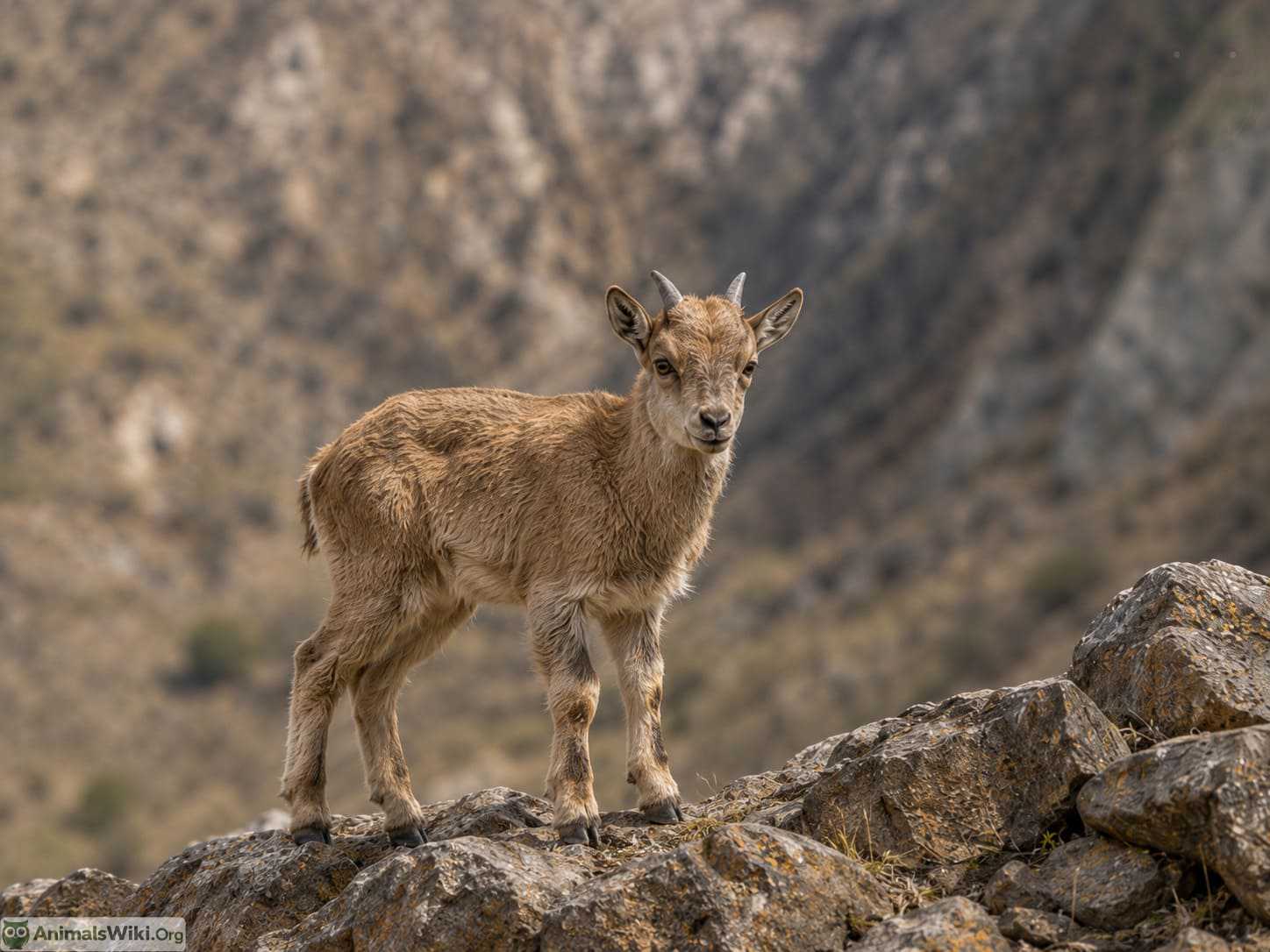
Markhor kids are precocial — born with eyes open, able to stand within minutes, and capable of basic movement within hours. This rapid development is essential in the mountain environment where predators are present and the ability to reach rocky escape terrain quickly can mean the difference between life and death.
| Stage | Timing | Development |
|---|---|---|
| Birth | Day 0 | 2.5–3.5 kg; standing within 30 min |
| First climbing | Day 2–5 | Begin navigating rocky terrain near birth site |
| First solid food | Week 2–3 | Begin sampling vegetation alongside nursing |
| Weaning | 5–6 months | Progressively reduced nursing; full dietary independence |
| First winter | 6–8 months | Most critical survival test; must navigate snow conditions |
| Sexual maturity (females) | 18–30 months | Can reproduce in second year if well-nourished |
| Sexual maturity (males) | 2.5–3.5 years | Physical maturity; competitive maturity typically 5–7 years |
| Horn development | Years 1–8 | Spiral structure develops progressively; full length at ~8 years |
Lifespan Comparison
| Animal | Average Lifespan (Wild) | Average Lifespan (Captivity) |
|---|---|---|
| Markhor | 12–13 years | Up to 19 years |
| Ibex (Capra ibex) | 10–14 years | Up to 22 years |
| Snow Leopard (Panthera uncia) | 10–12 years | Up to 22 years |
| Marco Polo Sheep (Ovis ammon polii) | 8–12 years | Up to 16 years |
| Domestic Goat (Capra hircus) | 10–15 years | Up to 18 years |
| Himalayan Tahr (Hemitragus jemlahicus) | 14–15 years | Up to 22 years |
Did You Know? Male markhors engage in one of the most spectacular horn-fighting displays of any wild goat — their massive, interlocking spiral horns can hold together during pushing contests in ways that straighter-horned species cannot achieve. Research suggests that the spiral structure of markhor horns may have evolved specifically to improve horn-lock stability during male-male combat — the corkscrew shape catches rival horns in a more secure lock than straight or curved horns would allow, making the contest more about pushing strength and endurance rather than risk of accidental disengagement. This means the outcome more reliably reflects genuine competitive ability — a genuine fitness signal for female mate choice.
6. Social Behavior & Communication
The markhor’s social organization reflects the mountain environment it inhabits — a landscape where resources are patchily distributed, predation risk is ever-present, and the terrain itself structures social groupings in ways that differ fundamentally from the open-country ungulates with which most people are more familiar.
Herd Structure — Sexually Segregated Groups
Adult male and female markhors live in largely separate social groups for most of the year — coming together only during the winter rut. This sexual segregation is common in many mountain ungulate species and reflects the different resource requirements and risk tolerances of the two sexes:
Female herds — typically 5–20 individuals including adult females, juveniles of both sexes, and young males up to approximately 2–3 years of age; female herds prioritize areas with good forage and escape terrain; they tend to be slightly more cautious and to use lower-risk terrain than male groups
Male groups (bachelor herds) — adult and sub-adult males form loose groups of 2–15 individuals outside the rut; tend to use higher elevation, rougher terrain; maintain looser social bonds than female groups
Solitary males — dominant adult males may spend extended periods alone, particularly outside the rut; large males with maximum resource requirements may be behaviorally territorial
Mixed groups — during the rut, male-female mixed groups form temporarily as males join female herds; mixed groups may also occur at particularly productive foraging sites or water sources
Communication — A Multi-Sensory System
Markhors communicate through a combination of visual, olfactory, and auditory signals:
Visual communication:
- Horn display — the sheer size and impressiveness of a male’s spiral horns communicates competitive status; males that display horns prominently during encounters signal confidence and competitive quality
- Body posture — lateral display (standing broadside to a rival) presents the animal’s full size; head tilt displaying horn length is a standard threat display
- Gait signals — stiff-legged walking and prancing communicate excitement and dominance
- Rump patch — the whitish rump area becomes more visible when disturbed; may function as an alarm signal visible to other herd members at distance
Olfactory communication:
- Preorbital gland secretions — deposited on vegetation and rocks; communicate individual identity and reproductive status
- Urine and dung — territorial and social marking; males spray urine on their own beards and front legs during the rut, creating a strong-smelling olfactory advertisement
- Foot gland secretions — deposited in footprints; communicate passage of individual to other markhors following the same route
Auditory communication:
- Alarm snort — sharp exhalation that alerts the herd to potential danger; immediately triggers vigilance behavior in all herd members
- Bleat — soft contact call used between mother and kid; keeps family units together in dense vegetation or poor visibility
- Rutting calls — guttural grunts and bellows produced by males during rut; communicate competitive status and reproductive readiness
Vigilance and Predator Detection
Mountain ungulate social groups function as cooperative vigilance networks — each individual’s scanning behavior contributes to the group’s overall predator detection capability. Research on markhor and related species has demonstrated that vigilance per individual decreases as group size increases — the well-established “many eyes” effect.
Markhors in smaller groups spend more time scanning for predators and less time feeding than individuals in larger groups — a direct behavioral reflection of the group-size benefit for predator detection. The sentinel behavior is uncoordinated in markhors (unlike some bird species) — each individual scans independently rather than taking turns — but the collective effect is a substantial increase in early warning capability.
7. Predators & Defense Mechanisms
The markhor’s mountain habitat is shared with some of the world’s most formidable large carnivores — and the markhor’s entire behavioral and physical toolkit is shaped by the demands of surviving in the same landscape as these predators.
Natural Predators
Snow Leopard (Panthera uncia) — the primary and most important predator of markhors across most of the range; the snow leopard is the apex predator of Central Asian mountain ecosystems and has co-evolved with markhor over millions of years; snow leopards are ambush predators that stalk markhors on cliff faces and rocky terrain, using their extraordinary agility and camouflage to approach before launching a rapid attack; markhors constitute a significant proportion of snow leopard diet in areas where both species occur; the markhor-snow leopard predator-prey relationship is one of the most ecologically important in mountain Asia
Common Leopard (Panthera pardus) — important predator at lower elevations where the snow leopard’s range ends and the common leopard’s begins; significant predator of markhor in lower-elevation zones of Pakistan and Afghanistan
Wolf (Canis lupus) — coursing predators that chase markhors; typically less effective than felid ambush predators in rocky terrain but significant in areas with more open ground; pack hunting allows wolves to pursue markhors into terrain that would allow escape from a single predator
Dhole (Asian Wild Dog) (Cuon alpinus) — pack predators that are occasionally documented taking markhors; less important than wolves in most of the range but potentially significant locally
Humans — historically the most significant mortality source for markhors; poaching and unregulated hunting remains a threat in some areas
Defense Strategies
The primary defense — terrain exploitation — the markhor’s most fundamental anti-predator strategy is its ability to access cliff faces and rocky terrain that most predators cannot follow. When alarmed, markhors move rapidly toward the steepest available terrain, ascending to ledges and cliff faces where their superior agility provides safety. A markhor on a near-vertical cliff face is essentially beyond the reach of wolves and most other predators; even snow leopards — despite their own remarkable agility — are at a disadvantage in extremely steep terrain where the markhor’s specific hoof adaptations are maximally advantageous.
Group vigilance — as described in the social behavior section, herds provide cooperative predator detection; the alarm call of any individual immediately alerts the entire group
The alarm snort and flight response — upon detecting a predator, markhors produce a loud alarm snort and immediately flee toward escape terrain; the response is rapid and highly consistent — there is essentially no hesitation between detection and flight in experienced adults
Horn defense — while the primary function of male horns is intraspecific competition, the sharp tips of mature spiral horns represent a formidable weapon against predators; cornered individuals (particularly females with kids) have been documented defending against predator attacks using their horns
Kid concealment — females with very young kids will sometimes leave them hidden in rocky concealment while they forage at distance, reducing the kid’s olfactory and visual conspicuousness to predators
The Ecological Relationship with Snow Leopards
The markhor-snow leopard ecological relationship is one of the most studied predator-prey systems in mountain Asia. Research in Pakistan’s Chitral region and other markhor habitats has quantified how this relationship shapes both species’ behavior:
- Snow leopard predation is estimated to account for 30–40% of adult markhor mortality in some populations
- Markhors in areas with higher snow leopard density use steeper terrain and larger group sizes — direct behavioral evidence of predator-mediated habitat and social choices
- The conservation of markhors directly benefits snow leopard populations — healthy markhor populations support more snow leopards, which makes markhor habitat simultaneously the core of snow leopard conservation
- This trophic interdependence is a powerful argument for integrated conservation of prey and predator species in mountain ecosystems
8. Relationship with Humans
Ancient Human Relationships — Mythology and Symbolism
The markhor has been a culturally central animal across the human societies of the Hindu Kush, Karakoram, and western Himalayan regions for thousands of years — appearing in art, mythology, material culture, and spiritual practice across multiple distinct cultural traditions.
The name and the myth: The name “markhor” derives from Persian and Pashto — “mar” (snake) + “khor” (eater) — meaning “snake eater.” This name reflects a widespread folk belief across the cultures of the markhor’s range that the animal kills and eats snakes, and that the foam produced during markhor mastication (cud-chewing) falls to the ground and draws out snakes which the markhor then kills. While entirely mythological — markhors are strict herbivores with no capacity to hunt or consume snakes — the belief is deeply embedded in the folk traditions of Pakistan, Afghanistan, and neighboring regions.
A second element of the snake-related mythology holds that markhor foam has medicinal properties — specifically that it can neutralize snake venom. In some traditional medical traditions of the region, markhor-related substances (foam, blood, horn shavings) were used as snake-bite remedies. Again, while without scientific validity, this belief contributed to the markhor’s cultural significance and to demand for the animal in traditional medicine markets.
In petroglyphs and rock art — markhor images appear in rock art sites throughout their range, including spectacular petroglyphs at Chilas in Gilgit-Baltistan, Pakistan — one of the world’s largest and most important rock art sites — dating back thousands of years. The spiral-horned profile of the markhor is immediately recognizable in these ancient images, demonstrating the animal’s cultural centrality to mountain communities for millennia.
In Nuristani and Pashtun culture — the markhor is a prestige animal in the traditional cultures of Afghanistan’s Nuristan province and the NWFP/KPK region of Pakistan; hunting a large male markhor historically conferred significant status; the horns were displayed as trophies and markers of hunting prowess
Pakistan’s National Animal
The markhor was designated the national animal of Pakistan in 1970 — a recognition of its ecological importance in Pakistan’s mountain landscapes and its significance to the cultures of the country’s northern regions. The designation has added symbolic weight to markhor conservation efforts and has helped generate public support for conservation programs.
Pakistan’s designation has been reinforced over subsequent decades through inclusion of the markhor in educational materials, government communications, and international diplomacy contexts — the markhor effectively serving as an ambassador for Pakistani wildlife conservation internationally.
Trophy Hunting as Conservation — The Controversial Success Story
The most controversial and most consequential aspect of the modern human-markhor relationship is the use of regulated trophy hunting as a conservation tool — a program that has been central to the markhor’s population recovery and is simultaneously celebrated as a conservation model and criticized as ethically problematic.
The program — how it works:
The Community-Based Trophy Hunting Program in Pakistan, administered primarily through the Torghar Conservation Project and similar initiatives across KPK (Khyber Pakhtunkhwa), was developed in the late 1980s and early 1990s in response to dramatically declining markhor populations. The program’s core principle:
- A very small number of hunting licenses (typically 6–12 per year for the entire country) are auctioned to international trophy hunters
- Hunting fees are substantial — a single markhor hunting license has sold for $60,000–$100,000 USD or more
- 80% of hunting revenue is returned directly to the local communities in whose territory the markhor lives — providing substantial economic incentive for communities to protect markhors from poaching and habitat destruction
- The remaining 20% funds government wildlife department activities including anti-poaching, monitoring, and management
- Only old, post-reproductive males (typically 8+ years old) with the largest horns are eligible for hunting — minimizing the reproductive impact of trophy removal
The results:
The program is considered one of the most successful conservation outcomes in South Asian wildlife management:
- Pakistan’s markhor population increased from approximately 2,500 animals in the early 1990s to an estimated 5,000+ by 2015 — prompting IUCN downlisting from Endangered to Near Threatened
- Local communities that previously poached markhors for subsistence or commercial sale became active protectors of the animals — employing game guards, reporting poachers to authorities, and actively managing habitat
- The economic value of a live markhor (through sustainable trophy hunting) dramatically exceeded the value of a killed markhor sold for meat and horns — a fundamental economic incentive shift
The controversy:
The program is genuinely contested — between conservation pragmatists who point to population recovery as evidence of success and animal welfare advocates and some conservationists who object to the killing of individual animals regardless of population-level outcomes. Key points of debate include:
- Whether the killing of individual spectacular animals (which often become beloved by wildlife photographers and ecotourists) is ethically justified by population-level benefits
- Whether alternative economic mechanisms (photography tourism, payment for ecosystem services) could achieve equivalent conservation outcomes without killing
- Whether the 80% community revenue share is actually delivered consistently and whether the benefits are equitably distributed within communities
9. Conservation Status & Threats
The Recovery Story — From Endangered to Near Threatened
The markhor’s conservation trajectory is one of the most celebrated in the history of IUCN species recovery:
1970s–1980s: Population estimated at approximately 3,000–5,000 animals and declining sharply due to uncontrolled hunting, poaching, habitat disturbance, and competition with domestic livestock; classified as Endangered on the IUCN Red List
Late 1980s–1990s: Community-based conservation and regulated trophy hunting programs established in Pakistan; initial population stabilization observed
2000s–2010s: Population recovery clearly established; international conservation attention and funding increasing; CITES Appendix I listing (prohibiting international commercial trade) maintained
2015: IUCN downlists markhor from Endangered to Near Threatened — one of the relatively few large mammal species to achieve this conservation improvement in recent decades; the downlisting is celebrated internationally as a conservation success
2026: Pakistan’s markhor population estimated at 5,000+; global population estimated at 5,000–7,000+; continued monitoring and management ongoing
Current Threats
Despite the recovery, the markhor remains Near Threatened and faces significant ongoing challenges:
1. Poaching Illegal hunting remains the most immediate and most severe threat to markhor populations, particularly in Afghanistan (where the conservation programs that have been successful in Pakistan are largely absent) and in areas of Pakistan and Tajikistan where enforcement is difficult. Poaching motivations include:
- Subsistence hunting — meat for food in isolated mountain communities
- Commercial hunting — horns sold for decorative and traditional medicine markets; whole carcasses sold to meat markets
- Trophies — illegal trophy hunting by individuals who cannot afford or access legal trophy hunting licenses
2. Habitat Loss and Degradation
- Overgrazing by domestic livestock — the most pervasive habitat threat; domestic sheep, goats, and cattle compete with markhors for forage and may displace them from optimal habitat; disease transmission from domestic livestock to wild markhors is an additional concern
- Forest degradation — cutting of the Chilghoza pine, oak, and juniper forests that provide winter forage; illegal logging and fuelwood collection in protected areas
- Agricultural expansion — encroachment of cultivation into lower-elevation winter habitat
3. Human Disturbance
- Infrastructure development — road construction through mountain valleys is increasing access to previously remote areas; this brings both development benefits and increased human pressure on markhor populations
- Military presence — the Line of Control in Kashmir and other militarized border zones create disturbance and restrict conservation management in important markhor habitats
4. Political Instability
- Afghanistan — the continuing political instability in Afghanistan since 2021 has severely hampered conservation efforts for Afghan markhor populations; monitoring has essentially ceased and protection is largely absent
- Cross-border populations — populations straddling international borders require cross-border cooperation that is difficult in regions of geopolitical tension
5. Climate Change
- Snow cover changes — alterations in snow depth and duration affect markhor seasonal movement patterns; reduced snow may benefit markhors in some areas (less winter-kill) but changes in vegetation productivity and timing could disrupt the phenological synchrony between kid birth and peak vegetation quality
10. Famous Markhors Around the World
The Torghar Conservation Project — Pakistan’s Model Success
The Torghar Conservation Project in the Sulaiman range of Balochistan, Pakistan — established in 1985 by Nawab Taimur Shah Jogezai in partnership with IUCN and local communities — is widely considered the founding model for community-based mountain ungulate conservation in South Asia. Starting with a population of approximately 100 markhors in the Torghar Hills, the project’s combination of community employment, revenue sharing from regulated hunting, and community ownership of wildlife resources produced a population increase to over 3,500 animals by the early 2010s — a 35-fold increase over 25 years.
The project has been the subject of extensive academic study and international conservation media coverage, winning multiple conservation awards and being cited by the IUCN, WWF, and numerous governments as a model for community-based conservation that aligns local economic interests with wildlife protection.
Chitral Gol National Park — A Sanctuary of International Importance
Chitral Gol National Park in Pakistan’s Khyber Pakhtunkhwa province — established in 1984 specifically to protect the markhor and other wildlife of the Hindu Kush — has become one of the most important markhor conservation areas in the world. The park supports Pakistan’s largest concentration of the Flare-horned Markhor (Capra falconeri falconeri) — the subspecies with the most dramatically wide-spreading spiral horns — and has been a focal area for research, monitoring, and international conservation attention.
The Shamsabari Range — India’s Markhor Heritage
The Shamsabari range of Jammu and Kashmir in India supports one of the few remaining markhor populations on the Indian side of the Line of Control. These animals — classified as belonging to the Flare-horned subspecies (C. f. falconeri) — are among the most isolated markhor populations in the world and have been the subject of Indian conservation efforts including protection under the Wildlife Protection Act of India (Schedule I, the highest level of protection).
“Markhoor” — Pakistan’s Internet Sensation
A markhor named “Markhoor” kept at Lahore Zoo became something of a social media celebrity in Pakistan in the 2010s — frequently photographed and videoed demonstrating the characteristic tree-climbing behavior that has fascinated visitors; videos of the animal climbing into tree branches and foraging went viral on Pakistani social media and contributed to increased public awareness of the species and its behaviors.
11. Role in Ecosystem & Food Chain
As a Keystone Herbivore
The markhor plays a functionally important role in the mountain ecosystems it inhabits — as an herbivore that shapes vegetation structure, as prey supporting apex predator populations, and as a seed disperser contributing to plant community dynamics.
Vegetation management — markhor grazing and browsing influences the composition and structure of mountain vegetation communities. By preferentially consuming certain plant species (particularly grasses during summer and shrubs during winter), markhors create patterns of differential grazing pressure that contribute to vegetation diversity. In areas where markhors have been extirpated, vegetation structure changes measurably — often showing increased dominance of less palatable plant species.
Soil disturbance — the movement of markhor herds across mountain slopes creates paths and erosion features that influence water flow, seed deposition, and soil development; the physical disturbance of hooves on mountain soils contributes to bioturbation that affects plant recruitment.
As Prey — Supporting the Snow Leopard
The most important ecological role of the markhor is as primary prey for the snow leopard across much of the range — particularly in Pakistan and the western reaches of the snow leopard’s distribution. This relationship makes markhor abundance a direct determinant of snow leopard density:
Research in Chitral Gol National Park and similar areas has documented clear positive correlations between markhor population density and snow leopard territory sizes and breeding success. Areas with higher markhor densities support smaller snow leopard territories (animals can meet their energetic needs in smaller areas) and higher reproductive rates.
This ecological interdependence has been explicitly recognized in conservation planning — the Snow Leopard Trust and Panthera both incorporate markhor conservation into their snow leopard programs, recognizing that protecting prey is as essential as protecting the predator.
Seed Dispersal
Markhors consume fruits, seeds, and fleshy plant parts and deposit seeds in their dung at locations distant from the parent plant. This endozoochory (seed dispersal through the digestive system) contributes to the spread and recruitment of various mountain plant species — including several species whose seeds are specifically adapted for gut passage (harder outer coats, germination triggers activated by digestive processes).
The importance of markhor seed dispersal in maintaining mountain forest structure and diversity is not well quantified but is thought to be ecologically meaningful, particularly for scattered tree species like juniper whose seeds benefit from animal-mediated dispersal away from the parent tree’s shadow.
12. Myths, Culture & Pop Culture Appearances
The “Snake Eater” Mythology — Across Multiple Cultures
The markhor’s name — derived from the Persian and Pashto for “snake eater” — reflects one of the most widespread and most persistent animal myths in Central and South Asian folklore. The belief that markhors kill and eat snakes, and that their foam (cud-chewing residue) has snake-venom-neutralizing properties, appears across Pakistani, Afghan, Nuristani, Kashmiri, and Tajik folk traditions in various forms.
Some versions of the myth are more elaborate:
- The markhor detects snakes by smell and actively hunts them, pinning them with its horns before consuming them
- Markhor foam, when it falls to the ground, drives out snakes from underground burrows
- The foam can be collected and used as an antidote to snakebite
- Places where markhors live are free of dangerous snakes
While entirely without biological basis — markhors are strict herbivores and could not physically consume snakes — the persistence of these beliefs across such a wide geographic and cultural range suggests they may reflect older, pre-literate observations of the markhor’s behavior in rocky terrain (where snakes are also present) combined with the cultural need to explain the markhor’s extraordinary horn structure and apparent fearlessness in dangerous environments.
In Rock Art — One of the World’s Great Artistic Subjects
Markhor images appear in rock art sites throughout the animal’s range — most spectacularly at Chilas and other sites along the Karakoram Highway in Gilgit-Baltistan, Pakistan, where thousands of petroglyphs spanning multiple cultural periods include numerous markhor images. The spiral-horned profile of the markhor is among the most artistically recognizable animal images in South Asian rock art — its distinctive horn shape making it unmistakable even in highly schematic representations.
These rock art images span multiple cultural periods and artistic traditions — from the earliest pre-Buddhist period to Buddhist, Hindu, and Islamic-era images — demonstrating the markhor’s cultural continuity across thousands of years of human occupation of these mountain landscapes.
In Pakistani National Identity
As Pakistan’s national animal, the markhor appears in:
- Official government communications and national imagery
- Pakistani currency — depicted on the two-rupee coin (though its currency depictions have varied over time)
- Military insignia — used in various Pakistan Army unit emblems and institutional logos
- Tourism promotion — the markhor is a central element of Pakistan’s international tourism marketing, particularly for adventure and wildlife tourism in the north
- Academic and scientific institutions — various Pakistani conservation and wildlife organizations use markhor imagery in their branding
Conservation Media Fame
The markhor has featured prominently in international conservation media coverage — particularly around the 2015 IUCN downlisting and the coverage of the community-based trophy hunting controversy. Major outlets including BBC News, National Geographic, The Guardian, and Reuters have published multiple significant pieces on markhor conservation, the trophy hunting debate, and Pakistan’s conservation success — giving the species a global media profile unusual for a mountain ungulate.
13. Discovery & Evolution Timeline
~5–7 million years ago — The genus Capra (wild goats) diverges from related bovid lineages; early goat-like animals inhabit rocky mountain terrain in the region connecting Europe, the Middle East, and Central Asia.
~3–4 million years ago — The markhor lineage (Capra falconeri) diverges from other Capra species; early forms are established in the mountain environments of what is now the Hindu Kush-Himalayan region.
~2 million years ago — Pleistocene glaciations repeatedly reshape mountain ecosystems; markhor populations contract and expand with glacial cycles, driving differentiation between populations that will eventually be recognized as subspecies.
~10,000 years ago — Retreat of Pleistocene glaciers establishes the approximate current distribution of markhor habitat; human populations begin to expand into mountain valleys throughout the markhor’s range.
~8,000 years ago — Earliest rock art images interpretable as markhors begin appearing at sites in what is now Pakistan and Afghanistan; the human-markhor cultural relationship is already clearly established.
~2500–500 BC — Indus Valley and subsequent civilizations in the region incorporate markhor imagery into material culture; hunts of markhor-like animals depicted in various artistic traditions.
~1000 AD — The name “markhor” (or variants of it) appears in Persian-language texts from the region; the snake-eater mythology is documented in written sources.
1839 — Edward Griffith formally describes Capra falconeri in European scientific literature; the species enters the Western taxonomic tradition.
Late 19th century — British colonial-era hunters and naturalists document markhor populations across the range; the first trophy hunting occurs under colonial administration; populations are described as still abundant across much of the range.
1900s–1950s — Increasing hunting pressure and habitat conversion begin affecting markhor populations; dramatic regional declines documented in some areas following the introduction of firearms.
1960s–1970s — Accelerating population declines; IUCN begins formal assessments; growing concern in international conservation community.
1970 — Pakistan designates the markhor as its national animal.
1975 — Markhor listed on CITES Appendix I — prohibiting international commercial trade in the species or its parts.
1985 — Torghar Conservation Project established in Balochistan, Pakistan — the beginning of the community-based conservation approach that will drive the species’ recovery.
1994 — IUCN classifies markhor as Endangered — recognizing the severity of population declines that have reduced the global population to approximately 2,000–3,000 animals.
Late 1990s–2000s — Community-based conservation and regulated trophy hunting programs expand across Pakistan; measurable population recovery begins.
2015 — IUCN downlists markhor from Endangered to Near Threatened — one of the most celebrated conservation recovery stories in South Asian wildlife management; acknowledged internationally as a success of community-based conservation.
2022 — The markhor is featured in multiple international media outlets in coverage of Pakistan’s conservation success and the regulated trophy hunting controversy; population continues to recover.
2026 — Pakistan’s markhor population estimated at 5,000+; global population approximately 5,000–7,000+; continued monitoring, management, and political challenges to Afghan populations; the species is recognized as a conservation success story but not yet out of danger.
14. Comparison with Similar Species
| Feature | Markhor (C. falconeri) | Ibex (Capra ibex) | Tahr (Hemitragus jemlahicus) | Bharal/Blue Sheep (Pseudois nayaur) |
|---|---|---|---|---|
| Range | Hindu Kush, Karakoram, W Himalayas | Alps, Middle East, C Asia | Himalayas | Himalayas, Tibet |
| Weight (male) | 80–110 kg | 67–117 kg | 80–105 kg | 60–75 kg |
| Horn shape | Dramatic corkscrew spiral | Large curved; ridged | Short; curved backward | Curved; intermediate between goat and sheep |
| Horn length (male) | Up to 160 cm | Up to 100 cm | Up to 46 cm | Up to 80 cm |
| Beard | Long; flowing (males) | Short beard | Mane (males) | Short beard |
| Habitat | Rocky cliffs, forest margins | Rocky alpine terrain | Rocky Himalayan slopes | Open alpine terrain |
| Elevation range | 600–3,600 m | 1,600–3,300 m | 2,500–5,000 m | 3,000–5,500 m |
| Social structure | Sexually segregated herds | Sexually segregated herds | Sexually segregated herds | Mixed herds common |
| IUCN Status | Near Threatened | Least Concern | Near Threatened | Least Concern |
| National significance | National animal of Pakistan | Symbol of Swiss Alps | — | — |
| Famous for | World’s largest wild goat; corkscrew horns | Alpine agility; large curved horns | Himalayan endemic | Snow leopard’s primary prey |
15. Best Places to See Markhors in the Wild
Pakistan — The Best Country for Markhor Observation
Pakistan offers the best opportunities for markhor observation in the world — both because it supports the largest populations and because it has the most developed wildlife tourism infrastructure focused on the species.
- 🇵🇰 Chitral Gol National Park, Khyber Pakhtunkhwa — the premier markhor watching location in the world; the park protects the largest concentration of the Flare-horned Markhor in existence; visitors can observe markhors from the park’s trails and viewpoints particularly in early morning and late afternoon; the park also supports snow leopards, Himalayan lynx, and other spectacular wildlife; December–January (rut season) offers the most dramatic behavioral observations as males compete and fight
- 🇵🇰 Torghar Hills, Balochistan — the site of the original community-based conservation project; markhor populations here have recovered dramatically; visits can be arranged through the Torghar Conservation Project and local community tourism organizations; the experience of visiting communities that have transformed from poachers to protectors adds significant conservation education value
- 🇵🇰 Gilgit-Baltistan — the extraordinary mountain landscapes of Gilgit-Baltistan support markhor populations across multiple valleys; the area is also the gateway to the world’s greatest mountain trekking and provides opportunities to observe markhors in some of the world’s most dramatic scenery; Khunjerab National Park and surrounding areas have documented markhor populations
- 🇵🇰 Dir and Swat Districts, KPK — additional populations in accessible mountain terrain; local guides can assist visitors in locating markhors in areas where community conservation programs have rebuilt populations
India
- 🇮🇳 Shamsabari Range, Jammu and Kashmir — the most accessible Indian location for markhor observation; the range supports a small but stable markhor population; observation is possible from trails in the area though the population is relatively small and sightings are not guaranteed
Tajikistan
- 🇹🇯 Shuroabad and Rushan districts — the recovering Bukharan Markhor population of Tajikistan can be observed in these districts; Tajikistan has developed wildlife tourism infrastructure in some areas; the Karakul Lake area and surrounding mountains offer opportunities for combined snow leopard and markhor watching
Zoos and Wildlife Parks
- San Diego Zoo, California, USA — excellent markhor exhibit; one of the best outside the range countries
- Lahore Zoo, Pakistan — well-known facility with markhor; central to Pakistani wildlife education
- Islamabad Zoo, Pakistan — markhor maintained for public education
- Various European zoos — several European zoological institutions maintain markhors; Wilhelma Zoo (Stuttgart) and Berlin Zoo have been notable holders
16. Markhor Fun Facts for Kids
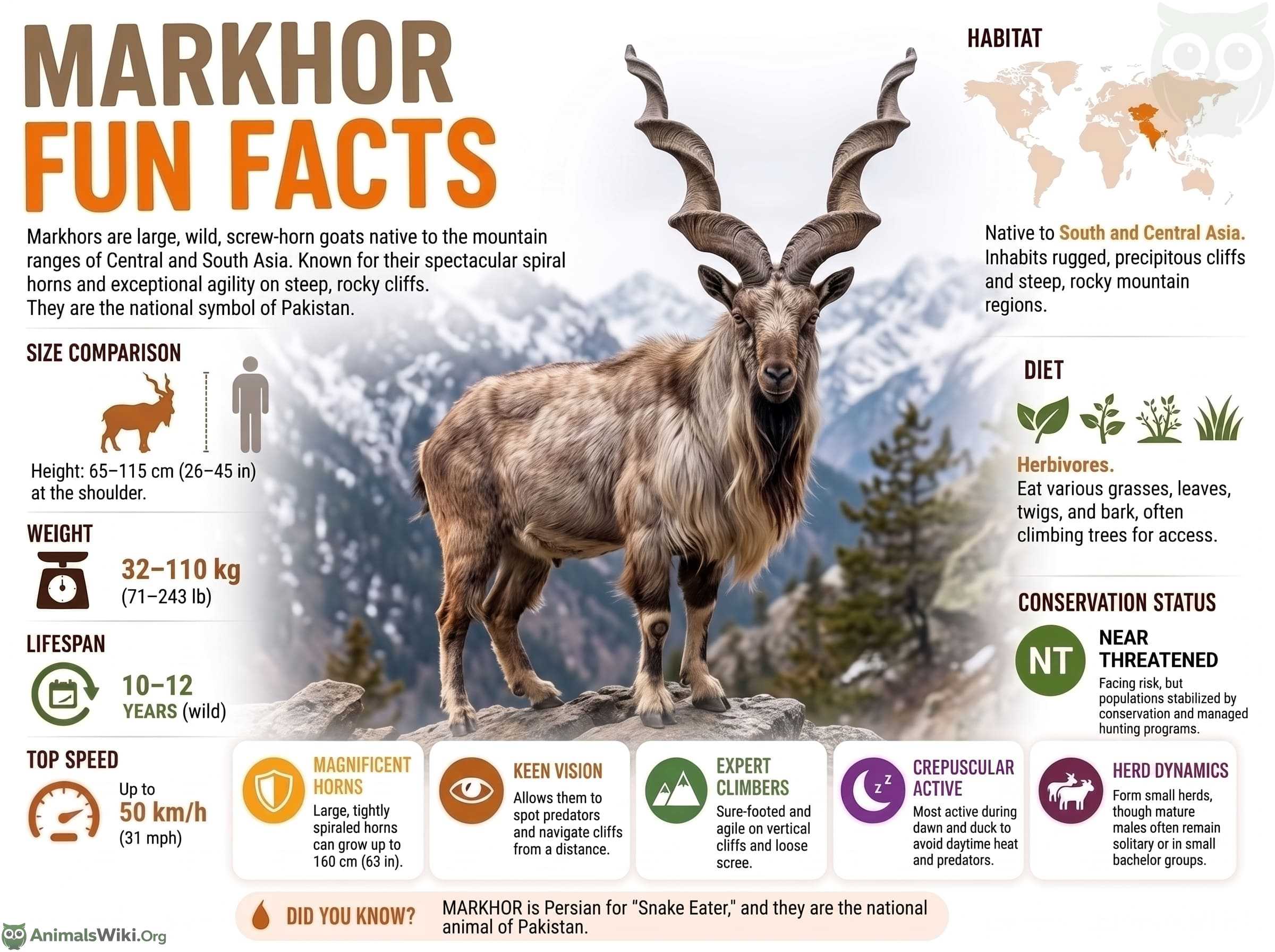
- 🐐 The markhor is Pakistan’s national animal — designated in 1970
- 🐐 Its name means “snake eater” in Pashto and Persian — reflecting a widespread folk myth about the animal killing and eating snakes
- 🐐 Male markhor horns can grow to 160 cm (63 inches) in length — the most spectacular horn structure of any wild goat
- 🐐 The markhor is the world’s largest wild goat — males can weigh over 110 kg
- 🐐 Markhors can climb near-vertical cliff faces with casual confidence — navigating terrain that defeats most other large mammals
- 🐐 The markhor was downlisted from Endangered to Near Threatened in 2015 — one of the most celebrated conservation recoveries in South Asian wildlife history
- 🐐 The Torghar Conservation Project in Pakistan increased a local markhor population by 35 times over 25 years through community-based conservation
- 🐐 A single trophy hunting license for a markhor can cost $60,000–$100,000 USD — with 80% of revenue going directly to local communities
- 🐐 Markhors appear in rock art at Chilas, Pakistan, dating back thousands of years — one of the most artistically depicted animals in ancient South Asian mountain cultures
- 🐐 The Snow Leopard (Panthera uncia) is the markhor’s primary natural predator — and healthy markhor populations directly support snow leopard conservation
- 🐐 Markhor horns weigh up to 9–10 kg — approximately 8–10% of the animal’s total body weight
- 🐐 The spiral structure of markhor horns locks together during male-male combat — an evolutionary advantage that makes fighting contests more reliably reflect genuine competitive ability
17. How You Can Help
Support These Organizations
- Snow Leopard Trust (snowleopard.org) — integrates markhor conservation into snow leopard programs; community-based conservation across Central and South Asia; one of the most effective mountain wildlife conservation organizations globally
- WWF Pakistan (wwf.org.pk) — the primary international conservation organization working on markhor in Pakistan; supporting habitat protection, anti-poaching, and community conservation programs
- Wildlife Conservation Society — Pakistan (wcs.org) — supporting markhor research, monitoring, and community-based conservation programs in Pakistan and Afghanistan
- Panthera (panthera.org) — through its snow leopard programs, directly supports the markhor habitat and prey-base conservation that benefits both species simultaneously
- IUCN Pakistan — coordinating conservation assessments and policy for markhor and other threatened Pakistani wildlife
- Nature Foundation Pakistan — local Pakistani organization supporting community-based conservation in northern Pakistan including markhor habitat
What You Can Do
- Support community-based conservation financially — the most effective way to directly benefit markhor conservation is to support organizations that deliver economic benefits to the mountain communities that share habitat with markhors; communities that benefit economically from markhor conservation become its most committed protectors
- Visit Pakistan for wildlife tourism — responsible wildlife tourism to Pakistan’s northern mountain areas directly funds local communities and demonstrates that living markhors are economically valuable; the markhor’s extraordinary appearance makes it a compelling wildlife tourism target that can generate significant local revenue
- Advocate for Afghan wildlife protection — the collapse of conservation programs in Afghanistan since 2021 is the most serious immediate threat to global markhor populations; supporting advocacy for the protection of Afghan wildlife through diplomatic and humanitarian channels helps maintain international attention on this overlooked crisis
- Support snow leopard conservation — protecting the markhor’s primary predator simultaneously requires protecting markhor habitat and populations; snow leopard conservation and markhor conservation are essentially the same program
- Engage with the trophy hunting debate thoughtfully — the ethics of using regulated trophy hunting as a conservation tool is genuinely complex; engaging with the evidence on both sides rather than adopting a simplistic position contributes to the sophisticated policy discussion that this important conservation tool deserves
Recommended Documentaries & Books
- “Snow Leopard: Beyond the Myth” (BBC) — covers the snow leopard and its prey including markhors in mountain Asia
- “Wild Pakistan” (various productions) — several documentary features on Pakistan’s extraordinary wildlife including markhor
- “The Hunt” (BBC, 2015) — David Attenborough production featuring mountain predator-prey relationships including snow leopard and ungulates
- “A Snow Leopard Bestiary” by various authors — covers the ecology of snow leopard prey species including markhor
- “Trophies and Tragedies: The Conservation Hunting Debate” — various academic treatments of the regulated trophy hunting controversy most relevant to the markhor program
18. Frequently Asked Questions Markhors
Q1: What is a markhor and where does it live?
The markhor (Capra falconeri) is the world’s largest wild goat — a mountain ungulate famous for its spectacular corkscrew spiral horns and its extraordinary agility on steep cliff terrain. It lives in the rugged mountain ranges of Pakistan, Afghanistan, India (Jammu and Kashmir), Tajikistan, Uzbekistan, and Turkmenistan — specifically in the Hindu Kush, Karakoram, Western Himalayas, and Sulaiman ranges at elevations of 600–3,600 meters. The markhor is Pakistan’s national animal and one of the most culturally significant wildlife species in South and Central Asia.
Q2: Why are markhor horns shaped like a corkscrew?
The markhor’s corkscrew spiral horns evolved through sexual selection — the process by which characteristics that improve reproductive success are passed on to subsequent generations. Males with larger, more impressive horns are more successful in competitions with rival males for access to females, and females tend to prefer larger-horned males. The spiral shape specifically appears to improve horn-lock stability during male combat — the corkscrew structure catches rival horns in a more secure lock, making contests more reliably reflect genuine competitive ability rather than accidental disengagement. The precise spiral form is produced by differential growth rates across the horn’s cross-section — the inner surface grows faster than the outer surface, creating both the curve and, through rotational growth differences, the spiral.
Q3: Why is the markhor called a “snake eater”?
The name “markhor” derives from the Persian and Pashto words for “snake” (mar) and “eater” (khor). This name reflects a widespread folk belief across the cultures of the markhor’s range that the animal actively hunts and kills snakes, and that the foam produced during cud-chewing has snake-venom-neutralizing properties. This belief is entirely mythological — markhors are strict herbivores with no biological capacity to hunt or consume snakes. The myth likely developed from observations of markhors in rocky terrain (where snakes also occur) combined with cultural elaboration of the markhor’s impressive physical capabilities and its fearless navigation of terrain inhabited by venomous snakes.
Q4: How did the markhor recover from near-extinction?
The markhor’s recovery is primarily attributed to community-based conservation programs that aligned local economic interests with wildlife protection. The key innovation was the Community-Based Trophy Hunting Program in Pakistan — which auctions a small number of hunting licenses to international trophy hunters at prices of $60,000–$100,000+ per license, then returns 80% of the revenue directly to the local communities in whose territory the markhors live. This created powerful economic incentives for communities to protect markhors from poaching rather than hunting them. Pakistan’s markhor population grew from approximately 2,500 animals in the early 1990s to 5,000+ by 2015, when the IUCN downlisted the species from Endangered to Near Threatened — one of the most celebrated conservation recoveries in South Asian wildlife history.
Q5: What is the difference between a markhor and an ibex?
Both markhors and ibexes are members of the genus Capra and are closely related wild goats that inhabit rocky mountain terrain. The key differences are: horn shape — markhor horns are distinctive corkscrew spirals reaching up to 160 cm; ibex horns are large and curved with prominent ridges but do not spiral; size — markhors are generally larger than most ibex species, with males reaching 110 kg versus the Alpine Ibex’s maximum of approximately 117 kg in the largest individuals; range — markhors are restricted to the Hindu Kush–Karakoram–Western Himalayan region, while various ibex species inhabit the Alps, Middle East, Caucasus, and Central Asia; appearance — male markhors develop long, flowing manes in winter, which ibexes do not.
Q6: Is trophy hunting really helping save markhors?
The evidence strongly suggests that regulated trophy hunting has been central to the markhor’s population recovery in Pakistan — the country with the largest markhor population and the most developed conservation program. Pakistan’s markhor numbers tripled between the early 1990s and 2015 following the introduction of the community-based trophy hunting program. The mechanism is clear: hunting fees provide substantial economic benefits to communities that would otherwise have financial incentives to poach markhors, fundamentally changing the economic calculus from “poaching is profitable” to “protection is profitable.” However, the program remains ethically contested — critics argue that alternative revenue mechanisms (wildlife photography tourism, payment for ecosystem services) could achieve similar conservation outcomes without killing individual animals. The mainstream conservation evidence currently supports the program’s effectiveness, while the ethical debate continues.
Q7: How does the markhor relate to the snow leopard’s conservation?
The relationship is direct and ecologically fundamental. The snow leopard (Panthera uncia) is the markhor’s primary natural predator across much of the range, and markhors constitute a significant proportion of snow leopard diet in Pakistan, Tajikistan, and other areas of overlap. This means that markhor population density directly determines snow leopard carrying capacity — areas with more markhors support more snow leopards; areas where markhors have been extirpated lose their snow leopards as well. Conservation organizations including the Snow Leopard Trust and Panthera explicitly incorporate markhor conservation into their snow leopard programs, recognizing that protecting prey is as essential as protecting predator. The markhor-snow leopard system is one of the most instructive examples of how prey and predator conservation must be integrated for either to succeed.
Q8: What does the markhor’s horn tell us about its age?
Like many bovid species, markhors accumulate visible growth rings on their horns — one ring per year of life, produced by the seasonal slowdown in horn growth during winter. These rings can be counted (with some difficulty given the spiral structure) to determine an individual’s age. In addition, horn length and degree of spiral are broadly correlated with age — younger males have shorter horns with less-developed spirals; maximum horn length and full spiral development are typically achieved at approximately 7–8 years of age. Trophy hunters and wildlife managers use horn characteristics to identify old, post-reproductive males — the target of regulated trophy hunting programs — from younger males whose removal would have greater reproductive impact on the population.
19. Sources & References
The information in this article was researched and verified using the following authoritative sources:
- Wikipedia — Capra falconeri, Markhor, Torghar Conservation Project, Chitral Gol National Park
- IUCN Red List (iucnredlist.org) — Markhor (Capra falconeri) conservation status assessment (Shackleton et al., 2020)
- WWF Pakistan (wwf.org.pk) — Markhor population data and conservation program information
- National Geographic (nationalgeographic.com) — Markhor biology, conservation, and trophy hunting coverage
- Britannica (britannica.com) — Markhor, Capra falconeri
- Snow Leopard Trust (snowleopard.org) — Predator-prey relationship data; community conservation program information
- TRAFFIC (traffic.org) — CITES listing information and trade data for markhor
- Pakistan Wildlife Department — National population monitoring data
- Hussain, S. (2000) — Torghar Conservation Project evaluation — IUCN publication; foundational community-based conservation documentation
- Schaller, G.B. (1977) — Mountain Monarchs — University of Chicago Press; the foundational ecological reference for Central Asian mountain ungulates including markhor
- Journal of Zoology — Multiple peer-reviewed papers on markhor ecology, behavior, and conservation
- Oryx (Cambridge University Press) — Conservation journal; multiple markhor conservation papers
- CITES (cites.org) — Appendix I listing information and trade regulation documentation
- Archaeological Survey of India and INTACH — Rock art documentation from Chilas and other sites
- BBC Nature (bbc.co.uk/nature) — Documentary references and species behavior data
20. Markhor Images