
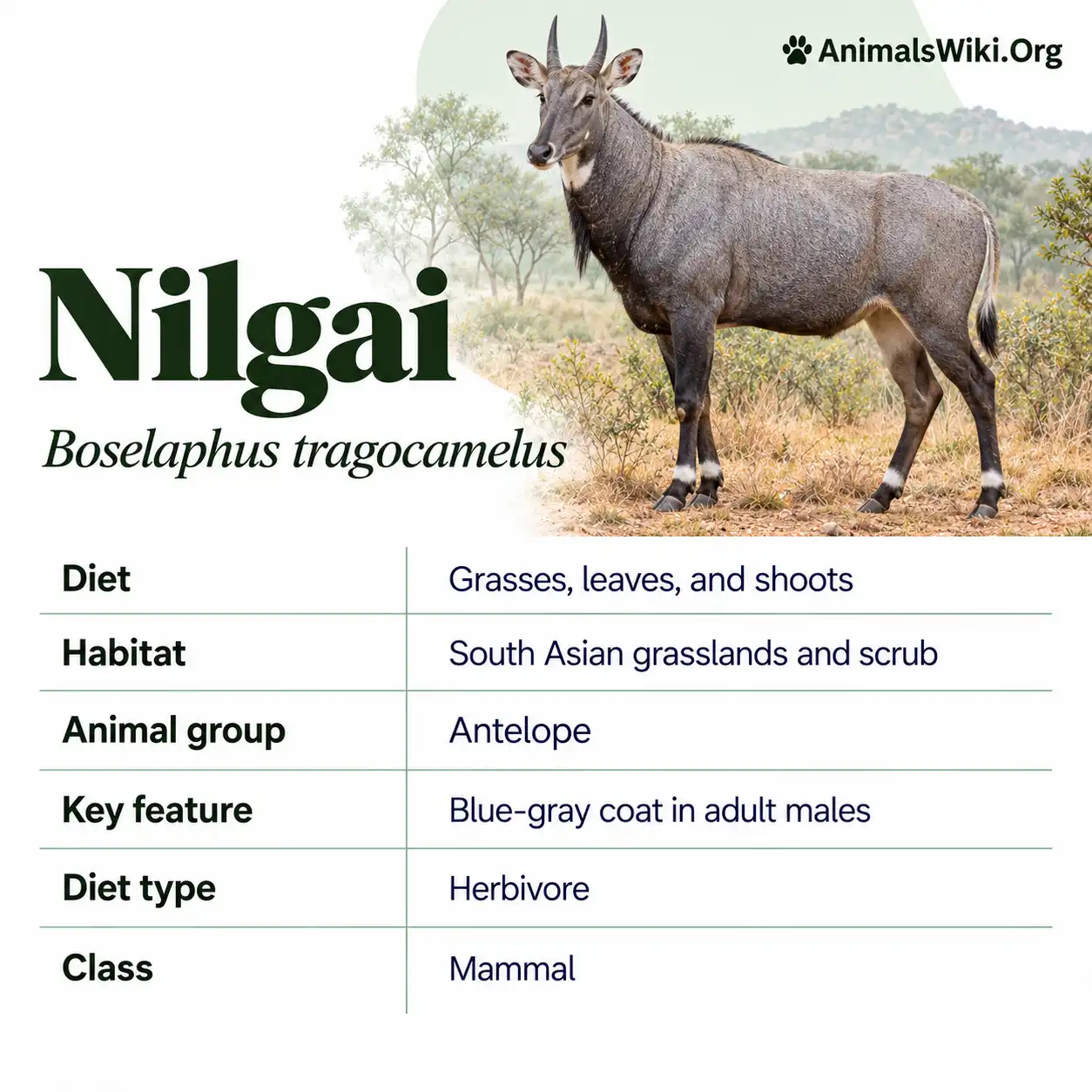
Nilgai Facts, The Blue Bull of the Indian Subcontinent
The nilgai is one of South Asia’s most distinctive wild mammals. Known as the blue bull, this large antelope has a powerful body, long legs, a sloping back, and a remarkable difference in appearance between adult males and females. Mature males often develop a slate-gray or bluish-gray coat, while females and young animals are usually tawny brown. Despite its bull-like appearance and name, the nilgai is an antelope rather than a member of the cattle family’s domestic species.
Scientifically known as Boselaphus tragocamelus, the nilgai is native to the Indian subcontinent. It lives in open woodland, scrubland, grassland, and agricultural landscapes, where it feeds on grasses, leaves, shoots, flowers, fruits, and cultivated plants. Its ability to use a variety of habitats has helped it survive in landscapes increasingly shaped by people.
The species also illustrates an important challenge in wildlife conservation: an animal can remain widespread and globally secure while still causing serious local conflicts. Nilgai may damage crops when they feed in agricultural fields, leading to disputes between farmers and wildlife managers. In other areas, habitat loss, hunting, and isolated populations can create conservation concerns.
This guide explores nilgai identification, scientific classification, distribution, habitat, feeding behavior, physical adaptations, social life, reproduction, calf development, predators, ecological importance, human conflict, and conservation. It also distinguishes established biological facts from population figures that are old, regional, or uncertain.
Nilgai Facts
| Feature | Details |
|---|---|
| Common name | Nilgai, blue bull |
| Scientific name | Boselaphus tragocamelus |
| Animal group | Mammal |
| Class | Mammalia |
| Order | Artiodactyla, often included within the broader modern grouping Cetartiodactyla |
| Family | Bovidae |
| Genus | Boselaphus |
| Native range | Mainly India, with populations in parts of Pakistan and Nepal |
| Habitat | Open woodland, scrubland, grassland, savanna-like habitats, and agricultural landscapes |
| Diet | Herbivorous; eats grasses, leaves, shoots, herbs, flowers, fruit, and crops |
| Adult male color | Gray to bluish-gray, often darker with age |
| Adult female color | Tawny, yellowish-brown, or sandy brown |
| Horns | Short horns normally found in males |
| Shoulder height | Approximately 1.2–1.5 meters, varying by individual and source |
| Body mass | Often around 120–240 kg; exceptionally large animals can weigh more |
| Gestation | Approximately eight months |
| Typical litter | One or two calves; twins are common in some populations |
| Conservation status | Globally assessed as Least Concern in commonly cited assessments |
| Global population | No dependable, current, comprehensive global count identified |
| Main pressures | Local habitat changes, hunting in some areas, road risks, and conflict over crop damage |
| Introduced populations | Includes free-ranging populations in southern Texas and other introduced areas |
| Ecological role | Large herbivore that influences vegetation and provides prey for large carnivores |
1. What Is a Nilgai?
The nilgai is a large, hoofed mammal belonging to the family Bovidae, the same broad family that includes antelopes, cattle, sheep, goats, and buffaloes. It is a wild herbivore adapted to the relatively open landscapes of South Asia.
Its common name comes from South Asian languages. The word nilgai is commonly explained as a combination meaning “blue cow” or “blue cattle,” reflecting the bluish-gray appearance of adult males. The alternative name blue bull refers to the same feature. These names can be misleading: nilgai are neither domestic cattle nor true bulls.
The species has a sturdy torso, long limbs, a relatively narrow head, pointed ears, and a short mane along the neck. Adult males have small, usually straight horns, whereas females are typically hornless. This contrast makes identifying the sex of an adult nilgai relatively easy when the animal can be observed clearly.
Nilgai are mainly active during daylight, although their activity patterns can shift with temperature, disturbance, and local conditions. They often feed in the cooler parts of the day and rest or seek cover during hotter periods. In landscapes where people are common, they may adjust their routines to avoid human activity.
Unlike highly specialized animals that depend on one narrow habitat type, nilgai can exploit a variety of environments. They may browse on shrubs in dry country, graze in open patches, and feed on crops where agricultural fields overlap their range. This flexibility helps explain why nilgai remain common in parts of their native range even as natural habitats change.
The species is also unusual among antelopes because adult males can look more like small, long-legged cattle than the slim, graceful gazelles familiar from African grasslands. Yet their body structure, behavior, and evolutionary history clearly place them among the wild bovids.
2. Scientific Classification and Taxonomy
The nilgai has the scientific name Boselaphus tragocamelus. Scientific names help researchers distinguish a species from animals that share similar common names across languages and regions.
Scientific classification table
| Taxonomic rank | Classification |
|---|---|
| Kingdom | Animalia |
| Phylum | Chordata |
| Class | Mammalia |
| Order | Artiodactyla; placed in Cetartiodactyla in some modern classifications |
| Family | Bovidae |
| Subfamily | Bovinae |
| Genus | Boselaphus |
| Species | Boselaphus tragocamelus |
The species was described by Peter Simon Pallas in 1766. It is the only living species generally recognized in the genus Boselaphus. Its distinctive combination of body shape, coloration, and horn characteristics separates it from other living bovids.
Why is the nilgai classified as a bovid?
Bovids are even-toed, hoofed mammals that typically possess a complex stomach adapted for fermenting plant material. Like other ruminants, nilgai can swallow vegetation and later regurgitate it as cud, chewing it again to help break down tough plant fibers.
The family Bovidae contains a wide variety of body forms. Some members are small and agile, while others are heavy, muscular, and built for moving through open or wooded terrain. The nilgai belongs to this diverse group, but its unusual combination of large size, sloping back, and strong sexual dimorphism makes it easy to recognize.
Is the nilgai related to cattle?
Yes, in the broad evolutionary sense. Nilgai and cattle belong to the same family and subfamily, but they are not the same species and should not be confused with domesticated cows or bulls. Their shared features reflect common ancestry rather than domestication of nilgai.
The nilgai’s name and appearance have contributed to cultural confusion. In some areas, people refer to it as a cow-like animal, but its biology is that of a wild antelope. Its behavior, habitat use, and reproduction should be understood on that basis.
Why does taxonomy sometimes vary between sources?
Scientific classification is not always presented identically across reference works. Some sources use Artiodactyla for even-toed ungulates, while others use Cetartiodactyla, a broader grouping that reflects evolutionary relationships between even-toed ungulates and cetaceans. This difference in rank naming does not mean the animal itself is a different species.
For a general wildlife article, Boselaphus tragocamelus is the central and widely accepted species name. Readers do not need to memorize every taxonomic convention to identify the animal correctly.
3. Nilgai Subspecies and Population Differences
One important point about nilgai taxonomy is that there are no widely accepted living subspecies that are consistently recognized across major mammal references. The species is usually treated as a single species, Boselaphus tragocamelus, rather than a collection of formally established subspecies.
This differs from species for which scientists recognize multiple subspecies with consistently documented geographic boundaries and distinguishing traits.
Are there different types of nilgai?
Nilgai populations can differ in body size, coat shade, habitat use, and local behavior. Those differences do not automatically establish separate subspecies. For example, animals living in dry open country may encounter different food resources from animals living near wooded grasslands or irrigated farmland. Their condition and appearance can reflect these environmental differences.
Adult males commonly develop a darker gray or blue-gray coat as they mature, while females remain brown. Such differences are part of the species’ normal sexual dimorphism, not evidence that the sexes belong to separate subspecies.
How do scientists decide whether a subspecies exists?
Subspecies are generally proposed when populations have consistent, heritable differences and occupy distinguishable geographic areas. Depending on the species and research question, scientists may examine anatomy, coat patterns, genetic variation, geography, and evolutionary history.
A few visible differences between animals do not establish a subspecies. Nor does a population living in a separate region automatically qualify. Researchers need evidence that the differences are meaningful and sufficiently consistent.
What about nilgai in India, Pakistan, and Nepal?
Nilgai across their native range belong to the same recognized species. However, local populations may face different conditions.
-
India: Nilgai occur across a broad range of landscapes, including open woodland, scrub, grassland, and agricultural areas. In some regions, they are common enough to create crop-damage concerns.
-
Pakistan: Nilgai are associated with parts of the eastern and northeastern region of the country, although their distribution is more limited than in India.
-
Nepal: Nilgai occur in parts of the southern lowlands, but their national conservation situation has been assessed more cautiously than the species’ global status.
These are geographic population differences, not evidence of universally accepted subspecies.
Why does this distinction matter for conservation?
A species may be widespread overall while some of its regional populations are small or isolated. Treating every population as equally secure can conceal local declines. Conversely, describing every regional group as a separate subspecies without strong evidence can create unnecessary taxonomic confusion.
For the nilgai, it is more accurate to discuss regional population conditions and threats directly than to present disputed or unsupported subspecies names as settled science.
4. Physical Appearance and Identification
The nilgai has a distinctive profile that becomes particularly obvious when it stands in open country. Its body is deep and muscular, the front portion is strong, and the back slopes downward toward the hindquarters. The legs are long enough to support quick movement across open ground, while the head and neck give it a somewhat horse-like or cattle-like silhouette.
Coat color
Coat color is one of the easiest ways to distinguish adult males from females.
Adult males usually develop a gray to bluish-gray coat as they mature. The shade can vary from pale gray to dark slate-gray, with some individuals appearing almost charcoal-colored around the neck and shoulders. Their legs and facial features may be darker than the body.
Females are usually yellowish-brown, tawny, or sandy brown. Young nilgai are also brown, which can make juvenile males resemble females until the males begin to mature and develop a darker coat.
Color varies with lighting, season, age, and individual condition. A photograph taken in harsh sunlight may make a gray male look much paler than he appears in shade. Coat color is therefore useful but should not be the only identification feature.
Head and facial markings
The nilgai’s head is relatively long and narrow. It has large, pointed ears and a muzzle adapted for taking leaves, grass, and other plant material. White markings commonly appear around the chin, throat, lips, and lower legs. The exact prominence of these markings varies among individuals.
The eyes are positioned on the sides of the head, giving the animal a broad field of view. This is valuable for a herbivore that must detect danger while feeding.
Mane and throat hair
A short mane runs along the neck and upper back. Adult males may have a more pronounced appearance around the neck and shoulders, adding to their robust silhouette.
A tuft of longer hair may hang from the underside of the neck, especially in males. This feature, along with the darkening coat and horns, helps distinguish a mature male from a female at a distance.
Horns
Male nilgai usually have a pair of short, dark horns that rise from the top of the head and angle slightly forward. They are generally much shorter than the long, curved horns seen in some other antelopes. Females are usually hornless.
The horns are not just decorative. They may be used in contests between males and can play a role in displays of dominance. However, body posture and other social signals can also help males resolve encounters without escalating them into serious fights.
Tail and legs
The tail is relatively short and often ends in a dark tuft. The legs are long and strong, allowing the animal to cover ground efficiently. Its hooves are suited to terrestrial movement across firm ground, scrub, grassland, and field edges.
The nilgai’s anatomy is built for a life spent feeding and moving through open or semi-open environments. It is not specialized for climbing steep rocky terrain or moving through dense tropical forest.
5. Size, Weight, and Sexual Dimorphism
Nilgai are large antelopes. Their size makes them among the most substantial wild herbivores found in many parts of the Indian subcontinent.
Adults commonly stand roughly 1.2 to 1.5 meters at the shoulder, though measurements differ among sources and individuals. Body mass is also variable. Males are generally heavier and more muscular than females, and exceptionally large males may exceed the upper end of commonly reported weight ranges. A specialist account from Texas Tech University reports male weights ranging from 109 to 288 kilograms, with a maximum recorded weight around 306 kilograms in its account.
Why are males and females so different?
The visible differences between male and female nilgai are examples of sexual dimorphism. In this species, males become larger and develop horns and a darker coat, while females usually remain smaller and brown.
These differences are common in many hoofed mammals. In species where males compete for access to females, larger size and weapons such as horns may help during competition. In nilgai, males may engage in displays, posturing, and physical contests during the breeding season.
Females invest heavily in pregnancy and raising young, while males may invest more energy in growth and competition. These different reproductive pressures can contribute to the evolution of different body sizes and appearances.
Does a large size make nilgai safe from predators?
Large body size can make an adult nilgai a challenging target for some predators, but it does not guarantee safety. Tigers and other large carnivores may kill nilgai, especially where predator and prey ranges overlap. Young animals and weakened adults may be more vulnerable than healthy, full-grown individuals.
Nilgai rely on more than size. They use vigilance, speed, group behavior, and familiarity with their surroundings to reduce danger.
How size affects daily life
A large body requires substantial food intake. Nilgai must spend much of their active time finding and processing vegetation, although the exact feeding schedule depends on local conditions.
Size also affects movement. Nilgai can travel across open ground, but their bulk makes them different from smaller antelopes that rely on rapid, highly agile maneuvers. They often benefit from detecting danger early enough to move away before a predator gets close.
6. Nilgai Habitat and Preferred Environment
Nilgai occupy a range of habitats, but they generally favor open or semi-open environments rather than dense, continuous forest. Their preferred landscapes provide a combination of forage, visibility, shelter, and access to water.
Common habitat types include:
-
Open woodland and dry deciduous forest.
-
Scrubland with scattered trees.
-
Grassland and wooded grassland.
-
Savanna-like environments.
-
Dry plains and gently rolling terrain.
-
Agricultural land near suitable natural cover.
-
Irrigated or modified landscapes where food is available.
A specialist review of nilgai describes their preference for open grassland and savanna-like habitats, while research and wildlife-management accounts also document their use of scrub, dry woodland, and farmland.
Open woodland
Open woodland offers both food and cover. Grasses and herbs grow in clearings, while trees and shrubs supply leaves, shoots, and shade. Scattered vegetation can also provide concealment without completely blocking the animal’s view of approaching danger.
Nilgai are not simply animals of treeless plains. A landscape with patches of woodland and open ground can offer a useful combination of browsing opportunities and open escape routes.
Scrubland and dry country
Scrubland may support nilgai where shrubs, herbs, and seasonal grasses provide enough food. The animals can browse on woody plants during periods when fresh grass is limited.
Their ability to feed on more than one category of plant material is especially valuable in regions with pronounced wet and dry seasons. Nevertheless, the quality of scrubland varies, and severe drought or heavy habitat degradation can reduce the food available to large herbivores.
Agricultural landscapes
In some parts of India, nilgai use agricultural land for feeding. Crops can provide concentrated, nutritious food, particularly when fields are surrounded by suitable cover or lie along regular movement routes.
This adaptability can bring animals into frequent contact with people. A field that provides an easy meal for nilgai may be a source of financial loss for a farmer, especially if animals repeatedly enter during a vulnerable stage of crop growth.
Agricultural use should not be mistaken for proof that natural habitat is unnecessary. Nilgai still need safe movement routes, resting sites, and access to adequate forage across the broader landscape.
Why dense forest is often less suitable
Dense forest can restrict visibility and movement, and it may provide fewer of the open feeding patches nilgai commonly use. The species can occur in wooded areas, but it generally does not depend on the deep, closed forest habitat associated with some other large mammals.
Habitat preferences are not absolute rules. Local food supply, disturbance, water availability, and the presence of other species can affect where nilgai are found.
Seasonal habitat changes
The same location can be attractive during one season and less suitable during another. Rainfall changes the availability of grasses and herbs, while crops can draw nilgai toward farmland. During dry periods, animals may spend more time searching for browse or water.
These movements may be local rather than long-distance migrations. A population can shift its daily or seasonal use of an area without undertaking a large, predictable migration.
7. Geographic Distribution
The nilgai is native to the Indian subcontinent, with its main range in India and smaller or more restricted populations in parts of Pakistan and Nepal. It has also been introduced outside its native range, most notably in southern Texas in the United States.
India
India holds the principal native range of the species. Nilgai occur across numerous northern, western, and central areas and are present in a variety of landscapes. They can be seen in protected areas as well as in agricultural and mixed-use environments.
Their distribution is not uniform. Local abundance depends on vegetation, hunting pressure, land use, human tolerance, and the availability of suitable habitat. Some agricultural districts have reported frequent nilgai activity, while other areas may hold fewer animals.
The presence of nilgai outside protected areas is especially important. Conservation planning cannot rely entirely on national parks and wildlife reserves when a substantial portion of the population uses farmland and other human-modified landscapes. Historical reviews have noted that nilgai can be locally abundant in agricultural regions, but they also warn that comprehensive census data have been limited.
Pakistan
Nilgai are native to parts of Pakistan, particularly areas associated with the eastern side of the country and the broader Indo-Gangetic region. Their distribution is more limited than in India, and local populations can be affected by changes in land use and pressure on natural habitats.
Historical records and regional studies should not be interpreted as proof that nilgai remain abundant at every former location. Confirming current distribution requires recent field surveys, reliable sighting records, and, where possible, population monitoring.
Nepal
Nilgai occur in parts of Nepal’s southern lowlands. Their national conservation status has been assessed more cautiously than the global status, illustrating why country-level and global assessments must be kept separate.
A national assessment published for Nepal in 2011 classified the species as Vulnerable and reported an estimated national population of approximately 289–324 animals based on separate surveys. That figure is a historical, country-specific estimate, not a current count and not an estimate for the entire species.
This is a useful reminder that a species can be globally widespread but vulnerable within a particular country.
Bangladesh
The nilgai is generally regarded as regionally extinct in Bangladesh. A national assessment uploaded to the National Red List Database in 2015 recorded the species as Regionally Extinct and noted that it had been tentatively lost since the end of the 1930s.
Regional extinction means a species is no longer considered to maintain a wild population in that particular country or region. It does not mean the species is globally extinct.
Introduced range
Free-ranging nilgai have become established in southern Texas after being introduced for game purposes. Introduced populations also have been reported in Mexico and other locations. These populations exist outside the species’ native South Asian range and should be considered separately when describing natural distribution and conservation.
The Texas population is particularly well documented in regional mammal accounts. Texas Tech University’s Mammals of Texas account reports an estimate of about 15,000 nilgai in south-central and southern Texas, but this is a regional estimate, not a worldwide census, and should not be treated as a precise count for October 2026.
8. Nilgai Population: What Is Known?
There is no single, dependable, up-to-date global population figure that can be confidently presented as the total number of wild nilgai alive today. Available sources include regional surveys, older estimates, local density studies, and assessments made at different times using different methods.
For that reason, it is better to explain the quality and scope of population information than to repeat a large number without context.
Global status versus a global count
The nilgai is commonly listed as Least Concern at the global level. This category indicates that the species is not currently considered to meet the criteria for a higher global threat category in the assessment being cited. It does not mean every population is stable, nor does it establish an exact total population.
A species can be widespread and locally abundant while still experiencing regional declines. Global assessments consider factors such as range, population trends, threats, and the likelihood of extinction across the species as a whole.
Why are population estimates difficult?
Several factors complicate counting nilgai:
-
Large distribution: The species occurs across extensive and varied landscapes.
-
Animals outside protected areas: Many nilgai use agricultural land and other places that are not routinely covered by wildlife censuses.
-
Different survey methods: Counts, transects, local sightings, and density estimates do not measure populations in exactly the same way.
-
Uneven survey coverage: Some regions have more monitoring than others.
-
Movement between habitats: Animals may shift their use of farmland, scrub, and woodland depending on food and disturbance.
-
Different reporting dates: An estimate from a past survey may remain widely quoted long after local conditions have changed.
A report estimating nilgai density in one forest or agricultural district cannot simply be multiplied across the species’ range to produce a global population figure. Habitat quality, animal density, and human pressures differ too much between regions.
Historical estimates in India
Older specialist and conservation accounts have suggested that nilgai numbered more than 100,000 across their range, and some historical reports described estimates of 100,000–150,000 in several northern and central Indian states. These numbers were based on older information rather than a comprehensive, modern, range-wide census.
They should not be described as an exact current count. The safest conclusion is that nilgai have been locally abundant in parts of India, while a reliable contemporary global total remains uncertain.
Total population and mature individuals are not the same
Population estimates can refer to different groups of animals:
-
Total population: All individuals counted or estimated, potentially including adults, juveniles, and calves.
-
Mature individuals: Animals considered reproductively mature under the definition used by the assessment.
-
Local population: Animals in a defined site, reserve, district, or region.
-
Estimated density: The number of animals per unit area, such as individuals per square kilometer.
These values answer different questions. A national estimate of total animals cannot be compared directly with an estimate of mature individuals in one protected area. Likewise, a density estimate does not reveal the total number of animals unless the area and suitable habitat are also known.
A population snapshot with important caveats
| Location or scope | Reported information | How to interpret it |
|---|---|---|
| Global | Commonly assessed as Least Concern | A threat category, not a precise head count |
| India | Older accounts describe populations in the hundreds of thousands or above 100,000 | Historical estimates; not a verified current nationwide census |
| Nepal | Approximately 289–324 animals in a national assessment published in 2011 | Historical national estimate, not current and not global |
| Southern Texas, USA | About 15,000 reported in a regional mammal account | Regional introduced-population estimate, not a current worldwide total |
| Bangladesh | Listed as Regionally Extinct in a national assessment uploaded in 2015 | A country-level status, not global extinction |
The main lesson is that population information must always be accompanied by a date, a geographic scope, and an explanation of what was counted. Until more comprehensive surveys become available, any exact global nilgai total should be treated with caution.
9. Diet and Feeding Behavior
Nilgai are herbivores, meaning they feed on plant material rather than hunting other animals for food. They are also flexible feeders: they can graze on grasses and other low-growing plants, while browsing on leaves, shoots, and woody vegetation.
This flexibility is one of the species’ most useful ecological traits. Instead of depending entirely on one type of plant, nilgai can adjust their feeding according to what is available in their habitat.
What do nilgai eat?
Their diet can include:
-
Grasses and young grass shoots.
-
Leaves from shrubs and trees.
-
Herbs and other broad-leaved plants.
-
Tender stems and new growth.
-
Flowers and seeds.
-
Fruits when available.
-
Agricultural crops, depending on the region and season.
Nilgai diets differ between native and introduced habitats. Specialist sources describe a substantial role for woody plants and agricultural crops in parts of South Asia, while grasses are reported to make up much of the diet in Texas.
Grazing and browsing
Grazing means feeding mainly on grasses and similar low-growing vegetation. Browsing means eating leaves, shoots, and other plant material from shrubs or trees.
Nilgai can do both. Their relative use of grazing and browsing changes with the availability and quality of forage. When fresh grass is abundant, they may spend more time feeding on it. When grasses become scarce or less nutritious, leaves and other browse can become more important.
This mixed feeding strategy allows nilgai to use habitats that would be less suitable for animals dependent on grass alone.
Why dietary flexibility matters
Plant growth changes throughout the year. Rainfall can trigger a flush of green vegetation, while long dry periods may leave only tougher or less nutritious plants. Animals that can switch food sources have more options during these seasonal transitions.
Dietary flexibility does not make nilgai immune to food shortages. If a landscape loses much of its vegetation, becomes heavily degraded, or experiences a prolonged drought, the remaining plants may not provide enough energy and nutrients to sustain the population.
Do nilgai eat crops?
Yes. Nilgai can enter fields and feed on crops where farmland overlaps their range. The plants they consume depend on local agricultural practices and the season.
Crop feeding is a major source of conflict in some areas because an animal may consume, trample, or damage plants that farmers have invested time and money in growing. A small group repeatedly entering a field can cause disproportionate losses if it targets a vulnerable crop stage.
Not every nilgai population causes the same level of agricultural damage. The severity depends on local abundance, crop type, field layout, natural forage availability, fencing, and the effectiveness of non-lethal deterrents.
How nilgai digest plants
Like other ruminants, nilgai have a specialized digestive system that helps them extract nutrients from fibrous plant material. Microorganisms in the foregut ferment plant matter, breaking down compounds that mammals cannot efficiently digest on their own.
The animal later regurgitates cud and chews it again. This additional chewing reduces the size of plant particles and helps the digestive process work more efficiently.
Ruminant digestion is especially useful for animals that consume large quantities of vegetation, much of which contains cellulose and other complex plant components.
10. How Nilgai Find Food and Water
Finding enough food is a daily priority for a large herbivore. Nilgai move between feeding sites, resting areas, and sources of water according to local conditions. Their movements may be influenced by the time of day, temperature, human disturbance, and the growth of seasonal vegetation.
Food selection
Nilgai do not simply consume every plant they encounter. Like many herbivores, they select foods according to availability, palatability, and nutritional value. Tender shoots and fresh growth can be particularly attractive because they may be easier to digest than mature, fibrous vegetation.
Their broad diet allows them to exploit multiple feeding opportunities. A nilgai might browse shrubs in one area and graze in a nearby opening, depending on what the landscape provides.
Water needs
Nilgai need water, but their water use varies with climate, diet, and habitat. They may drink from natural water sources or human-created water points when these are available. Moist vegetation can contribute water to the diet, but it should not be assumed that nilgai can live indefinitely without drinking.
In hot and dry environments, access to water may influence where animals spend their time. However, the importance of a particular water source depends on how far animals must travel, the availability of forage nearby, and whether they can approach the water safely.
Heat and feeding schedules
During hot weather, nilgai may shift activity toward cooler periods and rest more during the heat of the day. Shade can reduce exposure to direct sunlight, while early morning and evening feeding can help them avoid the most stressful temperatures.
These patterns are not fixed across all populations. Local disturbance and food availability may lead animals to feed at different times.
Seasonal adjustments
Rainfall can change the abundance and quality of vegetation rapidly. After rains, new grasses and herbs may appear, creating profitable feeding areas. During dry periods, browse can become more important, and animals may move farther to find suitable forage.
In farmland, the growth cycle of crops can also influence nilgai activity. Fields may become attractive when plants are tender or when crops provide concentrated food compared with surrounding vegetation.
11. Physical Adaptations and Survival Skills
Nilgai combine several physical and behavioral features that help them survive in open and semi-open habitats. No single feature explains their success. Instead, their size, senses, feeding flexibility, and movement abilities work together.
Long legs and strong body
Their long legs help them move across open ground and through scrub. A strong body supports sustained walking and quick acceleration when danger approaches. Although they are large, nilgai are capable of moving rapidly when startled or pursued.
Their body shape is also suited to reaching a variety of food sources. The head and neck allow them to graze on low vegetation and browse on leaves and shoots.
Coat color and camouflage
Brown females and juveniles can blend into dry grass, soil, and scrub. The gray coloration of adult males can also make them less conspicuous in certain habitats, especially when viewed at a distance or against muted vegetation.
Camouflage is not absolute. A large animal moving across an open field may be easy to see. Its coat simply helps reduce visual contrast under some conditions.
Eyesight and vigilance
The side placement of the eyes gives nilgai a wide field of vision. This helps them monitor their surroundings while feeding. Their vigilance is important because grazing and browsing often require the animal to lower its head, temporarily reducing its ability to inspect the horizon.
Animals in a group may benefit from having several individuals scanning the environment. One animal noticing danger can trigger others to become alert or move away.
Flexible feeding
The ability to graze and browse is an adaptation to variable food availability. It can help nilgai exploit seasonal vegetation and modified habitats, including areas where plant communities have been altered by human activity.
However, flexibility has limits. If suitable vegetation is removed, if water becomes unavailable, or if disturbance prevents animals from feeding safely, nilgai may still suffer.
Social awareness
Nilgai respond to the movements and alertness of other animals. Their behavior is not identical in every situation: a lone adult, a female with a calf, and a group of several animals may react differently to a disturbance.
Remaining aware of nearby animals can help them detect changes in the environment, although group living can also make a herd more visible to predators or people.
Tolerance of altered landscapes
Nilgai are known to use agricultural and other human-modified areas. This does not mean they are domesticated or that human presence is harmless. It means the species can take advantage of certain new food sources and habitat structures.
Such adaptability has two sides. It can help nilgai persist, but it can also increase encounters with farmers, vehicles, and settlements.
12. Behavior and Social Structure
Nilgai social behavior is flexible. They may be seen alone, in pairs, or in groups that vary in size and composition. Adult females and young animals can associate in groups, while adult males may be solitary or form loose associations outside the breeding period.
Group structure can change with food availability, breeding activity, disturbance, and the needs of females raising calves.
Do nilgai live in herds?
Nilgai can form groups, but they should not be imagined as living in large, permanent herds at all times. Group size varies from a few animals to larger aggregations where habitat and food resources support them.
Females may be found with calves or other females. Young males may remain near groups before becoming more independent. Adult males can be more solitary, particularly when they are not actively associated with females.
A group may gather in a favorable feeding area and later disperse. These associations are often shaped by immediate ecological conditions rather than by a rigid social structure.
Solitary males
Adult males may spend periods alone or associate temporarily with other males. During the breeding season, their behavior can change as they seek access to receptive females and respond to rivals.
A male’s size and horns may be important in interactions with other males, but aggressive contests are not necessarily constant. Threat displays, posturing, and avoidance can reduce the need for direct physical conflict.
Female groups and young animals
Females with calves may use areas where food and cover are available. Keeping a young animal close can help the mother monitor it and respond to danger.
Calves may rest in concealed places for periods after birth, depending on local conditions and the mother’s behavior. As they grow, they become more mobile and increasingly join the mother’s feeding routine.
Territorial behavior
Nilgai social organization should not be simplified into a claim that every male maintains a permanently defended territory. Male behavior varies with season, population density, and local conditions. Some individuals may show dominance or defend access to females, but the strength and form of territorial behavior can differ.
Researchers also need to distinguish a territory, which is actively defended, from a home range, which is the area an animal regularly uses. An animal moving repeatedly through one landscape does not necessarily own or defend that entire area.
Response to disturbance
Nilgai may freeze, watch, move away, or run when they detect a threat. The response depends on distance, the type of disturbance, prior experience, and whether calves are present.
Animals in heavily farmed areas may become familiar with some routine human activities but remain wary of direct approach. Such tolerance is not equivalent to tameness, and approaching or cornering a nilgai can be dangerous.
13. Communication and Senses
Nilgai communicate through body language, scent-related behavior, and sounds. Their communication is less conspicuous to human observers than the loud calls of some other mammals, but that does not mean social signals are unimportant.
Visual communication
Body posture can convey alertness, discomfort, or dominance. A nilgai that becomes rigid and watches a nearby animal or person may be signaling heightened attention. A male’s horns, size, and stance may also influence encounters with rivals.
Visual communication works especially well in open habitats where animals can see one another at a distance.
Vocal communication
Nilgai can produce sounds, particularly during social interactions or when alarmed. The type and frequency of calls depend on context and age. It is best not to assign one universal meaning to every vocalization without evidence from a specific study.
Vocal signals may help maintain contact or communicate distress, while body language and movement also contribute to how individuals respond to one another.
Smell and chemical cues
Like many mammals, nilgai use smell to investigate their environment. Odors can provide information about food, other animals, and possible threats. Defecation sites may also be used repeatedly, although the precise social function of such sites can vary and should not be assumed without evidence.
Hearing
Their ears help detect sounds from the surrounding environment, including movement that may not yet be visible. Hearing is particularly valuable when animals are feeding with their heads lowered or when vegetation partially blocks the view.
Sight and danger detection
Nilgai’s broad field of view helps them monitor open spaces. When one animal notices something unusual, others may respond to its alert posture or movement.
Their senses are useful but not infallible. Wind, vegetation, terrain, and human disturbance can affect how well they detect danger. Vehicles and fences can also create risks that are unfamiliar or difficult to avoid.
14. Speed, Movement, and Daily Activity
Nilgai are capable of running quickly when threatened, but there is no single reliable top-speed figure that should be treated as a universal record for the species. Published accounts vary, and a precise speed is difficult to compare across animals, terrains, and circumstances.
The important point is that nilgai can accelerate and move rapidly enough to escape many immediate threats, particularly when they detect danger early.
How nilgai move
Their long legs support walking and running across open terrain. They may travel between feeding areas and resting sites, sometimes using familiar routes through scrub, woodland edges, or farmland.
Movement is shaped by the availability of forage, water, shade, and safe cover. In areas with heavy human activity, nilgai may change routes or feeding times to reduce encounters.
Are nilgai active during the day or at night?
Nilgai are often described as diurnal, meaning active during daylight, but activity patterns are flexible. They may feed at dawn and dusk, rest during the hottest hours, or shift activity in response to disturbance.
Field observations from particular sites should not automatically be generalized to the whole species. Animals in a quiet reserve may behave differently from those living close to busy roads or cultivated fields.
Can nilgai jump fences?
Nilgai are physically capable of clearing some obstacles, but whether they cross a fence depends on its height, construction, the terrain, and the animal’s motivation. A fence that is effective against one species may not prevent nilgai from entering or leaving an area.
This creates a practical challenge in managing crop damage. Fencing must be designed for the local species and landscape, and poorly designed barriers may trap animals or redirect them into dangerous routes.
Daily routine
A typical day may include feeding, resting, moving between patches of vegetation, drinking when needed, and responding to other animals. The exact routine changes with temperature, season, breeding activity, and human disturbance.
Rather than following a strict timetable, nilgai adjust their behavior to the conditions around them.
15. Reproduction and Mating
Nilgai reproduce sexually, and their breeding patterns can vary across their range. In some populations, breeding activity has a seasonal peak, while in others the timing may be less sharply defined because climate and food availability differ.
Mating behavior
During the breeding period, males may seek out females and interact with rivals. Displays and posturing can help establish relative dominance. Where competition intensifies, males may use their horns and body strength during physical contests.
These interactions are not merely about aggression. They can help males assess rivals and may prevent some encounters from escalating. The exact behavior varies with the individuals involved and the local population.
Age at sexual maturity
The age at which nilgai first reproduce can differ between males and females and among populations. Reaching physical maturity does not necessarily mean an animal will breed immediately. A younger male may face competition from larger, more established males, while female reproduction depends on body condition and other environmental factors.
For these reasons, a single age should not be presented as universal for all nilgai.
Gestation
Pregnancy lasts approximately eight months, although exact figures vary slightly among accounts. The relatively long gestation period reflects the development of a large-bodied hoofed mammal before birth.
Birth timing
The timing of births varies by region and local breeding patterns. Rainfall, food availability, and seasonal conditions can influence the most favorable time for a female to raise a calf.
In introduced Texas populations, a regional account describes a principal breeding period from November through March and a peak calving period from September through November. These timings refer to that introduced population and should not be treated as a universal calendar for nilgai throughout South Asia.
How many calves are born?
A female may give birth to one calf or twins, and twins are commonly reported in some populations. Triplets have also been documented, but they should be regarded as unusual rather than typical.
The number of calves can be affected by the mother’s condition, population, and local environment. A twin birth does not mean every female will produce twins in every pregnancy.
16. Pregnancy, Birth, and Calf Development
The months following birth are a critical period for a young nilgai. A calf must grow, develop coordination, learn to recognize danger, and gradually become capable of feeding independently.
Before birth
During pregnancy, the mother must obtain enough energy and nutrients to support fetal growth. The availability of suitable vegetation can affect her condition. A healthy environment therefore matters not only for adult survival but also for successful reproduction.
Birth and early behavior
Nilgai calves are born with a brown coat that helps them blend into their surroundings. The mother provides milk and stays attentive to the young animal. Depending on the circumstances, a calf may remain relatively concealed for a period rather than constantly moving with the mother.
Concealment can reduce the chance of detection by predators, but the details of maternal behavior may vary with habitat and disturbance.
Getting to its feet
Like many hoofed mammals, a nilgai calf develops the ability to stand and move relatively early in life. This is important because a large herbivore cannot remain helpless for long in an environment where predators may be present.
However, early mobility does not mean the calf is immediately independent. It continues to rely on its mother for milk, protection, and opportunities to learn about safe feeding areas.
Growth and weaning
As the calf grows, it begins to consume more solid vegetation. Its diet gradually changes from being heavily dependent on milk to including the plant foods eaten by adults.
Weaning age and the timing of independence can vary, so a single exact age should not be treated as universal without a clearly identified source and population.
Learning survival skills
Young nilgai learn through experience and by observing other animals. They gradually become familiar with food sources, escape routes, group behavior, and the signs of danger.
Their survival depends on a combination of physical growth and learning. Even a calf that can run must still develop the judgment to respond appropriately to predators, vehicles, people, and unfamiliar terrain.
Why calf survival matters
A population’s future depends not only on how many adults survive but also on how many young animals reach maturity. If adult mortality rises, or if repeated disturbance and poor nutrition reduce calf survival, a population may decline even when animals are still being seen regularly.
Conservation monitoring therefore benefits from recording age classes and reproductive success rather than simply counting all sightings as equivalent.
17. Lifespan and Aging
Nilgai can live for many years, but lifespan depends on whether an animal lives in the wild or under human care. Predation, disease, injuries, food availability, and human-related hazards can all affect survival.
Some regional accounts report lifespans reaching approximately two decades, but maximum lifespan figures should not be confused with the average age of wild animals. A few individuals surviving to an advanced age does not mean most nilgai live that long.
Life in the wild
Wild nilgai face changing environmental conditions throughout their lives. Young animals are vulnerable to predators, while adults may face injuries, competition, vehicle collisions, or other local threats. Severe drought and habitat degradation can also affect body condition and survival.
The life expectancy of a wild population is difficult to summarize without long-term research. A study must track individuals or use reliable demographic methods to estimate how survival changes with age.
Life in captivity
Nilgai kept in well-managed zoological or private facilities may have access to consistent food, water, veterinary care, and protection from predators. These advantages can improve survival, although captive conditions introduce their own health and welfare considerations.
Captive longevity should not be directly used as an estimate of wild lifespan. The two settings expose animals to different risks and demands.
Signs of aging
As nilgai age, their physical condition, mobility, and reproductive performance may change. Worn teeth can make processing vegetation more difficult, while injuries or disease may reduce movement and feeding efficiency.
These changes are not always visible from a distance. A gray coat, for example, is primarily associated with male maturation and should not automatically be interpreted as a sign of old age.
18. Natural Predators and Other Threats
Nilgai are large animals, but they are not free from predation. Their main natural predators depend on the region and the predators present in the local ecosystem.
Tigers
Tigers can prey on nilgai where their ranges overlap. As powerful ambush predators, tigers may take advantage of cover and surprise rather than attempting to chase a healthy adult over a long distance.
The risk to a particular nilgai depends on the local tiger population, habitat, prey availability, and the size and condition of the animal. Calves and vulnerable adults may be easier targets than healthy, full-grown individuals.
Nilgai are not the only prey of tigers, and their importance in a tiger’s diet varies from one ecosystem to another. It would be inaccurate to claim that all tigers depend heavily on nilgai or that nilgai are the primary prey species throughout the tiger’s range.
Leopards
Leopards may kill smaller or younger nilgai where the species overlap. Their ability to use cover and adapt to a range of habitats can bring them into contact with a variety of prey animals.
However, the size of an adult nilgai makes it a difficult target for a leopard. Predation opportunities depend on the size of the prey, the predator’s circumstances, and the availability of more manageable alternatives.
Other predators
The predators that threaten nilgai vary by region. Large carnivores may target calves, injured individuals, or animals that become separated from a group. The presence of a predator does not mean it regularly kills adult nilgai; local evidence is needed to understand the importance of each predator-prey relationship.
Human-related mortality
In many landscapes, human activity can be a major source of risk. Depending on local conditions, hazards may include:
-
Hunting or poaching.
-
Vehicle collisions.
-
Entanglement or injury from fences.
-
Retaliatory killing associated with crop damage.
-
Loss or fragmentation of suitable habitat.
-
Disturbance that restricts access to food and safe resting areas.
The relative importance of these threats varies among populations. A threat that is serious in one district may be less important elsewhere.
Disease and parasites
Like other wild mammals, nilgai can be affected by parasites and infectious diseases. The impact depends on the pathogen, the animal’s health, environmental conditions, and contact with livestock or other wildlife.
It is not accurate to label disease as the main threat everywhere without population-specific evidence. Good monitoring can help distinguish isolated cases from problems that affect a significant proportion of a local population.
Why young animals face greater risks
Young nilgai are smaller and less experienced than adults. They may be less capable of escaping predators, and they rely on their mothers for protection and nutrition. Poor food conditions can also affect growth and development.
Calf survival is therefore an important part of population health. A landscape that supports many adult animals but consistently fails to support young animals may not sustain the population over the long term.
19. Competition With Other Herbivores
Nilgai share their habitats with a variety of plant-eating mammals. Depending on the region, these may include deer, blackbuck, chinkara, domestic cattle, goats, and other wild ungulates.
Competition occurs when animals use the same limited resource, such as a patch of fresh grass, a water source, or a concentration of nutritious browse. However, two species living in the same area do not automatically compete strongly. The degree of competition depends on how much their diets overlap and whether food is limited.
Nilgai and domestic livestock
Livestock can consume grasses, herbs, and browse that nilgai also use. Where grazing pressure is high, the combined demand from wild and domestic herbivores can reduce available forage.
The effects are not identical in every landscape. Some areas may support both wildlife and livestock, while others may be more vulnerable to overgrazing. Habitat management should consider the quality and quantity of vegetation, not simply the number of animals present.
Nilgai and deer
Nilgai may share habitat with deer species, but their diets and body sizes differ. A smaller deer may select particular leaves or grasses, while a nilgai can use a broader range of plant material.
The degree of dietary overlap varies by season and habitat. Researchers would need direct observations or diet analyses to determine whether the species are competing strongly at a specific site.
Nilgai and blackbuck
Nilgai and blackbuck may occur in some of the same broad landscapes, particularly where open grassland and agricultural land are available. Blackbuck are generally more slender and specialized in their use of open country, while nilgai are larger and can make greater use of woody browse.
Both may feed on crops, depending on the area. Their shared presence can complicate efforts to reduce agricultural damage, because a method that deters one species may not work equally well for another.
Is competition always harmful?
Not necessarily. Species can share an ecosystem by using different foods, feeding at different times, or selecting different habitat patches. Ecologists sometimes call this resource partitioning.
Competition becomes more serious when food, water, or space is limited. Drought, habitat degradation, and intensive livestock grazing can increase the likelihood that animals compete for the same resources.
20. Ecological Importance of Nilgai
Nilgai are important components of the ecosystems they inhabit. Their influence extends beyond their own survival because feeding, movement, and interactions with predators affect the wider ecological community.
Influencing vegetation
As large herbivores, nilgai consume grasses, leaves, shoots, and other plant material. Their feeding can influence which plants are eaten and how vegetation is distributed across a landscape.
The ecological effect depends on density and habitat conditions. A modest population may have limited effects on vegetation at a broad scale, while a concentrated population feeding repeatedly in a small area may have a stronger local impact.
It is important not to assume that all herbivory is harmful. Plant-eating animals are natural parts of many ecosystems, and their feeding is part of the normal flow of energy through food webs.
Seed movement
Nilgai may contribute to seed dispersal by eating fruits or seeds and moving between feeding sites. Seeds can sometimes pass through the digestive tract and be deposited elsewhere in dung.
The importance of this process depends on the plants involved, seed survival during digestion, and where the animals move. It is reasonable to recognize seed dispersal as a potential ecological function of fruit-eating herbivores, but its scale should not be exaggerated without species-specific research.
Nutrient cycling
Dung returns organic matter and nutrients to the environment. This material can support decomposers and soil organisms, helping nutrients move through the ecosystem.
Repeated use of particular paths or resting sites may also concentrate dung locally. The effect on soil fertility depends on the density of animals, the landscape, and the rate at which organic material decomposes.
Supporting predators
Nilgai can provide prey for large carnivores where their ranges overlap. Their presence may contribute to the range of available prey species in an ecosystem.
The relationship is not one-sided: predators may influence prey behavior, while changes in prey abundance can affect predator movement and feeding patterns. However, nilgai are only one part of a broader prey community, and their importance differs between regions.
Connecting natural and agricultural landscapes
Nilgai may move between scrubland, woodland, grassland, and farmland. Their movements can connect different habitat patches, but they can also bring wildlife into conflict with people.
This makes them useful examples of why conservation cannot always be separated from land-use planning. Wildlife managers may need to maintain safe movement routes while also reducing damage to crops and the risk of road collisions.
Ecological balance and population management
A large herbivore’s effects depend on the ecosystem in which it lives. High densities can increase grazing pressure or crop damage, while very low densities can reduce the species’ contribution to food webs and vegetation processes.
The goal of responsible wildlife management is not automatically to maximize or minimize nilgai numbers. It is to understand local conditions and balance ecological needs with human safety and livelihoods.
21. Nilgai and Human-Wildlife Conflict
Nilgai are especially well known for conflict with agriculture in some parts of India. Their ability to feed on crops, travel through farmland, and use modified landscapes can make them difficult neighbors for farmers.
The problem is not simply that nilgai exist near people. Conflict becomes serious when wildlife activity repeatedly damages crops, creates financial hardship, or leads to unsafe encounters.
Why nilgai enter farms
Agricultural fields can provide concentrated food. A crop may be more nutritious or easier to access than scattered wild vegetation, particularly during a period when natural forage is scarce.
Fields near scrubland, woodland edges, or regular animal routes may be especially vulnerable. If nilgai repeatedly find food in a particular field, they may return, making the problem more persistent.
What damage can they cause?
Nilgai may eat plants, break stems, trample crops, or move through fields in ways that damage growing produce. The economic effect depends on the crop, the stage of growth, the number of animals, and how frequently they visit.
Even where the total area damaged is relatively small, the loss may matter greatly to an individual farmer. Wildlife-management decisions must therefore consider local livelihoods as well as the broader conservation status of the species.
Why responses are complicated
There is no single crop-protection method that works in every setting. Fencing, deterrents, changes in field management, community coordination, and carefully designed landscape measures may help in some circumstances, but each has limitations.
Fencing can be costly and may create problems if it blocks animal movement or injures wildlife. Deterrents may lose effectiveness if animals become accustomed to them. Individual farmers may also struggle to protect large fields without support from neighbors or local authorities.
Practical approaches to reducing conflict
Effective strategies usually begin with understanding the local problem.
-
Identify high-risk periods. Record when nilgai enter fields and which crops are most affected.
-
Map movement routes. Look for paths between cover, feeding areas, and water sources.
-
Coordinate with neighboring farms. Wildlife can move between properties, so isolated efforts may have limited impact.
-
Use non-lethal deterrents where appropriate. Methods should be selected for the crop, terrain, and local regulations.
-
Avoid dangerous confrontations. People should not corner, chase, or attempt to handle a large wild ungulate.
-
Seek advice from wildlife authorities. Local officials may know which measures are legal and effective in the region.
-
Monitor results. A strategy should be adjusted if it fails to reduce damage or creates new hazards.
These steps are general principles rather than a guarantee of success. Local wildlife and agricultural authorities are best placed to advise on the methods permitted and practical in a particular area.
Why killing is not a simple solution
Lethal control may be considered under some local management frameworks, but it can raise ethical, legal, and ecological questions. Its effectiveness depends on the scale of the problem, population dynamics, implementation, and whether animals can quickly recolonize the affected area.
Poorly planned control can cause suffering, disrupt wildlife movement, or fail to address the underlying reason animals are attracted to crops. Any population-management measure should be evidence-based, legally authorized, and monitored for outcomes.
Balancing conservation and livelihoods
Nilgai are not necessarily endangered globally, but farmers experiencing crop damage still need practical support. Conservation policy is more likely to work when communities see a fair response to the costs of living alongside wildlife.
Possible approaches include crop-protection assistance, local reporting systems, technical guidance, and compensation schemes where available. The appropriate mix depends on regional laws, budgets, and the scale of the conflict.
The broader lesson is that protecting wildlife and supporting people should not be treated as mutually exclusive goals.
22. Conservation Status and Protection
The nilgai is commonly assessed as Least Concern globally in widely cited conservation sources. This classification reflects the species’ broad distribution and the overall assessment of its extinction risk, but it should not be interpreted as a statement that every population is secure.
What does Least Concern mean?
Least Concern is a global risk category used by the International Union for Conservation of Nature (IUCN) Red List framework. It generally indicates that a species does not currently meet the criteria for a higher category such as Vulnerable, Endangered, or Critically Endangered.
It is not the same as “no threats.” A Least Concern species can still face hunting, habitat loss, road mortality, local declines, and human-wildlife conflict.
Why local status matters
The nilgai’s situation differs among countries and regions. India has a much broader native distribution than Nepal, and introduced populations in Texas face a different management context from native populations in South Asia.
Nepal’s national assessment published in 2011 classified nilgai as Vulnerable and reported a national estimate of 289–324 individuals at that time. This does not contradict the species’ global Least Concern status: national assessments examine the risk within a specific country, not across the entire range.
Habitat protection
Protecting suitable habitat helps maintain feeding areas, resting places, and movement routes. Nilgai often use landscapes that include a mixture of natural vegetation and farmland, so conservation planning may need to extend beyond formal protected areas.
Habitat protection can include maintaining scrub and woodland patches, preventing unnecessary fragmentation, and managing land use so that animals can move safely between suitable areas.
Monitoring and research
Reliable conservation requires current information. Surveys can help establish where nilgai occur, how their numbers change, and whether particular populations are declining or expanding.
Useful monitoring can include:
-
Repeated counts using consistent methods.
-
Camera-trap records where appropriate.
-
Surveys of crop damage and human-wildlife conflict.
-
Records of road collisions and other mortality.
-
Studies of habitat quality and movement.
-
Assessment of the age and sex structure of local populations.
Data collected using different methods should be compared carefully. A rise in reported sightings may reflect increased monitoring rather than a true population increase.
Legal protection and management
Legal status varies by country and jurisdiction. A species may be protected under national wildlife law but managed differently in agricultural areas where conflict is severe. Regulations can also change over time.
Readers should not assume that the rules for hunting, capture, relocation, or crop protection are identical across India, Pakistan, Nepal, and introduced populations overseas. Current decisions should follow the laws and guidance of the relevant local authorities.
Conservation priorities
For nilgai, practical priorities include maintaining habitat, monitoring regional populations, reducing preventable mortality, and addressing crop conflict in ways that avoid unnecessary suffering.
Because the species remains widespread in parts of its native range, conservation efforts can focus on preventing local problems from becoming more severe. A secure global status is an opportunity to manage threats before they cause substantial regional declines.
23. Nilgai in Captivity and Introduced Populations
Nilgai are found in zoological collections and private wildlife facilities, and populations have been established outside their native range. Their history in southern Texas is particularly well documented.
Nilgai in zoos
In captivity, nilgai require suitable space, appropriate nutrition, access to water, shelter, and veterinary care. Their size and natural behavior mean they are not suitable as ordinary domestic animals.
A responsible facility must consider social behavior, breeding management, enclosure design, and the safety of both animals and people. Captive animals also need opportunities to move, feed, and rest in ways that support their physical and behavioral welfare.
Nilgai in Texas
Nilgai were introduced to Texas during the twentieth century, in part for game-animal purposes. They established free-ranging populations in the southern part of the state, where the climate and available forage can suit them.
Texas Tech University’s regional mammal account describes nilgai as among the most abundant free-ranging exotic ungulates in southern Texas and reports a population estimate of about 15,000 animals. This estimate is regional and should be treated as a reported figure rather than a verified current census.
Native versus introduced populations
The distinction between native and introduced populations is important.
In South Asia, nilgai are part of the ecosystems in which the species evolved. In Texas and other introduced locations, wildlife managers must consider the effects of a non-native large herbivore on local vegetation, livestock management, and disease transmission.
Introduced populations can create new ecological and economic challenges. However, their presence does not make the species globally invasive in every place where it occurs; impacts need to be assessed in the particular ecosystem.
Can captive nilgai be released into the wild?
Releasing an animal is not simply a matter of placing it in suitable-looking habitat. Wildlife authorities must consider legal permission, disease risk, genetic suitability, animal welfare, food availability, and possible impacts on existing wildlife.
Releases can also create problems if animals enter agricultural areas or encounter roads and fences. Any translocation or release should be conducted only through authorized wildlife-management programs based on appropriate scientific assessment.
24. Nilgai Compared With Other Antelopes
The nilgai is often compared with other large herbivores because its blue-gray males, sturdy body, and substantial size make it look different from many familiar antelopes.
The comparisons below focus on general identification. Body size, color, and habitat use can vary within species.
Nilgai vs. blackbuck
| Feature | Nilgai | Blackbuck |
|---|---|---|
| Scientific name | Boselaphus tragocamelus | Antilope cervicapra |
| Body build | Large, heavy, and robust | Slender and graceful |
| Adult male color | Gray to bluish-gray | Dark brown to nearly black on upper parts in many mature males |
| Female color | Usually brown | Usually tan or light brown |
| Horns | Short, usually straight horns in males | Long, spiraled horns in males |
| Typical habitat | Open woodland, scrub, grassland, farmland | Open grassland, plains, and agricultural landscapes |
| Feeding | Grazing and browsing | Primarily grazing, with some dietary flexibility |
| Geographic range | Mainly the Indian subcontinent | Indian subcontinent |
The most obvious difference is size and shape. A mature male nilgai looks bulky and blue-gray, while a male blackbuck has a slimmer body and distinctive spiraled horns.
Nilgai vs. chinkara
| Feature | Nilgai | Chinkara |
|---|---|---|
| Scientific name | Boselaphus tragocamelus | Gazella bennettii |
| Size | Large antelope | Much smaller gazelle |
| Body shape | Stocky, with a sloping back | Light, slender, and agile |
| Male coloration | Gray or bluish-gray | Sandy or tawny |
| Horns | Short in males | Slender, curved horns usually present in males |
| Habitat | Scrub, open woodland, grassland, farmland | Dry plains, desert margins, and scrub |
| Feeding style | Grazing and browsing | Browsing and grazing, depending on conditions |
Chinkara are more lightly built and are strongly associated with arid and semi-arid landscapes. Nilgai can also live in dry habitats, but their larger bodies and broader feeding flexibility give them a different ecological profile.
Nilgai vs. domestic cattle
| Feature | Nilgai | Domestic cattle |
|---|---|---|
| Scientific identity | Boselaphus tragocamelus | Domesticated cattle, usually Bos taurus, Bos indicus, or their crosses |
| Status | Wild antelope | Domesticated livestock |
| Coat | Adult males often gray-blue; females usually brown | Wide range of coat colors and patterns |
| Horns | Short horns usually found in males | Horns vary by breed and sex; some cattle are naturally hornless or dehorned |
| Behavior | Wild, alert, and generally wary | Behavior shaped by domestication and handling |
| Main ecological role | Native wild herbivore in its natural range | Livestock used for food, work, and other purposes |
Despite the name “blue bull,” nilgai are not cattle. Their similar body shape and shared membership in the Bovidae family do not make them the same species.
25. Interesting Nilgai Facts
1. Nilgai is the largest antelope in Asia.
Its impressive body size distinguishes it from smaller antelopes and gazelles found across the continent.
2. Adult males and females look very different.
Mature males usually become gray or bluish-gray, while females generally retain a brown coat.
3. Only males normally have horns.
Their horns are relatively short compared with the long, spiraled horns of blackbuck males.
4. Nilgai can both graze and browse.
Their diet includes grasses, leaves, shoots, herbs, and other plant material.
5. They can use farmland as well as natural habitat.
This flexibility helps them find food but can bring them into conflict with farmers.
6. Nilgai do not always live in large herds.
They may occur alone, in pairs, or in groups, depending on conditions and social context.
7. Pregnancy lasts about eight months.
Females give birth to one or two calves, and twins are common in some populations.
8. Nilgai have established populations outside Asia.
Free-ranging populations are found in southern Texas, where the species was introduced.
9. The blue bull is an antelope, not a cow.
Its name reflects its appearance and cultural naming history, not its classification as domestic cattle.
10. A secure global status does not mean every population is safe.
National and regional populations can face greater risks than the species as a whole.
26. Frequently Asked Questions About Nilgai
1. What is a nilgai?
A nilgai is a large wild antelope native to the Indian subcontinent. Its scientific name is Boselaphus tragocamelus. It is known for the gray-blue coat of adult males, the brown coat of females, and its sturdy body.
2. Why is the nilgai called a blue bull?
The name “blue bull” refers to the bluish-gray coat that many mature males develop. The word nilgai is also commonly interpreted as meaning “blue cow” in South Asian languages. Despite the name, the nilgai is an antelope, not domestic cattle.
3. What is the scientific name of the nilgai?
The scientific name is Boselaphus tragocamelus. The species belongs to the family Bovidae, which includes antelopes, cattle, goats, sheep, and other hoofed mammals.
4. Where do nilgai live?
Nilgai are native mainly to India, with more limited populations in parts of Pakistan and Nepal. They inhabit open woodland, scrubland, grassland, and some agricultural landscapes. Introduced free-ranging populations also occur in southern Texas.
5. What habitat do nilgai prefer?
They generally favor open or semi-open habitats with a mixture of forage, scattered trees or shrubs, and space to move. They can use dry deciduous woodland, scrub, grassland, and farmland, but are not typically associated with dense, continuous forest.
6. What do nilgai eat?
Nilgai are herbivores. Their diet includes grasses, leaves, herbs, shoots, flowers, seeds, and other plant material. They may also eat cultivated crops when fields overlap their range.
7. Are nilgai dangerous to humans?
Nilgai are wild animals and should be treated with caution. They generally try to avoid direct confrontation, but a large animal can injure someone if it is cornered, startled at close range, or handled. Observe from a safe distance and never attempt to capture or feed a wild nilgai.
8. How big is a nilgai?
Nilgai commonly stand around 1.2–1.5 meters at the shoulder. Their weight varies by sex and individual; many adults weigh roughly 120–240 kilograms, and exceptionally large males can weigh more.
9. Do female nilgai have horns?
Female nilgai are usually hornless. Males generally develop a pair of short, dark horns, which can help distinguish adult males from females.
10. How long do nilgai live?
Lifespan varies with environment, health, and whether an animal lives in the wild or in captivity. Some sources report lifespans reaching approximately 20 years or more, but this should not be mistaken for the average lifespan of a wild nilgai.
11. How long is a nilgai pregnant?
Gestation is approximately eight months. The precise duration can vary slightly between sources and populations.
12. How many calves does a nilgai have?
A female generally gives birth to one or two calves. Twins are commonly reported in some populations, while triplets occur occasionally. The number of calves can vary between pregnancies and environments.
13. What are the main predators of nilgai?
Tigers may prey on nilgai where their ranges overlap. Other large carnivores may threaten calves or vulnerable individuals, depending on the local ecosystem. Predator-prey relationships vary between regions, so no single predator should be assumed to be the main threat everywhere.
14. Are nilgai endangered?
The species is commonly assessed as Least Concern globally. However, this does not mean every population is secure. For example, a national assessment published in 2011 classified nilgai as Vulnerable in Nepal, demonstrating that regional status can differ from global status.
15. How many nilgai are left in the wild?
A dependable, up-to-date global population total is not available from the sources reviewed for this article. Historical estimates exist for parts of India, and regional estimates have been reported for introduced populations such as those in Texas. These figures have different dates and geographic scopes, so they should not be combined into a supposedly exact current global count.
16. Are there different subspecies of nilgai?
Nilgai are generally treated as one species, Boselaphus tragocamelus, without widely accepted living subspecies in major mammal references. Regional populations can differ in appearance and abundance, but those differences do not automatically establish separate subspecies.
17. Is a nilgai a type of cow?
No. The nilgai belongs to the bovid family, as cattle do, but it is a wild antelope. Its blue-bull nickname comes from its appearance and does not mean it is a domesticated cow or bull.
18. Can nilgai swim?
Nilgai are terrestrial mammals, and swimming ability is not among their defining adaptations. Their ability to cross water depends on the animal and the conditions. It is best not to assume they can safely cross any waterway or that swimming is a regular part of their behavior without local evidence.
19. Why do nilgai damage crops?
Nilgai may enter fields because crops offer concentrated, accessible food. Crop damage depends on the crop, its stage of growth, the number of animals visiting, and the availability of other forage. Non-lethal protection measures and local wildlife-management advice may help reduce losses.
20. Are nilgai found in the United States?
Yes. Nilgai were introduced to Texas, where free-ranging populations became established, particularly in the southern part of the state. These are introduced populations rather than part of the species’ native Asian range.
21. What is the difference between a nilgai and a blackbuck?
Nilgai are much larger and heavier, and adult males generally have a gray-blue coat with short horns. Blackbuck are more slender, and adult males are known for their long, spiraled horns and darker upper body coloration.
22. Are nilgai active at night?
Nilgai are often described as mainly active during the day, but their activity can change with temperature, disturbance, and local conditions. They may feed during cooler hours and alter their routines in areas where human activity is intense.
23. Why is the nilgai important to the ecosystem?
Nilgai are large herbivores that consume vegetation, contribute to nutrient cycling through dung, and may disperse some seeds. They can also provide prey for large carnivores where the species overlap. Their effects on vegetation depend on population density and habitat conditions.
24. What is the biggest threat to nilgai?
There is no single threat that dominates in every region. Local concerns can include habitat change, hunting, vehicle collisions, and conflict related to crop damage. The importance of each threat depends on the population and the landscape.
25. Can nilgai be domesticated?
Nilgai are wild animals, not domesticated livestock. Their size, behavior, and needs make them unsuitable as ordinary pets or farm animals. Captive care and handling should be left to appropriately equipped, authorized facilities.
Nilgai (Boselaphus tragocamelus)
The nilgai, or blue bull, is one of the most recognizable large antelopes of the Indian subcontinent. Its powerful body, long legs, and striking difference between the gray-blue males and brown females make it distinctive among Asian hoofed mammals. Scientifically known as Boselaphus tragocamelus, it is generally treated as the only living species in its genus.
Nilgai survive in a variety of open and semi-open habitats, including scrubland, woodland, grassland, and agricultural landscapes. Their flexible diet allows them to graze on grasses and browse on leaves, shoots, and other plants. Their behavior, physical adaptations, and ability to use modified landscapes have helped them remain widespread in parts of their native range.
Yet a widespread species is not automatically free from conservation concerns. Nilgai can face regional pressures from habitat changes, hunting, road risks, and conflict with farmers. Their global Least Concern status should therefore be interpreted alongside the condition of individual national and local populations.
Population figures also require care. Historical estimates from India, a national assessment from Nepal, and regional estimates from Texas describe different places and periods. They cannot be treated as interchangeable pieces of a single current global census. At present, it is more accurate to acknowledge the lack of a reliable, comprehensive global count than to present an unsupported exact total.
Understanding nilgai means looking beyond their size and color. They are herbivores that shape vegetation, contribute to food webs, and move through landscapes shared with people. Effective management must consider both their ecological role and the practical challenges faced by communities living alongside them. With better monitoring, habitat planning, and sensible conflict-reduction measures, people can make more informed decisions about this remarkable antelope.



