Cat Facts
| Feature | Detail |
|---|---|
| Common Name | Domestic Cat |
| Scientific Name | Felis catus |
| Wild Ancestor | African Wildcat (Felis lybica) |
| Kingdom | Animalia |
| Family | Felidae |
| Lifespan (Indoor) | 12–18 years (up to 25+ in exceptional cases) |
| Lifespan (Outdoor/Feral) | 2–5 years average |
| Weight | 3.6–4.5 kg (8–10 lbs) average; up to 9 kg |
| Length | 46–51 cm body + 30 cm tail |
| Diet | Obligate carnivore |
| Native Habitat | Originally Middle East/North Africa; now global |
| Global Population | Estimated 600 million+ (domestic & feral combined) |
| Conservation Status | Least Concern (Felis catus); Invasive in many regions |
| Domestic Status | One of the world’s most popular pets |
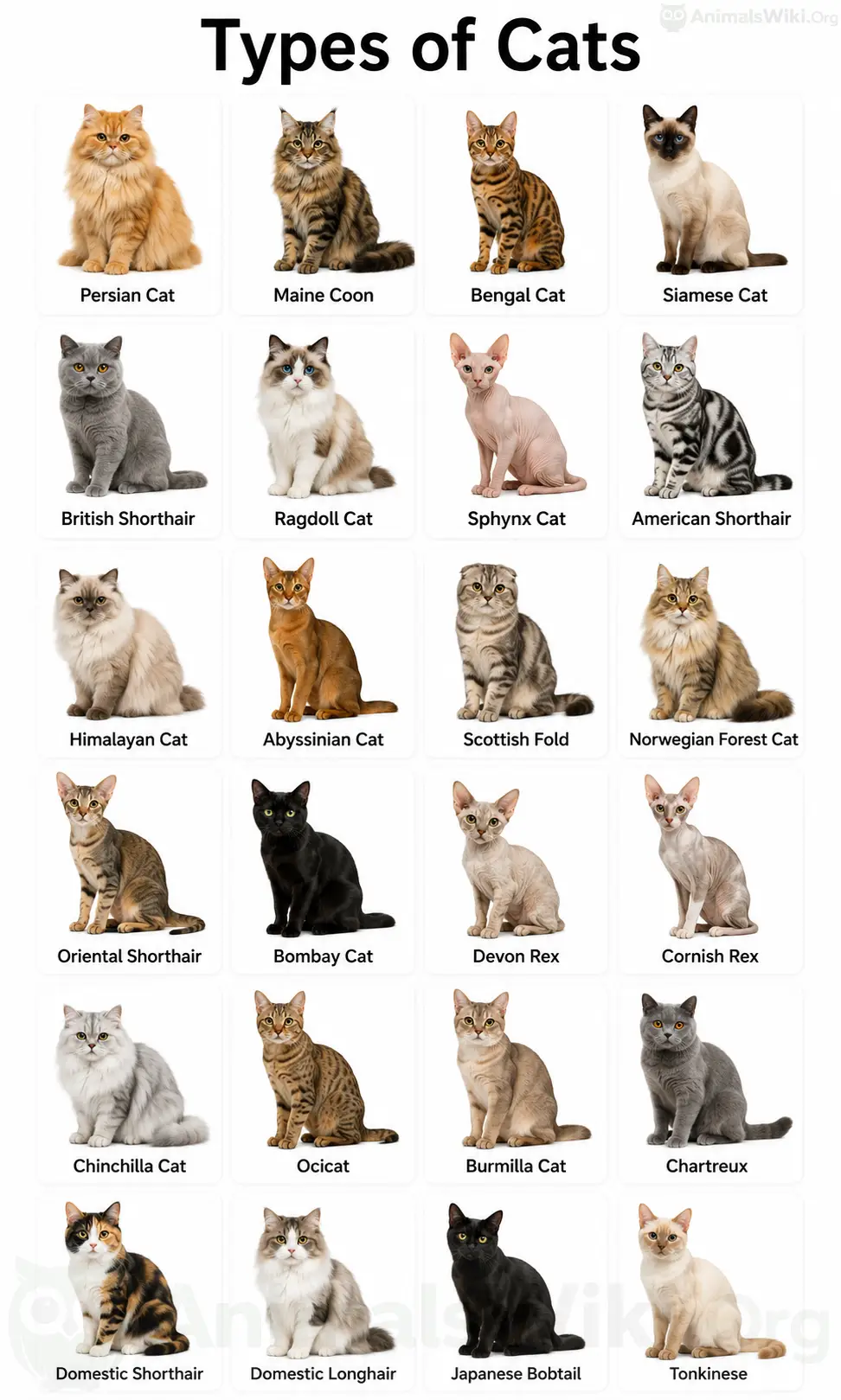
| Number of Breeds | 45–73 recognized breeds (varies by registry) |
1. Species Overview & Classification
Imagine an animal that has lived alongside humans for nearly 10,000 years, conquered every continent on Earth except Antarctica, inspired religions, launched internet empires, and still manages to look completely indifferent to your existence. That animal is the domestic cat — Felis catus — and it is one of the most successful, fascinating, and biologically extraordinary creatures ever to share the planet with us.
With an estimated population of over 600 million individuals worldwide — combining pets, strays, and feral colonies — the domestic cat is one of the most numerous carnivorous mammals on Earth. There are more pet cats than pet dogs in many countries. They appear on social media more than almost any other subject. And yet, despite their intimate proximity to human civilization, cats remain in many fundamental ways profoundly wild — solitary hunters, territorial predators, and masters of stealth who simply happen to tolerate, and occasionally enjoy, our company.
Species Classification Table
| Classification Level | Name |
|---|---|
| Kingdom | Animalia |
| Phylum | Chordata |
| Class | Mammalia |
| Order | Carnivora |
| Family | Felidae |
| Subfamily | Felinae |
| Genus | Felis |
| Species | Felis catus |
| Wild Ancestor | Felis lybica (African Wildcat) |
The domestic cat belongs to the family Felidae — the family that includes lions, tigers, leopards, cheetahs, and all other cats. Within Felidae, it sits in the subfamily Felinae, alongside species like the puma, cheetah, and ocelot. It is most closely related to the European wildcat (Felis silvestris) and the African wildcat (Felis lybica), the latter being its direct ancestor.
Genetically, domestic cats and African wildcats are so similar that they are sometimes classified as subspecies of the same animal — with Felis catus representing the domesticated form of Felis lybica.
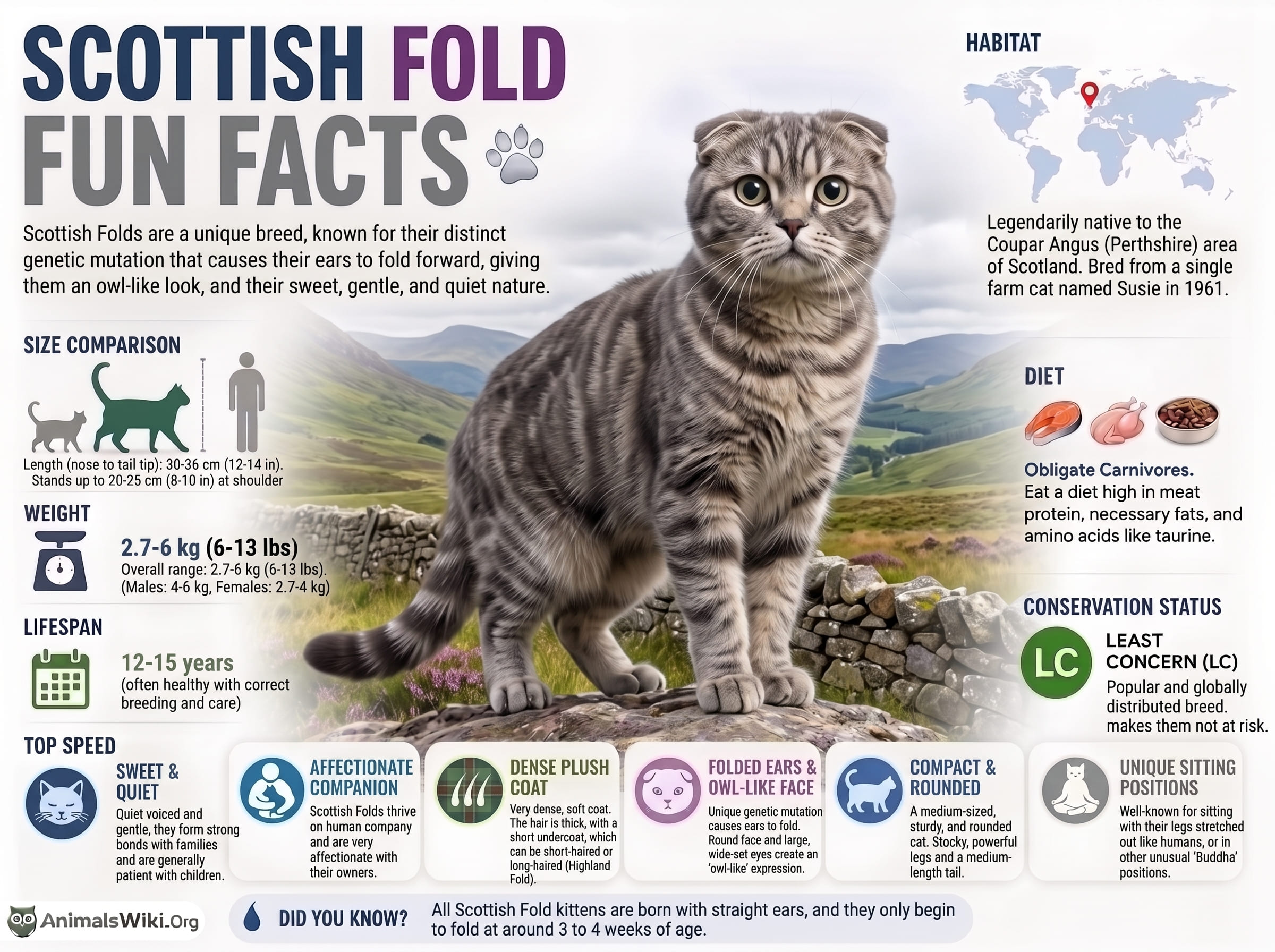
2. Physical Description & Unique Features
Built Like a Predator
The domestic cat is a masterpiece of biological engineering. Every feature of its body — from the retractable claws to the independently rotating ears — has been shaped by millions of years of predatory evolution.
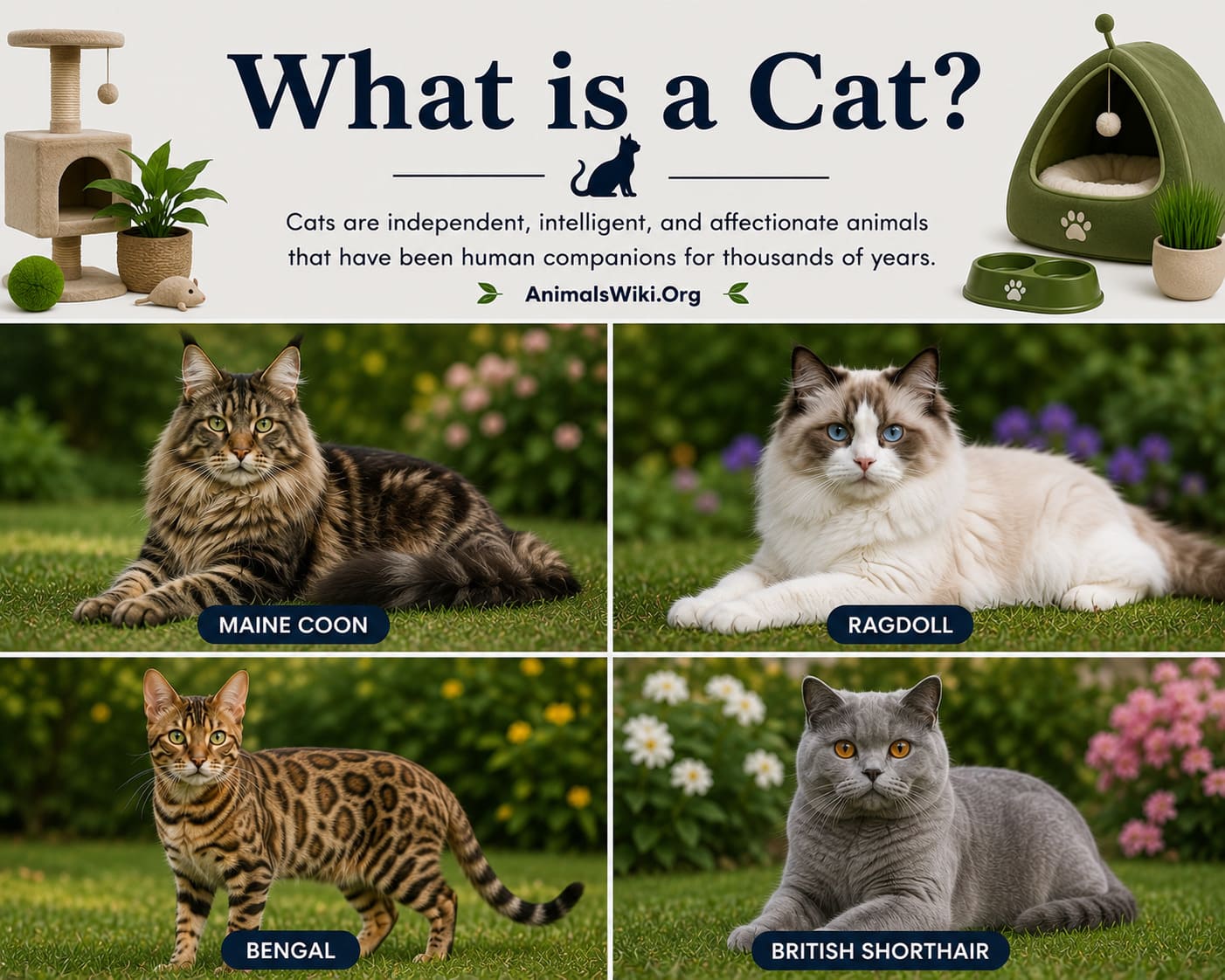
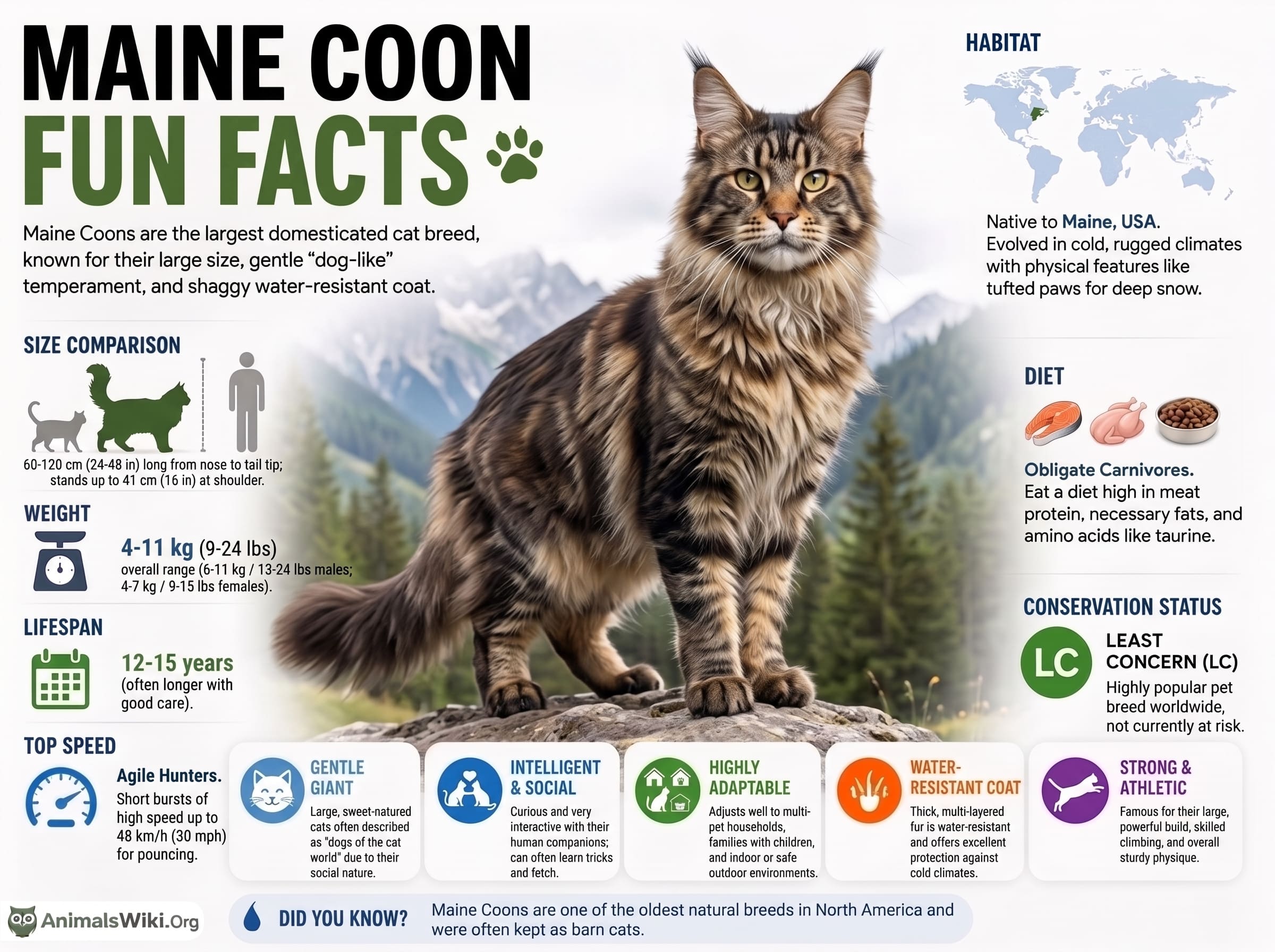
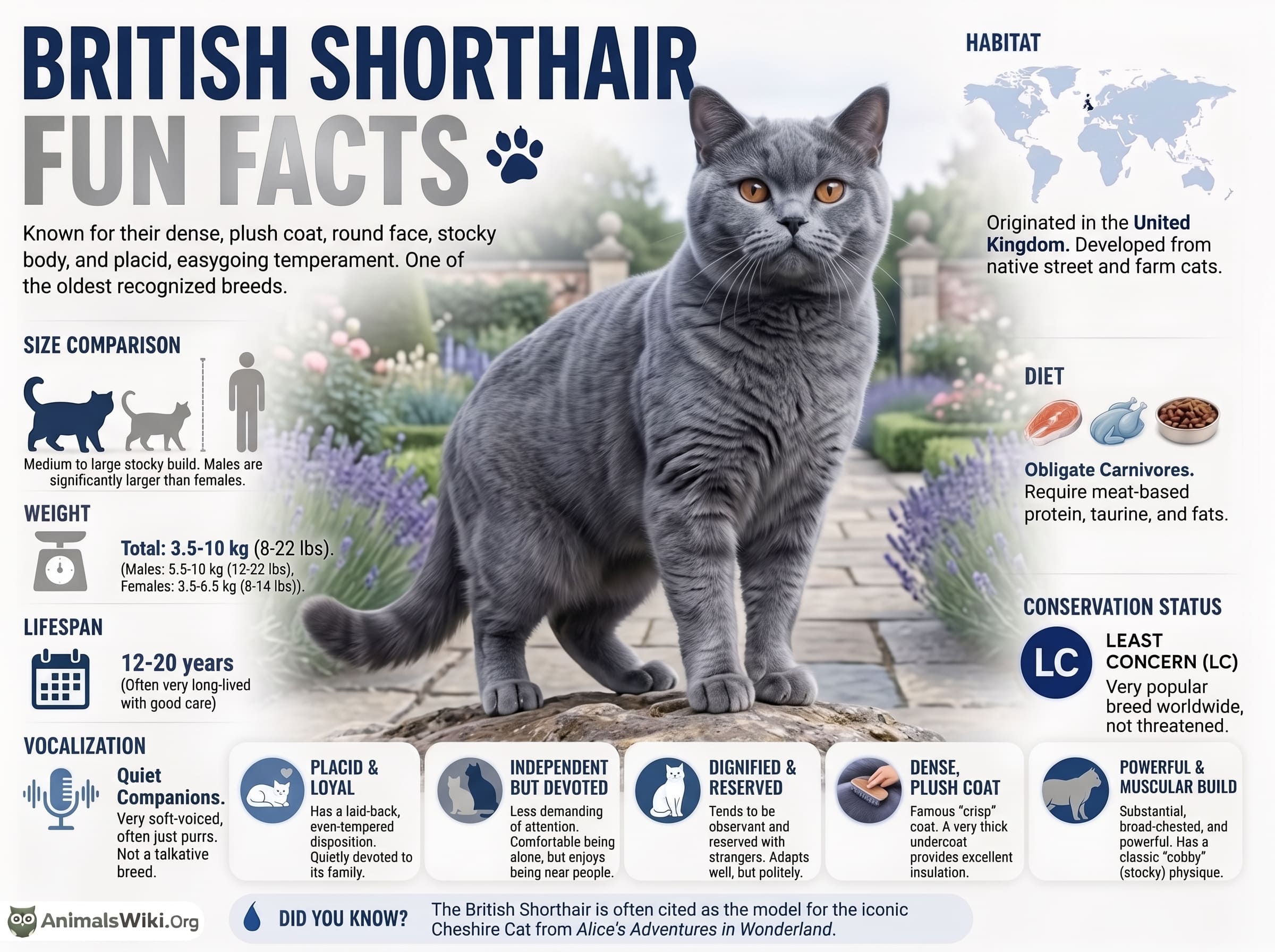
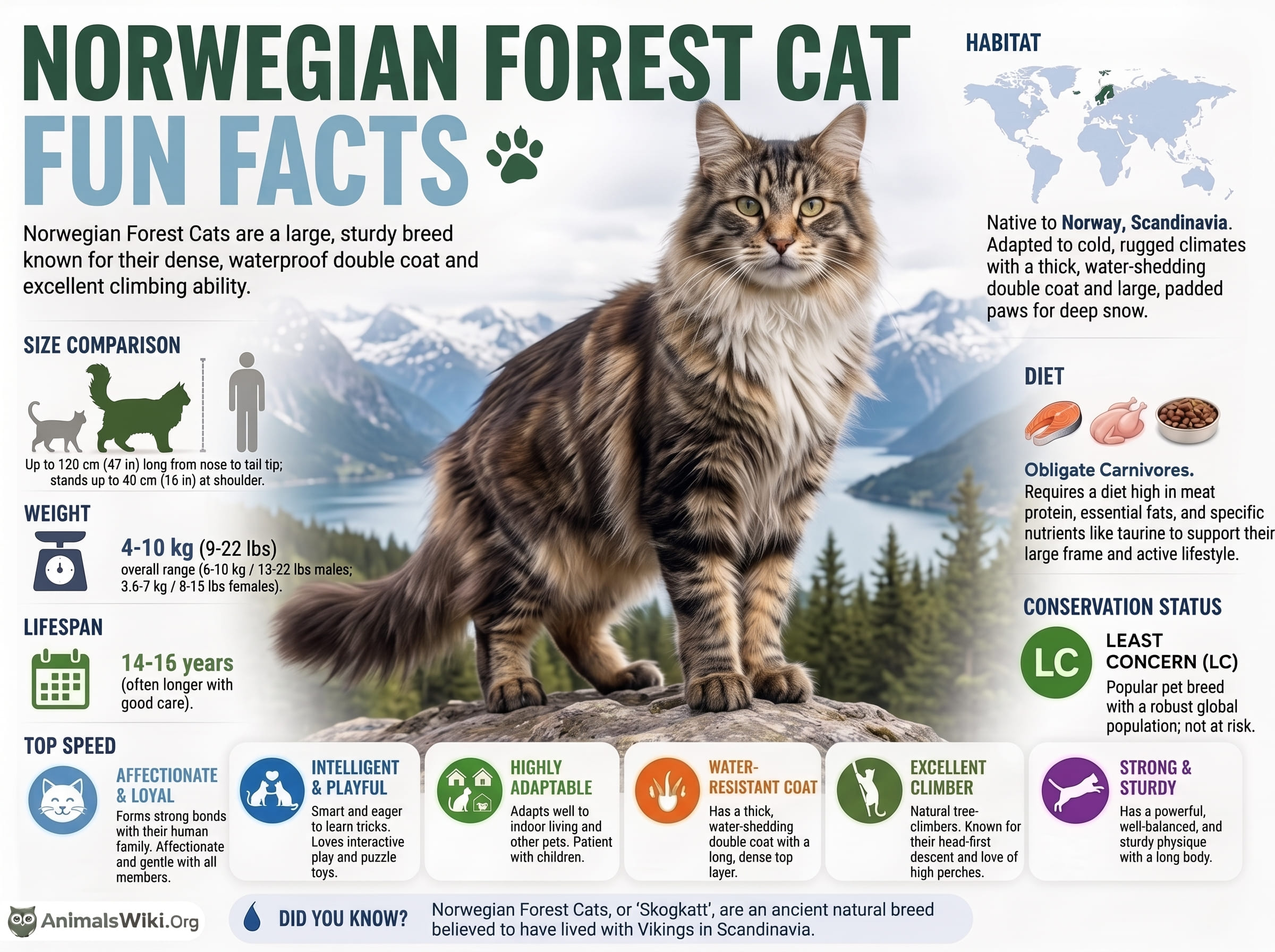
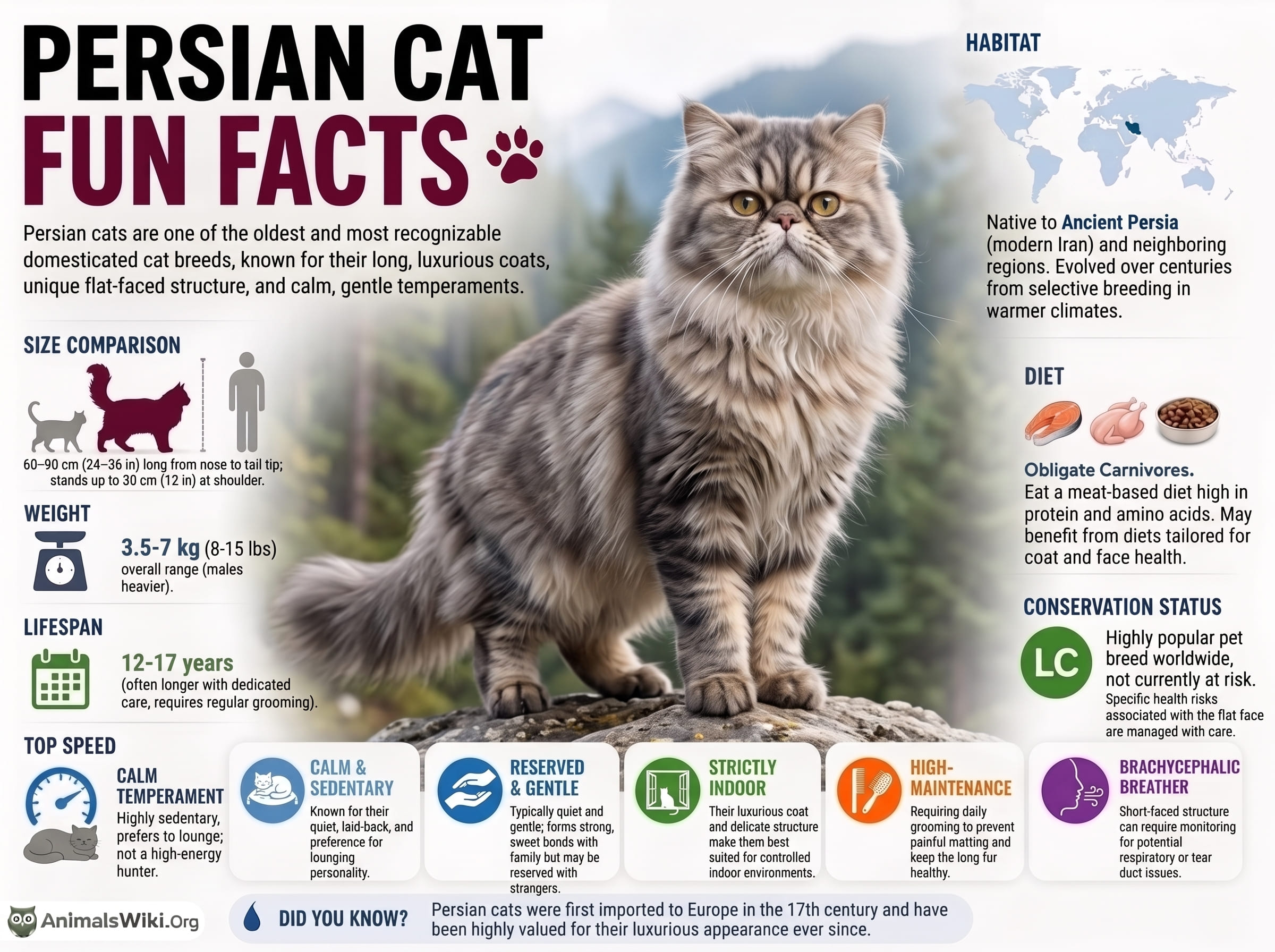
Size and Build: The average domestic cat weighs between 3.6 and 4.5 kilograms (8–10 lbs), though this varies enormously by breed. The Maine Coon, one of the largest domestic breeds, can reach 11 kilograms (25 lbs). The body is compact, muscular, and supremely flexible — cats can rotate their spine to an extraordinary degree, which is why they can right themselves in mid-air and almost always land on their feet.
Eyes: Cat eyes are among the most specialized in the mammal world. Their vertical slit pupils can dilate to an extraordinary degree in low light, allowing cats to see in conditions that would leave humans effectively blind. The tapetum lucidum — a reflective layer behind the retina — bounces light back through the eye a second time, effectively doubling the available light. This is what causes the eerie glow of cats’ eyes in the dark. Cats have a visual field of approximately 200 degrees, compared to the human 180 degrees.
Hearing: A cat’s ears can rotate 180 degrees independently of each other, allowing them to pinpoint the exact source of a sound. They can hear frequencies ranging from 48 Hz to 85,000 Hz — far exceeding the human range of 20–20,000 Hz. This extraordinary hearing allows them to detect the ultrasonic calls of mice and other small prey animals.
Claws: Cats possess fully retractable claws (with the exception of the cheetah, the only felid that cannot fully retract its claws). This keeps them razor-sharp during non-hunting activities and allows for silent movement when stalking prey.
Whiskers: A cat’s vibrissae (whiskers) are not merely decorative. They are densely packed with nerve endings and function as precision sensory instruments, detecting changes in air pressure and allowing cats to navigate tight spaces and judge whether their body will fit through an opening.
Did You Know? A cat’s nose print is as unique as a human fingerprint. No two cats have the same pattern of ridges and bumps on their nose pad — a fact that has been used in animal identification programs.
3. Natural Habitat & Geographic Range
From the Fertile Crescent to Your Living Room
The domestic cat originated in the Fertile Crescent — the region of the Middle East encompassing modern-day Iraq, Syria, Turkey, and Israel — approximately 10,000 years ago, coinciding closely with the rise of agricultural civilization. As humans began storing grain, they attracted rodents, and the wildcats that preyed on those rodents naturally gravitated toward human settlements. A mutually beneficial relationship was born.
From that original heartland, cats spread across the ancient world carried by human trade routes — aboard ships, along caravan roads, through the markets and ports of the Mediterranean, Indian Ocean, and eventually the entire globe.
Today, domestic and feral cats are found on every continent except Antarctica, making them one of the most geographically widespread mammals on Earth.
Habitat Range by Continent
| Continent | Wild/Feral Population | Notes |
|---|---|---|
| Africa | High | Origin continent; wild ancestor still present |
| Europe | Very High | Long association with human civilization |
| Asia | Very High | Major domestic and feral populations |
| North America | Very High | Estimated 30–80 million feral cats in USA alone |
| South America | High | Growing urban feral populations |
| Australia | Very High | Severe invasive species problem; 2–6 million feral |
| Antarctica | None | Cats cannot survive the climate |
Feral cats — those that live entirely independently of human support — have proven capable of surviving in extraordinary environments, from the deserts of Australia to the Arctic Circle of Norway. Their adaptability is a testament to their biological flexibility and predatory competence.
Did You Know? Australia has one of the world’s most serious feral cat problems. With an estimated 2 to 6 million feral cats, Australia’s cats are believed to kill approximately 1.4 billion animals per year, making them a leading cause of native wildlife decline and extinction on the continent.
4. Diet & Hunting Behavior
The Obligate Carnivore
The cat is one of the most committed carnivores in the animal kingdom. Unlike dogs, bears, or humans — who are omnivores capable of surviving on a mixed diet — cats are obligate carnivores, meaning their bodies are biologically incapable of meeting their nutritional needs without animal protein.
This is reflected in several unique physiological characteristics. Cats cannot synthesize taurine, an essential amino acid, and must obtain it from meat. They cannot convert beta-carotene to vitamin A the way many animals can; they need preformed vitamin A from animal liver. Their digestive systems are shorter than those of omnivores, optimized for rapid digestion of protein and fat rather than the slow fermentation of plant matter.
Diet Breakdown Table
| Food Source | Wild/Feral Diet % | Notes |
|---|---|---|
| Small Rodents (mice, voles, rats) | 40–50% | Primary prey; high water content |
| Birds | 20–30% | Second most significant prey group |
| Insects & invertebrates | 10–15% | Particularly important for kittens |
| Reptiles & amphibians | 5–10% | Lizards, frogs, small snakes |
| Rabbits & larger prey | 5% | Larger cats; opportunistic |
| Fish | Occasional | Near water sources |
The Perfect Hunting Machine
A domestic cat’s hunting behavior is a multi-stage process refined over millions of years: stalk, crouch, pounce, and kill. Cats typically deliver a killing bite to the back of the skull — severing the spinal cord — with a precision that reflects their evolution as ambush predators.
Critically, cats hunt independently of hunger. A well-fed domestic cat will still hunt if given the opportunity — a fact that has significant implications for wildlife conservation. The hunting instinct is hardwired, not hunger-driven.
Cats are crepuscular hunters by preference, most active at dawn and dusk when their visual advantage over prey is greatest. They can cover large territories during nocturnal hunting sessions — studies using GPS tracking have shown domestic cats ranging up to 2 kilometers from home on nighttime patrols.
5. Reproduction & Life Cycle
Fast, Prolific, and Remarkably Adaptable
Cats reach sexual maturity between 4 and 10 months of age, making them among the most reproductively precocious of domestic animals. Female cats — called queens — are seasonally polyestrous, meaning they have multiple heat cycles throughout the year, typically triggered by increasing daylight hours.
A queen’s gestation period is approximately 63–67 days, after which she gives birth to a litter of 1–8 kittens, with 4 being the average. Kittens are born blind, deaf, and entirely dependent on their mother. Their eyes open at approximately 7–10 days, their ear canals open at around 14 days, and they begin to explore and play at 3–4 weeks.
Weaning occurs at approximately 8 weeks, though behavioral development continues until 6 months and beyond.
A single unspayed female cat and her offspring can theoretically produce hundreds of thousands of descendants over seven years — a biological fact that underlies the explosive growth of feral cat populations worldwide when left unmanaged.
Lifespan Comparison Table
| Species | Average Lifespan (Wild) | Average Lifespan (Captivity/Domestic) | Record |
|---|---|---|---|
| Domestic Cat | 2–5 years (feral) | 12–18 years | 29 years (Creme Puff, USA) |
| African Wildcat | 10–15 years | Up to 16 years | ~16 years |
| European Wildcat | 6–10 years | Up to 14 years | ~14 years |
| Bobcat | 7–10 years | Up to 32 years | 32 years (captive) |
| Puma/Cougar | 8–13 years | Up to 20 years | 29 years (captive) |
Did You Know? The oldest domestic cat ever recorded was Creme Puff, a tabby from Austin, Texas, who lived to the extraordinary age of 38 years and 3 days (1967–2005), according to the Guinness World Records. Her owner reportedly fed her a diet that included bacon, eggs, and coffee — not veterinarily recommended.
6. Social Behavior & Communication
Solitary by Nature, Social by Choice
The domestic cat occupies a unique position in the social behavior of carnivores. Unlike their lion cousins — which are famously social and live in prides — wild felids are overwhelmingly solitary animals. Cats evolved as lone hunters in territories they defended fiercely. This fundamental solitary nature persists in domestic cats today, even after thousands of years of living alongside humans.
And yet, cats clearly form attachments. They recognize their owners, seek out physical contact, and show signs of genuine distress when separated from people they are bonded to. Research has shown that cats can form secure attachment bonds with their human caregivers — similar in structure, though not identical, to the bonds dogs form.
How Cats Communicate
Cats communicate through a remarkably sophisticated combination of vocalizations, body language, scent marking, and touch.
Vocalizations include:
- Meowing — Fascinatingly, adult cats almost never meow at each other. The meow appears to be a communication system that cats have specifically developed for interacting with humans, effectively treating us as large, somewhat slow kittens who need verbal cues
- Purring — Produced by a rapid, rhythmic movement of the laryngeal muscles. Cats purr at frequencies of 25–150 Hz, a range that has been associated with bone healing and stress reduction in research studies
- Chirping/Chattering — A unique sound made when cats observe prey they cannot reach (birds on the other side of a window), possibly mimicking prey calls
- Hissing and Growling — Threat displays
- Trilling — A high-pitched, rolling vocalization used in greeting
Body language includes tail position (high tail = confident and friendly; low or tucked = fear or submission), ear position, slow blinking (a gesture of trust and affection), and the slow blink — often called the “cat kiss” — which researchers have confirmed functions as a genuine affiliative signal.
Scent marking involves rubbing cheeks and chin on objects and people (depositing pheromones from facial glands), scratching (which leaves both a visual and scent mark), and spraying.
7. Predators & Defense Mechanisms
When Hunters Become the Hunted
Despite being formidable predators in their own right, cats face a range of natural and human-created threats.
Natural predators of domestic and feral cats include:
- Coyotes — The primary natural predator of outdoor cats in North America
- Large birds of prey — Eagles, large hawks, and great horned owls will take kittens and small cats
- Foxes — Particularly dangerous to kittens
- Large snakes — In tropical and subtropical regions
- Dogs — Both wild canids and domestic dogs
Defense mechanisms include:
- Speed and agility — Cats can reach speeds of 48 km/h (30 mph) over short distances and are extraordinarily agile climbers
- Claws and teeth — A cornered cat can inflict serious wounds on much larger animals
- Climbing — Trees provide a primary refuge from most terrestrial predators
- The righting reflex — Cats can almost always land on their feet from a fall, thanks to a flexible skeletal structure and exceptional spatial awareness. They can survive falls from remarkable heights — the so-called “high rise syndrome” in veterinary medicine shows that cats falling from extreme heights (5+ stories) sometimes have better survival rates than those falling from moderate heights, as they reach a relaxed, spread-out posture at terminal velocity
Did You Know? The cat righting reflex is so fast that it occurs in approximately 0.125 seconds — well below the threshold of conscious thought. It is one of the fastest reflexive responses documented in any mammal.
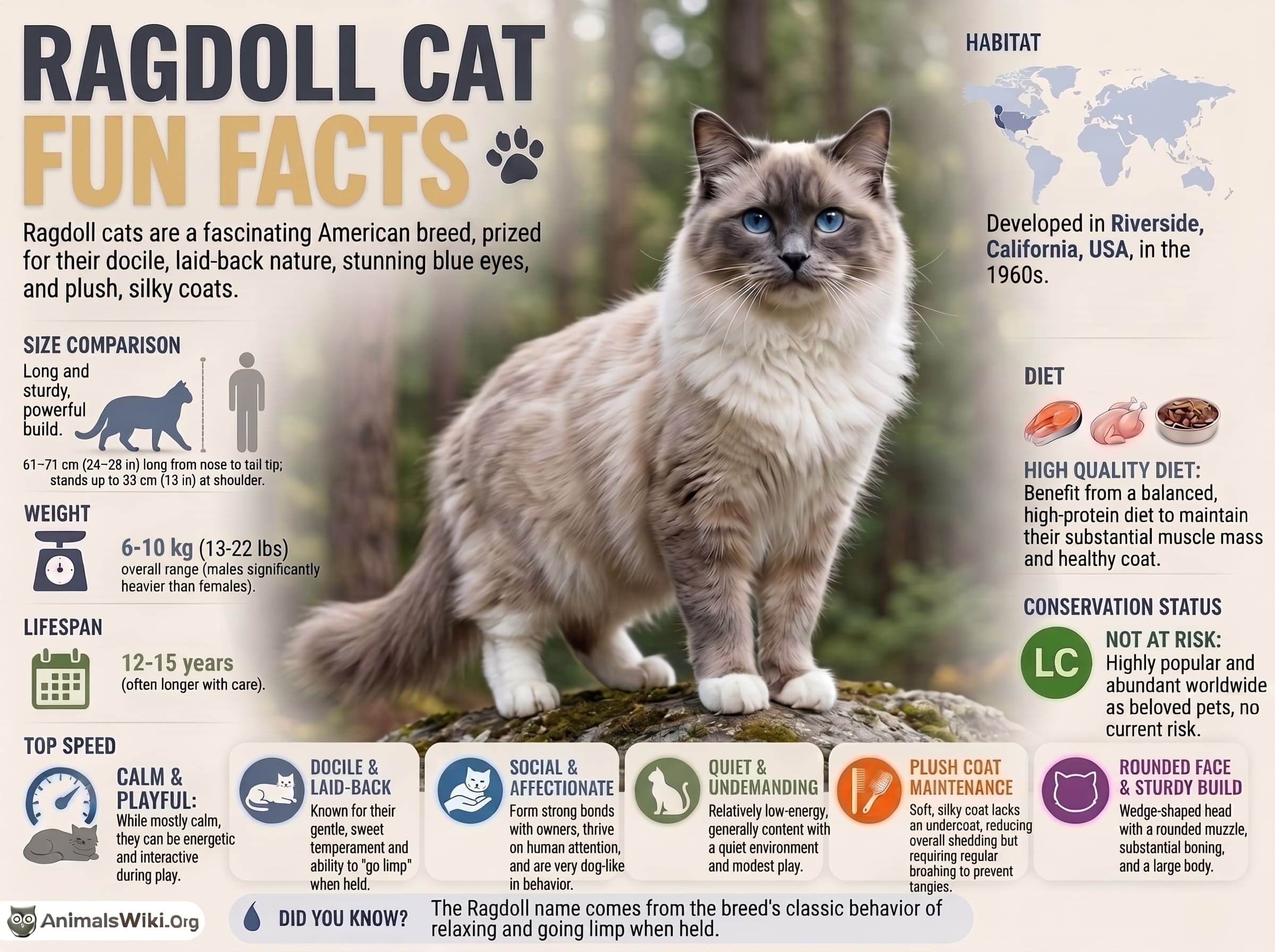
8. Relationship with Humans – Historical & Modern
10,000 Years of Complicated Coexistence
The relationship between cats and humans is one of the longest and most complex in the history of domestication — and it remains, by most scientific accounts, a relationship that is not fully domesticated even today.
The Beginning: Ancient Egypt and the Fertile Crescent
The earliest evidence of cats living alongside humans dates to approximately 7500 BCE on the island of Cyprus, where archaeologists discovered a cat buried with a human — suggesting the animal was valued enough to accompany its owner into death. In Egypt, cats became not just companions but deities. The goddess Bastet — depicted with the head of a cat — was one of the most beloved figures in the Egyptian pantheon, associated with home, fertility, and protection. Killing a cat in ancient Egypt, even accidentally, could be punishable by death.
Egyptian traders and sailors helped spread domestic cats throughout the Mediterranean world. By 500 BCE, cats were established in Greece and Rome, and by the medieval period they had reached Northern Europe, carried by Roman legions and trading vessels.
The Dark Middle Ages — and the Cat’s Rehabilitation
The cat’s relationship with humans took a dark turn in medieval Europe, where they became associated with witchcraft, paganism, and the Devil — particularly black cats. Cats were persecuted alongside alleged witches, and some historians have argued (though it remains debated) that this persecution contributed to rat population explosions and, indirectly, to the severity of the Black Death.
By the Renaissance and Enlightenment, the cat’s reputation was rehabilitated, and by the 19th century they were established as beloved domestic companions across Western culture.
The Modern Relationship
Today, approximately 370 million cats are kept as pets worldwide. In the United States alone, there are an estimated 90 million pet cats — more cats than dogs in many demographic surveys. Japan, Russia, Brazil, China, and the UK all have enormous pet cat populations.
The internet age has turned the cat into arguably the defining animal of digital culture. From Keyboard Cat to Grumpy Cat to the billions of cat videos uploaded annually to YouTube, TikTok, and Instagram, cats dominate online content in a way that no other species comes close to matching.
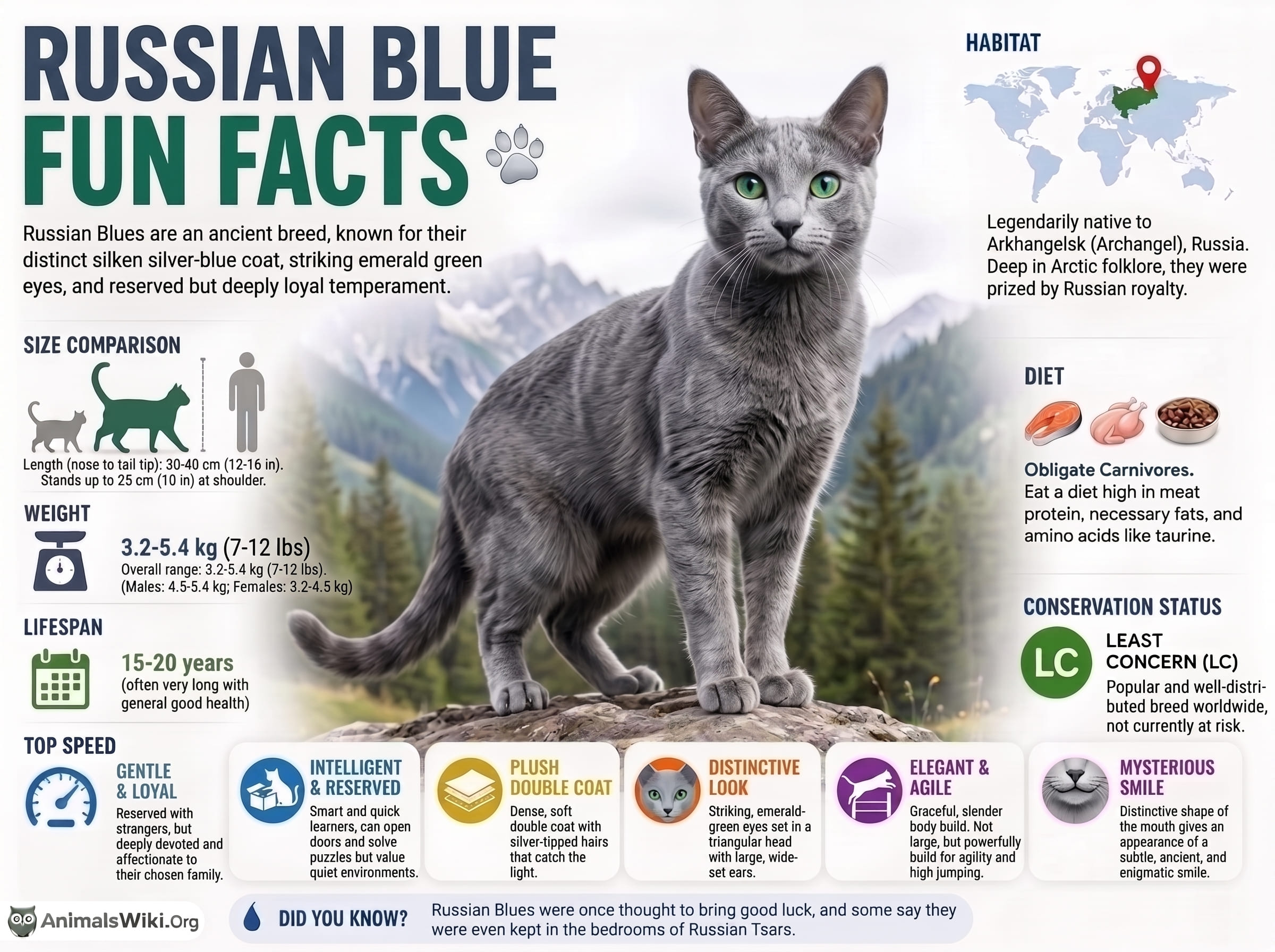
9. Conservation Status & Threats
A Complex Picture
The domestic cat itself (Felis catus) is classified as Least Concern by the IUCN — it faces no threat of extinction whatsoever. With hundreds of millions of individuals worldwide, it is in no danger.
However, the cat’s relationship with conservation is deeply complicated, because cats — particularly feral cats — are one of the leading causes of wildlife extinction globally.
The IUCN lists the domestic cat as one of the world’s 100 worst invasive species. Studies suggest that cats in the United States kill between 1.3 and 4 billion birds and 6.3 to 22.3 billion mammals annually — making them the single largest human-related cause of bird and mammal mortality in North America.
Globally, cats have been implicated in the extinction of at least 63 bird, mammal, and reptile species on islands, where endemic wildlife evolved without felid predators and has no behavioral defenses against them.
At the same time, the wild ancestors of domestic cats — including the African wildcat (Felis lybica) and the European wildcat (Felis silvestris) — face genuine conservation concerns from habitat loss and hybridization with domestic and feral cats, which threatens to “absorb” purebred wildcat populations genetically.
Conservation Efforts
- Trap-Neuter-Return (TNR) programs manage feral cat colonies by sterilizing animals rather than culling
- Island eradication programs in places like New Zealand and Australia have removed feral cats from offshore islands to protect nesting seabirds
- Indoor cat advocacy campaigns promote keeping pet cats indoors to reduce wildlife predation
- The American Bird Conservancy and numerous other wildlife organizations advocate for evidence-based feral cat management
Did You Know? New Zealand has implemented some of the world’s most aggressive cat management policies to protect its unique native wildlife, including proposals to ban the sale of cats in certain regions and mandatory microchipping of all owned cats.
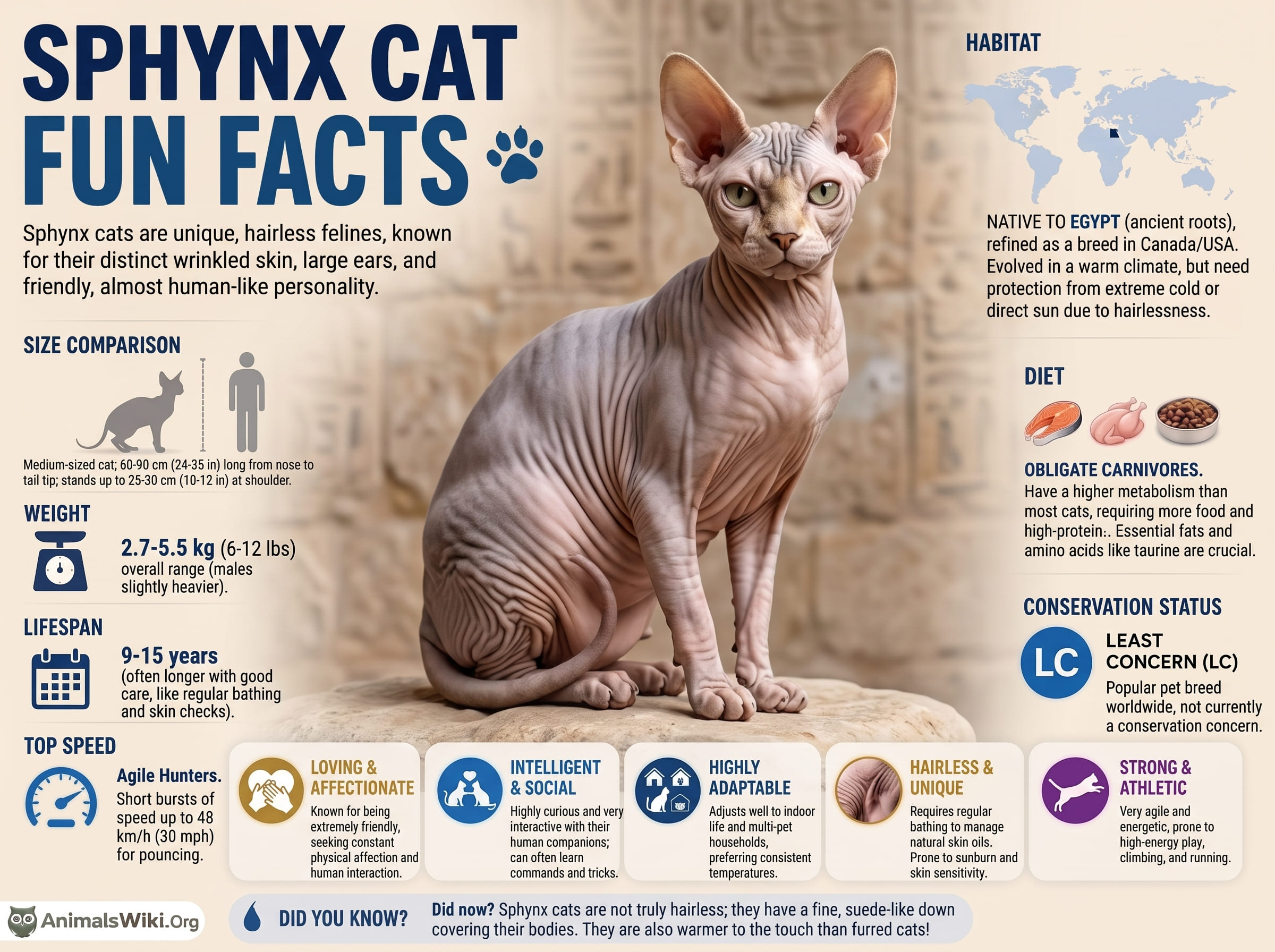
10. Famous Cats & Pop Culture Appearances
The Most Famous Cats in History
Félicette (1963) — A stray Parisian cat who became the first and only cat to travel to space, launched aboard a French Véronique rocket on October 18, 1963. She survived the flight and was recovered safely.
Creme Puff (1967–2005) — The world’s oldest recorded domestic cat, reaching 38 years and 3 days of age in Austin, Texas.
Stubbs (1997–2017) — A cat who served as the honorary mayor of Talkeetna, Alaska for nearly 20 years, becoming an international tourist attraction.
Tardar Sauce / Grumpy Cat (2012–2019) — Perhaps the most famous internet cat in history, whose permanently grumpy expression (caused by feline dwarfism and an underbite) launched a global meme phenomenon and earned her owner an estimated $100 million in merchandise and licensing.
Pop Culture
- Tom (Tom and Jerry, 1940–present) — One of animation’s most beloved characters
- Garfield (1978–present) — Jim Davis’s lasagna-loving tabby became one of the most widely syndicated comic strips in history, reaching 263 million readers in 111 countries
- Cheshire Cat (Alice in Wonderland, 1865) — Lewis Carroll’s grinning, disappearing cat
- Cat in the Hat (1957) — Dr. Seuss’s iconic character
- Hello Kitty (1974–present) — Sanrio’s globally dominant cat character, a $10 billion+ annual brand
- Crookshanks (Harry Potter) — Hermione Granger’s half-Kneazle cat
- Puss in Boots (Shrek franchise/spin-off films)
- Keyboard Cat, Nyan Cat, Lil Bub — Defining internet phenomena
11. Role in Ecosystem & Food Chain
Mesopredator and Ecosystem Disruptor
In their native and naturalized habitats, cats occupy the role of mesopredator — a mid-level predator that sits below apex predators (large felids, wolves, large raptors) in the food chain while sitting above small mammals, birds, insects, and reptiles.
As predators, cats help regulate populations of small rodents in agricultural settings — a role that originally drew them into human civilization. A single cat on a farm can catch dozens of mice per week, protecting grain stores from significant losses.
As invasive predators, particularly on islands and in regions without native felids, cats cause catastrophic disruption to ecosystems. They prey heavily on ground-nesting birds, small marsupials, and reptiles that evolved without mammalian predators and have no evolved fear responses to cats.
As prey, domestic and feral cats are occasionally taken by coyotes, foxes, large raptors, and larger wild felids in regions where their ranges overlap.
12. Myths & Cultural Significance
Across 10,000 Years of Human Culture
No animal has accumulated more mythology, superstition, and cultural significance than the domestic cat.
Ancient Egypt: Cats were sacred animals, associated with the goddess Bastet and later the fierce warrior goddess Sekhmet (depicted as a lioness). Killing a cat was a capital offense. When a household cat died, the family shaved their eyebrows in mourning. Vast cat cemeteries have been excavated in Egypt, containing hundreds of thousands of mummified cats.
Norse Mythology: The goddess Freyja, associated with love, fertility, and magic, rode a chariot pulled by two enormous grey cats named Bygul and Trjegul.
Japanese Culture: The Maneki-neko (beckoning cat) — a ceramic cat figurine with one paw raised — is one of Japan’s most ubiquitous good-luck symbols, found in businesses and homes across the country and throughout the world’s Chinatowns. Japan is also home to numerous cat cafés and even cat islands (most famously Tashirojima and Aoshima), where cats significantly outnumber humans.
Islamic Tradition: In Islamic culture, cats are considered ritually clean and are welcomed in mosques. The Prophet Muhammad is said to have had a beloved cat named Muezza, and there are multiple hadiths (sayings attributed to Muhammad) that speak warmly of cats.
Western Superstition: Black cats have been associated with both good luck (in the UK and Japan) and bad luck (in the United States and parts of Europe) — reflecting centuries of contradictory cultural attitudes toward cats that persist today.
13. Cat Fun Facts for Kids
- Cats spend approximately 50–70% of their lives sleeping — 12 to 16 hours per day on average
- A cat’s sense of smell is 14 times stronger than a human’s
- A domestic cat can run at speeds of up to 48 km/h (30 mph) over short distances
- Cats have 230 bones in their bodies — compared to 206 in humans — and no collarbone, allowing them to squeeze through any opening wide enough for their head
- Cats can hear frequencies up to 85,000 Hz — humans top out at 20,000 Hz
- There are approximately 600 million cats on Earth (domestic + feral)
- A group of cats is called a clowder; a group of kittens is called a kindle
- A cat’s brain is 90% similar to a human brain in structure, and shares more with the human brain than the dog’s brain does
- Cats walk like camels and giraffes — moving both right feet first, then both left feet — in a gait shared by only a few other animals
- Cat-related content generates an estimated 26 billion views per year on YouTube alone
- A cat’s purr vibrates at 25–150 Hz — a frequency range associated with therapeutic bone healing in medical research
- The Broadway musical “Cats” (1981–2000) ran for 7,485 performances in its original London run and 6,138 performances on Broadway — among the longest-running shows in history
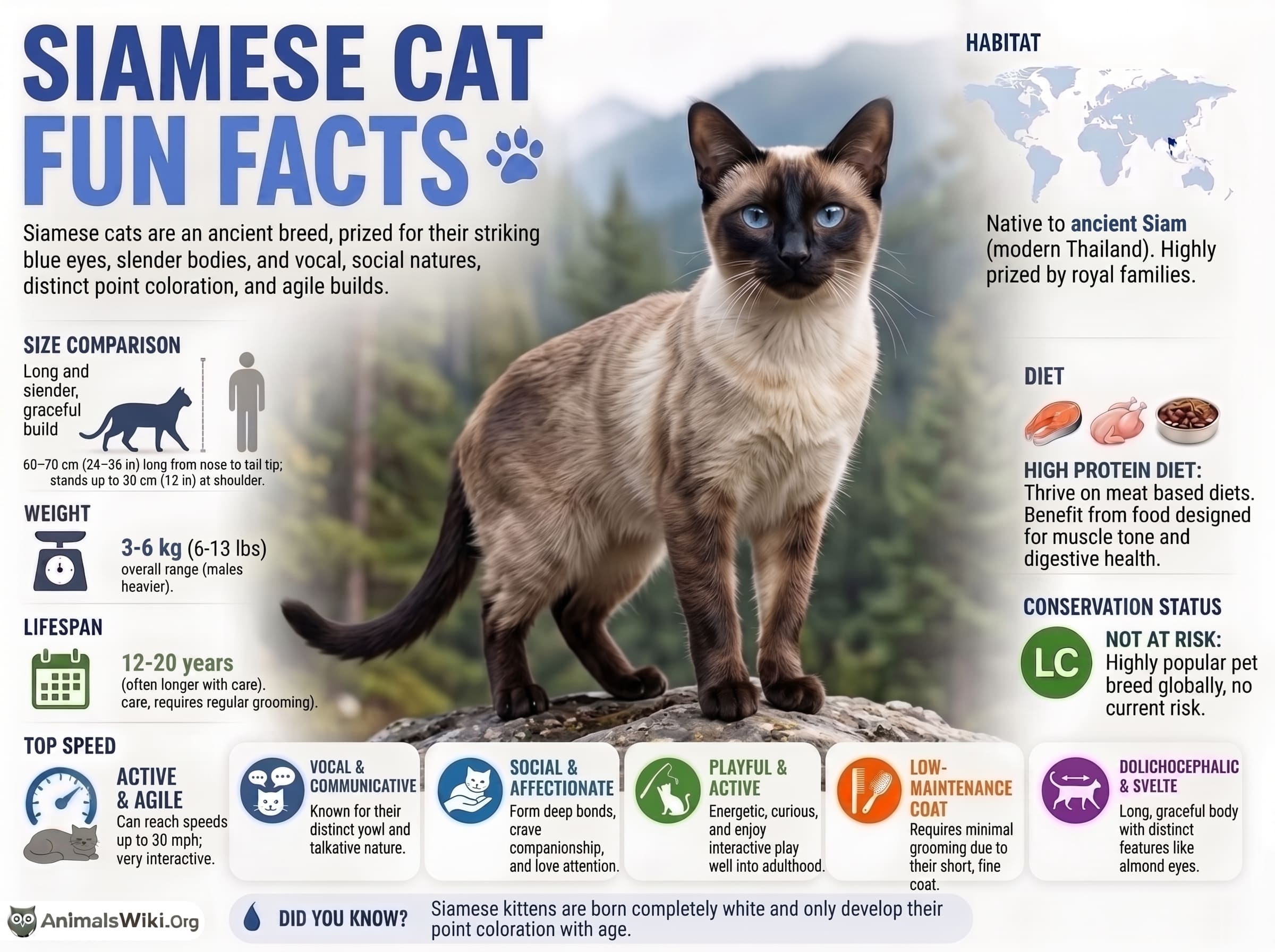
14. Cat Species Evolution & Discovery Timeline
~25 Million Years Ago — Early felid ancestors diverge from other carnivorans
~10–15 Million Years Ago — The genus Felis begins to emerge in the fossil record
~200,000 Years Ago — African wildcats (Felis lybica) emerge in North Africa and the Middle East in their recognizable modern form
~10,000 BCE — First evidence of cats associating with human agricultural settlements in the Fertile Crescent; beginning of the domestication process
~7500 BCE — Earliest confirmed evidence of human-cat companionship; cat buried with human in Cyprus
~4000–3000 BCE — Cats become deeply integrated into Egyptian culture; early depictions in Egyptian art
~3000 BCE — Cats formally depicted as sacred animals in Egyptian religion; Bastet cult flourishes
~1000 BCE — Phoenician traders spread domestic cats across the Mediterranean
~300 BCE — Cats common in ancient Greece and Rome; spread along Roman trade routes
~500 CE — Cats established throughout Europe, carried by Roman legions and traders
~900–1300 CE — Medieval European persecution of cats associated with witchcraft and paganism
1558 CE — First written description of distinct cat breeds (possibly the tabby) in European literature
1871 — First formal cat show held at Crystal Palace, London, organized by Harrison Weir; the beginning of formalized cat breeding
1895 — First cat show in North America, held at Madison Square Garden, New York
1906 — The Cat Fanciers’ Association (CFA) founded in the United States; begins formal breed registration
1940 — Tom and Jerry debuts; cats become central figures in 20th-century popular culture
1963 — Félicette becomes the first cat in space
1978 — Garfield debuts in syndication; becomes the world’s most widely syndicated comic strip
2006 — First major cat meme era begins with Keyboard Cat and early internet cat culture
2012 — Grumpy Cat goes viral; internet cat culture reaches its global peak
2018 — Landmark study confirms cats form secure attachment bonds with humans, comparable in some ways to human-infant attachments
2026 — Domestic cats remain among the world’s most studied, beloved, and controversial companion animals
15. How You Can Help
Being a Responsible Cat Owner — and Supporting Broader Conservation
The choices you make as a cat owner have real, measurable impacts on both your cat’s wellbeing and on the wildlife around you. Here’s how to be part of the solution:
1. Keep Your Cat Indoors (or Use an Outdoor Enclosure) The most effective single action you can take to protect wildlife is to keep your cat indoors, or to provide a secure outdoor enclosure (a “catio”). Indoor cats live significantly longer — an average of 12–18 years versus 2–5 years for outdoor cats — and cause no wildlife mortality.
2. Spay or Neuter Your Cat Spaying and neutering prevents unwanted litters, reduces feral populations, and is associated with longer, healthier lives for individual cats. Contact your local SPCA or veterinarian.
3. Support TNR (Trap-Neuter-Return) Programs For feral cat populations, TNR is the most widely supported humane management approach. Many local organizations run TNR programs and welcome volunteers.
4. Support Island Conservation Organizations like Island Conservation and BirdLife International work to remove invasive predators — including feral cats — from islands where endemic species are at risk. Your donations fund this critical work.
5. Adopt, Don’t Shop Millions of cats are euthanized in shelters each year. Adoption gives a second chance to a cat that needs one and reduces demand for commercial breeding.
6. Relevant Organizations
- ASPCA — aspca.org
- Best Friends Animal Society — bestfriends.org
- American Bird Conservancy — abcbirds.org (cat-wildlife impact programs)
- Alley Cat Allies — alleycat.org (TNR advocacy)
- Island Conservation — islandconservation.org
- The Cat Fanciers’ Association — cfainc.org
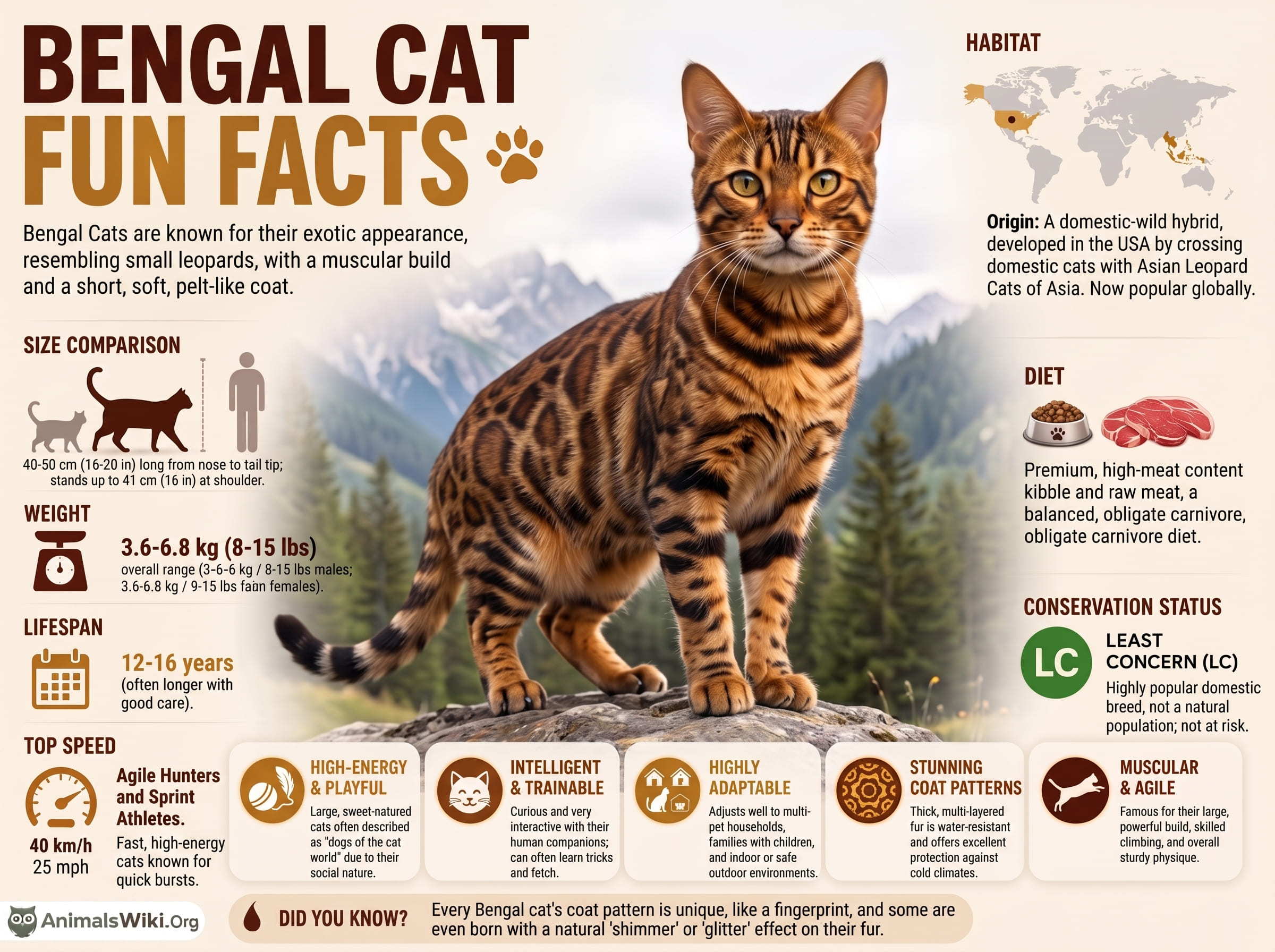
16. Best Places to See Cats in the Wild and Semi-Wild Settings
Wild Ancestor — African Wildcat
| Location | Details |
|---|---|
| Kgalagadi Transfrontier Park, South Africa/Botswana | One of the best places to observe African wildcats in their natural habitat |
| Namibia | Significant populations in semi-arid scrubland |
| Morocco & Algeria | North African wildcat populations in desert scrub |
Famous Cat Islands and Colonies
| Location | Details |
|---|---|
| Tashirojima, Japan | Japan’s most famous “cat island” — cats vastly outnumber humans |
| Aoshima, Japan | Another renowned cat island; no cars, ~15 humans, ~120+ cats |
| Istanbul, Turkey | One of the world’s most famous cities for free-roaming urban cats; cats are fed and cared for by the entire community |
| Rome, Italy | The cat sanctuary at Largo di Torre Argentina (where Julius Caesar was assassinated) houses hundreds of cats cared for by volunteers |
| Cat Island (San Salvador Island), Bahamas | Famous for swimming cats and coastal cat colonies |
17. Top Documentaries & Books
Documentaries
- “The Lion in Your Living Room” (CBC/Netflix, 2015) — Excellent exploration of domestic cat biology and behavior
- “Kedi” (2016) — Beautiful documentary about the street cats of Istanbul; widely considered one of the finest animal documentaries of the decade
- “Inside the Mind of a Cat” (Netflix, 2022) — Accessible and scientifically grounded exploration of feline cognition
- “Cat Cams” (BBC, multiple series) — Uses cameras on cats to document their secret outdoor lives
Books
- “The Cat: A Natural and Cultural History” by Sarah Brown — Comprehensive reference
- “Cat Sense” by Dr. John Bradshaw — Groundbreaking scientific account of cat behavior and evolution
- “The Inner Life of Cats” by Thomas McNamee — Warm and scientifically informed exploration
- “Total Cat Mojo” by Jackson Galaxy — Practical behavioral guide from America’s most famous cat behaviorist
- “A Street Cat Named Bob” by James Bowen — Bestselling memoir of a man and his ginger street cat
18. Comparison with Similar Species
| Feature | Domestic Cat (F. catus) | African Wildcat (F. lybica) | European Wildcat (F. silvestris) |
|---|---|---|---|
| Size | 3.6–4.5 kg | 3–6.2 kg | 3–8 kg |
| Temperament | Variable; domesticated | Shy and aggressive to humans | Extremely shy; cannot be tamed |
| Habitat | Global; human-associated | Savanna, scrubland, Africa/Middle East | Forest, Europe |
| Conservation Status | Least Concern | Least Concern | Vulnerable (hybridization threat) |
| Domesticability | Fully domestic | Ancestor of domestic cat | Cannot be domesticated |
| Lifespan | 12–18 years (domestic) | 10–15 years | 6–10 years |
| Coat | Highly variable (100+ patterns) | Tabby; striped | Thick, striped tabby |
| Relationship to Humans | Companion animal | Occasionally semi-commensal | Avoids all human contact |
19. Expert Quotes
“The cat is the only animal which has succeeded in domesticating the human being.” — Marcel Mauss, sociologist and anthropologist
“In ancient times, cats were worshipped as gods. They have not forgotten this.” — Terry Pratchett, author
“The cat is the perfect killing machine. It is everything a predator should be, packaged in a form that humans find irresistible. That combination has allowed it to conquer the world.” — Dr. John Bradshaw, anthrozoologist and author of Cat Sense
“What is most striking about cats is not their predatory excellence, though that is extraordinary — it is their ability to move seamlessly between two worlds. They are wild animals that have chosen, on their own terms, to live among us.” — Desmond Morris, zoologist and author of Catwatching
“Cats are not domesticated in the same sense that dogs are. They have allowed themselves to be associated with us. There is a difference.” — Dr. Carlos Driscoll, geneticist, National Cancer Institute, whose landmark 2007 study traced the origin of domestic cat domestication
Did You Know? A landmark 2007 genetic study by Dr. Carlos Driscoll and colleagues, published in Science, traced all domestic cats to five African wildcat lineages from the Near East/Fertile Crescent region — definitively confirming that domestication occurred once, in a single geographic region, approximately 10,000 years ago.
Did You Know? Research published in 2019 confirmed that cats — unlike dogs — do not follow human pointing gestures unless they have been specifically trained to do so. However, cats do monitor their owners’ emotional expressions and adjust their behavior accordingly — suggesting a sophisticated, if selective, social attentiveness.
20. Frequently Asked Questions About Cats
Q1: Are cats fully domesticated animals?
This is a genuinely contested scientific question. Genetically and anatomically, domestic cats are barely distinguishable from their wild ancestor, the African wildcat (Felis lybica). Unlike dogs — which have undergone profound genetic changes over 15,000+ years of domestication — cats show relatively few domestication-related genetic differences from wild cats. Most experts describe them as “semi-domesticated” or “self-domesticated” — animals that chose to associate with humans for mutual benefit and have maintained that association across thousands of years without fully surrendering their wild nature.
Q2: How many cats are in the world?
Estimates vary widely, but as of 2025–2026, the global domestic cat population is estimated at approximately 370–400 million pet cats and an additional 200–300 million feral and stray cats — bringing the total to somewhere between 600 and 700 million cats worldwide. The United States alone has an estimated 90–94 million pet cats and 30–80 million feral cats.
Q3: Why do cats purr?
Purring is produced by rapid rhythmic movement of the laryngeal (voice box) muscles, which dilates and constricts the glottis (the opening between the vocal cords) during inhalation and exhalation. Cats purr at frequencies of 25–150 Hz. While commonly associated with contentment, cats also purr when stressed, injured, or dying — suggesting that purring may serve a self-soothing and even therapeutic function. Research suggests that the specific frequencies of purring may promote bone density and healing, which may explain why cats evolved the ability in the first place.
Q4: Do cats really always land on their feet?
Almost always, yes — but not always, and not from every height. Cats possess a remarkable righting reflex that allows them to orient their body during a fall and land feet-first in most circumstances. The reflex operates in approximately 0.125 seconds. However, cats can and do sustain injuries from falls, particularly from very low heights (where they don’t have time to right themselves) or very high heights (though paradoxically, cats sometimes survive extreme falls better than moderate ones by reaching a relaxed, spread-out terminal velocity posture). Falls are still dangerous and cats should not be placed in situations where falling is likely.
Q5: Are cats dangerous to wildlife?
Yes, significantly so — particularly feral cats and outdoor pet cats. Studies estimate that domestic and feral cats kill between 1.3 and 4 billion birds and 6.3–22.3 billion small mammals annually in the United States alone. Globally, cats have contributed to the extinction of at least 63 bird, mammal, and reptile species, primarily on islands where native wildlife has no evolutionary experience with felid predators. The most effective solution is keeping pet cats indoors.
Q6: What do cats eat — can they be vegetarian?
Cats are obligate carnivores, meaning their biological systems require animal protein to function. Unlike humans and dogs, cats cannot synthesize certain essential nutrients — including taurine (essential for heart and eye function), arachidonic acid, and preformed vitamin A — from non-animal sources. A vegetarian or vegan diet for cats is not recommended by veterinary authorities and can cause serious, life-threatening health problems including heart disease and blindness. Cats must eat meat to survive.
Q7: How long do cats live?
The average lifespan of a domestic cat depends significantly on whether it lives primarily indoors or outdoors. Indoor cats live an average of 12–18 years, with many reaching their early-to-mid twenties with good care. Outdoor and feral cats live dramatically shorter lives — an average of just 2–5 years — due to traffic, predation, disease, and harsh weather. The oldest verified domestic cat was Creme Puff of Austin, Texas, who lived to 38 years and 3 days.
Q8: Why do cats knead?
The kneading behavior — pushing alternating front paws rhythmically against a soft surface — begins in kittenhood as a way to stimulate milk flow from the mother. Adult cats retain the behavior as a comfort mechanism, typically associated with relaxed, content states. When a cat kneads on a person, it is generally considered an expression of trust, affection, and comfort — the cat is essentially treating you as a source of safety and warmth, much as it would have treated its mother.
Q9: Are cats smarter than dogs?
This is a genuinely difficult comparison because cats and dogs have been shaped by evolution and domestication to excel in very different cognitive domains. Cats tend to score well on spatial memory, problem-solving tasks related to prey behavior, and individual cognitive challenges. Dogs tend to score better on social cognition tasks — following human cues, reading human emotional expressions, and cooperative problem-solving. Neither species is globally “smarter” — they are differently intelligent, shaped by their distinct ecological and evolutionary histories.
21. Sources Researched
- Cat Images — shutterstock.com
- IUCN Red List — iucnredlist.org (Conservation status, wildcat data)
- National Geographic — nationalgeographic.com (Cat biology, behavior, and cultural history)
- Smithsonian’s National Zoo — nationalzoo.si.edu (Species biology and care)
- Encyclopedia Britannica — britannica.com (Historical and biological reference)
- American Veterinary Medical Association (AVMA) — avma.org (Health, population, and welfare statistics)
- Journal Science (Driscoll et al., 2007) — science.org (Cat domestication origin study)
- BBC Earth & BBC Science — bbc.com/earth (Cat behavior and evolution features)
- Alley Cat Allies — alleycat.org (Feral cat population data and TNR information)
- American Bird Conservancy — abcbirds.org (Cat-wildlife impact statistics)
- Cat Fanciers’ Association — cfainc.org (Breed registry and history)
- PetMD — petmd.com (Veterinary health information)
- Cornell Feline Health Center — vet.cornell.edu (Feline medical research)
- Guinness World Records — guinnessworldrecords.com (Record-holding cats)
- Anthrozoös Journal — tandfonline.com (Human-animal bond research)
- The Royal Society — Biology Letters — royalsocietypublishing.org (Feline cognition research)
Cat Images (Shutterstock)