Wild Animal Facts
| Feature | Details |
|---|---|
| Category | Wild Animals (non-domesticated members of Kingdom Animalia) |
| Scientific Kingdom | Animalia |
| Total Wild Species (est.) | ~8.7 million animal species; ~1.5 million formally described |
| Wild Vertebrate Population | Declined ~69% since 1970 (WWF Living Planet Report) |
| Largest Wild Land Animal | African bush elephant (Loxodonta africana) — up to 7 tonnes |
| Largest Wild Animal Overall | Blue whale (Balaenoptera musculus) — up to 190 tonnes |
| Fastest Wild Land Animal | Cheetah (Acinonyx jubatus) — up to 120 km/h |
| Longest-Lived Wild Animal | Greenland shark — 270–500+ years (estimated) |
| Most Endangered Wild Animal | Vaquita porpoise — ~10 individuals remaining (2026) |
| Habitats Covered | Every biome — forests, oceans, deserts, tundra, grasslands, caves |
| Threatened Species | 44,000+ species on IUCN Red List as threatened (2026) |
| Annual Species Loss | 150–200 species lost per day (estimated) |
| Key Threats | Habitat loss, poaching, climate change, pollution, invasive species |
| Most Biodiverse Region | Amazon Basin, South America |
1. What Are Wild Animals? – Overview & Classification
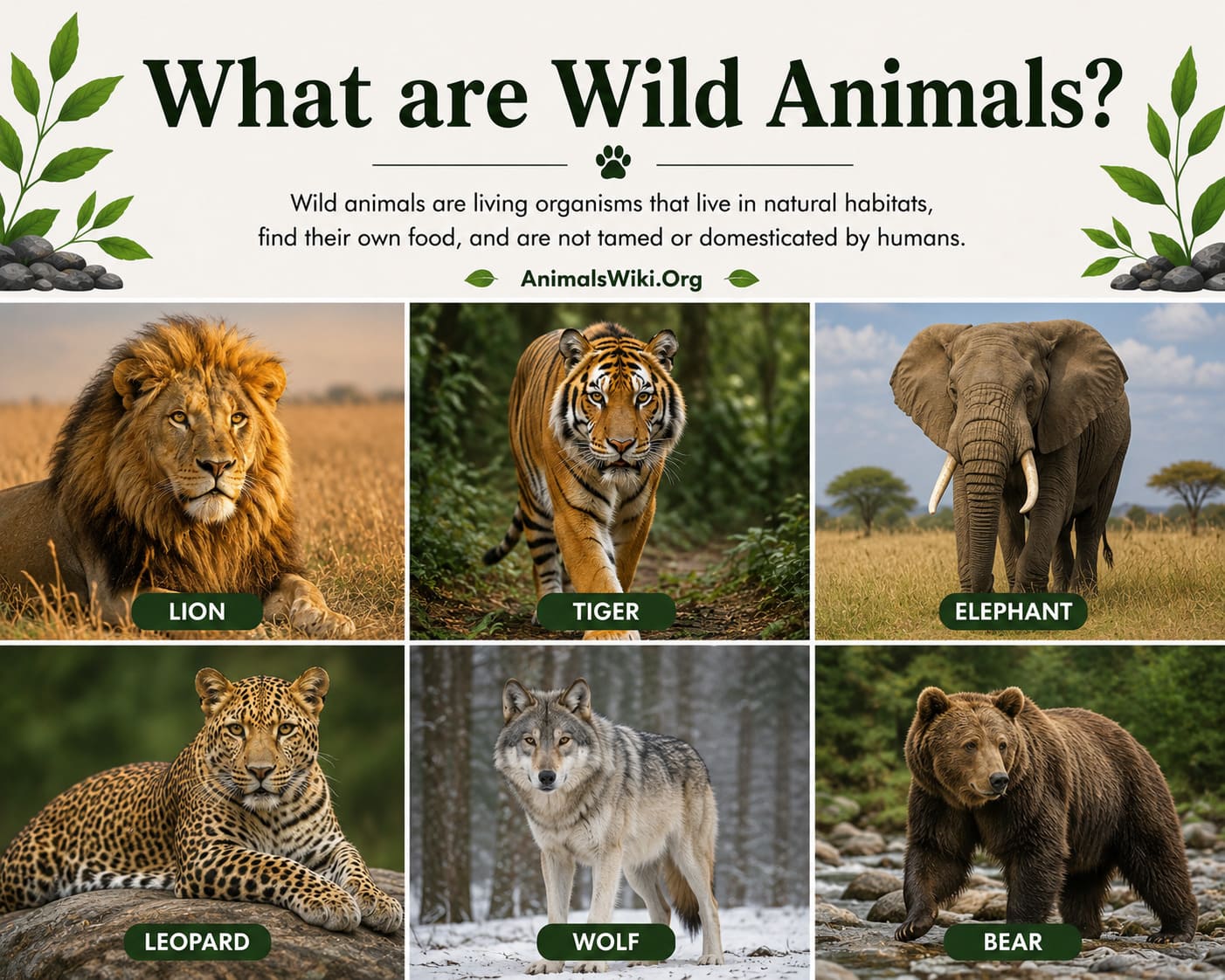
Step outside almost anywhere on Earth — a garden, a forest, a coral reef, a grassland at dawn — and you are in the presence of wild animals. Not the domesticated companions and livestock that share our homes and farms, but the untamed, self-sufficient, magnificently adapted creatures that have inhabited this planet for hundreds of millions of years without human management or intervention.
Wild animals are members of the kingdom Animalia that live independently in natural environments — finding their own food, choosing their own territories, raising their own young, and participating in the ecological relationships that have shaped life on Earth since long before our species arrived. They stand in contrast to domesticated animals (dogs, cats, cattle, horses — species modified over millennia by human selective breeding) and feral animals (domesticated species that have returned to living wild).
The distinction matters enormously — not just biologically but ecologically, ethically, and conservationally. Wild animals are the living architecture of Earth’s ecosystems. They pollinate plants, disperse seeds, control pest populations, cycle nutrients, shape landscapes, and maintain the biological complexity that ultimately supports all life — including human life — on this planet.
Understanding wild animals — their diversity, their behavior, their ecological roles, and the threats they face — is not merely an academic exercise. It is one of the most urgent priorities of our time.
What Makes an Animal “Wild”?
| Characteristic | Wild Animal | Domesticated Animal |
|---|---|---|
| Genetic history | Shaped by natural selection | Shaped by human selective breeding |
| Food source | Self-obtained through hunting/foraging | Provided by humans |
| Reproduction | Self-directed; natural mate selection | Often controlled by humans |
| Behavior | Full behavioral repertoire intact | Often reduced/modified behavioral range |
| Ecological role | Actively participates in ecosystem | Largely removed from natural ecosystem |
| Fear of humans | Typically present (wariness) | Largely absent (tameness) |
| Population control | Natural predation, disease, starvation | Human management |
“In wilderness is the preservation of the world.” — Henry David Thoreau, naturalist and philosopher, Walking (1862) — a statement that has proven more ecologically accurate with each passing decade
2. The Major Groups of Wild Animals
Wild animals span the full breadth of the animal kingdom — from creatures invisible to the naked eye to giants that dwarf anything humans have ever built. Understanding the major groups helps us appreciate the full scope of wild life on Earth.
Wild Vertebrates
Wild Mammals — approximately 5,900 species, the vast majority living entirely wild lives. From the Arctic fox surviving polar winters to the proboscis monkey navigating Borneo’s mangroves, wild mammals occupy every terrestrial and many aquatic environments. Notable wild mammal groups include big cats, wolves, bears, elephants, whales, dolphins, primates, bats, rodents, and ungulates.
Wild Birds — approximately 10,800 species, found on every continent including Antarctica. Wild birds are the most studied and monitored wild animals on Earth, with populations tracked by millions of amateur birdwatchers worldwide. From the wandering albatross crossing the Southern Ocean to the secretary bird stalking snakes across African savannas, wild birds occupy every ecological niche available in aerial and terrestrial environments.
Wild Reptiles — approximately 11,700 species including snakes, lizards, crocodilians, turtles, and the singular tuatara. Wild reptiles are among the most ecologically important and least appreciated groups of wild animals, providing critical pest control, seed dispersal, and prey base functions across tropical and subtropical ecosystems.
Wild Amphibians — approximately 8,400 species of frogs, salamanders, and caecilians — the most threatened vertebrate group on Earth, with approximately 41% of species at risk of extinction, primarily from the chytrid fungus pandemic sweeping through amphibian communities worldwide.
Wild Fish — approximately 36,000 species inhabiting every aquatic environment from mountain streams to abyssal ocean trenches, making them the most species-rich vertebrate group. Wild fish are foundational to both marine and freshwater ecosystem functioning.
Wild Invertebrates — The Overwhelming Majority
Wild invertebrates — animals without backbones — represent approximately 97% of all animal species on Earth. They are the true foundation of wild animal diversity and ecological function.
Major Wild Animal Groups — Classification Table
| Group | Class/Phylum | Est. Wild Species | Key Wild Examples | Primary Habitat |
|---|---|---|---|---|
| Insects | Insecta | 1,000,000+ | Monarch butterfly, army ant, goliath beetle | All terrestrial habitats |
| Arachnids | Arachnida | ~45,000 | Goliath birdeater, scorpions, ticks | Terrestrial, some aquatic |
| Crustaceans | Crustacea | ~67,000 | Coconut crab, krill, mantis shrimp | Marine, freshwater, some terrestrial |
| Molluscs | Mollusca | ~85,000 | Giant squid, octopus, nautilus | Marine, freshwater, terrestrial |
| Echinoderms | Echinodermata | ~7,000 | Crown-of-thorns starfish, sea urchin | Marine |
| Worms | Multiple phyla | ~25,000+ | Giant earthworm, marine polychaetes | Soil, marine, freshwater |
| Cnidarians | Cnidaria | ~11,000 | Box jellyfish, lion’s mane jellyfish, coral | Marine |
3. Wild Animals Physical Description & Adaptations
The physical diversity of wild animals is one of the most astonishing phenomena in natural history. Natural selection — operating across hundreds of millions of years and every conceivable environment — has produced body plans, sensory systems, and physiological capabilities that routinely exceed human engineering.
Wild Animal Size Extremes
| Category | Smallest Wild Species | Largest Wild Species |
|---|---|---|
| Wild Mammal | Etruscan shrew (1.8 g, 4 cm) | Blue whale (190 tonnes, 33 m) |
| Wild Bird | Bee hummingbird (1.6 g, 5.7 cm) | Wandering albatross (3.7 m wingspan) |
| Wild Reptile | Nano-chameleon (13.5 mm) | Saltwater crocodile (1,000+ kg, 7 m) |
| Wild Amphibian | Paedophryne amauensis (7.7 mm) | Chinese giant salamander (60 kg, 1.8 m) |
| Wild Fish | Paedocypris progenetica (8 mm) | Whale shark (21,500 kg, 12 m) |
| Wild Insect | Fairyfly wasp (0.15 mm) | Atlas moth (wingspan 30 cm) |
| Wild Arachnid | Samoan moss spider (0.3 mm) | Goliath birdeater spider (170 g, 30 cm leg span) |
Extraordinary Wild Animal Adaptations
Wild animals have evolved physical solutions so elegant and effective that scientists and engineers regularly study and replicate them — a field called biomimicry.
The Arctic ground squirrel (Urocitellus parryii) hibernates for 7–8 months — during which its body temperature drops to -2.9°C (below freezing) without ice crystal formation in its tissues. Its blood chemistry during hibernation is being studied for potential applications in organ preservation and human surgical procedures.
The electric eel (Electrophorus electricus) — actually a knifefish rather than a true eel — generates electric organ discharges of up to 860 volts using specialized cells called electrocytes that function essentially as biological batteries stacked in series. Researchers are developing flexible, bio-inspired power sources based on the electric eel’s electrocyte arrangement.
The mantis shrimp (Stomatopoda) strikes prey with its club appendage at accelerations of 10,400 g — generating forces so extreme that the impact creates cavitation bubbles that collapse at temperatures briefly approaching that of the sun’s surface. Its multilayered club structure — which absorbs repeated high-velocity impacts without fracturing — is being studied for advanced impact-resistant material design.
The wood frog (Rana sylvatica) of North America survives winter by freezing solid — up to 65% of its body water becomes ice, its heart stops beating, and it shows no detectable brain activity. In spring it thaws and resumes normal activity within hours — a feat of cryobiology that researchers hope to eventually apply to human organ preservation.
Did You Know? The Arctic woolly bear caterpillar (Gynaephora groenlandica) spends up to 14 years as a caterpillar — freezing solid each Arctic winter and thawing each spring — before finally pupating and emerging as an adult moth that lives for only a few days. It holds the record for the longest larval period of any insect on Earth.
4. Wild Animals Natural Habitats & Geographic Range
Wild animals have colonized every environment on Earth that can support life — and in many cases, environments that seem, by any reasonable assessment, incompatible with survival.
Wild Animal Habitat Diversity
Tropical Rainforests — covering approximately 6% of Earth’s land surface but containing an estimated 50–80% of all wild animal species — are the single richest wild animal habitat on the planet. The Amazon Basin alone hosts approximately 3 million species of plants, animals, and microorganisms. Wild animals in tropical rainforests have evolved extraordinary specializations — from the gliding tree frog navigating the canopy to the jaguar hunting along jungle rivers to the harpy eagle pursuing monkeys through dense forest.
Savannas and Grasslands — the wild animal spectacles of Africa’s Serengeti, India’s Ranthambore, and North America’s historic Great Plains. These open habitats support the largest concentrations of large wild mammals anywhere on Earth — wildebeest migrations of 1.5 million animals, elephant herds covering 50+ km per day, and predator-prey interactions on a scale impossible in closed forest.
Marine Environments — covering 71% of Earth’s surface and representing 97% of Earth’s living space by volume — host wild animals across every depth zone, from the sunlit epipelagic zone (0–200 m), through the mesopelagic twilight zone (200–1,000 m), to the abyssal plains and hadal trenches where species survive under pressures exceeding 1,000 atmospheres.
Deserts — covering approximately 33% of Earth’s land surface — support a remarkable diversity of wild animals through extraordinary physiological and behavioral adaptations. The Namib Desert sustains the Namib desert beetle that harvests fog from its own body surface; the Sahara hosts the fennec fox with enormous heat-radiating ears; Australia’s outback contains red kangaroos that can survive without drinking water, extracting moisture from vegetation.
Wild Animal Habitat Range by Continent
| Continent | Wild Animal Diversity | Most Biodiverse Habitat | Iconic Wild Species |
|---|---|---|---|
| South America | Highest globally | Amazon rainforest | Jaguar, anaconda, giant anteater, macaw |
| Africa | Second highest | Congo Basin + Savanna | Lion, elephant, gorilla, wild dog |
| Asia | Third highest | SE Asian forests + Himalayas | Tiger, orangutan, snow leopard, giant panda |
| Australia | Highest endemism | Eucalyptus forest + Outback | Kangaroo, platypus, Tasmanian devil, echidna |
| North America | High for temperate zone | Pacific Northwest + Gulf Coast | Grizzly, bald eagle, bison, alligator |
| Europe | Moderate; recovering | Scandinavian boreal forest | Brown bear, wolf, European bison, lynx |
| Antarctica | Limited but unique | Antarctic Peninsula | Emperor penguin, leopard seal, Antarctic toothfish |
Did You Know? Australia has the highest proportion of endemic wild animals — species found nowhere else on Earth — of any continent. Approximately 83% of wild mammals, 89% of reptiles, and 93% of frogs in Australia are found nowhere else on the planet. This extraordinary endemism is the result of the continent’s 40+ million years of isolation following its separation from the ancient supercontinent Gondwana.
5. Wild Animal’s Diet & Hunting
How wild animals obtain food is the organizing principle of their lives — driving their body plans, sensory systems, social structures, daily activity patterns, and geographic distributions. The feeding strategies that wild animals have evolved span a range from the sublime to the genuinely astonishing.
Wild Animal Dietary Categories
| Diet Type | Description | Wild Examples | % of Wild Species (est.) |
|---|---|---|---|
| Herbivore | Plants only | Elephant, koala, monarch caterpillar, manatee | ~25% |
| Carnivore | Animals only | Tiger, great white shark, dragonfly, mantis shrimp | ~30% |
| Omnivore | Plants and animals | Brown bear, wild boar, crow, raccoon | ~20% |
| Insectivore | Insects primarily | Aardvark, pangolin, most songbirds, bats | ~15% |
| Piscivore | Fish primarily | Osprey, grizzly (seasonal), orca, heron | ~5% |
| Nectarivore | Nectar primarily | Hummingbird, sunbird, honey possum | ~3% |
| Detritivore/Scavenger | Dead matter/carrion | Vulture, hyena, dung beetle, earthworm | ~10% |
| Filter Feeder | Microscopic organisms | Whale shark, baleen whale, flamingo | ~2% |
Remarkable Wild Animal Hunting Strategies
The African wild dog (Lycaon pictus) is the most successful large predator in Africa — with a hunting success rate of 70–85%, compared to 25–30% for lions. It achieves this through extraordinary pack coordination, communication, and relay running that exhausts prey over distances of 2–5 km. Each pack member contributes to the chase, with fresh individuals taking the lead as others tire.
The great white shark (Carcharodon carcharias) employs a devastating ambush strategy when hunting Cape fur seals at Seal Island, South Africa — approaching vertically from below at speed and striking with such force that large seals can be launched 3 metres clear of the water — a behavior called breaching predation observed nowhere else in the shark world with such frequency and scale.
Bottlenose dolphins in Shark Bay, Western Australia, have developed a unique cultural hunting technique called “sponging” — carrying marine sponges on their beaks while foraging on the seafloor to protect against abrasion. This behavior is learned socially and passed from mother to offspring — one of the clearest examples of cultural transmission in wild animals outside of primates.
Portia spiders (Portia spp.) — tiny jumping spiders — hunt other spiders, including species much larger and more dangerous than themselves. They display a problem-solving ability unprecedented for their brain size — detour planning, trial-and-error learning, and the ability to suppress an immediate response in favor of a longer-route strategy — abilities that astonished researchers when first documented.
6. Animals Reproduction & Life Cycles in the Wild
The reproductive strategies of wild animals represent some of evolution’s most creative solutions to the fundamental challenge of passing genes to the next generation in an often dangerous and unpredictable world.
Reproductive Strategy Diversity
R-strategists — animals producing large numbers of offspring with minimal parental investment, relying on sheer numbers for reproductive success. The ocean sunfish (Mola mola) produces up to 300 million eggs in a single spawning event — the most eggs of any vertebrate. The vast majority perish; a tiny fraction survive to reproduce.
K-strategists — animals producing few offspring with intensive parental investment, relying on offspring quality rather than quantity. The African elephant produces a single calf after a 22-month gestation — the longest of any land animal — and invests years of intensive care in that individual offspring. Elephant calves are nursed for 4–6 years and remain in their mother’s care for a decade or more.
Semelparous reproduction — reproducing once and dying — is employed by many wild animals including Pacific salmon, which undergo extraordinary physiological transformation to return to their birth streams, spawn, and die. Their decomposing bodies fertilize the stream ecosystem and surrounding forests with marine-derived nutrients.
Wild Animal Reproductive Data
| Wild Species | Gestation/Incubation | Typical Litter/Clutch | Parental Care Duration |
|---|---|---|---|
| African Elephant | 22 months | 1 calf | 10+ years |
| Snow Leopard | 90–100 days | 2–3 cubs | 18–22 months |
| Leatherback Sea Turtle | 60–70 days | 80–100 eggs | None (post-hatching) |
| Gray Wolf | 63 days | 4–6 pups | 1–2 years (pack) |
| Emperor Penguin | 65 days (incubation) | 1 egg | ~6 months |
| Chimpanzee | 230–240 days | 1 infant | 5–7 years |
| Nile Crocodile | 90 days | 40–60 eggs | ~2 years |
| Monarch Butterfly | 3–5 days (egg) | 100–300 eggs (lifetime) | None |
| Blue Whale | 10–12 months | 1 calf | ~7 months nursing |
Did You Know? The migratory locust (Locusta migratoria) is one of the most dramatic examples of wild animal reproduction run amok. Under certain environmental conditions, normally solitary locusts transform behaviorally and physically — changing color, behavior, and physiology — and begin aggregating into swarms that can contain 40–80 million locusts per square kilometre. A single swarm can consume the daily food of 35,000 people and travel 130 km per day, devastating agriculture across entire regions.
7. Social Behavior & Communication
The social lives of wild animals reveal a world of extraordinary complexity — individual recognition, long-term relationships, cultural traditions, political alliances, and communication systems of remarkable sophistication.
Social Structures in Wild Animals
Superorganisms — Wild ant, bee, wasp, and termite colonies represent the most complex social systems in the animal world. A leafcutter ant colony of up to 8 million individuals operates a fungiculture system of extraordinary sophistication — cultivating specific fungal strains for food, treating infections with antimicrobial secretions, and maintaining air circulation in their underground cities through precisely engineered tunnel architecture.
Matriarchal societies — African elephant herds are led by the oldest female — whose decades of accumulated ecological knowledge guide the group’s decisions about migration routes, water sources, and responses to threats. Research demonstrates that herds with older, more experienced matriarchs have significantly higher survival rates during droughts and other environmental crises.
Fission-fusion societies — Chimpanzees, bottlenose dolphins, spotted hyenas, and several other wild species live in large social communities that regularly split into smaller subgroups and reunite — a flexible social structure that allows both the benefits of large group membership and the foraging efficiency of small groups.
Wild Animal Communication Systems
| Communication Channel | Wild Animal Examples | Information Transmitted |
|---|---|---|
| Ultrasonic calls | Bats, dolphins, shrews | Echolocation, social bonding, territory |
| Infrasonic calls | Elephants, blue whales, rhinos | Long-distance communication (km to hundreds of km) |
| Pheromones | Ants, moths, wolves, deer | Territory, alarm, mate quality, trail marking |
| Bioluminescence | Fireflies, deep-sea fish, cephalopods | Mate attraction, predator deterrence, luring prey |
| Seismic signals | Elephants, mole rats, kangaroo rats | Long-distance communication through substrate |
| Electric fields | Electric fish, sharks | Navigation, communication, prey detection |
| Color change | Cuttlefish, chameleons, cephalopods | Mood, territorial status, camouflage, mate signals |
| Dance/movement | Honeybees, birds of paradise, cranes | Mate quality, food location, pair bonding |
Wild animal communication research has repeatedly revealed capabilities that challenge assumptions about the uniqueness of human language. Prairie dogs (Cynomys spp.) have been shown to produce calls that encode specific information about predator size, shape, color, and speed — essentially descriptive sentences about the world around them. Researcher Con Slobodikoff spent decades decoding this system, arguing it constitutes a genuine language.
8. Predators, Prey & Defense Mechanisms
The predator-prey relationship is the most powerful force in wild animal evolution — the relentless arms race that has produced the cheetah’s speed, the gazelle’s agility, the viper’s venom, and the mongoose’s resistance to it. Every extraordinary adaptation in the wild animal world can ultimately be traced to this fundamental dynamic.
Wild Animal Defense Mechanisms
Collective vigilance — Meerkats (Suricata suricatta) post dedicated sentinels on elevated positions while the rest of the group forages. Sentinels produce specific alarm calls encoding both predator type (aerial vs. terrestrial) and urgency level — allowing the group to respond appropriately without wasting energy on false responses.
Thanatosis (death feigning) — the Virginia opossum (Didelphis virginiana) enters an involuntary comatose state when severely threatened — producing a foul-smelling secretion from its anal glands that mimics a decomposing carcass. This involuntary response can last from 40 minutes to 4 hours and fools many predators that avoid carrion.
Autotomy — voluntary detachment of body parts to escape predators. Lizards sacrifice their tails (which continue wriggling to distract predators); sea cucumbers eviscerate themselves — expelling their own internal organs through their body wall — as a distraction, regenerating them afterward; spiders can detach legs caught by predators.
Group mobbing — small wild animals collectively harassing much larger predators. Wild African bees mob honey badgers; crows and ravens mob eagles and hawks; musk oxen form defensive circles with calves in the centre when wolves approach — a strategy so effective that wolves typically abandon attacks against circling musk ox herds.
Biological weaponry — the bombardier beetle ejects a boiling chemical spray at exactly 100°C with an audible detonation; the Malaysian exploding ant (Camponotus saundersi) ruptures its own body when threatened, spraying toxic liquid across predators and attackers — a suicidal but colony-protecting defense.
Did You Know? The honey badger (Mellivora capensis) — recognized by the Guinness World Records as the world’s most fearless animal — has been observed surviving bites from puff adders, black mambas, and cape cobras, being attacked by lions and leopards, and returning for more. Its skin is so thick, loose, and tough that it can turn in its own skin to bite an attacker holding it, and it has been documented surviving dozens of venomous snakebites in a single lifetime.
9. Wild Animals Evolution & Discovery Timeline
The story of wild animals is the story of life on Earth — a narrative spanning 600+ million years of extraordinary innovation, catastrophic destruction, and spectacular recovery.
~800 million years ago — Earliest multicellular animal-like organisms appear — possibly sponge ancestors. Life is still entirely microscopic.
~541 million years ago — The Cambrian Explosion — One of the most extraordinary events in Earth’s history. Over ~20 million years, virtually all major animal body plans appear simultaneously in the fossil record. The Burgess Shale (Canada) and Chengjiang biota (China) preserve extraordinary wild animal communities from this pivotal moment.
~375 million years ago (Devonian) — The first land-walking vertebrates emerge from lobe-finned fish ancestors. Tiktaalik roseae — discovered in 2004 in Arctic Canada — is the best-known transitional fossil from this crucial moment in wild animal history.
~252 million years ago — The Great Dying — The Permian-Triassic extinction kills 96% of marine species and 70% of terrestrial vertebrates — the most catastrophic event in wild animal history. Life recovers, but it takes 10–30 million years for ecosystem diversity to be restored.
~230 million years ago (Triassic) — Dinosaurs, pterosaurs, crocodilians, turtles, and the first mammals appear.
~150 million years ago (Jurassic) — Archaeopteryx — the transitional fossil between dinosaurs and birds — is preserved in Bavarian limestone. Wild birds begin their evolutionary journey.
~66 million years ago — The Asteroid Impact — The Cretaceous-Paleogene extinction eliminates non-avian dinosaurs and approximately 75% of all wild species. Mammals and birds diversify explosively in the aftermath — producing the wild animal communities we recognize today.
~55 million years ago — The great mammal radiation produces most modern mammal orders. Whales return to the sea. Bats take to the air. Primates begin their long evolutionary journey.
1859 — Charles Darwin publishes On the Origin of Species — the unifying theory that explains the extraordinary diversity of wild animals through natural selection.
1960s–1970s — Jane Goodall (chimpanzees), Dian Fossey (gorillas), and Biruté Galdikas (orangutans) begin their landmark wild primate studies — revolutionizing understanding of wild great ape behavior, cognition, and social life.
1995 — Gray wolves reintroduced to Yellowstone National Park — triggering one of the most dramatic and studied ecosystem recoveries in conservation history.
2006 — The ocean quahog clam “Ming” is determined to be 507 years old — the oldest wild animal individual ever documented.
2022–2026 — Environmental DNA (eDNA) sampling, drone surveillance, satellite tracking, and AI-assisted identification transform the monitoring of wild animal populations worldwide, revealing new species and population dynamics previously impossible to detect.
10. Wild Animals & Humans
The relationship between humans and wild animals is perhaps the most consequential interspecies story in the history of life on Earth — one of mutual dependence, dramatic conflict, exploitation, wonder, and increasingly urgent conservation effort.
Ancient Relationships
Humans and wild animals have coexisted — and competed — for hundreds of thousands of years. Our earliest ancestors were prey animals as much as predators — hunted by large cats, crocodiles, hyenas, and giant eagles before developing the tools, fire, and social coordination to reverse that dynamic.
Wild animals were central to the cognitive development of early humans. Tracking prey — reading footprints, anticipating behavior, understanding animal psychology — required and drove the development of complex reasoning, theory of mind, and causal thinking. Some cognitive scientists argue that predator-prey dynamics were a primary driver of human intelligence.
The cave paintings at Lascaux (France), Altamira (Spain), and Chauvet (France) — created 17,000–36,000 years ago — depict wild animals with extraordinary accuracy and artistic sophistication. Horses, aurochs, bison, rhinoceros, lions, and mammoths fill these ancient galleries — suggesting that wild animals occupied not just the physical but the psychological and spiritual center of early human life.
Modern Wild Animal-Human Conflict
As human populations expand and wild habitats shrink, human-wildlife conflict has become one of the most pressing conservation challenges of the 21st century:
| Conflict Type | Wild Species Involved | Affected Regions | Scale |
|---|---|---|---|
| Livestock predation | Lions, wolves, snow leopards, tigers | Africa, Asia, Americas, Europe | Millions of animals killed annually |
| Crop raiding | Elephants, primates, wild pigs | Africa, Asia | Affects ~1 billion smallholder farmers |
| Fishing competition | Seals, dolphins, cormorants | Coastal regions worldwide | Ongoing persecution of marine wildlife |
| Urban wildlife | Coyotes, leopards, bears, wild pigs | Cities worldwide | Growing as urban areas expand |
| Disease transmission | Bats, rodents, primates | Global | Increasing risk of zoonotic emergence |
“We need another and a wiser and perhaps a more mystical concept of animals. They are not brethren, they are not underlings; they are other nations, caught with ourselves in the net of life and time.” — Henry Beston, The Outermost House (1928)
11. Role in the Ecosystem & Food Chain
Wild animals are not passengers in Earth’s ecosystems — they are its architects. The removal of wild animal species from ecosystems triggers cascading consequences that reshape entire landscapes, sometimes irreversibly.
Wild Animals as Ecosystem Engineers
African elephants fell trees, dig water holes that other species depend on, compact and aerate soil, and maintain the savanna-woodland mosaic that dozens of other wild species require. A landscape from which elephants have been removed gradually becomes denser woodland — hostile to grassland species and ultimately less biodiverse.
Beavers (Castor spp.) — among the most powerful ecosystem engineers on Earth — construct dams that create wetlands, raise water tables, reduce stream flow velocity, filter sediments, and create habitat used by hundreds of other wild species. The reintroduction of beavers to rivers in the UK and Europe is now widely used as a cost-effective river restoration tool, with single beaver families capable of transforming degraded agricultural streams into thriving wetland ecosystems.
Wolves — reintroduced to Yellowstone National Park in 1995 — triggered what ecologists call a “trophic cascade” of remarkable scope. By hunting elk and altering their grazing behavior, wolves allowed streamside vegetation to recover — stabilizing stream banks, improving water quality, deepening river channels, and ultimately changing the physical geography of the park. Fish populations improved, beaver populations recovered, songbird diversity increased. Ecologists describe this as “the wolves that changed rivers.”
Wild Animals in the Food Web
| Trophic Level | Wild Animal Role | Examples | Consequence of Removal |
|---|---|---|---|
| Primary Consumer | Converts plant energy to animal biomass | Wildebeest, rabbits, grasshoppers | Plant overgrowth; higher trophic levels collapse |
| Secondary Consumer | Controls herbivore populations | Wild dogs, foxes, large fish | Herbivore explosion; vegetation destruction |
| Apex Predator | Regulates entire ecosystem structure | Tiger, orca, great white shark | Trophic cascade; ecosystem restructuring |
| Decomposer/Scavenger | Nutrient cycling; disease control | Vulture, dung beetle, earthworm | Disease spread; nutrient lock-up |
| Pollinator | Plant reproduction | Wild bees, butterflies, bats | Crop failure; plant community collapse |
| Seed Disperser | Plant distribution and regeneration | Hornbills, tapirs, giant tortoises | Forest regeneration failure |
Did You Know? Wild vultures — often dismissed as macabre scavengers — provide one of nature’s most valuable ecosystem services. A single group of vultures can completely consume a large carcass in 30 minutes — preventing the spread of diseases including anthrax, cholera, rabies, and botulinum toxin that would otherwise persist in decaying tissue. The collapse of vulture populations in South Asia following exposure to the drug diclofenac led to millions of rotting cattle carcasses, population explosions of feral dogs, and an estimated 47,000 additional human rabies deaths — a devastating demonstration of the wild animal services we take for granted.
12. Wild Animals Conservation Status & Threats
The global wild animal crisis is the defining environmental challenge of our era. Wild animal populations are declining at rates unprecedented in human history — and the consequences for ecosystems, human wellbeing, and the future of life on Earth are profound.
The Scale of Wild Animal Decline
- Wild vertebrate populations have declined by an average of 69% since 1970 — in just 54 years (WWF Living Planet Report 2022)
- Freshwater wild animals have suffered the steepest declines — an average of 83% population reduction since 1970
- An estimated 1 million wild species face extinction within decades (UN IPBES Global Assessment, 2019)
- 44,000+ wild species are currently listed as threatened on the IUCN Red List (2026)
- Wild animal extinction rates are currently 100–1,000 times the natural background rate
Primary Threats to Wild Animals
Habitat Destruction and Fragmentation remains the dominant driver of wild animal decline globally. The conversion of wild habitat to agriculture — primarily for beef, soy, palm oil, and timber — is responsible for approximately 80% of tropical deforestation. Habitat fragmentation — the breaking of continuous wild habitat into isolated patches by roads, farms, and urban development — prevents wild animals from moving, finding mates, accessing food resources, and maintaining genetically viable populations.
Poaching and Illegal Wildlife Trade — estimated to be worth $23 billion annually — is the second largest threat to wild animals after habitat destruction. Key targets include rhinoceros horn (worth more by weight than gold), elephant ivory, tiger parts, pangolins (the world’s most trafficked wild mammal — over 1 million individuals trafficked in the past decade), and thousands of wild bird, reptile, and fish species for the exotic pet and traditional medicine trades.
Climate Change is an accelerating, multiplier threat — shifting wild animal species’ ranges faster than many can track, disrupting breeding seasons, creating phenological mismatches between wild animals and their food sources, bleaching coral reefs, melting Arctic sea ice, and intensifying extreme weather events that devastate wild animal populations.
Wild Animal Conservation Status Comparison
| Wild Species | IUCN Status (2026) | Population | Primary Threat |
|---|---|---|---|
| Vaquita | Critically Endangered | ~10 individuals | Bycatch in illegal gillnets |
| Amur leopard | Critically Endangered | ~100 wild individuals | Habitat loss, poaching |
| Javan rhino | Critically Endangered | ~76 individuals | Habitat loss, historical poaching |
| Mountain gorilla | Endangered | ~1,063 individuals | Habitat loss, disease |
| African wild dog | Endangered | ~6,600 individuals | Habitat loss, disease, persecution |
| Snow leopard | Vulnerable | 4,000–6,500 individuals | Poaching, prey depletion |
| African lion | Vulnerable | ~20,000–25,000 individuals | Habitat loss, conflict, trophy hunting |
| Giant panda | Vulnerable (recovering) | ~1,864 individuals | Habitat loss (recovering through conservation) |
| Leatherback sea turtle | Vulnerable | Declining populations | Bycatch, plastic, beach development |
Comparison with Similar Wild Species Groups
| Group | Total Species | % Threatened | Conservation Challenge |
|---|---|---|---|
| Wild Mammals | ~5,900 | ~26% | Hunting, habitat, climate |
| Wild Birds | ~10,800 | ~13% | Habitat, cats, windows, climate |
| Wild Reptiles | ~11,700 | ~21% | Habitat, trade, climate |
| Wild Amphibians | ~8,400 | ~41% | Chytrid fungus, habitat, climate |
| Wild Fish | ~36,000 | ~33% (marine stocks overfished) | Overfishing, habitat, pollution |
| Wild Insects | ~1,000,000+ | Unknown but severe | Pesticides, habitat, climate |
13. Famous Wild Animals in Science, History & Pop Culture
Famous Individual Wild Animals
Greybeard (David Greybeard) — The first wild chimpanzee to allow close approach by researcher Jane Goodall at Gombe, Tanzania in 1960. His acceptance of Goodall opened the door to decades of landmark wild chimpanzee research and transformed scientific understanding of wild primate behavior.
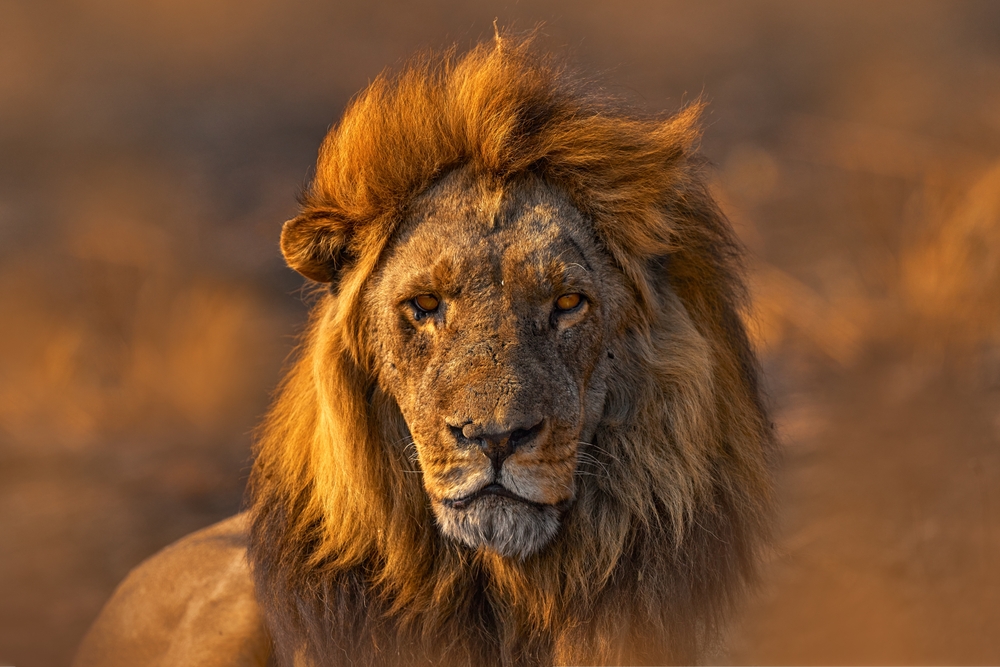
Scarface the Lion — Perhaps the most famous wild lion in history, Scarface (Scar) of Kenya’s Maasai Mara was a massive, battle-scarred male who survived to the remarkable age of 14 years (old for a wild lion), enduring extraordinary challenges and becoming a beloved subject of wildlife photographers and tourists worldwide until his death in 2021.
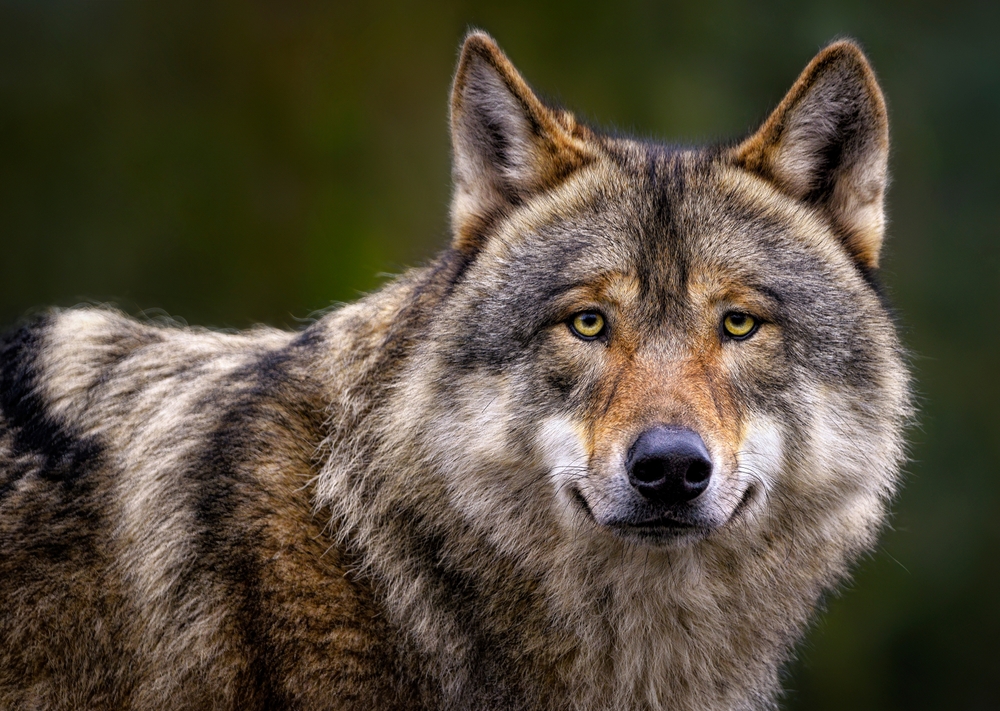
C1 (“OR7”) the Wolf — A gray wolf who made history in 2011 by becoming the first wild wolf documented in California in nearly 90 years — dispersing from a pack in Oregon and eventually establishing a new pack in the Cascade-Siskiyou region. His journey was tracked by GPS collar and followed by thousands of wildlife enthusiasts worldwide.
Wisdom the Albatross — The world’s oldest known wild bird — a Laysan albatross banded at Midway Atoll in 1956 and still breeding as of 2024 at approximately 74 years old. Wisdom has raised an estimated 30–36 chicks over her extraordinary wild life.
Wild Animals in Pop Culture
Simba (The Lion King, 1994/2019) — Disney’s lion prince brought the wild animals of the African savanna to global audiences and remains one of the most recognizable wild animal characters in entertainment history.
Bambi (1942) — Disney’s white-tailed deer, based on Felix Salten’s 1923 novel, became one of the most powerful wildlife conservation communications of the 20th century — research suggests the film measurably reduced hunting license applications in the years following its release.
Free Willy (1993) — The wild orca featured in this film sparked a real-world campaign to return the actual whale (Keiko) from captivity to the wild — the most ambitious and costly single-animal wildlife rehabilitation effort in history.
The Jungle Book (1894 novel by Rudyard Kipling; 1967 and 2016 Disney films) — featuring wolves, bears, panthers, and tigers in the wild forests of India, inspired generations of interest in wild animals and remains one of the most beloved wildlife-themed stories ever told.
Planet Earth (BBC, 2006) — David Attenborough’s landmark documentary series introduced television audiences to wild animals and wild places that most would never otherwise encounter, fundamentally changing public understanding of wild animal behavior and conservation needs.
14. Wild Animals in Myths, Folklore & World Cultures
Wild animals have occupied the center of human mythology, religion, and cultural identity since the earliest moments of human consciousness. Long before writing, before agriculture, before cities — there were wild animals, and there were humans watching them with wonder, fear, and reverence.
The Lion — universally symbolic of power, courage, and royalty across African, European, and Asian cultures. The lion appears on the royal arms of England, Scotland, Norway, Denmark, the Netherlands, Belgium, Bulgaria, and dozens of other nations. In Narnia (C.S. Lewis), the lion Aslan represents divine power and sacrifice. In East African traditions, the lion is associated with ancestral spirits and royal lineage.
The Tiger — supreme symbol of power, ferocity, and protection across Asian cultures. The tiger is the national animal of India, Bangladesh, Malaysia, South Korea, and several other nations. In Chinese culture, the tiger is the king of wild animals — associated with military prowess, protection against evil, and the West direction. In Hinduism, the goddess Durga rides a tiger into battle.
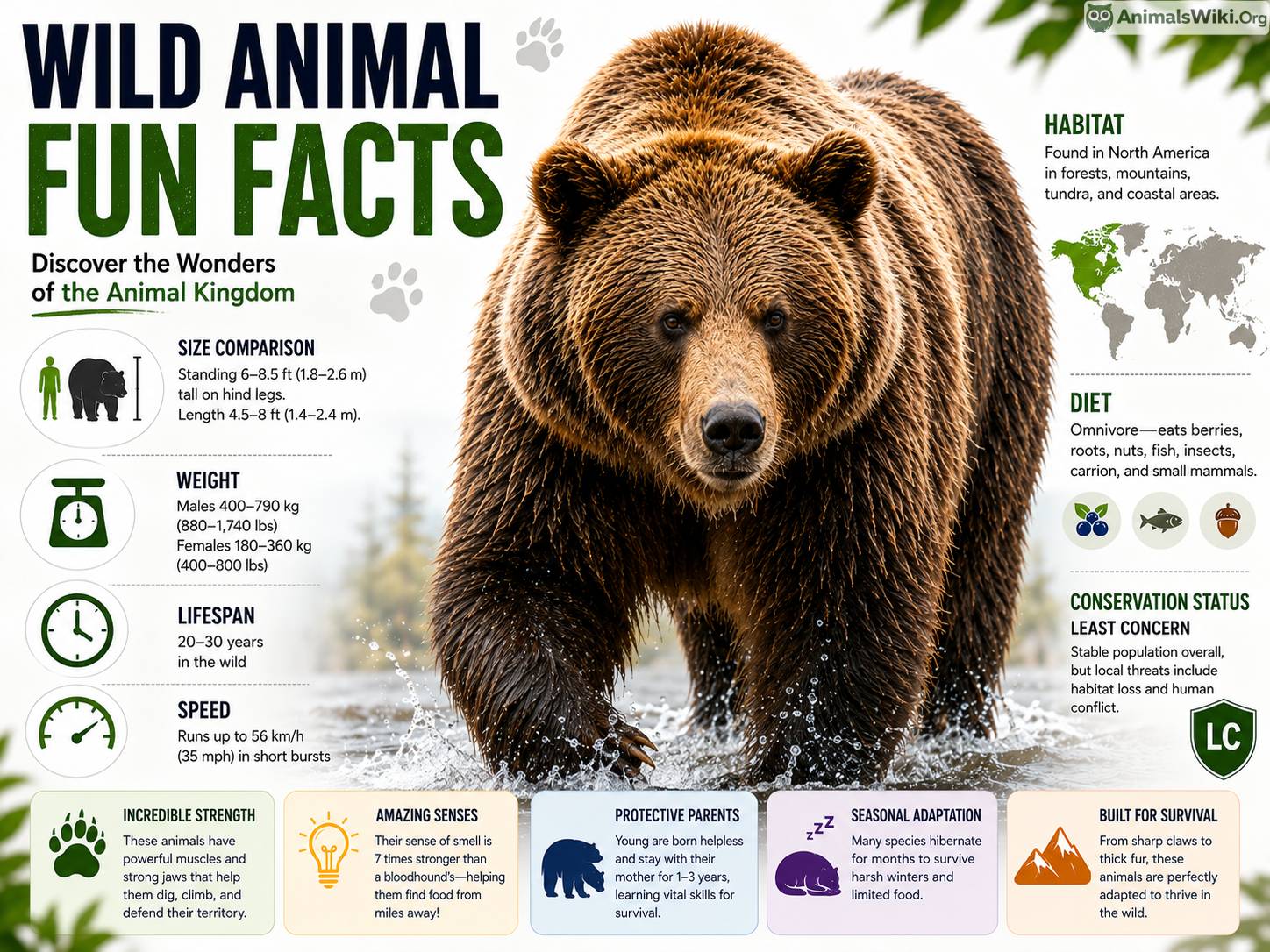
The Bear — one of the most widely revered wild animals in the Northern Hemisphere. Siberian shamanic traditions regard the bear as the mediator between human and spirit worlds — a role reflected in the extraordinary bear ceremonialism documented across Arctic and sub-Arctic cultures. The word for bear was considered so sacred in many Proto-Indo-European cultures that it was replaced with euphemisms — the English word “bear” itself derives from a term meaning “the brown one” rather than the original word, which was too sacred to speak.
The Wolf — simultaneously the most reviled and most revered wild animal in European culture. Feared as a livestock killer and associated with darkness, chaos, and danger in Western folklore (from “Little Red Riding Hood” to the werewolf tradition), the wolf is simultaneously sacred in Native American traditions as a teacher, pathfinder, and pack-family symbol. In Roman mythology, the she-wolf who suckled Romulus and Remus founded Rome itself.
The Jaguar — the supreme wild animal of Mesoamerican civilization. The Olmec, Maya, and Aztec civilizations all venerated the jaguar as the emblem of royal power, shamanic transformation, and the underworld. The Jaguar warrior caste of the Aztec military was the elite fighting force of the empire. Shamans across Amazonian traditions today still seek jaguar spirit through ritual plant medicines.
The Elephant — sacred across South and Southeast Asian cultures. Ganesha — the elephant-headed deity of Hinduism — is one of the most worshipped figures in the Hindu pantheon, associated with wisdom, new beginnings, and the removal of obstacles. In Buddhist tradition, the white elephant is associated with the birth of the Buddha. African traditions across the continent associate elephants with wisdom, longevity, and ancestral memory.
15. Best Places to See Wild Animals Around the World
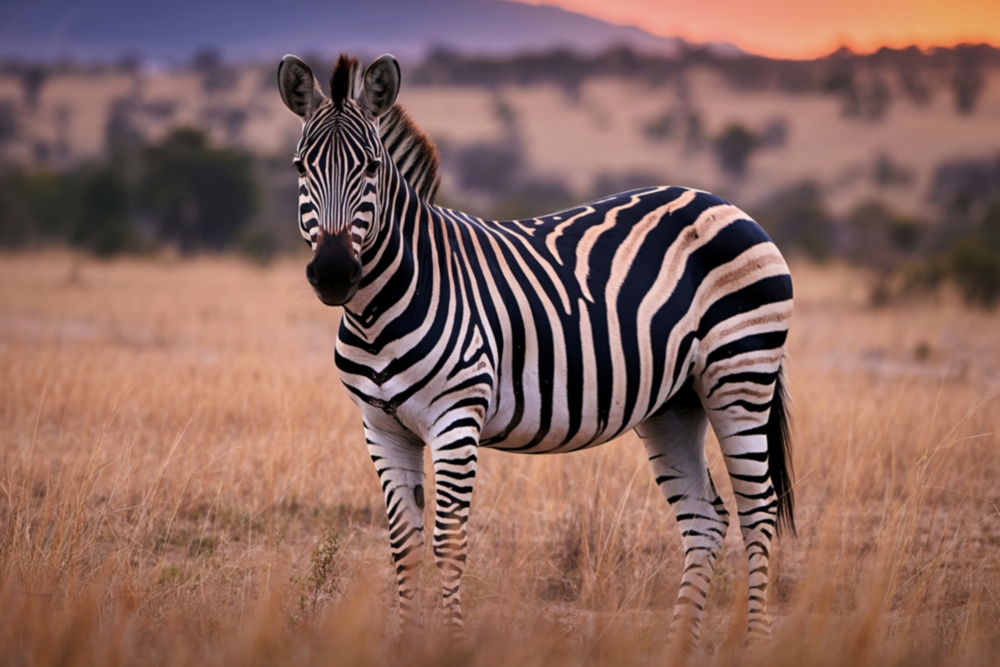
The Serengeti-Masai Mara Ecosystem, Tanzania/Kenya The greatest wild animal spectacle on Earth. The Great Migration — approximately 1.5 million wildebeest, 200,000 zebra, and 500,000 gazelle moving in a continuous circuit following rainfall — supports extraordinary predator populations including lions, cheetahs, leopards, wild dogs, and hyenas. Year-round access to abundant wildlife makes this the definitive African wildlife destination.
The Amazon Basin, Brazil/Peru/Ecuador/Colombia Home to approximately 10% of all wild species on Earth. The Amazon hosts the world’s most diverse wild animal community — jaguars, giant otters, tapirs, anacondas, river dolphins, harpy eagles, electric eels, piranhas, and millions of insect, bird, and amphibian species. Remote lodges along tributaries offer extraordinary wild animal access.
The Galápagos Islands, Ecuador Darwin’s living laboratory — where wild animals evolved in the absence of land predators and show virtually no fear of human observers. Giant tortoises, marine iguanas, blue-footed boobies, Galápagos penguins, flightless cormorants, and 13 species of Darwin’s finches make this one of the world’s most extraordinary wild animal destinations.
Yellowstone National Park, USA The world’s most famous rewilding success story — where gray wolf reintroduction triggered an ecosystem recovery that transformed the park. Wild bison herds, grizzly bears, wolves, elk, moose, pronghorn, coyotes, and extraordinary bird diversity in a landscape shaped by geothermal forces.
Borneo, Malaysia/Indonesia/Brunei The last stronghold of wild Bornean orangutans, pygmy elephants, proboscis monkeys, clouded leopards, and sun bears — wild animals found nowhere else on Earth, in one of the world’s most threatened wild habitats. River cruises through Kinabatangan Wildlife Sanctuary offer extraordinary wild encounters.
The Okavango Delta, Botswana One of Africa’s last great wild animal sanctuaries — a permanent inland delta in the Kalahari Desert that draws extraordinary concentrations of wild elephants, hippos, crocodiles, lions, leopards, cheetahs, and endangered African wild dogs to its waterways.
Svalbard, Norway The wild Arctic — home to polar bears (the archipelago has more polar bears than people), Arctic foxes, walrus, reindeer, and extraordinary seabird colonies. One of the most accessible wild Arctic environments in the world.
The Antarctic Peninsula The last great wild wilderness on Earth — where Emperor and Adélie penguins, leopard seals, crabeater seals, humpback and minke whales, and extraordinary seabird communities exist in a landscape of ice and silence of incomparable beauty.
You may also like: Complete Guide to the World’s Most Endangered Wild Animals | Top 10 Wildlife Safari Destinations in Africa | The Ultimate Guide to Wildlife Conservation
16. How You Can Help Wild Animals
Support Wild Animal Conservation Organizations
- WWF (World Wildlife Fund) (worldwildlife.org) — the world’s largest wild animal conservation organization, with programs across 100+ countries
- Wildlife Conservation Society (WCS) (wcs.org) — manages conservation programs protecting wild animals in 60+ countries
- African Wildlife Foundation (awf.org) — focused on wild African megafauna and their habitats
- Panthera (panthera.org) — dedicated exclusively to wild cat conservation globally
- Save the Elephants (savetheelephants.org) — research and conservation focused on wild African and Asian elephants
- WildAid (wildaid.org) — reducing demand for products derived from wild animals through high-profile campaigns
- Born Free Foundation (bornfree.org.uk) — campaigns for wild animals in the wild and against captive exploitation
- TRAFFIC (traffic.org) — the wildlife trade monitoring network, working to combat illegal wild animal trade
Practical Actions for Individuals
- Never purchase products derived from wild animals — ivory, rhino horn, shark fin, tiger bone, pangolin scales, sea turtle products, or live wild-caught exotic pets
- Choose sustainably certified products — FSC wood products, MSC seafood, Rainforest Alliance certified coffee, palm oil products certified by RSPO
- Reduce beef consumption — cattle ranching drives more wild animal habitat destruction than any other single human activity
- Support responsible ecotourism — wildlife viewing that directly funds wild animal conservation and benefits local communities
- Keep cats indoors — domestic cats kill an estimated 1.3–4 billion birds and 6–22 billion small mammals annually in the United States alone
- Participate in citizen science — iNaturalist, eBird, Zooniverse, and dozens of other platforms turn everyday observations into data used in wild animal research and conservation
- Advocate and vote for wildlife — support political candidates and policies that protect wild animal habitat, strengthen anti-poaching enforcement, and fund conservation
Top Documentaries & Books About Wild Animals
- “Planet Earth” (BBC, 2006) & “Planet Earth III” (BBC, 2023) — the defining wild animal documentary series of the modern era
- “Our Planet” (Netflix, 2019) — David Attenborough’s landmark series with an explicit wild animal conservation focus
- “The Serengeti Rules” (2018) — explores the science of wild animal trophic cascades and keystone species
- “My Octopus Teacher” (Netflix, 2020) — Oscar-winning documentary exploring a wild octopus’s extraordinary intelligence
- “The Sixth Extinction” by Elizabeth Kolbert (2014) — Pulitzer Prize-winning account of the current wild animal extinction crisis
- “The Hidden Life of Trees” by Peter Wohlleben (2015) — explores the interconnected world that wild animals inhabit
- “Are We Smart Enough to Know How Smart Animals Are?” by Frans de Waal (2016) — a landmark survey of wild animal cognition
- “Fang and Fur, Blood and Bone” edited by Sy Montgomery — unforgettable wild animal encounters
17. Wild Animals Fun Facts
- Wild blue whales communicate through sounds so low in frequency that they travel thousands of kilometres through ocean — a single whale’s call can theoretically be heard by another on the opposite side of an ocean basin
- The wild ostrich has the largest eyes of any land animal — 5 cm in diameter — and can see 3.5 km clearly, allowing it to detect predators at extraordinary distances across open savanna
- Wild arctic terns see two summers every year — migrating from the Arctic to the Antarctic and back annually, experiencing more daylight than any other wild animal on Earth
- The wild giant Pacific octopus (Enteroctopus dofleini) has three hearts, blue blood (copper-based rather than iron-based), and nine brains — one central brain and one in each of its eight arms, each capable of independent problem-solving
- Wild crows have been documented deliberately dropping nuts onto roads for passing cars to crack, then waiting for traffic lights to stop traffic before retrieving the contents — a behavior that requires causal reasoning, patience, and learned road safety
- The wild migratory monarch butterfly navigates from Canada to Mexico — a journey of up to 4,500 km — using a time-compensated sun compass that accounts for the sun’s movement across the sky throughout the day
- Wild elephant families have been documented holding vigils over deceased members for days — touching the bones, standing quietly nearby, and returning to the site of death repeatedly over subsequent years
- The wild Greenland shark grows at approximately 1 cm per year — meaning a 5-metre shark is estimated to be approximately 400 years old, having been born when Shakespeare was alive
18. Frequently Asked Questions About Wild Animal
Q1: What is the difference between a wild animal and a domesticated animal?
A wild animal is one that lives independently in natural environments — finding its own food, choosing its own territory, reproducing according to natural mate selection, and participating in ecological relationships without human management. Its genetics have been shaped by natural selection over millions of years. A domesticated animal is one whose genetics have been deliberately shaped by human selective breeding over generations — typically making it more docile, more productive of specific resources (meat, milk, wool, labor), and dependent on human provision of food and shelter. Feral animals are domesticated species that have returned to living wild but retain their domesticated genetics. The ecological, behavioral, and conservation implications of these categories are profoundly different.
Q2: Which wild animal is the most dangerous to humans?
Despite popular perception, the most statistically dangerous wild animal to humans is not the lion, shark, or crocodile — it is the mosquito (Culicidae), which transmits diseases (malaria, dengue fever, yellow fever, Zika, filariasis) responsible for over 700,000 human deaths annually. Among large wild animals, hippopotamuses kill an estimated 500 people per year in Africa — more than lions, crocodiles, or elephants. Saltwater crocodiles are the most deadly large reptile, killing hundreds annually across South and Southeast Asia and northern Australia.
Q3: How many wild animal species are endangered?
As of 2026, the IUCN Red List lists over 44,000 species across all groups as threatened with extinction — comprising Critically Endangered, Endangered, and Vulnerable categories. This includes approximately 26% of wild mammal species, 13% of wild bird species, 21% of wild reptile species, 41% of wild amphibian species, and 33% of marine fish stocks being overexploited. The true scale of wild animal endangerment is likely much larger, as the majority of wild species have never been formally assessed.
Q4: Can wild animals be kept as pets?
The keeping of wild animals as pets is illegal in most countries for most species, and deeply problematic even where legal. Wild animals have complex behavioral, social, dietary, and spatial needs that cannot be met in captivity. The exotic pet trade is one of the primary drivers of wild animal decline — many species die during capture and transport, and survivors suffer profound welfare impacts in captivity. Wild animals in homes also pose public health risks (zoonotic disease transmission) and safety risks from bites, scratches, and attack. The only appropriate wild animals to keep are domesticated species (dogs, cats, common livestock, certain birds bred in captivity) and captive-bred exotic species from reputable, regulated breeders.
Q5: What is the rarest wild animal on Earth?
The Vaquita (Phocoena sinus) — a small porpoise endemic to the northern Gulf of California, Mexico — holds the grim distinction of being the world’s rarest wild animal, with an estimated fewer than 10 individuals remaining as of 2026. The Javan rhinoceros (Rhinoceros sondaicus) with approximately 76 individuals in a single national park, and the Amur leopard (Panthera pardus orientalis) with approximately 100 wild individuals, are also among the rarest large wild animals on Earth.
Q6: How do wild animals survive winter?
Wild animals have evolved three primary strategies for surviving winter’s food scarcity and cold: migration (moving to warmer regions with more food — employed by millions of bird species, many bat species, caribou, monarch butterflies, and various whale species); hibernation (entering a physiological state of dramatically reduced metabolism, body temperature, heart rate, and energy consumption — employed by bears, ground squirrels, hedgehogs, dormice, and various bat species); and year-round residence with behavioral and physiological adaptation (thick insulating fur/feathers, fat reserves, food caching, reduced activity, huddling for warmth — employed by wolves, foxes, ptarmigan, bison, and many other species).
Q7: Why are wild animals important to humans?
Wild animals provide services of incalculable value to human civilization. Pollination by wild bees, butterflies, bats, and birds supports approximately 75% of food crop species and is valued at $577 billion annually in global food production. Pest control by wild insectivorous birds and bats saves agricultural industries tens of billions of dollars per year. Scavenging by wild vultures and other carrion feeders prevents disease spread worth billions in public health costs. Scientific research using wild animals has produced vaccines, drugs, surgical techniques, and materials science applications worth trillions. Beyond economics, wild animals provide cultural, spiritual, psychological, and aesthetic values that no economic metric can adequately capture — values that most cultures throughout human history have recognized as fundamental to human wellbeing.
Q8: What can I do to help wild animals right now?
The most impactful immediate actions include: reducing beef consumption (cattle ranching drives ~80% of Amazon deforestation); choosing MSC-certified sustainable seafood (overfishing is collapsing wild fish populations globally); keeping cats indoors (domestic cats kill billions of wild birds and mammals annually); refusing wild animal products (never buy ivory, rhino horn, shark fin, or other wild animal derivatives); donating to reputable wild animal conservation organizations (WWF, WCS, Panthera, Born Free); participating in citizen science platforms like iNaturalist (your wild animal observations become conservation data); and engaging politically — writing to elected representatives, supporting candidates with strong environmental records, and voting for policies that protect wild habitat. Collective political and economic action ultimately has more impact than individual lifestyle choices alone, though both matter.
19. Sources Researched
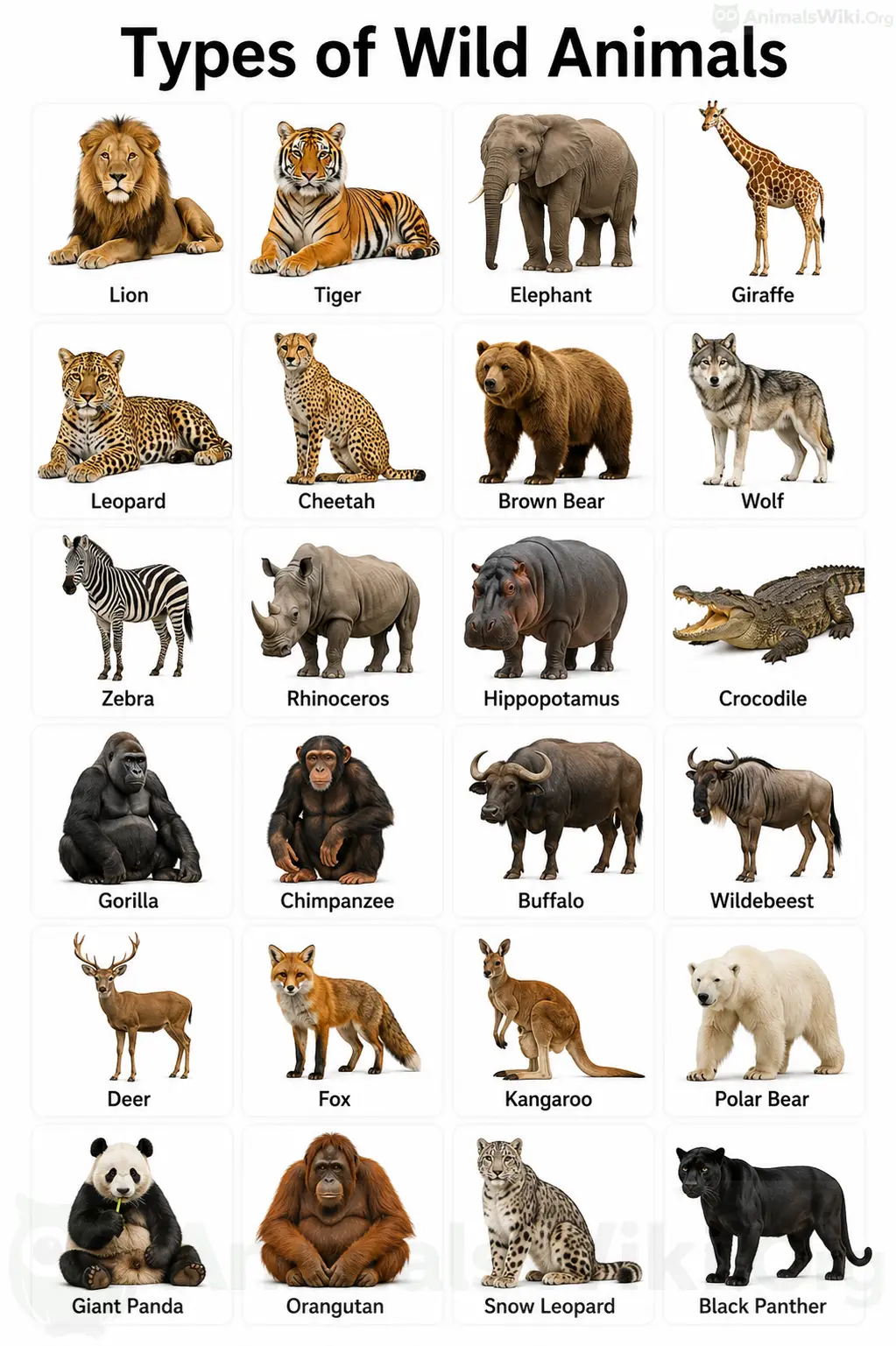
- Wild Animals Images — shutterstock.com
- Wikipedia — en.wikipedia.org/wiki/Wildlife
- WWF Living Planet Report 2022 — worldwildlife.org/pages/living-planet-report-2022
- IUCN Red List — iucnredlist.org
- National Geographic — nationalgeographic.com
- Britannica — britannica.com
- Smithsonian Institution — si.edu
- UN IPBES Global Assessment Report on Biodiversity and Ecosystem Services (2019) — ipbes.net
- Wildlife Conservation Society — wcs.org
- African Wildlife Foundation — awf.org
- Panthera — panthera.org
- TRAFFIC — traffic.org
- Cornell Lab of Ornithology — birds.cornell.edu
- NOAA — noaa.gov
- Elizabeth Kolbert, “The Sixth Extinction” (2014)
- Frans de Waal, “Are We Smart Enough to Know How Smart Animals Are?” (2016)
20. Wild Animal Images (Shutterstock)