Elk Facts
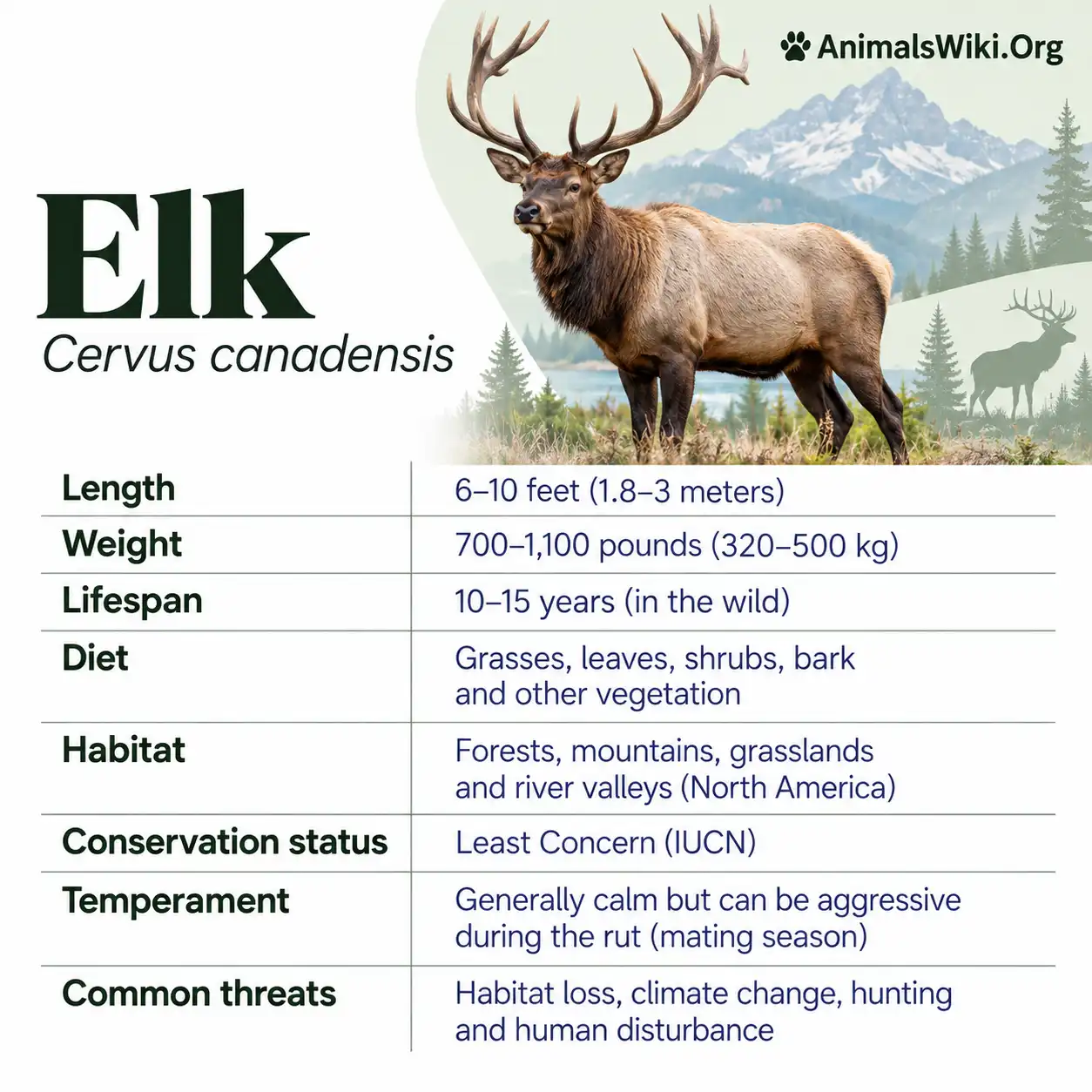
| Feature | Details |
|---|---|
| Common Name | Elk (North America); Wapiti (original Shawnee name; used in Europe and Asia) |
| Scientific Name | Cervus canadensis |
| Family | Cervidae |
| Order | Artiodactyla |
| First Described | 1777 (by George Zimmermann) |
| Native Habitat | Forest, forest edges, meadows, grassland, mountain slopes, riparian corridors |
| Geographic Range | North America (primary); reintroduced populations in New Zealand, Australia, Argentina; related subspecies across Central Asia |
| Average Size | Males: 1.4–1.6 m shoulder height; 2.1–2.7 m body length; Females: slightly smaller |
| Average Weight | Males: 180–500 kg; Females: 170–300 kg |
| Lifespan | 8–12 years (wild); up to 20 years (captivity) |
| Diet | Herbivore — grasses, sedges, forbs, shrubs, bark, lichens |
| Conservation Status | Least Concern (IUCN) — recovered from near-extirpation in much of range |
| Defining Feature | One of the world’s largest deer; spectacular multi-tined antlers in males; the bugling call — one of the most evocative sounds in North American wilderness; powerful rut behavior |
| Number of Subspecies | 6 recognized (Rocky Mountain, Roosevelt, Tule, Manitoban, Eastern — extinct, Merriam’s — extinct) |
1. Elk Species Overview & Classification
On a September morning in the mountains of Yellowstone, before the sun has cleared the ridgeline and while frost still clings to the meadow grass, a sound rises from the treeline that stops every human visitor in their tracks. It begins as a deep, resonant bugle — then rises through an almost musical scale to a high, piercing squeal — and ends with a series of guttural grunts that carry across the valley with astonishing clarity. Even people who have never heard the sound before seem to know, instinctively, what they are hearing. It is the bugle of a bull elk — one of the most immediately recognizable, most evocative, and most genuinely stirring sounds in all of North American wildlife.
The Elk (Cervus canadensis) — known as Wapiti in the original Shawnee language and in European and Asian contexts — is North America’s second-largest member of the deer family (exceeded only by the moose) and arguably its most dramatically impressive. A mature bull in September rut, carrying a full rack of antlers spanning over a meter in width, his neck swollen with the hormonal changes of breeding season, bugling at rivals and gathering a harem of cows, represents one of the most compelling wildlife spectacles available anywhere in the temperate world.
Yet the elk is considerably more than a spectacle. It is one of the most ecologically important large herbivores in the temperate forests and grasslands of North America — a keystone prey species that supports wolf, mountain lion, bear, and golden eagle populations; a vegetation manager whose grazing and browsing patterns shape plant community composition across enormous areas; and one of conservation’s most important success stories — a species that was reduced to perhaps 40,000 individuals by the early 20th century and has since recovered to approximately 1 million animals through one of the most comprehensive and most successful wildlife restoration programs in American history.
The elk’s story encompasses Native American cultural tradition spanning thousands of years, the devastating impact of European settlement and commercial hunting, the visionary conservation decisions of the early 20th century that saved the species, the landmark science conducted at Yellowstone National Park that revealed the elk’s role in a cascade of ecological relationships extending from wolves to willows, and the ongoing challenges of managing a species whose recovered populations must now coexist with agriculture, development, and the continuing evolution of the American landscape.
Species Classification Table
| Classification Level | Details |
|---|---|
| Kingdom | Animalia |
| Phylum | Chordata |
| Class | Mammalia |
| Order | Artiodactyla |
| Family | Cervidae |
| Subfamily | Cervinae |
| Genus | Cervus |
| Species | Cervus canadensis |
| Described By | George Zimmermann, 1777 |
| Common Names | Elk (North America); Wapiti (Eurasia and by Indigenous peoples) |
North American Elk Subspecies
| Subspecies | Scientific Name | Range | Population | Notes |
|---|---|---|---|---|
| Rocky Mountain Elk | C. c. nelsoni | Rocky Mountains; most common in parks and western states | ~700,000 | Most abundant; most studied |
| Roosevelt Elk | C. c. roosevelti | Pacific Coast (Washington, Oregon, California, British Columbia) | ~100,000 | Largest subspecies by body weight |
| Tule Elk | C. c. nannodes | Central Valley and coastal California | ~5,700 | Smallest subspecies; recovered from near-extinction |
| Manitoban Elk | C. c. manitobensis | Manitoba, Saskatchewan, North Dakota, Minnesota | ~18,000 | Mid-sized; prairies and parkland |
| Eastern Elk | C. c. canadensis | Eastern North America | EXTINCT ~1880 | Driven to extinction by hunting and habitat loss |
| Merriam’s Elk | C. c. merriami | Arizona, New Mexico | EXTINCT ~1906 | Hunted to extinction in the Southwest |
The Wapiti Name and Its Significance
The name Wapiti comes from the Shawnee and Cree word for the animal — meaning “white rump” — a reference to the elk’s distinctive pale rump patch. This is the name used in European and Asian contexts (where the animal is also native as distinct subspecies) and is increasingly used by wildlife managers and conservationists in North America as a way of distinguishing the elk from the European red deer (with which it is sometimes confused) and of honoring the Indigenous naming tradition. In this article, both names (Elk and Wapiti) are used.
Did You Know? The word “elk” in European English originally referred to the Eurasian Elk — which is the same animal Americans call the Moose (Alces alces). When European settlers arrived in North America and encountered what we now call the elk, they applied the familiar name to the large deer they found — creating an enduring transatlantic naming confusion. In Britain and Europe today, an “elk” is a moose; in North America, an “elk” is Cervus canadensis. The Indigenous Shawnee name Wapiti is scientifically unambiguous and is preferred in international scientific contexts precisely because it avoids this confusion.
2. Elk Physical Description & Unique Features
The elk’s physical form is one of the most impressive in the deer family — combining large body size, dramatic secondary sexual characteristics (particularly the male’s antlers), and several distinctive anatomical features that reflect its ecological role as a high-elevation, cold-climate herbivore.
Size and Build
The elk is a large, powerfully built cervid — one of the largest members of the deer family worldwide:
Males (bulls):
- Shoulder height: 1.4–1.6 meters (4.6–5.2 feet)
- Body length: 2.1–2.7 meters (6.9–8.9 feet) excluding antlers
- Weight: 180–500 kg (397–1,102 lbs); average approximately 320 kg for Rocky Mountain bulls; Roosevelt Elk bulls can approach 500 kg
Females (cows):
- Shoulder height: 1.3–1.5 meters (4.3–4.9 feet)
- Weight: 170–300 kg (375–661 lbs)
Sexual dimorphism: Pronounced — bulls are typically 25–40% heavier than cows; the difference is most dramatic during the rut when bulls have accumulated maximum fat reserves and muscle mass
Body proportions: The elk has a characteristically long neck (important for reaching high browse), a relatively compact body compared to the moose, long legs adapted for moving through snow, and a distinctive “Roman nose” profile
The Spectacular Antlers
The bull elk’s antlers are among the most iconic and most photogenic structures in North American wildlife:
Growth cycle: Elk antlers are shed and regrown annually — unlike the permanent horns of cattle or rhinoceroses:
- Shedding: Antlers are shed in late winter (February–April); the shedding typically occurs within hours, as both antlers almost always fall within a day of each other; shed antlers are eagerly consumed by rodents and other animals for their mineral content
- Velvet growth: New antlers begin growing immediately after shedding; during growth, they are covered in “velvet” — a soft, living tissue covering the growing bone, rich in blood vessels and nerve endings; velvet antlers grow at extraordinary rates — up to 2.5 cm (1 inch) per day during peak growth, making antlers one of the fastest-growing tissues in the mammalian world
- Hardening: In late summer (July–August), antler growth is complete; the velvet dries and is rubbed off against shrubs and small trees, revealing the hard, polished bone beneath; the velvet-rubbing behavior leaves distinctive “rubs” on vegetation that are important territorial and social signals
- Breeding season: The fully hardened antlers are carried through the rut (September–October) and into early winter; they are then shed and the cycle repeats
Structure: A mature bull’s antlers typically have a main beam that curves upward and backward from the head, with multiple tines (points) projecting upward from the main beam; the number of tines increases with age up to peak maturity:
| Age | Typical Antler Development |
|---|---|
| 1.5 years (spike bulls) | Simple single spike; no tines |
| 2.5 years | 3–4 tines per side |
| 3.5–4.5 years | 5 tines per side developing |
| 5.5+ years (mature) | 6+ tines per side (“6×6” or “Royal” configuration most prized) |
| 10+ years (old) | Antlers may become asymmetric or deteriorate |
Size: A large mature bull’s antlers can span 1.0–1.5 meters in width (tip to tip) and weigh 9–18 kg (20–40 lbs) — a remarkable bone structure grown annually in less than 6 months from scratch
World record: The largest recorded elk antler spread measured approximately 2.0 meters — an exceptional individual; typical trophy antlers score in the 300–400 Boone and Crockett points range (a standardized scoring system for trophy antlers)
The Rump Patch — The Diagnostic Field Mark
The elk’s pale cream to tan rump patch is the most immediately distinctive field identification feature — visible at great distance and the basis for the Shawnee name Wapiti (“white rump”):
- The rump patch contrasts sharply with the darker body coloration
- It is visible to other elk at considerable distance — potentially functioning as a social signal during group movement
- The rump patch is present in both sexes and all ages
Coat and Coloration
Summer coat: Tawny to reddish-brown overall; the head and neck are darker (brown to near-black); the legs are darker than the body; the rump patch is pale cream-tan
Winter coat: Thicker and shaggier; the mane on the neck becomes more prominent; overall coloration shifts to grayish-brown; the contrast between the dark neck/head and pale body is most pronounced in winter
The neck mane: Bulls develop a pronounced mane of long, dark neck hair that becomes particularly evident during the rut; the mane appears to make the neck look thicker and more imposing during dominance displays
Calves: Born with white spots on the reddish-brown coat (similar to other deer fawns) that fade within weeks to months; the spotted pattern provides camouflage during the vulnerable early weeks of life
Hooves and Legs
The elk’s hooves are adapted for moving across diverse terrain — from soft meadow ground to steep rocky slopes to deep snow:
- Two large central hooves (the primary weight-bearing structures)
- Two dewclaws (smaller, higher on the leg) that spread the footprint in soft substrate
- The hooves can spread significantly on soft ground, increasing the surface area and reducing sinking in snow or mud
3. Elk Natural Habitat & Geographic Range
The elk is one of the most habitat-versatile of all large North American mammals — occupying a remarkable range of environments from coastal rainforest to high alpine tundra, from semi-arid desert margins to boreal forest — yet showing consistent preferences for specific habitat features within this broad range.
Preferred Habitat Features
Forest-meadow ecotones — the boundary between forest and open areas is the most important habitat feature for elk; they use the forest for cover (from weather and predators) and the adjacent meadows for grazing; high elk densities typically occur where forest and grassland are interspersed
Elevation diversity — in mountainous areas, elk practice altitudinal migration — moving to high-elevation alpine meadows in summer and descending to lower-elevation valleys and forests in winter; this elevation tracking of seasonal vegetation quality is one of the most characteristic elk behaviors
Riparian corridors — rivers, streams, and their associated lush vegetation are critical elk habitat; riparian areas provide water, high-quality forage, and travel corridors; the ecological importance of elk in riparian corridors is one of the most intensively studied ecological relationships in North American wildlife science
Snow depth limitations — elk are limited by snow depth in winter; when snow exceeds approximately 50–60 cm (20–24 inches) in depth, elk cannot move effectively and may be unable to reach ground-level forage; winter range selection is strongly influenced by snow depth and snow density (weight)
Habitat Types Occupied
| Habitat | Primary Elk Use | Season | Key Species/Features |
|---|---|---|---|
| Alpine meadows | Summer grazing | June–September | Subalpine grasses, sedges, forbs |
| Subalpine forest | Cover; winter refuge | Year-round | Spruce, fir, pine |
| Mixed conifer forest | Cover; winter feeding | Winter-spring | Douglas-fir, ponderosa pine |
| Riparian areas | Water; high-quality forage | Year-round | Willows, cottonwood, sedges |
| Grassland | Primary grazing | Summer | Native grasses |
| Shrublands | Browse; winter food | Winter | Sagebrush, bitterbrush, snowberry |
| Coastal rainforest (Roosevelt) | All-season habitat | Year-round | Old-growth cedar, spruce, Sitka |
Geographic Range
Current North American range:
| Region | Key States/Provinces | Primary Subspecies | Population Status |
|---|---|---|---|
| Rocky Mountains | Wyoming, Montana, Colorado, Idaho, Utah, Nevada, New Mexico, British Columbia, Alberta | Rocky Mountain | Most numerous; largely recovered |
| Pacific Coast | Washington, Oregon, California, BC | Roosevelt; Tule (CA) | Stable; Roosevelt increasing |
| Upper Midwest | Minnesota, Wisconsin, Michigan | Rocky Mountain (reintroduced) | Recovering; reintroduced populations expanding |
| Appalachians | Pennsylvania, Virginia, Tennessee, North Carolina, Kentucky | Rocky Mountain (reintroduced) | Recovering; reintroduced populations |
| Canada (prairie) | Manitoba, Saskatchewan | Manitoban | Small; stable |
| Eastern US/Canada | Historically widespread | Eastern (EXTINCT) | Original subspecies extinct; reintroductions ongoing |
Introduced populations outside North America:
- New Zealand — largest elk population outside North America; introduced in early 20th century; feral and managed populations in Fiordland and other areas
- Australia — small feral populations in Queensland and Victoria
- Argentina — introduced for hunting; feral populations in Patagonia and Neuquén
The Yellowstone Elk Herd — The Most Famous Population
The Northern Yellowstone Elk Herd — which summers in Yellowstone National Park and winters on the Northern Range in and around the park — is the most intensively studied elk population in the world and the population at the center of the most important ecological research on elk in North American history. Population fluctuations in this herd — driven by wolf predation, hunting, weather, and vegetation dynamics — have provided fundamental insights into large mammal ecology. The herd’s size has fluctuated from approximately 19,000 animals (pre-wolf reintroduction) to approximately 5,000–6,000 (post-wolf reintroduction and regulated hunting) — a decline that has generated significant scientific and public debate.
4. Elk Diet & Feeding Behavior
The elk is a mixed feeder — combining grazing (consuming grasses and low-growing plants) and browsing (consuming leaves, twigs, and bark from shrubs and trees) in proportions that vary with season and habitat availability.
What Elk Eat
Grasses — the primary food during spring and summer when actively growing grass provides high-quality, high-protein forage; elk are efficient grazers that crop grass close to the ground; preferred grass species include bluegrasses (Poa spp.), fescues (Festuca spp.), Idaho fescue (Festuca idahoensis), and numerous other native grass species
Sedges and rushes — sedges (Carex spp.) are particularly important in wet meadows and riparian areas; often among the first plants to be available in spring as snow melts; high nutritional value early in the season
Forbs (broad-leaved herbs) — consumed in large quantities during summer; selected for their high protein content; preferred species include clover (Trifolium spp.), geranium (Geranium spp.), arrowleaf balsamroot (Balsamorhiza sagittata), and many others
Browse (shrubs and trees) — the primary winter food when snow covers ground-level vegetation; important browse species include:
- Willows (Salix spp.) — perhaps the single most important browse species; rich in protein; heavily used in riparian areas
- Sagebrush (Artemisia spp.) — critical winter food in the sagebrush steppe of the Great Basin and Intermountain West
- Bitterbrush (Purshia tridentata) — highly nutritious browse; eagerly consumed
- Snowberry (Symphoricarpos spp.) — regularly browsed in winter
- Aspen (Populus tremuloides) — bark consumed in winter; young shoots in spring
Bark — consumed in winter when other food is scarce; elk girdle (strip a ring of bark from) trees to access the nutritious cambium layer beneath; bark-stripping can kill trees and is a significant source of conflict with forestry operations
Lichens — consumed in some areas, particularly in northern forests where terrestrial lichens are abundant; important winter food in some high-latitude populations
Mushrooms and fungi — consumed opportunistically when encountered
The Critical Importance of Mineral Licks
Elk actively seek mineral licks — natural deposits of mineral-rich soil or rock — particularly in spring when mineral needs are highest (for antler growth in bulls; for lactation in cows):
- Sodium is typically the primary mineral sought — plant diets are often sodium-deficient
- Calcium and phosphorus — important for antler growth; bulls have dramatically elevated mineral requirements during the antler growth period
- Mineral lick sites are traditional locations visited by multiple generations of elk; some sites in Yellowstone and other areas have been used for thousands of years
- Mineral licks are important congregation points that influence elk movement patterns and create predictable wildlife viewing opportunities
Seasonal Diet Shifts
| Season | Primary Foods | Key Nutritional Goals |
|---|---|---|
| Spring (snowmelt to June) | Early-green sedges, grasses, forbs | Recovery from winter; lactation (cows); antler growth (bulls) |
| Summer (June–August) | Diverse grasses, forbs; peak nutrition | Fat accumulation; peak nutrition; antler completion |
| Autumn (September–October) | Grasses, forbs; beginning browse | Continued fat accumulation; pre-rut (bulls) |
| Winter (November–March) | Browse, bark, sagebrush; lichens | Survival; minimum energy expenditure |
Daily Food Consumption
- Adult elk consume approximately 8–14 kg (18–31 lbs) of dry matter daily — equivalent to approximately 3–5% of body weight
- Feeding occurs primarily in dawn and dusk activity periods — the crepuscular pattern reduces predation risk while covering the terrain needed to find adequate food
- Elk spend approximately 8–12 hours per day feeding or moving between feeding areas
5. Elk Reproduction & Life Cycle
The elk’s reproductive biology is organized around one of the most dramatic breeding seasons of any temperate North American mammal — the rut — whose acoustic, behavioral, and physical manifestations make it one of the most spectacular wildlife events on the continent.
Sexual Maturity
Cows: Reach sexual maturity at approximately 16 months (first breeding at 1.5 years); first calves typically born when cows are 2.5 years old; peak reproductive success from approximately 3–12 years
Bulls: Physiologically capable of reproduction from 16 months; however, competitively excluded from mating by larger, older bulls until approximately 5–6 years when they begin achieving breeding success; peak competitive success in bulls aged 7–11 years
The Rut — September’s Greatest Wildlife Drama
The elk rut is one of North America’s most dramatic and most observed wildlife events — occurring primarily in September through October across most of the range:
Pre-rut preparation (August–early September):
- Bulls’ antler velvet dries and is rubbed off against vegetation (creating “rubs”)
- Testosterone levels rise rapidly — transforming bulls behaviorally and physically
- Neck swelling — testosterone stimulates hypertrophy of neck musculature; bull necks can appear to double in diameter during the rut
- The mane becomes more pronounced
- Bulls become increasingly aggressive and restless
Rutting behaviors:
The bugle — the elk’s most famous vocalization; a complex, multi-note call that begins as a deep resonant tone, rises to a high squeal, and ends in a series of grunts; the bugle functions as:
- Territorial advertisement — communicating the bull’s presence, size, and competitive status to rivals
- Harem management — keeping cows in the harem aware of the bull’s location
- Challenge — specifically directed at rival bulls as an invitation to combat
Wallowing — bulls excavate wallows — muddy depressions — with their hooves and antlers and roll in them; they urinate in the wallow and rub the resulting mud (saturated with their own scent) onto their body; the scent-laden mud is a powerful olfactory advertisement of the bull’s presence; bulls in full rut carry a distinctive musky odor detectable at considerable distance
Herding cows — dominant bulls gather and maintain harems of typically 6–20 cows (occasionally more); they constantly move around the harem, responding to cows that stray, challenging nearby rival bulls, and mating with cows as they come into estrus
Bull combat: When two bulls of similar competitive status contest a harem or territory, physical combat may occur:
- Parallel walking — the two bulls walk side by side, comparing body and antler size; many conflicts are resolved at this stage
- Bugling exchanges — escalated vocal challenge
- Antler display — bulls approach and display antlers directly toward the rival
- Locking and pushing — if neither bull retreats, they charge each other, antlers clashing together; the two bulls then push and twist against each other in a test of strength that can last several minutes
- The loser retreats — typically with no injury; but serious injuries and occasional deaths occur when antlers lock or when a bull is gored by a tine; antler locks that cannot be separated have been documented, resulting in the deaths of both bulls
Breeding
Mating occurs when a cow comes into estrus — a brief period (approximately 24–36 hours) during which she is sexually receptive; the dominant bull in the harem mates with each cow as she comes into estrus; in a large harem, the bull may breed multiple times per day during the peak rut
Sperm competition: While the harem bull does the majority of breeding, satellite bulls — younger or subordinate males that lurk at the edge of harems — occasionally mate with cows when the harem bull is distracted; genetic paternity studies have confirmed that some calves in large harems are sired by bulls other than the apparent harem master
Gestation and Birth
- Gestation period: Approximately 240–262 days (8–8.5 months)
- Birth season: Mid-May to mid-June across most of the range — timed to coincide with the peak productivity of spring vegetation for maximum milk production and calf growth
- Litter size: Single calf — invariably; twins are extremely rare
- Birth weight: Approximately 14–20 kg (31–44 lbs)
Calf Development
Elk calves are precocial — able to stand within 30–60 minutes of birth and follow the mother within hours:
| Stage | Timing | Development |
|---|---|---|
| Birth | Day 0 | 14–20 kg; spotted; standing within 1 hour |
| “Hider” phase | Days 1–21 | Lies hidden; mother returns to nurse 4–5 times daily |
| Following | Week 3+ | Begins following mother regularly |
| Spot fading | Months 1–3 | Spotted coat replaced by uniform reddish-brown |
| Weaning | Months 4–6 | Gradual reduction in nursing; fully weaned by autumn |
| First winter | Months 5–9 | Critical survival test; calves remain with mother’s group |
| Sexual maturity | 16 months | First potential breeding season |
The hider strategy: During the first weeks of life, calves spend most time lying hidden in dense vegetation while their mother feeds at some distance; when disturbed, calves have limited escape capability and rely on camouflage (spotted coat) and absence of scent (calves are nearly odorless when born) to avoid predator detection; mothers aggressively defend calves if predators are detected nearby
Elk Lifespan
- Wild: Typically 8–12 years; maximum approximately 20 years
- Captivity: Up to 26 years documented
Natural mortality pattern: Calves experience high mortality in their first year (approximately 25–40% in most populations); adults have lower annual mortality rates (approximately 8–15% per year in hunted populations); the oldest age classes (12+ years) show increasing mortality from dental wear (elk’s molar teeth wear down with age, ultimately limiting their ability to process food) and the cumulative effects of injury and disease
6. Social Behavior & Communication
The elk’s social system is one of the most complex among North American ungulates — featuring strong seasonal sex segregation outside the rut, sophisticated dominance hierarchies within each sex group, and a rich multi-modal communication system.
Sex-Segregated Social Groups
For most of the year — outside the rut — elk live in sex-segregated groups:
Cow-calf groups: The basic social unit for most of the year; typically 10–50+ individuals comprising cows, calves, and yearlings of both sexes; these groups are often stable in membership; the oldest, most experienced cow often leads the group to food, water, and safe areas through her familiarity with the local landscape
Bull groups: Adult and sub-adult bulls live in separate bachelor groups outside the rut; these groups are remarkably peaceful — bulls that will be fierce competitors during the rut tolerate close proximity during summer; bull groups allow assessment of relative competitive status and reduce the energetic cost of constant vigilance
Why sex segregation?
- Different nutritional requirements — bulls prioritizing protein-rich foods for antler growth and muscle building; cows prioritizing digestible energy and calcium for lactation and calf support
- Different predator risk tolerance — cows with calves are more cautious and prioritize habitats with good predator detection and escape; bulls can afford to use riskier habitats with better food quality
- Reduced intersexual competition for food outside the breeding season
Dominance Hierarchies
Within both cow-calf groups and bull groups, linear dominance hierarchies determine priority access to food, preferred resting sites, and (for bulls) mating opportunities:
Bull dominance: Determined primarily by body size, antler size, and fighting ability; older, larger bulls typically dominate; the hierarchy is maintained through displays (bugling, antler displays, parallel walking) that allow size assessment without combat in most encounters
Cow dominance: Less dramatic than bull hierarchy; determined by age, body condition, and social experience; dominant cows may displace subordinates from preferred feeding areas
The Rut Social Reorganization
During the rut (September–October), the year-round sex-segregated social structure is dramatically reorganized:
- Dominant bulls move into cow groups and establish harems
- Bachelor groups break up as bulls compete for cows
- Sub-adult bulls (“spike bulls” and younger “raghorns”) are excluded from harems by dominant bulls
- The harem structure is temporary — dissolving after the peak rut (typically early-to-mid October) as bulls return to bachelor groups for winter
Communication — A Multi-Modal System
Acoustic signals:
- Bugle — the most famous and most complex elk vocalization; used primarily by bulls during the rut
- Chirp — high-pitched contact call used between cows and calves; maintains family contact in dense vegetation
- Bark — sharp alarm call; warns the group of predator presence
- Mew — soft contact calls within cow-calf groups; keep groups coordinated during movement
- Cough — mild alarm signal; also used as a contact call
- Bull “grunt” — low-frequency grunts; used in close-range dominance interactions
Visual signals:
- Antler display — the most important visual signal in bull interactions; bulls display antlers by tilting the head and orienting toward rivals; larger antlers command more respect
- Broadside display — turning the body broadside to a rival displays maximum body size
- Ear position — ears laid back signal aggression; ears forward signal alertness; ears relaxed signal calm
- Tail position — tail raised signals alarm
- Rump patch — the pale rump is visible at distance; possible role in group cohesion
Chemical signals:
- Wallowing and urine marking — creates persistent scent signals in the landscape
- Antler rubs — rubs on vegetation deposit scent from glands on the forehead; the sight and scent of rubs communicate bull presence and condition to other elk
- Flehmen response — bulls (and occasionally cows) curl their upper lip and draw air over the Jacobson’s organ on the roof of the mouth to assess chemical information from urine or other scent sources; used to detect female reproductive status
7. Predators & Defense Mechanisms
The elk is a primary prey species for most of North America’s large predators — a central position in the food web that gives the elk’s population dynamics enormous consequences for the entire ecosystem.
Natural Predators
Gray Wolf (Canis lupus) — the most ecologically important elk predator; wolves are efficient group hunters capable of taking elk of any size and condition; wolf predation is selective — targeting calves, old adults, and animals in poor condition; wolf reintroduction to Yellowstone in 1995 profoundly changed elk behavior and population dynamics, triggering the ecological cascade that became famous as the “trophic cascade” story
Mountain Lion (Puma concolor) — a significant elk predator, particularly for calves and smaller individuals; mountain lions are ambush predators that are most effective in forested terrain with cover; in some areas of the western US, mountain lions take as many or more elk as wolves
Grizzly Bear (Ursus arctos horribilis) — grizzlies prey on elk calves in spring (when calves are young and vulnerable) and occasionally kill adult elk; they also scavenge elk carcasses and rob wolves of kills; grizzly predation on calves is a significant mortality source in Yellowstone and other areas with both species
American Black Bear (Ursus americanus) — significant predator of elk calves; black bears are less dangerous to adult elk than grizzlies but are widespread across the elk’s range and collectively take large numbers of calves
Coyote (Canis latrans) — primarily takes calves; rarely attacks healthy adult elk; important mortality source for young calves, particularly in the first week of life
Golden Eagle (Aquila chrysaetos) — documented predation on elk calves in the first weeks of life; golden eagles are capable of killing newborn and very young calves
Wolverine (Gulo gulo) — occasional predation on elk, particularly weakened or injured animals and calves; more significant in northern parts of the range
Defense Strategies
Speed: A healthy adult elk can run at 55–65 km/h (34–40 mph) for short distances — fast enough to outrun most predators in a straight-line sprint; sustained running speed is somewhat lower but elk can maintain moderate speeds for considerable distances
Group vigilance: The “many eyes” effect in cow-calf groups provides collective predator detection; when one individual detects a predator, the alarm response propagates through the group immediately; group living significantly reduces individual predation risk
Terrain exploitation: Elk move to open terrain where predators cannot approach without being detected; in areas with wolves, elk have been documented avoiding dense riparian vegetation (where wolf ambushes are most effective) and moving to open hillsides where they can see approaching threats
The “predator escape” terrain shift: Research at Yellowstone has documented that elk in the presence of wolves dramatically alter their habitat use — spending less time in the most productive riparian areas (where wolf ambush risk is highest) and more time on exposed hillsides (where predator detection is better); this behavioral change — the “landscape of fear” — has profound ecological consequences for vegetation
Active defense of calves: Cow elk are extraordinarily aggressive in defense of calves — documented confrontations with wolves, bears, coyotes, and even large dogs include cows charging, kicking, and striking at threatening animals; maternal defense behavior is one of the most dramatic elk behaviors observable in the wild
Kicking: The primary physical defense; elk can deliver powerful kicks in multiple directions with front and rear hooves; a large cow or bull elk kick can break bones and cause serious injury to predators and humans
8. Relationship with Humans
Native American Cultural Relationships
The elk has been a central element of the material culture, spiritual life, and ecological knowledge of Indigenous peoples across North America for thousands to tens of thousands of years:
As food: Elk meat was a primary protein source for many nations across the Plains, Rocky Mountains, Pacific Northwest, and eastern woodlands; the large body of a single elk provided substantial meat that could be preserved (dried, smoked, or pemmican); a single bull could provide 180–250 kg of usable meat — an enormous food resource
Material culture: Virtually every part of the elk was used:
- Hides — tanned for robes, moccasins, tipi covers (particularly by Plains nations), clothing, and bags
- Sinew — used for bowstrings, thread, and binding
- Antlers — tool handles, digging implements, gaming pieces, and ceremonial objects; elk antler was one of the most valued raw materials in pre-contact Indigenous material culture
- Bones — tools including awls, needles, and scrapers
- Teeth (incisors) — the upper canine teeth (“bugler teeth”) were used as jewelry and status symbols; they were among the most valued trade items; Crow Nation women’s dresses decorated with hundreds of elk teeth were among the most prestigious garments in Plains culture
Spiritual significance: The elk appears in the spiritual traditions of numerous nations:
- Lakota (Sioux) tradition — the elk is associated with sexuality and romantic attraction; the elk flute (a cedar flute with a carved elk head) was played by young men to attract women; the elk spirit was invoked for love medicine; the Elk Dreamer society among Lakota warriors had specific ceremonial roles
- Shawnee tradition — the elk (wapiti) gave its Indigenous name to the animal that English speakers call elk; the Shawnee maintained traditional ecological knowledge of elk behavior, habitat, and population dynamics
- Blackfoot/Siksika tradition — elk were spiritually significant animals whose power could be accessed through ceremony; the elk’s bugle was heard as a spiritual voice of the wilderness
- Northwest Coast nations — Roosevelt Elk were important to the cultures of the Pacific Northwest coast; elk appear in the oral traditions and material culture of Salish, Chinook, Tillamook, and other coastal peoples
European Settlement — The Near-Extirpation
European settlement of North America was catastrophic for elk populations:
Commercial market hunting: The demand for elk hides, elk teeth (for fraternal organization jewelry — the Benevolent and Protective Order of Elks (BPOE) used elk teeth as symbols), and elk meat for sale to mining camps and growing cities drove commercial hunting of elk on an industrial scale from the 1860s through the early 1900s; an estimated 10 million elk were present in North America before European contact; by 1907, the population had been reduced to approximately 40,000–100,000 animals
Habitat loss: Agricultural conversion of grassland and forest, particularly in the Midwest and East, eliminated elk habitat across vast areas; the Eastern Elk subspecies was driven to extinction partly by hunting and partly by habitat loss
Two subspecies driven to extinction:
- Eastern Elk (C. c. canadensis) — the subspecies that originally ranged across the eastern half of North America; extinct by approximately 1880
- Merriam’s Elk (C. c. merriami) — the subspecies of Arizona and New Mexico; extinct by approximately 1906
The Tule Elk — The Narrowest Escape: The California Tule Elk (C. c. nannodes) came within a hair’s breadth of total extinction — by approximately 1870, the population had been reduced to as few as 3–10 individuals from an original estimated population of 500,000; a single ranch owner — Henry Miller of the Miller and Lux cattle empire — protected the last few animals on his land; this protection, and subsequent state programs, allowed the subspecies to recover from approximately 3 animals to the current 5,700+ — one of the most dramatic small-population conservation recoveries in North American history
The Conservation Recovery — A Model Success
The recovery of elk populations in the 20th century is one of the most significant wildlife restoration achievements in American history:
Key milestones:
- 1905 — The American Bison Society and sportsmen’s groups advocate for elk protection; state hunting regulations begin
- 1905 — Congress establishes Wichita Mountains Wildlife Refuge in Oklahoma; one of the first federal wildlife refuges
- 1915 — National Elk Refuge established near Jackson, Wyoming — providing critical winter range for the Jackson Hole elk herd
- 1920s–1960s — State wildlife agencies implement elk restoration programs; elk are translocated from source populations (Yellowstone, the Olympic Peninsula) to reestablish populations in formerly occupied states; over 100 elk restoration programs ultimately conducted across the eastern US
Hunting as a conservation tool: A somewhat counterintuitive aspect of elk recovery is the central role of hunting and hunting license revenue in funding that recovery:
- The Federal Aid in Wildlife Restoration Act (Pittman-Robertson Act, 1937) created an excise tax on firearms and ammunition that has funded wildlife restoration and management; a significant portion of this revenue has supported elk restoration programs
- State hunting license revenues fund the majority of state wildlife agency budgets; elk hunting is among the most economically significant hunting activities in the western US
- Modern elk population management through regulated hunting is one of the most successfully managed wildlife programs in the world
Current population: Approximately 1,000,000 elk in North America — from a low of approximately 40,000–100,000 in the early 20th century — represents a 10–25 fold increase in approximately 100 years
9. Elk Conservation Status & Threats
IUCN Status
Elk (Cervus canadensis): Least Concern — large, recovering population; regulated hunting; significant protected habitat; successful management programs
Despite Least Concern status overall, specific subspecies and populations face ongoing challenges.
Current Threats
1. Chronic Wasting Disease (CWD) — The Most Serious Current Threat
Chronic Wasting Disease is a fatal neurological disease of deer, elk, and moose caused by misfolded prion proteins — abnormal protein configurations that progressively destroy brain tissue. CWD is the most serious current conservation and management threat to elk in North America:
- Always fatal — there is no recovery from CWD; all infected animals eventually die
- Highly contagious — transmitted through saliva, urine, feces, blood, and contact with contaminated soil; CWD prions persist in soil for years
- Expanding range — CWD was first identified in a Colorado research facility in 1967; it has since spread to 31 US states and 4 Canadian provinces as of 2026; the spread appears unstoppable in the absence of effective intervention
- Impact on populations: In areas of high CWD prevalence, population-level impacts are emerging; mathematical models suggest that populations in heavily infected areas may eventually decline significantly
- Zoonotic concern: While no human CWD cases have been documented, public health agencies strongly advise against consuming meat from CWD-infected animals; the potential for transmission to humans is an active area of research; some prion disease experts have raised concerns about potential human transmission pathways
- Management challenges: There is currently no effective treatment, no practical vaccine, and no reliable method to decontaminate CWD-infected environments; management options are limited to monitoring, voluntary/mandatory testing programs, and reduction of hunting regulations in high-prevalence areas to reduce population density
2. Habitat Loss and Fragmentation
Despite the overall population recovery, habitat challenges persist:
- Agricultural expansion into former elk habitat continues in some areas
- Urban sprawl in the West fragments elk ranges and creates barriers to traditional migration routes
- Road infrastructure intersects elk migration corridors; vehicle collisions are a significant mortality source
- Energy development (oil and gas, wind energy) in important elk habitats creates disturbance and habitat loss
3. Human-Elk Conflict
As elk populations have recovered and human development has expanded into elk habitat:
- Crop depredation — elk raiding agricultural crops (particularly hay fields and grains) costs western farmers and ranchers significant amounts annually
- Vehicle collisions — elk-vehicle collisions are common and dangerous; elk are large enough to cause serious vehicle damage and injury to occupants
- Overgrazing in some areas — in areas without adequate predator pressure or hunting, elk can degrade vegetation through overgrazing; this was a significant issue in Yellowstone before wolf reintroduction
4. Climate Change
- Snowpack changes — reduced winter snowpack in the Rockies affects elk migration timing and route
- Drought — increasing drought frequency reduces forage productivity and quality; summer drought stress has been linked to reduced elk reproduction in some years
- Phenological mismatch — changes in the timing of spring vegetation green-up relative to elk calving timing may affect calf nutrition if the “green wave” that cows track for nutrition is disrupted
5. Brucellosis
Brucellosis — a bacterial disease caused by Brucella abortus — is endemic in the Greater Yellowstone Area elk population, where it is maintained partly through the elk population and transmitted to cattle; the disease causes reproductive failure in cattle, making it a significant agricultural and economic concern:
- The brucellosis situation in the Greater Yellowstone Area is one of the most contentious wildlife management issues in the region
- Bison are also infected; the disease provides a basis for conflict between livestock producers and wildlife managers over elk and bison management
- Elk congregated at artificial winter feeding grounds (the National Elk Refuge) may facilitate brucellosis transmission within the elk population
10. Famous Elk Around the World
“Alonzo” — Yellowstone’s Most Photographed Bull
The Northern Yellowstone elk herd has produced numerous individual bulls that achieved celebrity status among wildlife photographers and park visitors over the decades — massive, photogenic animals that learned to tolerate close vehicle approach; various large bulls with distinctive antler configurations have been named by photographers and rangers and pursued obsessively by wildlife tourism visitors. The annual autumn rut in Yellowstone’s Madison and Lamar valleys draws thousands of photographers specifically to photograph bugling bulls — generating some of the most spectacular wildlife images produced in North American national parks.
“Monarch” — The Tule Elk of Point Reyes
The Point Reyes National Seashore in Marin County, California has a population of Tule Elk — the smallest and rarest elk subspecies — that was established through reintroduction in 1978; these animals have become extremely habituated to human presence and provide extraordinary close-range elk viewing experiences; individual bulls with distinctive antler configurations have been photographed by millions of visitors over the years and have become symbols of California’s Tule Elk recovery program.
The Jackson Hole Elk Herd — The National Elk Refuge
The National Elk Refuge adjacent to Jackson, Wyoming — established in 1912 — is home to the famous Jackson Elk Herd, which winters on the refuge and has been managed and supported with supplemental feeding since the refuge’s establishment; at peak winter concentration, 5,000–7,000 elk may be present on the refuge simultaneously; horse-drawn sleigh tours through the wintering elk herd have been offered since the 1960s and provide an extraordinary winter wildlife experience; the Jackson Elk Herd is one of the most famous wildlife populations in America and one of the primary drivers of Jackson Hole’s wildlife tourism economy.
Roosevelt Elk of the Olympic Peninsula
The Olympic National Park in Washington State protects the largest Roosevelt Elk population in the world within a national park — approximately 5,000 animals in an old-growth rainforest setting that is unlike any other elk habitat; the Olympic elk and their role in maintaining the rainforest ecosystem through browsing and grazing have been the subject of significant ecological research; the animals are frequently observed in the Hoh Rain Forest and Quinault Rain Forest areas of the park.
The Wapiti of Cervus canadensis bactrianus — Central Asia
The Bactrian Deer or Bukhara Deer (Cervus canadensis bactrianus) — now considered by many taxonomists to be a subspecies of Cervus canadensis — is one of the world’s rarest deer, with a population reduced to fewer than 500–600 individuals in river valleys of Tajikistan, Uzbekistan, and neighboring areas; this Central Asian relative of the North American elk faces extreme threats from habitat loss, hunting, and competition with livestock; international conservation programs are attempting to stabilize this critically small population.
11. Role in Ecosystem & Food Chain
The Yellowstone Trophic Cascade — The Most Famous Ecological Story in North American Wildlife
The reintroduction of gray wolves to Yellowstone National Park in 1995 and the subsequent documented changes in elk behavior and vegetation — forming a trophic cascade that became one of the most famous ecological narratives in wildlife science — is primarily a story about elk:
The pre-wolf baseline: Before wolf reintroduction, Yellowstone’s Northern Range elk herd numbered approximately 19,000 animals; in the absence of significant predation pressure, elk grazed and browsed riparian vegetation heavily — particularly willows along stream banks; the impact was visible as heavily browsed, suppressed willows that could not grow tall enough to form the overhanging canopy characteristic of healthy riparian willow communities
The wolf effect on elk behavior: After wolf reintroduction, elk behavior changed dramatically:
- Elk avoided spending extended time in riparian areas — particularly the valley bottoms where wolves hunted most effectively
- The behavioral change — driven by the “landscape of fear” (elk avoiding high-risk areas even when not actively being pursued) — reduced grazing pressure on riparian willows
The vegetation response: With reduced elk browsing pressure, willows, aspens, and cottonwood in riparian areas began to recover — growing taller, more densely, and more extensively than they had in the absence of wolves
The cascade: The vegetation recovery triggered a cascade of ecological changes:
- Beavers returned — beavers, which had been largely absent from the Northern Range for decades (due to insufficient tall willow for dam-building material), began recolonizing streams with recovered willow growth; beaver dams created ponds that altered stream hydrology
- Stream bank stabilization — taller willows and cottonwood with deeper root systems stabilized stream banks, reducing erosion and changing stream geomorphology
- Songbird diversity increased — the recovered riparian shrub and tree vegetation provided nesting habitat for riparian bird species that had been declining
- Fish populations changed — cooler, shaded streams with beaver ponds and stable banks supported different fish communities than the degraded pre-wolf streams
This cascade — from wolves to elk behavior to vegetation to beavers to stream geomorphology to fish to birds — became one of the most compelling narratives in ecology and conservation biology, popularized through viral video content (particularly a 2014 video titled “How Wolves Change Rivers” that has been viewed tens of millions of times).
The debate: It should be noted that the narrative above is simplified; subsequent research has suggested that the trophic cascade story is more complex than originally presented, and that drought, drought cycles, elk hunting outside the park, and other factors contribute to the observed changes; the “landscape of fear” mechanism has been debated; the complete ecological story is more nuanced than the popular narrative suggests; but the fundamental ecological importance of wolf predation effects on elk behavior and vegetation is supported by substantial evidence.
Elk as Prey — Supporting Predator Communities
The elk is one of the most important prey species for large predators across western North America:
- Wolves in the Greater Yellowstone Ecosystem derive approximately 70–90% of their diet from elk
- Mountain lions in many western states depend heavily on elk as their primary prey
- Grizzly bears rely on elk carcasses (from wolf kills or natural mortality) as a critical winter-recovered food source, and on elk calves in spring
- Golden Eagles use elk calves as prey in spring
- Ravens, magpies, jays, and dozens of other scavengers depend on elk carcasses
The elk’s role as the primary prey base for North America’s largest remaining carnivores makes it ecologically irreplaceable in the western US ecosystem.
Vegetation Management — Positive and Negative
Elk grazing and browsing has complex effects on vegetation:
Positive effects:
- Grassland maintenance — moderate elk grazing maintains grass diversity and prevents succession to shrubland or forest; areas with appropriate elk grazing have higher plant species diversity than ungrazed or heavily grazed areas
- Nutrient cycling — elk dung and urine deposit nutrients that promote plant growth; the nitrogen input from large elk herds is ecologically significant
Negative effects (from overgrazing):
- Riparian degradation — heavy elk browsing on riparian willows can suppress growth and alter stream bank structure (as observed in Yellowstone pre-wolf)
- Aspen decline — elk are major consumers of aspen shoots; in areas without predator pressure, heavy elk browsing prevents aspen regeneration; aspen decline across the western US has been partially attributed to elk browsing in the absence of predators
12. Elk Discovery & Evolution Timeline
~20 million years ago — The family Cervidae (deer) appears in the fossil record in Eurasia; early deer are small, antler-less or spike-antlered animals.
~5–7 million years ago — The genus Cervus (the “true deer” including elk, red deer, and their relatives) diverges from other cervid lineages; the distinctive multi-tined antler pattern characteristic of Cervus begins developing.
~2–3 million years ago — The elk/Cervus canadensis lineage diverges from the Eurasian Red Deer (Cervus elaphus) lineage; early elk-like animals are established in Asia before migrating to North America.
~1 million years ago — Elk cross from Asia to North America via the Bering Land Bridge (which periodically connected Alaska and Siberia during Pleistocene glacial periods when sea levels were lower); elk join the diverse megafauna community of Pleistocene North America alongside mammoths, horses, camels, and giant bison.
~12,000–10,000 years ago — The Pleistocene megafaunal extinction eliminates horses, camels, mammoths, mastodons, and many other North American megafauna; elk survive, along with bison, pronghorn, moose, and white-tailed deer — a small minority of Pleistocene North America’s large mammal diversity.
Pre-contact era — North American elk populations estimated at approximately 10 million animals ranging from coast to coast and from Alaska to the Gulf Coast; Indigenous peoples hunt elk sustainably over thousands of years.
1670s–1800s — European settlement progressively eliminates elk from the eastern half of North America through hunting and habitat loss.
1777 — George Zimmermann formally describes Cervus canadensis — the North American elk’s scientific name established.
1780–1880 — Commercial market hunting, habitat loss, and agricultural conversion eliminate elk from the Midwest and East; two subspecies driven to extinction.
1907 — North American elk population at its lowest — estimated 40,000–100,000 animals remaining; most survive only in Yellowstone National Park and a few other wilderness refugia.
1905–1915 — The first major elk conservation programs begin; National Elk Refuge established (1912); state hunting regulations tighten; elk reintroduction programs commence.
1937 — Pittman-Robertson Act — Federal Aid in Wildlife Restoration; excise tax on firearms and ammunition begins funding wildlife restoration; elk recovery accelerates.
1940s–1990s — Systematic elk restoration programs in states where elk had been extirpated; over 100 successful elk restoration projects conducted.
1967 — Chronic Wasting Disease (CWD) first identified in a Colorado research facility; the disease that will become the most serious modern elk conservation challenge begins its silent spread.
1995 — Gray Wolves reintroduced to Yellowstone National Park; the beginning of the famous trophic cascade research program that will demonstrate the ecological importance of predator-prey dynamics centered on elk.
1995–2010 — Yellowstone trophic cascade research generates landmark scientific publications; the wolf-elk-willow-beaver cascade becomes one of the most famous ecological stories in modern science.
2006 — CWD detected in wild elk in multiple states; the spread of CWD begins accelerating; wildlife management agencies struggle with containment.
2014 — The viral video “How Wolves Change Rivers” accumulates tens of millions of views; brings the Yellowstone trophic cascade story to global popular awareness, with elk at the center of the narrative.
2022–2026 — CWD confirmed in 31 US states and 4 Canadian provinces; the disease remains the most serious conservation challenge for elk; population management in CWD-affected areas is the dominant wildlife management issue; North American elk population approximately 1 million animals; continued advocacy for corridor protection and migration route conservation.
13. Elk Comparison with Similar Species
| Feature | Elk/Wapiti (C. canadensis) | Moose (A. alces) | Red Deer (C. elaphus) | Mule Deer (O. hemionus) |
|---|---|---|---|---|
| Family/Genus | Cervidae/Cervus | Cervidae/Alces | Cervidae/Cervus | Cervidae/Odocoileus |
| Shoulder height | 1.4–1.6 m | 1.4–2.1 m | 1.1–1.3 m | 0.9–1.1 m |
| Weight (male) | 180–500 kg | 380–700 kg | 150–240 kg | 55–150 kg |
| Range | W North America; reintroduced E US | N North America; Eurasia | Europe; C Asia; introduced worldwide | W North America |
| Habitat | Forest, meadow, mountain | Boreal forest, wetland, riparian | Forest, moorland, mountain | Shrubland, forest, mountain |
| Antler style | Multi-tined; upswept main beam | Palmate (paddle-shaped) | Similar to elk; smaller | Forked; bifurcating |
| Primary call | Bugle (iconic; multi-note) | Bellow/moan | Roar (similar to elk) | Snort-wheeze |
| Rut timing | September–October | September–October | September–November | November–December |
| Conservation | Least Concern | Least Concern | Least Concern | Least Concern |
| IUCN trend | Stable/Increasing | Stable | Stable | Declining in some areas |
| Closest relative | Red Deer | Reindeer/Caribou | Elk | White-tailed Deer |
| Famous for | Bugling rut; antlers; Yellowstone | World’s largest deer; bell; palmate antlers | European counterpart to elk | Bounding gait; mule-like ears |
14. Best Places to See Elk in the Wild
Rocky Mountains — The Core Elk Country
- 🇺🇸 Yellowstone National Park, Wyoming/Montana/Idaho — the world’s most famous elk watching destination; two primary elk areas:
- Madison Valley — the most accessible rutting elk area; bulls bugle from the treeline as the Madison River flows through open meadows; extraordinary photography from vehicle pullouts; best time: mid-September for peak rut
- Lamar Valley (“America’s Serengeti”) — the Northern Range; large cow-calf groups throughout the year; wolf and predator watching often centered on elk herds; best time: any season; dawn and dusk
- 🇺🇸 Grand Teton National Park, Wyoming — elk are visible throughout the park; the elk migration through the park in autumn (from summer range in Yellowstone and surrounding areas to the National Elk Refuge near Jackson) is one of North America’s most spectacular wildlife movements; the rut occurs in the park’s meadows in September
- 🇺🇸 National Elk Refuge, Jackson, Wyoming — winter concentration of 5,000–7,000 elk; horse-drawn sleigh tours through the wintering herd are the most iconic winter elk experience available anywhere; best time: December–March
- 🇺🇸 Rocky Mountain National Park, Colorado — perhaps the most accessible rut viewing in the US; large bull elk bugle in the Horseshoe Park and Moraine Park meadows during September; the park provides extraordinary rutting elk viewing from the road system; best time: mid-September; arrive before dawn for bugling activity
- 🇺🇸 Olympic National Park, Washington — the world’s largest national park Roosevelt Elk population; encounter elk in the Hoh Rain Forest and Quinault Valley; the old-growth forest setting with massive elk is one of the most distinctive elk watching experiences in North America; rain forest elk viewing combines extraordinary habitat with exceptional wildlife
Other Notable Locations
- 🇺🇸 Point Reyes National Seashore, California — Tule Elk on the Tomales Point Trail; one of the most accessible and most photogenic Tule Elk populations; the coastal California backdrop is spectacular
- 🇺🇸 Elk County, Pennsylvania — the best elk watching in the eastern US; the Benezette area of Elk County has a 1,000+ animal elk population; a visitor center and established viewing areas support wildlife tourism; best time: September rut
- 🇺🇸 Great Smoky Mountains National Park, Tennessee/North Carolina — elk were reintroduced in 2001; the Cataloochee Valley is the most reliable elk viewing location; approximately 200 elk in the park; best time: September rut
Canada
- 🇨🇦 Banff National Park, Alberta — significant elk population in spectacular Rocky Mountain setting; elk are commonly seen around the town of Banff and in the Bow Valley; vehicle-accessible viewing year-round; best time: September rut
- 🇨🇦 Jasper National Park, Alberta — large elk population in a wilder setting than Banff; excellent wildlife photography opportunities
15. Elk Fun Facts for Kids
- The elk’s bugle is one of the most complex vocalizations of any North American mammal — rising through multiple octaves and ending in distinctive grunts
- Bull elk antlers grow up to 2.5 cm (1 inch) per day during the summer growth period — among the fastest-growing tissues in the entire animal kingdom
- A mature bull elk’s antlers can weigh 9–18 kg (20–40 lbs) and span over 1.5 meters — grown from scratch in less than 6 months, every year
- The North American elk population was reduced to approximately 40,000 animals by 1907 and has since recovered to approximately 1 million — one of conservation’s greatest success stories
- Wapiti is the correct Indigenous name for the elk — from the Shawnee word meaning “white rump”
- In Europe and Asia, what North Americans call a “moose” is called an “elk” — one of the most persistent animal naming confusions in the English-speaking world
- The Tule Elk subspecies was reduced to as few as 3 individuals in 1870 and has recovered to over 5,700 — the narrowest escape from extinction of any deer subspecies
- Elk at Yellowstone changed their behavior so dramatically after wolf reintroduction that vegetation, streams, beavers, and songbirds all responded — one of the most famous ecological cascades ever documented
- Chronic Wasting Disease — a fatal prion disease — has now been found in 31 US states and is considered the most serious current threat to elk
- Bull elk roll in mud wallows soaked with their own urine during the rut — spreading the scent to attract cows and intimidate rivals
- The upper canine teeth of elk (“ivories”) were so prized as jewelry by the Benevolent and Protective Order of Elks that commercial hunters killed thousands of elk for their teeth alone in the late 1800s
- A cow elk is an extraordinarily aggressive mother — documented charging and striking wolves, grizzly bears, and humans that approach her calf
16. Frequently Asked Questions About Elks
Q1: What is the difference between an elk and a moose?
In North America, elk (Cervus canadensis) and moose (Alces alces) are distinct species in the deer family (Cervidae) but belong to different genera. Key differences: size — moose are significantly larger (males typically 380–700 kg versus elk males at 180–500 kg); antler shape — moose antlers are palmate (paddle-shaped, like an open hand); elk antlers have a main beam with multiple upward-pointing tines; body shape — moose have a dramatically overhanging upper lip (the “bell”), a shoulder hump, and very long legs; elk have a more conventional deer-like body shape; habitat — moose are more strongly associated with wetlands and boreal forest; elk use more diverse habitats including open meadows and mountain slopes; call — the moose’s breeding call is a deep bellow or moan; the elk’s is the iconic bugle. Confusingly, in British English and many European languages, what North Americans call a “moose” is called an “elk” — the North American “elk” is called “wapiti” in European scientific contexts.
Q2: Why do bull elk bugle?
The elk bugle is one of the most complex vocalizations of any North American mammal — serving multiple simultaneous functions during the September–October breeding season. For rival bulls, the bugle advertises the bugling bull’s presence, size, and competitive status — potentially discouraging rivals of obviously inferior size from challenging, while inviting challenges from peers of similar status; the bugle’s acoustic properties (particularly the bass frequency of the initial note and the intensity of the squealing portion) are correlated with bull body size, allowing rivals to assess each other without direct confrontation. For cows in the harem, the bugle maintains contact and communicates the herd bull’s location. Bugles are also produced in response to other bulls’ bugles — creating the extended “bugling exchanges” between rival bulls that are one of the most spectacular acoustic performances in North American wildlife.
Q3: How fast do elk antlers grow?
Elk antlers grow at rates up to 2.5 cm (approximately 1 inch) per day during peak summer growth — making them one of the fastest-growing tissues in the entire mammalian kingdom, exceeded perhaps only by some tumors. A complete set of antlers — representing up to 18 kg of bone — is grown from scratch in approximately 90–120 days each summer. The growing antlers are covered in “velvet” — a highly vascularized tissue rich in blood vessels and nerve endings; the velvet supplies nutrients to the rapidly developing bone beneath. In late August, antler growth is complete, the velvet dries, and bulls rub it off against trees and shrubs. The biological cost of growing such an enormous structure annually is reflected in the elk’s nutritional strategy — bulls spend summer intensively feeding to accumulate the protein and minerals needed for antler growth.
Q4: What is Chronic Wasting Disease and why is it a threat to elk?
Chronic Wasting Disease (CWD) is a fatal neurological disease of deer, elk, and moose caused by misfolded prion proteins — abnormal protein structures that cause progressive deterioration of brain tissue; there is no known cure or effective treatment. CWD is transmitted through saliva, urine, feces, and blood, and prions can persist in soil for years. The disease has spread from its initial identification in Colorado in 1967 to 31 US states and 4 Canadian provinces as of 2026. CWD is considered the most serious current conservation threat to elk because: it is always fatal; it is highly contagious and spreading; there is no effective management tool; and in heavily affected areas, population-level impacts are beginning to be documented. Public health agencies advise against consuming meat from CWD-infected animals pending more research on potential human transmission.
Q5: How was the elk population saved from near-extinction?
The recovery of elk from approximately 40,000–100,000 animals in the early 20th century to approximately 1 million today is one of the greatest wildlife conservation successes in American history. The recovery involved: hunting regulations — state hunting laws dramatically reduced commercial market hunting; protected areas — national parks (particularly Yellowstone, which served as a source population for the entire western US recovery) provided refuge populations; wildlife restoration funding — the Pittman-Robertson Act (1937) created an excise tax on firearms and ammunition that has funded wildlife restoration programs including hundreds of elk reintroduction projects; elk reintroductions — over 100 reintroduction programs moved elk from source populations to restore them to states where they had been extirpated; federal land management — management of national forests, national grasslands, and other federal lands to maintain elk habitat. The recovery is credited significantly to regulated hunting — both as a management tool and as a funding mechanism for conservation.
Q6: What ecological role do elk play in the Yellowstone ecosystem?
Elk are the keystone prey species of the Yellowstone ecosystem — a central link in the food web that connects vegetation to predators. As prey, elk support populations of wolves, mountain lions, grizzly bears, black bears, golden eagles, ravens, coyotes, wolverines, and dozens of other species that eat or scavenge elk. As herbivores, elk grazing and browsing shapes plant community composition across the Northern Range. The most famous ecological story is the trophic cascade: wolf reintroduction (1995) changed elk behavior — elk avoided high-risk riparian areas more carefully; this reduced browsing pressure on willows and aspens in those areas; vegetation recovered; beavers returned and built dams; stream hydrology changed; fish and bird communities shifted. This cascade from wolves to vegetation to streams is one of the most studied ecological phenomena in modern wildlife biology.
Q7: What is the difference between Rocky Mountain Elk and Roosevelt Elk?
North American elk are divided into several subspecies with the most distinctive being the Rocky Mountain Elk (C. c. nelsoni) and the Roosevelt Elk (C. c. roosevelti). Key differences: range — Rocky Mountain Elk inhabit the interior Rocky Mountain west; Roosevelt Elk inhabit the Pacific Coast from Alaska south to northern California; size — Roosevelt Elk are the largest elk subspecies by body weight; large Roosevelt bulls can approach 500+ kg versus typically 320–400 kg for large Rocky Mountain bulls; habitat — Rocky Mountain Elk use open mountain meadows and forests; Roosevelt Elk inhabit dense old-growth coastal rainforest; antler style — Roosevelt Elk tend to have more “rounded” antler configurations with additional points near the antler tips (sometimes called “crotch” or “crown” tines) compared to the more typical Rocky Mountain configuration; behavior — Roosevelt Elk in dense coastal forest are more difficult to observe and have been less studied than Rocky Mountain Elk.
Q8: Can elk be dangerous to humans?
Yes — elk can be genuinely dangerous, particularly in the following situations: during the rut (September–October), when bulls are highly aggressive; cows with young calves (May–June), when maternal aggression is at its peak; habituated individuals in national parks and other areas where elk have lost their natural wariness of humans; and elk that have been fed by humans and associate people with food. Elk injuries to humans in Yellowstone and other national parks occur regularly, primarily from people approaching too closely for photographs. A large bull elk can weigh 400+ kg and run at 55 km/h; a kick or charge from such an animal is potentially lethal. Best practices: maintain a minimum distance of 23 meters (75 feet) from all elk; never approach a bull in rut or a cow with a calf; if an elk approaches you, back away slowly; never feed elk (illegal in national parks; dangerous and creates habituation).