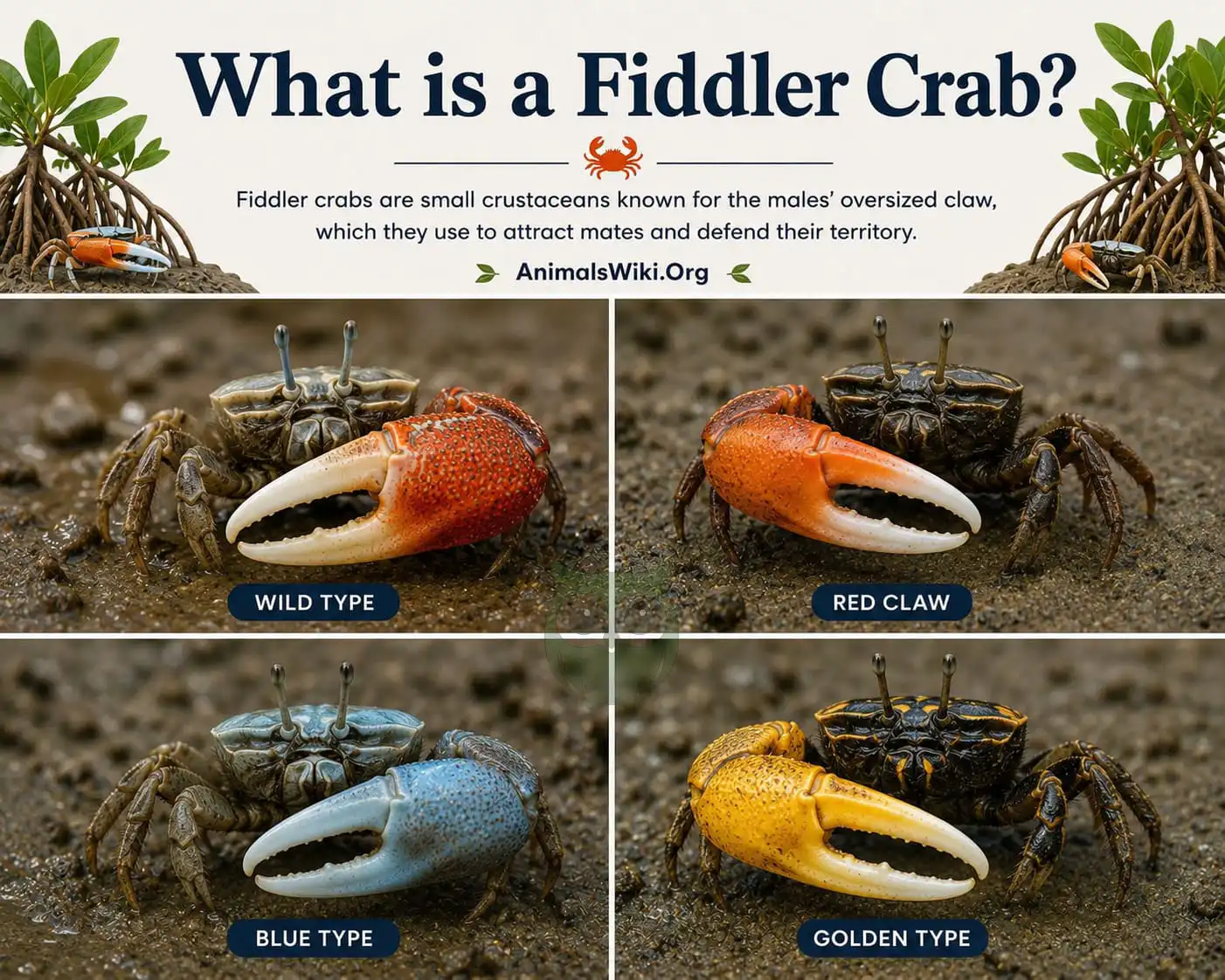
Fiddler Crab Facts
| Feature | Details |
|---|---|
| Common Name | Fiddler Crab |
| Scientific Name | Uca pugnax (Atlantic Sand Fiddler — focus species); Genus Uca / Gelasimus broadly |
| Family | Ocypodidae |
| Order | Decapoda |
| First Described | 1817 (by Henri Milne-Edwards) |
| Native Habitat | Intertidal mudflats, sandy beaches, mangrove forests, salt marshes |
| Geographic Range | Tropical and subtropical coastlines worldwide; Atlantic, Pacific, and Indian Oceans |
| Average Size | Carapace width 2–3 cm; males larger claw up to 4–5 cm |
| Average Weight | 2–10 grams depending on species |
| Lifespan | 1.5–3 years (wild); up to 3 years (captivity) |
| Diet | Deposit feeder — algae, bacteria, fungi, organic detritus from sediment |
| Conservation Status | Varies; most Least Concern; some threatened by habitat loss |
| Defining Feature | Males possess one enormously enlarged claw — up to half the crab’s total body weight |
| Number of Species | Approximately 100 species worldwide |
1. Species Overview & Classification
Picture a tidal flat at low tide — a grey-brown expanse of glistening mud and sand stretching toward the retreating water, seemingly empty and featureless. Look more carefully. The entire surface is moving. Hundreds, thousands, perhaps tens of thousands of small creatures are emerging from burrows, feeding at the surface, and engaging in what is, by any measure, one of the most visually spectacular behavioral displays in the entire animal kingdom.
The males are waving. All of them. Each one brandishing an oversized claw — sometimes as large as the crab’s entire body — in a rhythmic, repeated gesture directed at females, rivals, and the general world at large. The combined effect of thousands of tiny crabs waving enormous claws simultaneously across a tidal flat produces an effect that naturalists have consistently struggled to describe without resorting to the theatrical — a living, mobile art installation; a tiny army performing synchronized calisthenics; a concert of gesture conducted at frequencies too fast for the casual eye to fully process.
Welcome to the world of the Fiddler Crab — arguably the most behaviorally theatrical small animal on Earth, and one of the most ecologically important inhabitants of the coastal intertidal zone.
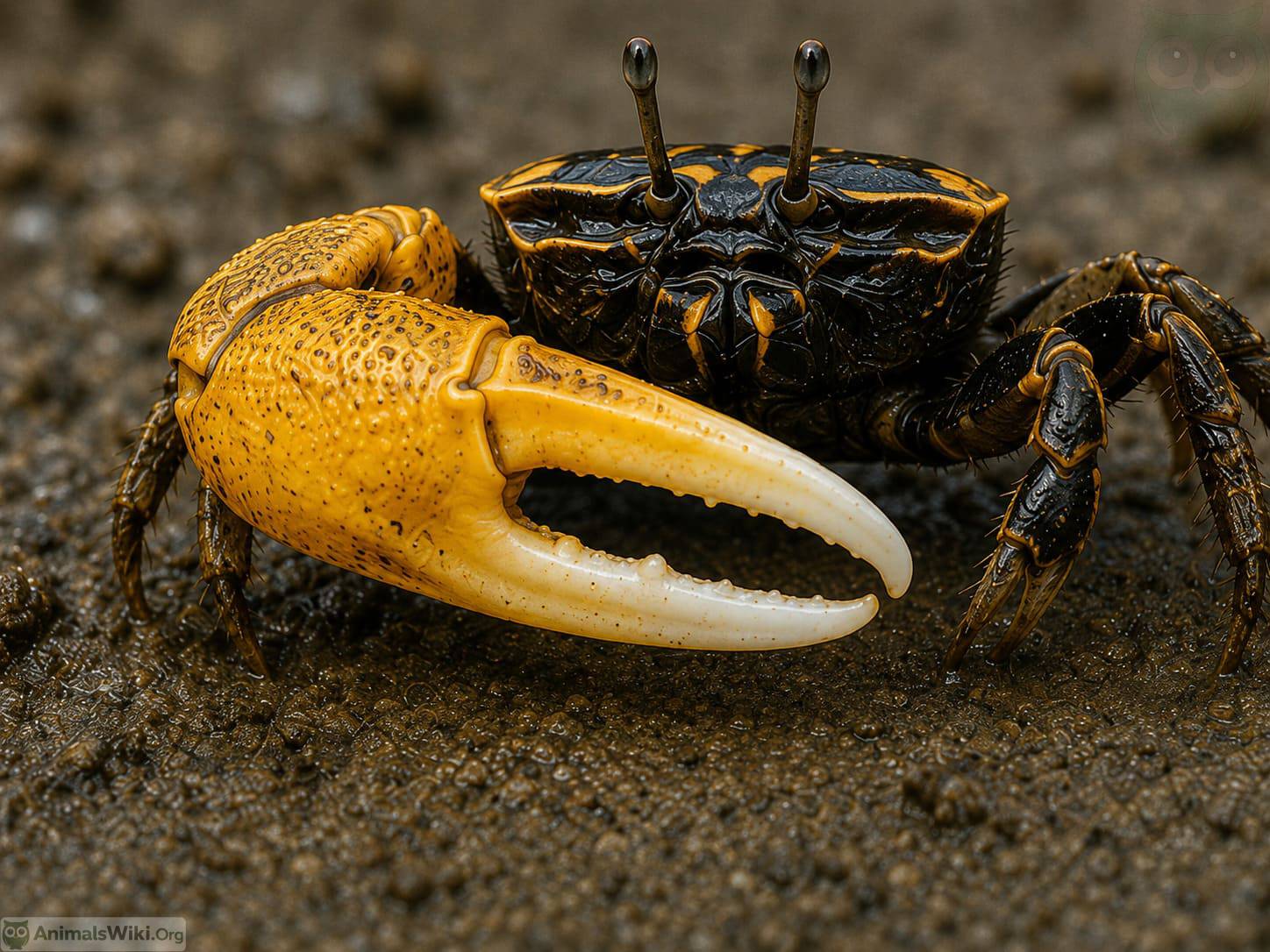
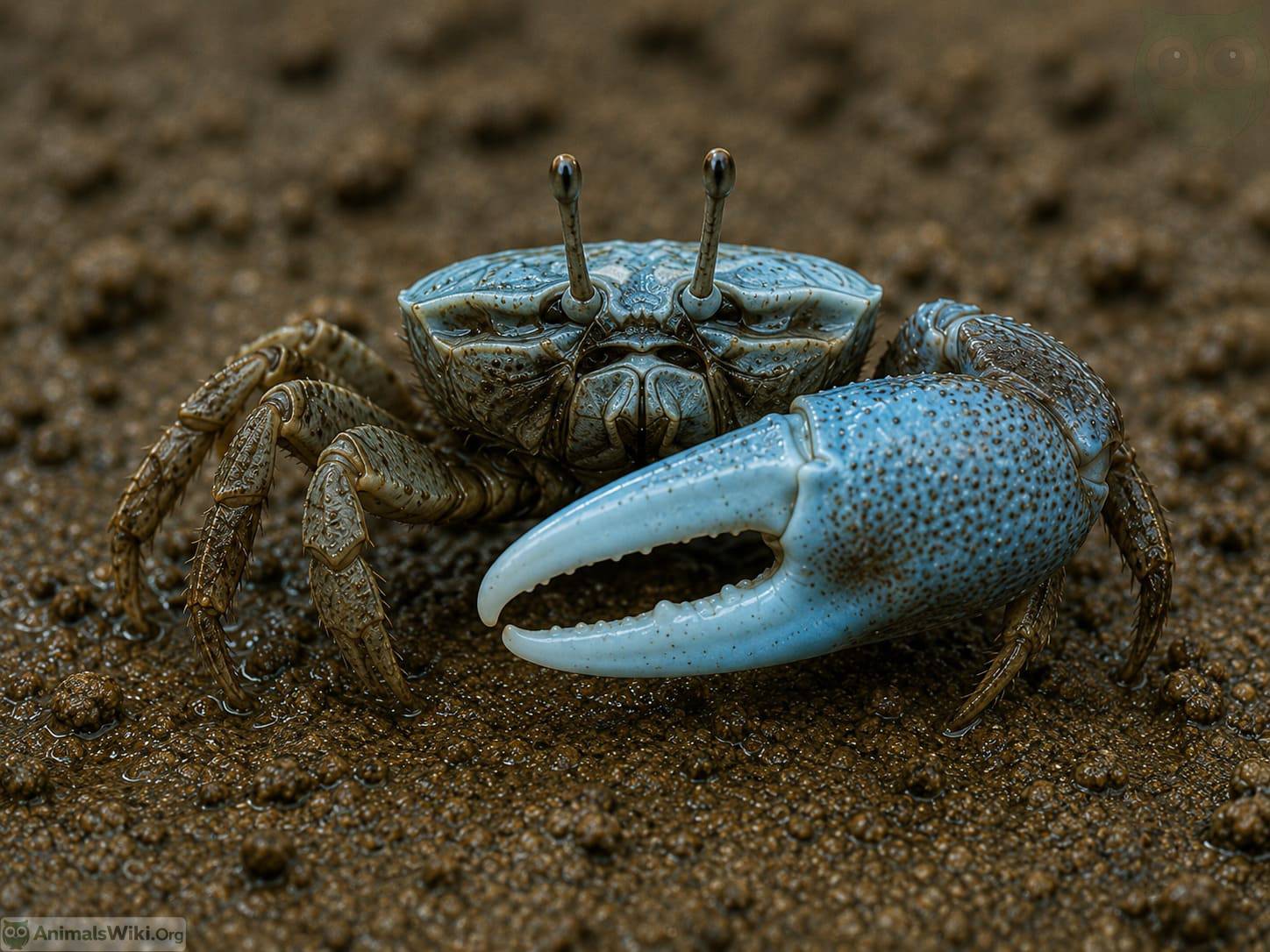
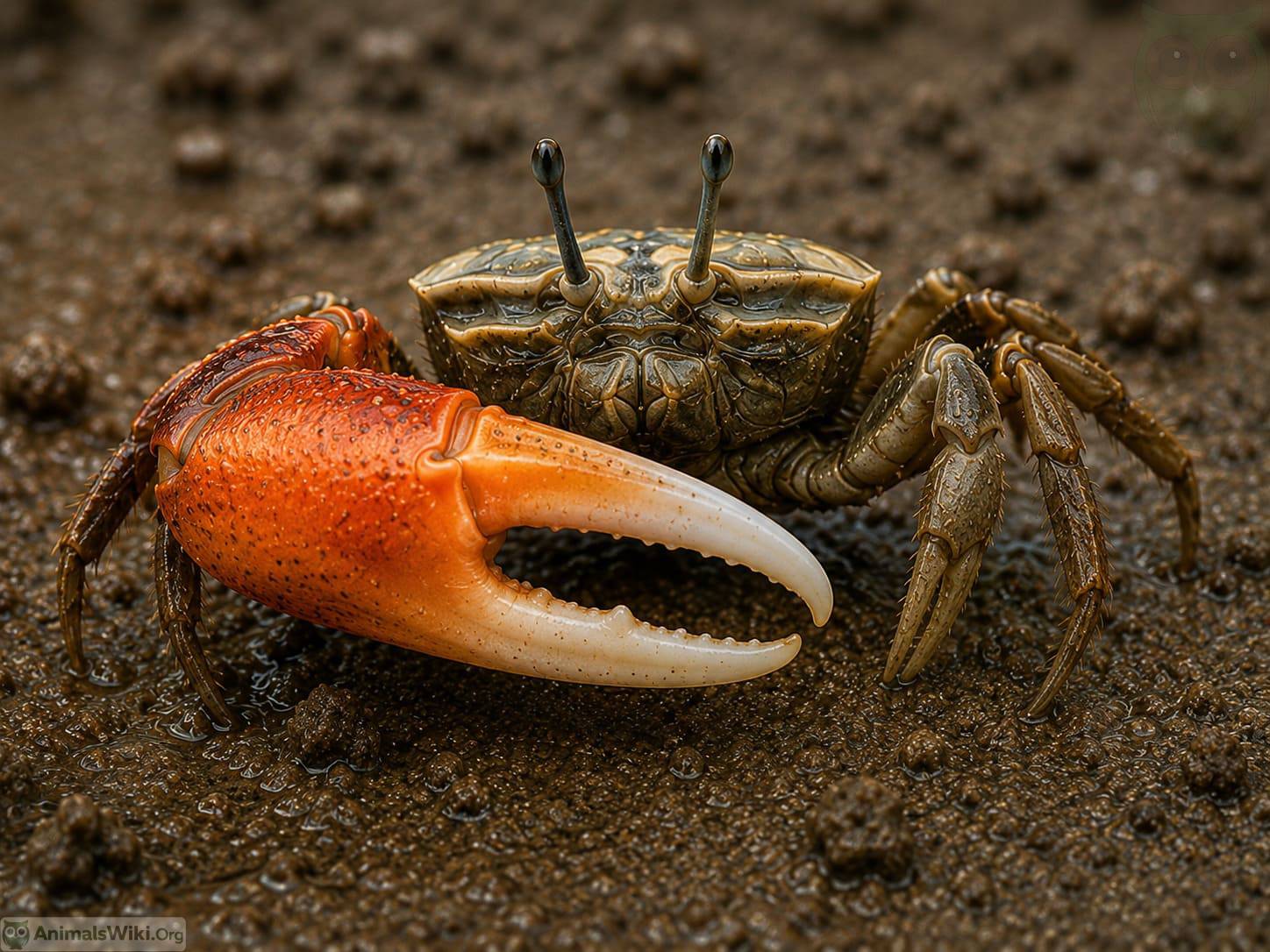
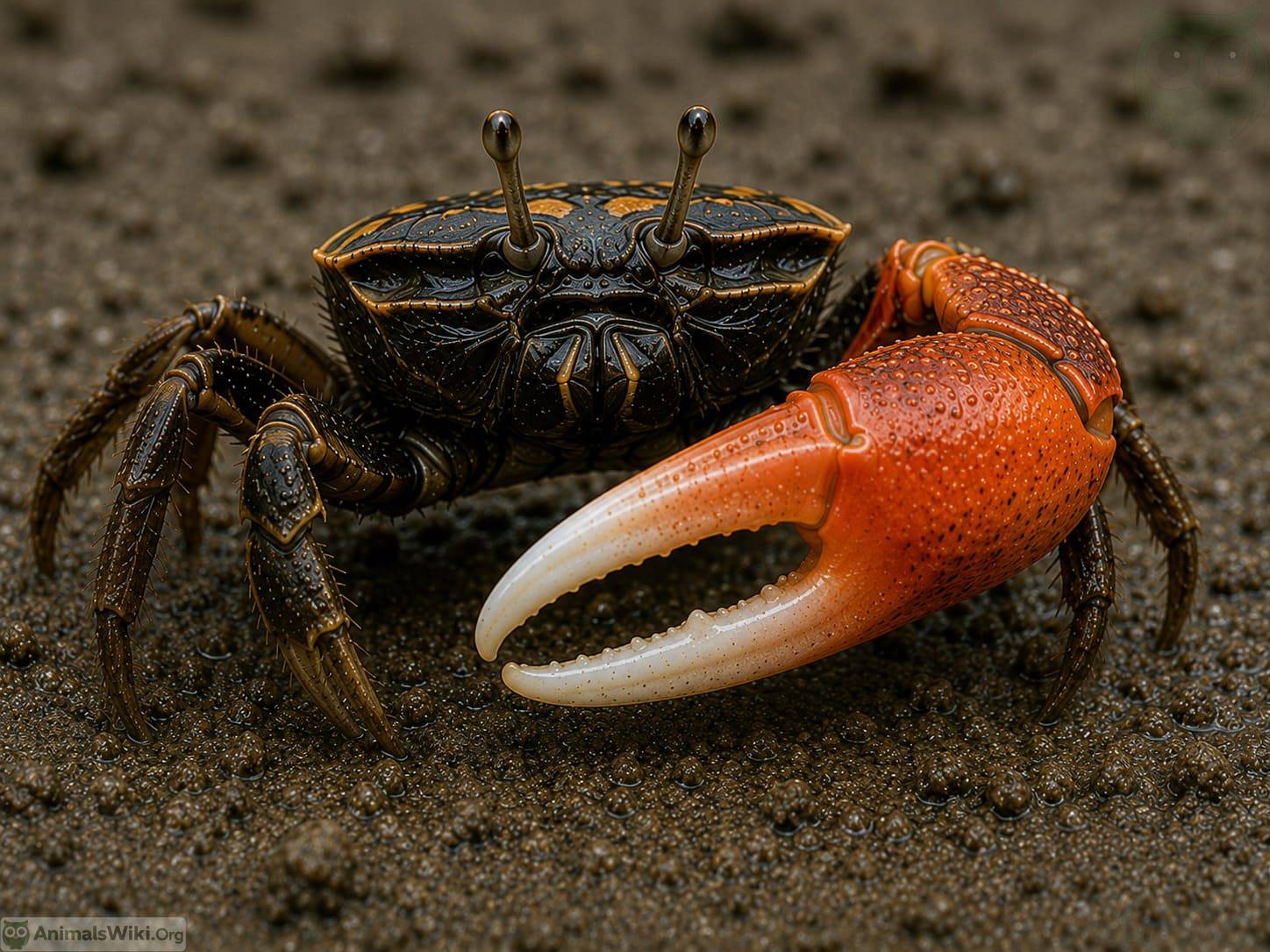
The fiddler crab’s defining characteristic is well known even to people who have never seen one: the extraordinary enlarged claw of the male — sometimes reaching half the crab’s total body weight and equal in length to the crab’s entire carapace — that gives the animal its common name. A male fiddler crab holding its oversized claw in feeding position, with the smaller claw busy scooping sediment to the mouth, does indeed resemble a musician holding a fiddle — the large claw stationary like the instrument, the small one moving like the bow.
But the fiddler crab is far more than a visual novelty. It is an animal whose behavioral complexity — the precise, species-specific waving displays; the intricate burrow defense strategies; the sophisticated female mate choice; the extraordinary sensory capabilities — has made it one of the most studied invertebrates in behavioral ecology. It is an animal whose ecological role — as sediment processor, nutrient cycler, and ecosystem engineer of coastal wetlands — is of fundamental importance to some of the world’s most productive and threatened ecosystems. And it is an animal whose sensitivity to environmental change makes it one of the most valuable indicator species available to marine ecologists monitoring the health of coastal environments.
Species Classification Table
| Classification Level | Details |
|---|---|
| Kingdom | Animalia |
| Phylum | Arthropoda |
| Subphylum | Crustacea |
| Class | Malacostraca |
| Order | Decapoda |
| Infraorder | Brachyura (true crabs) |
| Family | Ocypodidae |
| Genus | Uca (traditional); currently being split into multiple genera |
| Focus Species | Uca pugnax — Atlantic Marsh Fiddler Crab |
| Described By | Henri Milne-Edwards, 1837 |
| Total Species | ~100 species worldwide |
Taxonomic Note
The traditional genus Uca — which contained all fiddler crabs — has recently been revised by taxonomists into multiple genera following molecular phylogenetic studies. Current taxonomy recognizes genera including Gelasimus, Minuca, Leptuca, Tubuca, and others in addition to Uca. For clarity and accessibility, this article uses the traditional broad genus name Uca while noting this taxonomic revision.
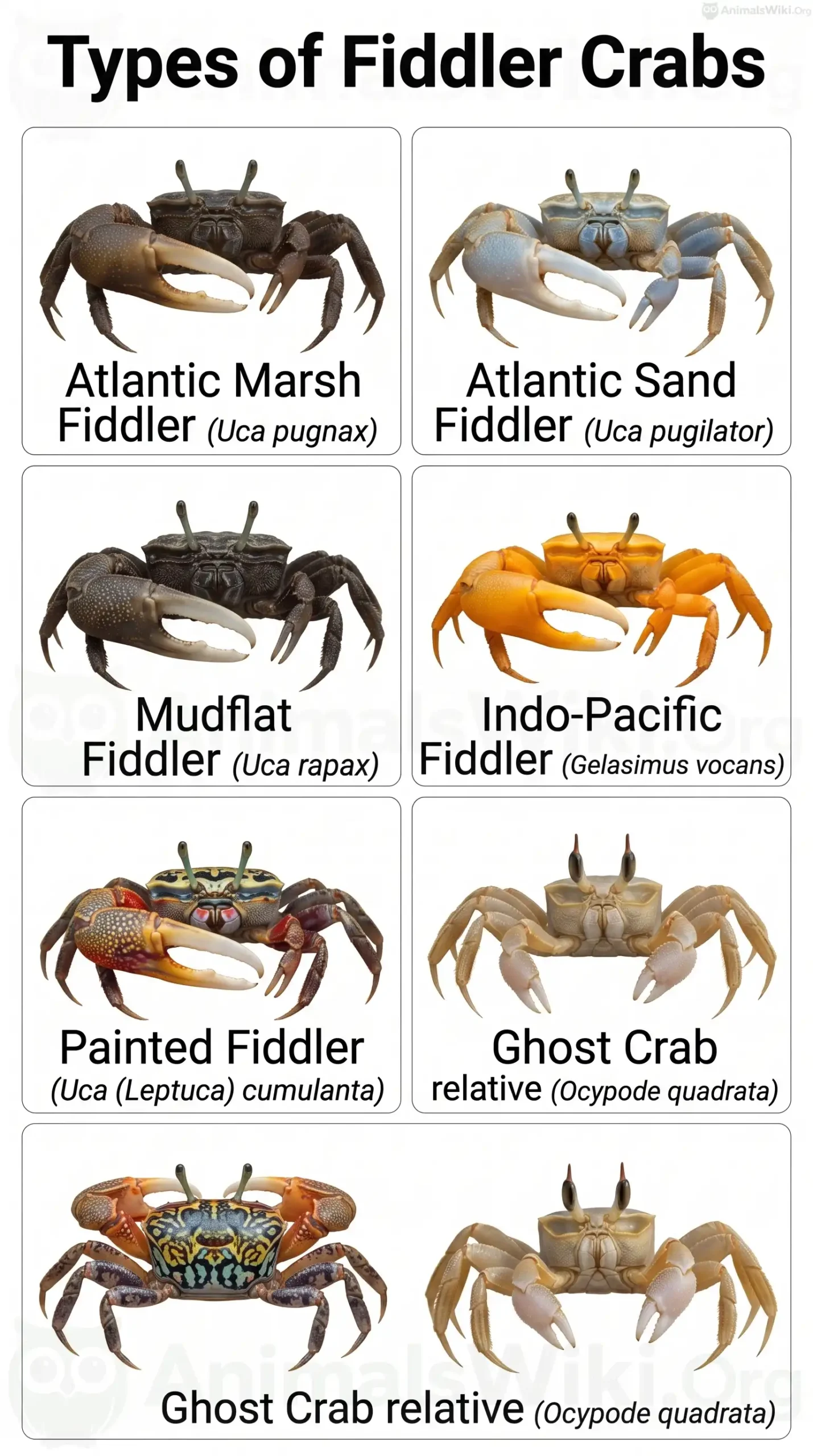
Key Fiddler Crab Species
| Species | Scientific Name | Range | Notable Feature |
|---|---|---|---|
| Atlantic Marsh Fiddler | Uca pugnax | Eastern North America | Most studied species; salt marsh specialist |
| Atlantic Sand Fiddler | Uca pugilator | Eastern North America | Sandy beach specialist |
| Mudflat Fiddler | Uca rapax | Caribbean, Gulf of Mexico | Mangrove habitat specialist |
| Indo-Pacific Fiddler | Gelasimus vocans | Indo-Pacific | Extremely widespread; mudflat species |
| Painted Fiddler | Uca (Leptuca) cumulanta | Caribbean | Vivid coloration |
| Ghost Crab relative | Various Ocypodidae | Worldwide | Sister family; similar ecology |
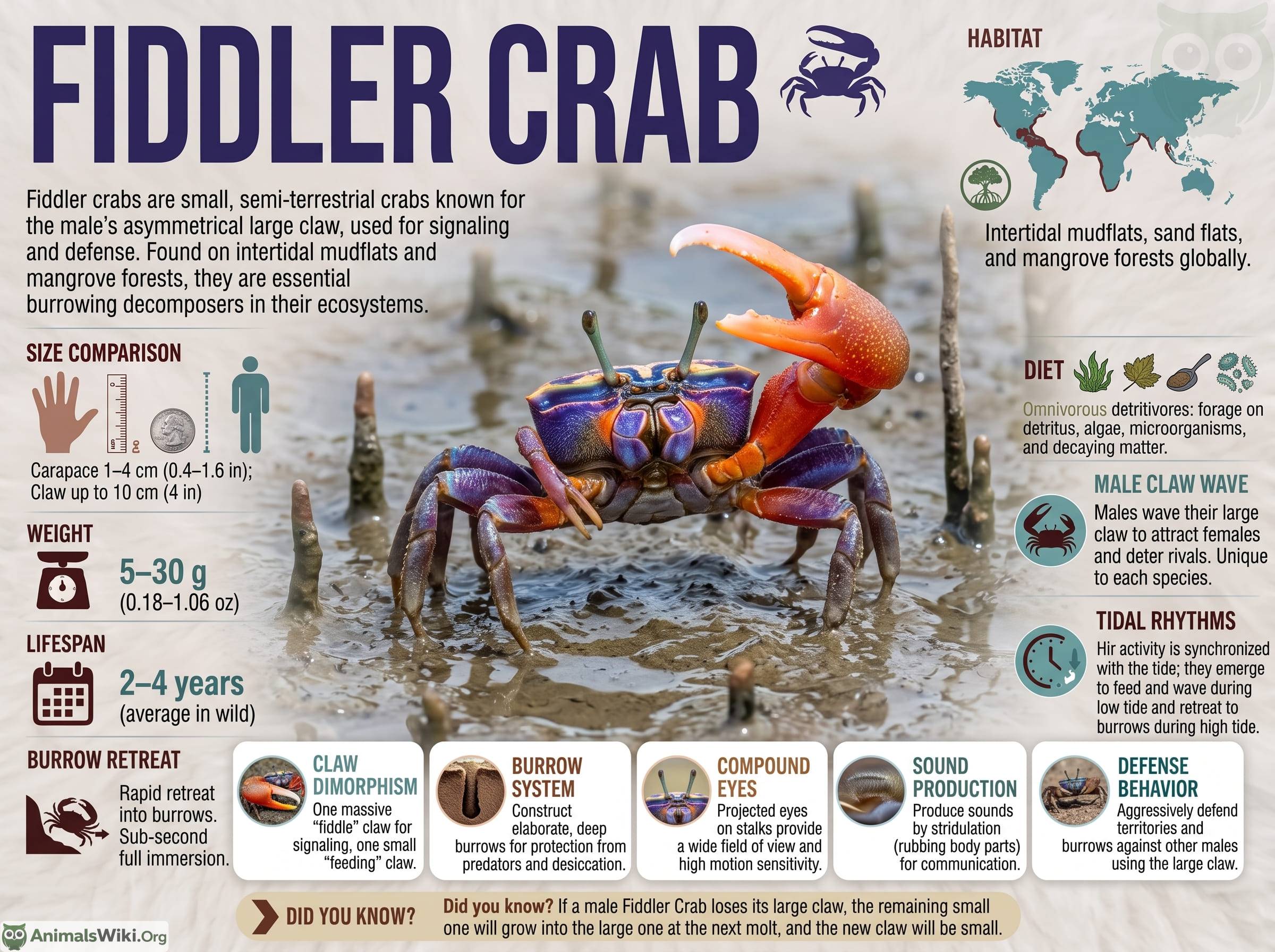
2. Physical Description & Unique Features
The fiddler crab’s body plan is the classic brachyuran (true crab) form — but with one modification so extreme that it transforms the animal’s appearance, behavior, ecology, and evolutionary history entirely.
The Basic Body Plan
The fiddler crab body consists of a broad, flattened carapace (the shell covering the thorax) that is typically wider than it is long — the characteristic crab shape. Carapace width in most species ranges from 1.5–3 cm, though some larger tropical species reach 4–5 cm. The carapace color varies significantly by species and habitat — from sand-colored beige through various browns, greys, and in some species vivid blues, purples, and oranges.
Beneath the carapace, the crab’s functional anatomy includes:
- Gills — adapted for both aquatic and aerial respiration; fiddler crabs can breathe air effectively, a critical adaptation for intertidal life
- Reproductive organs — females carry eggs on modified abdominal appendages
- Digestive system — adapted for processing large volumes of sediment
The abdomen (the “tail” of crabs, folded under the body) is small and folded against the underside of the carapace — as in all true crabs.
The Defining Feature — The Enlarged Claw
The fiddler crab’s fame rests entirely on a single extraordinary anatomical feature: the massively enlarged major claw (cheliped) of the male.
In males, one claw — either the left or the right, with roughly equal frequency across individuals — develops during growth into a structure of extraordinary size relative to the animal’s body:
- Weight — the major claw can weigh up to 50% of the crab’s total body weight — an extraordinary metabolic investment
- Length — in many species, the extended major claw equals or exceeds the width of the entire carapace
- Color — often more vivid than the body; orange, red, white, yellow, and blue coloration in different species; the color intensity serves as a signal to females
The minor claw (the “normal-sized” one) is used for feeding — scooping sediment to the mouth; the major claw cannot reach the mouth and contributes nothing to feeding. This creates the feeding posture that inspired the common name — the large claw held stationary while the small claw moves rapidly, resembling the bow-and-instrument relationship of a fiddle player.
Why does the major claw develop on one side randomly? If a male loses his major claw — to a predator or in combat — the remaining minor claw will regenerate as a new major claw at the next moult, and the original major claw side will regenerate a minor claw. The determination of which claw becomes the major one is thus not genetically fixed to a specific side but determined by which claw survives.
Coloration — A Communication Canvas
Fiddler crab coloration is not merely decorative — it is an active communication system. Many species can rapidly change color through the expansion and contraction of chromatophores (pigment cells) in their carapace:
- Color change during displays — males of many species become more vivid during waving displays, signaling health and vigor to observing females
- Circadian color change — many fiddler crabs show predictable daily color cycles — darker during the day (when active), paler at night — regulated by an internal biological clock
- Stress-induced color change — rapid paling when threatened
The Eyes on Stalks
The fiddler crab’s eyes are mounted on movable stalks — a feature common to many crustaceans that dramatically extends the animal’s visual field. The eyes can be elevated to scan the horizon for predators and lowered into protective grooves in the carapace when threatened. The visual system is adapted for detecting motion with great sensitivity — critical for both predator detection and reading the waving signals of conspecifics across a crowded tidal flat.
Did You Know? The male fiddler crab’s oversized claw is such an extreme metabolic investment that it must dedicate twice as much energy to maintaining it as to maintaining the rest of its body combined. And despite this enormous investment, the giant claw cannot be used for feeding — it is purely a social and reproductive tool. A male who loses his major claw will grow a new one at the next molt on the opposite side — demonstrating the remarkable developmental flexibility of these extraordinary animals.
3. Natural Habitat & Geographic Range
The fiddler crab is an intertidal specialist — an animal whose entire biology is organized around the rhythm of the tides, the chemistry of coastal sediments, and the complex ecology of the world’s coastal wetland ecosystems. They are found wherever these conditions are met — which means their range spans the tropical and subtropical coastlines of the entire planet.
The Intertidal Zone — A Demanding Environment
The intertidal zone — the coastal area between the high and low tide marks — is one of Earth’s most physically demanding environments:
- Temperature extremes — surfaces can reach 50°C (122°F) at low tide on sunny days, then plunge to cold water temperatures when the tide returns
- Salinity variation — fresh water from rain and rivers dilutes seawater at low tide; full marine salinity returns with tidal flood; fiddler crabs must tolerate enormous salinity swings
- Oxygen variation — mudflat sediments can be severely hypoxic (low oxygen) below the surface layer; burrows must be ventilated
- Desiccation risk — exposure at low tide in hot conditions risks dehydration
- Tidal scheduling — all behavior must be organized around the approximately 12.4-hour tidal cycle
The fiddler crab has evolved remarkable physiological adaptations to thrive in these conditions:
- Dual respiration — can extract oxygen from both water and air
- Osmotic regulation — maintains internal salt balance across wide salinity ranges
- Thermal tolerance — substantial range of tolerable body temperatures
- Circadian and circatidal clocks — internal biological clocks calibrated to both the daily light cycle and the tidal cycle simultaneously
Preferred Micro-Habitats
Within the intertidal zone, different fiddler crab species occupy specific microhabitats:
Salt marshes — dominated by Uca pugnax (Atlantic Marsh Fiddler) and similar species; the dense root networks of cordgrass provide structural complexity and the rich organic matter of decomposing marsh grass supports large microbial communities
Sandy beaches and sand flats — occupied by Uca pugilator (Atlantic Sand Fiddler) and similar species; different sediment particle size requires different feeding strategies
Mangrove forests — fiddler crabs are among the most characteristic inhabitants of mangrove ecosystems worldwide; the soft, organic-rich mud beneath mangrove trees supports particularly dense fiddler crab populations
Mudflats — open intertidal mud with minimal vegetation; typically highest fiddler crab densities; Indo-Pacific mudflat species reach extraordinary population densities
Habitat Range by Region
| Region | Key Species | Habitat Type | Approximate Density |
|---|---|---|---|
| Eastern North America | Uca pugnax, U. pugilator | Salt marsh, sandy beach | Up to 40 per m² |
| Caribbean and Gulf of Mexico | Uca rapax, U. vocator | Mangrove, mudflat | Up to 60 per m² |
| West Africa | Uca tangeri | Mudflat, mangrove | Very high densities |
| East Africa and Indian Ocean | Gelasimus vocans | Mangrove, mudflat | High densities |
| Southeast Asia | Multiple Tubuca species | Mangrove, mudflat | Extraordinary densities |
| Australia | Tubuca and Gelasimus species | Mangrove, mudflat | High densities |
| Japan and East Asia | Uca lactea and relatives | Mudflat | Moderate densities |
| Eastern Pacific | Uca species | Mangrove, mudflat | Moderate densities |
Did You Know? Fiddler crabs maintain not one but two separate internal biological clocks simultaneously — a circadian clock (24-hour cycle calibrated to day and night) and a circatidal clock (12.4-hour cycle calibrated to the tidal rhythm). These two clocks run simultaneously and interact to determine the precise timing of the crab’s activity patterns — emerging from burrows during the appropriate phase of low tide during daylight hours and remaining underground during high tide, nighttime, or unfavorable weather. This dual-clock system has been studied extensively by chronobiologists as a model for understanding how biological clocks evolve and interact.
4. Diet & Feeding Behavior
The fiddler crab’s feeding biology is perhaps the least appreciated but most ecologically significant aspect of its existence — transforming these tiny crustaceans from curious-looking coastal curiosities into fundamental engines of coastal ecosystem function.
Deposit Feeding — Eating the Mud
Fiddler crabs are deposit feeders — they do not hunt prey, filter seawater, or consume macroscopic plant material. Instead, they eat the microscopic organisms and organic material embedded in coastal sediments — algae (particularly diatoms), bacteria, fungi, and fine organic detritus. This makes them members of one of the most important ecological guilds in coastal ecosystems — the deposit feeders whose constant sediment processing drives nutrient cycling across vast areas of coastal wetland.
The feeding mechanism is remarkably precise:
Step 1 — Sediment scooping: The small claw (minor cheliped) scoops a small ball of sediment from the surface and transfers it to maxillipeds (specialized mouthparts) near the mouth.
Step 2 — Sorting and extraction: The maxillipeds rapidly sort through the sediment, extracting nutritious material (algal cells, bacterial films, organic particles) while discarding coarser inorganic material.
Step 3 — Pellet ejection: The processed, nutrition-extracted sediment is ejected as a small pellet — a characteristic feature of fiddler crab feeding grounds that makes the presence of active crabs immediately visible as a field of tiny round pellets on the sediment surface.
A single fiddler crab processes a remarkable volume of sediment — research has estimated that dense populations process the entire top few millimeters of sediment across their feeding territory during a single low-tide period. Across the vast tidal flats occupied by millions of fiddler crabs, the total sediment processing is ecologically transformative.
The Major Claw’s Non-Role in Feeding
The male’s major claw is entirely unable to reach the mouth — it is simply too large. This means that males feed at half the rate of females (who have two small claws available for feeding) — a significant fitness cost offset by the reproductive benefits the large claw provides. Studies have demonstrated that females in areas where males have been experimentally provided with abnormally large claws show reduced foraging efficiency when distracted by display activity — highlighting the behavioral cost of living in a species with such extreme sexual dimorphism.
Diet Breakdown Table
| Food Type | % of Diet | Notes |
|---|---|---|
| Diatoms and microalgae | 40–55% | Primary nutritional source; high in lipids and proteins |
| Bacteria and biofilm | 25–35% | Ubiquitous in sediment; high protein value |
| Fungi and fungal spores | 5–10% | Important in mangrove leaf litter areas |
| Fine organic detritus | 10–15% | Partially digested plant material; lower nutritional value |
| Protozoa and meiofauna | 2–5% | Microscopic animals in sediment; high protein |
“Fiddler crabs are the unsung heroes of coastal wetland ecology. Their constant sediment processing, nutrient cycling, and burrowing activity underpins the productivity of salt marshes and mangrove ecosystems that support fisheries worth billions of dollars annually. They are, quite simply, irreplaceable.” — Dr. Mark Bertness, Professor of Ecology, Brown University
5. Reproduction & Life Cycle
The fiddler crab’s reproductive biology is built around the dramatic behavioral displays that are the species’ most celebrated feature — but the details of mate choice, timing, and larval development reveal layers of biological sophistication that go far beyond the spectacle of waving claws.
The Breeding Season and Tidal Timing
Fiddler crab breeding is precisely timed to the tidal and lunar cycle — a reflection of the species’ deep physiological integration with coastal rhythms. In most species, mating peaks around spring tides (the highest tides occurring at new and full moon) when tidal water is available to carry larvae away from the adult habitat.
In temperate species like Uca pugnax, breeding season spans spring through early autumn (April–September in the Northern Hemisphere); tropical species may breed year-round with peaks related to monsoon seasons and lunar cycles.
The Waving Display — Function and Complexity
The male fiddler crab’s famous claw-waving display is not random gesticulation but a precisely structured species-specific signal that functions as a complex advertisement to females and a threat to rival males. Research has revealed extraordinary complexity in waving behavior:
Species specificity — each fiddler crab species has a characteristic waving pattern — the speed, arc, frequency, and precise movement trajectory of the wave varies diagnostically between species. Where multiple species co-occur on the same tidal flat, females reliably discriminate their own species’ males using these species-specific waving patterns. This specificity has been demonstrated experimentally using robotic fiddler crabs with programmable waving movements.
Wave content — the wave is not simply “I exist and am male” — it encodes information about the male’s size, condition, and burrow quality through subtle variations in wave amplitude, speed, and timing. Females reading these signals gain information about potential mate quality before investing in investigation.
Directionality — males do not wave continuously in all directions; they orient their displays toward approaching females and intensify waving as females approach — adjusting signal intensity to the signal receiver’s proximity and apparent attention.
Female Mate Choice — The Informed Consumer
Female fiddler crabs are discriminating mate choosers — spending considerable time moving across the tidal flat observing multiple waving males before selecting a partner. Research has revealed several factors that females use in mate assessment:
Claw size — within a species, females generally prefer males with larger major claws — signals of body size, condition, and genetic quality
Wave speed and vigor — more vigorous waves at higher speeds indicate better health and energy reserves
Burrow quality — males with deeper, better-constructed burrows are preferred by females who will use the burrow as the site of egg incubation
Neighbor fighting success — females observe male-male interactions and prefer males who win contests against rivals
Mating and Egg Care
After a female selects a male, mating occurs either at the burrow entrance or inside the burrow — species vary in this detail.
Mating: Fertilization is internal; the male transfers a spermatophore to the female
Egg development: The fertilized eggs are brooded by the female under her abdomen (on modified abdominal appendages called pleopods) for approximately 2 weeks while they develop
Larval release: The female times larval release to spring tides — emerging from the burrow and releasing larvae directly into the receding tidal water. The larvae are carried offshore by tidal currents into open water where they develop through planktonic larval stages.
Larval Development
| Stage | Duration | Habitat | Notes |
|---|---|---|---|
| Zoea (5–6 stages) | 3–5 weeks | Open ocean; planktonic | Free-swimming larvae; feed on phytoplankton |
| Megalopa | 1–2 weeks | Nearshore; settling | Post-larval stage; begins descent to substrate |
| Juvenile crab | 3–6 months | Intertidal; settling habitat | Miniature adult form; begins sediment feeding |
| Sub-adult | 3–6 months | Adult habitat | Claw differentiation beginning in males |
| Adult | 12–24 months | Adult intertidal habitat | Sexually mature; full claw development |
Lifespan Comparison
| Animal | Average Lifespan (Wild) | Average Lifespan (Captivity) |
|---|---|---|
| Atlantic Marsh Fiddler | 1.5–3 years | Up to 3 years |
| Atlantic Sand Fiddler | 1.5–2.5 years | Up to 3 years |
| Ghost Crab (Ocypode) | 3–5 years | Up to 5 years |
| Blue Crab (Callinectes) | 1–8 years | Up to 8 years |
| Horseshoe Crab (Limulus) | 20–40 years | Up to 40 years |
| Coconut Crab (Birgus) | 30–40 years | Up to 40 years |
Did You Know? Scientists created robotic fiddler crabs with programmable waving movements to test how females choose mates — and discovered that females responded differentially to robots that waved at different speeds and amplitudes. Robots waving in the pattern of the local species attracted female approaches; robots waving in a different species’ pattern were largely ignored. This demonstrated that the waving display encodes species recognition information with remarkable precision — each species’ wave is essentially a species-specific identity code readable by females of that species alone.
6. Social Behavior & Communication
The fiddler crab’s social life is conducted at extraordinary density and extraordinary speed — hundreds of individuals per square meter engaged simultaneously in feeding, displaying, fighting, and mate choice, all organized around the precise temporal window of low tide.
The Tidal Flat as Social Arena
When the tide recedes and the tidal flat is exposed, fiddler crabs emerge from their burrows in what can only be described as a social explosion — the previously empty-looking mudflat suddenly alive with activity. The social interactions that unfold over the next several hours until the tide returns represent some of the most complex invertebrate social behavior known to science.
Burrow Defense and Territorial Behavior
Each male fiddler crab maintains a burrow that serves as refuge, breeding site, and territory. The burrow is typically 15–30 cm deep — dug by the male using his walking legs and smaller claw — with a characteristic entrance plug of mud that the crab uses to seal the entrance during high tide.
Males defend a small territory around their burrow entrance against other males — using a combination of:
Claw waving as threat — a male detecting a rival approaching too closely will increase waving intensity, directed at the rival rather than at females
Meral waving — a specific threat display in which the male raises the major claw to a vertical position — a more intense signal than the curved waving display used in female attraction
Physical combat — when displays fail to resolve territorial disputes, males engage in physical contact fighting using the major claws. Combat is usually pushing and grappling rather than damaging; the larger-clawed male typically wins; losers retreat to their own burrow
Burrow intrusion — males sometimes attempt to evict rivals from their burrows; intruding males and defending males may engage in extended underground combat
The Semaphore Communication System
The visual communication system of fiddler crabs — using the major claw as a signaling device — represents one of the most sophisticated non-verbal communication systems in the invertebrate world. Key features include:
Amplitude coding — the height of the wave arc encodes information; larger-amplitude waves signal more vigor
Frequency coding — wave rate (number of waves per minute) also encodes information; healthy males in good condition wave faster
Temporal patterning — the precise timing relationship between the upward and downward strokes varies species-specifically
Multimodal signaling — in some species, waving is accompanied by substrate vibration (produced by stamping the walking legs on the mud) — creating both visual and seismic signals simultaneously
Synchronized waving — in some species, males in close proximity spontaneously synchronize their waving — producing the spectacular visual effect of coordinated mass displays visible across an entire tidal flat
7. Predators & Defense Mechanisms
The fiddler crab’s small size and dense surface aggregations make it one of the most important prey items in coastal intertidal food webs — sustaining a remarkable diversity of bird, fish, and mammal predators.
Natural Predators
Birds — the most significant predators:
- Great Blue Heron (Ardea herodias) and related herons — the primary avian predators of fiddler crabs across North America; they wade through intertidal areas capturing crabs with lightning-fast bill strikes
- Tricolored Heron, Little Blue Heron, Snowy Egret — all actively hunt fiddler crabs
- Clapper Rail (Rallus crepitans) — the characteristic bird of North American salt marshes; fiddler crabs are its primary food
- Willets, godwits, and sandpipers — numerous shorebird species extract crabs from mudflats using specialized long bills
- Laughing Gulls and other gull species — opportunistic surface predators
- Kingfisher — various species worldwide take crabs in intertidal areas
Fish:
- Sheepshead (Archosargus probatocephalus) — the name comes partly from its teeth, adapted for crushing crabs
- Tautog and black drum — crush-feeding fish that target intertidal crabs at high tide
- Various killifish and small fish that invade the marsh surface at high tide take recently emerged juveniles
Mammals:
- Raccoon (Procyon lotor) — a significant predator of fiddler crabs in North American salt marshes; forages at low tide along marsh edges
- River otter (Lontra canadensis) — takes crabs in salt marsh edges
- Mink — forages salt marsh edges
Defense Strategies
Visual vigilance — the fiddler crab’s elevated eye stalks provide nearly 360-degree visual coverage of the area around the burrow entrance; movement detection sensitivity is extraordinary — crabs detect predator approach at distances of several meters
Alarm propagation — when one crab detects a predator and retreats, neighboring crabs respond to the rapid disappearance of their neighbor — the wave of retreat spreading outward from the point of detection creates a visual alarm signal that propagates across the tidal flat at speeds significantly faster than any individual crab could detect the threat independently. This social information cascade has been studied as a model for how collective alarm responses evolve in animal groups.
Rapid retreat to burrow — the primary defense; fiddler crabs can reach their burrow entrance in a fraction of a second when alarmed; the burrow entrance plug provides additional protection
Claw defense — if caught outside the burrow, the male’s major claw can be used defensively; though primarily evolved for social rather than defensive functions, its size makes it a deterrent against some small predators
Camouflage — the color of many fiddler crabs matches the sediment substrate closely; motionless crabs are difficult to detect against the mudflat background
8. Relationship with Humans
Indigenous and Traditional Relationships
Across the tropical and subtropical coastlines where fiddler crabs are abundant, coastal-dwelling indigenous peoples have recognized and interacted with these animals for thousands of years. In most traditions, fiddler crabs are not primary food animals — they are too small individually to be nutritionally significant prey — but their behavior has been ecologically significant as indicators of tidal conditions, sediment quality, and habitat health.
In parts of Southeast Asia, fiddler crabs are occasionally harvested in bulk from dense mangrove populations and consumed as a local food source — fried or used in soups. In the Indo-Pacific, some indigenous communities use fiddler crab burrow density as an indicator of soil quality for aquaculture site selection.
Indigenous ecological knowledge of fiddler crab behavior has practical value — their emergence patterns reliably indicate tidal timing (useful in coastal environments where watches are unavailable), and their population health indicates overall mangrove and mudflat ecosystem condition.
Scientific Importance — A Model Organism for Multiple Disciplines
The fiddler crab has achieved significant status in multiple fields of scientific research — making it one of the most studied invertebrate animals in behavioral, ecological, and chronobiological research:
Sexual selection research — the fiddler crab has been a model system for sexual selection theory since the 1960s, when behavioral ecologist John Crane published comprehensive studies of display behavior across dozens of species. The extreme sexual dimorphism (unequal claw sizes) and elaborate female mate choice make fiddler crabs ideal for testing theories about honest signaling, female choice, and the evolution of male ornaments.
Chronobiology — the dual circadian-circatidal clock system of fiddler crabs has been studied extensively as a model for understanding how biological timing mechanisms evolve and interact. Frank Brown’s pioneering chronobiology research at Woods Hole in the 1950s used fiddler crabs to establish fundamental principles of biological clock function.
Ecosystem ecology — research by Mark Bertness and colleagues at Brown University on salt marsh ecology has quantified the extraordinary ecosystem engineering role of fiddler crabs in creating and maintaining salt marsh structure.
Communication and sensory biology — the visual communication system of fiddler crabs — using a movable structure to send species-specific signals — has been extensively studied as a model for how animals evolve reliable communication systems.
Ecotourism and Public Interest
Fiddler crabs are among the most accessible and visually dramatic wildlife spectacles available in coastal areas — requiring no special equipment, no expert guidance, and no difficult terrain to observe. A healthy tidal flat or salt marsh at low tide provides one of the most extraordinary small-scale wildlife experiences available in temperate and tropical coastal regions — and fiddler crabs are central to that experience.
The theatrical waving displays, the burrow-to-burrow interactions, and the dramatic collective retreats triggered by predator detection are all visible to any patient observer at low tide — making fiddler crabs genuinely accessible nature education subjects for all ages.
Did You Know? Scientists studying fiddler crab communication have built robotic fiddler crabs with programmable major claws that can be deployed in the field to test female responses to specific wave patterns. These robots — called RoboFiddlers by researchers — have been used to demonstrate that females respond to specific wave parameters, that they can discriminate species identity from wave pattern alone, and that wave speed encodes honest information about male quality. The RoboFiddler program represents one of the most creative applications of robotics in behavioral ecology research.
9. Conservation Status & Threats
IUCN Status
Most fiddler crab species are classified as Least Concern on the IUCN Red List — reflecting their generally high abundance and wide distributions across tropical and subtropical coastlines. However, this broadly reassuring status conceals significant regional population declines and genuine threats to specific species and habitat types.
Key Threats
1. Mangrove Destruction — The Most Critical Threat Fiddler crabs are among the most characteristic inhabitants of mangrove ecosystems — and mangrove forests are among the world’s most rapidly disappearing ecosystems. Global mangrove coverage has declined by approximately 35–50% since 1980, driven by:
- Aquaculture development — particularly shrimp and fish farming in Southeast Asia
- Coastal urban development — hotels, ports, and infrastructure
- Agriculture — conversion to rice paddies and palm oil plantations
- Fuelwood harvesting — in regions where mangrove wood is a primary fuel source
The loss of mangrove habitat directly eliminates fiddler crab populations and the ecosystem services they provide — creating cascading impacts on fisheries productivity, coastal protection, and carbon sequestration.
2. Salt Marsh Loss North American salt marshes — the primary habitat for Uca pugnax and related species — have been severely degraded by:
- Coastal development — filling and draining for urban and agricultural development
- Sea level rise — accelerating under climate change; drowning low-lying marsh areas
- Nutrient pollution (eutrophication) — excessive nitrogen from agricultural and urban runoff; alters vegetation and sediment chemistry
3. Sea Level Rise and Climate Change Fiddler crabs are intertidal specialists — their entire biology is calibrated to a specific tidal range and intertidal zone position. Sea level rise driven by climate change alters the intertidal zone, potentially:
- Drowning lower portions of the intertidal zone where maximum fiddler crab densities occur
- Shifting species ranges poleward as warming temperatures make previously unsuitable areas habitable
- Altering the timing and intensity of tidal patterns on which fiddler crab biological clocks are calibrated
- Reducing the area of coastal wetlands between the new high-tide mark and existing coastal development
4. Pollution Coastal sediment pollution — from heavy metals, petroleum hydrocarbons, pesticides, and other contaminants — directly affects fiddler crabs by contaminating the sediments they consume. Research has demonstrated that fiddler crabs in polluted areas show altered behavior, reduced reproductive success, and elevated mortality. Their sensitivity to sediment contamination makes them valuable bioindicators for coastal pollution monitoring.
5. Climate-Driven Range Shifts As ocean temperatures warm, fiddler crab species are documented to be expanding their ranges poleward — colonizing areas of salt marsh and tidal flat previously too cold for them. While individual species may benefit from range expansion, these shifts can have profound ecological consequences when warm-adapted species arrive in ecosystems previously structured without them.
10. Famous Fiddler Crabs Around the World
The Woods Hole Research Population
The fiddler crab population of Woods Hole, Massachusetts — where the Marine Biological Laboratory (MBL) has operated since 1888 — is arguably the world’s most scientifically famous fiddler crab community. Beginning with Frank Brown’s chronobiology research in the 1950s (which established the dual-clock system using Woods Hole Uca pugnax) and continuing through decades of research by generations of visiting scientists, this population has contributed to more peer-reviewed scientific publications than any other fiddler crab community. Scientists from around the world travel to Woods Hole specifically to collect fiddler crabs for laboratory research.
The RoboFiddler Experiments — Queensland, Australia
Research conducted by Dr. Patricia Backwell and colleagues at the Australian National University used robotic fiddler crab models on Queensland mudflats to test female mate choice in Uca mjoebergi. The experiments — in which custom-built robots with programmable major claws were deployed on actual tidal flats among real crabs — generated international media coverage and multiple high-impact publications. The RoboFiddler experiments are now cited in virtually every major textbook on animal communication and sexual selection as a landmark demonstration of how robotics can be used to test animal behavior hypotheses.
The Uca Waving Display Catalogue — John Crane’s Legacy
John Crane, an American zoologist working at the New York Zoological Society in the 1940s–1960s, conducted the most comprehensive survey of fiddler crab display behavior ever undertaken — documenting and filming the precise waving displays of dozens of species across the Caribbean, Atlantic, and Indo-Pacific. His monograph “Fiddler Crabs of the World” (1975) remains the foundational reference work in the field and established fiddler crabs as the premier model system for studying visual communication in invertebrates.
The Galveston Island Populations
The fiddler crab populations of Galveston Island, Texas — subject to long-term ecological monitoring — have provided important data on how fiddler crab communities respond to habitat degradation, storm events (including major hurricanes), and sea level rise. Their documented responses to Hurricane Harvey (2017) and other major storm events have informed coastal wetland management policy across the Gulf of Mexico region.
11. Role in Ecosystem & Food Chain
Ecosystem Engineering — Remodeling the Intertidal
The fiddler crab’s most ecologically significant role is as an ecosystem engineer — an organism whose activities physically modify the habitat in ways that affect the distribution and abundance of many other species. Their burrowing activity, feeding behavior, and population-level effects on sediment chemistry collectively make them among the most important determinants of salt marsh and mangrove ecosystem structure.
Burrowing effects:
- Sediment aeration — burrows introduce oxygen to otherwise anoxic (oxygen-free) sediment layers; this dramatically affects the chemistry and microbial ecology of the sediment
- Water drainage — burrow networks facilitate water drainage during tidal exposure, creating a more aerobic surface layer that different plant species require
- Root facilitation — aerated sediments support better root growth for cordgrass (Spartina) and mangrove trees; fiddler crab burrowing has been shown to promote the establishment and growth of these foundation plant species
Research demonstrating engineering importance: Studies by Mark Bertness and colleagues removed fiddler crabs from experimental salt marsh plots and found that:
- Sediment oxygen levels dropped dramatically
- Cordgrass growth was significantly reduced
- The physical structure of the marsh changed measurably over time
- Other invertebrate species composition shifted substantially
The conclusion — that fiddler crabs are critical architects of salt marsh structure — has been replicated across multiple marsh systems worldwide.
Sediment nutrient dynamics:
- Fiddler crab feeding brings nutrients from deeper sediment layers to the surface, where they become available to microorganisms and plants
- Burrow walls are lined with microbial films that process nitrogen compounds — converting ammonium to forms usable by plants
- The constant bioturbation (mixing) of sediment by feeding and burrowing activity homogenizes nutrient distribution
As Primary Consumers
By feeding on microalgae, bacteria, and organic detritus, fiddler crabs transfer energy from the base of the food web (primary producers and decomposers) to higher trophic levels. They are one of the primary pathways by which the enormous microbial productivity of coastal sediments is made available to the vertebrate predators (birds, fish) that depend on salt marsh and mangrove ecosystems.
As Prey — Supporting Coastal Fisheries
Perhaps the most economically important ecological role of fiddler crabs is as prey supporting the juvenile stages of commercially important fish species. Many commercially important fish — including striped bass, flounder, weakfish, and others in North America, and numerous tropical species globally — spend critical juvenile development phases in salt marshes and mangroves, feeding extensively on fiddler crabs and other intertidal invertebrates.
The productivity of commercial fisheries is thus indirectly dependent on fiddler crab abundance — making the conservation of fiddler crab habitat an economic as well as ecological priority.
12. Myths, Culture & Pop Culture Appearances
Coastal Cultural Traditions
Across the tropical and subtropical coastlines where fiddler crabs are found, their distinctive appearance and dramatic behavior have embedded them in local cultures — though they rarely achieve the prominence of larger or more directly economically important animals.
In various Pacific Island traditions, the fiddler crab’s waving behavior is observed as an indicator of tidal timing and weather conditions — practical ecological knowledge encoded in cultural observation. The collective retreat of an entire tidal flat population in response to a bird predator’s approach is a natural alarm system that coastal-dwelling peoples have recognized and interpreted for generations.
In Japanese coastal culture, the movement of fiddler crabs (Shio-maneky — literally “tide-beckoner” in Japanese, echoing the waving gesture) across tidal mudflats has been a subject of traditional art and poetic imagery — the tiny crabs waving as if beckoning the tide.
In parts of West Africa and the Caribbean, fiddler crab populations on mangrove mudflats are associated with the health of fishing grounds — dense, active populations indicating good water quality and productive fishing; depleted populations signaling pollution or habitat degradation.
Scientific Pop Culture
- “Blue Planet II” (BBC, 2017) — featured fiddler crab waving displays in the coastal episode; the time-lapse footage of hundreds of males waving simultaneously across a tidal flat generated significant viewer response and introduced the species to a global audience
- “Life” (BBC, 2009) — David Attenborough’s natural history series featured remarkable footage of fiddler crab male combat and female mate choice
- “Wild Pacific” and various natural history productions — Indo-Pacific fiddler crab species have been featured in multiple regional natural history programs
- University biology education — fiddler crabs appear in virtually every undergraduate textbook covering animal behavior, sexual selection, and coastal ecology; the waving display is one of the most commonly reproduced illustrations in behavioral ecology teaching materials
- Social media — time-lapse videos of fiddler crab waving displays, posted by researchers and wildlife photographers, consistently generate viral engagement; the spectacle of thousands of crabs waving simultaneously is immediately striking to viewers who have never encountered the species
- Citizen science — in the United States, fiddler crabs have been incorporated into citizen science monitoring programs for salt marsh health assessment, with volunteers counting and assessing crab populations as indicators of ecosystem condition
Did You Know? The Japanese name for fiddler crabs — “Shio-maneky” (潮招き) — literally translates as “beckoning the tide” — a poetic interpretation of the waving display that is much more evocative than the Western “fiddler” metaphor. The image of the tiny crab on the beach’s edge, apparently beckoning the vast ocean with its oversized claw, has been a subject of Japanese coastal poetry and art for centuries — reflecting a culture’s deep observation of its coastal wildlife.
13. Discovery & Evolution Timeline
~250 million years ago — The order Decapoda (ten-legged crustaceans, including all crabs, lobsters, and shrimp) appears in the fossil record; early decapods are marine animals.
~150 million years ago — True crabs (Brachyura) begin to diversify; early crab forms appear in the fossil record.
~40–50 million years ago — The family Ocypodidae (ghost crabs and fiddler crabs) diverges from related crab families; early forms begin adapting to intertidal environments.
~20–30 million years ago — The genus Uca (fiddler crabs in the traditional broad sense) appears in the fossil record; the distinctive enlarged-claw morphology is established in the lineage.
~5–15 million years ago — The extraordinary diversification of Uca occurs as tropical coastlines expand during the Miocene; the approximately 100 modern species differentiate from common ancestors.
Pre-colonial era — Fiddler crabs are abundant and culturally recognized by coastal peoples across the tropics; indigenous names in dozens of languages reflect close observation of the animals’ behavior.
1817 — Henri Milne-Edwards provides early formal descriptions of fiddler crab species in French scientific literature.
1837 — More comprehensive systematic descriptions of fiddler crab species by Henri Milne-Edwards establish the formal taxonomic framework.
1892 — Mary Rathbun at the Smithsonian Institution begins her landmark monographic work on American crabs, providing the first comprehensive North American fiddler crab taxonomy.
1940s–1960s — John Crane at the New York Zoological Society conducts the defining comparative study of fiddler crab display behavior across dozens of species worldwide.
1950s — Frank Brown at Woods Hole uses fiddler crab color change rhythms to establish fundamental principles of chronobiology — demonstrating for the first time that persistent biological rhythms are internal rather than simply responses to external cues.
1975 — John Crane publishes “Fiddler Crabs of the World” — the foundational comprehensive monograph on the group.
1990s–2000s — Mark Bertness and colleagues at Brown University quantify the ecosystem engineering role of fiddler crabs in salt marsh ecology through experimental field studies.
2000s–2010s — Robotic fiddler crab experiments by Patricia Backwell and colleagues demonstrate the species-specificity and information content of waving displays with unprecedented precision.
2016 — Major taxonomic revision of the Uca genus based on molecular phylogenetics splits the group into multiple genera (Gelasimus, Minuca, Leptuca, Tubuca, etc.) — generating considerable debate about the appropriate classification.
2020s–2026 — Climate change research documents poleward range expansion of fiddler crab species in North America and Europe; population declines linked to mangrove loss documented across Southeast Asia and West Africa.
14. Comparison with Similar Species
| Feature | Fiddler Crab (Uca pugnax) | Ghost Crab (Ocypode quadrata) | Mud Crab (Scylla serrata) |
|---|---|---|---|
| Size | 2–3 cm carapace | 3–5 cm carapace | 10–22 cm carapace |
| Major claw | Males only; up to 50% body weight | Both claws equal; no extreme dimorphism | Both claws large; used for feeding |
| Habitat | Intertidal mudflat, salt marsh | Sandy beach, above tide line | Mangrove, estuarine |
| Diet | Deposit feeder; microalgae and bacteria | Omnivore; carrion, vegetation, crabs | Predator; crabs, mollusks, fish |
| Activity | Diurnal; tidal-phase dependent | Nocturnal primarily | Nocturnal and tidal |
| Burrowing | Always; permanent burrow | Yes; temporary burrows | Less committed burrower |
| Commercial value | None | Minimal | High; major aquaculture species |
| Ecological role | Ecosystem engineer; prey species | Carrion recycler; prey species | Apex intertidal predator |
| IUCN Status | Least Concern (most spp.) | Least Concern | Least Concern |
15. Best Places to See Fiddler Crabs in the Wild
North America
- 🇺🇸 Chesapeake Bay Salt Marshes, Maryland and Virginia — the most extensive and best-studied salt marsh system in North America; Uca pugnax and Uca pugilator reach extraordinary densities; low tide exposures on warm summer days provide spectacular displays
- 🇺🇸 Cape Cod National Seashore, Massachusetts — excellent salt marsh and tidal flat habitats; near the famous Woods Hole Marine Biological Laboratory where much foundational fiddler crab research was conducted
- 🇺🇸 Georgia Barrier Islands (Cumberland Island, Sapelo Island) — pristine salt marsh systems supporting very high fiddler crab densities; outstanding display behavior visible from public access areas
- 🇺🇸 Florida Keys Mangroves — tropical fiddler crab species in beautiful mangrove settings; accessible from numerous public boat launches
- 🇺🇸 Gulf of Mexico coast, Louisiana and Texas — extensive tidal flat habitats with diverse fiddler crab communities; Galveston Island provides accessible viewing
Tropical and International Locations
- 🇦🇺 Darwin Harbor mudflats, Northern Territory, Australia — extraordinary Indo-Pacific fiddler crab diversity and density on extensive tropical mudflats; the dawn low-tide display here is one of the world’s most spectacular small-scale wildlife events
- 🇧🇩 Sundarbans Mangroves, Bangladesh/India — the world’s largest mangrove forest; extraordinary fiddler crab diversity in a UNESCO World Heritage setting
- 🇲🇾 Langkawi Island mangroves, Malaysia — excellent mangrove fiddler crab communities; accessible by boat tours
- 🇧🇷 Mangrove forests near Recife, Brazil — rich Atlantic mangrove fiddler crab communities
- 🇸🇬 Sungei Buloh Wetland Reserve, Singapore — internationally recognized wetland reserve with excellent mudflat fiddler crab populations; excellent visitor facilities
- 🇯🇵 Ariake Sea mudflats, Kyushu, Japan — extensive mudflat systems supporting large Japanese fiddler crab populations; traditional mudflat culture and excellent public access
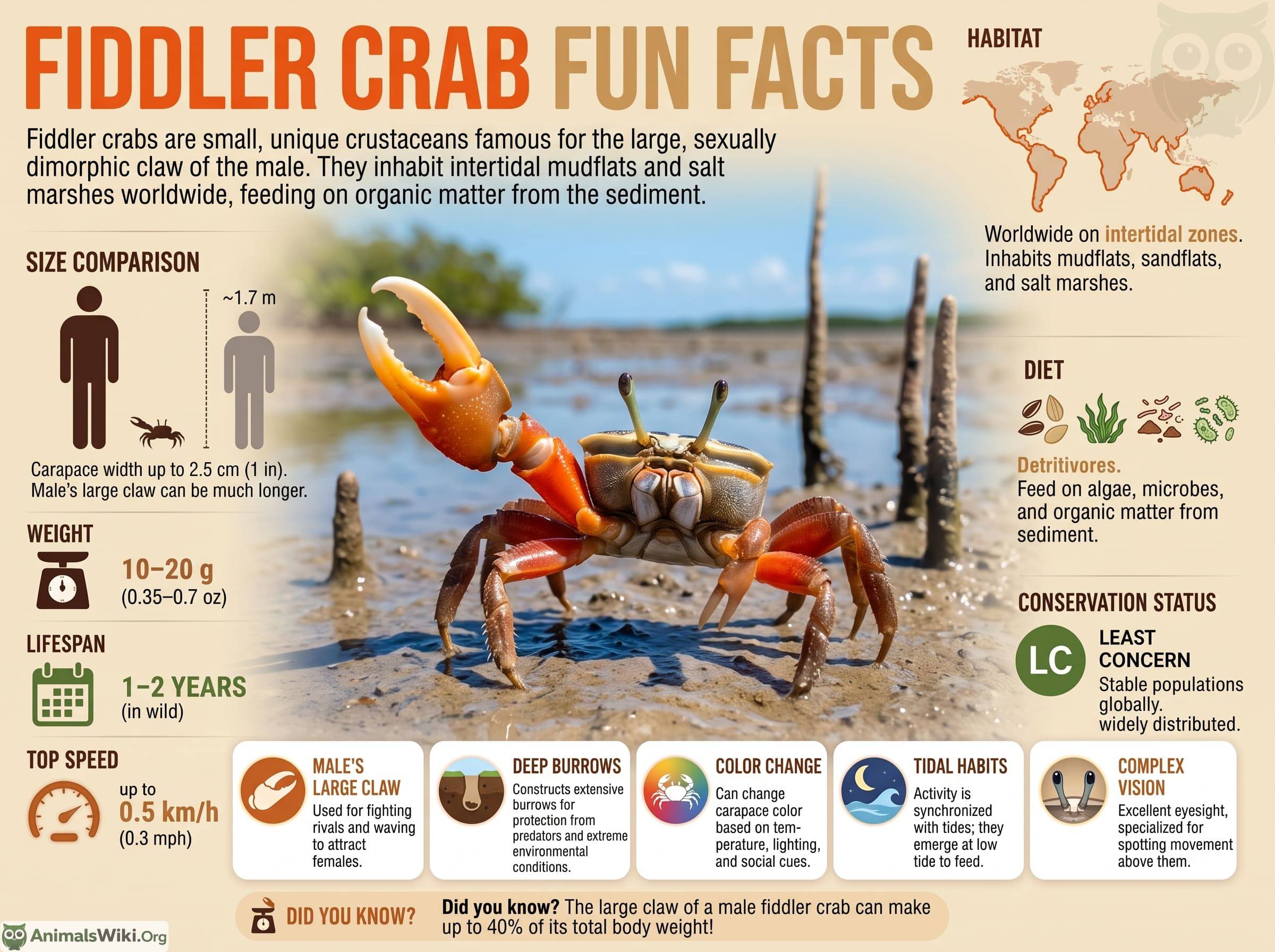
16. Fiddler Crab Fun Facts for Kids
- 🦀 The male fiddler crab’s major claw can weigh up to 50% of the animal’s total body weight — the single most extreme weapon-to-body ratio of any animal
- 🦀 If a male loses his major claw, the remaining minor claw regenerates as a new major claw — on the opposite side
- 🦀 Fiddler crabs maintain two simultaneous biological clocks — one calibrated to the 24-hour day and one to the 12.4-hour tidal cycle
- 🦀 Scientists built robotic fiddler crabs to test female mate choice — and they worked
- 🦀 A dense fiddler crab population processes the entire top layer of sediment across its territory during every low-tide period
- 🦀 The collective retreat of a tidal flat population at the approach of a predator propagates faster than any individual crab could detect the threat — it is a social alarm wave
- 🦀 Male fiddler crabs feed at half the rate of females because their major claw cannot reach their mouths
- 🦀 The Japanese name for fiddler crabs — “Shio-maneky” — means “beckoning the tide”
- 🦀 Fiddler crabs have been used in chronobiology research since the 1950s — helping establish fundamental principles of biological clock science
- 🦀 Their burrowing activity is so ecologically important that removing fiddler crabs from experimental plots causes measurable degradation of salt marsh structure
- 🦀 Fiddler crabs can breathe both underwater and in air — essential for surviving tidal exposure
- 🦀 The waving display pattern is so species-specific that females reliably identify their own species from wave pattern alone — even when presented with robotic impostors
17. How You Can Help
Support These Organizations
- The Nature Conservancy — Coastal and Marine Programs (nature.org) — protecting salt marsh and mangrove habitats critical for fiddler crab communities; active in habitat restoration across North America and globally
- Mangrove Action Project (mangroveactionproject.org) — the leading international organization specifically focused on mangrove conservation; directly protecting primary fiddler crab habitat worldwide
- Coastal America (coastalamerica.gov) — US coastal habitat conservation coordination
- IUCN Mangrove Specialist Group — scientific body monitoring mangrove ecosystem health globally
- National Estuarine Research Reserve System (NERRS) — US network of protected estuarine areas including key fiddler crab habitats; supports research and education programs
- Wetlands International (wetlands.org) — international organization protecting coastal wetlands including mangrove and salt marsh ecosystems
What You Can Do
- Support mangrove conservation organizations — mangrove loss is the single greatest threat to tropical fiddler crab communities; organizations working to protect and restore mangroves deserve support
- Choose sustainable seafood — shrimp farming has destroyed enormous areas of mangrove habitat; choosing certified sustainable shrimp (ASC-certified) reduces demand for destructive aquaculture
- Reduce nutrient pollution — agricultural and urban nutrient runoff degrades salt marsh and estuarine sediments; reducing fertilizer use, supporting better wastewater treatment, and advocating for agricultural buffer zones all help
- Support sea-level rise mitigation — climate action that reduces greenhouse gas emissions directly protects the intertidal zones that fiddler crabs require
- Participate in coastal monitoring programs — citizen science programs monitoring salt marsh and tidal flat health benefit from public participation; fiddler crab counts are a standard metric in many programs
- Educate others — the ecological importance of fiddler crabs is vastly underappreciated; sharing this understanding builds conservation support for coastal wetland ecosystems
Recommended Documentaries & Books
- “Blue Planet II” (BBC, 2017) — features extraordinary fiddler crab footage in the coastal ecosystems episode
- “Life” (BBC/Discovery, 2009) — excellent fiddler crab behavior coverage
- “Fiddler Crabs of the World” by John Crane (1975) — the foundational scientific reference; detailed and comprehensive
- “Intertidal Ecology” by various authors — comprehensive coverage of the coastal ecosystems that fiddler crabs inhabit and engineer
18. Frequently Asked Questions About Fiddler Crabs
Q1: Why do fiddler crabs have one big claw?
Only the males have one enlarged claw — females have two small, equal-sized claws. The oversized major claw of the male serves two primary functions: attracting females (through the distinctive waving display that signals the male’s size, health, and genetic quality) and fighting rival males (for access to burrows and territories). The claw is essentially a multi-purpose social tool — advertisement, weapon, and status symbol simultaneously. Its enormous size relative to the body (up to 50% of total body weight) reflects the extreme selection pressure that females exert by preferring larger-clawed males — driving the evolution of an increasingly exaggerated structure over evolutionary time.
Q2: What does the fiddler crab’s waving mean?
The waving display serves multiple functions depending on context. When directed toward females, the wave is a courtship advertisement — saying “I am a male of your species, I am healthy, my claw is large, and my burrow is high quality; please come investigate me as a potential mate.” When directed toward rival males, the wave at high intensity serves as a territorial threat — “this is my burrow and the surrounding area; back off.” The precise wave pattern (speed, arc, timing) is species-specific — females can identify their own species from the wave pattern alone, even when presented with robotic males waving different patterns.
Q3: What happens if a fiddler crab loses its big claw?
If a male fiddler crab loses his major claw — to a predator, in combat, or through accidental damage — his body initiates a remarkable developmental switch at the next moult (molting is the process of shedding the old exoskeleton to grow a new, larger one). The remaining minor claw on the other side regenerates as a new major claw, while the lost major claw side regenerates a new minor claw. The male effectively switches handedness — demonstrating that the determination of which claw becomes the major one is not genetically fixed to a specific body side but rather determined by which claw happens to persist.
Q4: How do fiddler crabs survive being covered by the tide?
Fiddler crabs survive tidal inundation by retreating into their burrows and sealing the entrance with a plug of mud — creating an air pocket within the burrow. The trapped air allows the crab to breathe during the hours of tidal coverage. Fiddler crabs have evolved dual respiratory capability — they can extract oxygen from both water (through gills) and air (through moist gill surfaces that function as lungs when kept wet). Their internal biological clock — calibrated to the 12.4-hour tidal cycle — ensures they begin returning to their burrows in advance of the tide’s return, without needing to observe the tide directly.
Q5: How important are fiddler crabs to coastal ecosystems?
Fiddler crabs are critically important ecosystem engineers in salt marsh and mangrove habitats. Their burrowing activity aerates otherwise anoxic (oxygen-depleted) sediments — enabling plant root growth and microbial nitrogen processing that underpin the entire ecosystem’s productivity. Experimental removal of fiddler crabs from salt marsh plots causes measurable degradation of sediment conditions and reduced plant growth within months. Their feeding activity processes enormous volumes of sediment, cycling nutrients from sediment to the water column and making them available to higher trophic levels. Commercial fisheries for striped bass, flounder, and other species are indirectly dependent on fiddler crab abundance through the fish’s use of salt marsh nursery habitats.
Q6: Do fiddler crabs make good pets?
Fiddler crabs are occasionally kept in aquariums — particularly in paludarium setups (combined land-water environments) that mimic the intertidal habitat. They have specific requirements: brackish water (a mix of fresh and saltwater), a land area with moist substrate for burrowing, appropriate temperature and humidity, and a tidal simulation if possible. They are social animals that do best in groups. Their short lifespan (1.5–3 years), specific habitat requirements, and the challenge of providing appropriate environmental conditions make them moderately demanding pets. They should never be collected from wild populations; captive-bred or responsibly sourced animals from reputable suppliers should be sought.
Q7: How do fiddler crabs know when to come out of their burrows?
Fiddler crabs have evolved an extraordinary internal dual-clock system — two independent biological clocks running simultaneously. One clock tracks the 24-hour day-night cycle (circadian clock), and another tracks the 12.4-hour tidal cycle (circatidal clock). The combined output of these two clocks predicts when low tide will occur during daylight hours — the optimal conditions for surface activity. Crucially, this clock system is truly internal — fiddler crabs maintained in constant laboratory conditions (no light changes, no tidal water) continue to show rhythmic activity patterns matching their home tide schedule for days or weeks. The clock doesn’t need external cues to keep running; it is a genuine internal timing mechanism.
Q8: What eats fiddler crabs?
Fiddler crabs are prey for a remarkable diversity of predators. Wading birds — particularly herons, egrets, willets, and clapper rails — are the most significant predators, hunting by sight across tidal flats. Fish including sheepshead, flounder, and various others invade the intertidal zone at high tide to feed on crabs unable to reach their burrows in time. Raccoons and other mammals forage marsh edges at low tide. Diamondback terrapins in North America take significant numbers of fiddler crabs. The fiddler crab’s response to this predation pressure — extreme visual vigilance, hair-trigger retreat responses, and the social alarm propagation system that spreads alerts faster than individual detection — reflects the intense predation pressure these small animals face throughout their lives.
19. Sources Researched
The information in this article was researched and verified using the following authoritative sources:
- Wikipedia — Uca pugnax, Fiddler crab, Ocypodidae, Mangrove, Salt marsh
- IUCN Red List (iucnredlist.org) — Fiddler crab species conservation status assessments
- National Geographic (nationalgeographic.com) — Fiddler crab biology and behavior features
- Britannica (britannica.com) — Fiddler crab, Ocypodidae, Crustacean
- Smithsonian Institution (si.edu) — Fiddler crab systematics and collection information
- Marine Biological Laboratory, Woods Hole (mbl.edu) — Chronobiology research history and fiddler crab studies
- Brown University Coastal Ecology Lab — Mark Bertness’s salt marsh ecosystem engineering research
- Australian National University — Patricia Backwell’s RoboFiddler research publications
- Journal of Experimental Marine Biology and Ecology — Peer-reviewed fiddler crab ecology research
- Animal Behaviour — Peer-reviewed fiddler crab behavioral research
- Current Biology — Research on fiddler crab communication and evolution
- Crane, J. (1975) — Fiddler Crabs of the World (Ocypodidae: Genus Uca) — Princeton University Press
- Proceedings of the Royal Society B — Research on fiddler crab sexual selection and communication
- Mangrove Action Project (mangroveactionproject.org) — Mangrove conservation and ecosystem data
- NOAA Coastal Management (coast.noaa.gov) — Salt marsh and estuarine ecosystem data
20. Fiddler Crab Images