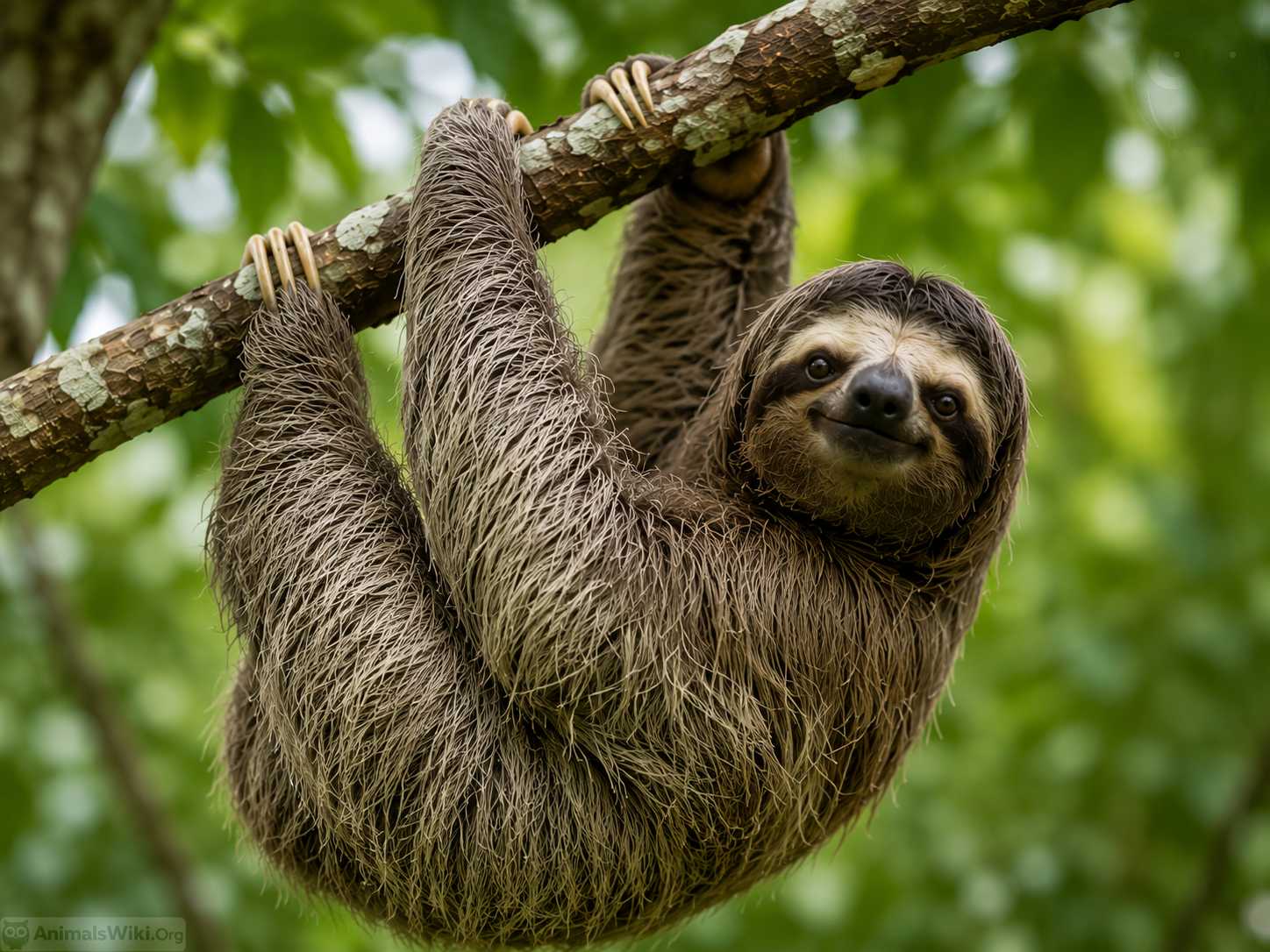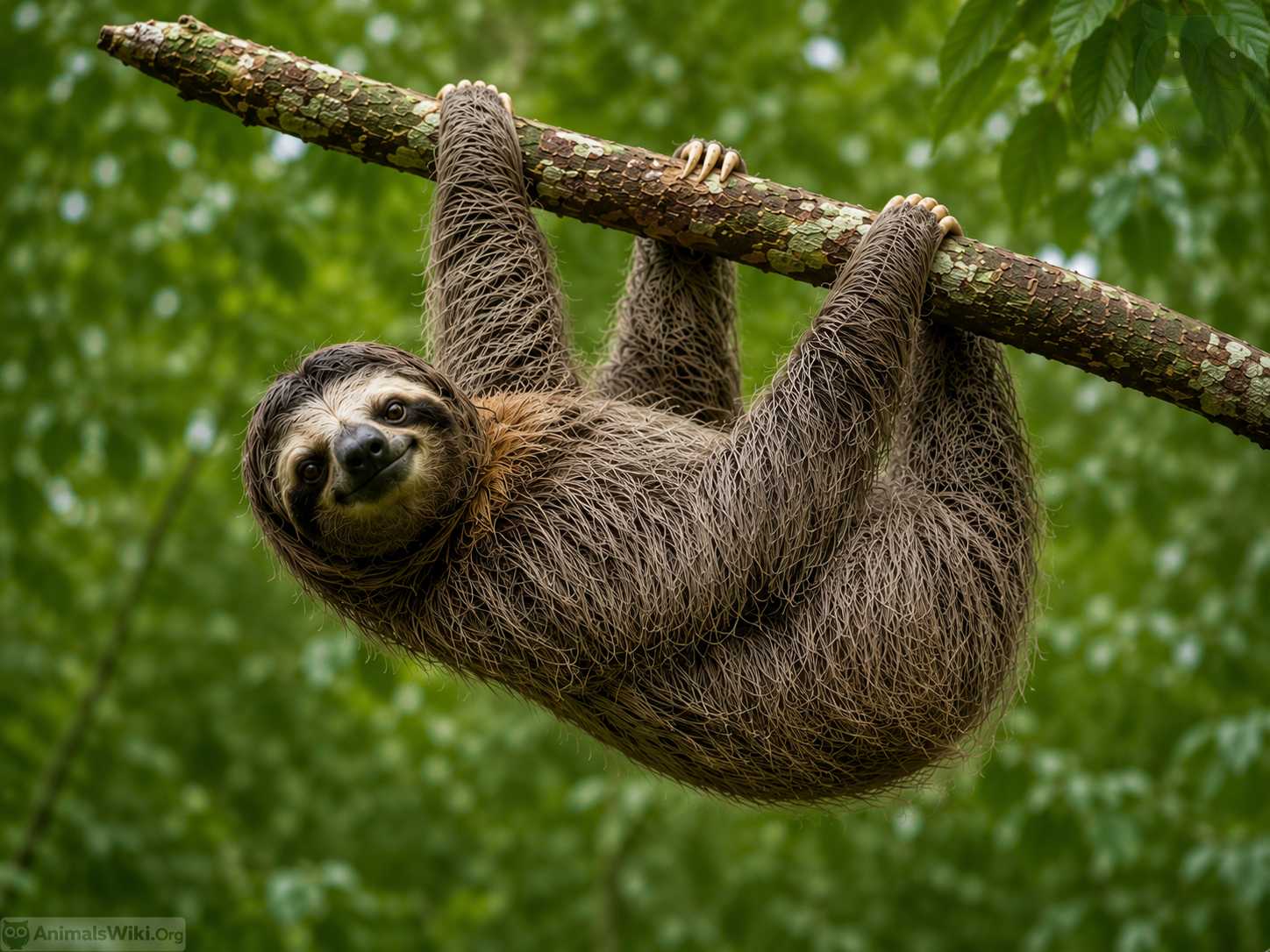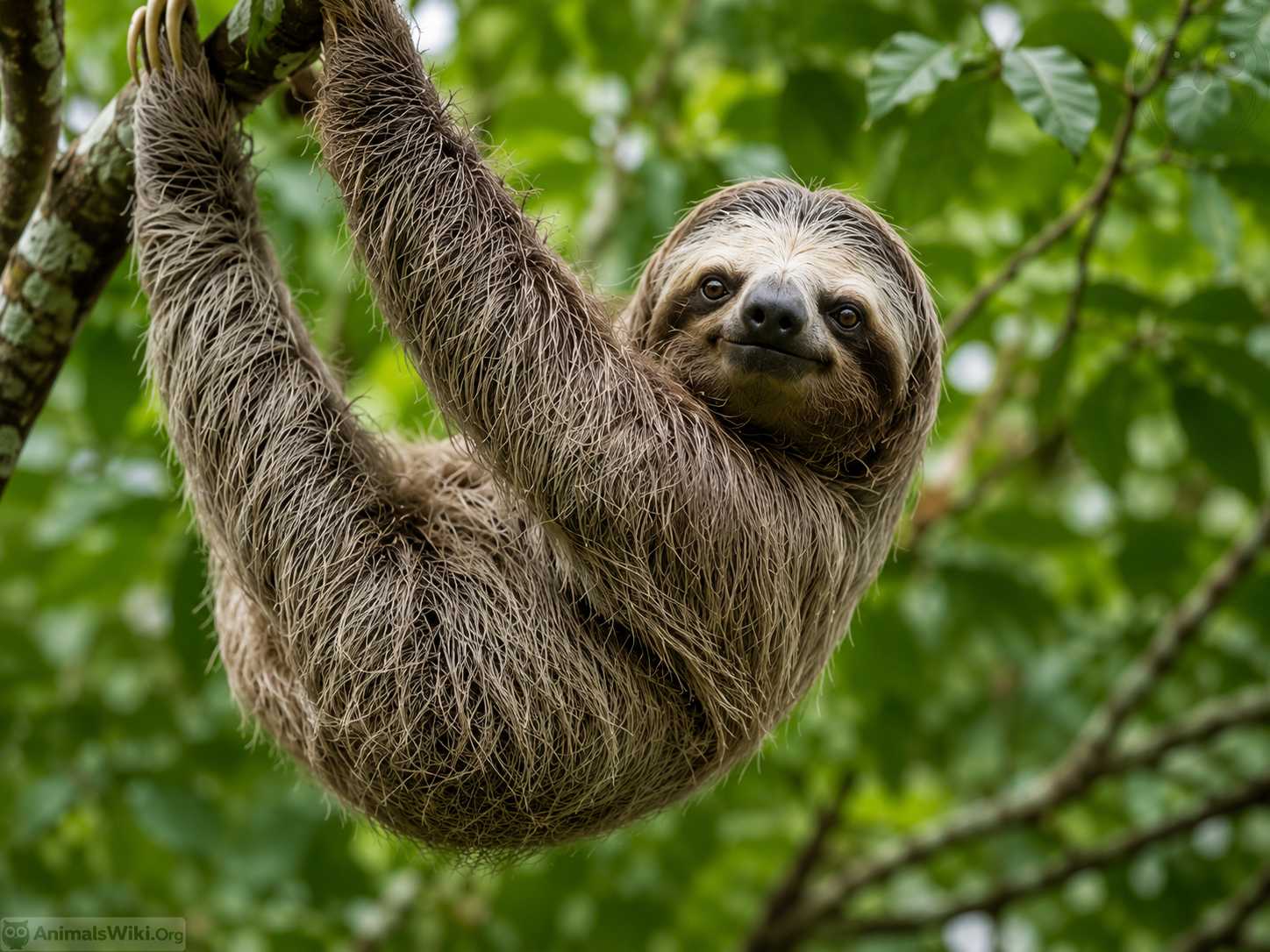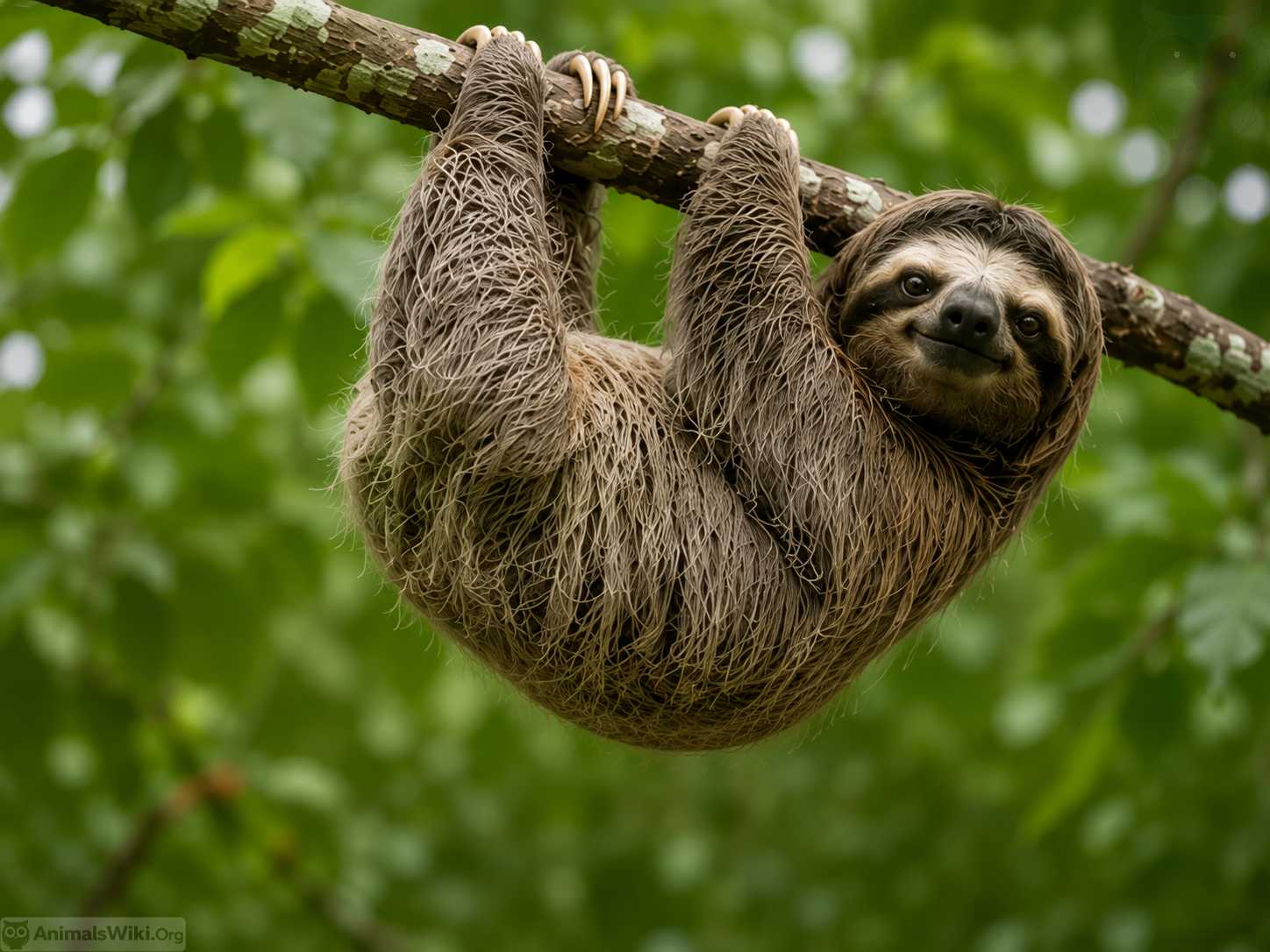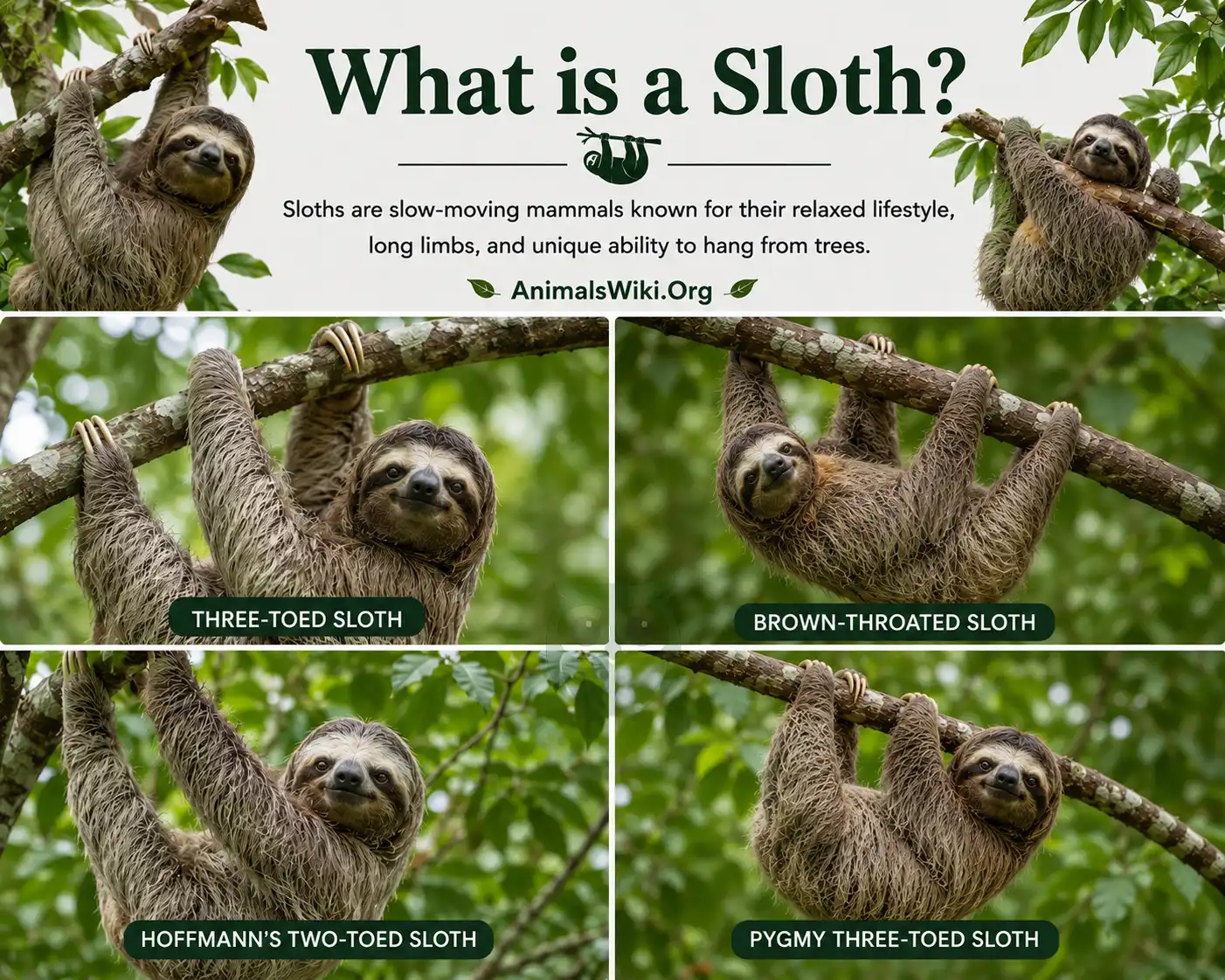
What is a Sloth?
Sloth Facts
| Feature | Details |
|---|---|
| Common Name | Sloth (Pale-throated Three-toed Sloth — focus species) |
| Scientific Name | Bradypus tridactylus (Three-toed Sloth) / Choloepus didactylus (Two-toed Sloth) |
| Family | Bradypodidae (three-toed) / Megalonychidae (two-toed) |
| Order | Pilosa |
| First Described | 1758 (Linnaeus — Bradypus tridactylus) |
| Native Habitat | Tropical and subtropical rainforest; cloud forest; secondary forest |
| Geographic Range | Central America and South America (Honduras to Bolivia and Brazil) |
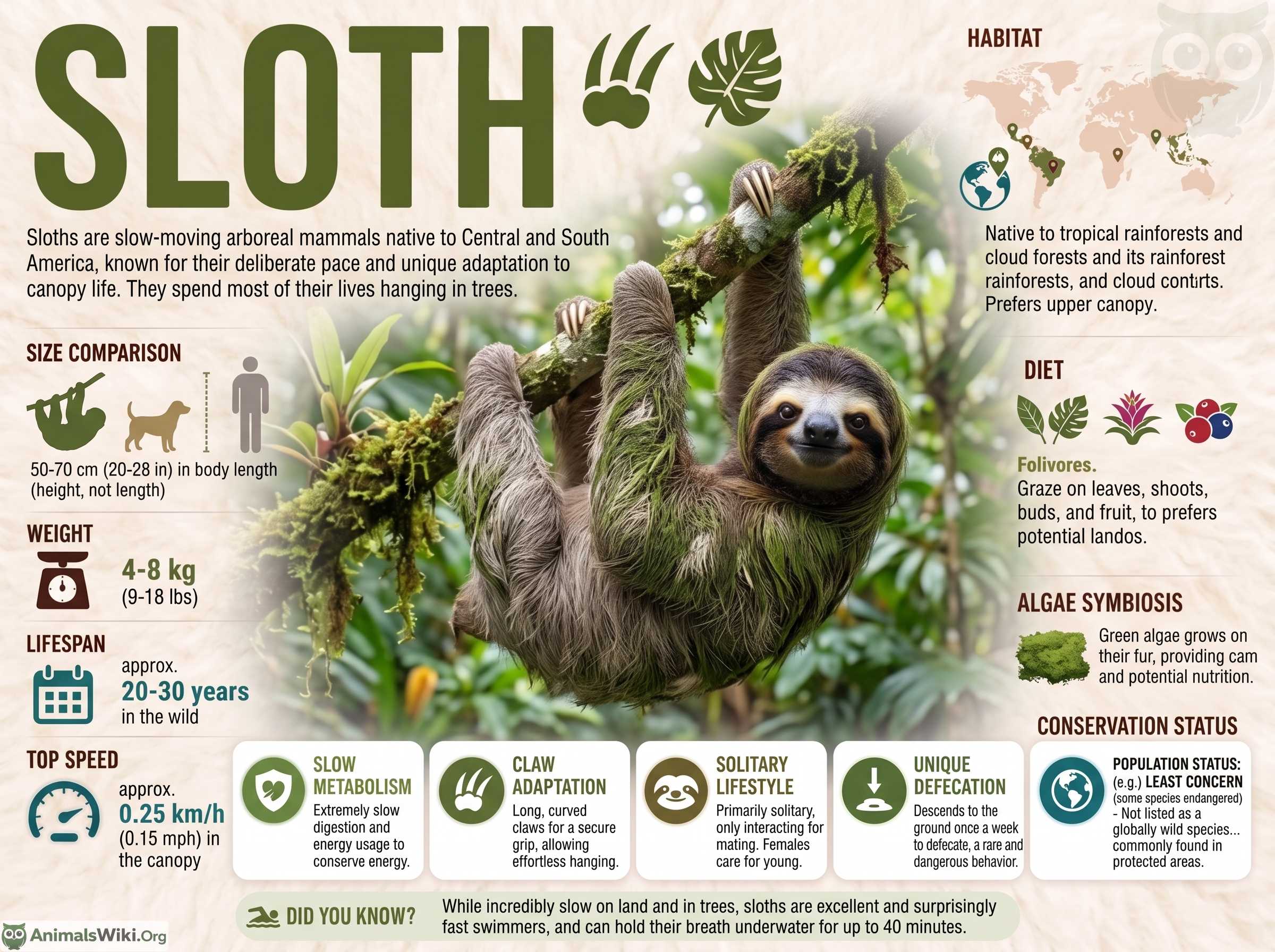
| Average Size | 45–80 cm body length; no external tail (three-toed) or short tail |
| Average Weight | 3.5–8 kg (species dependent) |
| Lifespan | 20–30 years (wild); up to 40 years (captivity) |
| Diet | Herbivore — leaves (primary); buds, flowers, fruits, some insects |
| Conservation Status | Least Concern (most species); Critically Endangered (Pygmy Three-toed Sloth) |
| Defining Feature | World’s slowest mammal; moves at average 0.24 km/h; sleeps 15–20 hours daily; unique upside-down lifestyle; symbiotic algae in fur |
| Number of Species | 6 living species across 2 families |
1. Species Overview & Classification
There is an animal in the rainforest canopy of Central and South America that is conducting what amounts to a long-running evolutionary experiment in doing everything differently. It does not run. It barely walks. It digests its food so slowly that a single meal can take a month to process. It sleeps for 15–20 hours every day. Its body temperature drops so low at night that it would be diagnosed as hypothermic in a hospital. Its muscles are so reduced in mass that it would be physically incapable of shivering to warm up. Its fur grows in the wrong direction for a mammal — from belly to back rather than back to belly, an inversion that channels rainwater downward when the animal hangs upside down (which is most of the time). And living in its fur is a miniature ecosystem — algae, moths, beetles, and mites that find in the sloth’s slow-moving, moisture-retaining coat a habitat of extraordinary stability.
The sloth is the world’s slowest mammal — a distinction it holds so decisively that it is not close. Moving at an average speed of 0.24 km/h (0.15 mph) during its limited daily activity, the sloth lives at a pace so far below the baseline of mammalian life that it seems less like an extreme on a continuum and more like a different way of being alive altogether. And it is an extraordinarily successful way of being alive — sloths have been pursuing this strategy for approximately 64 million years, surviving the extinction of the megafauna, the transformation of South American ecosystems, and the arrival of humans, while their giant relatives (some as large as elephants) went extinct.
Yet the sloth story is considerably more complex than the popular image of a comically lethargic ball of fur hanging from a branch. The sloth’s slowness is not laziness or incapacity — it is a sophisticated physiological strategy that has allowed it to exploit a food resource (leaves) that is so low in energy and so expensive to detoxify that virtually no other large mammal can make a living from it. Understanding the sloth means understanding one of evolution’s most radical experiments in energy economy — and discovering that what looks like incompetence is actually genius.
Species Classification Table
| Classification Level | Details |
|---|---|
| Kingdom | Animalia |
| Phylum | Chordata |
| Class | Mammalia |
| Order | Pilosa |
| Suborder | Folivora (sloths) |
| Families | Bradypodidae (three-toed); Megalonychidae (two-toed) |
| Focus Genera | Bradypus (three-toed); Choloepus (two-toed) |
| Total living species | 6 (4 three-toed; 2 two-toed) |
The Six Living Sloth Species
| Species | Scientific Name | Family | Range | IUCN Status | Notes |
|---|---|---|---|---|---|
| Pale-throated Three-toed Sloth | Bradypus tridactylus | Bradypodidae | N South America | Least Concern | Focus species; most studied |
| Brown-throated Three-toed Sloth | Bradypus variegatus | Bradypodidae | C America to Bolivia | Least Concern | Most widespread; most common |
| Maned Three-toed Sloth | Bradypus torquatus | Bradypodidae | Atlantic Forest, Brazil | Vulnerable | Severely restricted range |
| Pygmy Three-toed Sloth | Bradypus pygmaeus | Bradypodidae | Isla Escudo de Veraguas, Panama | Critically Endangered | Tiny island population; ~100 individuals |
| Linnaeus’s Two-toed Sloth | Choloepus didactylus | Megalonychidae | N South America | Least Concern | Larger; more nocturnal |
| Hoffmann’s Two-toed Sloth | Choloepus hoffmanni | Megalonychidae | C America to Peru | Least Concern | Common in C America |
Two Families — Surprisingly Unrelated
One of the most biologically remarkable facts about sloths is that the two living sloth families are not each other’s closest relatives — they represent an extraordinary example of convergent evolution:
- Three-toed sloths (Bradypodidae) and Two-toed sloths (Megalonychidae) diverged from a common ancestor approximately 30–35 million years ago
- They independently evolved the upside-down hanging lifestyle, the slow metabolism, the curved claws, and many other shared characteristics
- A two-toed sloth is actually more closely related to the extinct giant ground sloths (Megatherium) than to three-toed sloths
- The two families are so convergent that early naturalists classified them together in the same genus; modern molecular analysis has confirmed their independent evolutionary origins
This means that “being a sloth” — the entire suite of characteristics we associate with sloths — evolved twice independently — one of the most dramatic examples of convergent evolution in mammalian biology.
Did You Know? The three-toed sloth (Bradypus) and the two-toed sloth (Choloepus) are about as distantly related to each other within the order Pilosa as a lion is to a seal within Carnivora. The similarities between them — the upside-down lifestyle, the slow metabolism, the curved claws, the leaf diet — all evolved independently in the two lineages, making sloths one of the most spectacular examples of convergent evolution in mammalian natural history.
2. Physical Description & Unique Features
The sloth’s physical form is a masterwork of evolutionary optimization for a single, very specific way of life — hanging upside down in rainforest trees, eating low-energy food, and conserving every possible calorie.
Size and Build
Three-toed sloths (Bradypus spp.):
- Body length: 45–75 cm (18–30 inches)
- Weight: 3.5–4.5 kg (7.7–9.9 lbs)
- Males and females similar in size
- Short, stubby tail (approximately 6–7 cm) — unusual among mammal species that are otherwise tail-free
Two-toed sloths (Choloepus spp.):
- Body length: 58–70 cm (23–28 inches)
- Weight: 4–8 kg (8.8–17.6 lbs) — somewhat heavier and more robust
- No external tail
The body shape is compact and rounded — the limbs are long and slender, the head small and rounded, and the torso barrel-shaped. This compact form minimizes surface area relative to volume, reducing heat loss — important for an animal with a metabolic rate so low that maintaining body temperature is a significant challenge.
The Claws — Engineering for the Upside-Down Life
The sloth’s claws are its most functionally critical anatomical feature — the anatomical basis of its entire lifestyle:
Three-toed sloths — three curved claws on each foot (hence the common name); forelimb claws typically 8–10 cm in length
Two-toed sloths — two curved claws on the forelimbs; three on the hindlimbs
The claws are permanently curved — not retractile like a cat’s — and are so curved that the sloth cannot fully extend them. The curvature is precisely matched to the diameter of typical rainforest tree branches, allowing the sloth to hang with no muscular effort whatsoever — the claws are essentially hooks that lock onto branches by gravity alone. A sloth hanging from a branch requires zero muscle energy to maintain its grip — it is suspended entirely by the mechanical lock of curved claws over a branch.
This passive grip is one of the most important energy conservation mechanisms in the sloth’s entire biology — because maintaining grip requires no energy, the sloth can conserve calories that other arboreal animals (who must grip actively) must expend constantly.
The claw-muscle paradox: Despite their impressive appearance, sloth claws are not powerful weapons — the sloth’s limited muscle mass means that although the claws can penetrate skin, the animal cannot deliver a powerful strike. The claws function primarily as passive anchors rather than active weapons.
The Remarkable Musculoskeletal System
The sloth’s musculature is one of the most dramatically reduced in any mammal:
Muscle mass: Sloths have approximately 25–30% of the muscle mass that would be expected for a mammal of their body weight; this extreme muscle reduction is the primary driver of their extraordinary energy conservation
Vertebral adaptations: Three-toed sloths (Bradypus) have a unique vertebral feature — 8–9 cervical vertebrae (neck bones) compared to the standard 7 in virtually all other mammals (including humans, giraffes, and whales); this extra vertebral flexibility allows three-toed sloths to rotate their heads nearly 270 degrees without moving the rest of the body — enabling them to survey their environment, spot predators, and reach food without energetically expensive body movement
Diaphragm connections: Sloths have specialized connections between their internal organs and their rib cage — their organs are anchored to the ribs and do not hang free as in most mammals; this means the weight of organs does not compress the lungs when hanging upside down, preventing respiratory compromise in the inverted position
The Upside-Down Fur
One of the sloth’s most immediately remarkable physical features is that its fur grows in the opposite direction from virtually all other mammals:
- In most mammals, fur grows from back toward the belly — pointing downward when the animal stands normally
- In sloths, fur grows from belly toward back — pointing downward when the animal hangs upside down
This inversion means that when rain falls on a hanging sloth, the water flows naturally along the fur toward the ground — effective drainage for an animal that spends most of its life in exactly this position.
The Living Ecosystem — Algae, Moths, and More
The sloth’s fur hosts an extraordinary symbiotic ecosystem — one of the most remarkable examples of inter-species cohabitation in any mammal:
Algae (primarily Trichophilus welckeri and Cyanoderma bradypodis) — green algae grow in microscopic grooves along sloth fur strands; the algae give some sloths a distinctly greenish tint that provides camouflage against the green canopy; research published in 2014 suggested that sloths may actually eat the algae from their fur during grooming — obtaining a nutritional supplement from their own living coat
Sloth moths (Cryptoses choloepi) — at least one species of moth lives exclusively in sloth fur; the moths use the sloth’s fur as a breeding habitat, laying eggs in the sloth’s dung when the sloth descends to defecate, and the larval moths develop in the dung before flying up to recolonize a sloth’s fur; the moths are obligate symbionts — they cannot complete their life cycle without a sloth host; they may contribute to nitrogen cycling in the fur that supports algae growth
Beetles and mites — dozens of arthropod species have been documented from sloth fur, many representing species found nowhere else; the sloth’s fur constitutes a micro-ecosystem of considerable biological complexity
Did You Know? The sloth’s fur is not merely housing for freeloaders — it may be a functioning agricultural system. Research has suggested that sloths deliberately encourage the growth of algae in their fur by scratching and grooming in ways that create optimal conditions for algal growth, and then consume this algae as a nutritional supplement. This would make sloths one of very few mammals to cultivate their own food — farming algae on their own bodies with the assistance of the moths that fertilize the fur ecosystem with their presence and their interactions with the sloth’s dung.
3. Natural Habitat & Geographic Range
The sloth is quintessentially an animal of Neotropical forest — found across a broad range of forested habitats from southern Mexico through Central America and across most of tropical South America.
Preferred Habitats
Tropical rainforest — the primary habitat; the closed-canopy rainforest of the Amazon basin, the Atlantic Forest of eastern Brazil, the Pacific coast forests of Colombia and Ecuador, and the rainforests of Central America provide the combination of high diversity of tree species, year-round leaf availability, and stable temperatures that sloths require
Cloud forest and montane forest — sloths occur in montane forests up to approximately 2,400 meters elevation; cloud forest populations of both two-toed and three-toed sloths are documented in the Andes and in Central American mountain ranges
Secondary forest and forest fragments — sloths are more tolerant of forest disturbance than many rainforest specialists; they can persist in secondary forest (forest regenerating after disturbance) and in forest fragments surrounded by agricultural land, as long as sufficient trees of appropriate species are available
Mangrove forest — sloths occasionally enter mangrove forest in coastal areas, including the remarkable population of Pygmy Sloths on Escudo de Veraguas Island, Panama, which lives primarily in mangrove forest
What sloths need: The key habitat requirements are:
- Sufficient tree diversity to provide year-round food from multiple leaf species
- Canopy connectivity allowing movement between trees without descending to the ground
- Trees large enough to provide the branch diameters appropriate for their claws
- Appropriate temperature range — sloths are ectotherm-like in their temperature regulation and perform poorly at temperatures below approximately 15°C or in prolonged cold wet conditions
Geographic Range
| Region | Species Present | Habitat | Population Status |
|---|---|---|---|
| Central America (Honduras–Panama) | B. variegatus, C. hoffmanni | Rainforest, secondary forest | Reasonably stable; localized declines |
| Amazon Basin (Colombia, Venezuela, Brazil, Peru, Bolivia) | B. tridactylus, B. variegatus, C. didactylus | Tropical rainforest | Largest populations; some areas stable |
| Atlantic Forest, Brazil | B. torquatus (endemic) | Atlantic Forest fragments | Severely restricted; Vulnerable |
| Caribbean lowlands (Colombia, Venezuela) | B. tridactylus, C. didactylus | Lowland forest | Present but declining |
| Pacific coast forests (Colombia, Ecuador) | B. variegatus, C. hoffmanni | Humid Pacific forest | Declining with deforestation |
| Escudo de Veraguas Island, Panama | B. pygmaeus (endemic) | Mangrove and forest | Critically Endangered; ~100 individuals |
The Pygmy Sloth — The World’s Most Endangered Sloth
The Pygmy Three-toed Sloth (Bradypus pygmaeus) of Isla Escudo de Veraguas — a tiny uninhabited island off the Bocas del Toro coast of Panama — is one of the world’s most endangered mammals and the most critically endangered sloth species. Key facts:
- Population: Estimated at approximately 100 individuals or fewer
- Range: Restricted entirely to a single island of approximately 4.3 km²
- Size: Approximately 40% smaller than mainland three-toed sloths — classic island dwarfism
- Habitat: Primarily red mangrove (Rhizophora mangle) forest
- Discovered: Only formally described as a separate species in 2001 — one of the most recently recognized mammal species
4. Diet & Feeding Behavior
The sloth’s diet — almost exclusively leaves — is one of the most restrictive and most challenging diets of any large mammal, and the sloth’s entire physiology is built around the extraordinary demands of surviving on this food source.
The Leaf Diet — Surviving on Almost Nothing
Leaves are among the most abundant food resources in tropical forests — yet virtually no large mammal specializes on mature leaves as the primary diet. The reason is straightforward: mature leaves are low in energy, high in fiber, high in toxic defensive compounds, and difficult to digest. Processing leaves to extract their nutrients requires:
- Long retention times in the digestive system to allow fermentation of cellulose
- Specialized gut microbiota capable of breaking down plant cell walls
- Detoxification systems capable of neutralizing leaf chemical defenses
- Tolerance for a low-energy diet — accepting that the net caloric return from leaves will be very small
The sloth meets all of these requirements through its extraordinary physiological adaptations — but the cost is the extreme slowness that defines the animal.
What Sloths Eat
Mature leaves — the primary food of most sloth species; sloths are highly selective despite their apparent passivity — they select specific tree species and specific leaf ages based on criteria including tannin content, alkaloid load, nutritional value, and moisture content; a sloth may visit hundreds of different tree species in its lifetime but return repeatedly to a relatively small number of preferred species
Young leaves and leaf buds — preferred when available due to lower toxin content and higher nutritional value; sloths time their feeding to access new leaf flushes
Flowers — consumed when encountered; higher in energy than mature leaves; important seasonal supplement
Fruits — consumed by some species and individuals; two-toed sloths eat more fruit than three-toed sloths; fruit represents a higher-energy supplement to the primarily leaf diet
Bark and twigs — consumed occasionally; provide minerals and fibrous material
Insects — two-toed sloths (Choloepus spp.) occasionally consume insects, bird eggs, and small vertebrates; three-toed sloths (Bradypus spp.) appear to be strictly herbivorous
Algae from fur — as described above, sloths may consume the algae growing in their own fur during grooming, potentially providing a supplementary protein and mineral source
The Remarkable Digestive System
The sloth’s digestive system is the most extraordinary aspect of its dietary biology:
Multi-chambered stomach — similar in principle to the ruminant stomach of cows and other bovids; contains multiple chambers with different fermentation environments; cellulose-digesting bacteria in the stomach break down plant cell walls over extremely long periods
Digestive rate — the slowest of any mammal; food may take 30 days or more to pass through the digestive system from ingestion to defecation; this compares to approximately 4 hours in humans and 12–24 hours in most herbivorous mammals; the extraordinarily slow transit time allows maximum extraction of nutrients from the low-quality leaf diet
Stomach capacity — the sloth’s stomach, when full, can contain food representing up to 30% of its total body weight; this enormous relative stomach volume is necessary to maintain a continuous supply of fermenting material despite the extremely slow processing rate
Metabolic rate — the sloth’s metabolic rate is approximately 40–74% lower than expected for a mammal of its size; this metabolic depression is the energy conservation strategy that makes the leaf diet viable; by requiring very little energy, the sloth can survive on the tiny caloric return provided by fermenting leaves
Diet Breakdown Table
| Food Type | % of Diet (Three-toed) | % of Diet (Two-toed) | Notes |
|---|---|---|---|
| Mature leaves | 70–90% | 50–70% | Primary food; highly selective by species |
| Young leaves and buds | 10–20% | 10–20% | Preferred; lower toxins; higher nutrition |
| Flowers | 2–5% | 2–5% | Seasonal supplement; higher energy |
| Fruits | 1–3% | 5–15% | Two-toed sloths more frugivorous |
| Bark and twigs | 1–3% | 1–3% | Mineral supplement |
| Insects/small animals | Negligible | 1–5% | Two-toed sloths occasionally predatory |
“The sloth has solved the problem of surviving on leaves — one of the most challenging diets in the mammalian world — through a combination of physiological adaptations so radical that they amount to a fundamentally different way of being a mammal. The sloth doesn’t just eat slowly; it thinks slowly, moves slowly, grows slowly, reproduces slowly — it has traded speed for sustainability in the most extreme way of any large mammal on Earth.” — Dr. Jonathan Pauli, Wildlife Ecologist, University of Wisconsin-Madison
5. Reproduction & Life Cycle
The sloth’s reproductive biology is characterized by the same extreme slowness that defines every other aspect of its life — producing a single offspring after a long gestation, investing heavily in that single offspring over an extended dependency period, and reproducing only rarely throughout a long lifespan.
Sexual Maturity
- Three-toed sloths: Sexual maturity at approximately 3 years for females; males slightly later
- Two-toed sloths: Sexual maturity at approximately 3–4 years
- Males and females are similar in size; there is relatively little sexual dimorphism in most species
Mating — A Noisy Affair in a Silent Animal
For an animal famous for near-silence, mating season produces the sloth’s most remarkable vocal performance:
Female advertisement call — when a female enters estrus, she produces a loud, high-pitched scream (sometimes described as a “scree” call) that carries through the forest canopy and advertises her reproductive availability to males throughout her home range; this call — extraordinary in the context of an animal that is otherwise almost completely silent — is typically the first indication that sloth mating season has arrived
Male congregation — multiple males may be attracted to a calling female; competition between males for mating access is typically resolved through slow-motion wrestling — males attempt to dislodge each other from branches using their claws; injuries are rare
Mating — occurs while hanging from branches; gestation follows
Gestation and Birth
- Gestation period (three-toed sloths): Approximately 5–6 months
- Gestation period (two-toed sloths): Approximately 11.5 months — one of the longest gestations relative to body size of any mammal
- Litter size: Invariably 1 offspring — sloths never produce twins under natural conditions
- Birth weight: Approximately 300 grams for three-toed sloths; slightly heavier for two-toed
- Birth position: Remarkably, the sloth gives birth while hanging upside down from a branch — the newborn must immediately grip the mother’s fur and find a teat without falling
Infant Development — The Remarkable Mother-Infant Bond
The sloth’s maternal investment is extraordinary for such a small mammal:
Initial dependency — for the first weeks to months of life, the infant clings permanently to the mother’s belly, never voluntarily separating; the mother continues her normal (though even more limited than usual) activities with the infant attached
Learning to eat — the infant begins eating solid food (primarily leaves) while still clinging to the mother; it learns which tree species to eat by licking its mother’s lips as she chews — acquiring both the food identification information and the gut microbiota needed to ferment those leaf species from its mother
Duration of association — the mother-infant association lasts approximately 6 months to 1 year before the infant begins ranging independently; during this time, the mother essentially provides a traveling nursery — her body, her tree range, her food choices, and her microbiome
Home range inheritance — when the mother-infant bond ends, the female gives the infant her own home range territory and moves to establish a new range elsewhere; this remarkable maternal behavior means that the infant inherits known, familiar territory rather than having to establish a range from scratch
Reproductive Rate
The combination of late sexual maturity, long gestation, single offspring, and extended maternal investment makes the sloth one of the slowest-reproducing mammals of its size:
- A female may reproduce once every 1–2 years in good conditions
- A female beginning reproduction at 3 years of age and living 20 years in the wild may produce 8–10 offspring over her lifetime
- This very low reproductive rate makes sloth populations highly sensitive to elevated adult mortality
Lifespan
Sloths are surprisingly long-lived for their body size:
- Wild sloths: approximately 20–30 years
- Captive sloths: documented to 40+ years
The extraordinary lifespan relative to body size (most mammals of sloth size live 5–10 years) is consistent with the general biological principle that slow metabolisms tend to correlate with longer lifespans — the “rate of living” theory that predicts longer lifespans in animals with lower metabolic rates.
Did You Know? When a female sloth’s maternal period ends, she doesn’t simply drive her juvenile offspring away — she gives the juvenile her own home range and relocates herself to a new area. This extraordinary form of maternal inheritance means that young sloths begin their independent lives in familiar territory where they know the food trees, the escape routes, and the general layout — a significant survival advantage. The mother, meanwhile, must establish a new range in unfamiliar territory — suggesting that this behavior genuinely costs the mother something while benefiting the offspring.
6. Social Behavior & Communication
The sloth is one of the most solitary mammals in the world — spending the vast majority of its life alone, interacting with other sloths only briefly for mating, and maintaining social relationships of extraordinary simplicity. Yet the sloth’s social world is not entirely absent — it contains a nuanced system of territory maintenance, olfactory communication, and the rich mother-infant relationship described above.
Solitary Lifestyle
Adult sloths — except mothers with dependent young — are essentially solitary. They:
- Maintain individual home ranges that may overlap with multiple other individuals but are used independently
- Rarely engage in direct social interaction outside of mating
- Do not form any kind of persistent social group or cooperative relationship
- Show no territorial aggression beyond mild avoidance of other individuals
Home range size:
- Three-toed sloths: Relatively small home ranges of 1–8 hectares (2.5–20 acres); remarkable for their small size
- Two-toed sloths: Somewhat larger home ranges of 2–20 hectares
The small home range is directly enabled by the sloth’s low energy requirements — it needs to cover only the area necessary to find sufficient food for its very modest caloric needs.
Olfactory Communication
Despite their social simplicity, sloths maintain a sophisticated olfactory communication system using scent glands and urine marking:
Gland secretions — male sloths have chest glands (in Bradypus species) that produce aromatic secretions; males rub these glands on branches to mark their presence; females assess male quality partly through these scent marks
Urine marking — urine deposited during the sloth’s rare descents to defecate communicates individual identity and reproductive status to other sloths in the area
Behavioral evidence — sloths that encounter scent marks from other individuals show behavioral changes (prolonged investigation, altered movement patterns) that confirm the biological significance of these chemical signals even in an animal that rarely directly encounters other individuals
Vocal Communication
For an animal famous for near-silence, sloths have a vocal repertoire that serves important functions:
Adult alarm call — a hissing sound produced when threatened; warns potential predators that the sloth has detected them
Female estrus call — the loud, high-pitched advertisement call described in the reproduction section; the sloth’s most dramatic vocalization
Infant-mother calls — soft mewing or whistling sounds between infants and their mothers; maintain contact and signal distress if separated
Defensive hiss — produced when handled or attacked; accompanied by slow defensive swiping with claws
Thermoregulatory Behavior
One of the sloth’s most important and most misunderstood behaviors is its daily sunbathing — moving to exposed positions in the canopy in the morning to absorb solar heat:
- Sloths are not truly endothermic (able to maintain body temperature through metabolic heat generation alone) in the full sense — their metabolic rate is too low to maintain body temperature through metabolism alone in cool conditions
- They supplement their metabolic heat production with behavioral thermoregulation — seeking solar radiation in the morning to warm their bodies to functional operating temperature
- This sunbathing behavior is often misinterpreted as “basking laziness” — it is actually essential physiological temperature management
- In prolonged cold, wet conditions (particularly at higher elevations), sloths can become dangerously cold and may die of exposure if unable to warm themselves — a vulnerability that limits their distribution in cooler montane habitats
7. Predators & Defense Mechanisms
The sloth’s predator community is diverse and formidable — yet the sloth has developed a defense strategy so counterintuitive that it represents one of the most elegant examples of evolutionary problem-solving in the animal kingdom.
Natural Predators
Harpy Eagle (Harpia harpyja) — the most important and most specialized sloth predator in South and Central America; the Harpy Eagle is specifically adapted for hunting large arboreal prey — its relatively short, broad wings allow maneuvering through forest canopy; its enormous talons (comparable in size to a grizzly bear’s claws) can grip and crush a sloth’s spine; studies of Harpy Eagle diets at various South American nest sites document that sloths constitute 30–50% of prey items by weight at many nests
Ocelot and Margay (Leopardus pardalis and L. wiedii) — nocturnal felid predators; margays are particularly adept arboreal hunters and can pursue sloths in the canopy
Jaguar (Panthera onca) — takes sloths opportunistically, particularly when they descend to the ground for defecation
Anaconda (Eunectes murinus) — large anacondas near water take sloths that descend to swim (sloths are surprisingly competent swimmers — see fun facts) or when they descend to cross ground
Boa Constrictor (Boa constrictor) — occasional sloth predation; constrictors can ambush sloths in the canopy
Spectacled Owl (Pulsatrix perspicillata) — takes juvenile sloths; large enough to handle young animals
The Sloth’s Defense — Camouflage and Stillness
The sloth’s defense strategy is the most counterintuitive in the rainforest — do nothing and disappear:
Cryptic coloration — the greenish-brown, algae-tinged fur of a hanging sloth, viewed from below against a green canopy, is extraordinarily difficult to distinguish from the surroundings; the irregular, textured surface of the fur (enhanced by the resident algae ecosystem) breaks up the animal’s outline against the leaf background
Absolute stillness — a motionless sloth in the canopy is essentially invisible to any predator relying on motion detection; the sloth’s default response to perceived threat is to freeze completely — reducing an already marginal movement to zero
Resemblance to epiphytes — a hanging sloth, particularly from below at distance, resembles the bromeliads, mosses, and other epiphytic plants that commonly hang from tropical forest branches; this resemblance has been described as resembling a “ball of moss” — a object so common and unremarkable in the rainforest that predators do not attend to it
Slowness as camouflage — the sloth’s extreme slowness means that even when it does move, the movement is so gradual as to be difficult to detect; many predators rely on motion detection to identify prey; an animal moving at 0.24 km/h produces very little visual motion signal, even when it is technically in motion
Position maintenance — when a predator is detected, the sloth grips its branch tightly and remains completely motionless; it relies on the predator’s motion-based search image failing to identify the stationary, camouflaged animal
The claws as last resort — if physically seized, sloths can deliver damaging slashes with their long claws; Harpy Eagles have been documented with claw wounds from sloth defense attempts; the sloth’s grip strength (passive grip aided by body weight) is also significant — a predator trying to pull a gripping sloth from a branch faces considerable resistance
8. Relationship with Humans
Indigenous Relationships — Ancient Coexistence
Indigenous peoples across the sloth’s range have coexisted with sloths for tens of thousands of years — incorporating them into dietary traditions, folk medicine, and cultural narratives.
As food — sloth meat has been consumed by indigenous communities across the Amazon, Central America, and Caribbean lowlands; the meat is described as sweet and mild; traditional sloth hunting typically involves identifying sloths through their algae-green coloration in the canopy and shooting them with blowguns or bows; sloths’ slow movement and reluctance to fall even when mortally wounded (the grip reflex is strong enough that a dead sloth may remain hanging for days) has historically made them easier to hunt than most forest animals
In folk medicine — sloth claws, fat, and other body parts are used in traditional medicine across parts of their range; the specific applications vary by region and cultural tradition
In mythology and cosmology — sloths appear in the creation stories and cosmological frameworks of several Amazonian indigenous traditions; the animal’s extreme slowness gives it a distinctive symbolic quality across multiple cultures
The Tourist and Pet Trade Problem
The sloth’s extraordinary cuteness — its rounded face, its apparent smile, its gentle demeanor — has made it one of the most desired animals in the global wildlife tourism and pet trade:
Wildlife selfie tourism — in many Latin American tourist destinations, particularly in Costa Rica, Panama, and Peru, sloths are captured from the wild and held for paid photo opportunities with tourists; the stress of capture and handling, combined with inadequate care and inappropriate diet, means that most sloths held for tourism die within days to weeks; this practice, while appearing harmless, drives significant wildlife mortality
Illegal pet trade — baby sloths (particularly infants, which are more manageable and more photogenic) are sold illegally in markets across Latin America and internationally; obtaining a baby sloth typically involves killing the mother (who cannot be separated from her infant alive); most baby sloths obtained as pets die within weeks without the specialized care their complex dietary and social needs require
“Sloth sanctuaries” — a growing number of facilities in Central and South America market themselves as sloth rescues and sanctuaries but operate primarily as paid tourist attractions; distinguishing genuinely welfare-focused rescue operations from tourist trap operations has become an important conservation literacy issue for visitors to the region
Genuine Conservation and Welfare Organizations
Several genuinely committed organizations work on sloth welfare and conservation:
The Sloth Conservation Foundation (SloCo) — Costa Rica-based organization founded by Dr. Rebecca Cliffe; conducting research on sloth biology and conservation while addressing human-sloth conflict, wildlife trafficking, and habitat loss; the most scientifically credible organization specifically focused on sloth conservation
The Aviarios Sloth Sanctuary, Costa Rica — founded by Luis and Judy Arroyo; a genuine rescue and rehabilitation operation for injured sloths; pioneered sloth rehabilitation protocols; subject of the documentary “Meet the Sloths”
Road Mortality — A Significant Modern Threat
As road networks expand through formerly intact Latin American forest, vehicle collisions have become one of the most significant causes of sloth mortality:
- Sloths frequently attempt to cross roads — attracted to isolated trees on road margins that may previously have been connected to forest
- On the road surface, the sloth’s extreme slowness provides no escape from approaching vehicles
- Electrocution on power lines is similarly a significant source of mortality as electricity infrastructure expands through sloth habitat
- Conservation organizations have worked with authorities to install wildlife crossings (rope bridges spanning roads at canopy height) that allow sloths to cross road gaps without descending; these structures have been successful in several Costa Rican locations
9. Conservation Status & Threats
IUCN Status by Species
| Species | IUCN Status | Estimated Population | Primary Threat |
|---|---|---|---|
| Brown-throated Three-toed (B. variegatus) | Least Concern | Hundreds of thousands | Deforestation; fragmentation |
| Pale-throated Three-toed (B. tridactylus) | Least Concern | Hundreds of thousands | Deforestation |
| Maned Three-toed (B. torquatus) | Vulnerable | ~1,000+ | Atlantic Forest destruction; <7% of habitat remains |
| Pygmy Three-toed (B. pygmaeus) | Critically Endangered | ~100 | Single island; climate change; tourism disturbance |
| Hoffmann’s Two-toed (C. hoffmanni) | Least Concern | Hundreds of thousands | Deforestation; pet trade |
| Linnaeus’s Two-toed (C. didactylus) | Least Concern | Hundreds of thousands | Deforestation |
Key Threats
1. Deforestation — The Primary Driver
The destruction of tropical forest across Central and South America is the most significant threat to sloth populations. The conversion of forest to:
- Cattle ranching — the most extensive driver of Amazon deforestation
- Soy agriculture — primarily for animal feed; clearing vast areas of Amazon forest
- Palm oil plantations — in Central America and Colombia
- Urban and infrastructure expansion — roads, settlements, hydroelectric projects
Deforestation affects sloths particularly severely because:
- Sloths cannot move quickly enough to escape approaching fires or chainsaws
- They cannot rapidly colonize new habitat in the way that more mobile species can
- They are dependent on specific tree species that may not be present in secondary forest
- Fragmented forest isolates populations, reducing genetic diversity
2. Wildlife Trafficking
The international pet trade and tourist selfie industry drives significant sloth mortality:
- Baby sloths are among the most sought-after animals in the illegal pet trade
- Obtaining a baby sloth invariably involves separating it from its mother (typically by killing her)
- Most trafficked sloths die quickly due to inappropriate care
- The trade is driven by social media visibility — viral sloth videos create demand for captive sloths
3. Road and Power Line Mortality
As described above, road expansion and power line construction create significant mortality sources in formerly intact forest areas.
4. Climate Change
Sloths face specific climate change vulnerabilities:
- Temperature sensitivity — sloths cannot tolerate prolonged cold or prolonged extreme heat; as temperature patterns shift, some sloth populations may find their thermal environment outside the tolerable range
- Phenological mismatch — if the timing of leaf flush (the production of new leaves) shifts with climate change, sloths that time their reproductive cycles around new leaf availability may find the food supply out of sync with their reproductive demands
- Sea level rise — specifically threatens the Pygmy Sloth on its tiny low-lying island
5. Disease and Pollution
- Sloths in human-modified habitats are exposed to domestic animal diseases (particularly respiratory infections from dogs and cats)
- Agricultural pesticides and herbicides that contaminate leaf surfaces may affect sloths consuming vegetation in modified landscapes
10. Famous Sloths Around the World
Sid the Sloth — The Most Famous Fictional Sloth
Sid — the ground sloth character in the Ice Age franchise (Blue Sky Studios / 20th Century Fox, 2002–2022) — is one of the most culturally recognized fictional animals of the early 21st century. Voiced by John Leguizamo, Sid’s combination of enthusiasm, clumsiness, and fundamental good-heartedness made him one of the franchise’s most beloved characters across six films and multiple short features. Sid is technically a ground sloth (specifically resembling Megatherium relatives) rather than a modern tree sloth — though his characteristics blend historical accuracy with comic invention.
The Ice Age franchise’s total global box office exceeded $3.2 billion — making Sid one of the most commercially successful sloth characters in entertainment history and a major contributor to global sloth cultural visibility.
Flash the Sloth — Zootopia’s Scene-Stealing Cameo
Flash — the DMV worker sloth in Disney’s Zootopia (2016) — appeared on screen for approximately 4 minutes of the film’s 108-minute runtime yet became one of the most celebrated scenes in the entire movie. The sequence — in which the sloth’s characteristically slow movement is deployed in a bureaucratic context — was consistently cited by critics and audiences as one of the film’s highlights and generated the most shared clip from the film. The sequence’s comedic genius was recognized with the Annie Award for outstanding achievement in animated feature production.
Buttercup — The Sloth Who Inspired a Conservation Movement
Buttercup — a two-toed sloth rescued as an infant at the Aviarios Sloth Sanctuary in Costa Rica — became internationally famous through the 2013 Animal Planet documentary series “Meet the Sloths”. Her gentle personality and the careful rehabilitation work of Luis and Judy Arroyo generated enormous international attention for sloth conservation and rehabilitation; donations to sloth conservation organizations spiked dramatically following the documentary’s broadcast.
Lu — The World’s Oldest Known Captive Sloth
Lu — a Linnaeus’s Two-toed Sloth (Choloepus didactylus) at the Columbus Zoo and Aquarium in Ohio — lived to at least 43 years before her death in 2022, making her one of the oldest documented captive sloths in history. Lu had lived at the Columbus Zoo for her entire captive life and was a beloved institution ambassador for sloth conservation education.
The Sloth of Escudo — The World’s Most Endangered
The Pygmy Three-toed Sloths of Isla Escudo de Veraguas — collectively representing approximately 100 animals on a 4.3 km² island — are collectively among the most endangered mammals on Earth. The island was declared a marine protected area by Panama in 1994 specifically to protect this extraordinary population, but tourism disturbance, climate change, and the inherent vulnerability of such a tiny population remain serious concerns.
11. Role in Ecosystem & Food Chain
As Leaf Consumers — Canopy Regulators
Sloths are among the most abundant large mammals in their ecosystems — research in some Amazonian and Central American forest areas has documented sloth densities of 5–10 individuals per hectare — making them, despite their low individual energy consumption, ecologically significant consumers at the ecosystem level.
Their selective leaf consumption:
- Influences the growth patterns and leaf production of preferred tree species
- May reduce leaf pressure on the most heavily browsed trees, potentially affecting canopy structure
- Creates gaps in leaf coverage that influence light penetration to lower canopy layers
As Prey — Supporting Apex Predators
The sloth’s ecological role as prey is among its most significant — particularly for the Harpy Eagle, whose populations in the Amazon and Central America are heavily dependent on sloth availability. Research demonstrating that 30–50% of Harpy Eagle diet by weight consists of sloths means that sloth population health directly determines Harpy Eagle reproductive success and distribution.
This ecological linkage has conservation implications — Harpy Eagle habitat protection programs must ensure that sloth prey populations are maintained.
Nutrient Cycling — The Dung Descent
The sloth’s weekly descent from the canopy to defecate at the base of its preferred tree — a behavior that involves significant exposure to predators and considerable energetic cost — has fascinated biologists trying to explain why the sloth does not simply defecate from the canopy (as many arboreal animals do).
The most compelling current hypothesis is that the sloth descends to fertilize its preferred trees — depositing concentrated nutrient packages directly at the root base of trees that it depends on for food; this would represent a mutualistic relationship in which the sloth maintains the productivity of its food trees through fertilization, and the trees provide food in return — a genuinely reciprocal ecological relationship.
Ecosystem Services from the Fur Ecosystem
The extraordinary biodiversity of the sloth’s fur — the moths, beetles, algae, and other organisms living in this mobile micro-ecosystem — contributes to forest ecosystem services:
- Nitrogen fixation by bacteria in sloth fur contributes to nutrient cycling in forest canopy
- Pollination — some organisms from sloth fur may contribute to canopy pollination services
- The sloth fur ecosystem supports dozens of endemic species found nowhere else — making each sloth a habitat for organisms with no other home
12. Myths, Culture & Pop Culture Appearances
The Seven Deadly Sins — Sloth as Moral Symbol
Sloth — the English common name for the animal — derives directly from the theological concept of sloth (acedia in medieval Latin) as one of the Seven Deadly Sins — the sin of spiritual or physical laziness, indifference, and failure to use one’s God-given talents. The animal was named after this sin by European naturalists who interpreted its extraordinary slowness as a kind of natural embodiment of laziness.
This naming represents a profound anthropomorphic misinterpretation of a genuine biological strategy — the sloth’s slowness is not laziness but an extraordinary adaptation for energy conservation; yet the association of the animal with the concept of sloth (laziness) has shaped its cultural representation in virtually every Western language and context for centuries.
The irony is that the sloth is, in evolutionary terms, one of the most successfully adapted mammals on Earth — its “lazy” strategy has survived for 64 million years through multiple mass extinctions and climate changes while the more energetically active strategies of many other mammal groups have come and gone.
Indigenous Cultural Significance
In Amazonian and Central American indigenous traditions, sloths appear in various cultural roles:
Trickster figures — in some traditions, the sloth’s deceptive combination of apparent helplessness and effective survival through camouflage gives it trickster characteristics; an animal that appears defenseless but survives through invisibility has symbolic resonance
Symbols of time and patience — the sloth’s extreme slowness gives it associations with the concept of deep time and patience in some indigenous cosmological systems
Food and spirit — in many traditions, the sloth is both a practical food source and a spiritual animal; hunting sloths requires specific ritual practices in some cultures, acknowledging the animal’s special character
Pop Culture Appearances
- Ice Age franchise (2002–2022) — Sid the Ground Sloth; John Leguizamo; $3.2 billion total franchise box office; arguably the most famous fictional sloth character globally
- Zootopia (Disney, 2016) — Flash the DMV Sloth; 4-minute scene; consistently cited as the film’s most memorable sequence; Annie Award recognition
- “Meet the Sloths” (Animal Planet, 2013) — documentary series at Aviarios Sloth Sanctuary; generated enormous international sloth conservation awareness; multiple follow-up productions
- Social media — sloth content is among the highest-performing wildlife content across all social media platforms; baby sloth videos are consistently among the most shared wildlife content on YouTube, Instagram, and TikTok; the combination of slowness (comedic in video context), apparent smiling faces, and genuine cuteness produces near-universal positive response
- “The Sloth Song” and similar viral content — multiple viral video formats featuring sloths have collectively accumulated billions of views
- Various games — sloths appear as characters and collectibles in numerous games; the association with slowness creates natural gameplay dynamics (slow but invulnerable characters, time-manipulation themes)
- Children’s literature — sloths have become one of the most frequently featured animals in children’s books globally; the combination of genuine biological interest, conservation messaging, and inherent cuteness makes them ideal children’s book subjects; the “Sloth” series by Eunice Moyle and the extensive sloth children’s book genre represent a significant recent publishing category
- Wellness and slow living culture — the sloth has been adopted as a symbol by slow living, mindfulness, and anti-hustle culture movements; the animal’s apparent contentment with doing very little resonates with cultural reactions against the pace of modern life; “Be a sloth” has become a legitimate wellness slogan in some contexts
Did You Know? The 4-minute DMV sequence in Disney’s Zootopia (2016) — in which the protagonist Judy Hopps desperately waits for Flash the sloth to complete a vehicle registration search — was developed through months of specific research into sloth movement timing; the Pixar-adjacent animation team specifically timed real sloth movements to calibrate exactly how slowly Flash should move for maximum comedic effect. The scene’s success was so overwhelming that Flash became one of the most recognized sloth characters in film history despite appearing for less than 4% of the movie’s runtime — a remarkable ratio of cultural impact to screen time for any film character.
13. Discovery & Evolution Timeline
~85–90 million years ago — The order Xenarthra — the superorder containing sloths, anteaters, and armadillos — diverges from other placental mammal lineages; this ancient divergence reflects the long isolation of South America as a separate continent.
~64 million years ago — The suborder Folivora (sloths) diverges from the anteater-armadillo lineage; the earliest sloths are ground-dwelling animals of modest size.
~35–40 million years ago — The first arboreal sloths appear — the transition from ground-dwelling to tree-hanging is underway; the earliest tree-hanging sloths are documented from South American fossil sites.
~30–35 million years ago — The three-toed (Bradypus) and two-toed (Choloepus) lineages diverge from their respective ancestors — the two independent evolutions of the “sloth lifestyle” begin their separate trajectories.
~5–10 million years ago — The giant ground sloths reach their maximum diversity and size; species including Megatherium americanum (the size of an elephant, approximately 6 tons) and Eremotherium (up to 8 meters long) are among the largest land mammals that have ever lived; Megalonyx, a smaller ground sloth, reaches North America.
~3 million years ago — The Great American Biotic Interchange — the formation of the Panama land bridge connects North and South America; ground sloths migrate north into North America where they diversify further.
~12,000–10,000 years ago — The Pleistocene megafauna extinction eliminates all ground sloth species; the giant ground sloths go extinct — likely through a combination of human hunting and climate change at the end of the last ice age; Thomas Jefferson famously described the fossil bones of Megalonyx (naming it) and hoped living specimens might still exist in the unexplored western wilderness of America.
~10,000 years ago — present — The tree sloths (six modern species) survive the megafauna extinction, having diverged sufficiently in ecology and range from the ground sloths to escape the hunting pressure that eliminated the larger, slower, more vulnerable ground-dwelling species.
1492–1600 — European explorers encounter sloths and send descriptions and specimens to Europe; the animals cause significant confusion among European naturalists unfamiliar with upside-down hanging mammals.
1758 — Carl Linnaeus formally describes Bradypus tridactylus in Systema Naturae; named from the Greek words for “slow foot” — one of the most accurately descriptive scientific names in mammalian taxonomy.
1796 — The fossil Megatherium americanum is formally described from a specimen from Buenos Aires; the connection between modern tree sloths and the giant extinct ground sloths begins to be understood.
1799 — Thomas Jefferson describes Megalonyx jeffersonii — a North American ground sloth fossil discovered in Virginia; Jefferson famously hoped the animal might still live somewhere in the American West.
Early 20th century — Field studies of sloth biology in Central and South America reveal the basic behavioral ecology; the sloth’s extraordinary digestive rate (or lack thereof) is first scientifically documented.
1970s–1990s — Molecular biology confirms the independent evolutionary origin of three-toed and two-toed sloths — the most surprising finding in sloth evolutionary biology.
2001 — The Pygmy Three-toed Sloth (Bradypus pygmaeus) is formally described as a new species from Isla Escudo de Veraguas, Panama — one of the last large mammal species to be formally recognized.
2014 — Research documents the algae-moth-sloth ecosystem in sloth fur in unprecedented detail; the suggestion that sloths may actively farm their own fur algae generates significant scientific and popular attention.
2016 — Zootopia’s Flash the Sloth generates an unprecedented surge of public sloth interest; social media sloth content reaches extraordinary engagement levels.
2022–2026 — Growing concern for Pygmy Sloth population with climate change and tourism threats; expanding road infrastructure creating increasing roadkill mortality across Central America; sloth conservation organizations expanding community education programs in Colombia, Peru, and Ecuador; ongoing genetic research on sloth populations to assess fragmentation impacts.
14. Comparison with Similar Species
| Feature | Three-toed Sloth (Bradypus) | Two-toed Sloth (Choloepus) | Koala (Phascolarctos cinereus) | Kinkajou (Potos flavus) |
|---|---|---|---|---|
| Order | Pilosa | Pilosa | Diprotodontia (marsupial) | Carnivora |
| Range | C & S America | C & S America | Eastern Australia | C & S America |
| Weight | 3.5–4.5 kg | 4–8 kg | 4–15 kg | 1.4–4.6 kg |
| Diet | Leaves (strict) | Leaves + fruit; some insects | Eucalyptus leaves (strict) | Fruit, nectar, insects |
| Activity | Nocturnal and diurnal | Primarily nocturnal | Crepuscular; mostly inactive | Nocturnal |
| Sleeping hours | 15–20 hours/day | 15–18 hours/day | 18–22 hours/day | 8–12 hours/day |
| Speed | 0.24 km/h average | Slightly faster | Slow but faster than sloth | Moderately fast |
| Toes | 3 front; 3 rear | 2 front; 3 rear | 2 fused front toes; 3 rear | 5 per foot |
| Special feature | 9 cervical vertebrae; fur algae | More omnivorous; larger | Most similar leaf diet strategy | Prehensile tail; honey bear |
| IUCN | LC to Critically Endangered | Least Concern | Vulnerable | Least Concern |
15. Best Places to See Sloths in the Wild
Costa Rica — The World Capital of Sloth Watching
Costa Rica’s combination of accessible rainforest, well-developed ecotourism infrastructure, and genuinely high sloth density makes it the world’s premier destination for sloth observation:
- 🇨🇷 Manuel Antonio National Park — the most visited national park in Costa Rica; Brown-throated Three-toed Sloths are almost guaranteed to be observed; the park’s relatively small size and high visitor infrastructure means trained guides can reliably locate sloths in specific trees; both three-toed and two-toed sloths are present; the combination of beach, forest, and wildlife makes this one of Central America’s most complete nature destinations
- 🇨🇷 Tortuguero National Park — accessible only by boat or small plane; extraordinary biodiversity; sloths are abundant and visible in the canal-side forest; boat tours regularly spot sloths in branches overhanging the waterways
- 🇨🇷 Corcovado National Park, Osa Peninsula — one of the most biodiverse regions on Earth; Hoffmann’s Two-toed Sloths and Brown-throated Three-toed Sloths both present in high density; guided hiking with specialist naturalist guides is the best approach; the Osa Peninsula’s protected forests support extraordinary wildlife density
- 🇨🇷 Monteverde Cloud Forest Reserve — cloud forest sloths at higher elevation; both species present; the reserve’s well-maintained trail system and excellent guide availability make sloth finding reliable; canopy tours (zip lines) occasionally provide aerial sightings at sloth eye level
Panama
- 🇵🇦 Soberanía National Park (near Panama City) — exceptional sloth viewing accessible from Panama City; Pipeline Road is one of the world’s most famous birding routes and one of the most reliable sloth viewing sites in Central America
- 🇵🇦 Barro Colorado Island — a research island in the Panama Canal operated by the Smithsonian Institution; some of the world’s most studied sloth populations; limited public access but occasional research visits
Brazil
- 🇧🇷 Amazon lodges (Manaus region) — multiple lodge operations along Amazon tributaries near Manaus provide excellent sloth viewing; canopy walkways and boat tours regularly encounter Pale-throated and Brown-throated sloths
- 🇧🇷 Atlantic Forest lodges (Bahia coast) — the highly threatened Maned Three-toed Sloth (B. torquatus) can be observed at lodges in remaining Atlantic Forest fragments along the Bahia coast; this is one of the few opportunities to observe a Vulnerable sloth species
Colombia
- 🇨🇴 Amazon region (Leticia area) — both two-toed and three-toed sloths in the Colombian Amazon; wildlife lodges near Leticia provide reliable access
Responsible Viewing Guidelines
- Never touch or handle wild sloths — even gentle handling causes stress and can disrupt the sloth’s critical energy budget
- Never pay for a “sloth selfie” — this practice drives the wildlife trafficking that kills thousands of sloths annually
- Use certified naturalist guides — qualified guides can locate sloths reliably without disturbing them; they also ensure appropriate viewing distances
- Observe from below — looking up at sloths from the trail is the natural viewing angle and does not require disturbing the animal; binoculars and telephoto cameras provide excellent detail without close approach
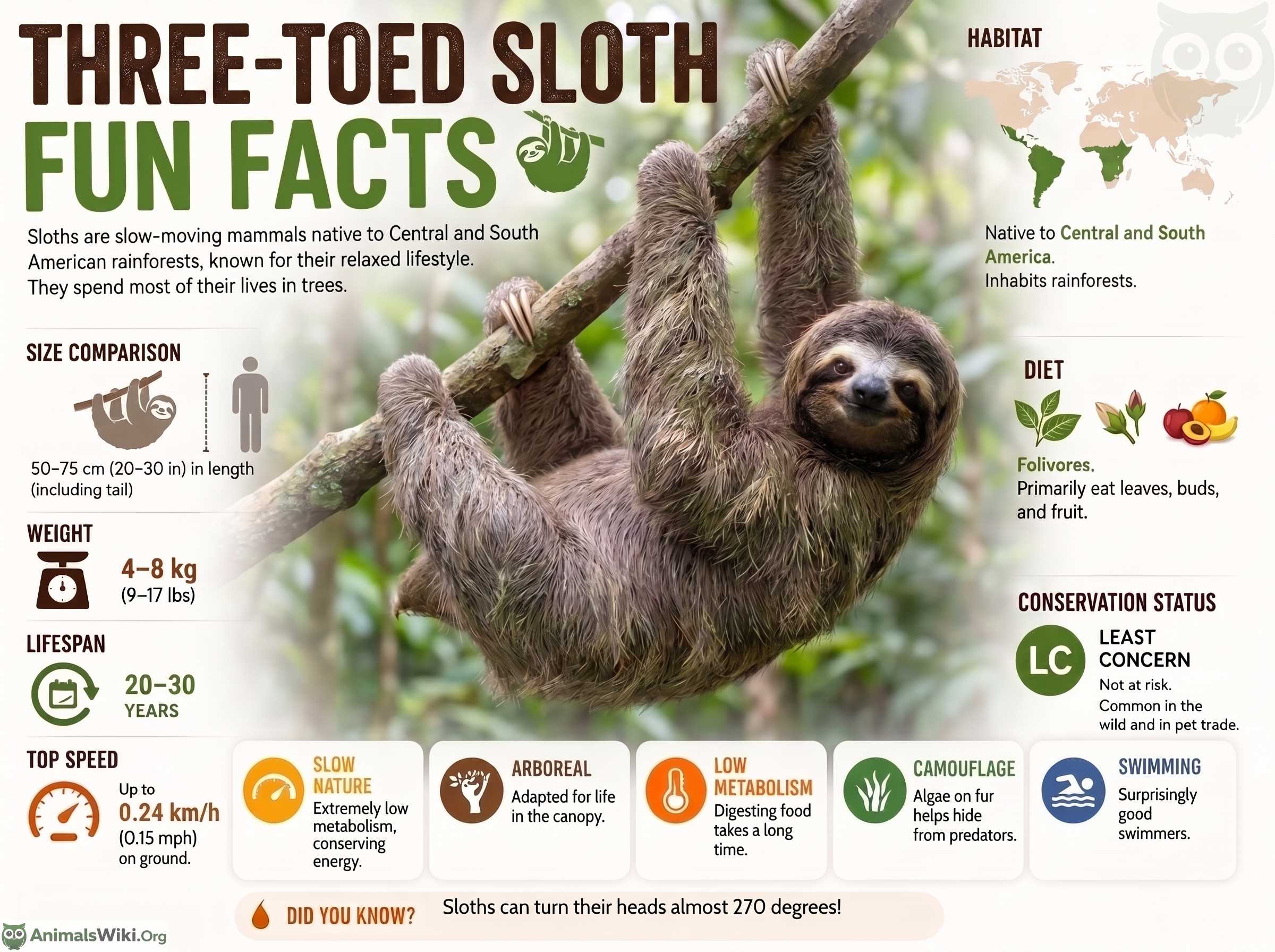
16. Sloth Fun Facts for Kids
- The sloth is the world’s slowest mammal — moving at an average of 0.24 km/h (0.15 mph)
- A single sloth meal can take up to 30 days to fully digest — the slowest digestive rate of any mammal
- Sloths sleep 15–20 hours per day — making them the sleepiest mammal (and one of the sleepiest vertebrates)
- Sloths have 8–9 cervical vertebrae — virtually every other mammal (including giraffes and humans) has exactly 7
- Sloths are surprisingly good swimmers — they can swim three times faster than they can move on land, crossing rivers with efficient breast-stroke movements
- Sloths defecate only once per week — descending from their tree, digging a hole, defecating, and returning; this is one of the most energetically costly activities of their week
- The sloth’s fur harbors a complete ecosystem — algae, moths, beetles, mites, and dozens of other organisms live in its fur; some are found nowhere else on Earth
- The three-toed sloth and two-toed sloth are no more closely related to each other than a lion is to a seal — their similarities evolved independently
- A sloth can lose up to two-thirds of its body heat in cool, wet conditions — its metabolic rate is too low to maintain body temperature through metabolism alone
- The sloth’s grip is so strong that individuals have been known to remain hanging from branches after death for several days
- The Pygmy Three-toed Sloth was only formally described as a species in 2001 and has a total population of approximately 100 individuals
- Sloths can rotate their heads nearly 270 degrees — allowing them to survey their surroundings without moving their energy-expensive bodies
17. How You Can Help
Support These Organizations
- The Sloth Conservation Foundation (SloCo) (slothconservation.com) — the most scientifically credible sloth-specific conservation organization; conducting research on sloth ecology and behavior; addressing wildlife trafficking, road mortality, and habitat loss; developing wildlife crossing programs and community education; founded by Dr. Rebecca Cliffe; donations directly fund field research and conservation programs
- Rainforest Trust (rainforesttrust.org) — protecting tropical forest habitat across Central and South America; every acre of forest protected directly benefits sloth populations; one of the most cost-effective tropical forest conservation organizations
- World Wildlife Fund — Amazon Program (wwf.org) — major programs protecting Amazon basin forests critical for multiple sloth species
- Amazon Conservation Association (amazonconservation.org) — protecting Amazon forest in Peru and Bolivia; community-based forest management programs that benefit sloth habitat
- Proyecto Asis Wildlife Rescue Center, Costa Rica — genuine wildlife rescue and rehabilitation for injured sloths and other animals; visitor experience available that is welfare-focused
- SalveNos, Brazil — Brazilian organization focused on Maned Three-toed Sloth conservation in the Atlantic Forest
What You Can Do
- Never buy a sloth selfie — the single most impactful individual action for sloth welfare is refusing to pay for “sloth selfie” photo opportunities at tourist destinations; this practice drives the wildlife capture that kills thousands of sloths annually; share this information with fellow travelers
- Report suspected wildlife trafficking — if you encounter sloths being held for tourist photography, offered for sale as pets, or otherwise trafficked illegally, report to local wildlife authorities and to TRAFFIC (traffic.org)
- Support sustainable palm oil and beef products — the conversion of Central and South American forest to cattle ranching and palm oil plantations is the primary driver of sloth habitat loss; purchasing certified sustainable beef (or reducing beef consumption) and RSPO-certified palm oil products directly reduces this pressure
- Install wildlife-friendly power infrastructure — if you are involved in property development or management in sloth habitat areas, insulating power lines and installing wildlife corridors (rope bridges between trees) reduces electrocution and road mortality
- Choose genuinely ethical wildlife tourism — when visiting Central or South America, choose wildlife tour operators that are genuinely conservation-focused; reputable operators allow observation from appropriate distances, do not allow touching or handling, and contribute to conservation programs
- Support legislation — advocate for stronger enforcement of wildlife trafficking laws in your country and internationally; sloth trafficking often passes through customs in countries far from the animal’s origin
Recommended Documentaries & Books
- “Meet the Sloths” (Animal Planet, 2013) — the foundational sloth documentary; Aviarios Sloth Sanctuary; accessible and moving
- “Sloths: Life in the Slow Lane” (various natural history productions) — multiple dedicated natural history features on sloth biology
- “Wild Costa Rica” (Netflix/BBC) — excellent sloth footage in natural habitat context
- “The Sloth Lemur’s Song: Madagascar from the Deep Past to an Uncertain Future” by Alison Richard — contextualizes island mammal conservation challenges relevant to the Pygmy Sloth
- “Slow: Life in the Slow Lane” by Dr. Rebecca Cliffe — the definitive popular science book on sloth biology and conservation by the founder of SloCo; accessible and authoritative
18. Frequently Asked Questions About Sloths
Q1: Why are sloths so slow?
Sloths are slow because of a radical energy conservation strategy built around a very low-calorie diet of leaves. Mature leaves are extremely low in energy, high in fiber, and full of toxic defensive compounds — making them one of the most challenging foods in the forest. To survive on this diet, sloths have reduced their metabolic rate to approximately 40–74% lower than expected for a mammal of their size, dramatically reduced their muscle mass (to about 25–30% of expected), and slowed every bodily process including digestion (which can take 30 days per meal), movement, and even neural processing. The slowness is not a deficiency but an elegant adaptation — by requiring very little energy, the sloth can make a viable living on food that almost no other large mammal can exploit.
Q2: How long do sloths sleep?
Sloths sleep approximately 15–20 hours per day — making them among the sleepiest mammals. Early research suggested that sloths might sleep up to 20 hours per day, but more recent field research using activity monitors on wild sloths suggests that 15 hours may be more typical for wild individuals (captive sloths sleep more). Even during their active hours, sloths are not engaged in energetic activity — they move very slowly, eat, and groom. The extended sleep is related to the low-energy diet and low metabolic rate — a sloth’s body simply does not need to be fully active for many hours each day to meet its modest energy needs.
Q3: Can sloths swim?
Yes — sloths are surprisingly competent swimmers, capable of moving through water at approximately 3× their land speed using an efficient breast-stroke movement. This swimming ability is ecologically important — the Amazon basin’s rivers and flooded forests regularly present water barriers that sloths must cross; sloths have been observed crossing rivers of considerable width. Their buoyancy is enhanced by the air trapped in their hollow hair shafts, keeping them afloat with relatively little effort. Sloths have also been documented voluntarily entering water in some contexts, and coastal populations (including the Pygmy Sloth) live in mangrove forests where water movement is essential for daily ranging.
Q4: Why do sloths only poop once a week?
Sloths defecate approximately once per week — releasing approximately one-third of their body weight in a single defecation event. This extraordinary regularity reflects the extraordinarily slow digestive rate — food takes up to 30 days to pass through the digestive system, meaning that only one meal cycle completes per week. The defecation event requires the sloth to descend from its tree to the ground — a genuinely dangerous activity that exposes it to terrestrial predators. The current leading hypothesis for why sloths descend to defecate (rather than simply releasing waste from the canopy) is that they are fertilizing their preferred food trees — depositing nutrient-rich waste directly at the root base of the trees they depend on, maintaining the trees’ productivity through a mutualistic relationship.
Q5: Are the three-toed and two-toed sloths closely related?
No — this is one of the most surprising facts in sloth biology. Three-toed sloths (Bradypus) and two-toed sloths (Choloepus) diverged from a common ancestor approximately 30–35 million years ago and represent two independently evolved lineages that happened to arrive at very similar ecological strategies through convergent evolution. Molecular analysis has confirmed that two-toed sloths are actually more closely related to the extinct giant ground sloths than to three-toed sloths. The similarities between modern sloth species — the upside-down hanging lifestyle, the curved claws, the low metabolism, the leaf diet — all evolved independently in the two lineages, making sloths one of the most dramatic examples of convergent evolution in mammalian biology.
Q6: What is the most endangered sloth species?
The Pygmy Three-toed Sloth (Bradypus pygmaeus) is the most critically endangered sloth species — classified as Critically Endangered by the IUCN with an estimated total population of approximately 100 individuals. It is restricted entirely to Isla Escudo de Veraguas — a single uninhabited island of approximately 4.3 km² off the Bocas del Toro coast of Panama. The species was only formally described in 2001 and is approximately 40% smaller than its mainland relatives — a classic example of island dwarfism. Threats include its tiny population size (making it inherently vulnerable to stochastic events), climate change (sea level rise threatens the low-lying island), and tourism disturbance (the island attracts visitors who can disturb the small population).
Q7: Is it legal to keep a sloth as a pet?
In most countries, keeping a sloth as a pet is illegal — sloths are covered by CITES regulations limiting international trade and by national wildlife protection laws in all range countries. In the United States, some states have specific exotic animal ownership laws that may or may not address sloths specifically, but federal regulations under the Lacey Act restrict interstate trade in sloths. Beyond legality, sloths make extremely poor pets for welfare reasons — their dietary requirements (specific leaf species that must be fresh and varied), their temperature and humidity requirements, their social needs, and their extreme sensitivity to stress make it essentially impossible to provide adequate captive care outside a specialized facility. Most sloths obtained as pets die within days to weeks. The purchase of sloths from traffickers also directly drives the wildlife capture that typically involves killing the mother to obtain the infant.
Q8: How do sloths stay warm if they have such a low metabolic rate?
This is genuinely one of the sloth’s most significant biological challenges. Sloths cannot generate sufficient heat through metabolism to maintain body temperature in cool or cold conditions — their metabolic rate is too low. They compensate through behavioral thermoregulation:
- Sunbathing — moving to exposed canopy positions in the morning to absorb solar radiation; the daily “basking” behavior that appears lazy is actually essential temperature management
- Choosing warmer microclimates — selecting tree positions and activity times that maximize solar exposure
- Clustering — in cooler conditions, sloths may press against warm tree surfaces or, rarely, against each other
When these strategies are insufficient (in prolonged cold rain or at high elevations), sloths can become dangerously cold and may die of hypothermia — a genuine vulnerability that limits their distribution in montane habitats and makes them particularly vulnerable to unusual cold events as climate patterns change.
19. Sources Researched
The information in this article was researched and verified using the following authoritative sources:
- Wikipedia — Bradypus tridactylus, Sloth, Choloepus, Bradypus pygmaeus, Folivora, Megatherium, Pilosa
- IUCN Red List (iucnredlist.org) — Conservation status assessments for all six sloth species
- The Sloth Conservation Foundation (slothconservation.com) — Sloth biology research, population data, and conservation program information; Dr. Rebecca Cliffe’s published research
- National Geographic (nationalgeographic.com) — Sloth biology, behavior, and conservation features
- Britannica (britannica.com) — Sloth, Bradypodidae, Megalonychidae, Folivora
- Pauli, J.N. et al. (2014) — “A syndrome of mutualism reinforces the lifestyle of a sloth”; Proceedings of the Royal Society B — landmark research on sloth fur ecosystem
- Cliffe, R.N. et al. (various) — Research on sloth activity budgets, thermoregulation, and ecology; multiple peer-reviewed publications
- Montgomery, G.G. and Sunquist, M.E. (1978) — Classic research on sloth habitat use and feeding ecology
- Journal of Mammalogy — Multiple peer-reviewed papers on sloth biology, behavior, and evolution
- Journal of Zoology — Research on sloth ecological role and conservation
- Smithsonian Tropical Research Institute — Research on Barro Colorado Island sloth populations and ecology
- BBC Nature (bbc.co.uk/nature) — Documentary references and species behavior data
- iNaturalist (inaturalist.org) — Distribution and sighting data for all sloth species
- TRAFFIC (traffic.org) — Wildlife trafficking data for sloth species
20. Sloth Animal Images