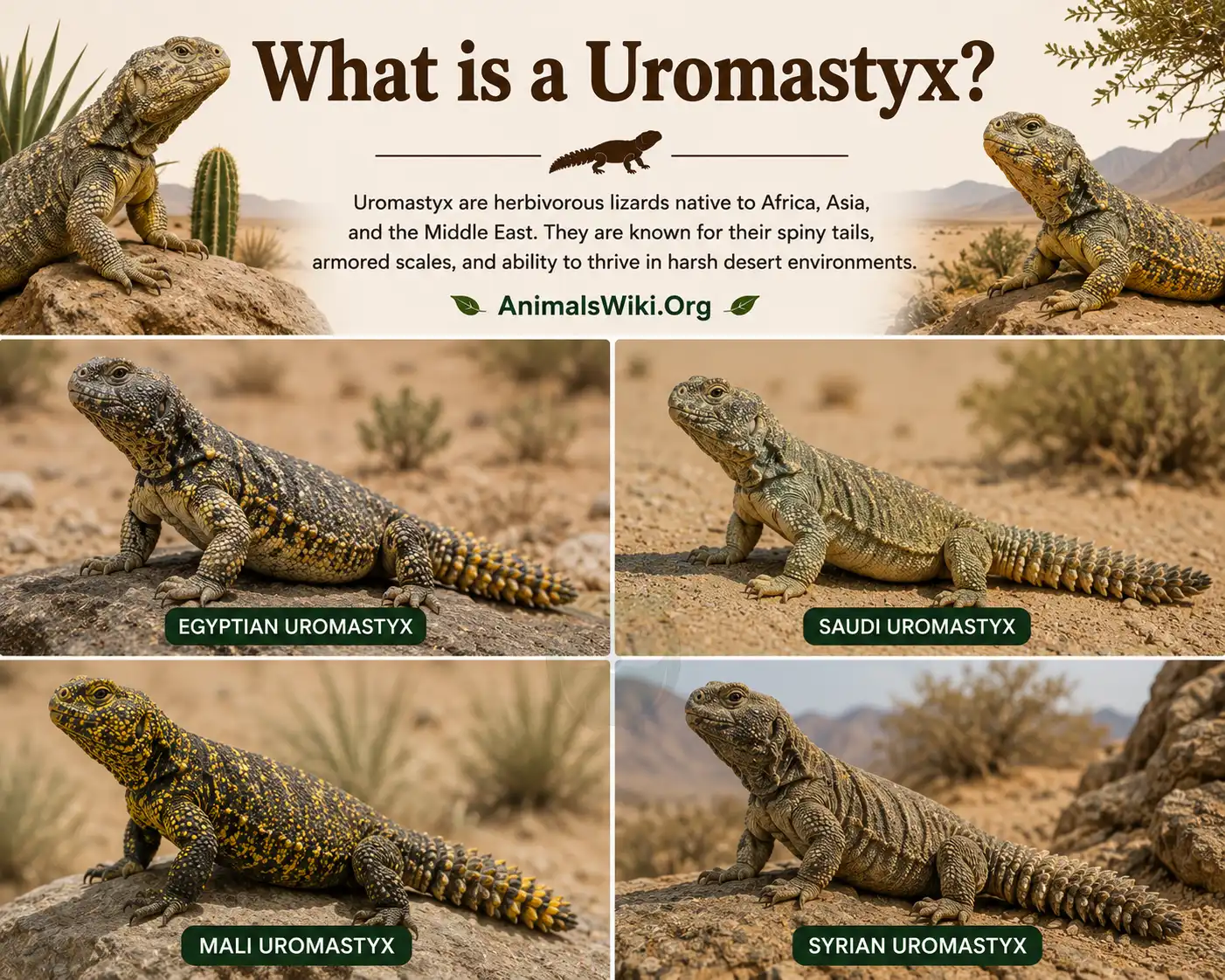
Uromastyx Facts
| Feature | Details |
|---|---|
| Common Name | Uromastyx / Spiny-Tailed Lizard / Dabb Lizard / Mastigure |
| Scientific Name | Uromastyx aegyptia (Egyptian Uromastyx — focus species) |
| Family | Agamidae |
| Order | Squamata |
| First Described | 1802 (by Étienne Geoffroy Saint-Hilaire) |
| Native Habitat | Arid desert; rocky scrubland; semi-arid savannah; sandy plains |
| Geographic Range | North Africa, Middle East, South Asia (genus range); U. aegyptia from Egypt to Iraq |
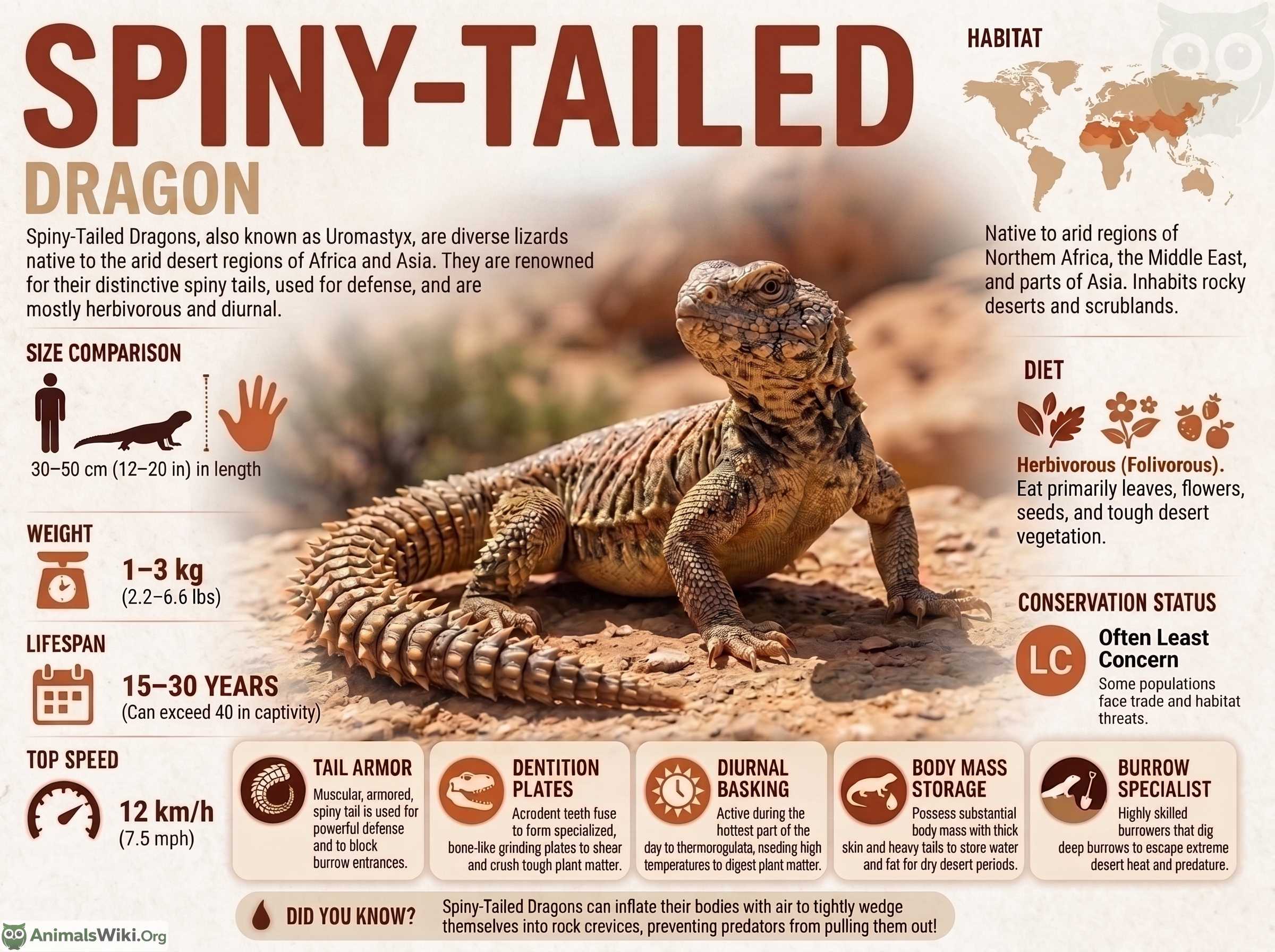
| Average Size | 30–75 cm total length (species variable); U. aegyptia up to 75 cm |
| Average Weight | 300 grams–2 kg (species variable) |
| Lifespan | 15–30 years (wild); up to 35 years (captivity) |
| Diet | Primarily herbivore — seeds, leaves, flowers; some insects (juveniles) |
| Conservation Status | Vulnerable (U. aegyptia); varies by species |
| Defining Feature | Powerful, heavily armored, ring-scaled spiny tail used as a weapon; remarkable heat tolerance; one of the world’s most herbivorous lizards; exceptional desert adaptations |
| Number of Species | ~20 recognized species within genus Uromastyx |
1. Species Overview & Classification
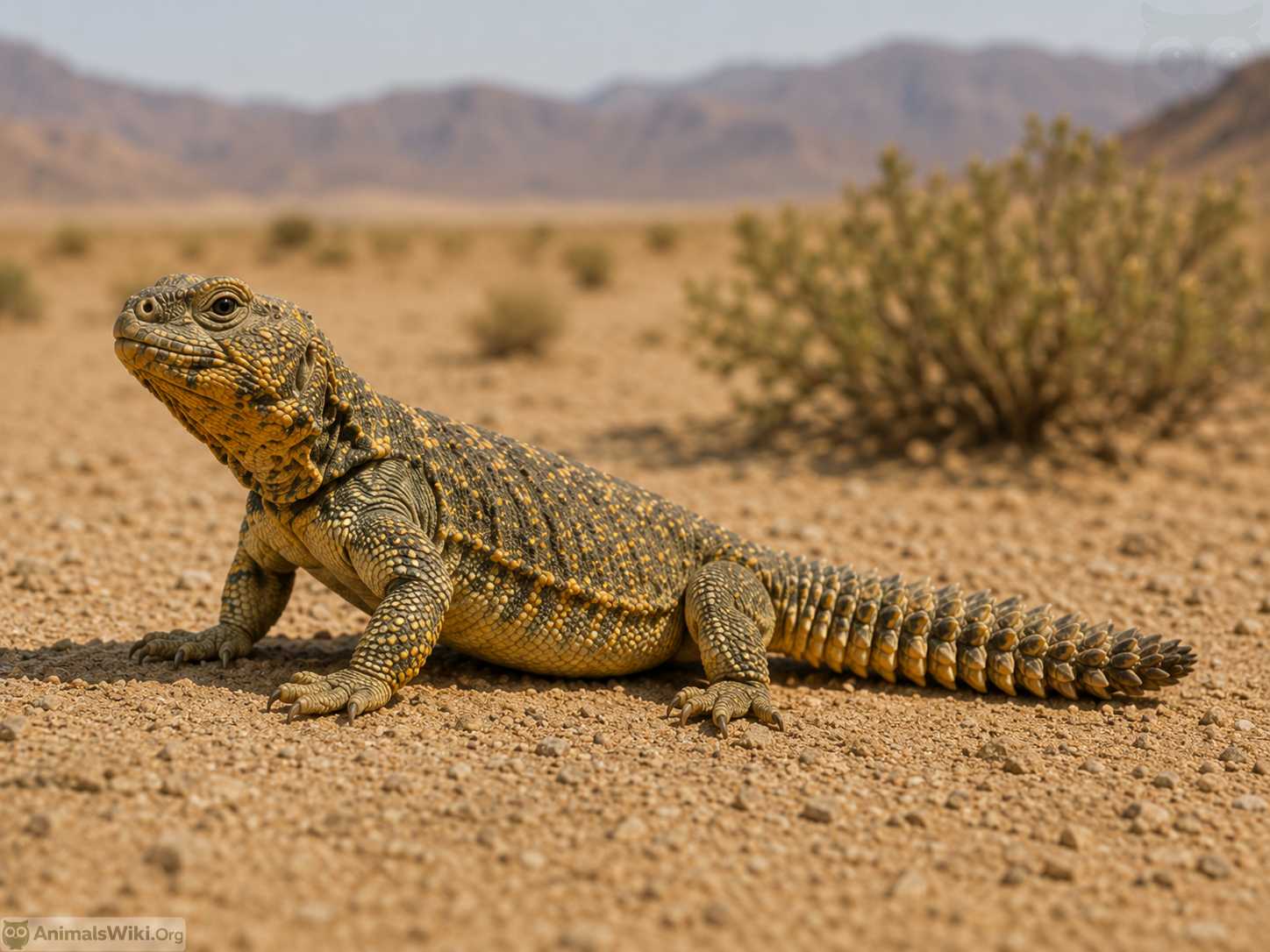
In the scorching rock fields and sandy plains of the Sahara, the Arabian Peninsula, and the arid zones stretching from Morocco to the Indian subcontinent, there is a lizard that has mastered the art of living where most other large animals cannot. It basks on rocks heated to temperatures that would blister human skin. It drinks no liquid water — deriving all its moisture from the dry seeds and desiccated vegetation it consumes. Its body temperature during peak activity routinely exceeds 40°C (104°F) — temperatures that would be life-threatening fevers in a mammal. And when threatened, it does not simply flee — it turns its back on the threat, presenting a thick, heavily armored tail ringed with wickedly pointed spines, and dares the predator to take a bite.
The Uromastyx — commonly called the spiny-tailed lizard, dabb lizard, or mastigure — is one of the desert world’s most remarkable and most misunderstood reptiles. The name itself comes from the Greek ourá (tail) and mastix (whip or scourge) — a reference to the animal’s most defining characteristic: the formidable, ring-scaled, spine-covered tail that is simultaneously its primary weapon, its most recognizable feature, and the source of multiple common names across the dozen or more languages spoken within its vast geographic range.
With approximately 20 recognized species distributed across North Africa, the Middle East, and South Asia — from Morocco and Senegal in the west to Pakistan and northwestern India in the east — the genus Uromastyx represents one of the most successfully radiation of large lizards in the arid world. Different species have colonized habitats ranging from the hyper-arid core of the Sahara to the rocky hillsides of the Thar Desert, from the limestone plateaus of Jordan to the sandy plains of Sudan, adapting their diet, coloration, and behavior to the specific challenges of their particular arid landscape.
The Egyptian Uromastyx (Uromastyx aegyptia) — the largest species in the genus, reaching up to 75 cm in total length — serves as the focus species for this guide. The largest and most massively built of the spiny-tailed lizards, the Egyptian Uromastyx occupies a range spanning from Egypt and Libya across the Sinai Peninsula, through Israel, Jordan, Saudi Arabia, Kuwait, and Iraq to the Persian Gulf — a geographic sweep across some of the world’s most intensely arid environments. It is also, unfortunately, one of the most heavily exploited species in the genus — hunted for food, harvested for traditional medicine, and collected for the international pet trade — making it the most conservation-concerning member of a group that faces broad pressure across its range.
Understanding the Uromastyx means understanding one of the most extreme physiological adaptations to desert life among all reptiles — and recognizing in this sometimes overlooked lizard one of the most fascinating and most successful desert survivors in the world.
Species Classification Table
| Classification Level | Details |
|---|---|
| Kingdom | Animalia |
| Phylum | Chordata |
| Class | Reptilia |
| Order | Squamata |
| Suborder | Lacertilia (Lizards) |
| Family | Agamidae |
| Genus | Uromastyx |
| Focus Species | Uromastyx aegyptia |
| Described By | Étienne Geoffroy Saint-Hilaire, 1802 |
| Common Names | Uromastyx; Spiny-tailed lizard; Dabb lizard; Mastigure; Dhabb (Arabic) |
Selected Uromastyx Species
| Species | Common Name | Range | Size | IUCN Status |
|---|---|---|---|---|
| U. aegyptia | Egyptian / Egyptian Mastigure | Egypt to Iraq | Up to 75 cm | Vulnerable |
| U. acanthinura | Bell’s Dabb Lizard | Algeria, Tunisia, Morocco, Libya | 30–43 cm | Near Threatened |
| U. geyri | Saharan Uromastyx / Geyri’s Mastigure | Sahara (Mali, Niger, Algeria) | 30–38 cm | Least Concern |
| U. ornata | Ornate Mastigure / Arabian Spiny-tailed Lizard | Egypt, Israel, Jordan, Saudi Arabia | 25–35 cm | Near Threatened |
| U. thomasi | Thomas’s Mastigure | Oman | 25–35 cm | Data Deficient |
| U. princeps | Prince’s Mastigure | Somalia, Ethiopia | 30–38 cm | Data Deficient |
| U. dispar | Sudan Mastigure | Sudan, Eritrea, Chad | 25–35 cm | Data Deficient |
| U. nigriventris | Moroccan Uromastyx | Morocco | 25–30 cm | Near Threatened |
| U. hardwickii | Indian Spiny-tailed Lizard | India, Pakistan | 35–45 cm | Vulnerable |
| U. leptieni | Leptien’s Mastigure | UAE, Oman | 25–35 cm | Near Threatened |
2. Physical Description & Unique Features
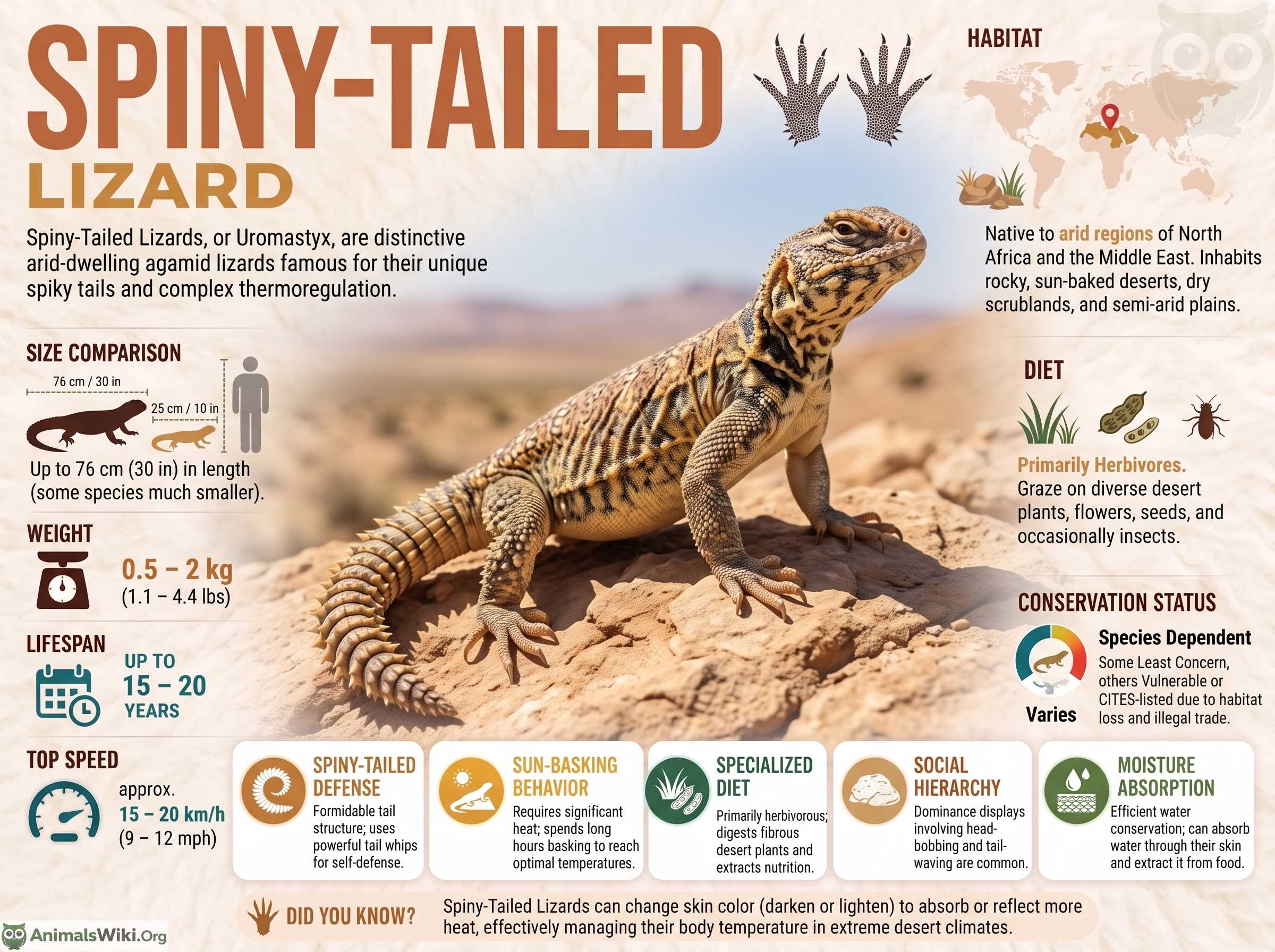
The Uromastyx body plan is one of the most distinctive in the lizard world — a heavily built, flat-bodied animal whose most immediate visual impression is of a creature armored specifically for desert life.
Size and Build
The genus shows considerable size variation across species:
Egyptian Uromastyx (U. aegyptia) — the largest species:
- Total length: Up to 75 cm (30 inches) including tail
- Body length (snout to vent): 35–45 cm in large adults
- Weight: Up to 2 kg in the largest individuals — among the heaviest agamid lizards
- Build: Massively built — broad, flat body; thick, powerful limbs; enormous head; disproportionately heavy tail
Smaller species (U. geyri, U. ornata, etc.):
- Total length: 25–43 cm
- Weight: 100–500 grams
- More slender build; proportionally similar tail but overall more gracile
The body is distinctively dorsoventrally flattened (compressed from top to bottom) — an adaptation that allows the lizard to:
- Squeeze into narrow rock crevices for thermoregulation and refuge
- Maximize surface area for solar heat absorption during basking
- Reduce visibility when pressed flat against a rock surface
The Iconic Spiny Tail — The Genus’s Defining Feature
The tail of Uromastyx is the most immediately striking anatomical feature — a structure of such biological and cultural significance that it gives the animal multiple of its common names:
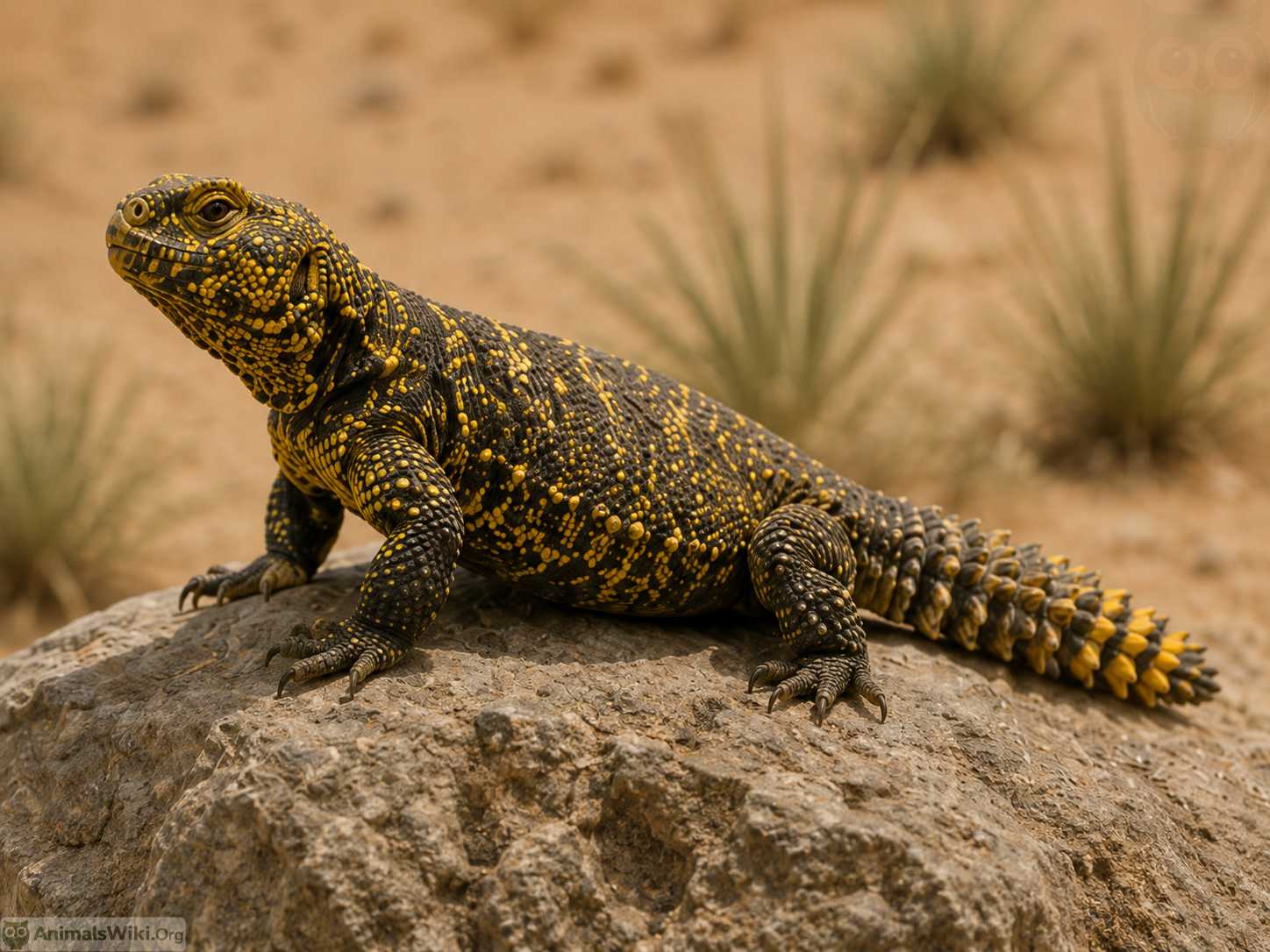
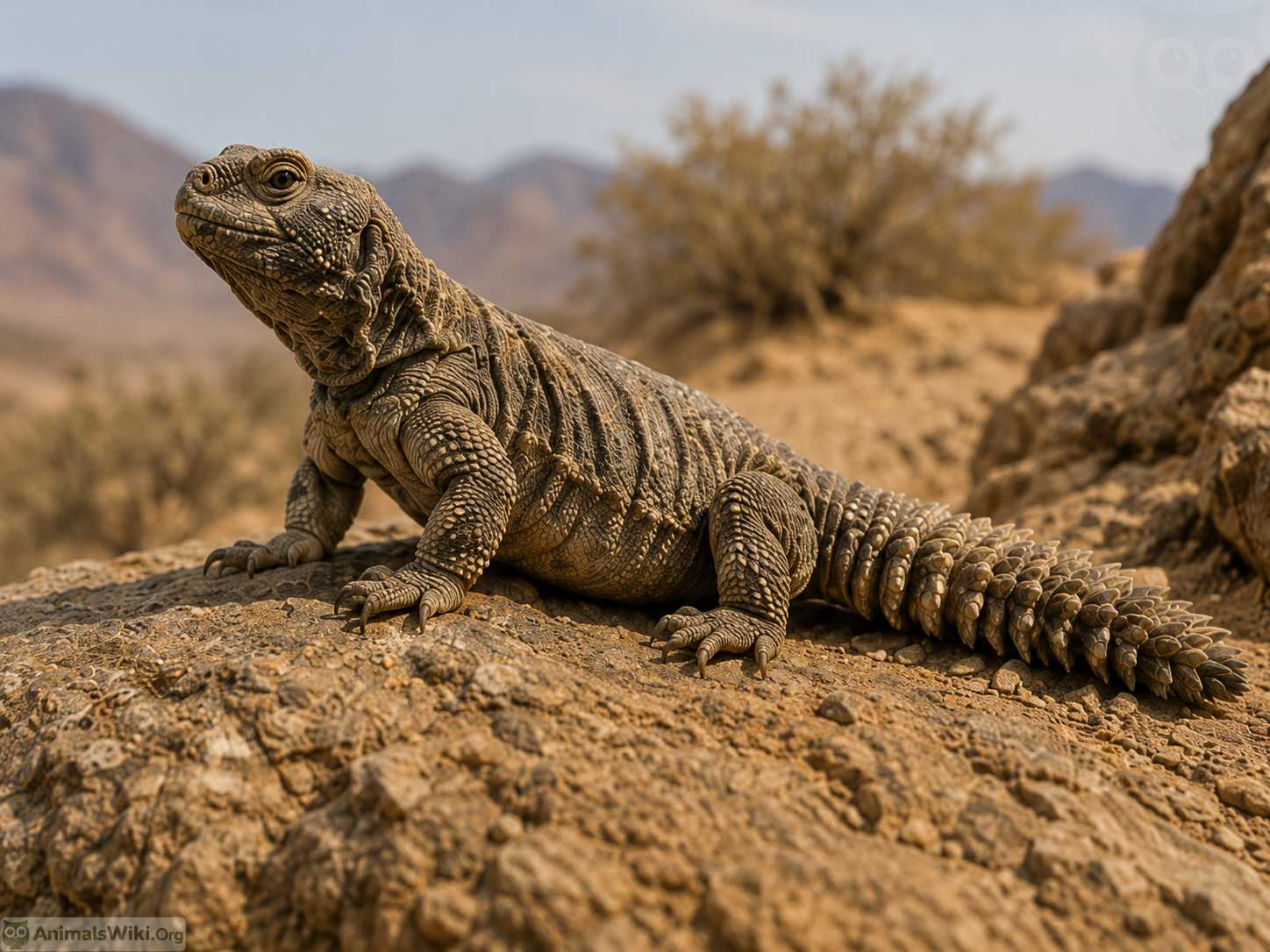
Structure: The tail is covered in concentric rings of keeled, spinose scales — each scale enlarged and pointed, pointing posteriorly; the rings create a visually unmistakable pattern of armored segments that becomes more heavily armed toward the base of the tail where the scales are largest
Size: The tail constitutes approximately 35–40% of the animal’s total length; in the Egyptian Uromastyx, a large adult’s tail may be 25–30 cm long with spines reaching several millimeters in height
Function as weapon: When threatened, the Uromastyx turns its body to present the tail toward the predator and delivers rapid, powerful lateral sweeping blows with the tail; the impact of the heavily spined tail against a predator’s face or legs is painful and potentially injurious; the same defensive tail swing has caused bleeding injuries to human handlers
Fat storage: The tail is also a significant fat storage organ — in well-fed animals, the tail base becomes noticeably swollen and rounded as fat reserves accumulate; a thin, flat tail on a Uromastyx indicates poor nutritional condition, while a plump, rounded tail base indicates a healthy, well-nourished animal
Water storage: Research has suggested that some stored fat in the tail can be metabolized for water production through metabolic water generation — providing an additional physiological benefit to the fat storage function
The Head and Jaws
The Uromastyx head is large and robust relative to the body — particularly in the Egyptian species where the head achieves impressive dimensions in large males:
Skull architecture: The skull is adapted for powerful crushing and grinding of hard seeds and tough vegetation; the jaw muscles (particularly the pterygoideus and adductor mandibulae) are massively developed, giving the head its characteristic broad, blunt appearance
Teeth: Pleurodont teeth (attached to the side of the jawbone rather than sockets) that are adapted for cropping and crushing vegetation; the dental formula reflects the herbivorous diet — broader, more crushing teeth than in predatory lizard species
Bite force: Exceptionally powerful for lizard body size — capable of crushing hard seeds and delivering a painful defensive bite if handled incorrectly
The “nuchal crest” — many Uromastyx species bear a series of enlarged, keeled scales along the back of the neck and upper back, creating a low ridge or crest that adds to the animal’s imposing appearance
Coloration — Extraordinary Diversity Across the Genus
The coloration of Uromastyx species is one of the most diverse in any lizard genus — ranging from completely cryptic sandy-brown to vivid, almost iridescent patterns of yellow, orange, red, green, and blue:
Egyptian Uromastyx (U. aegyptia):
- Adults: Grey to brownish-grey overall; some individuals show yellowish or olivaceous tones
- Pattern: Relatively uniform; some reticulation or mottling
- Sexual dimorphism: Males typically develop brighter coloration than females, particularly on the dorsal surface
Ornate Uromastyx (U. ornata):
- One of the most spectacularly colored species
- Males: Bright blue, green, yellow, or orange backs with complex reticulate patterns; colors intensify during the breeding season and in dominant males
- Females: More cryptic brown and tan; some retained pattern from juvenile stage
Saharan Uromastyx (U. geyri):
- Adults: Yellow to orange to red dorsal surface; males more intensely colored
- One of the most popular species in the pet trade precisely because of the vivid adult coloration
Moroccan Uromastyx (U. nigriventris):
- Males: Striking yellow-orange dorsal surface; dark (black to dark blue) ventral surface
- The specific epithet nigriventris means “black belly”
The color-change phenomenon: Many Uromastyx species show rapid physiological color change — particularly associated with thermoregulation and social signaling:
- Cold/morning colors: Many species appear dull grey or brown when cold — dark coloration maximizes heat absorption during morning basking
- Warm/active colors: As body temperature rises, brighter colors emerge — often yellows, oranges, and reds in species capable of vivid coloration
- Social arousal: Males engaged in territorial display or courtship often intensify their colors dramatically
Scales and Skin
Granular dorsal scales — small, keeled scales covering most of the body; the texture creates a rough, pebbly appearance that provides both protection and texture for thermoregulation
Larger, spiny scales on the tail — the characteristic ringed arrangement described above
Smooth ventral scales — the belly scales are smoother and larger than the dorsal scales; in contact with rock or ground during basking and movement
Skin thickness — the skin is relatively thick compared to many lizard species; this thickness provides protection against abrasion in rocky habitats and offers some protection against predator attacks
Did You Know? The Uromastyx can withstand body temperatures that would be lethal to virtually any mammal — actively foraging at substrate temperatures exceeding 70°C (158°F) and maintaining body temperatures above 40°C (104°F) during peak activity. This extreme heat tolerance makes the Uromastyx essentially immune to heat competition from mammalian herbivores that cannot function at such temperatures — allowing it to exploit food resources in the hottest parts of the day and the hottest microhabitats that no mammal can access.
3. Natural Habitat & Geographic Range
The Uromastyx genus is defined by its association with arid and hyperarid environments — habitats so extreme in their temperature ranges, moisture deficits, and resource scarcity that they exclude most large vertebrates. Understanding the specific habitat preferences within this broad arid zone reveals the ecological sophistication of these remarkable lizards.
Defining Habitat Features
Despite the diversity of specific habitats occupied across the genus, all Uromastyx species share consistent requirements:
Burrow substrate: All Uromastyx species construct or occupy burrows — underground refuges that are essential for thermoregulation, protection from predators, and overnight shelter. The substrate must be appropriate for burrowing:
- Hard-packed sandy or clay soils for species that excavate their own burrows
- Rocky terrain with natural crevices for species that exploit existing rock refuges
- Sandy substrates at the base of rocky outcrops — the most commonly used combination across the genus
Elevated basking positions: Rocks, boulders, rubble, or raised sandy areas that allow the lizard to elevate its body temperature rapidly in the morning while maintaining visual surveillance of the surroundings
Sparse to moderate vegetation providing food resources at manageable travel distances from the burrow; the combination of open ground and scattered vegetation characterizes most Uromastyx habitats
Absence of dense vegetation or closed canopy — Uromastyx are fundamentally open-habitat animals that require visual access to their surroundings for predator detection and thermoregulation
Habitat Types by Region
Saharan rocky desert (hamada) — rocky plateaus and hillsides with scattered boulders; the preferred habitat for many North African species including U. acanthinura and U. dispar; rocky substrate provides abundant natural burrow sites and elevated basking positions
Sandy desert (erg) — pure sand desert is less commonly occupied than rocky desert; species that do use sandy habitats (U. geyri in parts of its range) excavate deep burrows in the sand
Rocky wadi margins — the rocky edges of dry riverbeds (wadis) provide ideal habitat in many parts of the range; the combination of sandy substrate for burrowing, rocks for basking, and vegetation in wadi floors creates exceptional conditions
Gravel plains (reg) — compacted gravel desert surfaces support several Uromastyx species; the Egyptian Uromastyx is commonly associated with this habitat type in parts of its range
Hillside and escarpment terrain — steep, rocky hillsides with scattered vegetation are heavily used across multiple species; the thermal advantages of south-facing slopes (in the Northern Hemisphere range) concentrate populations
Burrow Architecture — Desert Engineering
The Uromastyx burrow is not merely a simple hole in the ground — it is a sophisticated temperature-regulation structure of considerable engineering complexity:
Depth: Egyptian Uromastyx burrows can reach 2–3 meters in depth — deep enough to access ground temperatures significantly lower than surface temperatures; burrow temperatures remain relatively stable compared to the extreme surface temperature fluctuations of the desert
Orientation: Many Uromastyx species orient their burrows to face specific compass directions — typically facing southeast in the Northern Hemisphere to receive early morning sun at the burrow entrance, facilitating rapid morning warming
Multiple entrance tunnels — some large burrow systems have multiple entrances providing escape routes if a predator enters
Sleeping chamber: The burrow typically widens into a sleeping chamber at depth where the animal spends the night and the hottest part of the day in a more thermally stable environment
Temperature buffering: Research has demonstrated that Uromastyx burrows maintain temperatures within the animal’s preferred body temperature range when the surface is either too hot or too cold — providing an extraordinary thermal buffer against the desert’s temperature extremes
Geographic Range
| Region | Key Species | Habitat | Notes |
|---|---|---|---|
| Morocco/NW Africa | U. acanthinura, U. nigriventris | Rocky desert, semi-arid scrub | Northwestern range; Maghreb endemic species |
| Sahara (Mali, Niger, Algeria) | U. geyri, U. dispar | Sandy and rocky desert | Deep Sahara; some of the most extreme habitats |
| Egypt/Libya | U. aegyptia | Gravel plains, rocky desert | Focus species; most heavily exploited |
| Sudan/Ethiopia | U. dispar, U. princeps | Rocky desert, semi-arid savannah | East African range; poorly monitored |
| Arabia/Israel/Jordan | U. ornata, U. aegyptia | Rocky hillsides, wadi margins | Middle Eastern range; ornata spectacularly colored |
| Oman/UAE | U. thomasi, U. leptieni | Gravel plains, rocky escarpments | Arabian Peninsula endemics |
| Iran/Iraq/Kuwait | U. aegyptia | Sandy and rocky desert | Eastern range of focus species |
| Pakistan/India | U. hardwickii | Thar Desert; arid scrub | Easternmost range; Indian Subcontinent |
4. Diet & Feeding Behavior
The Uromastyx’s dietary biology is one of its most scientifically fascinating aspects — the genus as a whole represents one of the most herbivorous lineages of lizards in the world, with most species deriving the vast majority of their nutrition from plant material with essentially no liquid water intake.
What Uromastyx Eat
Seeds — the most important food category for many species; seeds are extraordinary nutritional packages — high in oils, proteins, and carbohydrates; Uromastyx are among the very few lizard species capable of efficiently exploiting seeds as a primary food source; the powerful jaw musculature and crushing dentition are specifically adapted for seed processing; seeds also have the advantage of being dry — low in water but not requiring water for digestion in the way that some other food types do
Desert grasses — leaves, stems, and seed heads of desert grasses are consumed extensively; the thick, coarse grass of arid environments would be unpalatable to many animals but Uromastyx process it effectively
Forbs and desert herbs — various desert-adapted herbaceous plants are consumed; the leaves and flowers of annual and perennial desert plants are consumed as they become available
Flowers — particularly valued when available; flowers are rich in sugars and proteins; Uromastyx in bloom-bearing habitats show concentrated foraging at flowering plants
Leaves and stems — the foliage of various desert shrubs and small trees is consumed; Uromastyx are somewhat selective, showing preferences for specific plant species and avoiding highly toxic plants
Bark and woody material — consumed occasionally; particularly in dry seasons when more palatable vegetation is scarce
Insects and invertebrates — juveniles consume more insect prey than adults; as Uromastyx grow, the diet shifts progressively toward plant material; very large adults of most species rarely consume invertebrates; this ontogenetic dietary shift parallels similar patterns in other large herbivorous lizards (including the Green Iguana and the Chuckwalla)
Feces (coprophagy) — documented in captive Uromastyx and suspected in wild populations; the consumption of conspecific feces may serve to acquire gut microbiota necessary for plant cellulose digestion — a strategy also seen in some other herbivorous reptiles and mammals
The Water-Free Lifestyle — A Physiological Marvel
The Uromastyx’s ability to survive without drinking liquid water is one of the most remarkable physiological achievements in the reptile world:
Metabolic water production — the oxidation (burning) of food — particularly fats and carbohydrates — produces water as a metabolic byproduct; this metabolic water is the Uromastyx’s primary water source in most situations; the calculation of metabolic water production from specific food types is a key aspect of understanding how Uromastyx achieves water balance
Water from food — even apparently dry seeds contain small amounts of water; the cumulative water obtained from the food items consumed provides a meaningful supplement to metabolic water
Highly efficient kidney function — Uromastyx kidneys produce highly concentrated uric acid excretion (rather than urea as in mammals); uric acid is nearly insoluble in water and is excreted as a semi-solid paste with minimal water loss; this makes Uromastyx kidney function extraordinarily water-efficient
Salt glands — nasal salt glands excrete excess salts (primarily sodium and potassium chloride) that accumulate from the diet; these glands allow the elimination of excess dietary salt without requiring large amounts of water for dilution; the white crystalline deposits visible at the nostrils of Uromastyx represent the products of these salt glands
Reduced evaporative water loss — the thick skin, the behavioral avoidance of peak heat, and the use of burrows all reduce evaporative water loss from the body surface and respiratory tract; Uromastyx skin is significantly less permeable to water than the skin of more moisture-adapted lizard species
Foraging Behavior and Strategy
Activity window: Uromastyx foraging activity is concentrated in a relatively narrow window of the day — typically the late morning to early afternoon when body temperature has been raised to activity levels by basking but before the extreme midday heat makes surface activity dangerous:
Typical daily activity pattern (approximate, varies with season and latitude):
- Sunrise to ~9 AM: Burrow exit; basking; body temperature raising
- ~9 AM to 12 PM: Peak foraging activity
- ~12 PM to 2 PM: Return to burrow or shade; avoid peak heat
- ~2 PM to 4 PM (varies): Second activity period in cooler afternoon
- Before sunset: Final basking; return to burrow for night
Foraging range: Uromastyx typically forage within 50–150 meters of their burrow entrance — the home range is relatively compact, reflecting the cost-benefit calculation of leaving the thermal refuge of the burrow against the need to find food
Seasonal inactivity: In both the coldest months and (in some areas) the hottest months, Uromastyx may enter periods of reduced activity or dormancy — reducing foraging to minimal or zero activity when temperatures are outside the active range; the tail fat reserves accumulated during active seasons provide energy during inactive periods
Diet Breakdown Table
| Food Type | % of Adult Diet | % of Juvenile Diet | Notes |
|---|---|---|---|
| Seeds | 30–50% | 15–25% | Primary caloric source; crushing dentition essential |
| Leaves and stems | 25–35% | 20–30% | Bulk of diet; high fiber; selective consumption |
| Flowers | 10–20% | 10–15% | Seasonal; high sugar content; actively sought |
| Grasses | 10–20% | 10–20% | Year-round; drought-tolerant grass most important in dry season |
| Fruits and fleshy plant parts | 5–10% | 5–10% | Seasonal; higher water content |
| Insects and invertebrates | <5% | 20–40% | Juveniles more insectivorous; adults rarely |
“The Uromastyx represents the reptilian equivalent of the desert antelope in its ecological role — a large, herbivorous animal that has found a way to convert low-quality desert vegetation into biomass, and in doing so becomes a critical link in the desert food chain that connects scattered, sparse primary production to the predators that depend on them. Understanding how Uromastyx achieves water balance without drinking is one of the most fascinating problems in desert physiology.” — Dr. Kenneth Nagy, Professor Emeritus, UCLA Department of Ecology and Evolutionary Biology
5. Reproduction & Life Cycle
The Uromastyx reproductive cycle is closely tied to the desert’s seasonal rhythms — timed to ensure that juveniles hatch when food resources are most available and temperatures are most favorable for rapid growth.
Sexual Maturity
- Egyptian Uromastyx: Sexual maturity at approximately 3–5 years in females; males may begin displaying at 2–3 years but may not achieve dominant breeding status until larger
- Smaller species: Maturity may be reached slightly earlier at 2–3 years
- Size at maturity is probably more important than age — females reaching a threshold body size begin reproductive cycling
Seasonal Reproductive Cycle
The Uromastyx reproductive cycle follows the desert’s annual temperature cycle:
Winter inactivity (approximately November–February in most of range): Many Uromastyx enter a period of winter dormancy or reduced activity during the coolest months; body temperature drops; feeding nearly ceases; animals remain in burrows for extended periods; this dormancy period appears to trigger reproductive readiness in both sexes — the hormonal changes associated with gonadal development occur during or immediately following the cool period
Spring emergence and mating (approximately February–April): As temperatures rise, Uromastyx emerge with full reproductive readiness; males immediately begin territorial and courtship behavior; mating occurs in late winter and early spring across most of the range
Egg laying (approximately March–May): Females that have been successfully mated begin depositing eggs; the specific timing varies by latitude and species
Incubation (approximately 70–90 days): Eggs incubate in the burrow system or in a separate egg chamber
Hatching (approximately June–August): Juveniles hatch during the summer — when annual plant growth and insect abundance are highest in the desert, providing optimal food for the growing hatchlings
Male Territorial and Mating Behavior
Male Uromastyx in breeding condition display the most dramatic behavioral repertoire of any period in their lives:
Head bobbing — a rapid, rhythmic up-and-down movement of the head that functions both as a territorial signal to rival males and as a courtship signal to females; the pattern (speed, amplitude, rhythm) is species-specific — each Uromastyx species has a distinctive head-bob pattern that functions as a visual species-recognition signal
Color intensification — males of colorful species (particularly U. ornata, U. geyri, U. nigriventris) intensify their dorsal colors dramatically during the breeding season; the vivid blue, green, orange, or yellow displayed by a fully aroused male Uromastyx is dramatically more intense than the same animal’s non-breeding coloration
Push-up displays — males perform conspicuous push-up movements on prominent rocks — elevating the body on extended forelegs and lowering it rhythmically; these displays are visible to conspecifics across considerable distances in the open desert landscape
Territorial combat — when rival males are unable to resolve territorial disputes through display, physical combat may occur; combat involves lateral compression (making the body appear as large as possible), tail whipping (using the spiny tail as a weapon), and biting; serious injuries can result from prolonged combat between evenly matched males
Nesting and Egg Deposition
Female Uromastyx typically deposit eggs in a special nesting chamber within or adjacent to their burrow system:
- Clutch size: 5–40 eggs depending on species and female size; Egyptian Uromastyx typically lay 10–23 eggs per clutch; smaller species lay smaller clutches
- Egg size: White, leathery-shelled eggs approximately 2–3 cm in length for most species
- Nesting depth: Eggs are typically buried 20–40 cm below the surface — deep enough for temperature buffering but shallow enough for appropriate incubation temperatures
- No parental care: After egg deposition, the female provides no further care; eggs develop independently
Incubation and Hatching
- Incubation period: Approximately 70–90 days at typical nest temperatures of 30–35°C
- Temperature-dependent sex determination (TSD): Like many reptiles, Uromastyx sex determination is influenced by incubation temperature; the precise threshold temperatures vary by species but the pattern of cooler temperatures producing one sex and warmer temperatures producing the other is consistent with other TSD reptiles
- Hatchling size: Hatchlings are approximately 7–12 cm total length; they must immediately begin feeding and thermoregulating independently
- Juvenile behavior: Hatchlings show full adult behavioral repertoires (basking, foraging, head-bobbing, tail defense) immediately; they initially consume more insects than adults but transition to the herbivorous adult diet progressively
Lifespan
Uromastyx are among the longer-lived lizards — consistent with their slow reproductive rate and large body size:
- Wild lifespan: Estimated 15–25 years for Egyptian Uromastyx based on size-age correlations and field data
- Captive lifespan: Up to 35 years documented in captive Egyptian Uromastyx maintained by experienced keepers
- The combination of longevity, delayed maturity, and modest clutch sizes makes Uromastyx populations sensitive to adult mortality — population recovery from overexploitation is correspondingly slow
Did You Know? Male Ornate Uromastyx (U. ornata) in breeding condition are among the most strikingly colored reptiles in the entire Old World — their dorsal surface can display vivid combinations of blue, turquoise, green, yellow, and orange in intricate reticulate patterns that rival the most spectacular tropical lizards. The color change between a dull-colored, cold animal in the morning and a fully color-expressed, territorially active male at peak temperature is so dramatic that early naturalists collecting specimens from different behavioral states sometimes described them as different species. The vivid colors function as honest signals of male quality — only males in excellent physiological condition can produce and maintain such intense coloration.
6. Social Behavior & Communication
The Uromastyx social system is built around a resource-based dominance hierarchy — specifically around the ownership and defense of burrow sites, which represent the most limiting resource in the desert environment.
Social Structure — Burrow-Based Territories
The fundamental unit of Uromastyx social organization is the individual burrow territory — an area centered on a primary burrow system that the resident defends against conspecifics of the same sex:
Males defend larger territories encompassing multiple female burrow sites; a dominant male’s territory typically overlaps with those of 2–5 females
Females maintain smaller individual territories centered on their own burrow systems; female territories may overlap somewhat but core areas are defended
Dominance hierarchy: In areas of high Uromastyx density, a linear dominance hierarchy among males determines access to the best burrow sites, basking positions, and mating opportunities; dominant males are typically the largest and most intensely colored individuals
Non-territorial individuals: Younger males and subordinate adults may be “floaters” — occupying marginal habitat without established burrow territories; these individuals have reduced reproductive opportunities and higher mortality rates (greater exposure to predators without a defended burrow)
Visual Communication
The Uromastyx’s visual communication system is one of the most elaborate among Old World lizards:
Head bobbing — the primary long-range visual signal; the specific temporal pattern (frequency, amplitude, number of bobs in a sequence) is species-specific and serves multiple functions:
- Territorial advertisement — communicates occupation of a territory to distant conspecifics
- Threat escalation — bob rate and intensity increases with the level of territorial challenge
- Courtship — modified bob patterns are used in courtship approaches to females
Color display — the rapid brightening of colors described above; dominant males maintain bright colors during daylight hours when active; subordinate males may suppress color expression in the presence of dominants
Lateral compression and flattening — displaying the full body width to a rival by turning broadside; combined with color display, this creates a maximum-size impression
Push-up displays — performed on prominent elevated positions (boulders, termite mounds) making the display visible at maximum range
Tail waving — slow lateral movements of the tail function as a low-intensity threat or alert signal; distinct from the rapid defensive tail-whip used against predators
Olfactory Communication
Femoral pores — rows of secretory pores on the inner thighs of both sexes (better developed in males) produce chemical secretions deposited on substrate during movement; these chemical marks communicate individual identity, sex, reproductive status, and dominance rank
Cloacal dragging — deliberate dragging of the cloaca along substrate deposits secretions at specific locations; used in territory marking
Fecal deposits — latrine sites are used repeatedly and their location communicates territory occupancy
Social Tolerance and Aggregation
Despite their territorial nature, Uromastyx show context-specific social tolerance:
Thermal aggregation — in cold weather, Uromastyx from adjacent territories may share a particularly good basking site without overt aggression; the need to warm up overrides territorial behavior in cold conditions
Mineral lick sharing — at rare mineral lick sites, multiple individuals may aggregate with reduced aggression; the essential resource value of the site promotes tolerance
Juvenile tolerance — adults are generally tolerant of small juveniles that are not yet sexual competitors; the aggressive territorial behavior escalates as juveniles grow toward sexual maturity
7. Predators & Defense Mechanisms
The Uromastyx’s predator community is diverse — spanning aerial raptors, terrestrial snakes, and mammalian carnivores. The animal’s defense strategy combines passive camouflage with one of the most actively formidable defensive weapons of any lizard.
Natural Predators
Raptors:
- Lanner Falcon (Falco biarmicus) — significant aerial predator across the North African and Middle Eastern range; attacks Uromastyx in the open desert
- Short-toed Snake Eagle (Circaetus gallicus) — a specialized snake and lizard predator; documented taking Uromastyx across the range
- Pale Chanting Goshawk (Melierax canorus) — important predator in the sub-Saharan African range
- Eagle Owls (Bubo spp.) — nocturnal predators that take Uromastyx emerging from or at burrow entrances at dawn and dusk
- Various eagle species — multiple eagle species opportunistically take Uromastyx
Snakes:
- Desert Cobra (Naja haje) — regularly enters Uromastyx burrows to take eggs and juveniles
- Carpet Viper (Echis carinatus) — takes juvenile Uromastyx opportunistically
- Egyptian Ratsnake (Zamenis lineatus) — enters burrows for eggs and juveniles
- Horned Viper (Cerastes cerastes) — takes juveniles in sandy habitats
Mammals:
- Desert Monitor (Varanus griseus) — the primary reptilian predator of adult Uromastyx across the range; monitor lizards regularly excavate Uromastyx burrows and can pursue them across open ground
- Sand Cat (Felis margarita) — takes Uromastyx in suitable habitat
- Fennec Fox (Vulpes zerda) — takes juveniles and occasionally adults near burrow entrances
- Egyptian Mongoose (Herpestes ichneumon) — active predator of Uromastyx in suitable habitat
- Honey Badger (Mellivora capensis) — powerful digger that excavates Uromastyx burrows
The Defensive Sequence — A Graduated Response
The Uromastyx defensive behavior is a classic graduated threat response — escalating through a sequence of increasingly costly defensive measures:
Level 1 — Flight: The first response to any perceived threat is retreat to the burrow — the fastest available defensive option; Uromastyx maintain close proximity to their burrow entrances specifically to enable rapid retreat; at the first sign of a predator, the lizard dives into its burrow
Level 2 — Burrow defense: Once in the burrow, the Uromastyx uses its body to block the entrance — pressing its spiny tail against the burrow walls to create resistance; the heavily spined tail makes extraction of the lizard from its burrow extremely painful and difficult; predators attempting to pull a Uromastyx from its burrow by the tail encounter the spinose rings which catch against the burrow walls and the lizard’s muscles resist extraction
Level 3 — Tail whipping: If caught in the open or extracted from the burrow, the Uromastyx delivers rapid, powerful lateral tail sweeps against the predator; the heavy, spined tail striking a predator’s face or legs is painful and potentially injurious; documented deflections of raptor attacks by tail whipping have been observed
Level 4 — Biting: As a last resort, the Uromastyx delivers a powerful bite with its large jaws; the bite of a large Egyptian Uromastyx is genuinely formidable — capable of breaking finger bones in humans and causing serious injury to predators; the bite is held tenaciously — Uromastyx do not deliver quick defensive bites and release but tend to hold on
The puffing display: Some species inflate the body with air before delivering the tail-defense display, making the body appear larger and potentially increasing the intimidation value of the presentation
Camouflage as Passive Defense
Outside the brief vivid breeding coloration of some species, Uromastyx coloration generally matches the substrate of their specific habitat:
- Sandy-colored individuals in sandy habitats
- Grey and brown individuals in rocky, limestone habitats
- The resting posture pressed flat against a rock or sandy surface maximizes camouflage effectiveness
8. Relationship with Humans
Ancient Human Relationships
The Uromastyx has been part of the human landscape of North Africa and the Middle East for thousands of years — appearing in ancient art, featuring in traditional cuisine and medicine, and carrying cultural significance across multiple civilizations.
Ancient Egypt — images resembling Uromastyx appear in ancient Egyptian tomb paintings and decorative arts; the lizard’s association with the desert and with specific geographic areas gave it symbolic significance in Egyptian cultural geography; some Egyptologists have identified Uromastyx-like forms in specific desert scenes in tomb art
Arabian and North African culinary traditions — the Uromastyx (dabb or dhabb in Arabic) has been consumed as food across the Arabian Peninsula, North Africa, and the Levant throughout recorded history; the meat is described as mild-flavored and nutritious; the fat reserves in the tail were particularly valued; the consumption of dabb is explicitly permitted in Islamic dietary law — the Prophet Muhammad is reported in Hadith (Islamic oral tradition) to have confirmed the permissibility of eating dabb meat, and this religious sanction has been significant in maintaining the cultural tradition
Traditional medicine — various Uromastyx body parts are used in traditional medicine across the range:
- The fat is used as a skin treatment and wound dressing
- The tail (dried) is used in various traditional remedies
- The blood is used in some traditional preparations
- In parts of South Asia, U. hardwickii body parts are used in traditional medicine
The Dabb Lizard in Islamic Tradition
The Hadith (recorded sayings and actions of the Prophet Muhammad) contains explicit discussion of the Uromastyx as food — making the dabb one of very few wild animals with specific religious rulings in Islamic jurisprudence:
A well-known Hadith records that the Prophet was offered roasted dabb meat and declined to eat it (because it was not part of his familiar diet, not because it was impermissible), but explicitly confirmed that it was halal (permissible) and watched as his companion Khalid ibn al-Walid ate it. This religious sanction has contributed to the widespread consumption of Uromastyx across Islamic cultures for over 1,400 years.
The dabb appears in classical Arabic literature, poetry, and proverbs — the expression “awhash min al-dabb” (wilder than a dabb) reflects the animal’s association with the desert and wildness in Arab cultural imagination.
Modern Uses and Trade
Bushmeat hunting — the Egyptian Uromastyx and several other species continue to be heavily hunted for food across their range; hunting techniques include:
- Excavating burrows with shovels
- Blocking burrow entrances with nets and driving the lizards out
- Snaring at burrow entrances
- Night hunting with lights (in areas with road access)
The scale of Uromastyx hunting for food is significant — studies in Egypt and Jordan have documented tens of thousands of animals harvested annually from certain areas, with evidence of population depletion in accessible areas
Traditional medicine harvest — collection for traditional medicine purposes adds additional pressure beyond the food harvest
International pet trade — Uromastyx have become popular exotic pets in Europe, North America, and East Asia:
- The wild-caught trade of the 1990s and 2000s significantly depleted wild populations of several species before CITES regulations took effect
- Captive breeding has substantially reduced (though not eliminated) wild-caught imports; reputable breeders now supply most of the European and North American market
- The most popular species in the pet trade include U. geyri (Saharan Uromastyx), U. ornata (Ornate Uromastyx), and various U. acanthinura and related forms
- CITES Appendix II listing for the genus (established in 2000) requires documentation of legal origin for international trade
Scientific research — Uromastyx have been important subjects for research in:
- Desert physiology — water balance, temperature tolerance, kidney function
- Herbivorous lizard ecology — how lizards can achieve primary herbivory
- Sexual selection — the elaborate color displays and head-bob patterns of many species
- Burrow ecology — the thermal and ecological significance of burrow systems
9. Conservation Status & Threats
IUCN Status by Key Species
| Species | IUCN Status | Key Threats | Population Trend |
|---|---|---|---|
| U. aegyptia | Vulnerable | Hunting; habitat loss; pet trade | Decreasing |
| U. hardwickii | Vulnerable | Hunting; agriculture expansion; trade | Decreasing |
| U. ornata | Near Threatened | Pet trade; habitat degradation | Decreasing |
| U. acanthinura | Near Threatened | Hunting; overgrazing; pet trade | Decreasing |
| U. nigriventris | Near Threatened | Habitat loss; hunting | Decreasing |
| U. geyri | Least Concern | Pet trade (largely captive-bred now) | Stable (but uncertain) |
| Multiple species | Data Deficient | Unknown — insufficient monitoring | Unknown |
Key Threats
1. Hunting for Food — The Primary Threat
The most immediate and most significant threat to Uromastyx populations across their range is direct harvest for food and traditional medicine. Key factors driving this threat:
- Increasing human population in range countries increases demand for bushmeat protein sources
- Road access — new road construction in formerly remote desert areas opens previously inaccessible Uromastyx habitat to hunters; where roads penetrate, Uromastyx populations crash within years
- Mechanized hunting — the use of vehicles to cover larger areas combined with systematic burrow excavation is far more effective than traditional hunting methods; populations that could sustain traditional harvest rates cannot sustain motorized commercial harvest
- Export markets — live animals and animal parts (particularly dried tails) entering international markets add commercial incentive beyond subsistence hunting
2. Habitat Loss and Degradation
- Agricultural expansion — the conversion of arid land to agriculture through irrigation removes Uromastyx habitat; particularly significant in the Nile Valley (Egypt), Mesopotamia (Iraq), and parts of Pakistan and India
- Overgrazing — domestic livestock (particularly goats and camels) in desert areas compete with Uromastyx for sparse desert vegetation; overgrazing can eliminate the plant communities that Uromastyx depend on; degraded, overgrazed desert supports lower Uromastyx densities than undisturbed desert
- Urban and infrastructure expansion — desert areas adjacent to growing Middle Eastern cities are increasingly developed; the spectacular habitat destruction associated with Gulf region urbanization has eliminated or severely degraded Uromastyx habitat in parts of Saudi Arabia, Kuwait, UAE, and Qatar
- Military disturbance — in parts of the range (particularly North Africa, Yemen, and Syria), ongoing or recent military conflict has disrupted conservation monitoring and may have affected both hunting pressure and habitat integrity
3. Wildlife Trade
- Wild-caught pet trade — before CITES listing in 2000, large numbers of wild-caught Uromastyx were exported to Europe, North America, and Japan; this trade caused significant population declines in several accessible species; the trade has been substantially reduced but not eliminated by CITES regulations
- Traditional medicine trade — dried Uromastyx specimens and body parts continue to be traded in traditional medicine markets in North Africa, the Middle East, and South Asia
4. Climate Change
- Desertification — expanding desertification may push Uromastyx habitat toward more extreme conditions beyond even their remarkable physiological tolerance
- Temperature extremes — while Uromastyx are extraordinary heat-tolerant, increasing frequency of extreme heat events may exceed even their upper thermal limits in some areas
- Vegetation changes — changes in desert plant community composition and productivity with climate change could affect food availability
Conservation Challenges
Monitoring difficulties — the remote, often politically unstable areas where many Uromastyx species live make systematic population monitoring extremely difficult; most species have inadequate population data — the number of Data Deficient IUCN assessments in the genus reflects this monitoring gap
Enforcement challenges — hunting regulations where they exist (particularly CITES regulations on international trade) are extremely difficult to enforce across the vast, remote desert areas where Uromastyx occur
Cultural practices — the deeply embedded cultural practice of eating dabb in Arabian, Egyptian, and North African cultures makes hunting restriction socially and politically sensitive; conservation programs that do not engage with the cultural dimension of Uromastyx hunting are unlikely to succeed
10. Famous Uromastyx Around the World
The Uromastyx of Cairo’s Khan El-Khalili
The famous Khan El-Khalili market in Cairo has historically been one of the most significant trading points for Egyptian Uromastyx and their products; dried Uromastyx specimens and tails have been sold in Cairo’s traditional medicine markets for centuries; the market provides an extraordinary window into the intersection of traditional medicine practice and wildlife trade that represents one of the primary conservation challenges for the species.
Zizi — The Saharan Uromastyx of YouTube
Several individual captive Saharan Uromastyx (U. geyri) maintained by dedicated keepers have become social media celebrities with substantial YouTube and Instagram followings; these captive ambassador animals have contributed significantly to public awareness of the genus as remarkable animals in their own right; the most followed individual Uromastyx accounts have introduced hundreds of thousands of people to the genus who would otherwise never have encountered these animals.
The Ornate Uromastyx of Wadi Rum
The Ornate Uromastyx (U. ornata) of Wadi Rum in Jordan — the spectacular desert landscape that served as a filming location for Lawrence of Arabia, The Martian, and multiple other films — are among the most photographed wild Uromastyx in the world; wildlife photographers visiting this iconic landscape regularly photograph the vivid blue-and-yellow males on their rocky perches; these images have been widely published and have contributed to the species’ recognition in popular wildlife photography.
The CITES Listing Catalyst — U. aegyptia
The documentation of massive commercial exports of Egyptian Uromastyx — particularly from Egypt to European pet markets in the 1990s, with estimates of tens of thousands of animals per year being exported — was a key catalyst for the CITES Appendix II listing of the entire genus in 2000. The monitoring data and advocacy work that drove the CITES listing represented a significant conservation achievement that, while imperfect in its implementation, substantially reduced the legal international pet trade in wild-caught Uromastyx.
11. Role in Ecosystem & Food Chain
As Herbivores — Primary Production Converters
Uromastyx occupy a unique ecological niche as large herbivorous lizards in arid ecosystems — a role that in most non-desert environments is filled by mammals (rodents, ungulates) but that in the hyperarid desert is largely filled by these remarkable reptiles.
Primary production access: In hyper-arid environments, the total biomass of plant production is very low — yet Uromastyx are capable of accessing and converting this sparse production into animal biomass with remarkable efficiency:
- Unlike mammals, Uromastyx require no water from food beyond what is inherent in the plant material
- Unlike mammals, Uromastyx are ectothermic — they do not spend calories heating their bodies; the vast majority of their caloric intake is available for growth and reproduction rather than thermogenesis
- Uromastyx can be present at higher densities per unit of plant production than any comparable mammalian herbivore in the same habitat
Community significance: In desert ecosystems where Uromastyx are abundant, they can represent a significant fraction of total vertebrate herbivore biomass — sometimes the dominant large herbivore in the most extreme arid zones that exclude all mammalian competition
As Prey — Connecting Desert Ecosystems
Uromastyx are an important prey item for multiple desert predator species:
For large raptors — Lanner Falcons, Eagle Owls, Short-toed Snake Eagles, and other raptor species that inhabit arid environments depend on Uromastyx as a significant prey item; the energy content of a large Uromastyx makes it a high-value prey item that justifies the energy expenditure of hunting in the sparse desert
For Desert Monitors — the Desert Monitor (Varanus griseus) is the primary reptilian apex predator in most of the Uromastyx range; the two species co-occur across virtually the entire genus range, with Desert Monitors regularly preying on Uromastyx of all sizes; the ecological relationship between Uromastyx and Desert Monitors is one of the defining predator-prey interactions of the North African and Middle Eastern desert ecosystem
For desert snakes — multiple snake species depend on Uromastyx eggs and juveniles; the concentrated egg deposits in Uromastyx nesting burrows represent a seasonal food bonanza for desert cobras and ratsnakes
As Burrow Engineers
The burrow systems constructed by Uromastyx have ecological significance beyond the individual animal:
Thermal refuge for other species — abandoned or unoccupied Uromastyx burrows are used by multiple other species for thermal refuge, nesting, and shelter; small mammals (gerbils, jerboas), other lizard species, invertebrates, and snakes all exploit Uromastyx burrows
Soil modification — burrow excavation moves significant quantities of soil; this bioturbation influences soil structure, nutrient distribution, and plant recruitment in ways that can measurably affect vegetation composition around burrow clusters
Concentration points for ecological activity — in the sparse desert landscape, active Uromastyx burrow sites become concentration points for biological activity — plants grow more vigorously around burrow entrances (fertilized by lizard waste), insects are attracted to the plant growth, predators are attracted to the Uromastyx, and secondary colonizers exploit vacated burrows
12. Myths, Culture & Pop Culture Appearances
The Dabb in Arab Literature and Proverb
The dabb (Uromastyx) is one of the most frequently mentioned wild animals in classical Arabic literature — appearing in poetry, proverbs, folktales, and natural history writings from the earliest Islamic period through the present:
Proverbs: Multiple Arabic proverbs reference the dabb; the expression “asab min al-dabb” (“tougher than a dabb”) invokes the animal’s renowned resilience; “fil barr dabb” (“in the desert, a dabb [will do]”) references the animal as the definitive desert creature
Al-Jahiz — the 9th-century Arab polymath and one of the most important figures in classical Islamic intellectual history — wrote extensively about the dabb in his monumental Kitab al-Hayawan (Book of Animals); his observations include relatively accurate descriptions of Uromastyx behavior, diet, and habitat that are remarkably consistent with modern scientific accounts
Classical Islamic jurisprudence — as described above, the explicit Hadith permitting consumption of dabb meat has given the animal a unique position in Islamic dietary law discussions that continues to generate religious scholarly commentary
Ancient Egyptian Connections
Several researchers studying ancient Egyptian desert iconography have proposed that the “sha” — an unidentified composite animal appearing in ancient Egyptian iconography sometimes called the “Seth animal” (after the Egyptian god Set, with whom it is associated) — may have incorporated Uromastyx features into its design. The sha’s long, stiff tail, its desert associations, and some artistic depictions suggest possible Uromastyx inspiration, though the identification remains debated.
In Modern Middle Eastern Culture
The dabb maintains significant cultural presence in contemporary Arabian Peninsula culture:
Bedouin tradition — hunting dabb is a traditional Bedouin activity associated with desert knowledge and survival skills; the ability to locate and capture dabb is valued as a marker of desert expertise
Contemporary cuisine — despite conservation concerns, dabb continues to be consumed in traditional contexts across Saudi Arabia, Yemen, Kuwait, and other Gulf states; dabb hunting and consumption is associated with cultural identity and traditional desert heritage
Social media — videos of dabb encounters (including both wild animal sightings and consumption) circulate widely on Arabic-language social media platforms, reflecting the animal’s continued cultural presence
Pop Culture Appearances
- “Lawrence of Arabia” (1962) — set in the desert landscapes of Jordan and Arabia that are prime Uromastyx habitat; while Uromastyx don’t appear directly in the film, the landscape and cultural context of the film are intimately connected to the dabb tradition
- Various natural history documentaries — Uromastyx appear in documentaries about North African and Middle Eastern deserts; BBC’s “Sahara”, “Planet Earth” desert sequences, and National Geographic desert productions have all featured Uromastyx; the colorful males of U. ornata are particularly photogenic documentary subjects
- Reptile keeper social media — the Uromastyx keeping community on YouTube, Instagram, and TikTok has grown substantially; channels dedicated to Uromastyx care, breeding, and behavioral observation reach hundreds of thousands of viewers; the vivid coloration of species like U. ornata and U. geyri makes for visually compelling content
- Exotic pet community — Uromastyx have a dedicated and passionate keeper community, particularly in the United States and Europe; the community generates significant online content including husbandry guides, breeding records, and natural history information that has substantially increased public knowledge of the genus
- Various desert-themed games — lizard-inspired characters in multiple video game franchises draw on the Uromastyx body plan; the spiny-tailed, armored desert lizard is a natural design inspiration for fantasy creature design
Did You Know? The Uromastyx is one of very few wild animals explicitly mentioned in Hadith — the recorded sayings and actions of the Prophet Muhammad — making it one of a tiny number of animals with a specific ruling in classical Islamic jurisprudence. The Prophet’s statement confirming the permissibility of eating dabb (while not eating it himself due to unfamiliarity) is cited in multiple major Hadith collections including Sahih al-Bukhari and Sahih Muslim — the two most authoritative collections in Sunni Islam. This religious endorsement has sustained the cultural tradition of dabb consumption for over 1,400 years and continues to be referenced in contemporary Islamic discussions about the conservation of the species.
13. Discovery & Evolution Timeline
~100 million years ago — The family Agamidae (agamas, including the ancestors of Uromastyx) diverges from related lizard lineages; early agamids inhabit tropical and subtropical environments.
~50–60 million years ago — The aridification of North Africa begins following the closure of the Tethys Sea; the proto-Saharan landscape begins to develop; early lizard lineages begin adapting to increasingly arid conditions.
~35–40 million years ago — The genus Uromastyx (or its immediate ancestors) diverges from other agamid lineages; the distinctive spiny tail and herbivorous diet are established early in the lineage’s history.
~20–30 million years ago — Major diversification of the genus Uromastyx as the Sahara, Arabian Peninsula, and South Asian arid zones develop; different species adapt to the specific conditions of different arid habitats across this vast range.
~5–10 million years ago — The modern species diversity of Uromastyx is largely established; the current distribution pattern reflecting the arid zone corridor from Morocco to Pakistan is in place.
Pre-Islamic era — Uromastyx (dabb) are consumed by desert-dwelling peoples across North Africa and the Arabian Peninsula; the animal is well-known to Bedouin and other desert peoples throughout recorded human history in the region.
7th century AD — The Hadith of the Prophet Muhammad permitting dabb consumption is recorded; the dabb becomes one of the few wild animals explicitly addressed in Islamic religious law.
9th century AD — Al-Jahiz writes about the dabb in Kitab al-Hayawan — one of the earliest systematic natural history treatments of the animal in any language; his observations remain remarkably accurate.
1802 — Étienne Geoffroy Saint-Hilaire formally describes Uromastyx aegyptia from specimens collected during Napoleon Bonaparte’s Egyptian expedition (1798–1801); one of the first formal scientific descriptions of an African lizard in the Linnaean tradition.
Early 19th century — European colonial naturalists describe multiple additional Uromastyx species across the North African and Arabian range; the genus’s diversity begins to be catalogued.
Late 19th–early 20th century — Major European natural history museum collections accumulate extensive Uromastyx material; systematic taxonomic work on the genus begins; species boundaries are repeatedly revised.
1970s–1990s — Uromastyx begin entering the European and North American exotic pet trade; initial wild-caught imports cause significant population pressure on accessible species.
1990s — Research on Uromastyx desert physiology by Kenneth Nagy and colleagues at UCLA establishes the scientific basis for understanding the genus’s remarkable water economy.
2000 — CITES Appendix II listing for the entire genus Uromastyx establishes international trade controls; wild-caught imports to legal markets substantially reduced.
2000s–2010s — Captive breeding programs in Europe and North America develop for multiple Uromastyx species; captive-bred animals begin replacing wild-caught animals in most legal markets; multiple Uromastyx species become established in captive breeding programs.
2000–2010s — Ongoing taxonomic revisions using molecular methods continue to refine species boundaries; several new species and subspecies recognized; the total number of recognized species increases from approximately 15 to approximately 20.
2022–2026 — Continued decline of wild populations, particularly U. aegyptia, due to ongoing hunting pressure and habitat loss; expanding conservation attention to the genus; growing captive breeding community producing alternatives to wild-caught animals; renewed taxonomic work using genomic methods continuing to clarify species boundaries.
14. Comparison with Similar Species
| Feature | Egyptian Uromastyx (U. aegyptia) | Ornate Uromastyx (U. ornata) | Saharan Uromastyx (U. geyri) | Desert Agama (Trapelus spp.) |
|---|---|---|---|---|
| Family/Genus | Agamidae/Uromastyx | Agamidae/Uromastyx | Agamidae/Uromastyx | Agamidae/Trapelus |
| Total length | Up to 75 cm | 25–35 cm | 30–38 cm | 25–35 cm |
| Weight | Up to 2 kg | 100–250 g | 100–200 g | 50–150 g |
| Range | Egypt to Iraq | Egypt, Israel, Jordan, Arabia | Sahara (Mali, Niger, Algeria) | N Africa, Middle East |
| Adult coloration | Grey-brown | Blue/green/yellow males | Orange-yellow males | Grey-brown; some with blue throat |
| Tail spines | Heavy; prominent | Moderate | Moderate | Much less prominent |
| Diet | Herbivore (seeds, leaves) | Herbivore (seeds, leaves, flowers) | Herbivore (seeds, leaves) | Omnivore (insects, plants) |
| Burrow | Deep (2–3 m) | Moderate | Moderate | Shallow |
| IUCN Status | Vulnerable | Near Threatened | Least Concern | Various |
| Pet trade | Moderate | Very popular | Very popular | Occasional |
| Special feature | Largest Uromastyx; massively built | Most spectacular male coloration | Most commonly captive-bred | Related but not spiny-tailed |
15. Best Places to See Uromastyx in the Wild
North Africa
- 🇪🇬 White Desert National Park, Western Desert, Egypt — extraordinary desert landscape of white chalk formations; Egyptian Uromastyx (U. aegyptia) are present; the dramatic landscape provides both visual context and photographic opportunities; accessible from Cairo with 4WD vehicle
- 🇪🇬 Sinai Peninsula, Egypt — particularly the interior desert areas away from tourist coastal development; Egyptian and Ornate Uromastyx present; rocky wadis and hillsides provide good habitat
- 🇹🇳 Chott el-Djerid and surroundings, Tunisia — the salt flat and surrounding desert areas support U. acanthinura; accessible from Tozeur; a classic North African desert destination
- 🇲🇦 Draa Valley and Anti-Atlas foothills, Morocco — excellent habitat for U. acanthinura and U. nigriventris; traditional desert landscapes with good Uromastyx habitat; accessible from Ouarzazate
Middle East
- 🇯🇴 Wadi Rum Protected Area, Jordan — one of the world’s most spectacular desert landscapes; Ornate Uromastyx (U. ornata) are present on the rocky hillsides; easily accessible; guided desert experiences available; the red sandstone landscape and vivid blue-and-yellow male Uromastyx create extraordinary photographic opportunities; best time: April–May when males are in breeding coloration and highly visible
- 🇮🇱 Negev Desert, Israel — Ornate Uromastyx present in rocky desert habitats; accessible from Eilat and Beer-Sheva; several nature reserves protect Uromastyx habitat in Israel
- 🇸🇦 Hejaz region, Saudi Arabia — significant Egyptian Uromastyx populations in rocky desert terrain; less accessible to most international visitors due to tourism restrictions
- 🇴🇲 Wahiba Sands and adjacent rocky terrain, Oman — Oman’s spectacular desert landscapes support U. thomasi and U. leptieni; accessible from Muscat; Oman’s relatively well-developed ecotourism infrastructure makes desert wildlife viewing practical
South Asia
- 🇮🇳 Thar Desert, Rajasthan, India — Indian Spiny-tailed Lizard (U. hardwickii) is present; accessible from Jaisalmer; the Thar Desert landscape provides context for the easternmost range of the genus; local wildlife guides can locate animals
For Guaranteed Viewing — Zoos and Herpetoculture
- Various US and European zoos — multiple zoos maintain Uromastyx displays; exhibits at San Diego Zoo, ZSL London Zoo, Berlin Zoological Garden, and various European reptile exhibits provide guaranteed viewing with educational interpretation
- Reptile expos and keeper events — reptile expos in the US (particularly those in Texas, California, and Florida) and Europe regularly feature Uromastyx breeders with multiple species on display; these events allow close-up comparison of multiple species simultaneously
Best Viewing Times
- April–June — peak breeding season; males in full color; most visible and most active behavioral displays
- Morning hours (8 AM–12 PM) — peak activity period; lizards visible basking and foraging
- Avoid peak summer midday — animals retreat to burrows during the hottest hours
16. Uromastyx Fun Facts for Kids
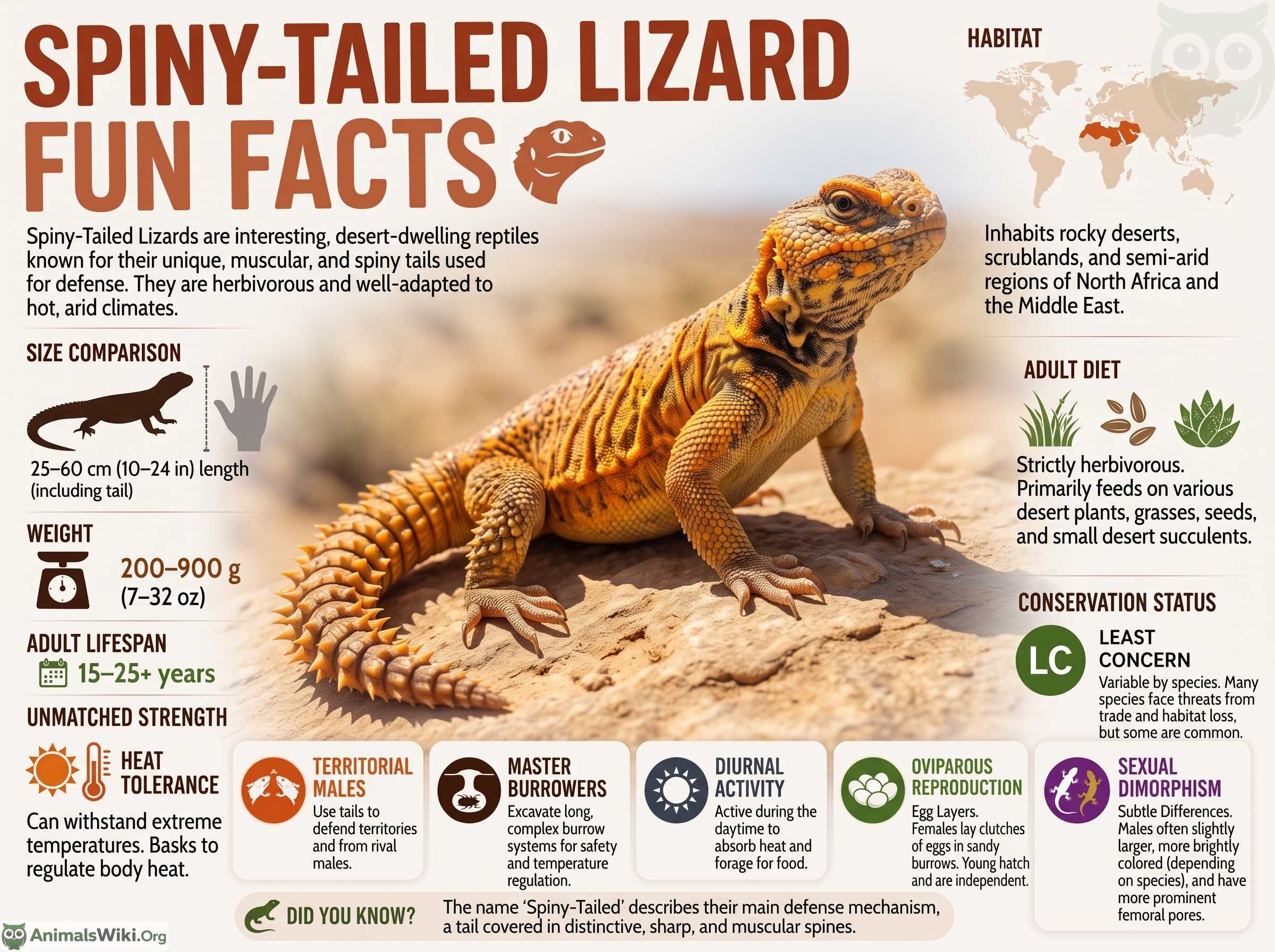
- 🦎 The name Uromastyx comes from Greek for “tail whip” — a direct reference to the animal’s primary defense weapon
- 🦎 Uromastyx can survive their entire lives without drinking liquid water — deriving all moisture from food and metabolic processes
- 🦎 Active body temperatures during peak activity can exceed 40°C (104°F) — temperatures that would be life-threatening fevers in mammals
- 🦎 The Egyptian Uromastyx is the largest agamid lizard in Africa — reaching up to 75 cm in the largest individuals
- 🦎 Uromastyx burrows can reach 3 meters in depth — providing thermal buffering against the extreme desert surface temperatures
- 🦎 The Ornate Uromastyx male in breeding season is among the most brilliantly colored lizards in the Old World — displaying vivid blues, greens, yellows, and oranges simultaneously
- 🦎 The Hadith of the Prophet Muhammad explicitly permits eating Uromastyx (dabb) — making it one of the very few wild animals addressed in Islamic jurisprudence
- 🦎 Uromastyx excrete salts through nasal salt glands — the white crystalline deposits visible at the nostrils represent dietary salt being eliminated without water loss
- 🦎 The Uromastyx tail functions simultaneously as a weapon, a fat storage organ, and a possible water reservoir through metabolic fat oxidation
- 🦎 All baby Uromastyx look similar at hatching — the spectacular adult color differences between species develop progressively over the first 2–3 years of life
- 🦎 The entire genus was listed on CITES Appendix II in 2000 — making it one of the few entire lizard genera to receive international trade protection
- 🦎 Uromastyx can live up to 35 years in captivity — among the longest-lived medium-sized lizards
17. How You Can Help
Support These Organizations
- IUCN SSC Lizard Specialist Group (iucnssc.org) — the international scientific authority on lizard conservation; coordinates assessments and conservation planning for Uromastyx species; funding supports field surveys in data-deficient range countries
- TRAFFIC (traffic.org) — the world’s leading wildlife trade monitoring organization; monitoring and advocacy on Uromastyx trade both legal and illegal; TRAFFIC’s work on CITES compliance and trade monitoring directly benefits Uromastyx
- Sahara Conservation Fund (saharaconservation.org) — specifically focused on Saharan wildlife; one of the few organizations with active conservation programs in the core Uromastyx range; supports field monitoring of North African wildlife including Uromastyx
- IUCN Save Our Species (iucnsaveourspecies.org) — funding conservation projects for threatened species including desert reptiles; grant-making for field conservation in difficult-to-access habitats
- Reptile & Amphibian Ecology International (RAEI) — supporting herpetological research and conservation in the developing world; field research on poorly known desert reptile species
- WCS Middle East and North Africa Programs (wcs.org) — wildlife conservation programs in range countries; habitat protection advocacy
What You Can Do
- Buy only captive-bred Uromastyx if keeping as pets — the single most impactful action for potential Uromastyx keepers is to purchase only captive-bred animals from reputable breeders; captive-bred Uromastyx are available for all commonly kept species and are healthier, better adapted to captivity, and do not contribute to wild population depletion; ask sellers for documentation of captive-bred origin; avoid animals that appear wild-caught (heavily parasitized, refusing food, or extremely stress-reactive)
- Support CITES compliance — advocacy for strong enforcement of CITES Appendix II regulations for Uromastyx imports in your country; reporting suspected illegal wildlife trade to national wildlife authorities and TRAFFIC
- Reduce demand for traditional medicine products — if you encounter Uromastyx products (dried specimens, tails) in traditional medicine markets, choosing alternatives reduces demand; advocacy in communities where traditional medicine use of Uromastyx is common can support transitions to alternative remedies
- Support desert habitat protection — protecting the desert habitats Uromastyx occupy requires advocacy for desert protected area networks in range countries; supporting organizations working in North Africa and the Middle East on desert conservation
- Share accurate information — the Uromastyx is poorly known to the general public outside its cultural range and the exotic pet community; sharing accurate information about its ecological role, conservation challenges, and remarkable biology raises awareness of a genuinely extraordinary animal
For Uromastyx Keepers
If you keep Uromastyx as pets, you can contribute positively to conservation:
- Document and share husbandry successes — detailed records of successful captive breeding contribute to the collective knowledge that supports captive populations
- Join keeper organizations — the Uromastyx and Butterfly Agama Group and similar keeper communities exchange husbandry information that reduces captive mortality and improves breeding success
- Educate other keepers — within the keeper community, consistently promoting captive-bred purchases and reporting suspected wild-caught imports to trade monitoring authorities makes a concrete difference
Recommended Documentaries & Books
- “Sahara” (BBC, 2001) — landmark documentary series covering the Sahara ecosystem including desert reptiles; excellent contextual coverage of Uromastyx habitat
- “Deserts” segments of “Planet Earth” (BBC, 2006) — desert reptile coverage including agamid lizards
- Various National Geographic desert documentary productions — coverage of North African and Middle Eastern desert wildlife
- “Uromastyx: Natural History, Captive Care and Breeding” by Philippe de Vosjoli, Roger Klingenberg, David Barker — the definitive English-language husbandry reference; also contains natural history information
- “The Lizards of the Arabian Peninsula” by various authors — comprehensive herpetological reference covering multiple Uromastyx species in the Arabian range
18. Frequently Asked Questions About Uromastyx
Q1: What is a Uromastyx and where does it live?
The Uromastyx (plural: Uromastyx or Uromastices) is a genus of approximately 20 species of large agamid lizards found across the arid zones of North Africa, the Middle East, and South Asia — from Morocco and Senegal in the west to Pakistan and northwestern India in the east. They are most closely related to the agama lizards (family Agamidae) and are distinguished from all other lizards by their heavily spined, armored tail — used as a primary defensive weapon. They inhabit deserts, rocky scrubland, and semi-arid terrain, where they exploit vegetation unavailable to most other vertebrates and survive without drinking liquid water.
Q2: How do Uromastyx survive without drinking water?
Uromastyx achieve water balance through three mechanisms: metabolic water production (water generated as a byproduct of burning food — particularly fats and carbohydrates); water in food (even dry seeds contain small amounts of water); and minimizing water loss through highly efficient kidneys (producing semi-solid uric acid rather than liquid urine), nasal salt glands (eliminating dietary salt without requiring water), thick skin (reducing evaporative water loss), and behavioral avoidance of the hottest parts of the day. Together, these mechanisms allow Uromastyx to maintain water balance on a diet of apparently dry desert vegetation with no liquid water intake whatsoever — one of the most remarkable physiological achievements in the reptile world.
Q3: What does the Uromastyx’s spiny tail do?
The Uromastyx’s heavily armored, ring-scaled spiny tail serves multiple functions. As a defensive weapon: when threatened, the Uromastyx turns to present its tail and delivers powerful lateral sweeping blows; the heavy, spined tail can cause painful, potentially injurious impacts on a predator’s face or limbs. As a burrow plug: when retreating to its burrow, the Uromastyx uses the spiny tail to block the entrance, making extraction by a predator extremely difficult and painful. As a fat storage organ: the tail base accumulates fat reserves that fuel the animal during inactive periods. As a possible water reserve: stored fat can be metabolized to produce water during periods of food scarcity.
Q4: Are Uromastyx good pets?
For experienced reptile keepers, Uromastyx can be excellent pets — they are long-lived (up to 35 years), diurnal (active during the day), can become quite tame with regular interaction, and the more colorful species are visually spectacular. However, they have specific requirements that make them unsuitable for beginners: they require very high temperatures (surface temperatures of 45–55°C in their basking zone, ambient temperatures of 35–40°C during the day); full-spectrum UV lighting for vitamin D3 synthesis; a primarily vegetarian diet of seeds, leafy greens, and flowers; a large enclosure with burrowing substrate; and a cool, dark winter period to stimulate natural dormancy. Most veterinarians have limited experience with the species. Always purchase captive-bred animals — wild-caught Uromastyx are stressed, heavily parasitized, and contribute to population depletion.
Q5: How many species of Uromastyx are there?
Approximately 20 species are currently recognized within the genus Uromastyx, though taxonomic revision using molecular methods continues to refine species boundaries; the number has increased from approximately 15 recognized species in the 1990s to approximately 20 today, and further revisions are expected. The four most conservation-concerning species are the Egyptian Uromastyx (U. aegyptia — Vulnerable), the Indian Spiny-tailed Lizard (U. hardwickii — Vulnerable), the Ornate Uromastyx (U. ornata — Near Threatened), and Bell’s Dabb Lizard (U. acanthinura — Near Threatened). Many species are classified as Data Deficient — insufficient monitoring data exists to assess their population status.
Q6: What do Uromastyx eat?
Adult Uromastyx are primarily herbivorous — one of the most herbivorous lizard genera in the world. The diet consists mainly of seeds (the primary caloric source, processed with powerful crushing jaws), leaves and stems of desert vegetation, flowers (particularly valued for their sugar content), and grasses. Juveniles consume more insects than adults, transitioning progressively to the herbivorous adult diet as they grow. In captivity, Uromastyx are fed seeds (millet, lentils, quinoa), leafy greens (endive, dandelion, kale), and flowers (hibiscus, dandelion flowers, squash blossoms); fruits are given sparingly due to high sugar content. They should not be given lettuce (poor nutritional value) or spinach (contains oxalates that bind calcium); fresh water should be provided in captivity even though wild animals don’t drink.
Q7: Are Uromastyx protected by law?
The entire genus Uromastyx is listed on CITES Appendix II (since 2000), meaning that international commercial trade requires documentation of legal origin from the exporting country. Individual range countries have varying levels of national protection — in some countries (Israel, Jordan) Uromastyx have strong legal protection; in others (parts of North Africa and the Arabian Peninsula) protection is minimal or unenforced. The CITES listing has substantially reduced the legal international pet trade in wild-caught Uromastyx but has not eliminated illegal trade or the significant domestic consumption of Uromastyx for food and traditional medicine within range countries, which is typically outside CITES jurisdiction.
Q8: What is the connection between Uromastyx and Islamic tradition?
The Uromastyx (dabb in Arabic) is explicitly mentioned in Hadith — the recorded sayings and actions of the Prophet Muhammad — in the context of food permissibility. In a well-known account recorded in both Sahih al-Bukhari and Sahih Muslim (the two most authoritative Hadith collections in Sunni Islam), the Prophet was offered roasted dabb meat and declined to eat it because he was unfamiliar with it, but explicitly confirmed it was halal (permissible) and observed as his companion Khalid ibn al-Walid ate it. This religious sanction has supported the cultural tradition of eating dabb across Islamic societies for over 1,400 years and continues to be referenced in contemporary Islamic discussions about the species. The tradition creates a conservation challenge — deeply embedded cultural practice of consuming Uromastyx is difficult to address through simple regulatory approaches and requires culturally sensitive conservation communication.
19. Sources Researched
The information in this article was researched and verified using the following authoritative sources:
- Wikipedia — Uromastyx, Uromastyx aegyptia, Uromastyx ornata, Uromastyx geyri, Agamidae, Dabb lizard
- IUCN Red List (iucnredlist.org) — Conservation status assessments for Uromastyx aegyptia, U. hardwickii, U. ornata, U. acanthinura, and other assessed species
- CITES (cites.org) — Appendix II listing information for the genus Uromastyx
- National Geographic (nationalgeographic.com) — Desert reptile biology and ecology features
- Britannica (britannica.com) — Uromastyx, Agamidae, Mastigure
- Nagy, K.A. (various publications) — Research on Uromastyx desert physiology, water balance, and metabolic rate; UCLA Department of Ecology and Evolutionary Biology
- Wilms, T. et al. (2009) — Uromastyx: Natural History, Captive Care and Breeding — comprehensive reference
- Journal of Arid Environments — Multiple peer-reviewed papers on Uromastyx ecology, behavior, and conservation
- Herpetologica — Research on Uromastyx reproductive biology and thermal ecology
- Copeia — Research on agamid lizard behavior and ecology including Uromastyx
- Al-Jahiz (9th century AD) — Kitab al-Hayawan (Book of Animals) — classical Arabic natural history reference including dabb observations
- Sahih al-Bukhari and Sahih Muslim — Primary Islamic Hadith sources for dabb religious rulings
- TRAFFIC (traffic.org) — Wildlife trade data for Uromastyx species
- Reptile & Amphibian Magazine — Captive husbandry and natural history articles on multiple Uromastyx species
- BBC Nature (bbc.co.uk/nature) — Documentary references and species behavior data
20. Uromastyx Images