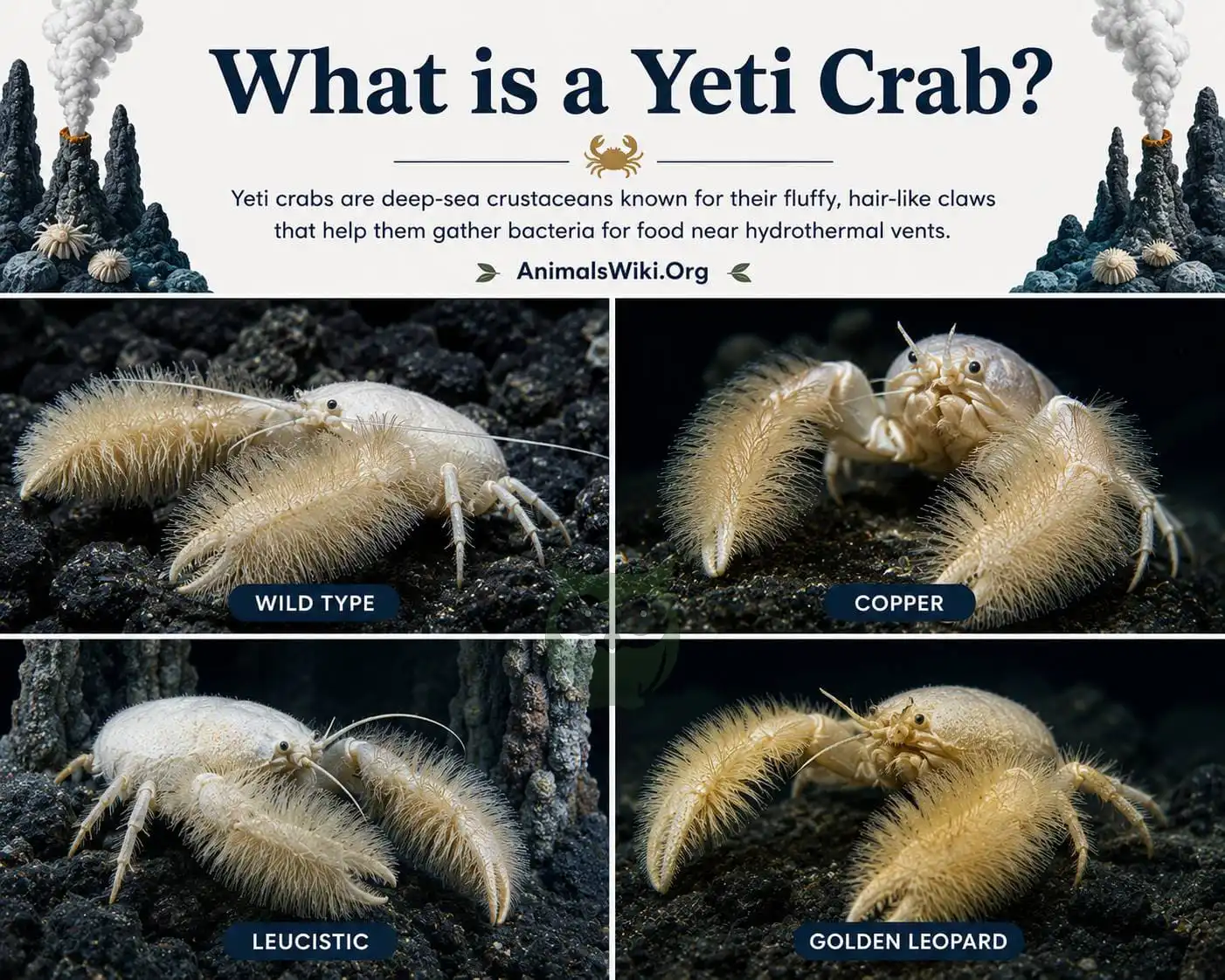
Yeti Crab Facts
| Feature | Details |
|---|---|
| Common Name | Yeti Crab (also: Yeti Lobster) |
| Scientific Name | Kiwa hirsuta (original species); Genus Kiwa (5+ species) |
| Discovered | March 2005 (described scientifically in 2006) |
| Habitat | Deep-sea hydrothermal vents & cold seeps; Pacific, Atlantic, Southern Ocean |
| Depth Range | 1,000 – 3,800 meters (3,280 – 12,467 feet) below sea surface |
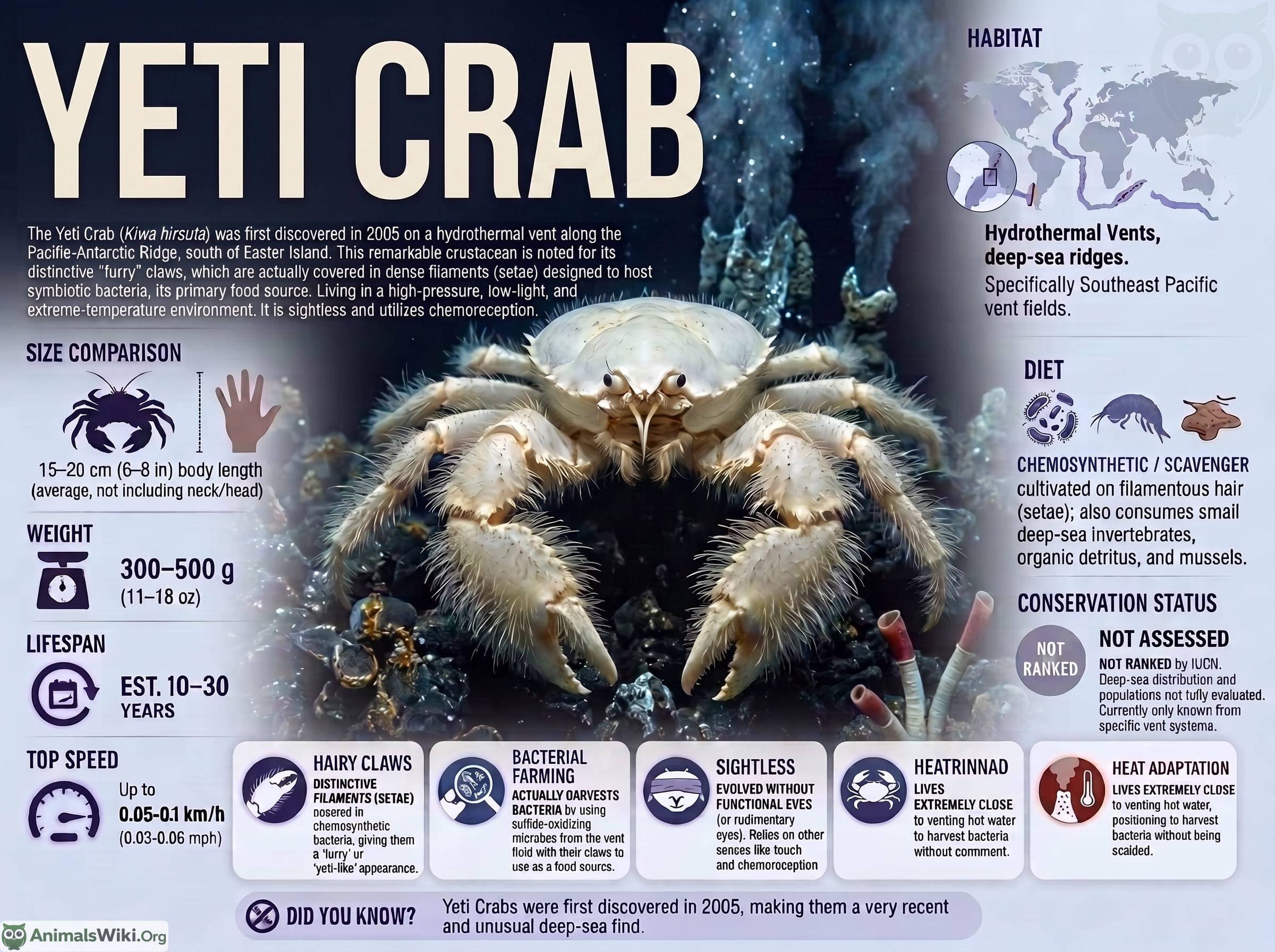
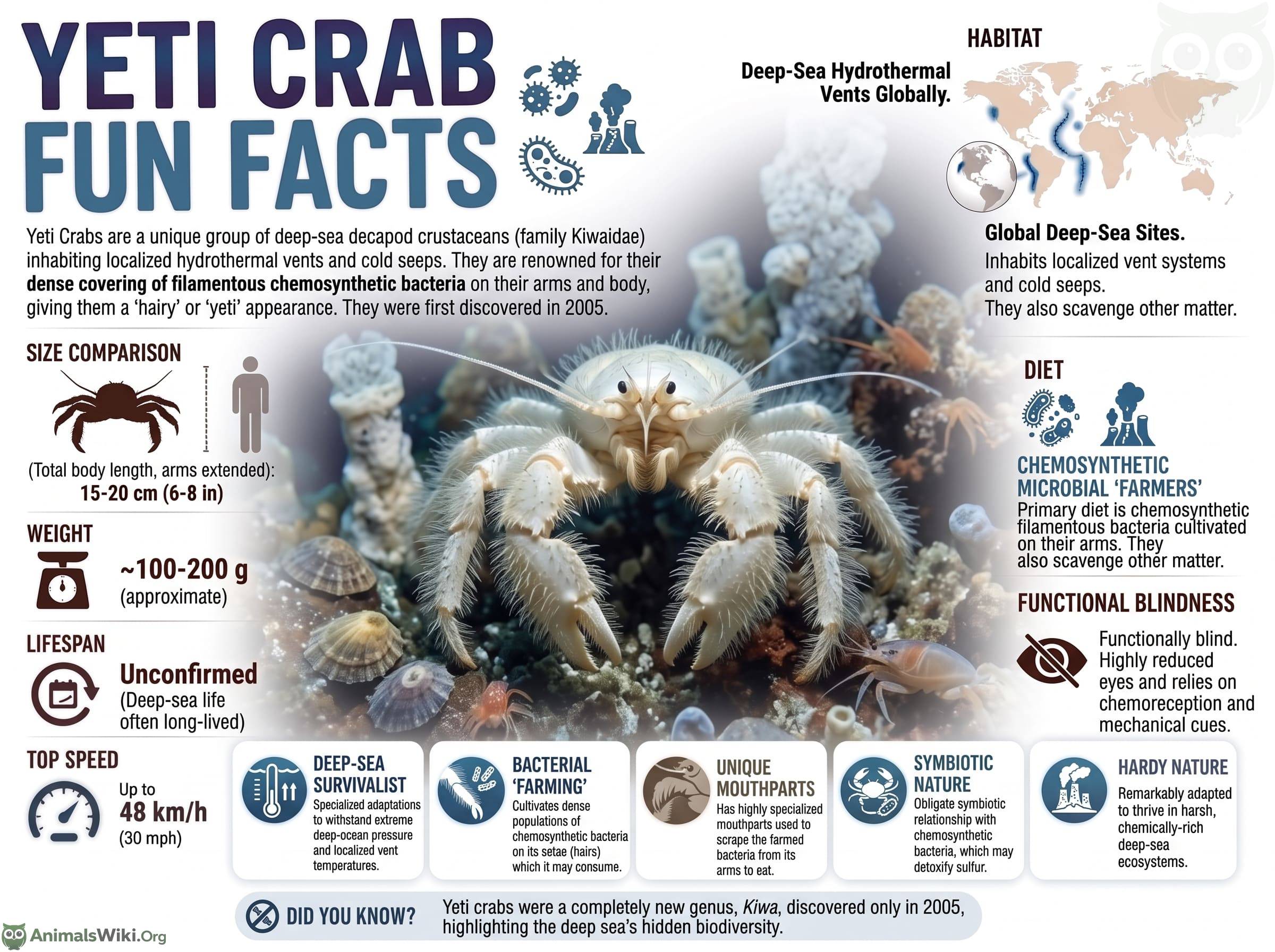
| Average Size | 15 cm (6 inches) body length |
| Weight | Estimated 200–400 g (relatively light, hollow exoskeleton) |
| Diet | Chemosynthetic bacteria farmed on own body + organic particles |
| Lifespan | Estimated 5–20 years (not fully confirmed) |
| Conservation Status | Not evaluated (IUCN) — deep-sea, rarely observed |
| Defining Feature | Dense, silky “hairy” arms covered in chemosynthetic bacteria |
| Family | Kiwaidae |
1. Species Overview & Classification
Deep beneath the surface of the ocean — far beyond where sunlight can reach, in a world of crushing pressure and scalding vents — lives one of the most extraordinary animals ever discovered by science. Meet Kiwa hirsuta: the Yeti Crab.
Named after the legendary Himalayan snowman for its striking covering of pale, silky “hair,” the Yeti Crab was first collected in March 2005 by a team of marine biologists using a deep-sea submersible near Easter Island in the South Pacific. When scientists got their first proper look at the creature, they knew immediately they were looking at something entirely new to science — not just a new species, but a whole new family of crustaceans.
That’s how remarkable the Yeti Crab is. It didn’t just earn a new species name — it earned a new taxonomic family: Kiwaidae, named after Kiwa, the Polynesian goddess of shellfish and crustaceans. The genus name Kiwa honors this deity, while the species name hirsuta comes from the Latin for “hairy” or “bristly” — a nod to those unforgettable arms.
Since that first dramatic discovery, scientists have identified at least five distinct species within the genus Kiwa, each found at different deep-sea locations around the world. Each species adds another layer to an already astonishing story — the story of an animal that has found a way to farm its own food, survive in one of Earth’s most hostile environments, and look absolutely spectacular while doing it.
Species Classification Table
| Classification Level | Details |
|---|---|
| Kingdom | Animalia |
| Phylum | Arthropoda |
| Subphylum | Crustacea |
| Class | Malacostraca |
| Order | Decapoda |
| Infraorder | Anomura |
| Family | Kiwaidae (new family, 2006) |
| Genus | Kiwa |
| Known Species | K. hirsuta, K. puravida, K. tyleri, K. araonae, K. williamsi |
Known Species of Kiwa
| Species | Common Name | Discovery Year | Location |
|---|---|---|---|
| Kiwa hirsuta | Yeti Crab (original) | 2005 | South Pacific (Easter Island) |
| Kiwa puravida | Yeti Crab (Costa Rica) | 2006 | Costa Rica cold seeps |
| Kiwa tyleri | Hoff Crab / “Jive Crab” | 2010 | East Scotia Ridge, Antarctica |
| Kiwa araonae | — | 2016 | Southwest Indian Ridge |
| Kiwa williamsi | — | 2011 | East Pacific Rise |
2. Physical Description & Unique Features
If you could dive nearly 2,400 meters beneath the Pacific Ocean and shine a light on a Yeti Crab for the first time, the experience would be nothing short of jaw-dropping. This is an animal that seems to defy every expectation we have of what a crab should look like.
Size and Shape
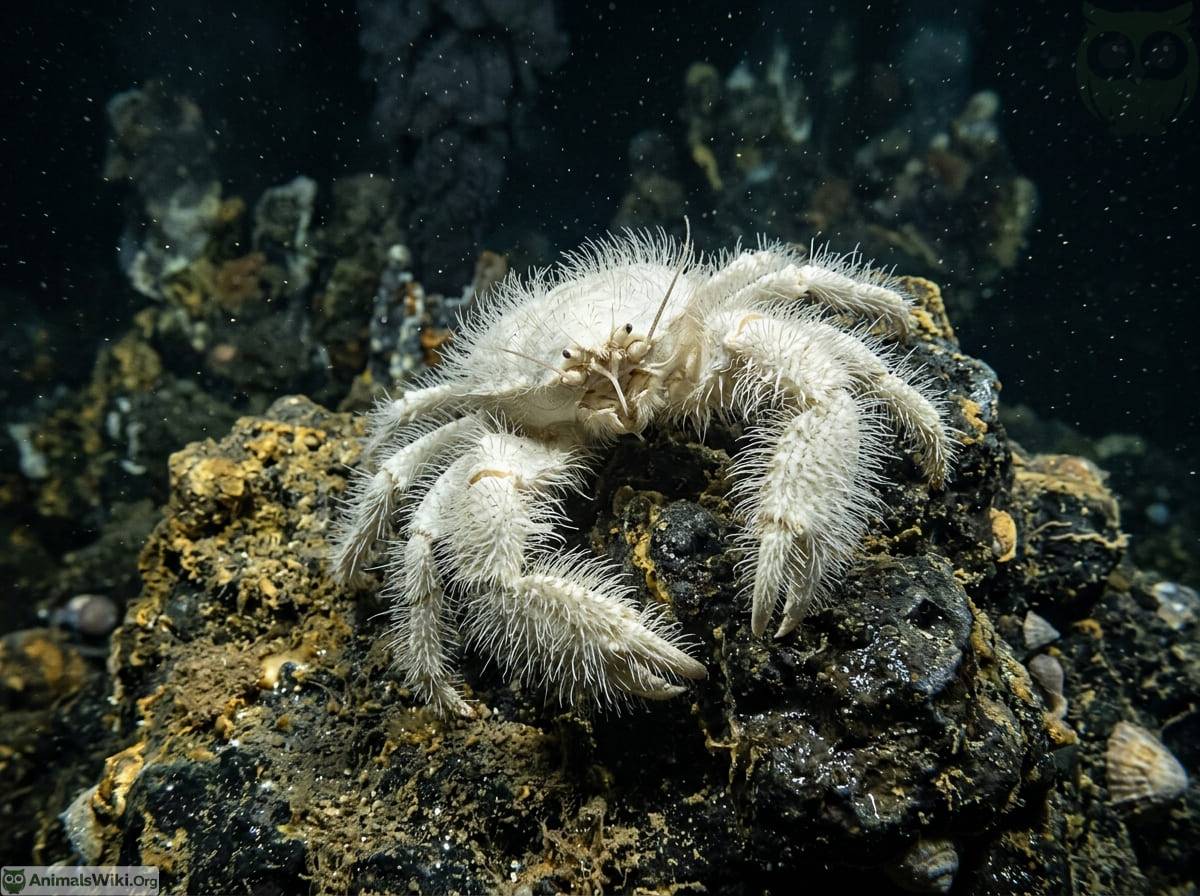
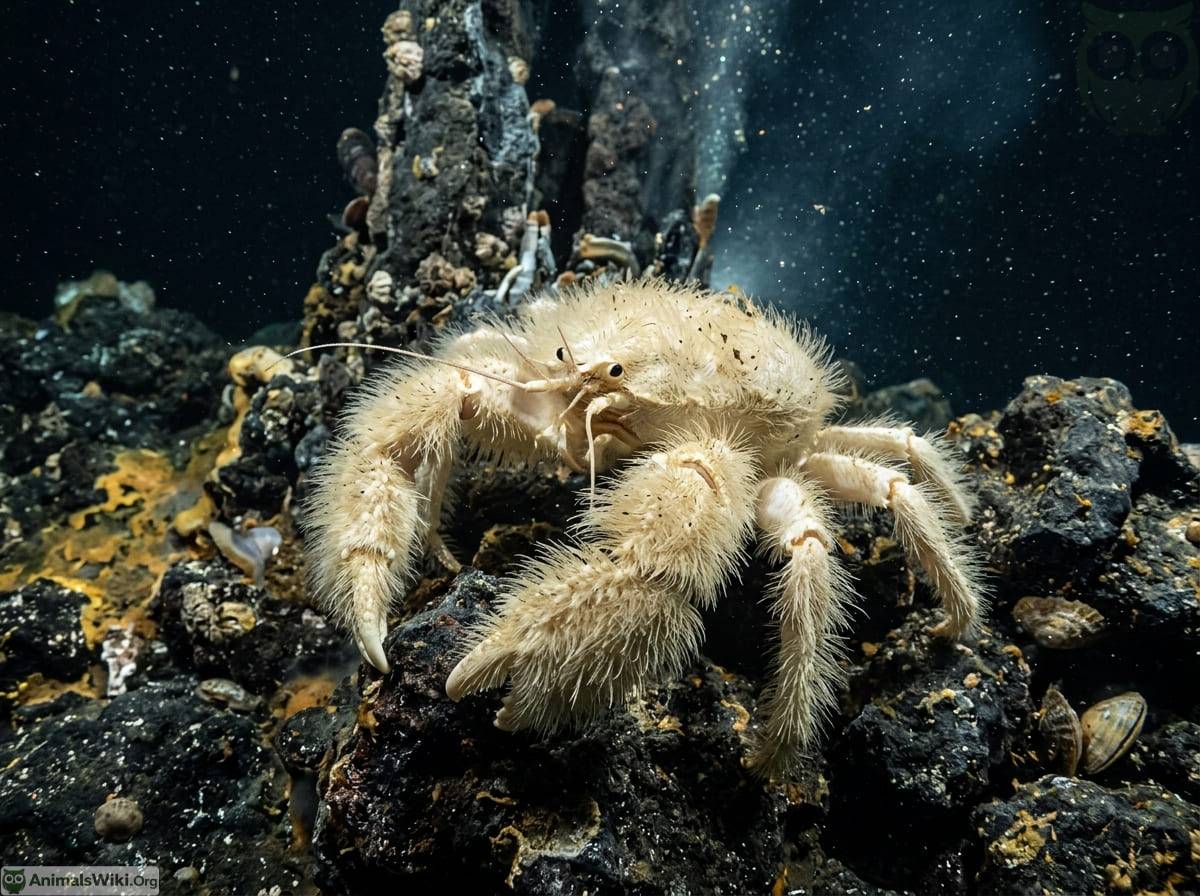
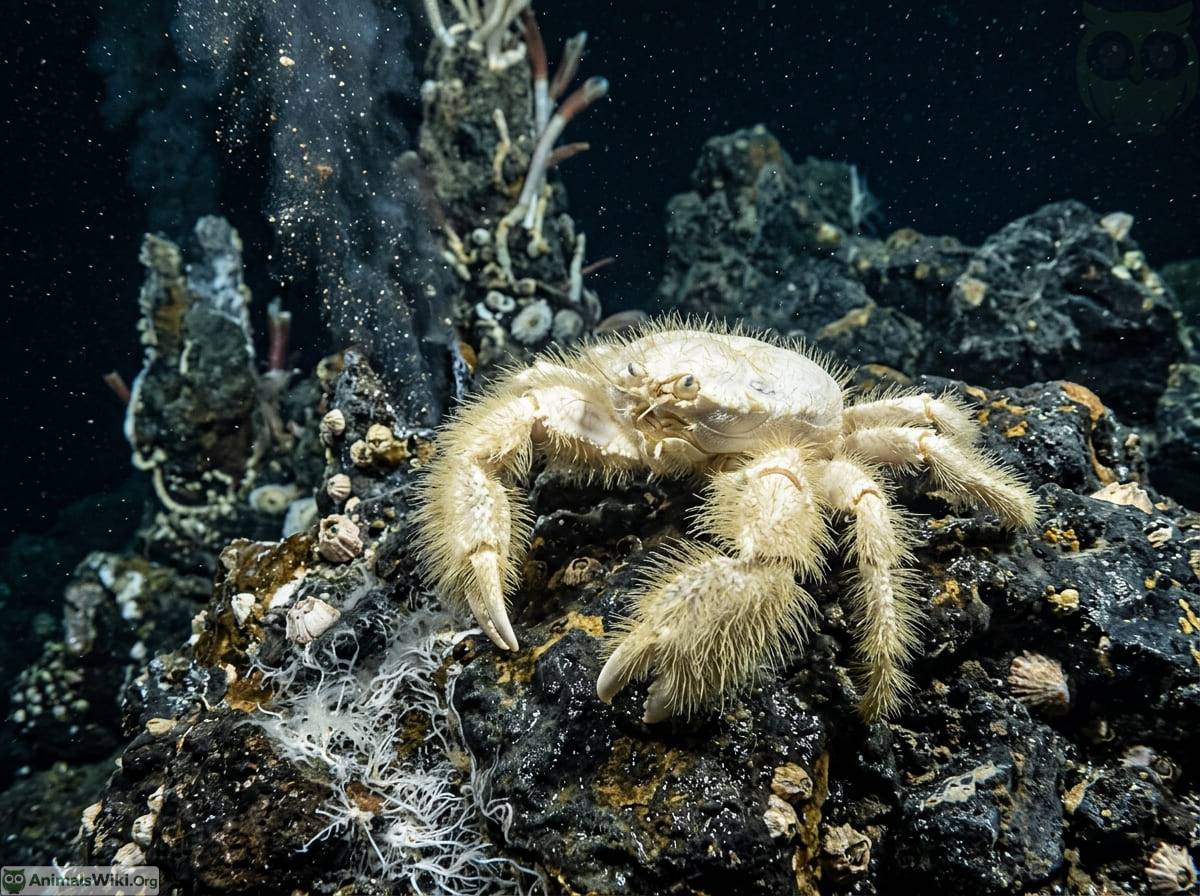
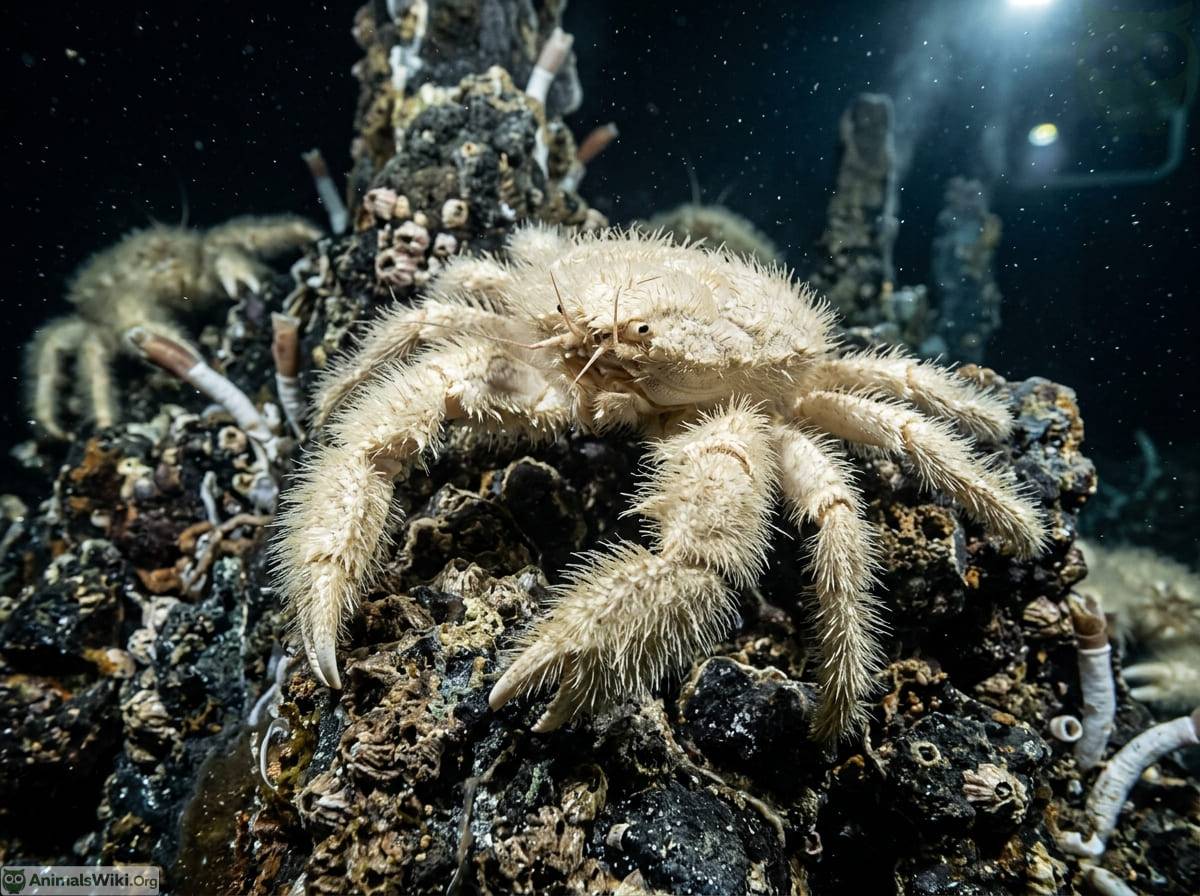
The Yeti Crab is a medium-sized crustacean, measuring approximately 15 centimeters (6 inches) in body length, though some specimens have been recorded slightly larger. Its body shape is broadly similar to other crabs and squat lobsters — it has a broad, flat carapace (the shell covering the main body), a segmented abdomen, and five pairs of legs, with the front pair modified into claws (chelipeds).
Unlike the hard, colorful shells we associate with common crabs, the Yeti Crab’s carapace is pale, almost white or cream-colored — a result of living in permanent darkness where pigmentation offers no evolutionary advantage. In the absence of sunlight, there is simply no reason to be colorful.
The Famous “Hair” — Setae
The Yeti Crab’s most iconic feature — the feature that gave it its name and made it an instant scientific sensation — is the dense covering of long, silky bristles called setae that coat its claws and, to a lesser degree, its legs and body.
These setae are not hair in the mammalian sense. They are specialized sensory and structural bristles made of chitin — the same tough material that forms the crab’s exoskeleton. Under a microscope, the setae are revealed to be colonized by filamentous bacteria — specifically chemosynthetic bacteria that the crab appears to actively cultivate and farm as a primary food source.
This makes the Yeti Crab’s arms essentially a living, mobile garden — an adaptation so extraordinary that it reshaped how scientists understand the feeding strategies of deep-sea invertebrates.
Eyes
Yeti Crabs have vestigial eyes — they have the structures where eyes should be, but these are non-functional and blind. Having evolved in total darkness, sight became unnecessary millions of years ago, and natural selection gradually reduced their eyes to mere remnants. Instead, they likely rely on chemoreception (detecting chemicals in the water) and mechanoreception (sensing vibrations and water movement) to navigate their world.
Did You Know? The silky “hair” on a Yeti Crab’s arms — called setae — can host billions of bacteria per square centimeter. These bacterial colonies are so dense that scientists initially mistook them for a fungal growth when viewing early specimens.
3. Natural Habitat & Geographic Range
The Yeti Crab lives in one of the most extreme environments on Earth: the deep sea, specifically around hydrothermal vents and cold seeps — geological features on the ocean floor where chemically-rich fluids gush up from beneath the Earth’s crust.
What Are Hydrothermal Vents?
Hydrothermal vents are essentially underwater geysers. Where tectonic plates meet or spread apart, seawater seeps down into the ocean floor, gets superheated by magma, picks up dissolved minerals and chemicals, and blasts back up through cracks in the seafloor at temperatures reaching 400°C (752°F). The water around these vents, rich in hydrogen sulfide and other chemicals, provides the energy base for entire ecosystems — all powered not by sunlight (photosynthesis) but by chemistry (chemosynthesis).
Cold seeps are gentler relatives of hydrothermal vents — places where methane, hydrogen sulfide, and other hydrocarbon-rich fluids seep slowly from the seafloor at roughly ambient temperatures. Both environments support remarkable communities of life.
Habitat Range by Ocean
| Ocean / Region | Known Kiwa Species | Depth Range | Vent/Seep Type |
|---|---|---|---|
| South Pacific (Easter Island) | K. hirsuta | ~2,400 m | Hydrothermal vents |
| East Pacific Rise | K. williamsi | ~2,500 m | Hydrothermal vents |
| Costa Rica (Pacific) | K. puravida | ~1,000 m | Cold methane seeps |
| Antarctic (Scotia Ridge) | K. tyleri | ~2,400 m | Hydrothermal vents |
| SW Indian Ocean Ridge | K. araonae | ~2,700 m | Hydrothermal vents |
Living Conditions
The environment around hydrothermal vents is staggeringly hostile by surface-world standards:
- Temperature: Ranges from near-freezing ambient seawater (~2°C) to scalding vent fluid (~400°C), with a sweet spot of 10–30°C where the Yeti Crab congregates
- Pressure: Up to 400 atmospheres — enough to crush an unprotected human instantly
- Light: Absolute zero sunlight at these depths
- Oxygen: Highly variable; vent areas can be low in dissolved oxygen
- Chemistry: Rich in hydrogen sulfide, methane, and heavy metals — toxic to most surface life
The Yeti Crab has evolved over millions of years to not just survive in these conditions but to thrive in them — clustering in dense populations around the warmest zones of hydrothermal vents.
Did You Know? The hydrothermal vent ecosystem where Yeti Crabs live is one of the few places on Earth where life exists completely independent of the sun. All the energy comes from chemical reactions — not photosynthesis. This has led some scientists to speculate that similar ecosystems might exist on other planets or moons in our solar system, such as Europa (a moon of Jupiter).
4. Diet & Feeding Behavior
The Yeti Crab’s feeding strategy is one of the most scientifically extraordinary behaviors known in the animal kingdom. It is, quite literally, a farmer — and what it farms lives on its own body.
The Bacteria Garden
The dense setae (bristles) on the Yeti Crab’s claws are colonized by chemosynthetic bacteria — microscopic organisms that derive energy from the chemicals pouring out of hydrothermal vents (particularly hydrogen sulfide and methane). These bacteria multiply on the crab’s arms, forming thick mats of living microbial growth.
The Yeti Crab is then believed to scrape these bacteria off its arms with specialized mouthparts and consume them — effectively harvesting its own crop. To maximize bacterial growth, the crab performs what researchers call its iconic “waving” behavior: slowly and rhythmically moving its arms up and down or side to side near the vent fluid. This waves the bacteria-covered setae through chemical-rich vent water, accelerating bacterial growth.
Scientists who have observed this behavior describe it as looking like the crab is dancing — a mesmerizing sight on the dark ocean floor.
Additional Food Sources
While bacteria farming appears to be the primary feeding strategy, studies suggest Yeti Crabs may also consume:
Diet Breakdown Table
| Food Source | Estimated % of Diet | Acquisition Method |
|---|---|---|
| Chemosynthetic bacteria (farmed on setae) | 60–75% | Scraped from own body |
| Organic particles / marine snow | 10–20% | Filter feeding, passive intake |
| Mussels, small invertebrates | 5–15% | Scavenging or opportunistic predation |
| Dead organic matter (carrion) | 5–10% | Scavenging near vent communities |
“The Yeti Crab’s bacterial farming is one of the most elegant symbioses we’ve ever encountered in the deep sea. The crab provides the bacteria with a mobile home and access to chemical energy; the bacteria provide the crab with a portable food supply. Evolution doesn’t get much more clever than that.” — Dr. Andrew Thurber, Deep-Sea Ecologist, Oregon State University
5. Reproduction & Life Cycle
The reproductive biology of Yeti Crabs sits at the edge of what science currently knows — a reminder of how much of the deep ocean remains unexplored and poorly understood.
What We Know
Yeti Crabs reproduce sexually, with males and females coming together to mate. Like most crustaceans, fertilization is internal, and females subsequently carry eggs attached to their abdominal appendages — a behavior called being “berried” (because the eggs resemble a cluster of berries).
Here is where the story becomes particularly poignant. In Kiwa puravida (the Costa Rica cold-seep species), researchers observed that brooding females migrate away from the food-rich vent areas to find cooler, more oxygenated water in which to incubate their eggs. This means that pregnant Yeti Crabs essentially starve themselves during the brooding period — sacrificing their own feeding access to give their eggs the best conditions for development.
Larval Stage
Like virtually all crustaceans, Yeti Crabs go through free-swimming larval stages after hatching — tiny, transparent larvae that drift in the water column before eventually settling near suitable vent environments. Scientists have not yet observed these larvae directly due to the extreme difficulty of deep-sea research, but this life history is inferred from what we know of related species.
Lifespan
The lifespan of Yeti Crabs is not precisely known. Based on comparisons with similar deep-sea crustaceans, estimates suggest they may live between 5 and 20 years. Deep-sea animals generally have slower metabolisms and longer lifespans than their shallow-water counterparts — the cold, low-energy environment of the abyss slows everything down.
Lifespan Comparison Table
| Animal | Estimated Lifespan |
|---|---|
| Yeti Crab (Kiwa hirsuta) | 5–20 years (estimated) |
| Common Shore Crab | 3–5 years |
| American Lobster | 45–100+ years |
| Giant Deep-Sea Isopod | 5–15 years |
| Tube Worm (vent species) | 170–250 years |
| Giant Pacific Octopus | 3–5 years |
Did You Know? Some deep-sea hydrothermal vent tube worms (Lamellibrachia luymesi) are estimated to live for over 250 years — making them among the longest-lived animals on Earth. Yeti Crabs share their habitat with these ancient animals.
6. Social Behavior & Communication
For a creature living in total darkness at crushing pressure, the Yeti Crab has a surprisingly rich social life — at least by deep-sea standards.
Aggregation Behavior
One of the most striking behaviors observed in Yeti Crabs is their tendency to form enormous aggregations — dense pileups of hundreds or even thousands of individuals clustering around the warmest zones of hydrothermal vents. These aggregations are not random; they reflect the narrow temperature band in which the crabs can survive and feed productively.
In Kiwa tyleri (the Antarctic “Hoff Crab”), researchers from the University of Southampton documented crowding densities of up to 700 individuals per square meter on warm vent surfaces — one of the highest animal densities ever recorded in the deep sea.
Hierarchy and Competition
Within these dense aggregations, there appears to be spatial competition for the most desirable vent zones — where the chemical-rich water is warm enough to maximize bacterial growth but not so hot as to be fatal. Larger, dominant individuals tend to occupy the prime vent positions closer to the heat source, while smaller crabs are pushed to the periphery.
Communication
In the absence of sight, Yeti Crabs communicate primarily through chemical signals (pheromones dissolved in the water) and tactile contact. Their setae — the bacteria-laden bristles — also contain sensory structures that may help them detect water chemistry, temperature gradients, and the presence of other individuals. The iconic “waving” behavior, while primarily a feeding strategy, may also serve a social signaling function in dense aggregations.
7. Predators & Defense Mechanisms
Life around a hydrothermal vent is dangerous in ways that surface-world animals never have to contend with — not just from other animals, but from the environment itself.
Environmental Threats
The greatest existential threat to a Yeti Crab is not a predator — it is thermal and chemical instability. Hydrothermal vents can shift, intensify, or go dormant with little warning. A sudden increase in vent temperature can boil an entire aggregation in minutes. A dormant vent removes the food source entirely. Yeti Crabs must constantly navigate this razor-thin edge between productive warmth and lethal heat.
Biological Predators
Relatively few animals can survive the extreme conditions of hydrothermal vent ecosystems, which means Yeti Crabs face fewer natural predators than shallow-water crabs. Known and suspected predators include:
- Deep-sea octopuses — capable of diving to vent zones and ambushing crabs
- Large deep-sea fish — such as eelpouts (Zoarcidae), which are commonly observed at vent sites
- Other large crustaceans — larger vent crustaceans may opportunistically prey on smaller Yeti Crabs
Defense Strategies
- Claws: Their chelipeds (claws) are capable of pinching aggressively when threatened
- Dense aggregation: Safety in numbers — a predator targeting one crab in a crowd of thousands faces significant confusion and difficulty
- Camouflage: Their pale, almost white coloration blends with the mineral deposits around vent chimneys in the low-light conditions of the deep sea
- Agility: Despite their slow-seeming appearance, Yeti Crabs can move quickly when startled
“Hydrothermal vent ecosystems are islands of life in a deep-sea desert. The animals there — including the Yeti Crab — have evolved some of the most specialized survival strategies on Earth, because in that environment, every single adaptation matters.” — Dr. Jon Copley, Marine Biologist, University of Southampton
8. Relationship with Humans
Discovery: A Scientific Earthquake
The Yeti Crab’s relationship with humanity began in dramatic fashion. In March 2005, researchers aboard a scientific expedition led by Robert Vrijenhoek of the Monterey Bay Aquarium Research Institute (MBARI) were exploring hydrothermal vents near the Pacific-Antarctic Ridge, south of Easter Island, using the deep-sea submersible Alvin — the same famous submersible that explored the Titanic wreck.
What they found at a depth of approximately 2,400 meters was a dense aggregation of pale, hairy-armed crabs unlike anything previously recorded by science. Specimens were collected, brought to the surface, and formally described in a peer-reviewed paper published in the journal Science in March 2006 by Michel Segonzac, Macpherson, and colleagues.
The paper created immediate global headlines. The Yeti Crab was not just a new species — it was a new genus and a new family, the first new family of decapod crustaceans to be discovered in several decades. The scientific community was electrified.
Modern Human Relationship
Today, the Yeti Crab has no direct commercial or industrial relationship with humans. It is not fished, farmed, or used in any industry. Its relationship with humanity is entirely one of scientific fascination and ecological importance.
However, as interest in deep-sea mining grows — with companies eyeing the mineral-rich hydrothermal vent fields as potential sources of copper, gold, zinc, and rare earth metals — the Yeti Crab’s habitat faces an indirect but real threat from human economic activity.
The Yeti Crab has also become a cultural and educational icon — one of the most frequently cited examples of deep-sea biodiversity in marine biology education worldwide.
9. Conservation Status & Threats
IUCN Status
The Yeti Crab and all members of the genus Kiwa are currently listed as “Not Evaluated” on the IUCN Red List. This is not because they are considered safe — it is because their deep-sea habitat makes population assessments practically impossible with current technology.
Key Threats
1. Deep-Sea Mining The most serious emerging threat to Yeti Crabs is the rapidly growing deep-sea mining industry. Hydrothermal vent fields are extraordinarily rich in polymetallic sulfide deposits — concentrations of copper, zinc, gold, silver, and other valuable minerals deposited by vent activity over thousands of years. Several companies have already obtained exploration licenses in vent regions overlapping with known Kiwa habitat.
Mining would involve physically destroying the seafloor around vent chimneys — effectively eliminating the habitat of every organism in the area, with virtually no possibility of rapid recovery.
2. Climate Change Ocean warming, acidification, and changes in deep-sea oxygen levels driven by climate change may alter hydrothermal vent chemistry and stability over coming decades — with unpredictable consequences for vent-dependent species like the Yeti Crab.
3. Scientific Disturbance Even the act of researching Yeti Crabs carries a small conservation cost — deep-sea submersible operations can disturb vent communities, and specimen collection reduces local populations (though the scale of scientific collection is minimal compared to industrial threats).
Did You Know? The International Seabed Authority (ISA), the UN body that regulates deep-sea mining, has issued exploration licenses covering 1.5 million square kilometers of the Pacific Ocean floor — an area larger than the entire country of Mongolia.
10. Famous Individuals & Notable Discoveries
Unlike large charismatic megafauna such as elephants or lions, individual Yeti Crabs are not named or tracked. However, certain discovery events and research milestones have made specific Yeti Crab populations and specimens globally famous.
The Original 2005 Discovery — Easter Island
The very first Yeti Crabs ever encountered by science were collected from the Pacific-Antarctic Ridge near Easter Island. These specimens — preserved and studied at institutions including the Muséum National d’Histoire Naturelle in Paris — remain the type specimens of Kiwa hirsuta, meaning they are the scientific reference point against which all other members of the species are compared. They are among the most scientifically significant crustacean specimens of the 21st century.
Kiwa tyleri — The “Hoff Crab” (2010, Antarctica)
When scientists from the University of Southampton discovered a new species of Yeti Crab at the East Scotia Ridge in Antarctica in 2010, they informally nicknamed it the “Hoff Crab” — a reference to actor David Hasselhoff, whose own notably hairy chest was a cultural meme at the time. The formal name Kiwa tyleri honors marine biologist Paul Tyler. This species is notable for its extraordinarily dense aggregations — the most crowded Yeti Crab populations ever documented — and for its adaptation to the near-freezing Antarctic vent environment.
Kiwa puravida — The “Waving” Crab (2006, Costa Rica)
Named puravida (Spanish for “pure life” — Costa Rica’s national motto), this species was the first to be observed performing the now-iconic arm-waving behavior clearly linked to bacterial farming. Research on K. puravida provided the breakthrough evidence that bacterial cultivation on setae is a primary feeding strategy, not an incidental association.
The MBARI Collection
The Monterey Bay Aquarium Research Institute maintains one of the world’s most important collections of Yeti Crab research data, video footage, and genetic material, all gathered through years of ROV (remotely operated vehicle) expeditions to Pacific vent systems.
11. Role in Ecosystem & Food Chain
Despite existing in one of Earth’s most isolated ecosystems, the Yeti Crab plays a significant ecological role in the hydrothermal vent community.
As a Consumer
Yeti Crabs are primary and secondary consumers within vent ecosystems. By farming and consuming chemosynthetic bacteria, they are directly channeling energy from the chemosynthetic base of the food web up into higher trophic levels. When they are eaten by deep-sea fish, octopuses, or other predators, that energy moves further up the chain.
As a Bacterial Host
The Yeti Crab functions as a mobile habitat and incubator for chemosynthetic bacteria. By carrying bacterial colonies on its body and moving them through chemical-rich vent water, the crab effectively amplifies bacterial productivity in ways that benefit the broader vent community. It is, in ecological terms, both farmer and field.
As Prey
By serving as prey for deep-sea fish and octopuses, Yeti Crabs contribute to the survival of higher-order deep-sea predators that could not otherwise sustain themselves in the nutrient-poor deep ocean.
Ecosystem Engineers (Indirect)
The dense aggregations of Yeti Crabs physically alter the surface of vent chimneys and surrounding rock — through movement, feeding, and waste production — in ways that may create microhabitats for smaller organisms. In this sense, they function as minor ecosystem engineers, indirectly shaping their own environment.
12. Myths, Culture & Pop Culture Appearances
The Yeti Crab is a geologically very recent entry into human culture — it has only been known to science since 2005 — but in under two decades, it has made a surprisingly deep impression.
The Name and the Myth
The name “Yeti Crab” connects this real-world animal to one of humanity’s most enduring mythological creatures — the Yeti (or Abominable Snowman) of Himalayan folklore. The Yeti is said to be a large, hairy, ape-like creature living in the remote high-altitude mountains of Nepal and Tibet — a mythical beast that has fascinated explorers, cryptozoologists, and storytellers for centuries.
The naming of the Yeti Crab after this legend was an inspired choice — emphasizing both the animal’s mysterious, hard-to-reach habitat and its distinctive hairy appearance. It turned a scientific discovery into an immediately compelling story that the public could connect with emotionally.
Pop Culture and Media Appearances
- “Blue Planet II” (BBC, 2017) — The BBC’s landmark deep-sea documentary series featured hydrothermal vent ecosystems prominently, including coverage of Yeti Crab-like creatures and the extraordinary biology of vent communities. The episode aired to an audience of millions worldwide and is credited with massively boosting public awareness of deep-sea biodiversity.
- “Planet Earth III” (BBC, 2023) — Featured deep-sea vent ecosystems with updated footage of extraordinary marine invertebrates.
- “Deep Ocean” (NHK/National Geographic) — Multiple documentary productions from Japan’s NHK and National Geographic have featured Yeti Crabs in segments on deep-sea discovery.
- Video Games — The Yeti Crab has appeared as a creature in several marine biology and ocean exploration games, including educational titles and simulation games.
- Social Media Phenomenon — When footage of K. tyleri’s arm-waving behavior was released online in 2012, it went viral, with the clip shared millions of times on YouTube, Reddit, and early social media platforms. Many viewers described it as “the most alien thing they’d ever seen from Earth.”
- Educational Literature — The Yeti Crab is now a standard example in marine biology textbooks and educational resources about deep-sea ecosystems, chemosynthesis, and animal-bacteria symbiosis worldwide.
Did You Know? When the Yeti Crab was formally announced to the public in 2006, it was featured on the front pages of major newspapers and science magazines around the world — one of the few times a newly discovered crustacean has made international headlines.
13. Discovery & Evolution Timeline
~500 million years ago — The ancestors of all arthropods (the group containing crustaceans) first appear in the fossil record during the Cambrian Explosion — one of the most rapid periods of animal evolution in Earth’s history.
~250–300 million years ago — Early decapod crustaceans (the order containing crabs, lobsters, and shrimp) begin to diversify in shallow marine environments.
~180–200 million years ago — Deep-sea hydrothermal vents begin supporting complex chemosynthetic ecosystems. The ancestors of deep-sea invertebrates begin colonizing these extreme environments.
~20–30 million years ago (estimated) — The lineage that would eventually produce the genus Kiwa diverges from related crustacean groups. Exact timing is still debated due to the difficulty of finding deep-sea fossils.
Pre-2005 — Hydrothermal vent ecosystems are explored extensively since their discovery in 1977, but the Kiwaidae family remains completely unknown to science.
March 2005 — A team led by Robert Vrijenhoek (MBARI) uses the deep-sea submersible Alvin to explore vents near Easter Island and collects the first specimens of what would become Kiwa hirsuta.
March 7, 2006 — The species is formally described and named in a landmark paper in the journal Zootaxa by Enrique Macpherson, William Jones, and Michel Segonzac. A new family, Kiwaidae, is established. The scientific world takes notice.
2006 — Kiwa puravida is collected from Costa Rica cold seeps (formally described in 2011), revealing that the Kiwa genus spans multiple ocean basins.
2010 — Kiwa tyleri (the “Hoff Crab”) is discovered at the East Scotia Ridge near Antarctica, demonstrating the genus has reached polar deep-sea environments.
2011–2016 — Kiwa williamsi and Kiwa araonae are described, bringing the known species count to five and raising the possibility that many more Kiwa species await discovery in unexplored vent systems.
2017–2026 — Continued ROV and submersible expeditions expand knowledge of Yeti Crab biology, distribution, and ecology. Deep-sea mining concerns bring increased scientific and conservation attention to vent ecosystems.
14. Comparison with Similar Deep-Sea Species
| Feature | Yeti Crab (Kiwa hirsuta) | Pompeii Worm (Alvinella pompejana) | Vent Shrimp (Rimicaris exoculata) |
|---|---|---|---|
| Habitat | Hydrothermal vents, Pacific/Atlantic | Hydrothermal vents, Pacific | Mid-Atlantic Ridge vents |
| Size | ~15 cm | ~10 cm | ~4–6 cm |
| Diet | Bacteria (farmed on body) | Bacteria (on body tubes) | Bacteria (filter/scraping) |
| Key Adaptation | Silky setae for bacterial farming | Heat resistance up to 80°C | No functional eyes; vent-heat sensing |
| Discovery Year | 2005 | 1980 | 1985 |
| Conservation Status | Not Evaluated | Not Evaluated | Not Evaluated |
| Scientific Significance | New family (Kiwaidae) | Most heat-tolerant animal known | Largest known vent shrimp swarms |
15. Best Places to “See” a Yeti Crab
Here is the honest truth: you cannot see a Yeti Crab in the wild without a multi-million dollar deep-sea submersible. They live between 1,000 and 3,800 meters below the ocean surface — a realm completely inaccessible to human divers.
However, there are ways to experience the Yeti Crab and its world:
Aquariums & Museums with Deep-Sea Exhibits
- 🇺🇸 Monterey Bay Aquarium, California, USA — Home of MBARI, one of the world’s leading deep-sea research institutions. Their exhibits on deep-sea life are world-class and often reference Yeti Crab research directly. Preserved specimens and video installations are available.
- 🇬🇧 Natural History Museum, London, UK — Holds significant deep-sea biological collections and regularly features hydrothermal vent ecosystems in exhibits and educational programming.
- 🇫🇷 Muséum National d’Histoire Naturelle, Paris, France — Houses the type specimens of Kiwa hirsuta — the original animals collected in 2005 that defined the species. While not always on public display, these specimens are scientifically priceless.
- 🇯🇵 JAMSTEC (Japan Agency for Marine-Earth Science and Technology), Yokosuka, Japan — A world leader in deep-sea research with public outreach programs and exhibits featuring deep-sea vent organisms.
- 🇦🇺 Australian Museum, Sydney, Australia — Features Pacific deep-sea biodiversity in educational collections.
Virtual & Digital Access
- MBARI YouTube Channel — Features extraordinary ROV footage of hydrothermal vent ecosystems, including Yeti Crab aggregations.
- BBC Earth YouTube Channel — Clips from “Blue Planet II” and other productions include remarkable deep-sea vent footage.
- NOAA Ocean Explorer (oceanexplorer.noaa.gov) — Live deep-sea expedition footage and archives featuring vent ecosystems.
Did You Know? The Alvin submersible — the vehicle that first collected Kiwa hirsuta specimens — has made over 5,000 dives since its commissioning in 1964, including dives to the Titanic wreck, hydrothermal vent discovery dives in 1977, and numerous Yeti Crab collection dives. It remains one of the most scientifically productive research vessels in human history.
16. Yeti Crabs Fun Facts for Kids
- 🦀 The Yeti Crab was only discovered in 2005 — making it one of the most recently discovered iconic animal species on Earth.
- 🦀 It is named after the legendary Yeti (Abominable Snowman) of Himalayan mythology — because of its pale color and hairy arms.
- 🦀 The Yeti Crab essentially farms bacteria on its own arms for food — one of the most extraordinary feeding strategies in the animal kingdom.
- 🦀 It is completely blind — its eyes are vestigial and non-functional, long made obsolete by millions of years of life in total darkness.
- 🦀 Yeti Crabs have been found clustering at densities of up to 700 individuals per square meter around Antarctic vents.
- 🦀 The Yeti Crab was so unique it required scientists to create an entirely new taxonomic family — Kiwaidae — to classify it.
- 🦀 Pregnant Yeti Crabs migrate away from food sources to incubate their eggs — essentially starving themselves for the sake of their young.
- 🦀 Scientists nicknamed one Yeti Crab species the “Hoff Crab” — a reference to David Hasselhoff’s famously hairy chest.
- 🦀 Yeti Crabs live in environments with zero sunlight, crushing pressure, and water temperatures that range from near-freezing to scalding — yet they thrive.
- 🦀 At least 5 species of Yeti Crab are currently known, with scientists confident that more await discovery in unexplored vent systems.
17. How You Can Help
While you may never personally encounter a Yeti Crab, you can play a meaningful role in protecting the extraordinary deep-sea world it calls home.
Support These Organizations
- MBARI (Monterey Bay Aquarium Research Institute) (mbari.org) — World leader in deep-sea research and education. Donor support funds deep-sea expeditions that document and protect species like the Yeti Crab.
- Deep Sea Conservation Coalition (savethehighseas.org) — A global alliance of NGOs working to protect deep-sea ecosystems from destructive mining and fishing.
- NOAA Ocean Exploration (oceanexplorer.noaa.gov) — US government agency leading deep-sea exploration programs with significant public education components.
- WWF (World Wildlife Fund) (wwf.org) — Active in advocating for protections for deep-sea ecosystems under international law.
- Ocean Conservancy (oceanconservancy.org) — Campaigns for marine protected areas and responsible ocean governance.
What You Can Do
- Advocate against deep-sea mining — Contact your representatives to support a moratorium on deep-sea mining until the science is better understood.
- Reduce your carbon footprint — Climate change threatens deep-sea chemistry and ocean health at every level.
- Support marine science funding — Deep-sea research is chronically underfunded relative to its scientific importance.
- Watch and share educational content — Spreading awareness about deep-sea biodiversity builds the public will to protect it.
- Donate to deep-sea research institutions — Institutions like MBARI depend partly on public support for their education and outreach programs.
Recommended Documentaries & Books
- “Blue Planet II” (BBC, 2017) — The definitive modern documentary on ocean life, with stunning deep-sea coverage.
- “Alien Ocean” (PBS/NOVA, 2014) — Specifically focused on hydrothermal vent ecosystems and the extraordinary life they support.
- “Deep Ocean” (NHK, multiple editions) — Japanese public broadcasting’s extraordinary series on deep-sea biology.
- “The Brilliant Abyss” by Helen Scales (2021) — A beautifully written exploration of deep-sea life and the threats it faces from mining and climate change.
- “Below the Edge of Darkness” by Edith Widder (2021) — A marine biologist’s memoir exploring deep-sea bioluminescence and biodiversity.
18. Frequently Asked Questions About Yeti Crabs
Q1: What exactly is a Yeti Crab?
The Yeti Crab is a species of deep-sea crustacean belonging to the genus Kiwa and the family Kiwaidae — a family so unique it was created specifically to classify this animal when it was discovered in 2005. It is famous for its pale, ghostly coloration and the dense covering of silky bristles (called setae) on its claws, which are colonized by chemosynthetic bacteria that the crab farms and eats. It lives around hydrothermal vents in the deep ocean, at depths of 1,000–3,800 meters.
Q2: Why does the Yeti Crab wave its arms?
The iconic arm-waving behavior of Yeti Crabs is primarily a feeding strategy. By slowly waving their bacteria-covered arms through chemical-rich vent water, the crabs maximize the exposure of their bacterial colonies to hydrogen sulfide and other chemicals that the bacteria use for energy — accelerating bacterial growth and thereby increasing the crab’s food supply. Some researchers also suggest the behavior may have a social signaling component in dense aggregations.
Q3: Is the Yeti Crab blind?
Yes, completely. Yeti Crabs have vestigial eyes — the structures are present but non-functional. Having evolved in total darkness over millions of years, sight became evolutionarily unnecessary and was gradually lost. Instead, Yeti Crabs likely navigate their world using chemoreception (detecting chemicals) and mechanoreception (sensing vibrations and water movement).
Q4: How was the Yeti Crab discovered?
The Yeti Crab was discovered in March 2005 by a team of marine biologists using the deep-sea submersible Alvin, operated by the Monterey Bay Aquarium Research Institute (MBARI). They were exploring hydrothermal vents near Easter Island in the South Pacific when they encountered dense aggregations of the then-unknown crabs at approximately 2,400 meters depth. Specimens were collected and formally described in a scientific paper published in March 2006.
Q5: What does the Yeti Crab eat?
The Yeti Crab’s primary food source is the chemosynthetic bacteria that grow in dense mats on the setae (bristles) of its claws. The crab farms these bacteria by waving its arms through chemical-rich vent water, then harvests them using specialized mouthparts. It may also supplement its diet with organic particles drifting from above, small invertebrates, and carrion from other vent organisms.
Q6: Are Yeti Crabs endangered?
Yeti Crabs are not formally assessed by the IUCN — their deep-sea, hard-to-reach habitat makes population surveys practically impossible. However, they face growing threats from deep-sea mining (which would destroy their hydrothermal vent habitat) and climate change (which may alter deep-sea chemistry). Conservation scientists argue urgently that more research and legal protections are needed before large-scale mining operations begin in vent areas.
Q7: How many species of Yeti Crab exist?
As of 2026, five species of Kiwa (the Yeti Crab genus) have been formally described: K. hirsuta, K. puravida, K. tyleri, K. williamsi, and K. araonae. Scientists believe additional species likely exist in unexplored vent systems around the world — the deep ocean is so vast and so poorly surveyed that new species are regularly discovered with each major deep-sea expedition.
Q8: Can Yeti Crabs be kept in aquariums?
Not practically, no. Yeti Crabs require the extreme conditions of deep-sea hydrothermal vents — near-freezing to mildly warm temperatures, crushing pressure, and a steady supply of hydrogen sulfide-rich water for their bacterial colonies to survive. Recreating these conditions in a standard aquarium setting is essentially impossible with current technology. Scientists studying Yeti Crabs must work with specimens collected during deep-sea dives, which survive only briefly once brought to surface pressure.
19. Sources Researched
The information in this article was researched and verified using the following authoritative sources:
- Wikipedia — Kiwa hirsuta, Kiwaidae, Hydrothermal vent, Chemosynthesis
- National Geographic (nationalgeographic.com) — Deep-sea species profiles and vent ecosystem features
- NOAA Ocean Explorer (oceanexplorer.noaa.gov) — Hydrothermal vent research and species data
- MBARI (Monterey Bay Aquarium Research Institute) (mbari.org) — Original research on Kiwa species discovery and biology
- Zootaxa (2006) — Macpherson, Jones & Segonzac original species description paper
- Britannica (britannica.com) — Yeti Crab, Deep-sea ecosystem
- Natural History Museum London (nhm.ac.uk) — Deep-sea biological collection resources
- Deep Sea Conservation Coalition (savethehighseas.org) — Deep-sea mining threat data
- IUCN Red List (iucnredlist.org) — Marine invertebrate conservation status database
- University of Southampton Marine Biology — Research on Kiwa tyleri and Antarctic vent ecosystems
- Oregon State University Deep-Sea Ecology Lab — Bacterial symbiosis research in vent crustaceans
- BBC Earth / Blue Planet II Production Notes — Documentary research and species coverage
- Journal of the Marine Biological Association (UK) — Peer-reviewed research on Kiwa feeding behavior
- International Seabed Authority (isa.org.jm) — Deep-sea mining license data
20. Yeti Crab Images