Wood Frog Facts
| Feature | Details |
|---|---|
| Common Name | Wood Frog |
| Scientific Name | Rana sylvatica (also classified as Lithobates sylvaticus) |
| Family | Ranidae (True Frogs) |
| First Described | 1825 (by John LeConte) |
| Native Habitat | Deciduous and boreal forests, Arctic tundra, wetlands, floodplains |
| Geographic Range | North America — from Alaska and Canada south to Georgia and Alabama |
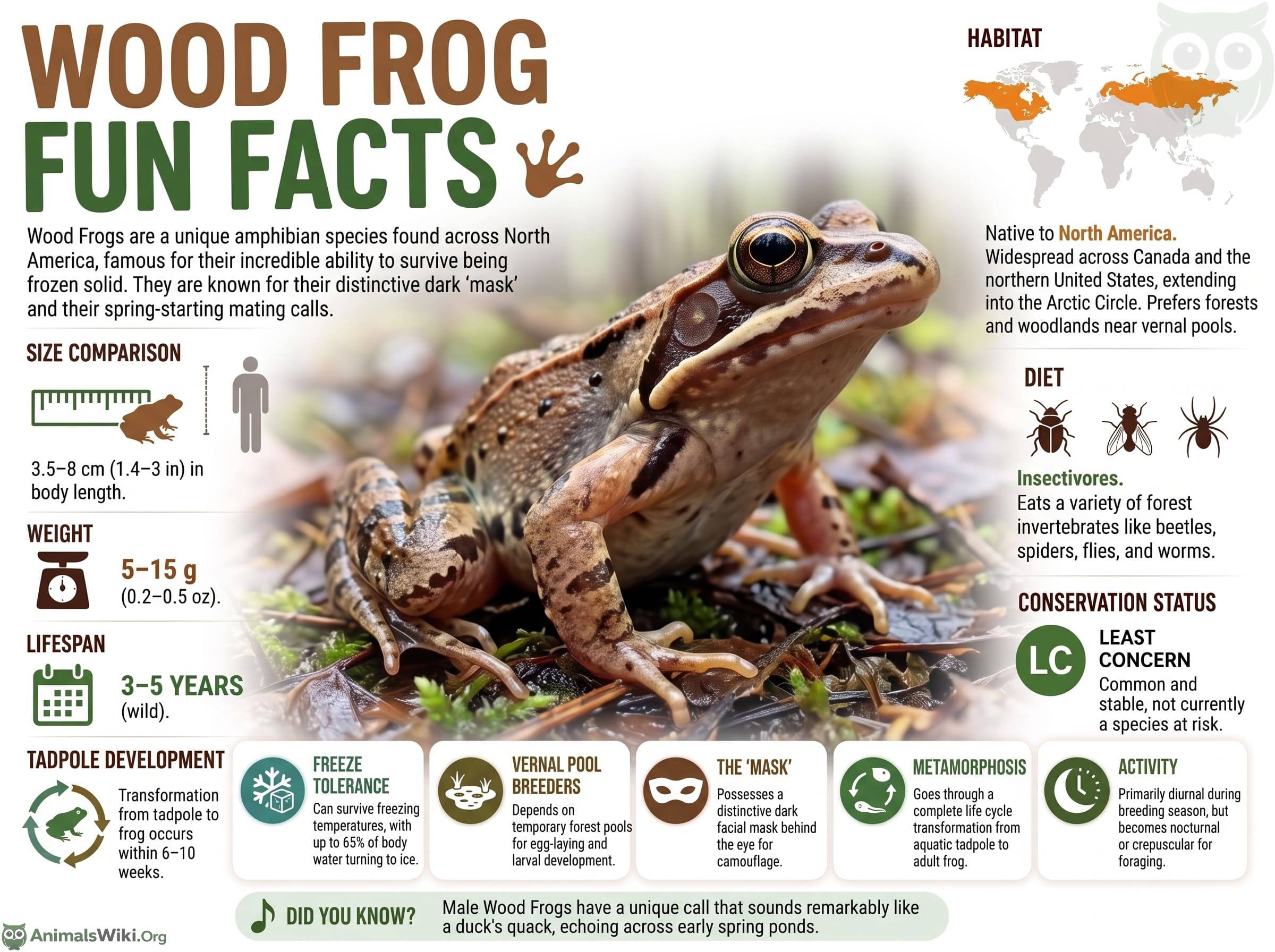
| Size | 3.5–7.5 cm (1.4–3.0 inches) body length |
| Weight | 3–8 grams |
| Lifespan | 3–5 years (wild); up to 6 years (captivity) |
| Diet | Carnivore — insects, worms, spiders, slugs, small invertebrates |
| Conservation Status | Least Concern (IUCN) |
| Defining Feature | Freezes solid in winter and thaws back to life in spring |
| Northernmost Range | Beyond the Arctic Circle — the only North American frog to do so |
1. Species Overview & Classification
There are remarkable animals in this world, and then there are animals that seem to operate by an entirely different set of physical rules. The Wood Frog (Rana sylvatica) belongs firmly in the second category.
Picture this: it is the dead of a North American winter. The temperature has plunged well below freezing. In the leaf litter of a boreal forest, a small brown frog lies on the forest floor — completely frozen solid. Its heart has stopped. Its blood is no longer circulating. Its brain shows no electrical activity. By every conventional measure, this animal is dead.
And then spring comes.
Ice crystals melt. The forest floor warms. And this little frog — this seemingly dead creature — simply… comes back to life. Its heart restarts. Blood flows. Muscles twitch. Within hours, it is hopping through the forest, heading to a pond to breed.
This is the Wood Frog. And it is, without exaggeration, one of the most biologically extraordinary animals on Earth.
The Wood Frog is a medium-sized North American frog belonging to the family Ranidae — the “true frogs” — a large and globally distributed family containing over 400 species, including the familiar American Bullfrog, Leopard Frog, and Pickerel Frog. Within this family, the Wood Frog is exceptional for its freeze tolerance, its remarkable Arctic range, and its importance as an indicator species for forest and wetland ecosystem health.
Species Classification Table
| Classification Level | Details |
|---|---|
| Kingdom | Animalia |
| Phylum | Chordata |
| Class | Amphibia |
| Order | Anura (frogs and toads) |
| Family | Ranidae |
| Genus | Rana (or Lithobates — debated) |
| Species | Rana sylvatica / Lithobates sylvaticus |
| Described By | John LeConte, 1825 |
| Subspecies | None currently recognized |
A note on nomenclature: the Wood Frog’s scientific name has been the subject of ongoing taxonomic debate. Traditionally classified as Rana sylvatica, many modern taxonomists place it in the genus Lithobates (as Lithobates sylvaticus), which groups together North and Central American “true frogs.” Both names are valid in current scientific use, with different authorities preferring different classifications. Throughout this article, we use Rana sylvatica as the primary name, consistent with traditional usage.
2. Physical Description & Unique Features
The Wood Frog is a small to medium-sized frog with a distinctly handsome appearance — not the flashy tropical colors of a poison dart frog, but the subtle, refined beauty of an animal perfectly matched to its forest environment.
Size and Build
Adult Wood Frogs measure 3.5 to 7.5 centimeters (1.4 to 3.0 inches) in body length, with females generally being noticeably larger than males — a common pattern in frogs known as sexual dimorphism. Weight ranges from a mere 3 to 8 grams — roughly the weight of a few paperclips. Despite their small size, they are robustly built frogs with long, powerful hind legs ideal for jumping and swimming.
Coloration and the “Robber’s Mask”
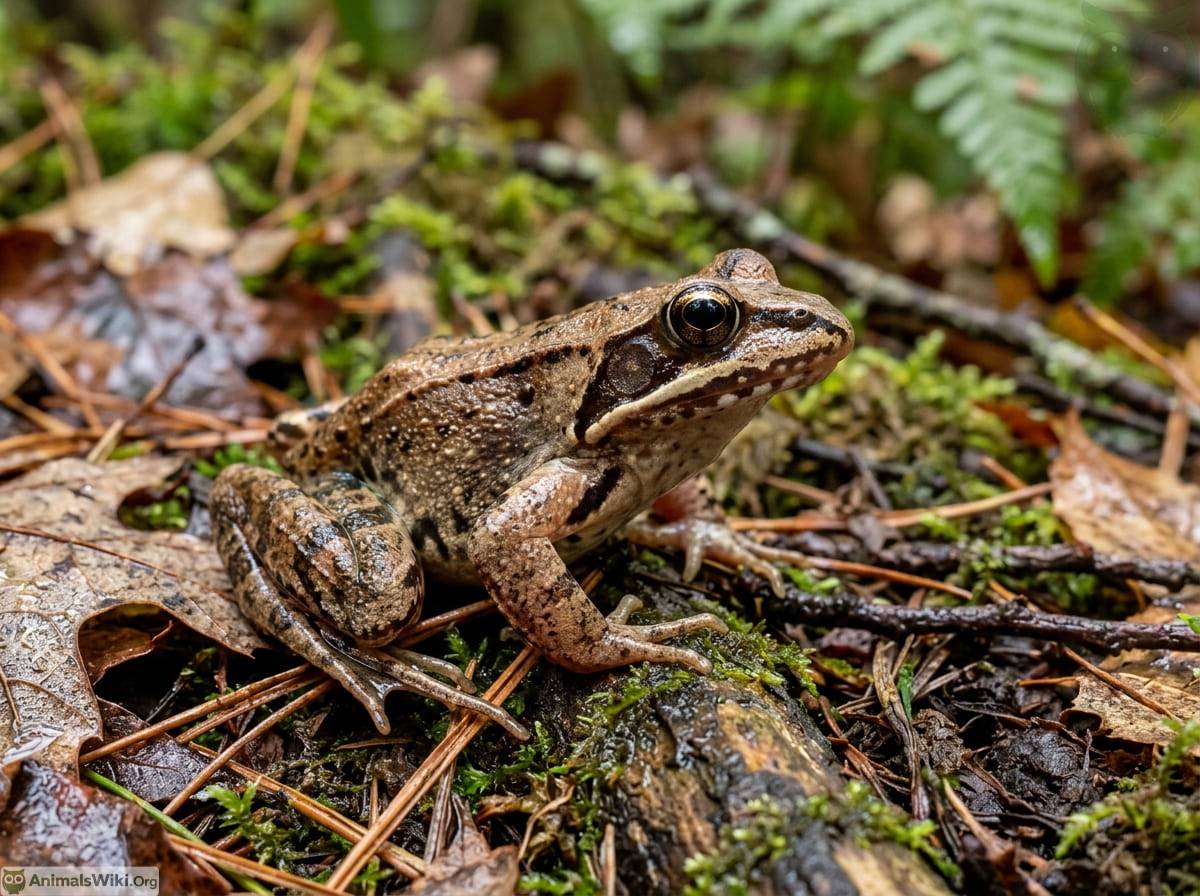
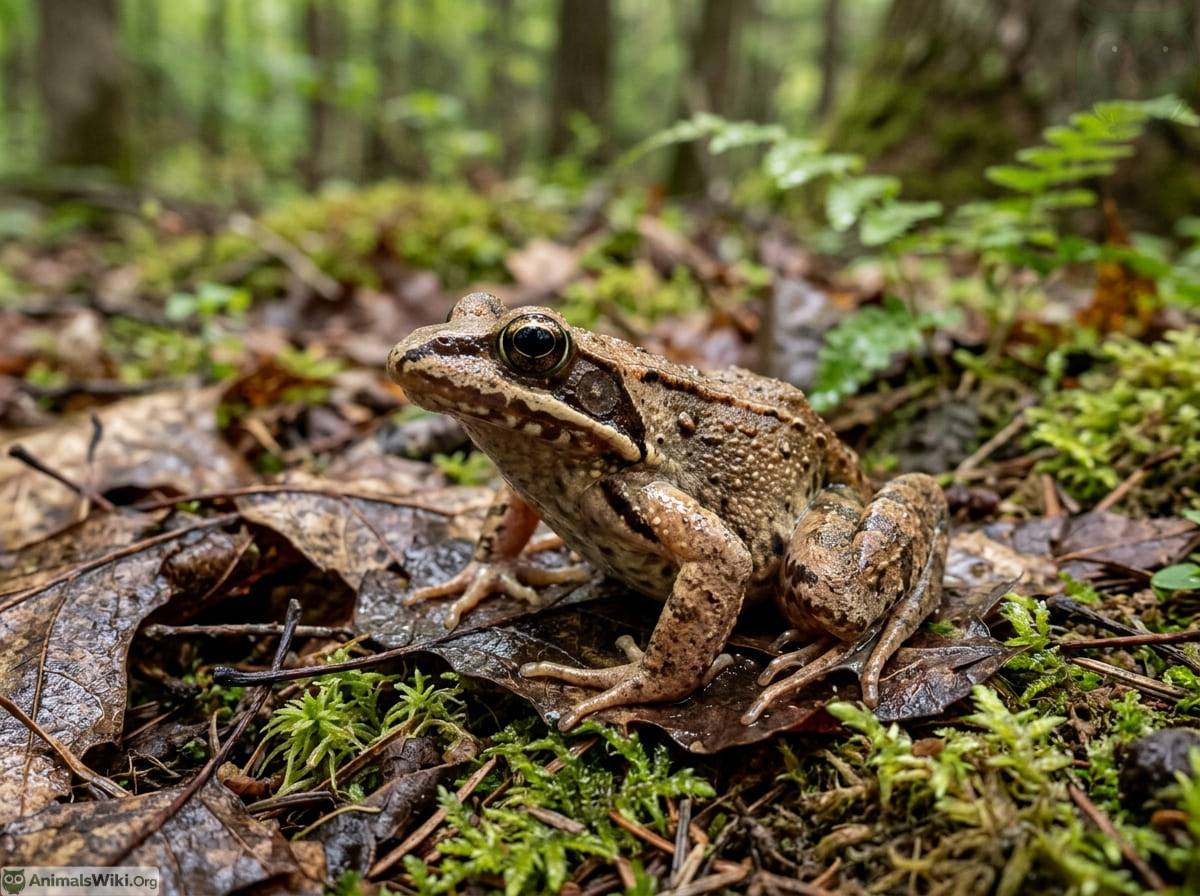
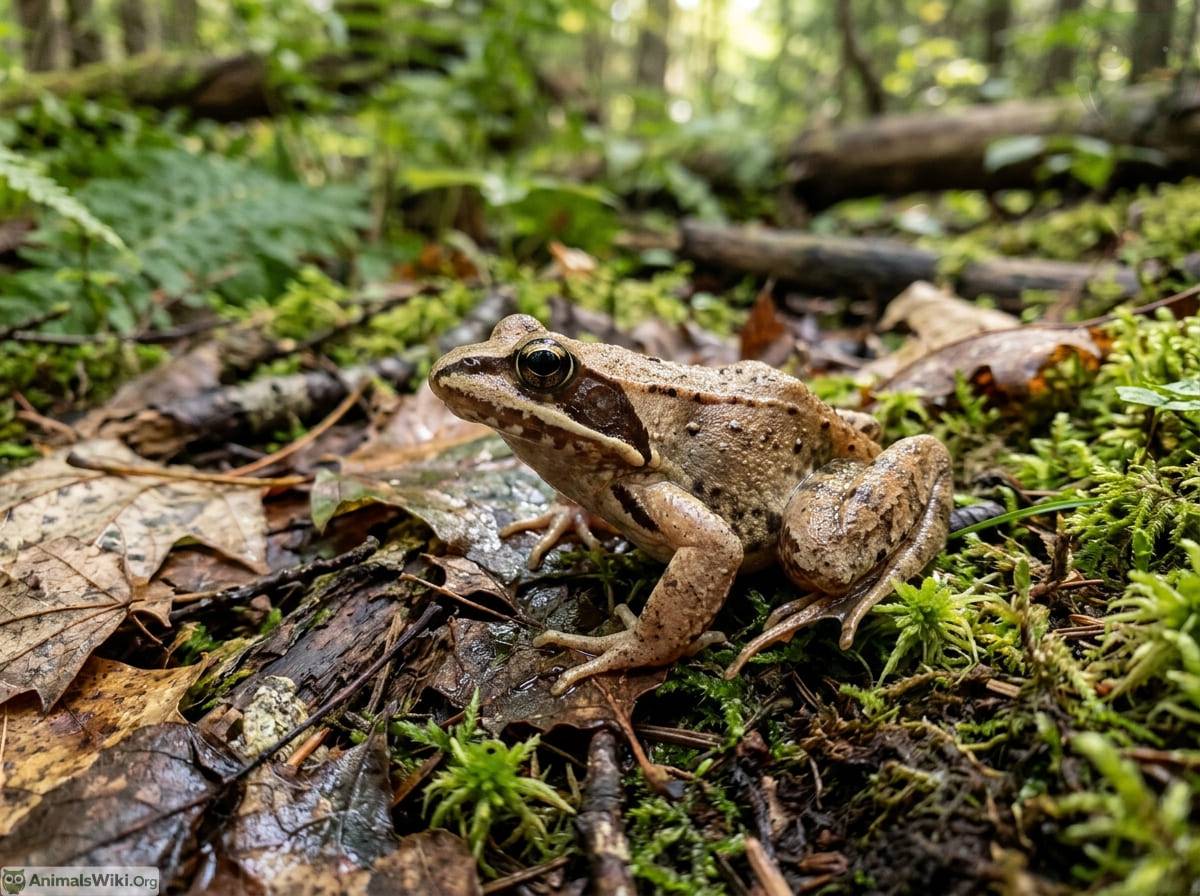
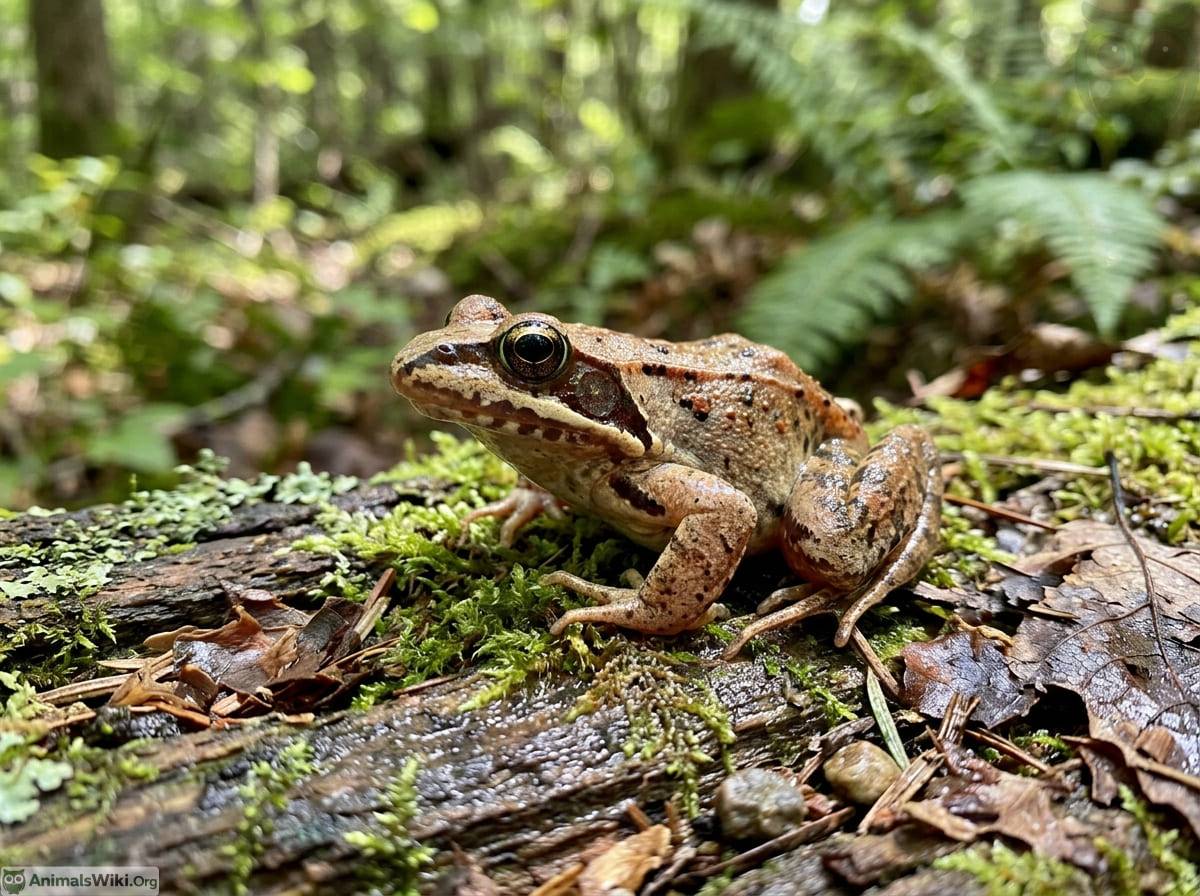
The Wood Frog’s coloration is a study in elegant forest camouflage. The dorsal (upper) surface ranges from tan, brown, russet-red, or olive-gray — colors that blend seamlessly with the leaf litter of the forest floor. Coloration can vary significantly both between individuals and seasonally within the same individual, with frogs often becoming darker in cold conditions and lighter when warm.
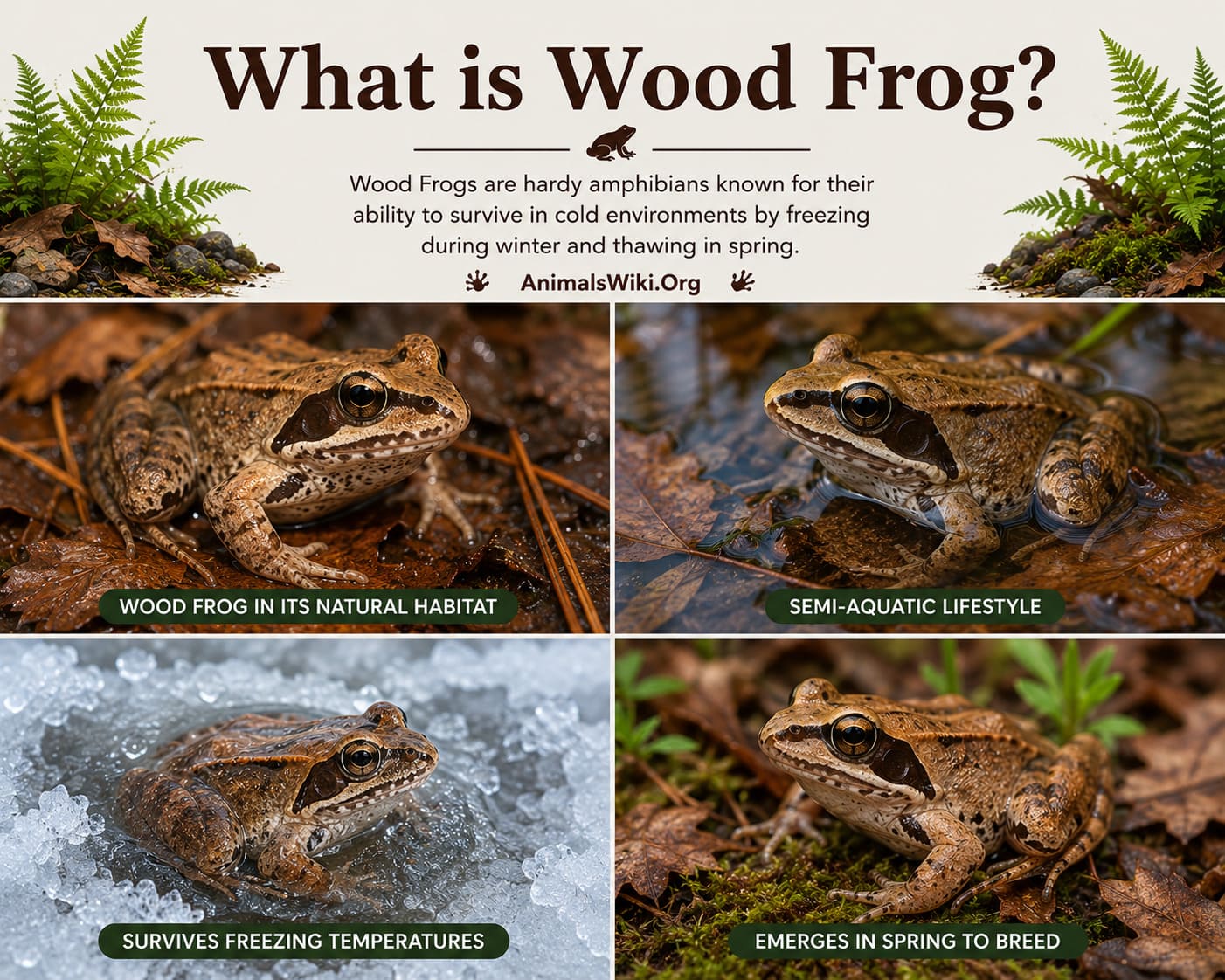
The Wood Frog’s most distinctive marking — and the easiest way to identify it at a glance — is the dark brown or black “mask” that runs from the snout, through the eye, and along the side of the head to the jaw. This robber’s mask makes the Wood Frog one of the most immediately recognizable frogs in North America and has inspired its occasional nickname: the “masked frog.”
A white or pale stripe along the upper lip (supralabial stripe) often accompanies the mask, creating a two-tone facial pattern that is almost comically expressive. The belly is typically pale cream, white, or yellowish, sometimes with faint mottling.
Skin and Texture
The Wood Frog’s skin is smooth and moist — typical of true frogs — and requires regular moisture to function properly, as amphibians breathe partially through their skin. The skin contains mucous glands that keep it hydrated and may offer mild antimicrobial protection.
The Freeze-Tolerance Adaptation
No description of the Wood Frog’s physical biology is complete without addressing its most extraordinary feature: the ability to survive being frozen solid. This is not metaphor. In winter, as temperatures drop, the Wood Frog’s body undergoes a series of remarkable physiological changes:
- Ice crystals begin forming under the skin and between organs — but crucially, not inside individual cells
- The liver rapidly converts stored glycogen to glucose, flooding the bloodstream with sugar that acts as a cryoprotectant (antifreeze) inside cells
- The heart stops. Breathing stops. Brain activity ceases.
- Up to 65–70% of the body’s total water content becomes ice
The frog can survive temperatures as low as -16°C (3°F) in this frozen state. When temperatures rise in spring, the process reverses — ice melts, organs resume function, and the frog recovers with no permanent damage.
This process — called cryogenic freeze tolerance — is virtually unparalleled in vertebrate animals and has attracted intense scientific research interest for its potential applications in human organ preservation and transplant medicine.
Did You Know? The Wood Frog can survive having up to 70% of its body water frozen solid — including the fluid in its eyes. When fully frozen, it would actually rattle like a plastic toy if you shook it. It is, for all biological purposes, dead during this state — yet it thaws and hops away every spring.
3. Natural Habitat & Geographic Range
The Wood Frog has one of the most extraordinary geographic ranges of any North American amphibian — a range that pushes the very limits of where a cold-blooded animal can survive.
The Northernmost Frog in North America
The Wood Frog holds a remarkable distinction: it is the only amphibian in North America found north of the Arctic Circle. Its range extends from the forests of the southeastern United States (northern Georgia and Alabama) all the way through Canada to Alaska and into the Arctic tundra — a latitudinal span of over 4,000 kilometers.
This extraordinary northern reach is made possible entirely by its freeze-tolerance superpower. Where other frogs would die in a single hard freeze, the Wood Frog simply waits, frozen, until conditions improve.
Preferred Habitats
Despite being called the “Wood” Frog — suggesting a forest preference — this species is actually quite habitat-flexible. It uses different habitat types at different points in its annual cycle:
- Deciduous and mixed forests — Primary adult habitat; leaf litter provides overwintering cover and daytime shelter
- Boreal coniferous forests — Throughout Canada and Alaska
- Arctic tundra — In its northernmost range; shelters under moss and vegetation
- Vernal pools and temporary ponds — Critical breeding habitat in spring
- Wetlands, bogs, and floodplains — Used for feeding and seasonal movement
- Forest edges and meadows — Foraging habitat during the active season
Habitat Range by Region
| Region | Habitat Type | Season Used | Notes |
|---|---|---|---|
| Arctic Alaska/Canada | Tundra, taiga | Summer only | Northernmost amphibian range globally |
| Boreal Canada | Coniferous/mixed forest | Spring–autumn | Core northern range |
| Great Lakes Region | Deciduous forest, wetlands | Spring–autumn | High population density |
| New England (USA) | Mixed forest, vernal pools | Spring–autumn | Well-studied populations |
| Appalachian Mountains | Mountain forest, streams | Spring–autumn | Southernmost range extension |
| Pacific Northwest | Coastal forest | Spring–autumn | Western population |
The Wood Frog’s dependence on vernal pools (temporary woodland pools that form from snowmelt in spring) for breeding makes it a critical indicator species for the health of forest ecosystems — vernal pools are among the most ecologically important and most threatened wetland types in North America.
Did You Know? Wood Frogs in the far north have developed a remarkable behavioral adaptation to complement their freeze tolerance: they breed almost immediately upon thawing — sometimes while ice is still visible on the surface of breeding pools. This gives their tadpoles the maximum possible time to develop before the next winter arrives.
4. Diet & Feeding Behavior
The Wood Frog is an active, opportunistic carnivore that feeds throughout its active season — from spring thaw through the early autumn, when it must put on enough fat reserves to survive the winter freeze.
What Wood Frogs Eat
Wood Frogs are sit-and-wait predators as well as active hunters, depending on conditions. They eat almost any small invertebrate they can catch and fit in their mouth, including:
- Beetles and beetle larvae — a major dietary component
- Ants, flies, and other flying insects
- Earthworms and aquatic worms
- Spiders and harvestmen
- Slugs and snails
- Caterpillars and other moth/butterfly larvae
- Small crustaceans (in aquatic foraging contexts)
- Springtails and other tiny soil invertebrates
As tadpoles, Wood Frogs have a completely different diet — they are filter feeders and algae scrapers, consuming:
- Algae and phytoplankton
- Decaying organic matter (detritus)
- Bacteria and biofilm on submerged surfaces
Diet Breakdown Table (Adult)
| Food Type | Estimated % of Diet | Notes |
|---|---|---|
| Beetles and larvae | 25–35% | Most frequently documented prey item |
| Flies and winged insects | 15–20% | Surface and aerial prey |
| Earthworms | 10–15% | Important protein source, especially in wet conditions |
| Spiders | 10–15% | Frequently taken on forest floor |
| Ants and other Hymenoptera | 8–12% | Abundant and accessible prey |
| Slugs and snails | 5–10% | Taken when available |
| Caterpillars / larvae | 5–8% | Seasonal availability |
| Other small invertebrates | 5–10% | Springtails, mites, harvestmen |
Feeding Technique
Wood Frogs use a rapid, sticky-tongued strike to capture prey — the classic frog hunting method. The tongue is attached at the front of the mouth (not the back, as in humans), allowing it to be flipped forward with lightning speed to snag a passing insect. The entire strike-and-swallow sequence takes less than 100 milliseconds in most cases.
“Wood Frogs are remarkably efficient predators for their size. Their diet makes them important regulators of soil invertebrate communities — they consume enormous quantities of insects and worms across their range.” — Dr. Michael Lodato, Amphibian Ecologist, University of Vermont
5. Reproduction & Life Cycle
If the Wood Frog’s freeze survival is its most extraordinary physical feat, then its explosive breeding season is its most spectacular behavioral one. Few events in the North American natural calendar are as dramatic, brief, and intense as a Wood Frog breeding congregation.
The Spring Awakening
As temperatures begin rising in late winter and early spring — often when snow is still on the ground and ice lingers at pond margins — Wood Frogs begin thawing from their winter freeze. Males emerge first, making their way to breeding pools while females may still be thawing nearby.
The trigger for breeding activity is air and soil temperature rather than calendar date — Wood Frogs in Alaska might breed in May, while those in Georgia may breed as early as January or February. In most of their range, the breeding season falls in March and April.
The Explosive Breeding Explosion
Wood Frogs engage in what biologists call explosive breeding — a strategy where virtually the entire local population of adults converges on a breeding pond over a single period of just 1 to 3 days. Within this frantic window, all mating, egg-laying, and fertilization occurs. Then, as quickly as they arrived, the frogs disperse back into the forest, and the pond falls silent.
The sheer density of frogs in these breeding aggregations is remarkable — a single vernal pool might host hundreds or even thousands of frogs simultaneously, all calling, mating, and depositing eggs in a chaotic, churning mass.
Mating and Egg Laying
Males call to attract females with a sound described as a rapid, duck-like quacking — nothing like the deep croak of a bullfrog. Male Wood Frogs quack so insistently and in such numbers that a breeding pond can be heard from a considerable distance.
Mating occurs through amplexus — the male grasps the female from behind and fertilizes her eggs externally as she deposits them. Females lay eggs in communal clusters — large, gelatinous masses attached to submerged vegetation near the pond surface. Remarkably, multiple females often deposit their egg masses in the same location, creating enormous communal egg rafts that can contain thousands of eggs from dozens of females.
Egg and Tadpole Development
| Stage | Duration | Notes |
|---|---|---|
| Egg incubation | 10–30 days | Varies with water temperature |
| Tadpole stage | 45–90 days | Longer in cold northern populations |
| Metamorphosis | ~1 week | Dramatic transformation from tadpole to froglet |
| Juvenile dispersal | Immediately after metamorphosis | Young frogs move into surrounding forest |
| Sexual maturity | 1–2 years | Faster in southern populations |
Lifespan Comparison
| Species | Average Lifespan (Wild) | Average Lifespan (Captivity) |
|---|---|---|
| Wood Frog (Rana sylvatica) | 3–5 years | Up to 6 years |
| American Bullfrog (Lithobates catesbeianus) | 7–10 years | Up to 16 years |
| Gray Tree Frog (Hyla versicolor) | 5–7 years | Up to 9 years |
| Spring Peeper (Pseudacris crucifer) | 2–3 years | Up to 5 years |
| Spotted Salamander (Ambystoma maculatum) | 20–30 years | Up to 32 years |
Did You Know? The Wood Frog’s entire adult breeding season lasts just 1 to 3 days at any given location — one of the shortest breeding windows of any North American vertebrate. Yet in those few days, a population produces enough eggs to sustain itself for the coming year.
6. Social Behavior & Communication
For most of the year, Wood Frogs are solitary and secretive — hidden in leaf litter, quietly hunting invertebrates, avoiding predators, and building the fat reserves they need to survive the winter. But for a few extraordinary days each spring, they transform into one of the most intensely social animals in the North American forest.
The Breeding Chorus
The male Wood Frog’s breeding call is one of the most distinctive and surprisingly comical sounds in the natural world. Rather than the deep, resonant croak or melodic whistle of many other frogs, the Wood Frog produces a rapid, nasal quacking sound — remarkably similar to a duck, which frequently confuses first-time listeners. This call is made by males using paired vocal sacs on either side of the throat, which amplify the sound.
The collective call of a breeding aggregation is extraordinary — hundreds of males quacking simultaneously creates a roaring chorus that carries across the forest.
Amplexus Competition
At breeding ponds, competition among males for females is intense. Males will wrestle, jostle, and displace rivals in their attempts to secure amplexus with a gravid female. A single female may be grabbed simultaneously by multiple males in what is called a “mating ball” — a chaotic scrum of frogs that can last for hours. Despite this intensity, the frogs rarely injure each other.
Outside the Breeding Season
Once breeding is complete, Wood Frogs return to their essentially solitary lifestyle in the surrounding forest. They show no territorial behavior, no extended pair bonds, and no parental care of any kind after eggs are laid. Communication outside the breeding season is minimal and primarily limited to alarm responses — sudden jumps and rapid escape from perceived threats.
7. Predators & Defense Mechanisms
Small, slow (outside the water), and living in habitats shared with dozens of predator species, the Wood Frog faces significant predation pressure throughout its life cycle — from egg to adult.
Predators at Every Life Stage
Egg and Tadpole Predators:
- Spotted salamander larvae and other aquatic predators eat Wood Frog eggs and tadpoles
- Water beetles and their larvae — significant predators of eggs and hatchlings
- Predatory diving beetles (Dytiscidae)
- Leeches — consume eggs
- Various fish — in ponds where fish are present (Wood Frogs often preferentially use fishless vernal pools to avoid this pressure)
Juvenile and Adult Predators:
- Raccoons — frequently raid breeding ponds during explosive breeding events
- Skunks — opportunistic predators at breeding aggregations
- Garter snakes (Thamnophis spp.) — the most significant reptilian predator of Wood Frogs
- Ravens, crows, and herons — opportunistic predation at ponds
- Mink and otters — aquatic predators
- Larger frogs (American Bullfrogs) — will readily eat Wood Frogs where their ranges overlap
Defense Strategies
Camouflage: The Wood Frog’s brown, mottled coloration provides excellent cryptic camouflage on the leaf-littered forest floor. Remaining motionless is often the first line of defense.
Explosive Jump: When detected, Wood Frogs rely on a rapid, powerful jump — often into dense vegetation or water — to escape predators. Their long hind legs make them capable jumpers relative to body size.
Thanatosis (Death Feigning): Some Wood Frogs have been observed going limp and motionless when captured — mimicking death to discourage predators that prefer live prey.
Skin Secretions: While not toxic like poison dart frogs, Wood Frog skin produces mild mucous secretions that may be distasteful or mildly irritating to some predators.
Breeding Strategy as Defense: The explosive breeding strategy — concentrating all mating activity into 1–3 days — has a defensive dimension. The sheer density of frogs at a breeding pond makes it impossible for any predator to consume more than a tiny fraction of the total population during that brief window. It is predator satiation at the population level.
“The Wood Frog’s explosive breeding is not just a reproductive strategy — it’s a defense. By flooding the pond with thousands of individuals simultaneously, no predator can make a significant dent in the population. Raccoons gorge themselves, herons feast, garter snakes hunt through the night — and still the vast majority of frogs survive to breed.” — Dr. Jon Costanzo, Physiological Ecologist, Miami University, Ohio
8. Relationship with Humans
Indigenous Relationships
Long before European scientists formally described the Wood Frog in 1825, the species was known to Indigenous peoples across North America — particularly to First Nations, Inuit, and Native American communities throughout the frog’s vast range. In many Indigenous cultures of the northeastern forests and sub-Arctic, frogs — including the Wood Frog — were associated with spring, renewal, and the return of life after winter.
The Haudenosaunee (Iroquois) and Anishinaabe peoples of the Great Lakes region recognized the Wood Frog’s call as one of the first reliable signs of spring — a cultural marker of seasonal transition and the beginning of planting and hunting cycles. In some Indigenous traditions, frogs were seen as rain bringers or harbingers of good weather.
Scientific Relationship
The Wood Frog has become one of the most intensively studied amphibians in the world — not primarily for its ecological role (though that is significant) but for its extraordinary freeze-tolerance physiology, which has attracted researchers from:
- Cryobiology — the science of how life responds to freezing temperatures
- Medical science — specifically organ preservation and transplant research
- Climate change biology — studying how changing winters affect freeze-survival success
- Conservation biology — using Wood Frogs as indicator species for wetland and forest health
The Wood Frog is a model organism in cryobiological research. Understanding how its cells survive freezing without damage — using glucose as a cryoprotectant — has directly influenced research into preserving human organs for transplant, potentially extending the window during which donated organs can survive before being transplanted.
Modern Cultural Relationship
The Wood Frog is a beloved figure in North American nature education. Its dramatic spring emergence, explosive breeding chorus, and remarkable freeze story make it a favorite subject for:
- School nature programs — particularly in the northeastern US and Canada
- Nature journaling and citizen science
- Backyard and woodland pond conservation projects
- Environmental education curricula at all grade levels
Did You Know? Research on the Wood Frog’s freeze-tolerance mechanism has directly influenced medical research into organ cryopreservation — the ability to freeze and thaw human organs for transplant without damage. Scientists at institutions including the NIH and University of Alaska have studied Wood Frog biochemistry in hopes of extending organ preservation times from hours to days or longer.
9. Conservation Status & Threats
IUCN Status
The Wood Frog is currently listed as Least Concern on the IUCN Red List — reflecting its wide range, large overall population, and relatively stable status across much of its range. However, this broad designation masks significant regional population declines and emerging threats that conservation biologists are monitoring with increasing concern.
Key Threats
1. Habitat Loss and Fragmentation The most significant long-term threat to Wood Frog populations is the destruction and fragmentation of forest habitat and the loss of vernal pool breeding sites. Vernal pools — the shallow, temporary woodland pools on which Wood Frogs depend for breeding — are among the most frequently destroyed wetland types in North America, filled in for development, agriculture, and road construction. Many US states still offer inadequate legal protection for vernal pools.
2. Road Mortality Every spring, as Wood Frogs migrate from their overwintering forest sites to breeding ponds, they must frequently cross roads. Road kills during spring migration can be locally significant — studies have documented that road crossings kill substantial percentages of migrating frog populations in fragmented landscapes.
3. Disease — Chytridiomycosis Batrachochytrium dendrobatidis (Bd) — the chytrid fungus responsible for catastrophic amphibian declines globally — poses a significant potential threat to Wood Frog populations. While Wood Frogs appear more resistant than many species, Bd has been detected in Wood Frog populations and its long-term impact is not fully understood.
4. Climate Change Climate change threatens Wood Frogs in complex and sometimes contradictory ways:
- Warmer, shorter winters may reduce the depth of ground freezing, potentially helping frogs survive in some areas
- Unpredictable freeze-thaw cycles — warm spells followed by sudden freezes — can kill frogs that have thawed too early
- Changes to vernal pool hydrology — pools drying earlier or filling later — may reduce tadpole survival
- Range shifts — southern populations may face increasing stress as temperatures rise
5. Pesticides and Pollution Exposure to herbicides, insecticides, and road salts through wetland runoff has been shown to have negative effects on Wood Frog development and immune function in studies conducted across their range.
Did You Know? In some parts of the northeastern United States, road salt applied to roads in winter washes into vernal pools in spring — just as Wood Frogs are breeding. Studies have shown that even relatively low concentrations of road salt can impair Wood Frog tadpole development and survival.
10. Famous Individuals & Notable Research
Individual Wood Frogs are not named or tracked — they are too small and too numerous for that. But specific research programs and scientific milestones have made the Wood Frog globally famous in scientific circles.
Dr. Kenneth Storey and the Freeze Tolerance Discovery
Dr. Kenneth Storey of Carleton University in Ottawa, Canada is arguably the most important figure in Wood Frog research. Since the 1980s, Storey and his laboratory have led the world’s most comprehensive investigation of the Wood Frog’s freeze-tolerance mechanisms. His laboratory’s publications on the role of glucose as a cryoprotectant, the regulation of ice nucleation, and the molecular biology of freeze-tolerance have made the Wood Frog famous in biochemistry and medicine far beyond the world of herpetology.
University of Alaska Research Program
Researchers at the University of Alaska Fairbanks have focused on the Wood Frog’s Arctic populations — the northernmost frogs on the continent — documenting how these animals survive winters far harsher than those faced by southern populations, and investigating the upper limits of freeze tolerance.
Project Frogwatch
The Frogwatch USA citizen science program (operated by the American Association of Zoos and Aquariums) has used Wood Frog breeding calls as one of the primary monitoring signals for wetland and forest health across the eastern United States, with thousands of volunteers logging Wood Frog breeding activity each spring as part of long-term population trend monitoring.
11. Role in Ecosystem & Food Chain
The Wood Frog punches well above its weight in ecological importance. Despite its small size and relatively short lifespan, it plays critical roles at multiple points in the food chain of North American forest ecosystems.
As a Consumer
Wood Frogs are voracious insectivores that consume enormous quantities of invertebrates throughout the warm season. Studies estimate that individual Wood Frogs may consume hundreds of invertebrates per week during peak feeding season. Across the entire population of a healthy forest ecosystem, this represents:
- Significant regulation of insect pest populations, including many species of agricultural and forestry concern
- Control of soil invertebrate communities, influencing soil structure and decomposition rates
- Consumption of slugs and snails, which can otherwise devastate plant communities
As Prey
Wood Frogs are critical prey items for a remarkable diversity of North American predators. They convert invertebrate biomass into frog biomass that then fuels:
- Snakes (particularly garter snakes, which depend heavily on spring frog breeding aggregations)
- Wading birds (herons, egrets)
- Waterfowl (ducks occasionally eat tadpoles and froglets)
- Mammals (raccoons, mink, skunks, foxes)
- Raptors (some hawk species)
Tadpoles as Ecosystem Engineers
Wood Frog tadpoles play a specific and important ecological role in vernal pool ecosystems. Their grazing on algae and organic detritus helps regulate algal growth in these pools, while their waste products contribute nutrients that support the broader pool food web. Some research suggests that Wood Frog tadpole grazing can actually improve water quality in vernal pools.
12. Myths, Culture & Pop Culture Appearances
Indigenous Cultural Significance
Across North America, frogs have deep cultural significance in Indigenous traditions — and the Wood Frog, as the most widespread and prominent frog across vast areas of Canada and the northern US, features prominently in this cultural landscape.
For many Algonquian-speaking peoples of northeastern North America, the first calling of Wood Frogs in spring is a culturally significant event — a marker of seasonal change as important as the first flowers or the return of migratory birds. In some traditions, frogs are seen as weather predictors — with the timing and intensity of the breeding chorus interpreted as signals about the coming growing season.
The Dene peoples of northern Canada, living alongside Wood Frogs in the boreal forest, incorporate frogs into traditional ecological knowledge that tracks the health and timing of seasonal cycles. In Yup’ik traditions of Alaska, frogs are associated with the return of warmth and life — powerful symbols in a culture defined by the rhythms of Arctic seasons.
Western Cultural Symbolism
In broader Western cultural tradition, frogs generally — and the Wood Frog specifically — carry associations with:
- Transformation and resurrection — reflecting the frog’s metamorphosis from tadpole to adult, and the Wood Frog’s dramatic return from its winter freeze
- Spring and fertility — connected to breeding season activity and the renewal of the natural world
- Environmental health — in modern conservation culture, amphibians (including the Wood Frog) have become symbols of ecosystem health and the consequences of environmental degradation
Pop Culture Appearances
- “Arctic” (BBC, 2019) and “North America” (BBC/Discovery, 2013) — Both featured Wood Frog freeze survival sequences, with the BBC’s nature cinematography capturing the freezing and thawing process in remarkable detail. These segments have been viewed tens of millions of times on YouTube and are among the most shared nature documentary clips in recent years.
- “Life in the Freezer” — Various nature documentaries have used the Wood Frog as the quintessential example of cold-climate animal adaptation.
- “Frozen Earth” and cryobiology literature — The Wood Frog is the star example in virtually every popular science book about extreme survival, freeze tolerance, and animal adaptation to cold.
- Science classrooms worldwide — The Wood Frog’s freeze survival is one of the most frequently cited examples of extraordinary animal adaptation in biology education at every level from elementary school to university.
- Medical research media — Articles in Scientific American, National Geographic, New Scientist, and major newspapers regularly feature the Wood Frog when covering organ preservation research, making it arguably the most media-prominent frog in North America.
13. Discovery & Evolution Timeline
~250 million years ago — The first amphibians evolve from lobe-finned fish ancestors, colonizing terrestrial environments. Early amphibians are very different from modern frogs.
~200–250 million years ago — The order Anura (frogs and toads) begins to diverge from other amphibian lineages.
~150–200 million years ago — Early frog fossils appear in the geological record. The family Ranidae (true frogs) begins its long evolutionary history.
~80–100 million years ago — True frogs of the family Ranidae begin diversifying across the supercontinent Gondwana, eventually spreading to North America, Europe, Africa, and Asia.
~20–30 million years ago (estimated) — The lineage leading to Rana sylvatica begins diverging from related North American true frogs. The development of freeze-tolerance adaptations likely begins evolving during a period of significant continental cooling.
~2–3 million years ago — During the Pleistocene glaciations, Wood Frog populations are pushed south by advancing ice sheets, potentially creating the geographic genetic variation seen across today’s populations.
Pre-1825 — Wood Frogs are known to Indigenous peoples across their vast North American range for thousands of years. European settlers also observe and informally note the species.
1825 — American naturalist John LeConte formally describes the Wood Frog as Rana sylvatica — “sylvatica” meaning “of the forest” in Latin — in a landmark paper that establishes its place in scientific taxonomy.
Early 20th century — Naturalists and ecologists begin documenting the Wood Frog’s explosive breeding behavior and northern range, though the freeze-tolerance mechanism remains unknown.
1980s — Dr. Kenneth Storey (Carleton University) and colleagues begin publishing groundbreaking research on Wood Frog freeze tolerance, identifying glucose as the primary cryoprotectant and documenting the physiology of freeze-thaw cycles for the first time.
1990s–2000s — Wood Frog research expands into medical applications — cryopreservation research inspired by the Wood Frog’s biology begins influencing organ transplant science.
2000s–2010s — Citizen science programs (Frogwatch USA, NatureWatch Canada) begin systematically monitoring Wood Frog populations as climate change indicators.
2010s–2026 — Climate change impacts on Wood Frog populations are actively studied. Concerns about vernal pool loss, road mortality, and disease mount. The species remains common but shows regional declines in fragmented landscapes.
14. Comparison with Similar Species
| Feature | Wood Frog (Rana sylvatica) | Spring Peeper (Pseudacris crucifer) | American Bullfrog (Lithobates catesbeianus) |
|---|---|---|---|
| Size | 3.5–7.5 cm | 2–3.5 cm | 9–20 cm |
| Key Feature | Freeze tolerance; robber’s mask | High-pitched peeping call; X on back | North America’s largest frog |
| Range | Alaska to Georgia | Eastern North America | Eastern/Central North America (invasive elsewhere) |
| Breeding Season | Very early spring (explosive) | Early spring (extended) | Late spring to summer |
| Call | Duck-like quacking | High, clear whistle/peep | Deep, resonant “jug-o-rum” |
| Habitat | Forest, vernal pools | Forest edges, shrubby wetlands | Permanent ponds, lakes, streams |
| Overwintering | Freezes on forest floor | Freezes under bark/leaf litter | Hibernates in pond mud |
| Lifespan | 3–5 years | 2–3 years | 7–10 years |
| Conservation Status | Least Concern | Least Concern | Least Concern (invasive elsewhere) |
15. Best Places to See Wood Frogs in the Wild
The Wood Frog is widespread and relatively accessible — far easier to see than many remarkable animals. The key is knowing when and where to look.
Prime Viewing Window
The best time to encounter Wood Frogs is during their explosive breeding season — typically late February to April, depending on latitude. At this time, breeding ponds are alive with calling frogs that can be heard and seen without any special equipment.
Top Locations
- 🇺🇸 Acadia National Park, Maine, USA — Excellent forest and vernal pool habitat. Wood Frogs breed in park ponds in early spring, often while snow is still on the ground. The park’s extensive trail network makes vernal pools accessible.
- 🇺🇸 Adirondack Park, New York, USA — One of the largest wild areas in the eastern US, with abundant vernal pool habitat and significant Wood Frog populations throughout.
- 🇺🇸 Shenandoah National Park, Virginia, USA — Rich Appalachian forest habitat supports good Wood Frog populations at the southern edge of their core range.
- 🇨🇦 Algonquin Provincial Park, Ontario, Canada — One of the most accessible and spectacular locations for Wood Frog observation. The park’s extensive boreal and mixed forest, combined with hundreds of lakes and ponds, supports enormous Wood Frog populations.
- 🇨🇦 Kejimkujik National Park, Nova Scotia, Canada — Rich wetland and forest habitat with excellent amphibian diversity including Wood Frogs.
- 🇺🇸 White Mountain National Forest, New Hampshire/Maine, USA — Extensive forest with abundant vernal pool habitat throughout.
- 🇺🇸 Denali National Park, Alaska, USA — For a truly extraordinary experience, Wood Frogs in Alaska represent the world’s northernmost amphibian populations. Seeing them in their tundra-edge habitat is genuinely awe-inspiring.
- 🇨🇦 Point Pelee National Park, Ontario, Canada — An outstanding biodiversity hotspot where Wood Frogs and many other amphibian species can be observed during spring migration.
Practical Tip: The best time to visit breeding sites is on warm, rainy evenings in early spring — Wood Frogs migrate to ponds most actively at night during or after rain. Bring a red-filtered flashlight (less disturbing to wildlife than white light) and wear waterproof boots.
16. Wood Frog Fun Facts for Kids
- The Wood Frog can survive being frozen solid — up to 70% of its body water turns to ice — and thaws back to life every spring.
- It is the only amphibian in North America found north of the Arctic Circle.
- The Wood Frog’s call sounds exactly like a duck quacking — confusing birders and hikers every spring.
- The entire breeding season lasts just 1–3 days at any given location — one of the fastest in the vertebrate world.
- When frozen, the Wood Frog’s heart stops completely — it has no heartbeat for months.
- The glucose cryoprotectant that saves the Wood Frog’s cells from ice damage can reach 10 times the normal blood sugar level during freezing.
- Wood Frog tadpoles can develop from egg to froglet in as little as 45 days — one of the fastest amphibian developments in cold climates.
- A frozen Wood Frog would rattle like a plastic toy if shaken — its body becomes almost completely rigid.
- Research on Wood Frog freeze tolerance is actively influencing human organ transplant medicine and cryopreservation science.
- The Wood Frog’s black “robber’s mask” makes it one of the most visually distinctive and easily identified frogs in North America.
17. How You Can Help
The Wood Frog may be listed as Least Concern, but the forest and wetland ecosystems it depends on need urgent protection — and there is plenty that every individual can do.
Support These Organizations
- Amphibian Survival Alliance (amphibians.org) — The world’s largest amphibian conservation partnership, coordinating protection efforts for species at all risk levels.
- Frogwatch USA (aza.org/frogwatch) — Citizen science amphibian monitoring program run by the Association of Zoos and Aquariums. Volunteers monitor frog and toad calls to track population trends.
- North American Amphibian Monitoring Program (NAAMP) — USGS program tracking amphibian population trends across the continent.
- Nature Conservancy (nature.org) — Active programs protecting vernal pool habitats and forest ecosystems across the Wood Frog’s range.
- Canadian Wildlife Federation (cwf-fcf.org) — Conservation programs protecting Canadian wetland and forest amphibian habitats.
- Save the Frogs (savethefrogs.com) — International amphibian conservation organization with educational programs and habitat protection initiatives.
What You Can Do
- Protect vernal pools on your property — if you have a seasonal pond or wetland, leave it undisturbed in early spring.
- Join Frogwatch USA or NatureWatch Canada — contribute to citizen science monitoring by recording Wood Frog calls in your area each spring.
- Reduce road salt use — excess road salt washes into vernal pools and harms developing tadpoles.
- Create wildlife-friendly road underpasses — advocate for amphibian tunnels under roads that cross migration routes.
- Plant native vegetation around ponds and wetlands — native plants provide essential cover and food for frogs and the invertebrates they eat.
- Reduce pesticide use in your garden — pesticide runoff into wetlands is a significant amphibian health threat.
- Never release captive frogs into the wild — this can spread disease and introduce non-native genetics.
Recommended Documentaries & Books
- “North America” (BBC/Discovery, 2013) — Features a stunning sequence on Wood Frog freeze survival that has introduced millions to this remarkable animal.
- “Arctic” (BBC One, 2019) — Includes dramatic Wood Frog footage as part of its exploration of Arctic ecosystem life cycles.
- “The Frozen Planet” (BBC, 2011) — Broader cold-climate coverage with relevant context for understanding Wood Frog adaptations.
- “The Frog Who Croaked Blue” by Jamie Whitfield — Educational book on frog biology including freeze tolerance.
- “Amphibians and Reptiles of the Great Lakes Region” by James Harding — Excellent field guide covering Wood Frog natural history in detail.
- “Life in the Cold” by Peter Marchand — A superb popular science book about cold-climate biology, featuring extensive Wood Frog freeze-tolerance coverage.
18. Frequently Asked Questions Wood Frogs
Q1: How does the Wood Frog survive being frozen solid?
The Wood Frog survives freezing through a remarkable multi-step physiological process. As temperatures drop, its body begins producing massive quantities of glucose (blood sugar) from glycogen stored in the liver. This glucose floods into the body’s cells, acting as a cryoprotectant — preventing ice crystals from forming inside cells, which would rupture and kill them. Ice forms instead in the spaces between cells and organs. The heart stops, breathing ceases, and brain activity halts. Up to 70% of the body’s water freezes solid. When temperatures rise in spring, the process reverses — ice melts, organs resume function, and the frog recovers fully within hours.
Q2: What is the scientific name of the Wood Frog?
The Wood Frog’s primary scientific name is Rana sylvatica (LeConte, 1825), meaning “forest frog” in Latin. It is also classified by some authorities as Lithobates sylvaticus, placing it in a genus grouping North and Central American true frogs. Both names are used in current scientific literature, reflecting an ongoing debate about frog taxonomy. Common names include Wood Frog, Masked Frog, and (historically) Forest Frog.
Q3: Where do Wood Frogs live in winter?
Wood Frogs overwinter on land — not in water. They shelter under leaf litter, logs, rocks, and soil in the forest, where they freeze solid in place as temperatures drop. They do not dig deep into the ground like some other frogs — they remain in the shallow leaf layer, directly exposed to winter temperatures. This is why their freeze tolerance is so critical: unlike a bullfrog hibernating in mud at the bottom of a pond, the Wood Frog cannot escape below the frost line.
Q4: What does a Wood Frog call sound like?T
he Wood Frog’s call is famously described as sounding like a duck quacking — a rapid, nasal, chuckling sound that bears almost no resemblance to the stereotypical “ribbit” of frog cartoons. First-time listeners near a Wood Frog breeding pond often look around for ducks before realizing the sound is coming from hundreds of frogs. The calls of many males together create a continuous roaring chuckle that can be heard from several hundred meters away.
Q5: Are Wood Frogs poisonous or dangerous?
No — Wood Frogs are completely harmless to humans. They produce no toxins, have no venom, and do not bite in any meaningful way. They are safe to observe, and brief gentle handling by careful humans causes no lasting harm (though frequent handling stresses them and should be minimized). Always wash hands before and after handling amphibians to protect both the frog from skin oils and chemicals, and yourself from any naturally occurring skin secretions.
Q6: How can I attract Wood Frogs to my garden or property?
The best way to attract Wood Frogs is to create or preserve suitable habitat:
- Maintain a seasonal pond or shallow vernal pool — even a small, planted garden pond can be used for breeding
- Leave leaf litter undisturbed in garden and woodland areas — this provides overwintering shelter
- Plant native vegetation around any water features
- Avoid pesticides — these kill the invertebrates Wood Frogs eat and can directly harm the frogs
- Reduce outdoor lighting near potential habitat — artificial light disrupts frog behavior
Q7: Is the Wood Frog endangered?
The Wood Frog is currently listed as Least Concern on the IUCN Red List, meaning it is not globally threatened. However, significant regional population declines have been documented in areas with habitat fragmentation, vernal pool loss, heavy road networks, and extensive pesticide use. Climate change poses emerging threats that may become more significant in coming decades. Conservation biologists emphasize that “Least Concern” globally does not mean populations can be ignored locally.
Q8: Can Wood Frog freeze tolerance teach us anything useful for human medicine?
Yes — this is one of the most exciting applications of Wood Frog research. The mechanisms by which Wood Frogs survive freezing without cellular damage have directly inspired research into human organ cryopreservation — the ability to preserve donated organs for transplant for longer periods than currently possible. Currently, most donor organs must be transplanted within hours. Insights from Wood Frog biochemistry may eventually allow organs to be preserved for days or even longer, dramatically expanding the pool of viable transplant organs. Research programs at institutions including Carleton University, the University of Alaska, and the NIH are actively pursuing these applications.
19. Sources Researched
The information in this article was researched and verified using the following authoritative sources:
- Wikipedia — Rana sylvatica, Lithobates sylvaticus, Cryoprotectant, Vernal pool
- IUCN Red List (iucnredlist.org) — Lithobates sylvaticus conservation status assessment
- National Geographic (nationalgeographic.com) — Wood Frog biology and freeze survival features
- Britannica (britannica.com) — Wood Frog, Amphibian, Ranidae
- Smithsonian’s National Zoo (nationalzoo.si.edu) — Amphibian species profiles
- USGS Amphibian Research and Monitoring Initiative (armi.usgs.govarmi.usgs.gov) — Population monitoring data
- Carleton University — Storey Laboratory (carleton.ca) — Freeze tolerance biochemistry research
- University of Alaska Fairbanks — Arctic Wood Frog population research
- Frogwatch USA / AZA (aza.org/frogwatch) — Citizen science monitoring data
- Cornell Lab of Ornithology / All About Frogs — Behavioral and ecological data
- Save the Frogs (savethefrogs.com) — Conservation status and threat information
- Journal of Experimental Biology — Peer-reviewed research on Wood Frog freeze physiology
- Herpetologica — Scientific journal; Wood Frog taxonomy and ecology papers
- NatureWatch Canada (naturewatch.ca) — Canadian amphibian monitoring data
- BBC Nature / BBC Earth — Documentary reference footage and species features
Wood Frog Images